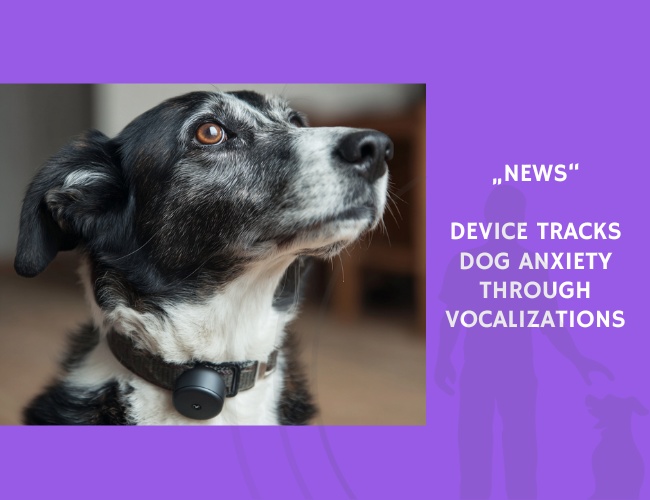
Understanding and managing problem behavior in companion dogs is a persistent challenge due to high individual variability and the lack of standardized methods. To address this, A. V. Avilov and colleagues (2023) developed a hardware–software prototype capable of objectively monitoring canine vocalizations and identifying anxiety markers.
The team recorded 250 canine vocalizations during fieldwork in Rostov-on-Don from spring to autumn 2021. Using microcontrollers programmed via Arduino IDE, the device measured the amplitude, duration, and frequency of barks and whines. Algorithms then generated intervalograms and spectrograms, allowing classification of activity patterns linked to anxiety and aggression.
A key feature of the prototype is its ability to send real-time data to a Telegram chatbot, including vocalization metrics, behavioral classifications, and even ambient temperature. This allows owners and practitioners to track canine stress responses and receive unbiased data on their dogs’ welfare.
The authors highlight the potential for such systems to improve early detection of behavioral disorders and provide more objective records of owner–dog interactions. They also suggest that the approach could be adapted for other animal species in urban environments, expanding applications in animal welfare monitoring.
This innovation demonstrates how technology and ethology can converge to create tools for practical welfare assessment, offering a path toward more evidence-based interventions for anxiety in dogs.
Source: Avilov, A. V., et al. (2023). Russian Journal of Veterinary Pathology. Published October 24, 2023.