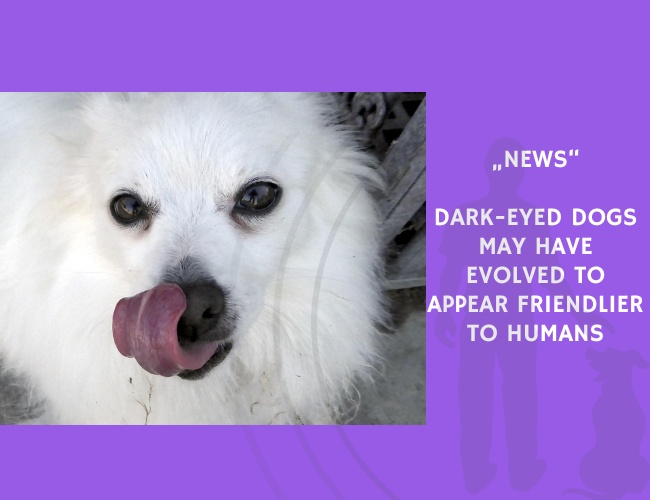
Published in Royal Society Open Science, this study by A. Konno and colleagues explores how domestication shaped the eye color of dogs and its potential role in human perception. Using image analysis of dogs and grey wolves, the researchers compared iris pigmentation across species to determine whether darker eye coloration offered social advantages during evolution.
The analysis revealed that dogs’ irises are significantly darker than those of wolves, their wild counterparts. Furthermore, when human participants rated facial images, dark-eyed dogs were perceived as friendlier and more youthful. These traits are known to trigger caregiving and affiliative responses—behaviors that may have enhanced cooperation and bonding between humans and early domesticated dogs.
The findings support an evolutionary hypothesis that eye coloration contributed to social adaptation during domestication. Just as humans evolved expressive facial traits to enhance communication, dogs may have acquired dark, non-threatening eyes that project warmth and safety, reinforcing trust within the human–dog partnership. The study also parallels research in primates, where ocular morphology has been linked to social communication and emotional signaling.
Konno et al. propose that dark-eyed dogs evolved to convey an “inviting gaze”—a visual cue that helped deepen interspecies cooperation and emotional connection. This perspective broadens our understanding of how visual appearance and social selection shaped the domesticated dog’s evolution from its wolf ancestors, aligning aesthetic features with behavioral adaptability.
Source: Konno, A., Aoki, H., Suzuki, E., Furuta, S., & Ueda, S. (2023). Are dark-eyed dogs favoured by humans? Domestication as a potential driver of iris colour difference between dogs and wolves. Royal Society Open Science, 10. Published December 1, 2023.