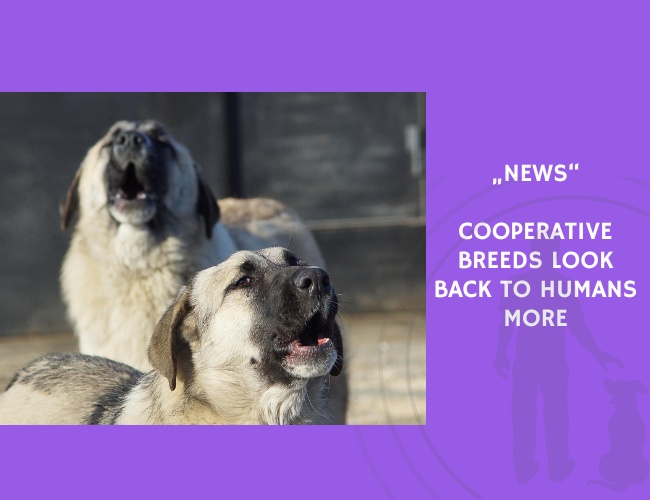
Péter Pongrácz and Csenge Anna Lugosi (2024) explored how functional breed selection influences dogs’ tendency to direct their gaze toward humans when faced with a difficult task. The study included 71 dogs from 36 breeds, classified into cooperative and independent categories based on their historical working roles.
During the trials, dogs first learned how to retrieve a reward from a container. In the critical test, the container was locked, making the reward unattainable. While both cooperative and independent breeds showed similar persistence and task focus, their human-directed behaviors diverged.
Cooperative breeds performed more gaze alternations between the container and nearby humans and looked back more often than independent breeds. These behaviors suggest that cooperative dogs are more likely to seek human assistance when faced with unsolvable challenges.
The findings provide the first empirical evidence that recent functional selection—beyond domestication and ancestry—can influence breed-level differences in dependency and human-oriented communication. This highlights the impact of selective breeding on the subtle ways dogs interact with humans.
Source: Pongrácz, P., & Lugosi, C. A. (2024). Cooperative but Dependent–Functional Breed Selection in Dogs Influences Human-Directed Gazing in a Difficult Object-Manipulation Task. Animals, 14. MDPI.