
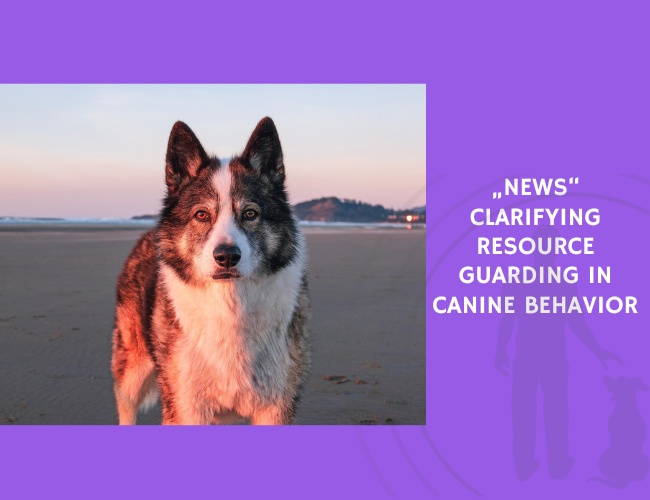
Published in Frontiers in Veterinary Science, this study addressed a persistent issue in canine behavior discourse: the interchangeable use of the terms possessive aggression and resource guarding. Such inconsistency can hinder communication between dog owners, clinicians, and researchers, potentially affecting behavior management strategies and scientific progress.
The authors conducted a two-stage online survey involving 85 canine behavior experts who met predefined inclusion criteria. Participants were asked to share their understanding of each term, indicate preferences, and discuss how terminology influences interpretation and intervention.
Results from the surveys showed that the majority of experts preferred the term resource guarding. Because nuanced definitions could not be fully explored through survey questions alone, respondents from the second stage were invited to an online discussion board. This qualitative component enabled deeper exploration of meanings, contexts, and implications associated with each term.
Content analysis of the discussion board reinforced that while a strong preference for resource guarding existed, 100% consensus was not achieved. This lack of unanimity underscores the complexity of behavioral terminology and the need for explicit definitions whenever terms are used in clinical or research settings.
Based on expert contributions, the authors proposed an operational ethological definition of resource guarding as: “the use of avoidance, threatening, or aggressive behaviors by a dog to retain control of food or non-food items in the presence of a person or other animal.”
The study concludes that adopting clear definitions alongside preferred terminology will enhance effective communication, improve treatment and management outcomes, and promote consistency in canine behavior research.
Source: Jacobs, J., Coe, J., Widowski, T., Pearl, D., & Niel, L. (2018). Defining and Clarifying the Terms Canine Possessive Aggression and Resource Guarding: A Study of Expert Opinion. Frontiers in Veterinary Science. Published June 11, 2018.










