
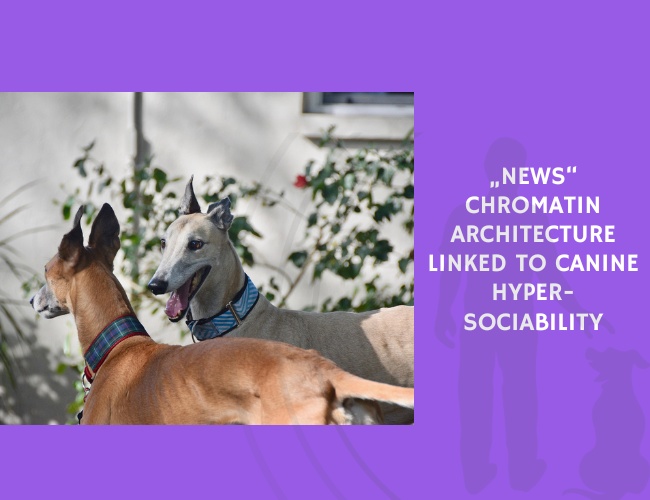
Published in BMC Genomics, this study by Dhriti Tandon, Enikő Kubinyi, Sára Sándor, and colleagues explored how specific non-coding structural variants influence the extreme sociability often observed in domestic dogs. These behaviors, shaped by thousands of years of selective pressure, have long been associated with particular genomic regions, yet the regulatory mechanisms remained poorly understood.
The researchers focused on a 5 Mb region on canine chromosome 6 (CFA6) that contains four polymorphic transposable elements (TEs) previously linked to hypersocial traits. Although these TEs do not alter protein-coding sequences, the team found that they significantly affect chromatin architecture, thereby modifying how regulatory elements interact within three-dimensional genomic space.
A TE located in intron 17 of the GTF2I gene demonstrated the clearest functional impact. The presence of this variant was correlated with altered chromatin looping, enabling distinct cis-regulatory interactions. Supporting evidence included an E2F1 DNA-binding peak aligned with the altered loop and increased expression of GTF2I exon 18, suggesting changes in alternative splicing.
Beyond GTF2I, dogs with higher TE copy numbers showed differences in extracellular matrix–related pathways, further implicating these elements in broad regulatory shifts. These findings highlight a striking molecular convergence between canine hypersociability and human Williams–Beuren Syndrome, a genetic condition involving deletions in the homologous genomic region that produce heightened social behavior.
This study underscores the importance of considering chromatin dynamics—not just DNA sequence—in understanding domestication, behavior, and the evolution of social traits. It demonstrates that changes in genome architecture can be powerful drivers of the emotional and affiliative tendencies that characterize dog–human relationships.
Source: Tandon, D., Kubinyi, E., Sándor, S., Faughnan, H., Miklósi, Á., & Vonholdt, B. (2024). Canine hyper-sociability structural variants associated with altered three-dimensional chromatin state. BMC Genomics. Published August 7, 2024.










