
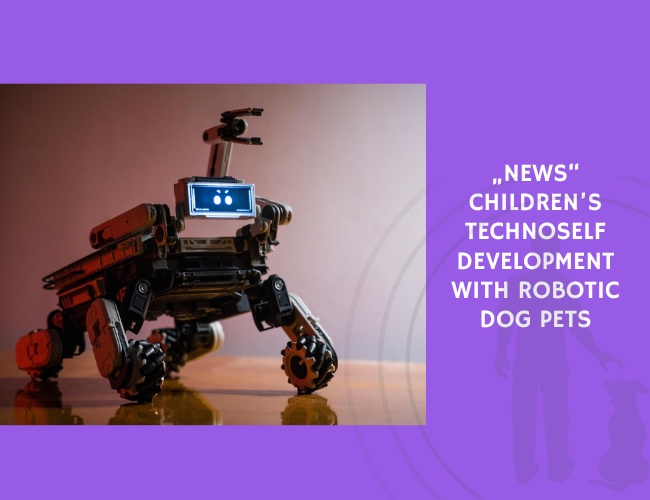
Study Chiang Mai, Thailand, December 24, 2025 – New insights reveal how children’s interactions with robotic pets, especially robotic dogs, contribute to the development of a “technoself.”
The rise of personal robotics has introduced children to new forms of companionship, prompting questions about how such interactions shape their developing identities. This chapter investigates the emergence of the technoself in children through relationships with robotic pets, focusing particularly on the iconic robotic dog AIBO. By examining children’s ideas and behaviors toward these devices, the study explores how young users interpret robotic animals not only as objects, but as partners in interaction.
The author outlines three domains central to technoself formation. The first concerns children’s perceptions of the robot as a technological object—how they categorize, understand, and reason about robotic pet capabilities. The second domain involves how children conceptualize their relationship with the robot, including attachment, empathy, and expectations of reciprocity. The third examines how children interpret their self-in-relationship with the robot, reflecting on their own agency, responsibility, and emotional expression during interactions.
A dynamic developmental perspective guides the analysis across these domains. Children’s interpretations vary widely depending on factors such as age, temperament, gender, personality traits, cognitive level, and previous experience with technology. Contextual elements, including family environment and cultural exposure to digital tools, also influence how children engage with robotic pets. Characteristics of the robots themselves—such as responsiveness, movement, and lifelike cues—play a significant role in shaping children’s reactions and expectations.
Collectively, these findings underscore that robotic pets are not merely toys but social technologies that participate in children’s identity development. As robots increasingly enter domestic and educational environments, understanding how they shape children’s internal models of self and relationship becomes critical for educators, designers, and parents.
Source: Melson, G. F. (2013). Building a Technoself: Children’s Ideas about and Behavior toward Robotic Pets. In Handbook of Research on Technoself.










