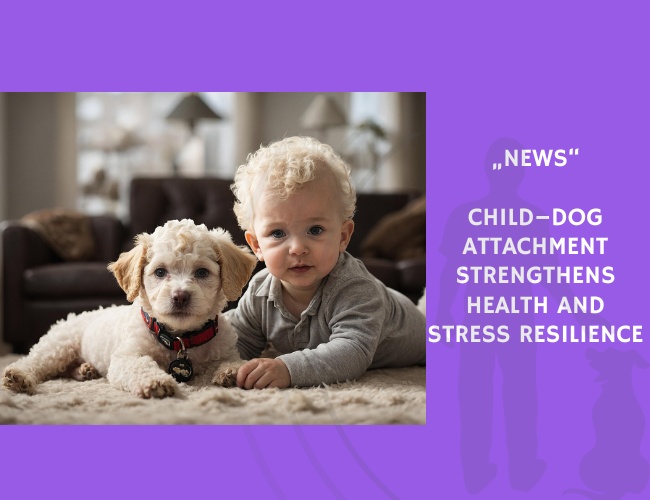
Owning a pet dog is widely associated with improvements in children’s physical, emotional, and social well-being. However, Reilly and colleagues (2024) highlight that it is not simply the presence of a dog that matters, but the strength of the attachment bond between child and dog that determines the extent of these benefits.
Drawing on evidence from neuroscience, endocrinology, and behavioral science, the review shows that strong child–dog attachments can buffer stress, improve emotional regulation, and enhance resilience. These benefits mirror the effects of close human social bonds, suggesting that dogs may play a role akin to attachment figures in children’s lives.
The authors argue for a dyadic approach to research, recognizing that attachment is reciprocal: the behavior and emotional responses of both child and dog shape the bond. They review findings on oxytocin, stress physiology, and neural mechanisms underlying these interspecies attachments, situating them within broader mammalian bonding processes.
Importantly, the review underscores that not all child–dog relationships are equally beneficial. The quality of interaction and emotional closeness largely determines whether children experience the therapeutic outcomes of dog ownership. This insight supports initiatives encouraging positive child–dog engagement as a means of promoting healthier development.
Source: Reilly, O. T., Somerville, L. H., & Hecht, E. E. (2024). Mechanisms of Social Attachment Between Children and Pet Dogs. Animals, 14. Published October 1, 2024.