
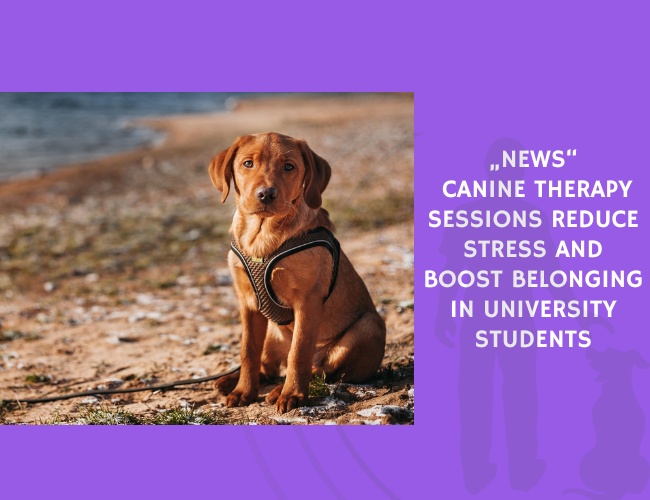
University students frequently report high levels of stress, which can compromise both mental health and academic performance. As a response, many campuses have implemented canine therapy programs—structured opportunities for students to interact with calm, well-socialized dogs. Despite their growing popularity, empirical support for these interventions remains limited.
This randomized controlled trial investigated the effects of a group-administered, single-session canine therapy intervention on key indicators of student wellbeing. A total of 163 participants were randomly assigned to either a treatment group—which engaged in a 20-minute session with a therapy dog, handler, and peers—or a control group that spent 20 minutes studying individually. Baseline measures revealed no differences between the groups prior to the intervention.
The findings show a significant main effect for group. Compared with the control condition, students in the canine therapy session exhibited substantial reductions in perceived stress, as well as decreases in both homesickness (dislike) and homesickness (attachment). Additionally, participants reported a meaningful increase in their sense of school belonging, suggesting that positive interactions with therapy dogs may strengthen students’ emotional connection to their campus community.
Interestingly, the control group showed an increase in homesickness (dislike) from pre-test to post-test, underscoring the contrasting benefit of the canine intervention. However, at follow-up—after accounting for pre- and post-test scores—no significant differences remained between the two groups, indicating that the effects may be short-term without repeated exposure.
This study contributes to the evidence base supporting animal-assisted interventions as a valuable tool for student wellbeing initiatives. It highlights the potential impact of brief, structured interactions with therapy dogs and reinforces their role in stress reduction efforts on university campuses.
Source: Binfet, J. (2017). The Effects of Group-Administered Canine Therapy on University Students’ Wellbeing: A Randomized Controlled Trial. Psychology & Education. Published July 3, 2017.










