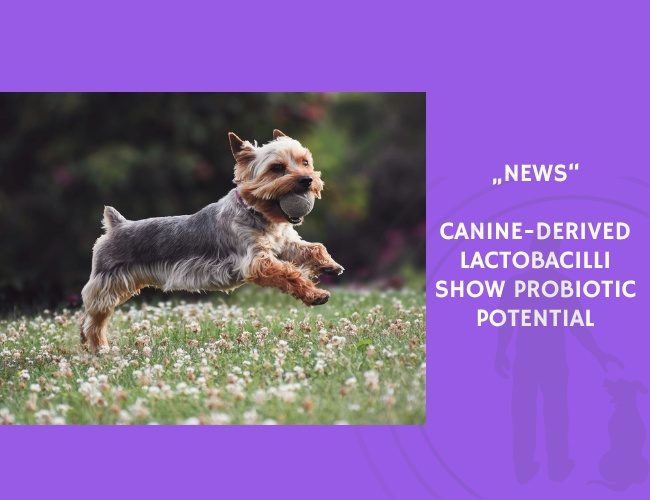
G. Zhang, A. Raheem, J. Zhang, M. Yue, X. Yan, M. Wang, and T. Qin (2021) investigated the probiotic potential of canine-derived Lactobacilli as an alternative to antibiotics for promoting gut health and combating intestinal infections in dogs.
The researchers isolated Lactobacilli from dog feces and confirmed them using 16S rRNA sequencing. In vitro experiments tested their ability to survive simulated gastrointestinal conditions, such as low pH and high bile salt concentrations, along with adhesion to MODE-K intestinal cells. The results showed that these strains not only survived but also adhered effectively, reinforcing intestinal barrier function.
Importantly, the canine-derived Lactobacilli demonstrated inhibitory effects on pathogens like Salmonella, suppressing their growth and adhesion to gut cells. Strains L. acidophilus AR1 and AR3 also reduced Salmonella-induced proinflammatory cytokines (IL-6, IL-8, IL-1β) and promoted expression of the tight junction protein occludin, which supports gut integrity. However, they did not stimulate beta-defensin 3 expression.
The study concluded that dog-derived Lactobacilli, especially L. acidophilus AR1, have strong probiotic potential and could be developed for use in canine nutrition. While the findings are promising, the authors emphasized that further in vivo studies are needed to confirm these health-promoting effects in real-world settings.
Source: Zhang, G., Raheem, A., Zhang, J., Yue, M., Yan, X., Wang, M., & Qin, T. (2021). Evaluation of Probiotic and Antimicrobial Potential of Canine Derived–Lactobacilli.