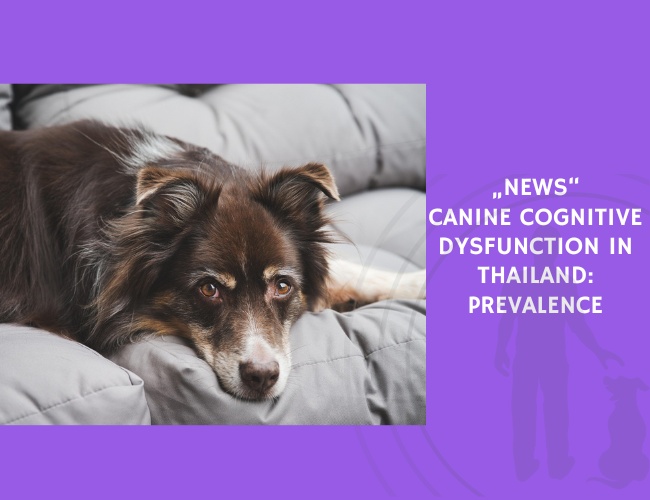
Canine cognitive dysfunction syndrome (CDS) is a progressive neurodegenerative disorder in aging dogs that resembles Alzheimer’s disease in humans. It is characterized by behavioral changes that impair both dog welfare and the human–dog relationship, yet it remains widely underdiagnosed.
In this study, researchers investigated CDS prevalence in Thailand by randomly recruiting 622 senior dogs aged seven years and older. Following clinical screening, 389 dogs were excluded due to medical or sensory conditions that could confound behavioral assessment. Owners of the remaining 233 dogs completed a structured questionnaire focusing on behaviors associated with CDS.
Behavioral signs were grouped into five categories: disorientation, social interaction, sleep–wake cycle, activity level, and house soiling. Based on owner reports, 122 dogs (52.4%) showed signs consistent with CDS.
The prevalence of CDS increased significantly with advancing age. In addition, neutered dogs had a 2.3-fold higher odds of exhibiting CDS signs compared with intact dogs. In contrast, sex and body size or weight were not significantly associated with cognitive decline.
Among the behavioral domains, sleep–wake cycle disruption and reduced activity were the most commonly affected, highlighting changes that are often dismissed as “normal aging.” Notably, only 30% of owners were aware of CDS prior to participation, underscoring a major gap in public awareness.
The authors conclude that advanced age and reproductive status are the most prominent risk factors for CDS in Thailand, consistent with findings from other countries. While owner questionnaires were shown to be useful for screening, the study emphasizes that definitive diagnosis requires longitudinal observation and detailed behavioral history.
Source: Benjanirut, C., Wongsangchan, C., Setthawong, P., Pradidtan, W., Daechawattanakul, S., & Angkanaporn, K. (2018). Prevalence and risk factors for canine cognitive dysfunction syndrome in Thailand. :contentReference[oaicite:1]{index=1}.