Published in Frontiers in Allergy, this proof-of-concept study explored whether dogs could detect chemical markers linked to emotional distress in individuals with trauma histories, including participants diagnosed with post-traumatic stress disorder (PTSD). The researchers hypothesized that exposure to trauma cues would trigger physiological stress responses, releasing distinct VOCs detectable by trained canines.
The study involved 26 participants (54% with PTSD) who provided breath samples during both calm and stress-induced conditions. Two professionally trained scent-detection dogs were presented with these samples using two-alternative forced choice (2AFC) and yes/no detection paradigms. Remarkably, both dogs were able to identify the “stress state” samples with above-chance accuracy, indicating that dogs can indeed sense the chemical signature of trauma-related arousal.
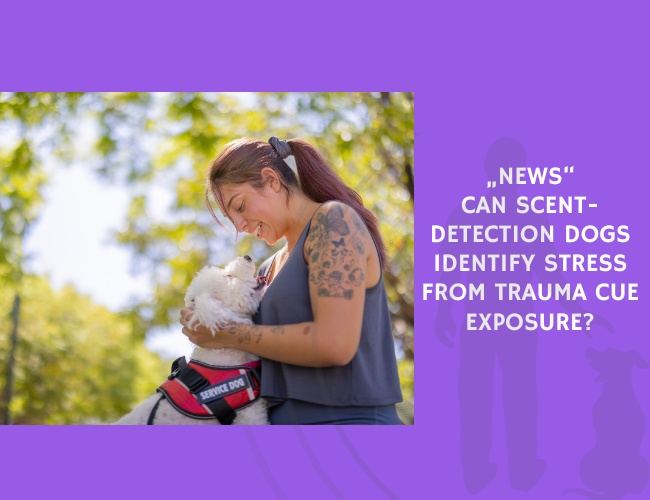
This discovery represents a significant advance in the field of canine-assisted therapy and detection. It supports the long-held belief that dogs’ olfactory systems are not only attuned to biological changes like illness but also to psychophysiological states such as fear and distress. The findings provide a biological basis for anecdotal reports of PTSD service dogs anticipating their handlers’ emotional episodes before visible symptoms arise.
Kiiroja and colleagues suggest that future studies with larger sample sizes could refine our understanding of the specific VOC profiles associated with emotional stress and improve training methodologies for PTSD service dogs. This research bridges neuroscience, olfaction, and emotional behavior—showing that the bond between humans and dogs operates not just through sight and sound, but through the invisible chemical language of empathy.
Source: Kiiroja, L., Stewart, S. H., & Gadbois, S. (2024). Can scent-detection dogs detect the stress associated with trauma cue exposure in people with trauma histories? A proof-of-concept study. Frontiers in Allergy, 5. Published March 28, 2024.