
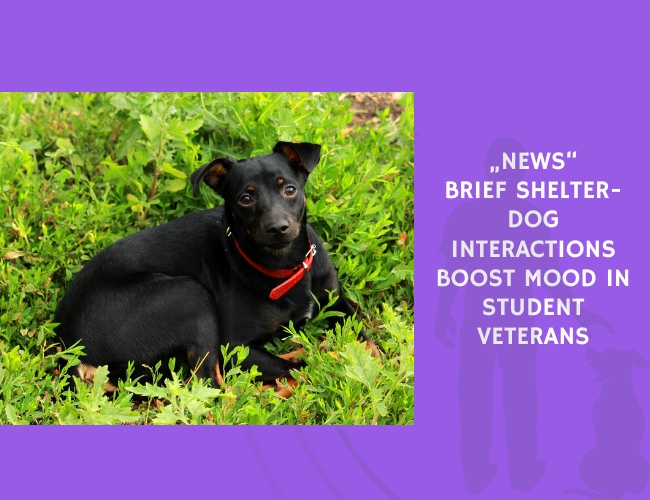
Published in Human–Animal Interactions, this mixed-methods study by Emily Webberson, Katy Schroeder, J. Binfet, and A. Stellato focuses on student veterans—an understudied population in animal-assisted intervention (AAI) research. Veterans in higher education often face reintegration difficulties and academic-related stress, prompting universities to incorporate AAIs into wellness programs.
The study involved 30 student veterans (mean age 34) and 30 screened shelter dogs (mean age 2). Veterans engaged freely in activities of their choice—such as petting, playing, talking, brushing, or giving treats—allowing natural social behaviors to emerge without structured task demands.
Veteran mood was assessed before and after the interaction using a pictorial self-report scale measuring arousal (activated ↔ deactivated) and valence (pleasant ↔ unpleasant). Results showed that veterans reported a pleasant, positively valenced post-interaction mood and described the overall experience as enjoyable and meaningful.
Qualitative responses emphasized that the dogs’ behavior—their personality, excitement, and individuality—was the most memorable aspect of the experience and significantly enhanced veterans’ enjoyment.
Shelter dogs were observed before, during, and after the interaction. Initially, dogs displayed more fear behaviors (e.g., lowered posture), general activity (e.g., jumping), and soliciting contact (e.g., inviting play). By the midpoint of the session, these behaviors had markedly decreased, suggesting that dogs became more comfortable and relaxed as the interaction progressed.
These findings indicate a mutual benefit: veterans experience improved mood and meaningful engagement, while dogs show reduced fear and activity levels—changes consistent with increased relaxation. The study underscores the potential value of enrichment-based, low-structure AAI programs for both human participants and shelter animals.
Source: Webberson, E., Schroeder, K., Binfet, J., & Stellato, A. (2024). Supporting animals and veterans through enrichment: An exploratory study on a brief canine socializing intervention. Human–Animal Interactions. Published April 4, 2024. Research conducted within programs in education, psychology, and animal welfare science.










