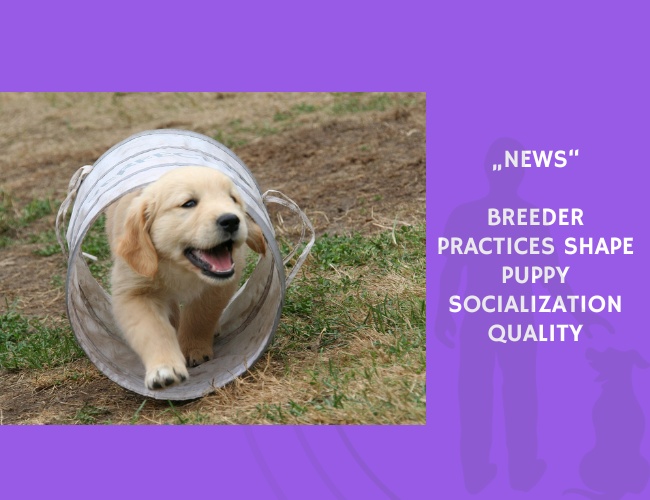
The early environment in which puppies are raised has a profound influence on their emotional stability and social behavior. In a cross-sectional study published in The Veterinary Record, Pierre-Alexandre Dendoncker and colleagues examined how breeding practices differ across breeder types and how these differences may affect puppy behavioral development.
The research, conducted in 2016, compared management, socialization, and environmental learning practices across a wide range of breeding establishments. The authors found significant variability between small-scale and large-scale breeders. Occasional or small-scale breeders—those housing fewer than ten adult dogs—provided the most enriched environments. Their puppies typically experienced greater outdoor access, diverse environmental stimuli, and more frequent human interaction, including access to visitors and varied surroundings.
In contrast, large-scale breeders often provided fewer enrichment opportunities and screened potential owners less thoroughly. Limited time for advising buyers and reduced environmental complexity raised concerns about the potential long-term behavioral effects on puppies reared in such settings. These differences point to a crucial balance between quantity versus quality of early-life stimuli—an ongoing topic in canine welfare research.
This study is the first to systematically document environmental and socialization differences among breeder categories, emphasizing that early rearing conditions play a key role in shaping adult dog temperament and adaptability. The authors advocate for improved breeder education and stricter welfare guidelines to ensure puppies experience optimal developmental environments from birth.
Source: Dendoncker, P.-A., Keuster, T., Diederich, C., Dewulf, J., & Moons, C. (2019). On the origin of puppies: breeding and selling procedures relevant for canine behavioural development. The Veterinary Record, 184, 710–710. Published January 29, 2019.