The study, led by Kathleen Morrill and colleagues (2022), paired genomic data from 2,155 dogs with owner surveys from 18,385 dogs. The findings reveal that while many behavioral traits are heritable, breed itself has only a modest influence on how an individual dog behaves.
Key results showed that traits like biddability (responsiveness to human direction) had the highest heritability, but even here, dogs within the same breed varied widely. For less heritable traits, such as aggression thresholds, breed offered virtually no predictive power.
The researchers identified 11 genetic loci significantly linked to behavioral traits such as howling frequency and human sociability. However, unlike physical traits, behavioral loci were not strongly differentiated between breeds, suggesting that modern breeds are primarily shaped by aesthetic traits like size, color, and conformation, rather than temperament.
The authors propose that many behaviors thought to define breeds are rooted in thousands of years of polygenic adaptation that predates breed formation. In contrast, breed standards established only in the past 160 years have focused heavily on physical appearance.
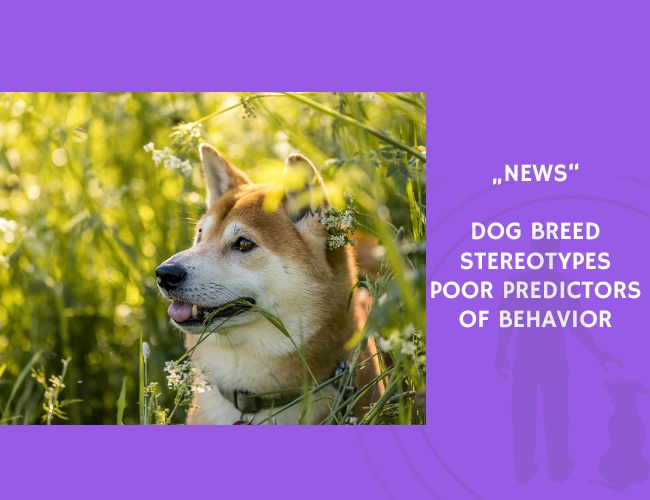
This large-scale, ancestry-inclusive study challenges popular assumptions about breed-specific behavior. It emphasizes that individual variation, environment, and training play a far greater role in shaping a dog’s behavior than breed stereotypes suggest.
Source: Morrill, K., Hekman, J., Li, X., McClure, J., Logan, B., Goodman, L., Gao, M., Dong, Y., Alonso, M., Carmichael, E., Snyder‐Mackler, N., Alonso, J., Noh, H. J., Johnson, J., Koltookian, M., Lieu, C., Megquier, K., Swofford, R., Turner-Maier, J., … Karlsson, E. (2022). Ancestry-inclusive dog genomics challenges popular breed stereotypes. Science, 376.