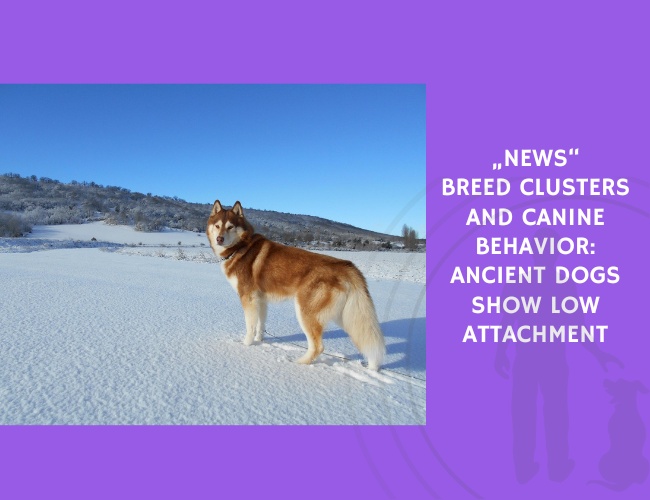
Study Chiang Mai, Thailand, December 23, 2025 – Large-scale behavioral data from over 13,000 dogs reveal that genetically ancient breeds show notably lower attachment and attention-seeking toward humans, highlighting potential ancestral patterns in dog behavior.
The domestication of the dog produced remarkable behavioral diversity, with breed groups selected for distinct functions and environments. Among these groups, those genetically closest to wolves—often termed ancient or spitz-type breeds—have long been suspected to differ behaviorally from modern European-derived breeds. The study by Tonoike et al. (2015) tested this hypothesis using one of the most robust tools for quantifying canine behavior: the Canine Behavioral Assessment and Research Questionnaire (C-BARQ).
Researchers analyzed owner-reported behavioral data from a combined dataset of 2,951 dogs in Japan and 10,389 dogs in the United States, providing an unprecedented cross-cultural perspective on breed-linked behavioral tendencies. Dogs were grouped into genetically clustered categories based on established breed phylogenies.
Across both countries and all analyses, dogs in the ancient and spitz breed clusters consistently demonstrated lower attachment and attention-seeking behavior when compared with breeds of more modern European origin. These traits involve behaviors such as seeking physical closeness, staying near the owner, and soliciting interaction—behaviors typically strong in many companion and working breeds developed in recent centuries.
The consistency of the findings across nations suggests that the behavioral profile is not simply cultural or environmental, but may instead represent an ancestral trait retained from early stages of domestication. Such reduced dependence on human attention also aligns with observations from related research on communication and gaze behavior in ancient breeds.
This comparative approach underscores the importance of understanding genetic background when interpreting canine social behavior. It also highlights that modern expectations of extreme sociability may not reflect the natural predispositions of all breeds. Awareness of these inherent patterns can improve owner expectations, welfare considerations, and training approaches for dogs in ancient breed clusters.
Source: Tonoike, A., Nagasawa, M., Mogi, K., Serpell, J., Ohtsuki, H., & Kikusui, T. (2015). Comparison of owner-reported behavioral characteristics among genetically clustered breeds of dog (Canis familiaris). Scientific Reports. No DOI provided in the supplied text.