
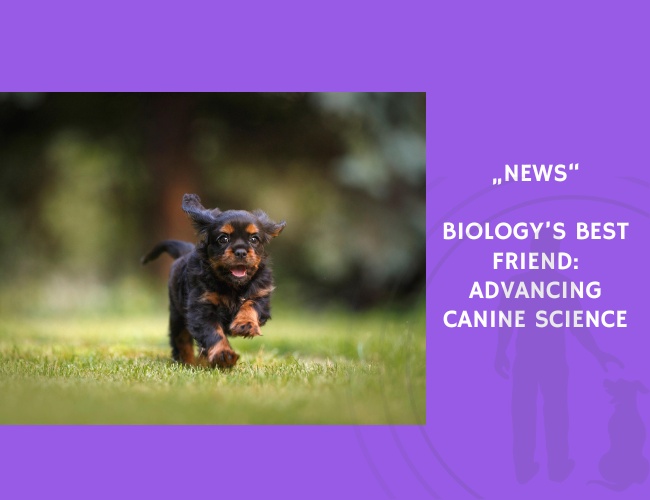
Domestic dogs (Canis familiaris) are among the most phenotypically diverse mammals, shaped by both domestication and close integration with humans. This makes them an ideal model for interdisciplinary research. However, according to Bryce et al. (2021), connections between fields such as genetics, ecology, physiology, and cognition have often been limited, slowing the development of a unified canine science.
The authors emphasize that canine evolutionary history—from wolves to modern household companions—offers a rare opportunity to study biology across multiple scales, from genomes to ecosystems. Yet, integrative and ecological perspectives remain underrepresented in research. By combining genomic insights with ecophysiology and comparative medicine, researchers can more fully capture the complexity of canine biology and its implications for both dogs and humans.
This review identifies the most compelling research questions in canine biology and encourages collaboration across disciplines to pursue them. Such integration could advance understanding of topics ranging from health and behavior to environmental adaptation, ultimately benefiting both companion animals and human society.
Source: Bryce, A. C. M., Davis, M. S., Gompper, M., Hurt, A., Koster, J. M., Larson, G., Ostrander, E., Udell, M., Urfer, S., Wirsing, A. J., & Jiménez, A. G. (2021). Biology’s best friend: Bridging disciplinary gaps to advance canine science. Integrative and Comparative Biology. Publication Date: May 13, 2021. Citations: 7.










