
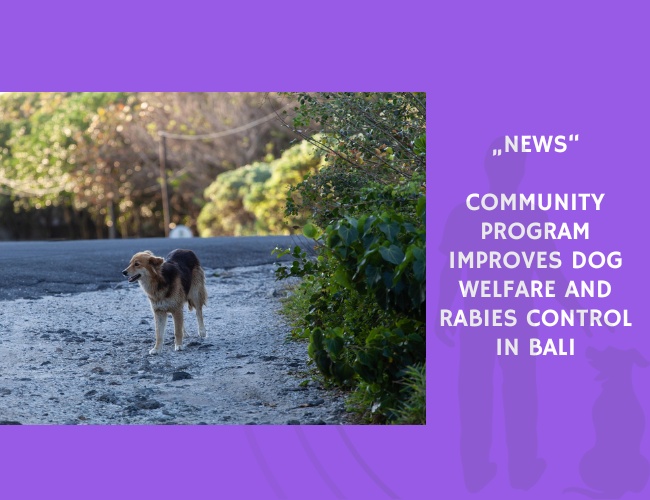
Rabies remains a major concern in many parts of Asia, but community participation offers a promising route to long-term control. A study by N. W. F. Utami and colleagues, published in Frontiers in Veterinary Science, assessed the success of Program Dharma—a community-driven initiative launched in Sanur, Bali—to promote dog health, welfare, and vaccination against rabies.
The project recruited local residents with experience in dog care or community health to serve as community-based agents. These individuals educated owners about welfare, monitored owned and unowned dogs, and encouraged vaccination and veterinary visits. Over the two-year program, vaccination coverage increased significantly, and no new rabies cases were reported among dogs or humans in the target area.
Baseline surveys showed that 41–49% of dogs had never been vaccinated, but after the program, this figure dropped to 11–19%. The percentage of dogs with visible welfare problems fell from 20.7% to just 2.7%, while roaming dog density decreased by up to 47% depending on the neighborhood. These results highlight the strong positive impact of local engagement on public health and animal welfare outcomes.
The evaluation also identified challenges. Maintaining accurate dog databases, sustaining volunteer participation, and managing veterinary costs without fostering dependency were ongoing issues. However, community members increasingly valued and supported the program financially, suggesting long-term sustainability and acceptance.
The success of Program Dharma demonstrates that community empowerment is key to effective rabies control. By fostering collaboration between residents, veterinarians, and local authorities, such initiatives can improve dog welfare, reduce disease risk, and strengthen human–animal relationships in densely populated areas.
Source: Utami, N. W. F., Agustina, K., Atema, K., Bagus, G., Girardi, J., Harfoot, M., Haryono, Y., Hiby, L., Irawan, H., Januraga, P., Kalalo, L., Purnama, S., Subrata, I. M., Swacita, I. B., Swarayana, I. M. I., Wirawan, D. N., & Hiby, E. (2019). Evaluation of Community-Based Dog Welfare and Rabies Project in Sanur, a Sub-district of the Indonesian Island Province of Bali. Frontiers in Veterinary Science, 6. Published July 9, 2019.










