
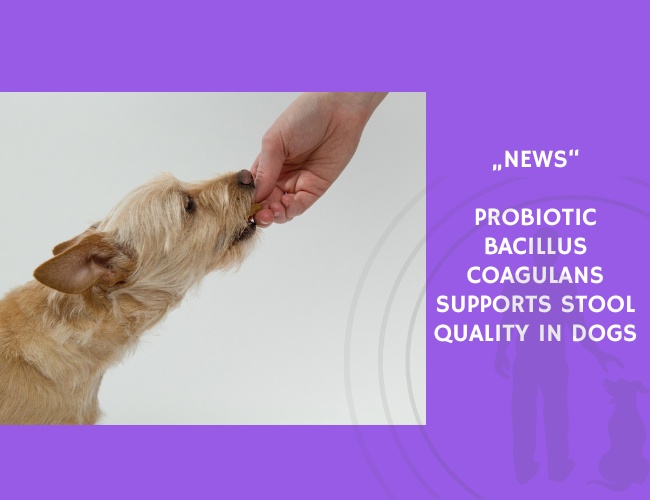
Sofia M. Wilson, Y. Kang, J. Wren, M. Millette, M. Kelly, E. Vinay, J. Menton, and K. S. Swanson (2024) examined whether supplementing dogs with Bacillus coagulans could mitigate digestive disturbances during sudden dietary transitions. Unlike many probiotics, B. coagulans produces spores that withstand food processing and gastrointestinal digestion, making it a promising candidate for pet nutrition.
Twelve adult pointer dogs were enrolled in a replicated 3 × 3 Latin square design, receiving either a control (placebo) or low- and high-dose B. coagulans supplementation alongside a commercial kibble diet. After 28 days, all dogs were abruptly switched to a canned diet, and fecal samples were collected at multiple time points to assess nutrient digestibility, microbial composition, and stool quality.
The researchers found that B. coagulans supplementation did not alter nutrient digestibility, food intake, or immune markers prior to dietary change. However, dogs receiving the probiotic produced firmer stools compared to controls. Notably, low-dose supplementation increased the abundance of Faecalibacterium, a beneficial gut bacterium. While the abrupt diet shift caused looser stools and significant microbial shifts, B. coagulans modulated key bacteria such as E. coli, Faecalibacterium, and Prevotella copri, suggesting a stabilizing influence on the gut ecosystem.
Although the probiotic did not fully prevent disruptions caused by sudden dietary changes, the results indicate that B. coagulans may help maintain stool quality and support gut health in dogs. Importantly, supplementation showed no adverse effects, reinforcing its potential as a safe dietary additive.
Source: Wilson, S. M., Kang, Y., Wren, J., Millette, M., Kelly, M., Vinay, E., Menton, J., & Swanson, K. S. (2024). PSIX-16 Effects of Bacillus coagulans GBI-30, 6086 on nutrient digestibility, fecal characteristics and metabolites, immunity, and microbiota of healthy adult dogs subjected to an abrupt diet change. Journal of Animal Science.










