
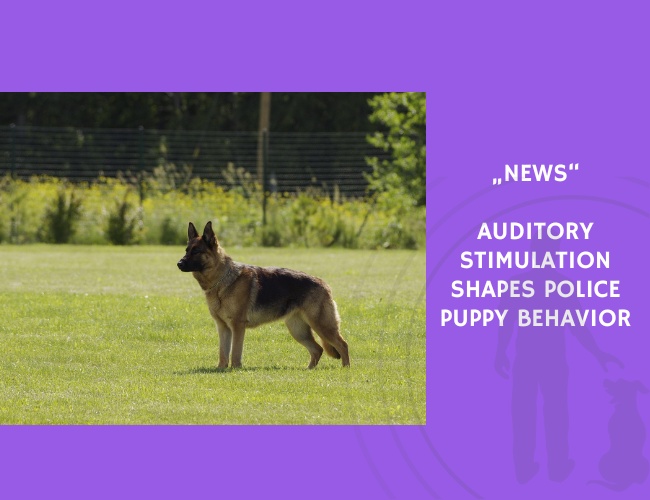
Early development is a critical period for shaping the behavior and adaptability of working dogs. Alves and colleagues (2018) tested whether auditory stimulation using music, radio, and environmental sounds such as car noises, sirens, and gunshots would influence the outcomes of puppy testing in police dog candidates. The study involved 67 puppies from 12 litters, including German Shepherds, Belgian Malinois, Dutch Shepherds, and crosses, divided into two groups: one following a standard socialization protocol and the other receiving additional auditory stimulation.
The puppies were assessed at 7 weeks of age through a 9-situation behavioral test designed to evaluate human interaction, reactions to handling, and responses to environmental stimuli. Results revealed that auditory stimulation produced significant behavioral differences, with group variations in interaction scores and reactivity. Interestingly, no sex differences were observed, but breed-related differences suggested that genetics also played a role in shaping noise responses.
The findings indicate that controlled sound exposure during puppyhood can influence behavioral development, potentially improving adaptability in environments where sudden or loud noises are common. However, the authors note that more extensive studies with physiological measures and long-term follow-ups are needed to determine whether these early effects translate into adult police dog performance.
This research underlines the importance of early environmental experiences in working dog training programs and may inform breeders and trainers seeking to optimize resilience and social adaptability in both working and companion dogs.
Source: Alves, J., Santos, A., Lopes, B., & Jorge, P. (2018). Effect of Auditory Stimulation During Early Development in Puppy Testing of Future Police Working Dogs. Topics in Companion Animal Medicine, 33, 100–104.










