
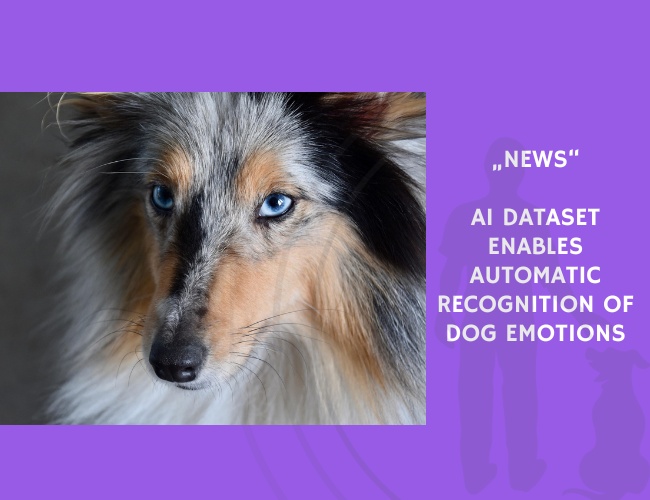
Presented at the Ninth International Conference on Animal-Computer Interaction, this pioneering study by Fernanda Hernández-Luquin and collaborators demonstrates how computer vision and machine learning can be used to classify emotional states in dogs using natural images. The project bridges ethology and technology, aiming to create non-invasive digital systems that can interpret and respond to canine emotions in real-world settings.
The researchers constructed the Dog Emotions in the Wild (DEBIw) dataset, consisting of 15,599 images of dogs displaying four emotion categories: aggression, anxiety, contentment, and fear. All images were sourced directly from the internet and manually labeled by multiple human taggers through a web-based interface, ensuring diverse data representation across breeds, contexts, and postures.
Using a suite of state-of-the-art image classification algorithms—including AutoML-based architectures—the team achieved a macro-average F1 score of 0.67. This is particularly notable given that the model processed raw, unsegmented images without any pre-cleaning or landmark annotation, demonstrating the potential of deep learning for emotion detection in uncontrolled environments.
The authors emphasize that their approach provides a non-invasive, easily retrainable, and scalable method for implementing dog emotion–aware computational systems. Beyond its scientific contribution, this work holds promise for practical applications such as welfare monitoring, behavioral analysis, and training support, where emotion recognition can improve dog–human communication and well-being.
By establishing a benchmark dataset and proving the feasibility of automated canine emotion recognition, Hernández-Luquin et al. have opened new pathways for integrating AI with animal welfare research. Their findings support the long-term goal of creating adaptive, emotion-sensitive systems that respond ethically and intelligently to dogs’ affective states.
Source: Hernández-Luquin, F., Escalante, H. J., Villaseñor-Pineda, L., Reyes-Meza, V., Pérez-Espinosa, H., & Gutiérrez-Serafín, B. (2022). Dog emotion recognition from images in the wild: DEBIw dataset and first results. In Proceedings of the Ninth International Conference on Animal-Computer Interaction. Published December 5, 2022.










