
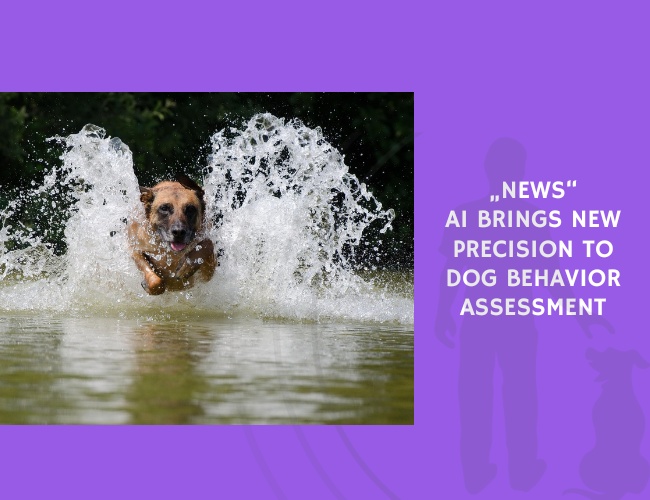
Published in Scientific Reports, this case study by Nareed Farhat, Teddy Lazebnik, A. Zamansky, and colleagues introduces a computational paradigm for dog behavioral testing. Traditional assessment methods—such as questionnaires, direct observation, and expert scoring—require substantial time and expertise and are vulnerable to human bias. The authors propose a digital alternative to enhance objectivity and scalability.
The team tested 53 dogs using components of a standard Stranger Test, in which dogs encounter a neutral unfamiliar person. Expert behaviorists scored each dog’s coping style, while owners or trainers completed the Canine Behavioral Assessment and Research Questionnaire (C-BARQ). Simultaneously, the system collected precise positional data from dogs’ movement trajectories.
An unsupervised clustering analysis of these trajectories identified two primary behavioral groups. These clusters showed clear differences in the stranger-directed fear C-BARQ category and effectively separated relaxed dogs from those exhibiting heightened or maladaptive responses toward strangers. This suggests that canine movement patterns carry meaningful behavioral information detectable through computational methods.
Using the cluster structure, the researchers built a machine learning classifier capable of predicting expert-scored coping styles with 78% accuracy. They also developed regression models that predicted specific C-BARQ categories with notable precision—particularly Owner-Directed Aggression (mean average error = 0.108) and Excitability (mean square error = 0.032).
The case study underscores the strong potential of AI-assisted behavioral testing. Automated systems can streamline assessment workflows, improve reliability, and offer scalable tools for shelters, working-dog programs, and researchers. Such digital approaches may expand the future of dog behavior science by combining expert insight with machine precision.
Source: Farhat, N., Lazebnik, T., Zamansky, A., et al. (2023). Digitally-Enhanced Dog Behavioral Testing. Scientific Reports. Published July 26, 2023.










