
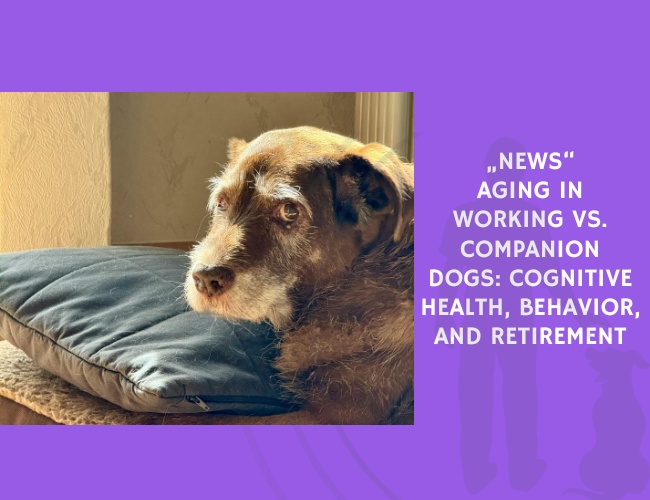
Published in Animal Behavior and Cognition, this 2025 study by Sarah Krichbaum and Lucia Lazarowski investigates how aging affects cognitive and behavioral traits in working detection dogs compared to untrained companion dogs. While age-related cognitive changes—specifically canine cognitive dysfunction (CCD)—are well documented in companion dogs, it has remained unclear whether these effects also apply to dogs who undergo rigorous training and maintain mentally demanding working roles.
The study used validated behavioral assessment tools, including the Dog Impulsivity Assessment Scale (DIAS), the Positive and Negative Affect Scale (PANAS), and the Canine Cognitive Dysfunction Rating Scale (CCDR). These tools measured key traits relevant to working success: impulsivity, emotional reactivity, focus, interest, energy, and cognitive function.
Findings showed that although detection dogs exhibited the typical age-related increase in CCD, it was not linked to retirement decisions. In contrast to untrained companion dogs, detection dogs demonstrated no significant aging-related declines in energy, motivation, or behavioral engagement—traits essential for working dog performance.
This suggests that working dogs experience a differential aging effect, in which training, environmental stimulation, and continued cognitive work help preserve behavioral function. Companion dogs, lacking this structured cognitive engagement, showed greater declines in areas such as interest, responsiveness, and emotional stability.
The authors conclude that working dogs are not retired due to cognitive decline, but for other factors such as physical health, workload, or operational needs. They propose that lifelong cognitive and behavioral stimulation—as found in working environments—may protect against some age-related behavioral deterioration.
These findings highlight the importance of enriched environments, structured training, and mental stimulation for supporting healthy aging in dogs—whether working or companion.
Source: Krichbaum, S., & Lazarowski, L. (2025). Differential Effects of Aging on Behavior in Working and Untrained Companion Dogs. Animal Behavior and Cognition. Published November 1, 2025.










