
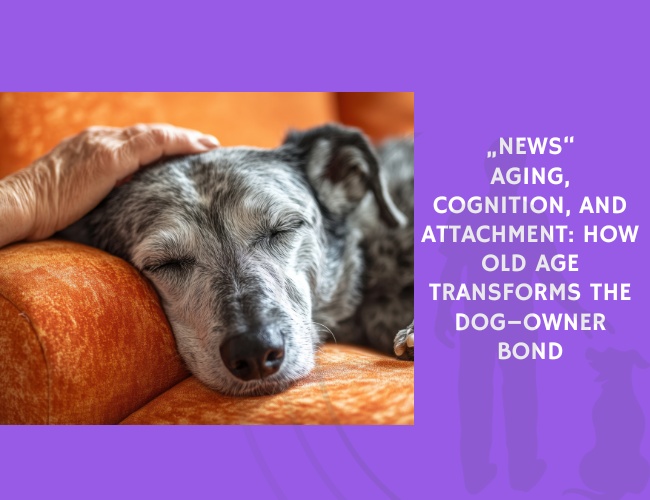
Conducted across three interrelated studies, this research explored how aging shapes cognition, selective attention, and emotional bonding in companion dogs. The first study developed a novel Cognitive Evaluation Scale (CES) and combined it with spatial cognition tasks to detect age-related cognitive impairment. Results revealed that aged dogs scored lower on memory and reversal learning tasks compared to adults, confirming measurable cognitive decline and validating CES as a sensitive diagnostic tool.
The second study introduced a new selective attention assessment protocol designed to measure how dogs divide attention between their owner and unfamiliar individuals. While adult dogs showed strong, targeted attention toward their owners, aged dogs displayed a greater tendency toward passive attention—orienting without cognitive engagement. They struggled to maintain focus on social stimuli once these disappeared from view, reflecting diminished working memory and reduced social processing.
The third study applied the Strange Situation Test—adapted from human attachment research—to evaluate how aging affects emotional bonding. Findings showed that old dogs maintain secure attachment patterns (comfort in the owner’s presence and distress upon separation), indicating that emotional security remains largely intact. However, subtle shifts in emotional behavior emerged: older dogs displayed less playfulness and more passive or ambivalent behaviors, suggesting a transformation rather than deterioration of the emotional bond.
Integrating results across all three studies, Mongillo concluded that while the foundational emotional connection between dogs and their owners remains resilient with age, aging brings qualitative changes in how attention and emotion are expressed. Cognitive decline may subtly reshape attachment behavior—not by weakening love or trust, but by altering how older dogs perceive, process, and express connection.
These findings strongly align with the Invisible Leash philosophy, which views attachment not as dependency but as mutual energetic awareness. In senior dogs, the Invisible Leash may persist as a deep, non-verbal bond that transcends sensory and cognitive limitations. Emotional resonance, more than responsiveness, defines the mature stage of connection—where calm presence replaces playful reciprocity as the primary form of communication.
Source: Mongillo, P. (2010). Cognitive and emotional aspects of the dog-owner relationship in aged companion dogs. Published February 1, 2010.










