
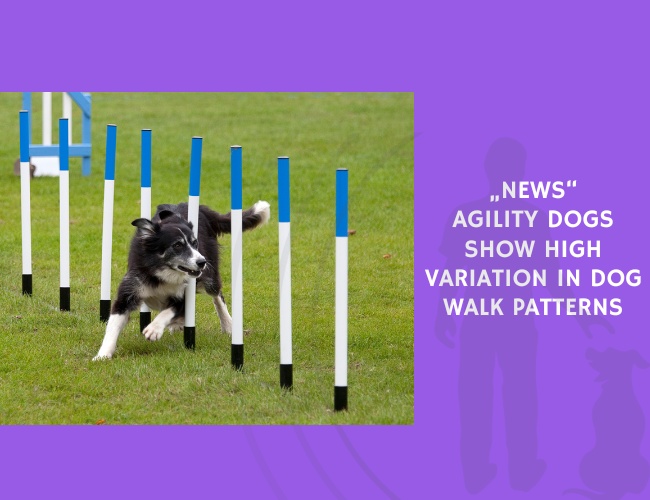
Published in PLoS ONE, J. K. DiMichele and colleagues analyzed 296 dogs competing at the 2021 UKI US Open to examine how canine athletes place their paws when performing the dog walk obstacle. The researchers aimed to identify consistent biomechanical patterns based on end-contact behavior, limb coordination, and lead preference.
Video evaluations revealed high variability in both paw placements and obstacle performance times. The average completion time was 2.26 seconds (SD = 1.03), with similar performance speeds across all height classes. A slight majority (63%) of dogs hit the up ramp with the right front paw first, suggesting a tendency toward running on the left lead. On the down ramp, 58% of dogs again made first contact with the right front paw, showing no consistent directional bias.
Despite expecting clear paw placement patterns, the study found no reliable gait or footfall signatures that could reliably define dog walk performance styles. The authors suggest that factors such as training method, physical conformation, speed, and handler influence may contribute to this variability. This variability complicates attempts to classify agility movement patterns using traditional visual assessment.
Given the large variation observed, the authors recommend the use of advanced gait analysis technologies (e.g., motion sensors, force plates, high-speed 3D kinematic tracking) in future studies to better understand canine agility biomechanics. Such data will be crucial for reducing injury risk and optimizing training protocols for canine athletes.
Source: DiMichele, J.K., Pechette Markley, A., Shoben, A., & Kieves, N. (2024). Evaluation of variability in performance and paw placement patterns by dogs completing the dog walk obstacle in an agility competition. PLoS ONE. Published March 8, 2024.










