
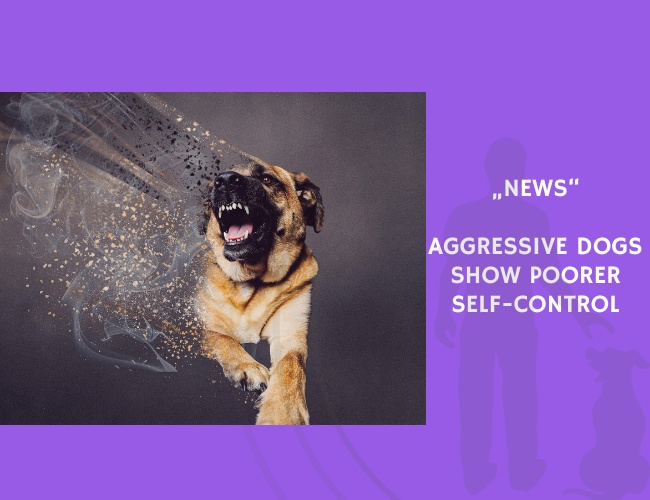
Impulse control plays a crucial role in maintaining stable and safe behavior in dogs. In their study published in Frontiers in Veterinary Science, Elena Gobbo and Manja Zupan Šemrov examined how aspects of inhibitory control—the ability to suppress impulsive responses—relate to aggressive behavior in dogs. The findings highlight that deficits in self-control, more than cognitive inhibition, contribute significantly to aggressive reactivity.
The research involved 30 dogs—16 police dogs and 14 privately owned dogs—matched for sex, age, and breed group. The study employed two behavioral paradigms: the delay of gratification test to measure self-control, and the reversal learning test to assess cognitive inhibition. Aggressive reactivity was evaluated using a standardized aggression-eliciting behavioral test.
Results showed that police dogs displayed higher aggression levels and poorer self-control compared to privately owned dogs. Across all subjects, dogs exhibiting biting or snapping behaviors had significantly lower ability to tolerate delayed rewards, indicating impulsivity. In contrast, no link was found between aggression and cognitive inhibition, suggesting that aggression stems primarily from emotional impulsivity rather than cognitive flexibility deficits.
The authors concluded that self-control—measured as the ability to delay gratification—plays a key role in managing aggression. This finding emphasizes the importance of incorporating patience-building and impulse-control exercises in dog training, especially for working dogs under high stress. For handlers and trainers, understanding that aggression may arise from poor inhibitory control rather than disobedience can improve training outcomes and animal welfare.
Ultimately, the study underscores that aggression in dogs is not purely a behavioral issue but also a reflection of underlying cognitive and emotional regulation capacities. Enhancing a dog’s ability to control impulses may therefore be central to fostering safer and more cooperative human–dog interactions.
Source: Gobbo, E., & Šemrov, M. Z. (2022). Dogs Exhibiting High Levels of Aggressive Reactivity Show Impaired Self-Control Abilities. Frontiers in Veterinary Science, 9. Published March 24, 2022.










