
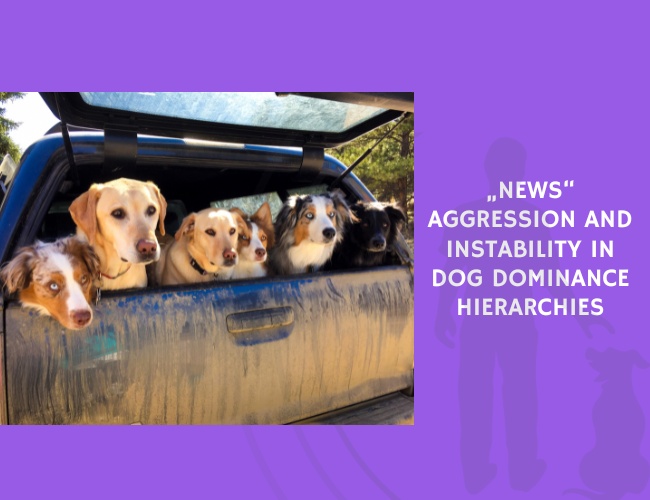
Published in the Proceedings of the Royal Society B, this study examined the structure, stability, and behavioural costs of dominance hierarchies in free-living dog populations. Using social network analysis, the researchers assessed how aggression, ritualized dominance, and submission behaviours vary with rank stability across multi-male, multi-female groups of dogs living in natural conditions.
The findings show that the middle regions of the dominance hierarchy—where relationships were least stable—were also the most aggressive. Contrary to predictions from high-skew social models (where aggression typically increases with rank), dogs occupying central hierarchical positions exhibited the highest frequency and intensity of aggressive interactions. This instability suggests that uncertainty about relative rank, rather than social ambition, drives much of the observed conflict.
Importantly, the study highlights that hierarchy instability carries energetic and social costs: prolonged chases, ritualized displays, and the risk of injury. In stable upper or lower ranks, aggression was notably reduced, implying that clarity in social standing acts as a behavioural regulator. These results offer a nuanced view of canine social systems, demonstrating that dominance in dogs operates through dynamic negotiation rather than static authority.
Silk and colleagues propose that these findings reshape our understanding of dominance theory in canids, particularly when applied to domestic and semi-domestic populations. In practical terms, behavioural uncertainty—rather than inherent aggression—may explain tension in group-living dogs or multi-dog households. Within the framework of Invisible Leash philosophy, such instability reflects the energetic cost of unclear leadership and inconsistent communication, emphasizing the importance of emotional clarity and predictable cues in maintaining harmony among dogs.
Source: Silk, M., Cant, M., Cafazzo, S., Natoli, E., & Mcdonald, R. (2019). Elevated aggression is associated with uncertainty in a network of dog dominance interactions. Proceedings of the Royal Society B: Biological Sciences, 286. Published July 3, 2019.










