Fearfulness and anxiety-related behaviors are among the most common welfare challenges in dogs, with noise sensitivity, fear of novel situations, and fear of heights causing significant distress. Hakanen et al. (2020) conducted one of the largest surveys to date, gathering data from 13,700 Finnish pet dogs to identify factors linked to non-social fear.
After applying inclusion criteria, the researchers analyzed thousands of cases: 9,613 dogs with fear of fireworks, 9,513 with fear of thunder, 6,945 with fear of novel situations, and 2,932 with fear of surfaces and heights. Logistic regression revealed clear environmental associations. Dogs with frequent non-social fear were more likely to be poorly socialized during puppyhood, neutered, owned by inexperienced handlers, or living in urban environments. They were also less likely to live with other dogs, participate in training, or engage in activities with their owners.
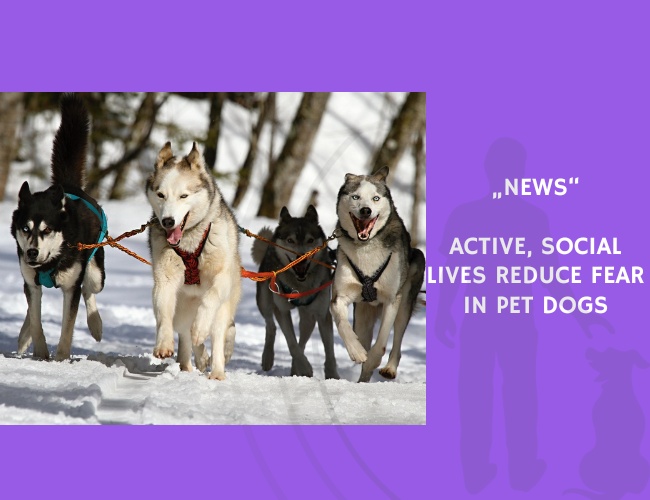
In contrast, dogs with active and socially rich lives—including companionship with other dogs, structured training, and frequent owner interaction—showed significantly lower levels of non-social fear. The study also identified breed-related tendencies, with small breeds displaying more frequent non-social fears, suggesting a genetic contribution.
The findings underscore the importance of early socialization, continued engagement in activities, and companionship in promoting canine mental health. Active, socially enriched environments not only reduce fear but also enhance the overall well-being of pet dogs.
Source: Hakanen, E., Mikkola, S., Salonen, M., Puurunen, J., Sulkama, S., Araújo, C., & Lohi, H. (2020). Active and social life is associated with lower non-social fearfulness in pet dogs. Scientific Reports, 10. Published August 13, 2020.