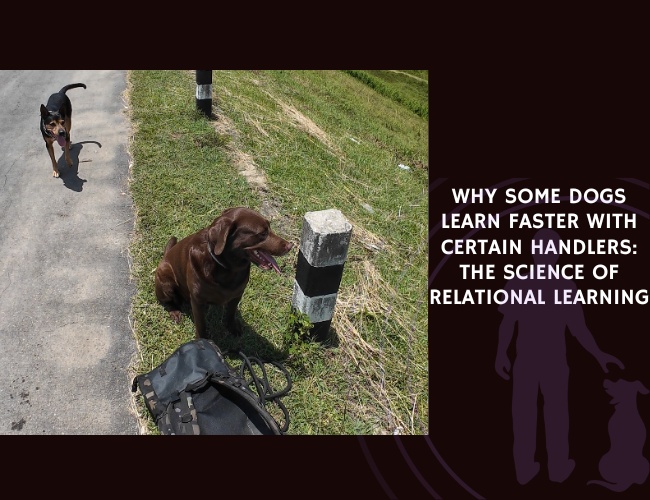
In this study, M. Udell, K. Lord, Erica N. Feuerbacher, and C. Wynne challenge the popular narrative that canine cognition evolved primarily through close companionship with humans. Instead, they propose that the majority of the world’s dogs exist as free-ranging scavengers living on the periphery of human societies—neither fully wild nor domesticated in the conventional pet sense.
The authors argue that many cognitive traits often celebrated as specially evolved for human cooperation—such as sensitivity to human gestures, gaze, or emotional cues—are actually rooted in basic conditioning, social learning, and biological traits shared with other canids. When dogs are highly socialized and made dependent on humans, these natural learning mechanisms are expressed more strongly, giving the impression of specialized adaptation.
The study emphasizes that the true cognitive differences between dogs and wolves lie not in abstract intelligence but in socialization, foraging strategies, reproductive behavior, and survival flexibility. Dogs are more promiscuous, reproduce faster, and are less capable hunters but more efficient scavengers than wolves—traits that shaped their ecological and behavioral success near humans.
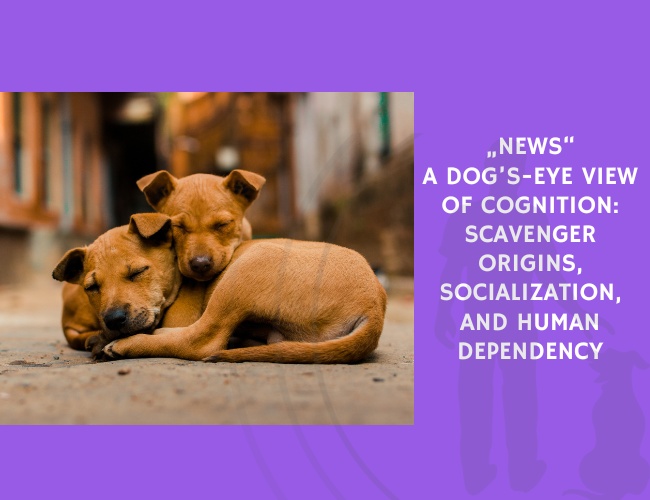
Udell and colleagues stress that pet dogs represent only a small subset of the global dog population. Free-ranging dogs tend to avoid human contact, survive through scavenging, and form loose social networks. This perspective places dogs not as intentionally crafted companions, but as successful ecological opportunists whose cognition reflects adaptability rather than domesticated devotion.
The authors conclude that understanding canine cognition requires shifting focus from human-centered interpretations to a broader behavioral and ecological context. Dogs’ cognitive strengths are better explained through learning, flexibility, and survival-based social behavior—rather than a romanticized narrative of human-designed evolution.
Source: Udell, M., Lord, K., Feuerbacher, E. N., & Wynne, C. (2014). A Dog’s-Eye View of Canine Cognition. Published 2014.