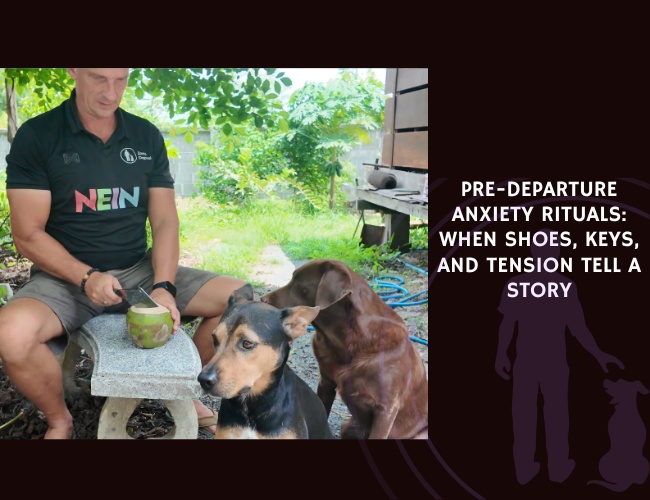
Introduction: The Invisible Moment Before Goodbye
You reach for your keys, and your dog’s entire demeanor shifts. The playful companion from moments ago now stands rigid, eyes locked on your every movement. Your hand touches the doorknob, and the whining begins—soft at first, then urgent. This isn’t separation anxiety that starts when you leave. This is something that happens before you even step out the door.
Pre-departure anxiety rituals represent one of the most fascinating intersections of canine cognition, emotional memory, and the deep bond between humans and their dogs. These moments—when your dog begins to stress not from your absence, but from the mere anticipation of it—reveal how profoundly our companions learn to read our patterns, predict our movements, and emotionally prepare for what comes next.
But here’s what many dog owners don’t realize: this anticipatory distress isn’t just about separation. It’s about conditioning, about the way neutral objects become emotional triggers, and about how your dog’s brain has learned to associate everyday rituals with the feeling of being left behind. Understanding this process opens the door to genuine healing, not just management.
Let us guide you through the science, the signals, and the solutions that can help transform these tense pre-departure moments into calm, connected transitions. 🧡
The Science Behind the Anxiety: How Your Dog’s Brain Learns to Predict
Classical Conditioning and the Power of Association
Your keys don’t inherently mean anything to your dog. Neither do your shoes, your jacket, or the way you check your phone before leaving. These are what behavioural scientists call “neutral stimuli”—they have no emotional meaning until your dog’s brain learns to connect them with something else.
Through classical conditioning, these ordinary objects become powerful emotional triggers. Every time you pick up your keys and then leave, your dog’s brain creates a link between the sound of jingling metal and the distress of being alone. Over time, this association becomes so strong that the keys alone can trigger the full anxiety response—elevated heart rate, increased cortisol, and the activation of what neuroscientists call the PANIC/GRIEF system in your dog’s emotional brain.
This isn’t a choice your dog makes. It’s an automatic response that happens below the level of conscious control, deep within the limbic system where emotions are processed and memories are formed.
The Amygdala’s Role in Anticipatory Fear
When your dog encounters a pre-departure cue, the amygdala—a small, almond-shaped structure deep in the brain—springs into action. This region serves as your dog’s threat-detection system, and in dogs with pre-departure anxiety, it becomes hyperreactive to these learned signals.
Research suggests that this amygdala hyperreactivity mirrors patterns observed in PTSD-like anticipatory states. Just as a combat veteran might experience heightened fear responses to sounds or situations that remind them of trauma, your dog experiences genuine distress in response to cues that predict separation. The amygdala doesn’t distinguish between remembered threat and present danger—it simply activates the fear response.
What makes this particularly challenging is that repeated exposure to pre-departure stress can alter neuroplasticity in the fear and safety circuits of your dog’s brain. The amygdala-hippocampus-prefrontal cortex axis—the neural network responsible for processing fear, context, and emotional regulation—can undergo maladaptive changes. Fear pathways strengthen, while the prefrontal cortex’s ability to inhibit anxiety weakens. This is why pre-departure anxiety often becomes more intense over time rather than improving on its own.
The Polyvagal Perspective: From Safety to Defense
The Polyvagal Theory offers another lens for understanding what happens to your dog during these pre-departure moments. Your dog’s autonomic nervous system has different states: a calm, socially engaged state where connection and exploration happen naturally, and a defensive mobilization state where sympathetic arousal takes over.
Pre-departure cues act as predictive threat signals, shifting your dog from that relaxed, connected state into defensive mode. You can see this transition happen in real time: the soft, relaxed body suddenly becomes tense, vagal tone decreases (meaning less parasympathetic “rest and digest” activity), and your dog enters a state of hypervigilance.
This autonomic shift explains why your dog might seem fine one moment and completely distressed the next—it’s not a sudden decision, but a neurobiological cascade triggered by learned associations. 🧠
The 15 Most Common Pre-Departure Triggers
Understanding which specific cues trigger your dog’s anxiety helps you target your training efforts effectively. Here are the most frequently reported pre-departure triggers across anxious dogs:
- Keys jingling or being picked up – Often the most powerful auditory cue
- Putting on specific shoes – Work shoes versus casual footwear distinction
- Grabbing a coat or jacket – Particularly if you have a “leaving” jacket
- Picking up bags, purses, or backpacks – The physical act of gathering belongings
- Checking or putting phone in pocket – Modern departure ritual that dogs quickly learn
- Moving toward the door – Directional movement triggers anticipation
- Opening the closet – If this is where departure items are stored
- Alarm going off at specific time – Morning alarms predict work departures
- Shower or grooming routine – When it happens at consistent pre-departure times
- Coffee maker sounds – Morning routine markers
- Turning off lights or TV – Environmental changes signaling departure
- Checking the weather or looking out window – Observational behaviors before leaving
- Changing clothes – From casual to work attire
- Specific verbal phrases – “I’ll be back soon” or “Be good” become conditioned cues
- Owner’s emotional shift – Subtle changes in energy, pace, or stress level
Action step: Identify your dog’s top 3-5 triggers from this list and begin pattern disruption training with those specific cues first.
Reading the Signs: Behavioral Indicators That Reveal Internal States
The Spectrum of Pre-Departure Stress Signals
Pre-departure anxiety doesn’t always look the same across all dogs. Some are vocal, others become silent and withdrawn. Understanding the full range of behavioral indicators helps you recognize when your dog is entering that anticipatory stress state—often earlier than you might realize.
High-Intensity Indicators:
- Shadowing behavior: Following you from room to room, maintaining close physical proximity with an anxious quality rather than playful curiosity
- Pre-emptive vocalization: Whining, barking, or howling that begins when you start your departure routine, not when you leave
- Pacing and restlessness: Inability to settle, repetitive movement patterns that suggest internal agitation
- Destructive positioning: Moving toward doors, windows, or areas associated with your exit, sometimes engaging in destructive behavior even before you leave
Moderate-Intensity Indicators:
- Stress yawning: Repetitive yawning that’s not related to tiredness, often accompanied by lip-licking
- Body tension: Stiff posture, raised hackles, or a tucked tail that signals defensive arousal
- Hypervigilance: Intense focus on your movements, following you with their eyes, startling easily at sounds
- Decreased playfulness: Sudden disinterest in toys, treats, or activities they normally enjoy
Subtle Indicators:
- Freezing: Becoming completely still, as if hoping stillness might prevent the departure
- Drooling: Excess salivation that appears during the pre-departure routine
- Trembling: Subtle shaking, particularly visible in the legs or jaw
- Avoidance behaviors: Moving away from you or hiding, attempting to make themselves small
The combination of these behaviors, their intensity, and how early they appear in your departure sequence all provide valuable information about the depth of your dog’s anticipatory anxiety.

The Temporal Threshold: When Does Anxiety Actually Begin?
One of the most revealing aspects of pre-departure anxiety is its timing. Many owners notice their dog’s stress only in the final moments before leaving, but careful observation often reveals that anxiety begins much earlier—sometimes ten, fifteen, or even twenty minutes before actual departure.
This temporal pattern tells us something important: your dog has learned a complex sequence of cues, not just a single trigger. You might start your morning routine, and your dog seems fine. But as you move through each step—showering, getting dressed, gathering your belongings—your dog is tracking these patterns and predicting the outcome.
The earlier the anxiety appears, the more deeply ingrained the conditioned association has become. A dog who shows distress only when you touch the door handle has a different level of conditioning than one who becomes anxious when you step into the shower at your usual departure time.
Multi-Sensory Processing: How Dogs Read Your Departure Rituals
Dogs don’t rely on a single sense to predict your departure—they integrate information across multiple sensory channels to build a complete picture of what’s coming.
Auditory cues can be incredibly salient: the specific sound of keys, the particular ringtone you use for work calls, the beep of your coffee maker at a certain time, or even the sound of your footsteps when you’re moving with purpose rather than casual movement.
Visual cues matter just as much: the sight of specific clothing (your work shoes versus your at-home slippers), you picking up your bag, the visual sequence of you moving toward the door, or even the position of objects like your jacket or wallet.
Olfactory and tactile cues play subtler but powerful roles: changes in your scent when you apply cologne or perfume before leaving, the tension in your body that your dog can feel during a goodbye pat, or the specific quality of your touch when you’re in a hurry.
Individual dogs may be more reactive to certain sensory modalities than others, but most are processing all of this information simultaneously, creating a rich, multi-layered prediction of what comes next. 🐾
Body Language Decoder: 12 Physical Signs Your Dog Is Anxious
Beyond obvious behaviors, your dog’s body language reveals internal stress states. Learn to read these subtle and not-so-subtle physical signals:
- Whale eye – Showing the whites of eyes, often with a worried expression
- Pinned or flattened ears – Pulled back against the head rather than natural position
- Tucked tail – Low or between legs, lacking natural carriage
- Lowered body posture – Appearing smaller, crouching, or slinking movements
- Raised hackles – Hair standing up along spine from arousal or stress
- Tense facial muscles – Tight mouth, furrowed brow, tense jaw
- Rapid panting – When not hot or after exercise, indicates stress
- Excessive lip licking – Quick, repetitive tongue flicks across the nose or lips
- Yawning when not tired – Stress yawning has a different quality than sleepy yawning
- Stiff, frozen body – Rigid posture with minimal movement
- Sweaty paws – Leaving damp paw prints on floors (visible on tile or wood)
- Trembling or shaking – Visible tremors in legs, jaw, or entire body
Training tip: Video your dog during your departure routine to catch subtle body language you might miss in the moment. Compare footage weekly to track improvement.
The Human Factor: When Your Stress Becomes Their Stress
Emotional Contagion and the Bidirectional Bond
Here’s a truth that might be difficult to hear: your own stress, guilt, or hurried movements before departure can significantly amplify your dog’s anticipatory anxiety. This phenomenon, called emotional contagion, reflects how deeply interconnected you and your dog truly are.
Dogs are extraordinary readers of human emotional states. They pick up on subtle changes in your facial expressions, your body tension, the pace of your movements, and even chemical signals in your scent. When you’re anxious about leaving—perhaps feeling guilty about going to work, stressed about being late, or worried about how your dog will cope—your sympathetic nervous system activates. Your breathing becomes shallow, your movements quicken, your facial muscles tense.
Your dog perceives all of this as a signal that something threatening is happening. Your stress becomes confirmation that there is, indeed, something to fear about this departure. This bidirectional emotional feedback loop can transform a manageable situation into an intensely anxious one for both of you.
Research on emotional synchrony shows that when an owner maintains a calm, regulated state, it can help co-regulate the dog’s emotional system. But the reverse is equally true: an owner’s dysregulation can dysregulate the dog.
The Guilt-Anxiety Cycle
Many dog owners develop a particular pattern around departures: they feel guilty about leaving, so they engage in elaborate, emotionally charged goodbyes. They might speak in apologetic, high-pitched tones, give excessive affection, offer special treats, or engage in prolonged eye contact and touching.
While the intention is to provide comfort, these behaviors often achieve the opposite effect. By treating departure as a significant, emotional event, you’re confirming to your dog that there is something to be concerned about. You’re inadvertently teaching your dog that your leaving is, indeed, a big deal—something that requires special rituals, heightened emotion, and preparation.
This doesn’t mean you should be cold or dismissive. Instead, it suggests that neutral, calm consistency creates more emotional safety than elaborate, emotionally laden rituals.
Predictability and the Double-Edged Sword
Routine can be both helpful and harmful when it comes to pre-departure anxiety. On one hand, predictable patterns give your dog a sense of control—they know what to expect, which can reduce uncertainty. On the other hand, if your predictable routine has become strongly associated with anxiety, that very predictability becomes a long, drawn-out warning signal.
Consider a typical morning routine: alarm at 6:30 AM, shower at 6:45, coffee at 7:00, dressed by 7:15, keys and bag at 7:25, departure at 7:30. If your dog has learned this sequence and experiences distress throughout it, you’re essentially giving your dog a one-hour runway of mounting anxiety rather than a sudden departure.
Strategic variability—performing departure-associated actions at random times when you’re not leaving, or occasionally altering your sequence—can help break rigid associations and reduce the predictive power of any single cue. Through the Invisible Leash approach, we learn that awareness, not rigid routine, guides the path toward emotional balance.
10 Signs Your Own Stress Is Amplifying Your Dog’s Anxiety
Self-awareness is the first step to becoming an effective co-regulator. These behaviors indicate you’re transmitting stress to your dog during departures:
- Moving faster than normal – Hurried, rushed movements versus deliberate pace
- Shallow, rapid breathing – Chest breathing instead of deep diaphragmatic breaths
- Tense shoulders and facial expressions – Physical tension your dog can observe and feel
- High-pitched or apologetic voice tone – Conveying guilt, worry, or uncertainty
- Excessive farewell rituals – Prolonged goodbyes, multiple returns, over-touching
- Checking phone repeatedly – Distracted, anxious energy about being late
- Verbal expressions of guilt – “I’m so sorry I have to leave” or “I’ll miss you so much”
- Avoiding eye contact – Guilt-driven avoidance that signals something is wrong
- Sighing or visible frustration – Audible stress markers
- Multi-tasking during goodbye – Trying to pet dog while gathering items, showing divided attention
Self-regulation practice: Before each departure, take 30 seconds for three deep breaths and a body scan. Ask yourself: “Am I genuinely calm, or just pretending?”
Training and Transformation: Rebuilding Emotional Associations
Beyond Desensitization: The Case for Emotional Recalibration
Traditional desensitization approaches to pre-departure anxiety typically involve gradual exposure: picking up your keys without leaving, putting on your shoes and sitting back down, touching the door handle and returning to your activities. The goal is extinction training—breaking the conditioned association by presenting the cue without the outcome.
While this approach has merit, it often addresses symptoms rather than root causes. True healing requires emotional recalibration—teaching your dog to experience these cues within a completely different emotional context, one characterized by safety, calm, and connection rather than threat.
Emotional recalibration focuses on creating positive or neutral emotional states in the presence of departure cues, rather than simply trying to reduce the fear response through exposure. This involves pairing the cues with experiences that activate your dog’s social engagement system and build feelings of safety.
The NeuroBond Approach to Pre-Departure Calm
Through the NeuroBond approach, we understand that true transformation happens through emotional coherence training—teaching your dog to maintain emotional stability during pre-separation routines through what we call “limbic alignment.”
This process involves several key elements:
Calm-state modeling: Before beginning your departure routine, you consciously regulate your own physiological state. This means deepening your breathing, relaxing your facial muscles, moving with deliberate calm rather than hurried tension. Your regulated nervous system becomes a co-regulator for your dog’s system.
Contextual neutrality training: You systematically practice departure-associated actions throughout the day when you’re not actually leaving, ensuring your dog experiences these cues in a variety of emotional contexts—sometimes during play, sometimes during rest, sometimes during training—so they lose their singular predictive power.
Emotional anchoring: You create specific calm-state anchors—perhaps a particular scent, a specific touch pattern, or a breathing rhythm—that you consistently pair with relaxation. These anchors then become tools you can activate during actual pre-departure moments to help shift your dog’s emotional state.
Progressive autonomy building: Rather than creating dependence on your presence for emotional regulation, you gradually teach your dog to maintain calm independently by building confidence in brief absences that end positively and predictably.
The goal isn’t to teach your dog to tolerate anxiety—it’s to eliminate the anxiety by fundamentally changing what departure cues mean on an emotional level. This is the essence of emotional resilience. 🧡
20 Pattern Disruption Exercises to Practice Daily
These exercises break the predictive power of departure cues by presenting them in non-departure contexts. Practice 5-10 of these daily:
- Pick up keys and make coffee – Then sit and drink it
- Put on shoes and watch TV – Remain seated for 20 minutes
- Grab your bag and start laundry – Continue with household tasks
- Touch door handle and return to read a book – No actual exit
- Put on coat and cook dinner – Wear it while cooking
- Check phone and play with dog – Immediately engage in play
- Open door and close it – Without stepping outside
- Set alarm and take a nap – Different context for alarm sound
- Jingle keys while petting dog – Pair with positive touch
- Put on work shoes during weekend – Break time-based associations
- Gather belongings and sit back down – Complete gathering, then stay
- Walk toward door and turn around – Directional movement without exit
- Say goodbye phrases and continue activity – Verbal cues without departure
- Start departure routine then take shower – Break sequence expectations
- Pick up keys during playtime – Pair with high-value positive activity
- Put on jacket indoors for an hour – Extended wearing without leaving
- Check weather then settle in for movie – Observation without departure
- Organize bag contents while sitting – Bag interaction without purpose
- Open and close closet multiple times – Access without gathering items
- Touch all departure items in sequence then cook – Full routine without exit
Implementation note: Remain completely calm and matter-of-fact during these exercises. Don’t make them a “big deal” or draw excessive attention to what you’re doing.
Practical Relaxation Protocols
Specific techniques can support the recalibration process:
Patterned breathing exercises: Your breathing directly influences your autonomic state, and dogs synchronize with their owner’s breathing patterns. Before beginning your departure routine, practice slow, deep breathing—four counts in, seven counts out. Your dog will often naturally begin to breathe more slowly alongside you. This parasympathetic activation helps prevent the sympathetic surge that drives anxiety.
Scent anchoring: Introduce a specific calming scent (such as lavender or chamomile) exclusively during deeply relaxed moments with your dog—perhaps during massage, after exercise, or during quiet evening time. Once this scent is strongly associated with relaxation, introduce it during pre-departure routines to activate that calm state.
Rhythmic touch protocols: Gentle, consistent touch with a predictable rhythm can activate oxytocin release and promote feelings of security. This might involve slow, firm strokes along your dog’s body, gentle circular massage on the chest, or consistent pressure against the shoulder. The key is consistency and calm—this isn’t frantic petting but deliberate, grounding contact.
Place training with positive association: Teach your dog that a specific location (a bed, mat, or crate) is associated with safety, treats, and relaxation. Practice having your dog go to this place during various activities throughout the day, always pairing it with positive experiences. During pre-departure, asking your dog to go to their place shifts focus to a trained behavior and activates associations with safety rather than abandonment.
The Question of Timing and Consistency
Transformation doesn’t happen overnight, but it also doesn’t require months of intensive work if approached systematically. Most dogs begin showing measurable improvement within two to four weeks of consistent emotional recalibration training.
The key variables for success include:
- Consistency across all departures: Every single exit becomes a training opportunity, whether you’re leaving for thirty seconds or eight hours
- Commitment to calm-state modeling: Your emotional regulation becomes non-negotiable, regardless of whether you’re running late or feeling stressed
- Gradual progression: Starting with very brief absences and slowly increasing duration only when your dog demonstrates continued calm
- Absence of punishment: Understanding that your dog’s anxiety isn’t misbehavior but an emotional state that requires support and reconditioning
Remember that setbacks are normal—a particularly long absence, a change in household routine, or external stressors can temporarily increase anxiety. These moments aren’t failures but opportunities to reinforce the training and rebuild the calm associations.
8 Evidence-Based Calming Scents for Scent Anchoring
Not all scents are created equal for canine stress reduction. These scents have research support or strong anecdotal evidence for calming properties:
- Lavender (Lavandula angustifolia) – Most studied scent for canine relaxation, reduces cortisol and restless behavior
- Chamomile (Roman chamomile) – Gentle sedative properties, promotes calm and reduces arousal
- Vanilla – Simple, pleasant scent associated with comfort and security
- Coconut – Mild, sweet scent that dogs generally find pleasant
- Ginger – Can reduce stress-related nausea and promote calm focus
- Valerian root – Strong calming effects, though scent is not appealing to all humans
- Sweet marjoram – Reduces hyperactivity and promotes restful states
- Frankincense – Deepens breathing and promotes meditative calm states
Safety notes: Always use pet-safe formulations, never apply essential oils directly to dog’s skin, use diffusers at low intensity in well-ventilated spaces, discontinue if any signs of irritation occur. Consult your veterinarian before use, especially for pregnant, nursing, or health-compromised dogs.
Application method: Introduce chosen scent exclusively during deeply relaxed states (post-walk, during massage, evening rest time) for 7-10 days before beginning to use during pre-departure routines.
Physiological Markers: What’s Happening Inside Your Dog’s Body
The Cortisol Connection
When your dog encounters pre-departure cues, the hypothalamic-pituitary-adrenal (HPA) axis activates, triggering cortisol release. This stress hormone prepares the body for threat—increasing blood glucose, suppressing non-essential functions, and heightening alertness.
What’s particularly revealing in pre-departure anxiety is that cortisol levels can rise significantly during the anticipatory phase—sometimes nearly as much as during actual separation. Your dog’s body is experiencing the stress of abandonment before you’ve even left.
Chronic elevation of cortisol has significant health implications: impaired immune function, digestive issues, cognitive changes, and increased susceptibility to anxiety in other contexts. This is why addressing pre-departure anxiety isn’t just about behavior—it’s about overall health and wellbeing.
Heart Rate Variability and Autonomic Balance
Heart rate variability (HRV)—the variation in time intervals between heartbeats—provides insight into autonomic nervous system balance. High HRV indicates good parasympathetic tone and emotional flexibility, while low HRV suggests sympathetic dominance and stress.
During pre-departure anxiety, dogs show decreased HRV as their systems shift from rest-and-digest to fight-or-flight. This autonomic imbalance doesn’t just feel bad—it interferes with learning, makes emotional regulation more difficult, and perpetuates the anxiety cycle.
Interventions that increase vagal tone and improve HRV—such as rhythmic breathing, gentle touch, and calm social engagement—help restore autonomic balance and create conditions where new, calmer associations can form.
The Neuroplastic Window: How Chronic Stress Reshapes the Brain
Repeated pre-departure stress doesn’t just create temporary distress—it actively reshapes neural pathways. The amygdala-hippocampus-prefrontal cortex network undergoes maladaptive neuroplastic changes that entrench anxiety patterns.
Specifically:
- Amygdala strengthening: The fear center becomes more reactive, with lower thresholds for activation
- Hippocampal impairment: Context processing and memory consolidation become affected, making it harder for your dog to differentiate safe from threatening situations
- Prefrontal cortex weakening: The brain’s “executive control” system loses its ability to inhibit amygdala activation, reducing top-down emotional regulation
But here’s the hopeful news: neuroplasticity works in both directions. The same mechanisms that allow anxiety to become entrenched also allow new, healthier patterns to form. Through consistent emotional recalibration training, you’re not just managing symptoms—you’re actively reshaping neural pathways toward resilience. 🧠
10 Veterinary-Approved Supplements for Anxiety Support
These supplements may support emotional regulation alongside behavioral training. Always consult your veterinarian before adding supplements:
- L-Theanine – Amino acid promoting calm without sedation, often combined with other calming agents
- Probiotics (specific strains) – Gut-brain axis support; strains like Bifidobacterium longum may reduce anxiety
- Omega-3 fatty acids – Anti-inflammatory properties support brain health and emotional regulation
- Melatonin – Regulates sleep-wake cycles and has mild anxiolytic properties
- Tryptophan – Precursor to serotonin, may improve mood and reduce stress
- Valerian root – Herbal anxiolytic with calming effects, especially for situational anxiety
- Chamomile extract – Gentle calming properties with anti-anxiety effects
- Passion flower – Traditionally used for anxiety, may enhance GABA activity
- Thiamine (Vitamin B1) – Supports nervous system function, deficiency linked to stress sensitivity
- Adaptogenic mushrooms – Reishi and lion’s mane may support stress resilience and cognitive function
Important disclaimer: Supplements are supportive tools, not primary solutions. They work best when combined with behavioral modification. Dosing must be appropriate for your dog’s weight and health status. Some supplements interact with medications—veterinary consultation is essential, not optional.
Quality matters: Choose supplements from reputable companies with third-party testing. Look for products specifically formulated for dogs rather than human supplements.
Special Considerations: When Pre-Departure Anxiety Intersects With Other Issues
Generalized Anxiety and Comorbidity
Pre-departure anxiety rarely exists in isolation. Many dogs with anticipatory separation distress also show:
- Noise sensitivities: Heightened fear responses to thunderstorms, fireworks, or household sounds
- Stranger anxiety: Difficulty with unfamiliar people or situations
- Resource guarding: Increased protectiveness over food, toys, or space
- Compulsive behaviors: Repetitive licking, tail chasing, or shadow chasing
When pre-departure anxiety co-occurs with these issues, it suggests a broader pattern of amygdala hyperreactivity and compromised emotional regulation. Treatment needs to address the overall anxiety architecture, not just departure-specific triggers.
The Role of Genetics and Early Experience
Some dogs are more predisposed to anxiety than others due to genetic factors affecting temperament and stress responsiveness. Breeds selected for close human bonding and working partnership—such as herding dogs, companion breeds, and some sporting dogs—may show higher rates of separation-related distress.
Early life experiences also play a crucial role. Dogs who experienced:
- Premature separation from their mother and littermates
- Inconsistent early caregiving
- Trauma or neglect during critical developmental periods
- Limited socialization to various environments and situations
…may have altered stress response systems that make them more vulnerable to anxiety, including pre-departure distress.
Understanding these predisposing factors doesn’t mean accepting anxiety as inevitable—it means approaching treatment with realistic expectations and comprehensive support that addresses the dog’s overall emotional needs.
Medical Rule-Outs and Medication Considerations
Before attributing all pre-departure behaviors to psychological anxiety, it’s important to rule out medical causes:
- Cognitive dysfunction: In older dogs, confusion and disorientation can intensify during routine changes
- Pain conditions: Arthritis or other painful conditions may worsen when a dog anticipates being alone and unable to access comfort
- Gastrointestinal issues: Stress-related digestive problems can create genuine physical discomfort during pre-departure times
- Sensory deficits: Declining vision or hearing can increase general anxiety and make departures more distressing
In cases of severe pre-departure anxiety, particularly when it significantly impacts quality of life or prevents successful behavior modification, medication may be a valuable tool. Anti-anxiety medications, when prescribed and monitored by a veterinarian, can reduce baseline anxiety enough to make training effective. They’re not a substitute for behavior modification but can be an important bridge to success.
12 Red Flag Behaviors Requiring Immediate Veterinary Consultation
Some anxiety presentations indicate medical intervention should be considered alongside or before behavioral training:
- Self-injury during absences – Broken teeth from biting crate bars, torn claws from scratching, lacerations
- Extreme destruction focused on escape – Damaged doors, windows, or walls indicating panic-driven escape attempts
- Complete refusal of food or water – Not eating or drinking throughout absences
- Elimination despite perfect house-training – Particularly if diarrhea or multiple locations
- Excessive salivation creating puddles – Beyond mild drooling, indicates extreme stress
- Continuous vocalization for hours – Nonstop barking or howling throughout absence
- Vomiting or regurgitation – Stress-induced digestive upset during pre-departure or absence
- Aggressive behavior during pre-departure – Redirected aggression toward people or other pets
- Complete immobility or shutdown – Total freezing, non-responsiveness to environment
- Rapid, shallow breathing persisting – Hyperventilation that doesn’t resolve quickly
- Loss of bladder/bowel control – Involuntary elimination from extreme fear
- No improvement after 6+ weeks – Correct training implementation showing zero progress
Why these matter: These behaviors indicate anxiety levels that may require medical intervention—not because training won’t work, but because the dog’s distress level prevents them from learning. Medication can create a neurological window where training becomes possible.
Creating Lasting Change: A Comprehensive Protocol
Week One: Baseline Assessment and Pattern Disruption
Days 1-3: Observation
- Document every pre-departure ritual you perform, noting the sequence and timing
- Record when your dog first shows anxiety signs during this sequence
- Note which specific cues trigger the strongest reactions
- Track your own emotional state during departure preparation
Days 4-7: Initial Pattern Disruption
- Begin performing departure-associated actions randomly throughout the day when you’re not leaving
- Practice picking up keys, putting on shoes, touching the door handle, and gathering your bag at unpredictable times
- Immediately engage in normal activities afterward (sitting down, making tea, starting a different task)
- Notice how your dog begins to show reduced reactivity when cues no longer perfectly predict departure
Week Two: Calm-State Modeling and Scent Anchoring
Daily practice:
- Introduce your chosen calm scent during three 15-minute relaxation sessions with your dog
- Practice patterned breathing before and during any departure-associated action
- Consciously regulate your movements to be deliberate rather than rushed
- Notice and celebrate any reduction in your dog’s early anxiety signals
Departure modification:
- Begin actual departures with your new calm protocol: deep breathing, slow movements, minimal emotional fanfare
- Keep goodbyes brief, neutral, and consistent
- Return without elaborate greetings, waiting until your dog is calm before offering attention
Week Three: Progressive Desensitization with Emotional Recalibration
Daily training sessions (3-5 per day, 5-10 minutes each):
- Go through your complete departure routine while your dog is in their designated calm place
- Provide gentle praise and treats for remaining relaxed
- Actually leave for extremely brief periods (10-30 seconds initially)
- Return while your dog is still calm, before any anxiety appears
- Gradually increase duration only when your dog consistently maintains calm
Integration:
- Introduce your scent anchor during pre-departure routine
- Combine rhythmic touch with departure cues
- Practice place training during various daily activities, not just departures
Week Four and Beyond: Building Resilience and Autonomy
Continued progression:
- Extend absence duration gradually, always returning before anxiety appears
- Vary your departure routine while maintaining calm emotional state
- Practice departures at different times of day
- Occasionally skip traditional cues entirely to prevent rigid associations
Independence building:
- Create positive associations with your dog being in a separate room while you’re home
- Practice “pretend” departures where you leave and return unpredictably
- Enrich your dog’s alone time with puzzle toys, calming music, or enrichment activities
- Celebrate your dog’s growing confidence in handling various departure scenarios
Through moments of Soul Recall—those instances where your dog chooses calm even in the presence of once-triggering cues—you’ll witness the profound transformation that’s possible when emotional memory is rewritten through consistent, supportive reconditioning. 🐾
The Neuroscience of Why It Works: Understanding the Mechanism of Change
Your Dog’s Brain as a Filing System
Imagine your dog’s brain as an elaborate filing system where every experience gets stored with emotional tags attached. When your dog first heard keys jingling, that sound went into a neutral file—just another noise with no particular meaning. But the moment you picked up those keys and left, your dog’s brain created a new connection: “Keys → Owner Leaves → Distress.” That file now carries a bright red “THREAT” label.
Here’s where it gets fascinating: every time this sequence repeats, the brain doesn’t just reference that file—it strengthens it. The neural pathways connecting the sound of keys to the feeling of abandonment become wider, faster, and more automatic. This is neuroplasticity in action, and it’s why pre-departure anxiety can intensify over time rather than fading.
But neuroplasticity is a double-edged sword. The same mechanism that created this anxious association can also dismantle it and build something new in its place. When you practice picking up your keys while maintaining a calm state, when your dog experiences those sounds without the predicted outcome, when departure cues get re-filed under “Neutral” or even “Positive,” you’re literally rewiring neural pathways.
The Oxytocin Connection: Why Calm Presence Beats Treats
You might wonder why emotional recalibration emphasizes calm presence over reward-based training. The answer lies in oxytocin—often called the “bonding hormone” but more accurately understood as a neurochemical that promotes social connection, reduces fear, and facilitates emotional regulation.
When you’re genuinely calm and regulated in your dog’s presence, oxytocin levels rise in both of you. This isn’t something you can fake—your dog reads your actual physiological state through multiple channels including scent, micro-expressions, and the quality of your touch. Authentic calm creates a neurochemical environment where anxiety can’t maintain its grip.
Oxytocin does something treats cannot: it directly modulates amygdala activity, reducing fear responses at their source. While food rewards can create positive associations, they work through different neural pathways and don’t address the underlying emotional state the same way social bonding does. A dog who’s genuinely anxious often won’t even take treats—the amygdala has hijacked the system, and appetite gets suppressed during threat response.
This is why the NeuroBond framework emphasizes limbic alignment over operant conditioning. You’re not training your dog to perform a behavior despite anxiety—you’re eliminating the anxiety itself by creating a felt sense of safety that emerges from genuine emotional connection.
Predict. Panic. Pattern.
Cues become catalysts. The rustle of keys or reach for shoes turns neutral moments into emotional alarms encoded deep within your dog’s limbic memory.
Anticipation rewires calm. Each repetition fortifies the amygdala’s warning loop, teaching fear to arrive before goodbye ever comes.

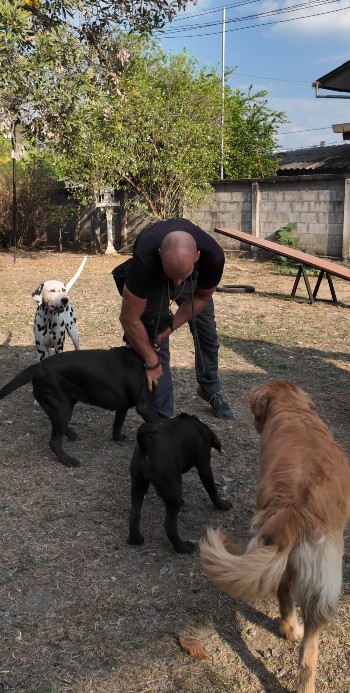
Rituals can be rewritten. Slow desensitization, altered routines, and your composed energy teach the nervous system a new truth—departure need not mean distress.
12 Oxytocin-Boosting Activities to Strengthen Emotional Regulation
These activities naturally increase oxytocin—the neurochemical that reduces anxiety and strengthens your bond. Incorporate 3-5 daily:
- Slow, deliberate petting – Long, firm strokes down the back and sides (not frantic patting)
- Mutual gazing – Gentle eye contact for 30-60 seconds promotes bonding neurochemicals
- Synchronized walking – Walking together at matched pace builds connection
- Massage sessions – Gentle circular massage on chest, shoulders, and base of ears
- Training with positive reinforcement – Learning together activates reward and bonding systems
- Calm together-time – Simply sitting together reading or watching TV with physical contact
- Grooming rituals – Brushing, bathing (if dog enjoys), nail care with calm energy
- Playing tug or fetch – Interactive play that includes pauses for connection
- Hand-feeding meals or treats – Direct food sharing promotes trust and bonding
- Sleeping near each other – Physical proximity during rest builds felt safety
- Breathing together – Consciously synchronizing your breath with your dog’s
- Exploration walks – Leisurely sniff walks where dog chooses direction promotes trust
Implementation strategy: These aren’t separate “training exercises” but integrated daily life activities. The goal is authentic connection, not mechanical implementation. Your genuine presence and calm engagement activate the bonding neurochemistry.
Memory Reconsolidation: Rewriting the Past
One of the most powerful mechanisms underlying emotional recalibration is called memory reconsolidation. Here’s how it works: every time your dog recalls a memory—like the association between keys and abandonment—that memory briefly becomes unstable, open to modification. This is called the “reconsolidation window.”
During this window, if your dog experiences something different than expected, the brain has an opportunity to update that memory file. When keys jingle but you don’t leave, when you exhibit calm rather than hurried stress, when the predicted threat doesn’t materialize, the brain can actually rewrite the emotional content of that memory.
This isn’t just suppressing the fear response—it’s fundamentally altering what that memory means. The original association doesn’t get erased completely, but it gets overwritten with new information. Over time, with consistent reconsolidation experiences, the emotional charge of pre-departure cues diminishes. They stop being threat signals and become neutral aspects of daily life.
This is why consistency matters so profoundly. Every single departure is an opportunity for memory reconsolidation. Every time you maintain calm, every time the pattern doesn’t lead to distress, you’re providing your dog’s brain with evidence that updates the original fear memory. 🧠
🔑 Pre-Departure Anxiety: The 7 Phases of Transformation
From Keys and Tension to Calm, Connected Departures
Phase 1: Recognition & Assessment
Understanding Your Dog’s Anxiety Timeline
Your dog’s anxiety doesn’t start when you leave—it begins when your brain decides to leave. Through classical conditioning, neutral cues like keys or shoes become powerful emotional triggers. The amygdala activates threat detection 10-20 minutes before actual departure, creating a neurobiological cascade of stress.
• Shadowing behavior and following you room to room
• Pre-emptive whining or barking before you touch the door
• Body tension: pinned ears, tucked tail, whale eye
• Stress signals: yawning, lip-licking, pacing
• Timing: Note exactly when anxiety first appears in your routine
Document your complete departure routine from start to finish. Video record a typical morning to catch subtle signals you might miss. Identify your dog’s top 3-5 triggering cues. This baseline assessment guides your entire training approach.
Phase 2: Pattern Disruption
Breaking the Predictive Power of Departure Cues
When you perform departure-associated actions without actually leaving, you begin to weaken the conditioned association. Your dog’s brain learns that keys don’t always predict abandonment. This cognitive flexibility is the foundation of memory reconsolidation.
• Pick up keys and make coffee, then sit down
• Put on shoes and watch TV for 20 minutes
• Touch door handle and return to reading
• Grab your bag and start laundry
• Put on coat and cook dinner
• Open door, close it, continue with normal activities
Within 3-5 days, you’ll notice reduced reactivity to previously triggering cues. Your dog may still glance at you when you pick up keys, but the intense anxiety response begins to fade. This is neuroplasticity in action—the brain updating its prediction model.
Phase 3: Calm-State Modeling
Becoming Your Dog’s Emotional Co-Regulator
Through the NeuroBond approach, we understand that your regulated nervous system directly influences your dog’s autonomic state. When you’re genuinely calm, oxytocin levels rise in both of you, modulating amygdala activity and reducing fear responses at their neurological source.
• Practice patterned breathing: 4 counts in, 7 counts out
• Consciously relax facial muscles and shoulders
• Move deliberately, not hurriedly
• Speak in low, calm tones if needed
• Take 30 seconds for self-regulation before starting routine
• Your authenticity matters—dogs read your actual physiological state
Pretending to be calm while feeling stressed doesn’t work. Your dog reads micro-expressions, scent changes, breathing patterns, and body tension. You can’t fake calm—you must cultivate it. If you’re late and stressed, that’s data your dog interprets as threat confirmation.
Phase 4: Scent & Touch Anchoring
Creating Calming Sensory Associations
Choose one calming scent: lavender, chamomile, or vanilla. For 7-10 days, introduce this scent ONLY during deeply relaxed moments—post-walk, during massage, evening rest. Once strongly associated with calm, begin using it 5 minutes before departure. The olfactory-limbic connection activates remembered relaxation states.
• Slow, firm strokes along spine (not quick patting)
• Gentle circular massage on chest or shoulders
• Consistent pressure—grounding, not exciting
• Match your breathing to a calm rhythm
• Practice daily during non-departure times first
• Oxytocin release promotes feelings of security and connection
Don’t introduce sensory anchors during high anxiety—they’ll become associated with distress rather than calm. Build positive associations first during relaxed states, then gradually introduce during mild pre-departure moments, finally using during your full routine.
Phase 5: Environmental Optimization
Creating a Safe Zone That Supports Calm
The environment where your dog spends alone time significantly impacts their autonomic state. Comfortable temperature, appropriate lighting, background noise that masks triggering sounds, and your scent presence all reduce baseline stress and support emotional regulation.
• Comfortable bed with your recently worn clothing
• Classical music or white noise (masks external triggers)
• Appropriate lighting (never completely dark)
• Fresh water in non-tip bowl
• Long-lasting enrichment (frozen Kong, puzzle feeders)
• Window management if visual triggers are problematic
• Comfortable temperature throughout your absence
Some dogs find windows enriching, others find them triggering. Some prefer enclosed crate spaces, others need freedom. Observe your dog’s natural preferences during calm times and honor them rather than imposing a “should” setup.
Phase 6: Progressive Desensitization
Building Duration Through Successful Repetition
Every time your dog recalls the keys-departure association, that memory becomes briefly unstable—open to modification. When the predicted outcome doesn’t occur (you don’t leave, or you return quickly before anxiety builds), the brain can rewrite the emotional content of that memory.
Week 1: 10-30 second departures (3-5 times daily)
Week 2: 1-2 minute departures with calm return
Week 3: 5-10 minute departures
Week 4: 15-30 minute departures
• Always return BEFORE anxiety appears
• If your dog shows stress, you’ve progressed too fast
• Neutral departures and calm returns—no dramatic goodbyes
Never push duration to “test” if your dog can handle it. Every experience of panic during training reinforces the fear pathway you’re trying to eliminate. Progress must be so gradual that your dog simply stops noticing departures trigger anxiety.
Phase 7: Integration & Resilience Building
Maintaining Progress and Preventing Regression
New neural pathways require 60-90 days to fully consolidate. Even when your dog appears completely calm during departures, the old fear pathways still exist—just weakened. Consistency during this consolidation period determines whether new patterns become permanent or old anxiety resurfaces.
• Continue pattern disruption exercises 2-3 times weekly
• Maintain calm-state modeling for all departures
• Vary departure times and routines to prevent new rigid patterns
• Practice occasional “pretend” departures
• Keep safe zone enriching and comfortable
• Monitor for early warning signs during stressful life changes
Major life changes, unusually long absences, or household disruptions can temporarily increase anxiety. This doesn’t mean failure—it means returning to earlier phase protocols for a few days, then resuming normal departures. The foundational work you’ve done makes recovery much faster.
🔍 Pre-Departure Anxiety Across Different Situations
Prevention focus: Start micro-departure training immediately. Build independence gradually from day one. Avoid rigid routines. Expected timeline: 2-3 weeks to establish healthy patterns. Key advantage: Clean slate with no prior conditioning to overcome.
Trauma-informed approach: Build secure attachment first before independence training. Slower progression needed. May require 6-8 weeks or longer. Watch for trauma-specific triggers. Celebrate incremental progress—reduction in pacing is progress even if whining continues.
Age-related factors: Consider cognitive dysfunction, sensory decline, pain. Medical intervention often needed alongside behavioral work. Extremely consistent routines help. Shorter alone-time tolerance. Strong scent markers especially important for vision/hearing impaired dogs.
Emotional contagion factor: One anxious dog can spread anxiety to calm housemates. Train separately initially, then reintegrate. A genuinely calm dog can sometimes co-regulate anxious dog—but don’t force it. Separate during departures if one dog’s distress triggers others.
Mild (whining, following): 2-4 weeks typical progress. Moderate (pacing, destructiveness): 6-8 weeks with consistent protocol. Severe (self-injury, escape attempts): Requires veterinary behaviorist, likely medication plus 3-6 months structured work.
8+ hour work days: May need dog walker, daycare, or lunch-break visits during training. Work-from-home: More opportunities for practice but must avoid accidentally creating dependency. Irregular schedules: Actually beneficial—unpredictability prevents rigid associations.
Timeline Expectation: Mild anxiety = 2-4 weeks | Moderate = 6-8 weeks | Severe = 3-6 months with professional support
Daily Time Investment: Week 1-2: 30-45 minutes of active training | Week 3+: 15-20 minutes maintenance
Success Indicator: Your dog remains calm when you perform 80% of your departure routine without showing stress signals
Red Flag for Help: Zero improvement after 4 weeks of correct implementation OR self-injury occurring
Most Common Mistake: Progressing duration too quickly—return before anxiety appears, not after
Pre-departure anxiety reveals the profound depth of the NeuroBond—your dog’s emotional system so attuned to yours that the mere anticipation of separation triggers genuine distress. But this same sensitivity becomes your greatest training asset. Through calm-state modeling and emotional recalibration, you’re not teaching your dog to tolerate your absence. You’re fundamentally changing what departure means on a neurological level.
The Invisible Leash reminds us that true guidance flows through awareness and emotional presence, not physical control or rigid rules. When you regulate your own nervous system before departures, when you practice pattern disruption with genuine calm, when you create environmental safety—you’re activating the invisible connection that transcends physical proximity.
Those moments of Soul Recall, when your dog chooses calm even as you reach for your keys, represent more than behavioral success. They’re evidence of rewritten emotional memories, of neural pathways shifted from threat to safety, of trust that deepens precisely because it’s been tested and rebuilt. That’s the essence of Zoeta Dogsoul—where neuroscience meets soul, where understanding brain mechanisms doesn’t diminish the profound bond but illuminates its beauty.
© Zoeta Dogsoul – Where neuroscience meets soul in dog training
The Prefrontal Cortex’s Role in Emotional Control
Your dog’s prefrontal cortex serves as the brain’s “executive control center”—the region responsible for regulating emotional responses, making thoughtful decisions, and inhibiting automatic reactions. In dogs with chronic pre-departure anxiety, this region becomes less effective at controlling amygdala activation.
Think of it like this: the amygdala is the alarm system, and the prefrontal cortex is supposed to evaluate whether the alarm is justified and turn it off if it’s a false alarm. In anxious dogs, the prefrontal cortex has lost some of its authority—the amygdala alarm keeps blaring, and the control center can’t quiet it down.
Emotional recalibration training strengthens prefrontal cortex function. When your dog experiences departure cues while remaining calm, the prefrontal cortex learns it can successfully regulate the emotional response. This neurological success builds on itself, gradually restoring the brain’s natural hierarchy where thoughtful evaluation can modulate automatic fear responses.
This is also why forced exposure without emotional support can backfire. If you repeatedly trigger the amygdala without giving the prefrontal cortex the tools to regulate that response, you’re just reinforcing the pattern of dysregulation. True healing requires building the prefrontal cortex’s capacity alongside reducing amygdala reactivity.
Environmental Management Strategies: Creating the Physical Foundation for Calm
Designing Your Dog’s Safe Zone
The physical environment where your dog spends alone time significantly impacts their emotional state. A well-designed safe zone provides sensory comfort, reduces triggering stimuli, and creates positive associations with your absence.
Location considerations: Your dog’s safe zone should be in a part of the home where they feel naturally comfortable—not isolated or unfamiliar. For many dogs, this might be a bedroom where your scent is strongest, a living room with comfortable furniture, or a quiet corner away from street noise. The key is choosing a space your dog already associates with relaxation.
Physical setup: Include a comfortable bed or crate with your recently worn clothing that carries your scent. This olfactory presence can be remarkably soothing, providing a sensory reminder of your connection even during absence. Add a blanket or item from your laundry rather than something freshly washed—your dog finds comfort in your actual scent, not detergent.
Boundary definition: Some dogs benefit from clear spatial boundaries like a crate or exercise pen, while others need freedom of movement. If your dog finds enclosed spaces comforting, a crate with the door open during training (and potentially closed during short absences) can create a den-like sanctuary. If confinement increases anxiety, ensure your dog has access to multiple rooms while still defining a primary “home base.”
Resource placement: Position water, any long-lasting enrichment items, and comfort objects within easy reach. The safe zone should have everything your dog might need, reducing the impulse to pace or search for resources during your absence.
Safe Zone Setup Checklist: 15 Essential Elements
Create an optimal environment for emotional regulation with these key components:
Physical Comfort:
- Orthopedic bed or comfortable crate – Appropriate size with proper support
- Your recently worn clothing – Unwashed shirt or towel with your scent
- Appropriate temperature control – Heating or cooling as needed for comfort
Sensory Management: 4. Background sound source – Speaker for music, white noise machine, or calm radio 5. Appropriate lighting – Soft lamp or natural light, never harsh or completely dark 6. Calming scent diffuser – If using scent anchoring, positioned safely out of reach
Resources: 7. Fresh water in stable bowl – Non-tip design, easily accessible 8. Long-lasting enrichment items – Frozen Kong, puzzle feeders, chew items 9. Familiar comfort items – Favorite blanket, well-loved (safe) toy
Safety Elements: 10. Removed hazards – No items dog could destroy and ingest, no electrical cords 11. Secure space definition – Baby gates, closed doors, or exercise pen if needed 12. Window management – Curtains, film, or positioning to reduce triggering views
Monitoring (Optional): 13. Pet camera – Allows you to check anxiety levels and time improvement 14. Temperature monitor – Ensures environment remains comfortable 15. Automated treat dispenser – For timed positive reinforcement (once anxiety reduces)
Setup timing: Prepare the safe zone while you’re home, allowing your dog to explore and settle in the space during calm periods before using it during actual departures.
Window Management: The Visual Trigger Factor
Windows present a complex challenge in pre-departure anxiety management. For some dogs, being able to see outside provides enrichment and reduces boredom. For others—particularly those with territorial tendencies or high arousal to movement—windows become sources of additional stress.
Observing your dog’s window behavior: Does your dog settle near windows when you’re home, calmly watching the world? Or do they bark at passersby, show tension when people walk by, or become hypervigilant? Most importantly: can your dog see you leave through a window? Watching you walk away often intensifies anxiety, as it provides visual confirmation of the feared event.
Strategic modifications: If windows are triggering, consider temporary modifications during the training period. Frosted window film allows light in while obscuring the view, curtains or blinds can be partially closed to limit visual access to your departure route, or you might designate your dog’s safe zone in a room without direct view of your exit path.
Alternatively, for dogs who find windows calming, position their safe zone with a view that’s engaging but not overstimulating—perhaps overlooking a quiet garden rather than a busy street.
Background Noise: The Auditory Environment
Silence can actually amplify anxiety for many dogs. In a quiet environment, every small sound becomes noticeable and potentially alarming. Thoughtfully chosen background noise creates an auditory blanket that both soothes and masks triggering sounds from outside.
Types of beneficial sound:
- Classical music: Research consistently shows that classical music, particularly compositions with slow tempos and simple arrangements, reduces canine stress markers. The predictable patterns and absence of sudden dynamic changes create a calming auditory environment.
- Species-specific music: Several companies now produce music specifically composed for canine hearing ranges and preferences, often incorporating frequencies and rhythms that promote relaxation.
- White noise or nature sounds: Gentle rainfall, ocean waves, or consistent white noise can mask external sounds that might trigger alertness—car doors, footsteps, voices—while providing a soothing, unchanging backdrop.
- Audiobooks or talk radio: Some dogs find human voices comforting, as they create a sense of social presence even during physical absence. Choose content with calm, steady speaking rather than dramatic or loud presentations.
What to avoid: Television often includes sudden sounds, dramatic music, and unpredictable content that can increase rather than decrease arousal. If you do use TV, choose channels with consistent, calm programming rather than action, news, or shows with frequent commercial breaks.
Temperature and Lighting: The Comfort Fundamentals
Dogs regulate stress better when they’re physically comfortable. Temperature extremes—too hot or too cold—create additional physiological stress that compounds emotional anxiety.
Temperature considerations: Ensure your dog’s environment remains comfortable throughout your absence. If you adjust your home’s temperature when leaving, do so gradually and moderately. Extreme changes can trigger alertness and discomfort. In warm climates, ensure adequate ventilation or air conditioning. In cold weather, provide appropriate bedding and consider your dog’s coat type and cold tolerance.
Lighting strategies: Dogs generally feel more secure in spaces that aren’t completely dark or harshly bright. If you leave during daylight hours, natural light through windows (assuming windows aren’t triggering) usually provides the most comfortable illumination. For evening or early morning departures, consider leaving a lamp on with a warm, soft bulb rather than harsh overhead lighting.
Some owners find that maintaining consistent lighting—whether natural or artificial—helps establish a predictable environment that reduces anxiety. Sudden transitions from bright to dark when you leave can signal “something different is happening,” potentially triggering pre-departure associations.
Enrichment Activities: Positive Occupation During Alone Time
Strategic enrichment can shift your dog’s focus during the vulnerable early moments of your absence, providing positive occupation when anxiety might otherwise build.
Long-lasting food puzzles: Items like frozen Kong toys filled with appropriate treats, puzzle feeders that require problem-solving, or lick mats spread with dog-safe peanut butter or yogurt provide sustained engagement. The key is introducing these items only during your departures, creating positive associations with alone time.
Scent work opportunities: Hide small treats around your dog’s safe zone before leaving, encouraging natural foraging behaviors that are incompatible with anxiety. Sniffing and searching activate different neural pathways than fear responses, potentially interrupting the anxiety spiral before it fully develops.
Rotation of novel items: Rather than leaving the same toys available constantly, rotate enrichment items so there’s always something “new” (or at least not recently available) during alone time. Novelty captures attention and creates positive anticipation.
Important considerations: Introduce all enrichment items while you’re home first, ensuring your dog understands how to interact with them and finds them genuinely engaging. Some highly anxious dogs won’t engage with food or toys when distressed—for these dogs, enrichment becomes more relevant as anxiety decreases through emotional recalibration training, not as an initial solution. 🐾
15 Engaging Enrichment Activities for Alone Time
Strategic enrichment provides positive occupation during vulnerable pre-departure and early absence moments:
Food-Based Enrichment:
- Frozen Kong with layers – Peanut butter, kibble, yogurt frozen in layers for extended engagement
- Puzzle feeders – Varying difficulty levels that require problem-solving
- Snuffle mat – Hide kibble or treats in fabric folds for natural foraging
- Lick mat with spreads – Dog-safe peanut butter, pumpkin, or yogurt for calming licking behavior
- Frozen broth treats – Chicken or beef broth frozen in ice cube trays or molds
Mental Stimulation: 6. Hide and seek treats – Scatter small treats around safe zone before leaving 7. Treat-dispensing ball – Wobble toys that dispense food with movement 8. Cardboard box destruction – Fill box with crumpled paper and hidden treats (if safe for your dog) 9. Rotation toy system – Different toys available each departure keeps novelty high
Sensory Engagement: 10. Scent work setups – Hide high-value treats in various locations for sniffing activity 11. Calming music playlist – Species-specific or classical music on timer 12. Nature sounds – Rainfall, ocean waves, or forest sounds 13. Safe chew items – Bully sticks, dental chews, or appropriate bones (size and safety appropriate)
Visual/Auditory: 14. Pet-specific TV or videos – Programs designed for dogs with moving animals or nature scenes 15. Window bird feeder – If windows aren’t triggering, provides engaging viewing
Timing strategy: Introduce enrichment items 5 minutes before your departure, creating positive association with the pre-departure window rather than waiting until after you’ve left.
Age-Specific Considerations: Tailoring Your Approach
Puppies: Building Confidence Through Prevention
The early months of a puppy’s life represent a critical window for preventing pre-departure anxiety rather than treating it later. Puppies haven’t yet formed strong anxiety associations, making this the ideal time to establish healthy independence patterns.
Gradual alone-time building: From the moment your puppy joins your household, practice brief absences. Start with literally seconds—step out of sight, immediately return, remain calm and neutral. Gradually extend these micro-departures, always returning before any distress appears. You’re teaching your puppy that your absence is temporary, predictable, and nothing to fear.
Preventing over-attachment: While bonding with your puppy is essential, constant proximity can inadvertently create dependence. Encourage your puppy to settle in their own space while you’re home—perhaps using a crate, playpen, or designated bed. Practice moving between rooms without your puppy following, rewarding calm independence rather than shadowing behavior.
Crate training as a positive sanctuary: If implemented correctly, a crate becomes a puppy’s personal den—a space associated with rest, safety, and positive experiences. Feed meals in the crate, provide special chew toys exclusively in that space, and ensure all crate time is positive. Never use the crate for punishment, and always build duration gradually.
Socialization and confidence: A well-socialized puppy who’s experienced various environments, sounds, people, and other dogs typically develops greater overall confidence, which translates to better emotional regulation during absences. Confident dogs handle novel or challenging situations—including departures—with less reactivity.
Preventing predictable patterns: Avoid establishing rigid departure routines with your puppy. Vary what you do before leaving, sometimes pick up keys and don’t leave, occasionally skip your usual morning sequence. This prevents the formation of anxiety-triggering predictive patterns before they develop.
10 Prevention Strategies for Puppies (8 Weeks – 6 Months)
Building confidence early prevents pre-departure anxiety from ever developing:
- Micro-departure training from day one – Start with 5-second absences, build gradually to minutes
- Crate training with positive associations – Feed meals in crate, special toys only in crate, never punishment
- Independent settling practice – Encourage puppy to rest in their space while you’re home but in different room
- Varying departure rituals – Different sequences, different times, random actions
- No dramatic departures or returns – Neutral, calm energy during transitions
- Confidence-building socialization – Expose to various environments, people, sounds during critical period
- Alone-time with enrichment – Make solo time engaging with food puzzles, not boring
- Multiple caregivers – Ensure puppy bonds with various people, not just one person
- Practice all departure cues randomly – Keys, shoes, coats used throughout day in non-departure contexts
- Reward calm independence – Praise and treats when puppy settles alone voluntarily
Critical window: The first 6 months establish patterns that last a lifetime. Investment in prevention now saves years of anxiety treatment later.
Adult Rescues: Trauma-Informed Approaches
Adult dogs from rescue or shelter backgrounds often come with unknown histories that may include abandonment, multiple home changes, or inconsistent care. These experiences can create vulnerability to separation-related distress.
Building trust before independence: Unlike puppies where you can immediately practice brief separations, adult rescues may need an initial period of secure attachment before independence training begins. This isn’t about creating dependence—it’s about establishing a foundation of safety and trust. Your rescue dog needs to first believe that this home is permanent and you are reliable before they can handle your absence without fear.
Recognizing trauma responses: Some behaviors in rescued dogs represent trauma responses rather than typical anxiety. Extreme panic, destructive behavior focused on escape (damaged doors, windows, crates), self-injury, or complete shutdown during absences suggest deeper trauma that requires professional support alongside behavior modification.
Slower progression: Adult rescues often need longer timelines for desensitization than dogs who’ve been in stable homes since puppyhood. What might take two weeks with a mildly anxious pet-store puppy might require two months with a rescue who’s experienced multiple abandonments. Patience isn’t just kind—it’s neurologically necessary for forming new, secure associations.
Understanding trigger variations: Your rescue dog’s specific triggers might differ from typical pre-departure anxiety. Some rescued dogs show distress not to routine departures but to specific cues that remind them of past trauma—perhaps carrying suitcases if they were surrendered during a move, or seeing certain types of clothing if previous owners always wore uniforms before leaving.
The power of predictable routine: While we generally recommend variability to prevent rigid associations, rescued dogs often benefit from an initial phase of highly predictable routines. Knowing what to expect—when meals occur, when walks happen, when you typically leave and return—can create security for a dog whose previous life was chaotic or unpredictable. Once security is established, you can gradually introduce variability.
Celebrating small progress: Adult rescues may show improvement in ways that aren’t immediately obvious. Perhaps your dog stopped pacing constantly but still whines—that’s progress. Maybe destruction decreased even though vocalization continues—that’s progress. Recognizing and celebrating these incremental changes helps maintain your commitment during what can be a lengthy process. 🧡
Senior Dogs: Managing Age-Related Changes
Older dogs who previously handled departures well may develop new anxiety as cognitive function changes, sensory abilities decline, or health issues emerge. These cases require different considerations than lifelong separation anxiety.
Cognitive dysfunction syndrome (CDS): Also known as canine cognitive dysfunction or dog dementia, CDS affects a significant percentage of dogs over age eleven. Symptoms include confusion, disrupted sleep-wake cycles, disorientation, and—relevant here—increased anxiety, particularly when routines change or the dog is alone.
Senior dogs with CDS may become anxious during departures because they genuinely can’t remember that you always return, or they become disoriented when their anchor (you) disappears. This isn’t conditioning-based anxiety—it’s confusion-based distress. Management includes maintaining extremely consistent routines, minimizing environmental changes, and potentially exploring veterinary-prescribed medications that support cognitive function.
Sensory decline considerations: Dogs losing vision or hearing often become more anxious when separated from their primary caregiver, who serves as their guide and safety signal. A deaf dog can’t hear you moving around the house and may panic when they can’t locate you. A blind dog relies heavily on your presence for navigation confidence.
For senior dogs with sensory deficits, focus on non-visual and non-auditory communication. Strong scent markers (your worn clothing in their bed), consistent tactile cues (always touching them in the same way before departures), and maintaining furniture arrangements so visually impaired dogs can navigate confidently become especially important.
Pain and mobility issues: Arthritic or mobility-limited senior dogs may experience increased anxiety during departures if they’re worried about needing to move (for water, bathroom needs, repositioning for comfort) but finding movement painful. Ensure your senior dog’s environment is set up to minimize necessary movement—water nearby, comfortable bedding that doesn’t require standing to adjust, and if needed, pee pads or easy access to bathroom areas.
Shorter tolerance windows: Senior dogs often can’t “hold it” as long as younger dogs, may need more frequent meals, or have medication schedules that don’t align with eight-hour work absences. These practical considerations might require adjusting your routine—perhaps hiring a midday dog walker, working from home more frequently, or exploring doggy daycare options that accommodate senior dogs.
The role of companionship: Some senior dogs benefit from the presence of a calmer, younger dog in ways they wouldn’t have earlier in life. The social support can reduce anxiety and provide company without the owner needing to be present. However, this only works if the senior dog actually enjoys the other dog’s presence—forced companionship with an incompatible animal increases rather than decreases stress.
Medical interventions: Veterinary support becomes more important with senior dogs. Anti-anxiety medications, supplements supporting cognitive function, pain management that reduces overall stress levels—all of these can make behavioral interventions more effective. Work closely with your veterinarian to address the medical aspects of age-related anxiety alongside behavioral modification.
Senior Dog Comfort Accommodations: 12 Age-Appropriate Modifications
Adjusting your environment and approach for aging dogs with mobility, sensory, or cognitive changes:
Physical Comfort:
- Orthopedic bedding with memory foam – Superior support for arthritic joints
- Multiple water stations – Reduces need to move far for hydration
- Non-slip flooring or mats – Improves confidence for dogs with mobility issues
- Ramps or steps – For accessing elevated resting spots comfortably
Sensory Support: 5. Increased lighting – Brighter environment helps visually impaired dogs navigate 6. Vibration cues – For deaf dogs, stomp on floor to signal presence 7. Stronger scent markers – More pronounced scent anchors for dogs with reduced olfaction 8. Tactile navigation aids – Textured rugs marking pathways for blind dogs
Cognitive Support: 9. Extremely consistent routines – Predictability reduces confusion from cognitive decline 10. Shorter absence durations – More frequent check-ins or dog walkers for midday visits 11. Environmental constancy – Avoid moving furniture or changing layouts 12. Medication timing coordination – Schedule departures around medication effects when possible
Special consideration: Senior dogs may need bathroom access more frequently. Pee pads in safe zone or dog door access prevents distress about elimination needs during your absence.
Multi-Dog Households: When Anxiety Affects the Group
Emotional Contagion Between Dogs
Just as your emotional state affects your dog, dogs in the same household influence each other’s emotional responses. An anxious dog’s pre-departure distress can spread to previously calm housemates through emotional contagion.
You might notice that your relaxed dog begins showing mild anxiety symptoms around the same time your anxious dog escalates. The calm dog is reading and mirroring the anxious dog’s signals—rapid breathing, tense body language, stress vocalizations—and beginning to share that emotional state. This is particularly common when dogs have strong social bonds with each other.
The challenge is that you now have two dogs reinforcing each other’s anxiety rather than one dog’s individual issue. The anxious dog’s distress signals the calm dog that there’s something to fear, and the calm dog’s emerging anxiety confirms to the anxious dog that the threat is real. It’s a feedback loop that can escalate quickly.

Training Approaches for Multiple Anxiety Levels
When dogs in the same household have different levels of pre-departure anxiety, your training approach needs to accommodate both without compromising either dog’s progress.
Separate initial training: Begin desensitization and emotional recalibration separately if possible. Work with your highly anxious dog during times when the calmer dog is occupied or in another space. This allows you to focus completely on the anxious dog’s responses without the complicating factor of another dog’s presence.
Similarly, maintain the calm dog’s positive departure associations by ensuring they continue to experience neutral or positive departures even while you’re doing intensive work with the anxious dog. You don’t want your previously confident dog developing new anxiety because they’re constantly present during the anxious dog’s distress.
Gradual reintegration: Once your anxious dog shows improvement in solo training sessions, begin practicing with both dogs present. Start with very brief exposures where both dogs can maintain calm, gradually building duration and intensity only when both remain regulated.
Managing the environment: During actual departures while training is in progress, you might need to separate the dogs temporarily. Your anxious dog might go to their safe zone with enrichment and calming protocols, while your calm dog has access to different space. This prevents the calm dog from being repeatedly exposed to the anxious dog’s distress during the training period.
Differential reinforcement: Reward each dog for the behaviors you want to see from them individually. Your anxious dog gets reinforcement for remaining calm during departure cues. Your calm dog gets reinforcement for maintaining their own emotional regulation regardless of what the anxious dog is doing. You’re teaching both dogs that their individual emotional state matters, not just the group’s collective energy. 🐾
Using a Calm Dog as Co-Regulator
In some situations, a genuinely calm, confident dog can actually support an anxious dog’s emotional regulation—serving as a non-human co-regulator similar to how your calm presence helps your dog.
When this works well:
- The calm dog has a naturally stable temperament and isn’t easily influenced by others’ anxiety
- The anxious dog looks to the calm dog for social cues and generally follows their lead
- The dogs have a positive relationship where the anxious dog finds the calm dog’s presence comforting
- The calm dog’s behavior during departures models the responses you want—settling calmly, engaging with enrichment, showing no stress signals
How to implement: Rather than separating dogs during training, you leverage the calm dog’s presence as part of the intervention. The anxious dog observes the calm dog’s lack of reaction to departure cues and can begin to adopt those responses through social learning. The calm dog’s regulated nervous system can help regulate the anxious dog’s nervous system through proximity and social bonding.
When this doesn’t work:
- If the “calm” dog is actually just hiding their own anxiety, they can’t effectively co-regulate
- If the anxious dog is so distressed they can’t attend to the calm dog’s signals, modeling doesn’t occur
- If the dogs don’t have a strong bond or the anxious dog doesn’t look to the other dog for guidance
- If the presence of another dog is itself stimulating rather than calming for the anxious dog
Important consideration: Never force this dynamic. Some anxious dogs actually prefer to be alone during departures rather than in the presence of other dogs. The goal is reducing anxiety, not creating a specific household configuration. If separating dogs during departures reduces everyone’s stress, that’s the right choice even if it seems less ideal theoretically.
8 Multi-Dog Training Strategies for Mixed Anxiety Levels
Managing households where dogs have different stress responses to departures:
- Separate initial assessment – Evaluate each dog’s anxiety level individually without other dogs present
- Individual training sessions – Work with anxious dog alone, calm dog separately, before combined practice
- Staggered departures – One dog in safe zone, other with different family member, building independence from each other
- Differential reinforcement – Reward each dog for their own calm behavior, not just group calm
- Physical separation during acute anxiety – Baby gates or closed doors prevent anxiety transfer during training
- Parallel training tracks – Anxious dog gets intensive protocol, calm dog maintains their current success
- Strategic reintroduction timing – Bring dogs together only when anxious dog shows consistent improvement
- Calm dog as model – Once anxious dog improves, use calm dog’s behavior as social learning opportunity
Key principle: Training should reduce stress for all dogs, never increase it. If the anxious dog’s training is making your calm dog anxious, separation during training is necessary.
Common Myths Debunked: What Doesn’t Work and Why
Myth #1: “Just Ignore Your Dog Before Leaving”
This advice appears everywhere: “Don’t make a big deal out of leaving. Ignore your dog for 10-15 minutes before departure to avoid triggering anxiety.”
Why this fails: This approach confuses the mechanism of pre-departure anxiety. Your dog’s anxiety isn’t triggered by your attention—it’s triggered by the conditioned association between departure cues and abandonment. Withdrawing your attention before leaving does nothing to change that underlying association. In fact, it often makes things worse.
When you suddenly start ignoring your dog before departures, you’re adding a new predictive cue to the sequence. Your dog learns: “First my person stops interacting with me, then they leave.” You’ve just given your dog an even earlier warning signal, potentially extending the window of anticipatory anxiety.
What actually works: Maintaining calm, neutral interaction—not withdrawal, not excessive attention, just normal presence—while gradually reconditioning the departure cues themselves. Your dog needs to learn that departure cues don’t predict abandonment, not that your withdrawal predicts departure.
Myth #2: “Get Another Dog to Keep Them Company”
The logic seems sound: lonely dog + companion dog = problem solved. Unfortunately, separation anxiety and pre-departure distress aren’t about boredom or lack of social stimulation.
Why this fails: Pre-departure anxiety is about emotional distress related to separation from the primary attachment figure—you—not about being alone in the literal sense. Adding another dog does nothing to address the underlying fear of your departure. In many cases, it creates additional problems:
- The anxious dog may develop over-attachment to the new dog, then show anxiety when separated from them
- The new dog may learn anxiety behaviors from the existing anxious dog through social learning
- Management becomes more complex with two dogs instead of one
- If the dogs don’t bond well, you’ve added stress rather than reducing it
When this might help: In rare cases where a dog truly is just bored and under-stimulated (different from anxiety), another dog might provide enrichment. But this is social isolation, not separation anxiety—the behavioral presentations are quite different.
What actually works: Addressing the specific dog’s emotional response to your departure through systematic desensitization and emotional recalibration, potentially with professional support if needed. The solution is changing how your dog feels about your absence, not providing a substitute attachment figure. 🧠
Myth #3: “They’re Being Manipulative and Punishing You”
Some owners interpret pre-departure anxiety behaviors—especially destructive behavior or elimination—as deliberate attempts to “get back at” the owner for leaving, or as manipulation to make the owner feel guilty and stay home.
Why this fails: This is anthropomorphism—attributing human-style emotional reasoning to behaviors that have completely different causes. Dogs don’t think, “I’m angry they left, so I’ll destroy the couch to teach them a lesson,” or “If I act distressed enough, they won’t leave next time.”
Pre-departure anxiety behaviors are automatic stress responses, not calculated manipulations. The destruction happens because your dog is experiencing genuine panic—they’re not thinking clearly, they’re in sympathetic nervous system activation, often trying to escape to find you. The elimination occurs because stress affects digestive and bladder control, not because your dog is “getting revenge.”
Believing your dog is being manipulative creates several problems: it prevents you from offering appropriate support (because you think the behavior is deliberate), it damages your relationship (you feel betrayed or manipulated, creating tension), and it keeps you from addressing the actual issue (genuine emotional distress requiring intervention).
What actually works: Recognizing anxiety behaviors as symptoms of an emotional state that requires understanding and treatment, not discipline or punishment. Your dog needs help managing their distress, not consequences for expressing it.
Myth #4: “Crating Solves Separation Anxiety”
Many owners believe that crating a dog with separation anxiety will keep them safe, prevent destruction, and somehow resolve the underlying issue.
Why this fails: Crating a dog who’s experiencing genuine panic is like locking someone with claustrophobia in a small closet—it doesn’t address the fear, it intensifies it. Dogs with severe separation anxiety will often injure themselves trying to escape crates, breaking teeth on metal bars, damaging claws trying to dig out, or causing lacerations and torn nails.
The crate addresses symptoms (destruction of furniture) but not causes (emotional distress). Meanwhile, you’ve potentially traumatized your dog by trapping them during their most vulnerable, frightened state. For many dogs, the crate becomes an additional trigger—now they’re anxious not just about your departure, but about being confined.
When crating is appropriate: For dogs who find crates comforting and have positive associations with them, crating during departures can be part of the solution—but only if the dog is calm in the crate and shows no distress. The crate should never be introduced or used when a dog is already in an anxiety state.
What actually works: Addressing the emotional response to separation first, then potentially using a crate as a comfortable safe zone once anxiety has resolved—or not using a crate at all if your dog doesn’t find it comforting. The tool isn’t the solution; the emotional state change is the solution.
Myth #5: “They’ll Get Over It Eventually / They Just Need to Learn”
Time alone doesn’t heal separation anxiety. The “just wait it out” approach assumes that repeated exposure to the fear-inducing situation will naturally lead to adaptation.
Why this fails: Without intervention, pre-departure anxiety typically worsens rather than improving. Each experience of panic during your departure strengthens the neural pathways of fear, makes the amygdala more reactive, and entrenches the maladaptive associations. You’re not teaching your dog that departures are safe—you’re repeatedly traumatizing them.
Some owners report that their dog eventually “settled down” after months or years of anxiety, but often what they’re seeing is learned helplessness—the dog has given up actively expressing distress but remains internally anxious. This isn’t resolution; it’s suppression of symptoms while the underlying emotional state remains unchanged.
What actually works: Systematic intervention that actively works to change the emotional response, build new neural pathways, and provide support during the reconditioning process. Healing requires intentional action, not passive waiting. The Invisible Leash teaches us that awareness and intentional guidance create the path forward—never neglect or passive hope. 🐾
10 Harmful Training Methods to Absolutely Avoid
These approaches worsen anxiety, damage trust, or create additional behavioral problems. Never use:
- Punishment for anxiety behaviors – Yelling, physical corrections, or scolding for whining, pacing, or destruction
- Flooding – Forcing prolonged exposure to overwhelming fear without escape (traumatic, not therapeutic)
- Shock collars for anxiety – Pain and fear compound existing anxiety, create new associations
- Isolation as punishment – “Timeout” for anxious behavior teaches dog to fear alone time even more
- Dominance-based approaches – Alpha rolls, forced submission, intimidation tactics have no place in anxiety treatment
- Withholding food or water – Never deprive resources to “motivate” calm behavior
- Excessive confinement – Crating for extended periods increases rather than reduces distress
- Startling or scaring – Using loud noises or surprise to interrupt anxiety behaviors creates more fear
- Forced interaction during panic – Compelling physical contact when dog is trying to escape or hide
- Comparison or shaming – “Other dogs don’t act like this” damages your relationship and changes nothing
Why these fail: Anxiety is fear-based, not defiance. Methods designed for obedience or “respect” issues make fear worse. Your dog needs support and reconditioning, never punishment or intimidation. Through the NeuroBond approach, we understand that trust and safety—never coercion—create lasting behavioral transformation.
Troubleshooting: When Progress Stalls or Problems Arise
“What If My Dog’s Anxiety Gets Worse During Training?”
Sometimes, owners begin implementing desensitization protocols and notice their dog’s anxiety seems to increase rather than decrease. This can be frustrating and confusing, but it’s often a sign of specific, correctable issues in the training approach.
Progressing too quickly: The most common cause of increased anxiety during training is pushing duration or intensity too fast. If you’re leaving for five minutes when your dog can only handle thirty seconds without stress, you’re repeatedly triggering the anxiety response you’re trying to eliminate. This reinforces fear rather than reducing it.
Solution: Step back to durations where your dog remains completely calm—even if that means starting with just seconds. Build so gradually that your dog never experiences anxiety during training sessions. Progress should be invisible from your dog’s perspective; they should simply notice that departures stop being stressful.
Inconsistency across household members: If you’re following the protocol perfectly but your partner, roommate, or family members aren’t, your dog is still experiencing anxiety-triggering departures alongside the training departures. This creates confusion and slows progress.
Solution: Ensure everyone in the household understands and implements the protocol consistently. Even a single person continuing old patterns can undermine the entire training program. If complete household cooperation isn’t possible, you may need to be the only person who leaves during the training period, or accept slower progress.
Insufficient calm-state modeling: Remember that emotional contagion works both ways. If you’re going through the physical motions of the protocol while internally feeling stressed, rushed, or anxious, your dog is reading that physiological state. You’re inadvertently pairing departure cues with your own nervous system activation.
Solution: Before each training session and actual departure, genuinely regulate your own state. This isn’t about pretending to be calm—it’s about actually becoming calm through breathing, conscious movement, and emotional regulation. Your authenticity matters neurologically.
Environmental stressors: Sometimes increased anxiety during training isn’t about the training itself but about other factors affecting your dog’s overall stress levels. A new dog in the neighborhood, construction noise, schedule changes, health issues, or other life stressors can raise baseline anxiety, making it harder for your dog to remain calm during departure training.
Solution: Assess your dog’s overall stress load. Addressing other stressors—through environmental management, routine stability, health care, or additional support—can make separation anxiety training more successful.
“When Should I Consider Professional Help?”
While many cases of pre-departure anxiety can be successfully addressed through the protocols outlined here, some situations benefit from or require professional intervention.
Signs you should seek professional support:
Severe symptoms:
- Self-injury during absences (broken teeth, damaged claws, lacerations)
- Complete panic responses that don’t diminish with initial training attempts
- Destruction focused on escape routes (damaged doors, windows, walls)
- Elimination that continues despite house-training and health rule-outs
Lack of progress:
- No improvement after 4-6 weeks of consistent, correctly implemented training
- Progress that starts well but then completely stalls
- Anxiety that continues to worsen despite appropriate intervention
Complex presentations:
- Pre-departure anxiety combined with aggression, compulsive behaviors, or other significant behavioral issues
- Suspected trauma history with responses that seem disproportionate to current circumstances
- Senior dogs with potential cognitive dysfunction requiring medical and behavioral integration
Owner factors:
- Uncertainty about whether you’re implementing protocols correctly
- Inability to maintain consistency due to work or life circumstances
- Your own stress about the situation interfering with calm-state modeling
Types of professionals to consider:
Veterinary behaviorists: Board-certified specialists who can address both medical and behavioral aspects. They can prescribe behavior-modification medications if needed and rule out medical causes for anxiety. Particularly valuable for complex cases or when medication might be beneficial.
Certified applied animal behaviorists: Professionals with advanced degrees in animal behavior who create comprehensive behavior modification plans. They work through detailed assessment and customized protocols.
Certified professional dog trainers with separation anxiety specialization: Trainers who focus specifically on separation-related issues and use evidence-based approaches. Many offer virtual consultations, making specialized support accessible regardless of location.
Important note: Avoid trainers who emphasize dominance, punishment, or “tough love” approaches to anxiety. These methods are contraindicated for fear-based behaviors and can significantly worsen the condition. Through the NeuroBond approach, we understand that connection and emotional support—never coercion or force—create lasting behavioral change.
“What If I Live With Others Who Don’t Follow the Protocol?”
This is one of the most challenging real-world obstacles to successful training. You might be committed to the protocol, but your roommate, partner, or family member doesn’t understand the importance, doesn’t believe in the approach, or simply can’t or won’t maintain consistency.
Strategies for mixed-commitment households:
Education first: Sometimes inconsistency comes from misunderstanding rather than unwillingness. Share information about the neuroscience of pre-departure anxiety, explain why consistency matters, and help household members understand they’re not just following arbitrary rules—they’re actively participating in rewiring your dog’s brain.
Designate roles: If one person can’t or won’t follow the full protocol, minimize their involvement in departures during the training period. Perhaps they leave through a different door, at different times, or with completely different routines that your dog doesn’t yet associate with anxiety. Meanwhile, you handle the primary training departures.
Accept longer timelines: If complete consistency isn’t achievable, accept that progress will be slower. Some progress with inconsistency is still better than no progress. Focus on maximizing your own adherence to the protocol and recognize that even partial implementation can help.
Consider temporary adjustments: During intensive training periods, it might be worth temporary lifestyle adjustments. Perhaps you primarily handle departures for a few weeks, or you coordinate schedules so inconsistent household members leave when you’re home to immediately counteract any anxiety triggered.
Recognize when it’s not workable: In some cases, household inconsistency makes progress impossible. An actively undermining household member who continues elaborate goodbye rituals, punishment for anxiety behaviors, or constantly rushed, stressed departures will sabotage your efforts. If education and role adjustment don’t work, professional mediation or accepting that training must wait until circumstances change may be necessary.
“How Do I Handle Emergencies When I Need to Leave Quickly?”
Life doesn’t pause for training protocols. Medical emergencies, work crises, or unexpected situations sometimes require you to leave immediately, without the calm protocol you’ve been building. This doesn’t ruin all progress, but how you handle these situations matters.
Emergency departure protocol:
Maintain whatever calm you can: Even in a crisis, taking ten seconds to breathe deeply and regulate your physiological state makes a difference. You’re not aiming for perfect calm—that’s unrealistic—but moving from panic to controlled urgency protects both you and your dog.
Keep it brief: Don’t try to reassure, apologize, or explain. A quick, neutral departure is better than a prolonged, emotionally charged one even when you’re stressed.
Return to protocol immediately: The next departure should return to your training protocol—calm, gradual, following the structure you’ve established. One emergency departure doesn’t erase progress if you immediately resume appropriate patterns.
Avoid excessive reassurance upon return: You might feel guilty about the rushed, stressed departure. Resist the urge to overcompensate with excessive affection or attention when you return. This teaches your dog that rushed departures predict special reunions, potentially creating new problematic associations.
Build in backup plans when possible: If you know certain situations might require emergency departures (work in a field with crisis calls, medical conditions that might require sudden hospital visits), plan ahead. Having a trusted person who can quickly come stay with your dog, or a backup plan for dog care during emergencies, reduces the frequency of unavoidable protocol breaks. 🧡
Professional Help Decision Tree: When and Who to Contact
Navigate the decision of whether professional support is needed with this decision framework:
Immediate veterinary behaviorist consultation needed if:
- Self-injury occurring (broken teeth, torn claws, lacerations)
- Aggression emerging during pre-departure or anxiety episodes
- Complete inability to function (won’t eat, drink, or settle for hours)
- Medication evaluation needed alongside behavioral intervention
Certified separation anxiety trainer within 2-4 weeks if: 5. Moderate to severe anxiety with no improvement after 3-4 weeks of home protocol 6. Uncertainty about correct training implementation 7. Complex household factors (multiple anxious dogs, inconsistent family members) 8. Need for structured, supervised progression planning
General certified professional dog trainer consultation if: 9. Mild anxiety with slow but steady progress (guidance to optimize approach) 10. Prevention work with puppy or newly adopted dog 11. Integration of anxiety training with other behavioral goals 12. Support for maintaining progress long-term
Veterinarian (general practice) consultation if: 13. Suspected medical causes (cognitive dysfunction, pain, illness) 14. Interest in anti-anxiety medication or supplements 15. Senior dog with age-related anxiety factors 16. Overall health check before intensive behavioral intervention
Continue home protocol without professional help if: 17. Mild anxiety showing steady improvement 18. Correct protocol implementation with consistent household support 19. Clear understanding of principles and progression 20. Dog responding well to your interventions
Cost considerations: Virtual consultations often available at lower cost than in-person. Many professionals offer tiered support from one-time consultations to comprehensive programs. Investment in professional help early often saves time and prevents anxiety from becoming entrenched.
Quick Reference Guide: Your Action Plan for Success
Your First Week Action Plan
Days 1-2: Assessment Phase
- Document your current departure routine from start to finish
- Note exactly when your dog first shows anxiety signals
- Identify which cues trigger the strongest reactions (keys, shoes, bag, door)
- Record your own stress levels and emotional patterns during departures
- Take baseline video of your dog during a typical departure sequence
Days 3-4: Pattern Disruption Begins
- Start performing departure-associated actions randomly throughout the day
- Pick up keys and sit back down—5 times daily
- Put on shoes and then cook dinner—3 times daily
- Touch the door handle and return to reading—4 times daily
- Practice remaining completely calm during these actions
Days 5-7: Calm-State Foundation
- Begin patterned breathing practice: 3 sessions of 5 minutes daily
- Introduce your chosen calm scent during relaxation time with your dog
- Continue random departure-action practice
- Start noticing reductions in your dog’s reactivity to previously triggering cues
- Record progress in writing—small changes matter
Daily Checklist for Ongoing Training
Morning:
- Practice 2-3 random departure actions while remaining calm
- One 5-minute calm breathing session with dog
- Actual departure using full protocol (if leaving for work)
Midday:
- Mental check: Am I maintaining awareness of my own emotional state?
- If home: Practice one mini-departure (step outside for 10-30 seconds)
Evening:
- Practice 2-3 random departure actions
- 10-minute relaxation session with calm scent anchor
- Review day’s observations—any anxiety signals? Victories to celebrate?
Weekly:
- Compare current week’s video to previous week
- Assess whether ready to slightly increase departure duration
- Adjust protocol based on dog’s responses—slower or faster progression?
Red Flags Requiring Professional Help
Seek immediate professional support if you observe:
Severe distress indicators:
- Self-injury: broken teeth, torn claws, lacerations, excessive self-licking causing wounds
- Escape attempts that cause property damage: doors, windows, crates destroyed
- Complete inability to settle even briefly—constant pacing, no rest periods
- Refusal to eat or drink throughout your absence
- Elimination despite being completely housetrained and having no medical issues
Dangerous behaviors:
- Aggression toward household members during pre-departure time
- Redirected aggression toward other pets
- Extreme destruction that could result in ingestion of dangerous materials
Lack of progress:
- Zero improvement after 6 weeks of consistent, correctly implemented protocol
- Initial improvement followed by complete regression
- Worsening anxiety despite appropriate training approach
Complex medical/behavioral interactions:
- Senior dogs with suspected cognitive dysfunction
- Dogs on multiple medications requiring careful behavior-medical integration
- Pre-departure anxiety combined with other significant behavioral issues (severe aggression, compulsions, phobias)
Owner limitations:
- Inability to maintain consistency due to work, travel, or life circumstances
- Household members actively undermining training efforts
- Your own anxiety about the situation preventing effective calm-state modeling
Emergency Calm-Down Protocol
For situations when your dog is in acute anxiety and you need to provide immediate support:
Physical grounding:
- Place your hand firmly but gently on your dog’s chest or shoulder
- Apply steady, consistent pressure—not petting, but grounding contact
- Match your breathing to a slow, deep rhythm
Auditory anchoring:
- Speak in a low, calm, monotone voice
- Use repetitive phrases: “You’re safe, you’re okay, we’re together”
- Avoid high-pitched, emotional tones even if trying to be comforting
Environmental simplification:
- Move to a quieter, smaller space if possible
- Reduce sensory stimulation—dim lights, reduce noise
- Remove other animals or people if their presence is increasing arousal
Autonomic regulation:
- Guide your dog to lie down if possible
- Gentle, slow massage along the spine or chest
- Continue your own deep breathing—your regulated state helps regulate theirs
When emergency protocol isn’t working:
- Don’t force it—some dogs need space when highly anxious
- Allow your dog to retreat to their safe zone
- Maintain your calm presence nearby without demanding interaction
- Consider whether this level of distress requires medication support
Important reminder: Emergency protocols are for acute situations, not regular training. If you’re frequently needing emergency intervention, the baseline training approach requires adjustment or professional support is needed. The goal is preventing acute anxiety through systematic reconditioning, not repeatedly managing crisis states. 🐾
Conclusion: From Ritual Tension to Confident Transitions
Pre-departure anxiety rituals reveal something profound about the canine mind: the capacity for complex learning, the depth of emotional bonding, and the vulnerability that comes with deep attachment. When your dog begins to show stress at the mere sight of your keys, they’re demonstrating not a flaw in their character but the strength of their connection to you and the power of associative learning.
But this same capacity for learning—this neuroplasticity that allows anxiety to take root—also allows healing to occur. Your dog’s brain can form new associations, rebuild emotional responses, and develop resilience in the face of once-triggering cues. The key lies in addressing not just the behaviors you see but the emotional states that drive them.
Through calm-state modeling, emotional recalibration, and consistent training that honors your dog’s internal experience, you’re doing more than managing symptoms. You’re fundamentally changing what departure means to your dog—transforming it from a threat signal into a neutral or even positive event that doesn’t require sympathetic arousal or emotional distress.
This work requires patience, consistency, and a willingness to examine your own emotional patterns as much as your dog’s behaviors. It asks you to slow down, breathe deeply, and trust that calm, connected presence creates more security than elaborate rituals or guilty goodbyes ever could.
As you move forward, remember: every departure is an opportunity. Each time you pick up your keys with regulated breathing, each time you leave without emotional fanfare and return without excessive celebration, each time your dog chooses to remain in their calm place rather than following you with mounting anxiety—these are victories. They’re evidence of neural pathways being rewired, emotional memories being rewritten, and resilience being built.
The journey from ritual tension to confident transitions isn’t always linear. There will be days when old patterns resurface, moments when stress breaks through despite your best efforts. This is normal and expected. What matters is the overall trajectory, the consistent return to calm practices, and the growing trust that forms between you and your dog as you navigate this together.
That balance between understanding the science and honoring the emotional bond, between systematic training and compassionate presence—that’s the essence of Zoeta Dogsoul. It’s recognizing that your dog’s anxiety isn’t a problem to be eliminated but an emotional state to be understood, supported, and gradually transformed through patient, informed care. 🧡
Key Takeaways
Understanding the mechanism:
- Pre-departure anxiety results from classical conditioning, where neutral cues become powerful emotional triggers
- The amygdala becomes hyperreactive, creating PTSD-like anticipatory states
- Chronic stress reshapes neural pathways in the amygdala-hippocampus-prefrontal cortex network
- Memory reconsolidation allows emotional memories to be rewritten during training
The neuroscience of change:
- Your dog’s brain functions like a filing system where emotional tags can be updated
- Oxytocin from genuine calm presence modulates amygdala activity more effectively than food rewards
- The prefrontal cortex’s ability to regulate emotional responses strengthens through successful training
- Neuroplasticity works bidirectionally—the same mechanisms that create anxiety can eliminate it
Recognizing the signs:
- Anxiety often begins 10-20 minutes before departure, not just at the moment of leaving
- Dogs integrate multiple sensory cues: sounds, sights, changes in your behavior and scent
- Shadowing, pre-emptive vocalization, and pacing indicate high-intensity anticipatory distress
- Individual dogs may be more reactive to specific sensory modalities
The human factor:
- Your stress, guilt, and hurried movements amplify your dog’s anxiety through emotional contagion
- Elaborate, emotional goodbyes confirm that departure is something to fear
- Calm-state modeling reduces sympathetic arousal in both you and your dog
- Consistency across all household members accelerates progress
Environmental management:
- A well-designed safe zone with appropriate temperature, lighting, and comfort items supports emotional regulation
- Window access should be evaluated individually—some dogs benefit, others become more anxious
- Background noise (classical music, white noise, nature sounds) masks triggering sounds and soothes
- Strategic enrichment activities provide positive occupation during vulnerable early departure moments
Age-specific approaches:
- Puppies: Focus on prevention through gradual independence building and avoiding rigid routines
- Adult rescues: Require trauma-informed approaches, slower timelines, and trust-building before independence training
- Senior dogs: Consider cognitive dysfunction, sensory decline, pain, and medication needs alongside behavioral intervention
Multi-dog considerations:
- Emotional contagion between dogs can spread anxiety throughout the household
- Dogs at different anxiety levels require separate initial training before gradual reintegration
- A genuinely calm dog can sometimes serve as a co-regulator, but forced companionship often worsens problems
- Getting a second dog rarely solves separation anxiety and often complicates management
Common myths to avoid:
- Ignoring your dog before leaving actually extends the anxiety window rather than reducing it
- Getting another dog doesn’t address attachment to you and may create additional problems
- Dogs aren’t being manipulative—they’re experiencing genuine distress requiring support
- Crating doesn’t solve anxiety and can intensify panic if the dog isn’t already crate-comfortable
- Time alone doesn’t heal separation anxiety; without intervention, it typically worsens
Effective intervention:
- Emotional recalibration creates deeper change than exposure-based desensitization alone
- Practical tools include patterned breathing, scent anchoring, rhythmic touch, and place training
- Consistency across all departures accelerates transformation
- Progress typically becomes visible within 2-4 weeks of systematic training
- Gradual progression at your dog’s pace prevents setbacks
When to seek help:
- Severe symptoms including self-injury, escape-focused destruction, or complete inability to settle
- No improvement after 4-6 weeks of correctly implemented training
- Complex cases involving trauma, multiple behavioral issues, or medical factors
- Household circumstances preventing consistent implementation
- Your own stress interfering with effective calm-state modeling
The path forward:
- Every departure is a training opportunity—consistency transforms neural pathways
- Neuroplasticity allows anxiety patterns to be rewired toward resilience
- Success requires addressing emotional states, not just managing behaviors
- The goal is contextual neutrality: departure cues that no longer trigger distress
- Small progress deserves celebration—anxiety reduction happens gradually, not overnight
Your dog’s capacity for learning created this anxiety, but that same capacity—paired with your patient, informed support—can transform these tension-filled moments into confident, calm transitions. The work is worth it, not just for quieter departures, but for the deeper sense of security and resilience your dog will carry into all aspects of life. 🐾