
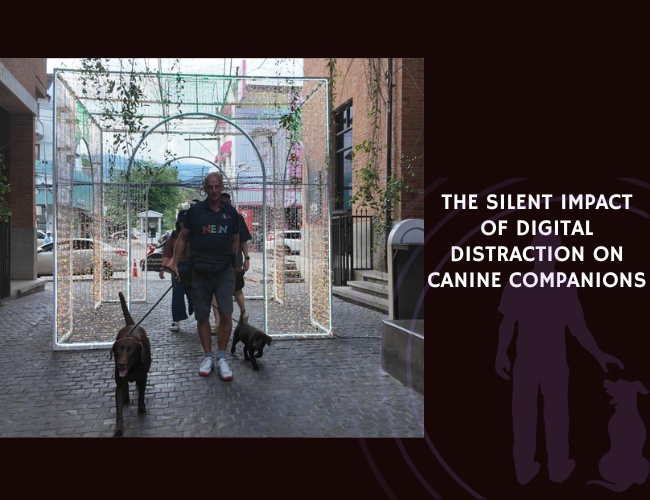
Introduction: When Your Attention Wanders, Your Dog Feels It
You might not realize it, but every time you reach for your phone during a walk with your furry friend, something shifts in the invisible bond between you. In our increasingly connected world, screens have become constant companions—but at what cost to the relationship with our canine companions?
This phenomenon, known as “technoference” in human relationships, describes how digital devices quietly disrupt the emotional dynamics that matter most. While we understand its impact on children and human partnerships, the effect on dogs remains largely unexplored. Yet dogs, who have evolved alongside us for thousands of years, depend profoundly on human attention for their emotional security and wellbeing.
When you scroll through social media while your dog sits beside you, or check work emails during your evening walk, you create what researchers call “micro-absences”—brief moments when you’re physically present but emotionally unavailable. These seemingly insignificant interruptions accumulate over time, shaping your dog’s attachment style, stress levels, and even their ability to trust you in moments that matter. Let us guide you through the science and soul of this modern challenge, so you can recognize when your digital habits might be affecting the one who loves you most unconditionally. 🐾
Understanding the Emotional Landscape: How Dogs Read Your Attention
The Social Referencing System
Did you know that your dog constantly monitors your face and body language to understand their world? This process, called social referencing, allows dogs to interpret environmental safety through your emotional cues. Your facial expressions, vocal tones, and postural shifts tell your dog whether to relax or remain vigilant.
Essential co-regulation cues your dog needs from you:
- Facial expressions: Soft eyes, relaxed mouth, and dynamic expressions that signal emotional availability
- Vocal tone: Warm, varied pitch that conveys engagement and reassurance rather than flat, distracted speech
- Eye contact: Mutual gaze that activates oxytocin release and strengthens the emotional bond
- Body language: Open posture, facing toward your dog, movements that include rather than exclude them
- Touch quality: Gentle, intentional physical contact that communicates care and presence
- Response timing: Quick acknowledgment of your dog’s communication attempts, showing you’re paying attention
When your attention diverts to a screen, these vital co-regulation cues disappear. Your face becomes still, your voice silent, your body language closed. From your dog’s perspective, you’ve essentially vanished—not physically, but emotionally. This creates confusion and potential anxiety because the reference point they rely upon has suddenly become unavailable.
Research shows that dogs exhibit stress behaviors even when separated from owners in familiar environments. They decrease exploration, fixate on exit points, and display signs of emotional distress. The mental absence caused by digital distraction mirrors this separation experience, creating a similar sense of abandonment despite your physical presence.
Micro-Absences and Their Hidden Toll
What happens during a micro-absence? When you become absorbed in your device, your dog loses access to the emotional synchrony that normally regulates their nervous system. These brief disconnections might seem harmless—just checking a text, scrolling for a minute, answering one email—but they accumulate into a pattern of inconsistent availability.
Think of it like this: imagine having a conversation with someone who keeps looking away every few seconds. You’d feel unimportant, confused about whether to continue engaging, and eventually, you might simply give up trying. Your dog experiences something similar, except they lack the cognitive framework to rationalize your behavior.
Studies on technoference in parent-child relationships reveal striking parallels. When parents use digital devices during meals, children show increased dysregulation and behavioral difficulties. Dogs, who rely on consistent engagement for emotional balance through their CARE and SEEKING systems—neurological pathways governing attachment and exploration—face similar consequences when their primary attachment figure repeatedly withdraws attention. 🧠
The Physiology of Emotional Synchrony
Emotional synchrony isn’t just psychological—it’s biological. Research demonstrates that dogs and their owners can develop hormonal synchrony, meaning their stress and bonding hormones rise and fall together. Your cortisol levels influence your dog’s cortisol levels. Your oxytocin release triggers theirs.
This remarkable physiological alignment requires consistent, reciprocal interaction. When you engage fully with your dog—making eye contact, speaking with warmth, offering gentle touch—you activate what’s known as the oxytocin-gaze positive feedback loop. You look at your dog, oxytocin increases in both of you, strengthening the bond and creating feelings of calm and security.
Digital distraction shatters this synchrony. Without mutual gaze, the oxytocin loop can’t activate. Without responsive vocalizations, your dog can’t gauge your emotional state. Without appropriate touch, the stress-reducing benefits of physical connection vanish. The result is a dysregulated dog whose physiological state no longer aligns with yours—creating distance where there should be connection.
Next, we’ll explore how these disruptions shape the very foundation of your relationship: attachment.
Attachment Under Siege: How Digital Habits Shape Your Dog’s Security
The Architecture of Attachment
Secure attachment forms the foundation of every healthy dog-owner relationship. When dogs feel securely attached, they use their owner as a safe base from which to explore the world. They return to you for reassurance, trust that you’ll respond to their needs, and develop confidence in navigating unfamiliar situations.
This security requires predictable, responsive caregiving. Your dog needs to know that when they seek your attention, you’ll acknowledge them. When they feel uncertain, you’ll provide reassurance. When they’re stressed, you’ll help them regulate.
Habitual digital distraction creates the opposite pattern: inconsistent availability. Sometimes you respond warmly; other times you’re absorbed in your screen and don’t even notice your dog’s attempts to connect. This unpredictability mirrors the conditions that create insecure attachment styles in both children and dogs.
Three Patterns of Insecure Attachment
Anxious attachment develops when your dog learns that your availability is unpredictable. They become hypervigilant, constantly monitoring your attention and behavior. You might notice excessive following, distress when you pick up your phone, or persistent attempts to interrupt your screen time. These dogs have learned that connection requires constant effort—they can’t trust that you’ll be present when needed.
Avoidant attachment emerges when your dog learns that seeking connection is futile. After repeated experiences of being ignored while you’re on your device, they stop trying. They may appear independent or aloof, but this isn’t confidence—it’s resignation. These dogs have adapted to emotional unavailability by shutting down their attachment-seeking behaviors.
Ambivalent attachment combines elements of both patterns. Your dog wants connection but has learned not to trust it. They may approach and retreat, seek attention but seem unable to settle, or display conflicting behaviors that reflect their internal confusion about whether you’re a reliable source of comfort.
Common signs that digital distraction may be affecting your dog’s attachment security:
- Excessive following: Your dog can’t settle unless they’re in the same room, constantly monitoring your location
- Increased separation anxiety: Greater distress when you leave, even for short periods
- Attention-demanding behaviors: Persistent pawing, whining, or nudging that escalates when ignored
- Difficulty settling: Unable to relax even when you’re home, showing persistent restlessness
- Emotional withdrawal: Decreased interest in interaction, appearing resigned or indifferent
- Inconsistent responses: Sometimes eager to engage, other times avoidant or hesitant
- Heightened vigilance: Constantly watching you, especially when you handle your phone or devices
Research confirms that adverse early experiences and inconsistent caregiving lead to insecure attachment and physiological dysregulation in dogs. Digital distraction, by creating patterns of emotional unavailability, replicates these conditions even in otherwise loving homes. 🧡
Breed Sensitivities: Who Feels It Most?
Not all dogs experience digital distraction equally. Breeds selected for close human partnership and high social attunement—Border Collies, Poodles, Labrador Retrievers, German Shepherds—may be particularly vulnerable to attentional disruptions.
These breeds were developed specifically for their responsiveness to human cues and their desire for collaborative work. A Border Collie reading a shepherd’s body language to herd sheep, or a Labrador watching a hunter’s subtle gestures for direction—these dogs excel at human communication because we bred them to do so.
This heightened sensitivity becomes a vulnerability when their primary attachment figure repeatedly withdraws attention. You might notice these socially attuned breeds become more frustrated, anxious, or demanding when you’re frequently on your device. Their drive for connection isn’t “neediness”—it’s the very quality we cultivated in them.
The Oxytocin Paradox
The absence of co-regulation cues doesn’t just prevent bonding—it actively undermines it. Eye contact, vocal tone, and touch aren’t optional extras in the dog-owner relationship; they’re the mechanisms through which attachment develops and maintains itself.
When these cues disappear during digital distraction, the oxytocin feedback loop can’t function. Without oxytocin release, bonding weakens. Without the stress-reducing effects of positive interaction, cortisol levels may rise. Over time, this creates a hormonal environment that supports anxiety rather than security.
Interestingly, research shows that for people with lower attachment to their dogs, affiliative interactions like walking and playing significantly increase oxytocin and improve bond quality. This suggests that intentional, screen-free engagement can repair and strengthen connections—but only if it happens consistently enough to rebuild trust.
Next, we’ll examine the behavioral signals that reveal when your dog is struggling with your divided attention.
Reading the Signs: Behavioral Indicators of Digital-Induced Distress
Attention-Seeking Behaviors: When Your Dog Says “Notice Me”
Your dog can’t ask you to put down your phone, so they communicate through behavior. When you’re absorbed in a screen, you might notice your dog pawing at your leg, placing their head on your lap, or gently nosing your hand. These aren’t random actions—they’re deliberate attempts to reclaim your attention.
Some dogs become more vocal during digital distraction. Whining, soft barks, or repeated sighs signal frustration and confusion about your unavailability. These vocalizations often escalate if ignored, as your dog tries different approaches to break through your distraction.
Others bring toys to you, dropping them nearby or nudging them toward you. This behavior reflects your dog’s attempt to initiate the kind of engaged play that typically activates your shared attention system. When the toy is ignored, many dogs will try repeatedly, their persistence reflecting both their desire for connection and their growing confusion about why you’re not responding.
Displacement Behaviors: Stress Made Visible
When dogs can’t resolve their stress through direct action, they often display displacement behaviors. These are activities that seem out of context—like suddenly grooming when stressed, or sniffing the ground during a moment of social uncertainty.
Common displacement behaviors during digital distraction:
- Excessive licking: Of paws, flanks, furniture, or themselves—self-soothing through repetitive action
- Yawning when not tired: Stress-induced yawning that differs from sleepy yawns in frequency and context
- Ground sniffing: Suddenly becoming absorbed in scent investigation during what should be social moments
- Scratching or shaking off: Physical actions that release tension, as if shaking off water when dry
- Lip licking or tongue flicking: Quick, nervous tongue movements that signal discomfort or anxiety
- Pacing or circling: Repetitive movement patterns that reflect internal agitation
- Redirected behaviors: Suddenly grabbing a toy, scratching at the door, or engaging in unrelated activities
During digital distraction, you might observe excessive licking (of paws, flanks, or objects), repeated yawning when not tired, or sudden interest in sniffing or scratching. These behaviors serve a self-soothing function, helping your dog manage the discomfort of your emotional absence.
Some dogs begin pacing—walking back and forth between you and another location, or circling an area without apparent purpose. This movement reflects internal agitation and an inability to settle while their primary attachment figure remains emotionally unreachable.
Ground sniffing during interactions that should be socially engaging is particularly telling. When a dog suddenly becomes absorbed in scent investigation while their owner is on a phone, it often signals disengagement—the canine equivalent of giving up on trying to connect. 🐾
The Quiet Ones: Withdrawal and Learned Helplessness
Not all distress is loud. Some dogs respond to chronic digital distraction by becoming quieter, more withdrawn, and less interactive. This pattern is particularly concerning because it can be mistaken for calm contentment.
A dog experiencing learned helplessness has tried repeatedly to gain your attention and failed. Eventually, they stop trying. They lie nearby but no longer seek interaction. They watch you scroll through your phone with an expression that seems resigned rather than engaged. They’ve learned that their actions don’t produce the responses they need.
This emotional disengagement represents a profound shift in the dog-owner relationship. Through the NeuroBond approach, we understand that trust becomes the foundation of learning—but trust requires reciprocity. When dogs learn that their bids for connection are routinely ignored, the very basis of that trust erodes.
You might notice these dogs become less responsive to training cues, slower to recall, or generally less motivated to engage with you. This isn’t stubbornness or disobedience—it’s the logical outcome of inconsistent attention. Why should they respond eagerly to your call when you’ve repeatedly failed to respond to theirs?
Changes in Training Responsiveness
Effective training depends on clear, consistent communication. When your attention is frequently divided by digital devices, several things happen that undermine your dog’s training progress.
First, your timing becomes inconsistent. You might miss the moment to reward desired behavior because you were looking at your screen. Or you fail to notice unwanted behavior until it escalates, creating confusion about what earned your correction.
Second, your cues become unreliable. If you sometimes call your dog while scrolling through your phone—voice distracted, body language disengaged—your dog learns that your recall cue doesn’t always mean you’re truly requesting their presence. This weakens response reliability over time.
Third, your dog’s motivation to engage with training decreases. If interactions with you have become unpredictable and often disappointing, why would they enthusiastically participate in training? The joy of working together requires mutual presence, and that presence has become conditional on whether a notification happens to interrupt.
Next, we’ll explore what’s happening inside your dog’s brain and body during these experiences.
The Neuroscience of Disconnection: What Digital Distraction Does to Your Dog’s Brain
The Oxytocin-Cortisol Seesaw
Two hormones tell the story of your dog’s emotional state: oxytocin and cortisol. Oxytocin, often called the “love hormone,” facilitates bonding, trust, and social connection. Cortisol, the primary stress hormone, rises in response to perceived threats or uncertainty.
In healthy dog-owner interactions, oxytocin rises while cortisol falls. Mutual gaze triggers oxytocin release in both species, creating a positive feedback loop that strengthens attachment. Gentle touch, warm vocalizations, and shared activities further enhance this hormonal cascade, creating feelings of safety and contentment.
Digital distraction interrupts this process. Without mutual gaze, oxytocin release diminishes. Without comforting touch and engaged vocal tone, the stress-reducing effects of your presence vanish. The result is a hormonal shift: less oxytocin, potentially more cortisol.
Research shows that the interruption of these co-regulation cues can elevate stress hormones in both dogs and humans. When your dog seeks connection but encounters your blank, screen-focused face instead of your warm, responsive presence, their brain interprets this as a form of social rejection—triggering the very stress response that your presence normally mitigates. 🧠
Social Referencing and the Absent Reference
Your dog’s brain constantly asks: “Is this safe? How should I feel right now?” They answer these questions by reading your emotional state through social referencing—monitoring your facial expressions, vocal tones, and body language for cues about how to interpret their environment.
This neurological process depends on your availability as an emotional reference point. When you’re mentally absent due to digital engagement, your dog loses access to this crucial information. Your face becomes expressionless, your vocalizations cease, and your body language suggests disengagement.
From a neurological perspective, this creates ambiguity and potential threat. Your dog’s amygdala—the brain region governing threat detection—must now assess situations without access to your emotional guidance. This can shift them toward more defensive or anxious states, as they default to caution when their trusted reference point becomes unavailable.
Dogs with secure attachments can tolerate brief absences of this guidance because they’ve learned you’ll return to emotional availability. But chronic or frequent micro-absences prevent the development of this trust, leaving dogs in a state of persistent uncertainty about whether they can rely on you for emotional regulation.
Reading Micro-Patterns: The Canine Observation System
Dogs are remarkably skilled at detecting subtle changes in human behavior. They notice micro-expressions, postural shifts, changes in breathing patterns, and alterations in vocal quality that humans often miss. This ability evolved through thousands of years of selection for dogs who could accurately read human communication.
When you engage with a digital device, you display consistent behavioral patterns. Your gaze fixates on a small screen. Your face becomes relatively still, lacking the dynamic expressions that characterize social engagement. Your body curves slightly forward, creating a closed rather than open posture. Your vocalizations either cease entirely or take on a different quality—distracted, fragmented, less warm.
Subtle cues your dog reads when you’re on a device:
- Fixed gaze: Eyes locked on the screen rather than scanning the environment or making contact
- Facial stillness: Reduced micro-expressions, fewer smiles, less animated features
- Closed posture: Shoulders curved forward, body oriented away from the dog
- Reduced movement: Less gesturing, minimal body language, static positioning
- Vocal changes: Monotone speech, distracted “uh-huh” responses, or complete silence
- Touch withdrawal: Hands occupied with the device, unavailable for petting or connection
- Breathing patterns: Shallow or irregular breathing that differs from relaxed states
Your dog’s brain registers all these changes. They interpret them as indicators that you’re no longer emotionally present or available for interaction. This pattern recognition happens quickly and automatically—your dog doesn’t need extended observation to detect that you’ve mentally “left” the social context.
Some dogs learn to predict your screen use, showing stress responses when you simply reach for your phone. They’ve formed associations between certain movements or sounds (picking up the device, the notification chime) and your subsequent emotional unavailability. This anticipatory stress demonstrates how deeply your digital habits become embedded in your dog’s psychological landscape.
Present. Absent. Disconnected.
Attention is currency. Every glance at a screen withdraws presence from your dog’s emotional bank, leaving silence where safety once lived.
Bonding needs rhythm. Mutual gaze and tone tune two nervous systems into one heartbeat—without them, oxytocin falters, and calm turns to confusion.



Presence repairs everything. Look up. Speak softly. Let your dog’s eyes find yours again—because connection isn’t taught; it’s remembered.
The CARE and SEEKING Systems: Neurological Needs Unmet
Affective neuroscience identifies specific brain systems governing emotional needs. Two particularly relevant to digital distraction are the CARE system and the SEEKING system.
The CARE system generates feelings of nurturance, attachment, and social bonding. It’s activated through warm physical contact, eye contact, and responsive interaction. When functioning well, this system produces feelings of safety and contentment in both caregiver and recipient.
Digital distraction prevents CARE system activation. Without mutual presence and responsive engagement, this neurological pathway remains unstimulated. Your dog essentially experiences unmet attachment needs—not because you don’t care, but because the behavioral expressions of care are absent during screen time.
The SEEKING system drives exploration, curiosity, and motivated engagement with the environment. It requires a secure base from which to operate—knowing that connection and safety are available when needed. Chronic digital distraction undermines this secure base, potentially reducing your dog’s confidence in exploration and creating a more anxious, less resilient emotional state.
Through the Invisible Leash, we understand that awareness, not tension, guides the path forward. By becoming conscious of how digital habits affect these fundamental neurological systems, you can begin to restore the emotional availability your dog’s brain is seeking. 🧡
Stress Recovery: The Long Road Back from Silent Interactions
How quickly your dog recovers from stress depends heavily on whether they receive emotional support during the recovery process. Engaged, synchronous communication—characterized by mutual gaze, comforting touch, and warm vocalizations—actively facilitates the return to calm.
After a stressful experience, your dog naturally seeks your presence for co-regulation. Your calm demeanor, gentle touch, and reassuring voice help their nervous system return to baseline. This process requires your full attention and emotional availability.
When stress recovery attempts coincide with your digital distraction, the recovery process extends significantly. Your dog must return to calm without the co-regulation that typically facilitates this process. Their cortisol levels remain elevated longer. Their nervous system stays activated without the external support needed to downregulate.
Over time, repeated experiences of stress without adequate co-regulatory support can alter your dog’s baseline stress levels and stress reactivity. They may become more easily triggered, slower to calm, and generally more anxious—not due to inherent temperament issues, but because the environmental support for emotional regulation has become unreliable.
Next, we’ll discuss breed-specific vulnerabilities and how different dogs experience digital distraction.
📱🐕 The Silent Impact of Digital Distraction on Your Dog
Understanding How Screen Time Affects the Human-Dog Bond & How to Restore Connection
Phase 1: Recognition
Understanding the Problem
What Are Micro-Absences?
Micro-absences are brief moments when you’re physically present but emotionally unavailable due to digital engagement. Your dog experiences these as mini-abandonments—you’re there, but you’re not really there. This phenomenon, called “technoference,” disrupts the emotional synchrony your dog depends on for security.
What Your Dog Experiences
When you check your phone, your dog notices: • Your face becomes expressionless • Eye contact disappears • Your voice goes silent • Your body closes off • Touch becomes unavailable. From their perspective, their trusted reference point has suddenly vanished, creating confusion and potential anxiety.
Phase 2: Attachment Disruption
How Digital Habits Shape Security
Three Insecure Attachment Patterns
Anxious: Hypervigilant following, excessive attention-seeking, distress when you pick up your phone. Avoidant: Emotional withdrawal, appearing independent but actually resigned. Ambivalent: Conflicting behaviors—approaching then retreating, unable to trust connection.
The Oxytocin-Cortisol Seesaw
Digital distraction interrupts the oxytocin-gaze positive feedback loop. Without mutual gaze, oxytocin (bonding hormone) decreases while cortisol (stress hormone) increases. Your dog’s brain interprets your blank, screen-focused face as social rejection, triggering the very stress response your presence normally prevents.
Phase 3: Reading the Signs
Behavioral Indicators of Distress
Active Distress Signals
• Pawing at your leg or hand • Whining or soft barking • Bringing toys repeatedly • Placing head on your lap • Nudging your phone • Pacing between you and another location. These aren’t annoying behaviors—they’re communication attempts from a confused, distressed companion.
Displacement Behaviors
Stress-induced self-soothing: • Excessive licking (paws, flanks, objects) • Yawning when not tired • Sudden ground sniffing • Scratching or shaking off • Circling or pacing. These behaviors indicate your dog is managing discomfort from your emotional absence.
The Quiet Withdrawal
Most concerning: Dogs who’ve learned helplessness. They stop trying to connect, lie nearby with resigned expressions, show decreased training responsiveness. This isn’t calm contentment—it’s emotional disengagement from repeated failures to gain your attention.
Phase 4: Brain & Body Response
Neurophysiological Consequences
Social Referencing Breakdown
Your dog’s brain constantly asks: “Is this safe? How should I feel?” They answer by reading your emotional state. When you’re mentally absent, they lose this crucial reference point. Your dog’s amygdala must now assess situations without your guidance, defaulting to caution and potentially shifting into defensive or anxious states.
CARE & SEEKING Systems Unmet
Affective neuroscience identifies two critical systems affected: The CARE system (nurturance, bonding) requires eye contact and responsive interaction—absent during screen time. The SEEKING system (exploration, curiosity) needs a secure base—undermined by unpredictable availability, creating more anxious, less resilient dogs.
Phase 5: Self-Awareness
Understanding Your Patterns
Track Your Screen Time
Most people underestimate their device use by 50% or more. Use your phone’s screen time monitoring for one week. Note when you’re most likely to reach for your device: during walks, evening relaxation, when sitting with your dog? Awareness precedes transformation.
Observe Your Dog’s Response
Keep a simple journal for 3-5 days noting: • Times you engaged with screens while with your dog • Your dog’s apparent response • Moments when you successfully provided focused attention. This creates clarity about both problems and progress, revealing patterns you might otherwise miss.
Phase 6: Active Restoration
Rebuilding Emotional Availability
The Five-Minute Rule
Several times daily, set aside five minutes of completely undivided attention. No phone, no distractions—just you and your dog. Use this time for play, training, gentle grooming, or calm petting. Five focused minutes provides more emotional nourishment than an hour of divided attention.
Device-Free Zones & Times
Establish consistent screen-free periods: • Morning routines • All walks (phone in pocket only) • First 30 minutes after coming home • Designated evening hour. The specific timing matters less than the consistency—your dog learns to trust these reliable moments of full presence.
Respond to Connection Bids
Your dog makes dozens of small bids for connection daily—a glance, bringing a toy near, soft vocalization, moving closer. Increase your response rate to 75% or more. Even brief acknowledgment (“I see you,” eye contact, quick touch) tells your dog their communication was received and valued.
Phase 7: Finding Balance
Living in the Real World
The 80/20 Principle
You don’t need perfection. If 80% of your interactions involve genuine presence and availability, the relationship can tolerate 20% divided attention. Most dogs thrive with 30-60 minutes of truly engaged interaction distributed throughout the day—not including passive time where they’re simply near you.
When Screen Time Is Necessary
Before extended screen sessions: exercise your dog and provide enrichment (food puzzles, chew toys). Set timers every 20-30 minutes for one-minute reconnections. Use “do not disturb” modes to finish tasks efficiently. Communicate your status with a “settle” cue that signals temporary unavailability.
Phase 8: Sustainable Change
Making Presence a Lifestyle
Environmental Supports
Create systems that support your intentions: • Keep chargers in one location (don’t carry devices room to room) • Use drawer storage for devices during sacred connection times • Enable “do not disturb” automatically during dog activities • Place phone face-down to remove visual temptation. Transform temporary efforts into permanent habits.
Signs of Positive Change
Within 2-4 weeks, watch for: • Reduced anxiety signals and displacement behaviors • Improved training responsiveness and recall • Calmer demeanor and ability to settle • Increased voluntary affection and proximity • Better sleep patterns • Enhanced confidence in exploration. These changes confirm your efforts are working.
📊 Breed Sensitivity to Digital Distraction
Working Partnership Breeds
Border Collies, German Shepherds, Malinois: Highest sensitivity. Bred for microsecond-level attention to human cues. Digital distraction creates intense frustration; may develop displacement behaviors like excessive ball fixation or herding family members.
Velcro Dogs
Labs, Golden Retrievers, Cavaliers: High sensitivity. Physical proximity without emotional availability creates particular distress. Show quiet sadness—lying with heavy sighs, patient waiting expressions, watching you scroll.
Independent Breeds
Shiba Inus, Basenjis, Chow Chows: Moderate sensitivity but masked. Lower attachment-seeking behaviors don’t mean unaffected. May show subtle withdrawal or decreased interest in interaction—protective distancing from unpredictable availability.
Sensitive Souls
Greyhounds, Whippets, Italian Greyhounds: High sensitivity. Feel emotional absence acutely. May show increased startle responses, reluctance to settle, or seemingly unexplained anxiety that corresponds with your screen time patterns.
Puppies (2-6 months)
Critical Socialization Period: Highest vulnerability. Digital distraction during puppyhood affects attachment style formation and confidence development that persists throughout life. Need frequent social referencing during new experiences.
Senior Dogs (8+ years)
Increased Need for Reassurance: Higher sensitivity due to cognitive decline or health challenges. Their more subdued attention-seeking attempts are easily missed while on devices, leaving them to cope with discomfort alone.
⚡ Quick Reference: Daily Connection Formula
Minimum Daily Requirement: 30-60 minutes of genuinely focused interaction (distributed throughout the day)
Five-Minute Rule: 3-5 sessions of completely undivided attention daily
80/20 Principle: If 80% of interactions are truly present, relationship tolerates 20% distraction
Connection Bid Response Rate: Aim for 75%+ acknowledgment of your dog’s communication attempts
Screen-Free Essentials: All walks + morning routine + first 30 min home + one evening hour
Recovery Timeline: 2-4 weeks to see behavioral improvements with consistent implementation
🧡 The Essence of Digital Mindfulness Through Zoeta Dogsoul
Through the NeuroBond approach, we understand that emotional synchrony and mutual presence form the foundation of trust-based relationships. Every moment you choose eye contact over screen time, you’re actively rebuilding the neurological pathways that support secure attachment and co-regulation.
The Invisible Leash reminds us that awareness, not tension, guides the path forward. Your commitment to digital mindfulness isn’t about rigid rules—it’s about conscious presence and gentle guidance through energy and intention. When you put down your phone to truly see your dog, you demonstrate the calm leadership that allows them to relax and trust.
In moments of Soul Recall, when emotional memory and intuitive response align, you recognize your dog’s bids for connection not as interruptions but as invitations to the profound relationship you both deserve. These micro-moments of presence accumulate into something extraordinary—a bond built on genuine availability rather than divided attention.
That balance between the demands of modern life and the timeless needs of the creature who loves you unconditionally—that’s the essence of Zoeta Dogsoul. Where neuroscience meets soul, where screen time gives way to sacred time, and where every choice for presence becomes an investment in trust.
© Zoeta Dogsoul – Where neuroscience meets soul in dog training
Breed Differences: Who Feels the Absence Most Acutely?
The Working Partnership Breeds
Border Collies, German Shepherds, Australian Shepherds, and Belgian Malinois were developed for intensive collaboration with humans. These breeds don’t just tolerate human interaction—they require it for psychological wellbeing. Their intelligence and responsiveness, which make them exceptional working partners, also make them particularly sensitive to attentional disruptions.
A Border Collie scanning your face for the subtle cue that indicates which direction to move sheep, or a German Shepherd reading your body language to determine the next protective action—these breeds excel at microsecond-level attention to human communication. When you’re on your phone, you’re essentially speaking a language they’ve evolved to understand but suddenly finding the conversation unilateral.
You might notice these breeds become intensely frustrated during digital distraction. They may bring toys repeatedly, herd family members, or develop displacement behaviors like excessive ball fixation. These aren’t behavioral problems—they’re adaptive responses to unmet needs for engaged partnership.
The Velcro Dogs: Companion Breeds and Digital Dependency
Labrador Retrievers, Golden Retrievers, Cavalier King Charles Spaniels, and similar companion breeds were selected specifically for their desire to be near humans and their sensitivity to human emotional states. These “velcro dogs” form exceptionally close bonds and thrive on constant proximity.
For these breeds, your physical presence without emotional availability creates particular distress. They’re literally beside you, yet you’re mentally elsewhere. This disconnect between physical proximity and emotional connection can generate confusion and anxiety.
You might observe these dogs lying with heavy sighs, placing their head on your leg while you scroll, or watching you with expressions of patient waiting. While these behaviors seem less disruptive than the working breed’s responses, they still indicate emotional needs that aren’t being met. The quiet sadness of a Labrador watching their owner scroll through social media tells its own story. 🐾
The Independent Breeds: Hidden Vulnerability
Breeds often characterized as independent—Shiba Inus, Basenjis, Chow Chows, Akitas—are sometimes assumed to be less affected by human attention patterns. This is a misconception that can mask genuine distress.
These breeds typically have lower attachment-seeking behaviors, but this doesn’t mean they don’t form attachments or need emotional availability. It means they express these needs differently and may be more subtle about their distress when needs aren’t met.
An independent breed might not obviously demand attention during your screen time, but that doesn’t mean they’re unaffected. You may notice subtle withdrawal, decreased interest in interaction when you do reach out, or what appears to be aloofness that’s actually a protective distancing from unpredictable availability.
The Sensitive Souls: Sight Hounds and Gentle Breeds
Greyhounds, Whippets, Italian Greyhounds, and similarly sensitive breeds often possess heightened emotional sensitivity combined with gentle temperaments. These dogs can be particularly affected by emotional absence because they’re naturally attuned to subtle mood shifts and environmental changes.
Digital distraction may create anxiety in these breeds even without overt stress signals. They simply feel the emotional absence more acutely. You might notice increased startle responses, reluctance to settle, or seemingly unexplained anxiety that corresponds with your screen time patterns.
These breeds benefit especially from intentional, screen-free time where they can relax into the security of your full presence. The contrast between engaged attention and digital distraction may be more psychologically disruptive for them than for more resilient breed types.
Age Factors: Puppies and Senior Dogs
Puppies in critical socialization periods require consistent, responsive interaction to develop secure attachments and confidence. Digital distraction during puppyhood can affect attachment style formation and socialization outcomes that persist throughout life.
A puppy learning to navigate their world needs frequent social referencing—checking in with you to understand whether new experiences are safe or threatening. When you’re on your phone during walks or play sessions, you’re unavailable as that reference point during crucial learning moments.
Senior dogs facing cognitive decline or health challenges may also be more vulnerable to digital distraction’s effects. They often need more reassurance and emotional support, yet their attempts to gain attention might be more subdued. It’s easy to miss the gentle approach of an elderly dog while absorbed in your device, leaving them to cope with discomfort or uncertainty alone.
Next, we’ll explore practical strategies for rebuilding emotional availability and restoring connection.
Restoration and Repair: Rebuilding Presence in a Digital Age
The Anatomy of Focused Interaction
Creating meaningful connection requires intentionality. A focused interaction isn’t just time spent in the same room—it’s time where your attention is completely available to your dog, free from digital interruption.
Start by establishing device-free zones and times. This might mean keeping your phone in another room during morning routines, leaving it in your pocket during walks, or creating an evening hour where screens disappear entirely. The specific timing matters less than the consistency.
During these focused periods, engage in activities that activate the co-regulation systems we’ve discussed. Make eye contact, even briefly. Speak to your dog with warmth and variation in your tone. Offer gentle, appropriate touch—stroking, patting, scratching favorite spots. These simple actions stimulate oxytocin release and rebuild the physiological synchrony that digital distraction has disrupted.
Physical activities like walking, playing, and training sessions become particularly valuable when they’re done with full presence. A ten-minute walk where you’re actively engaged with your dog—noticing their sniffing patterns, responding to their communication, enjoying the shared experience—provides more relational benefit than an hour-long walk spent on your phone. 🧡
Co-Regulation Practices: Small Moments, Big Impact
You don’t need hours of uninterrupted time to rebuild connection. Research on human attachment suggests that short but frequent moments of responsive interaction may be more important than occasional extended periods of attention.
Practice what might be called “micro-connections” throughout your day. When your dog approaches you, pause whatever you’re doing for just thirty seconds of acknowledgment. Make eye contact, speak to them, perhaps offer a brief touch. Then return to your activity. This pattern teaches your dog that their bids for connection will be acknowledged, even if you can’t always engage in extended interaction.
Create transition rituals that mark shifts between screen time and dog time. This might be as simple as putting your phone face-down and taking three deep breaths before calling your dog to you. Or having a specific phrase you say when you’re finished with a device and ready to engage (“Okay, I’m back”). These rituals help both you and your dog recognize when full presence is available.
During necessary screen time, practice what some trainers call “parallel presence”—being near your dog without demanding interaction from either of you. This differs from neglectful distraction because you’re available if your dog needs you, but you’re also allowing independent relaxation. The key is awareness: knowing you’re choosing to multitask rather than unconsciously defaulting to divided attention.
The Five-Minute Rule: Quality Over Quantity
Implementing the five-minute rule transforms daily routines. Several times throughout the day, set aside five minutes of completely undivided attention. No phone, no distractions, just you and your dog.
Five minutes might seem brief, but when it’s genuinely focused, it provides substantial emotional nourishment. Use this time for whatever form of connection your dog most enjoys: play, gentle grooming, training games, calm petting, or simply being together.
The psychological impact of knowing these moments will occur reliably helps dogs develop secure expectations about your availability. They learn that even though you’re sometimes distracted, there are predictable times when your attention is fully theirs. This predictability helps rebuild attachment security over time.
Recognizing and Responding to Bids for Connection
Your dog makes dozens of small bids for connection daily. A glance in your direction, bringing a toy near you, a soft vocalization, moving to be closer—these subtle communications invite interaction.
Increasing your response rate to these bids significantly improves relationship quality. You don’t need to provide extended engagement every time, but acknowledging the bid matters. Even a brief “I see you” or quick eye contact and smile tells your dog their communication was received and valued.
Research in human relationships shows that partners who respond positively to bids for connection maintain stronger, more satisfying relationships. The same principle applies to dog-owner dyads. Through moments of Soul Recall—those instances when emotional memory and intuitive response align—you begin to recognize and honor these bids more consistently. 🐾
Screen-Free Activities: Rebuilding the Foundation
Certain activities naturally promote presence and connection. Prioritizing these helps restore the emotional synchrony that digital habits have disrupted.
High-impact activities for rebuilding connection:
- Training sessions: Even five minutes of focused practice requires mutual attention, precise timing, and clear communication
- Scent work games: Hide treats or toys, encouraging natural behaviors while you guide and celebrate discoveries
- Puzzle toys together: Sit with your dog while they work on food puzzles, offering encouragement and shared problem-solving
- Massage and body work: Slow, intentional touch that releases oxytocin and calms both nervous systems
- Decompression walks: Let your dog lead and explore at their pace while you remain present and aware
- Play sessions: Tug, fetch, or chase games that require your active participation and engagement
- Grooming rituals: Brushing, nail care, or simply checking your dog’s body while maintaining gentle contact
- Calm companionship: Sitting together without demands, simply sharing space with full presence
Training sessions require mutual attention by their nature. Even five minutes of training practice demands that you observe your dog carefully, time your reinforcement precisely, and communicate clearly. This focused interaction benefits the relationship beyond the specific skills being taught.
Scent work and puzzle games engage your dog’s cognitive abilities while providing opportunities for encouragement and shared problem-solving. Your role as supporter and celebrator of their success strengthens the partnership dynamic.
Massage and body work activate multiple beneficial systems simultaneously: physical touch releases oxytocin, slow movements calm the nervous system, and focused attention demonstrates care. Even dogs who initially seem indifferent to petting often learn to value these sessions when practiced consistently.
Decompression walks where your dog leads and explores at their own pace, with you as calm companion rather than director, rebuild trust and security. Your full presence during these walks—noticing what interests them, staying aware of their emotional state, providing reassurance when needed—reinforces your role as secure base and safe harbor.
Recognizing Your Own Patterns: The First Step to Change
Awareness precedes transformation. Before you can change your digital habits, you need to understand them clearly. Many people significantly underestimate their screen time and overestimate their availability to their dogs.
Try tracking your phone use for a week using built-in screen time monitoring. Note when you’re most likely to reach for your device: during walks, in the evening, when sitting with your dog? Identifying patterns helps you understand which moments matter most for intervention.
Notice your dog’s responses to your screen use. Do they show immediate behaviors like pawing or whining? Do they eventually give up and settle elsewhere? Do they seem more anxious or demanding around specific times of day when you’re typically distracted? These observations provide feedback about how your habits affect their wellbeing.
Consider keeping a simple journal for a few days noting: times you engaged with screens while with your dog, your dog’s apparent response, and moments when you successfully provided focused attention. This creates clarity about both problems and progress.
Next, we’ll address the challenging realities of modern life and how to find balance.
Living in the Real World: Balance, Not Perfection
The Unavoidable Reality of Digital Life
You can’t eliminate screens from your life, nor should you have to. Work demands, family communication, essential information access, and genuine relaxation all involve digital devices. The goal isn’t abandonment of technology—it’s conscious integration that preserves relationship quality.
Some screen time happens with your dog present, and that’s acceptable. The distinction lies between mindless scrolling and purposeful use, between chronic distraction and occasional necessity. Your dog doesn’t require your undivided attention every waking moment; they require enough consistent, quality engagement to maintain secure attachment and emotional wellbeing.
Through the NeuroBond approach, we recognize that emotional synchrony and mutual presence form the foundation—but foundations need maintenance, not constant construction. Building reliable patterns of focused interaction creates resilience that can absorb occasional periods of distraction. 🧠
The 80/20 Principle for Dog Owners
Striving for perfection creates unnecessary stress. Instead, aim for the 80/20 principle: if 80% of your interactions with your dog involve genuine presence and availability, the relationship can tolerate 20% where attention is divided or unavailable.
This principle requires honesty about what constitutes “genuine presence.” Five minutes of focused play counts far more than thirty minutes in the same room while scrolling through social media. A fifteen-minute walk where you’re actively engaged with your dog outweighs an hour-long walk spent on phone calls.
Calculate your daily dog-focused time realistically. Most dogs thrive with 30-60 minutes of truly engaged interaction distributed throughout the day—not including passive time where they’re simply near you. This might include training, play, walks, grooming, or intentional calm companionship. If you’re meeting this threshold consistently, occasional distracted periods won’t undermine the relationship foundation.
When Screen Time Is Necessary: Minimizing Impact
Sometimes you need to use your device while your dog is present. Managing these situations thoughtfully reduces their relational impact.
Strategies to minimize impact during necessary screen time:
- Pre-activity preparation: Exercise your dog before extended screen sessions so they’re naturally ready to rest
- Provide enrichment alternatives: Offer food puzzles, chew toys, or frozen treats to give your dog their own engaging activity
- Set regular reconnection timers: Every 20-30 minutes, pause for one minute of eye contact and acknowledgment
- Use “do not disturb” modes: Reduce interruptions so you can finish tasks more quickly and return to presence
- Create physical distance: Work in a separate room when possible, rather than being physically close but mentally absent
- Communicate status cues: Teach a “settle” command that signals rest time versus an “all done” release for interaction
- Prioritize task completion: Focus efficiently on necessary work so screen time is purposeful rather than endless scrolling
First, provide an alternative focus for your dog. Before settling in with your laptop, ensure your dog has recently exercised, has access to water, and perhaps has a food puzzle or chew to occupy them. A dog with their own engaging activity experiences less stress from your temporary unavailability.
Second, take breaks to reconnect. If you’re working on your computer for an extended period, set a timer for every 20-30 minutes to spend one minute acknowledging your dog—eye contact, a few words, perhaps a brief pat. These micro-connections maintain relational continuity even during necessary distraction.
Third, communicate your status when possible. While dogs don’t understand the words “I’m working,” they can learn to recognize cues that predict your availability patterns. Some owners teach a “settle” cue that indicates “this is rest time” versus a release word that signals “now I’m available for interaction.” This gives dogs more predictability about when engagement will occur.
Teaching Your Dog to Be Comfortable with Independence
Part of secure attachment includes the ability to be comfortable alone or without constant interaction. Dogs with healthy attachment can tolerate their owner’s attention being elsewhere because they trust it will return.
Building this capacity requires a foundation of reliable responsiveness. Only after establishing consistent patterns of engagement can you gradually teach your dog that temporary disengagement doesn’t mean abandonment.
Practice this by alternating focused attention with brief periods of neutral disengagement—reading a book, working on a laptop—while remaining in the same room. Start with very short durations and gradually extend them, always returning to engagement before your dog shows significant distress.
Reward calm, independent behavior with attention. When your dog settles quietly while you’re on a device, occasionally look up to offer quiet praise: “Good settle.” This reinforces that they can earn your attention through calm presence, not just through demand behaviors.
The Digital Detox: Periodic Intensive Connection
Consider implementing regular “digital detox” periods where you significantly reduce or eliminate device use for a day or weekend. These intensive connection periods can help repair accumulated disconnection and strengthen the relationship foundation.
During detox periods, focus entirely on activities that build the dog-owner bond: extended walks or hikes, training sessions, play, grooming, and simple companionship. Notice how your dog responds when they have your full, sustained attention—many owners report their dogs seem more relaxed, affectionate, and engaged.
These intensive connection periods also benefit you. Many people discover they enjoy the freedom from constant connectivity and the depth of presence that becomes possible when screens aren’t competing for attention. The contrast between detox days and regular routines also highlights just how much digital devices typically interrupt your awareness and availability. 🐾
Setting Boundaries with Others
Your commitment to screen-free dog time may require boundary-setting with work, family, and social obligations. This can feel challenging, but it models healthy technology relationships and protects space for what matters most.
Consider communicating your boundaries clearly: “I don’t respond to messages during my evening walk with my dog” or “I keep my phone off during the first hour after coming home.” Most reasonable people respect boundaries when they’re stated clearly and maintained consistently.
For work-related concerns, explore whether certain screen time can be consolidated into specific periods, leaving other times completely free. Many people find that focused work periods without constant interruption actually improve productivity, creating space for focused dog time without professional sacrifice.
When Professional Help Is Needed
If your dog shows signs of significant anxiety, insecure attachment, or behavioral problems potentially linked to chronic digital distraction, professional guidance may be valuable. Qualified trainers and veterinary behaviorists can assess your specific situation and develop targeted intervention plans.
Signs that professional support might be helpful include persistent anxiety despite your efforts to increase presence, aggressive or destructive behaviors, or attachment patterns that seem entrenched and resistant to change. Early intervention typically produces better outcomes than waiting until problems become severe.
Next, we’ll synthesize everything into practical implementation strategies.
Your Roadmap to Digital Mindfulness and Canine Connection
Week One: Awareness and Assessment
Begin with observation rather than change. For seven days, simply notice your screen habits and your dog’s responses without trying to modify anything. Use your phone’s screen time tracker to understand actual usage patterns. Note when your dog seeks attention, how often you respond, and any behavioral signs of stress or frustration you observe.
Create a simple tracking sheet with three columns: Time, Screen Activity, Dog’s Response. Fill it out several times daily. You might discover patterns you hadn’t recognized—like scrolling through social media every time you sit on the couch, precisely when your dog typically seeks evening cuddle time.
At week’s end, review your observations. Where are the biggest gaps between your dog’s bids for connection and your availability? Which screen activities are truly necessary versus habitual? What times of day seem most important for your dog’s emotional needs?
Week Two: Small Shifts and Sacred Times
Implement three specific screen-free periods daily. These don’t need to be long—even ten minutes each makes a difference. Choose times that align with your dog’s natural attention-seeking patterns: morning routine, post-work reunion, and evening wind-down are often ideal.
During these sacred times, put your phone in another room or turn it off completely. Tell yourself these ten minutes are an investment in your relationship—and they genuinely are. Use this time for any form of engagement: play, training, grooming, walking, or simply sitting together with full presence.
Simultaneously, reduce multi-tasking during dog care activities. When feeding your dog, be present for those two minutes. When letting them outside, stand and observe them rather than checking your phone. When walking, leave your phone in your pocket unless truly needed. These small attention shifts accumulate significant impact.
Week Three: Building New Patterns
Introduce transition rituals and response habits. Create a specific action that signals you’re shifting from screen time to dog time—perhaps placing your phone face-down while saying “Okay, I’m back” or taking three deep breaths before engaging.
Practice the five-minute rule at least three times daily: five minutes of completely focused interaction. Set a gentle timer so you don’t need to watch the clock, and genuinely engage for that full period. Many owners discover that five focused minutes leaves both them and their dog feeling more satisfied than much longer periods of divided attention.
Work on increasing your response rate to your dog’s bids for connection. You don’t need to provide extensive engagement every time, but try to acknowledge at least 75% of clear communication attempts. A glance, a word, a brief touch—these simple responses tell your dog their communication matters. 🧡
Week Four: Evaluation and Adjustment
Assess changes in your dog’s behavior and the relationship quality. Has your dog’s anxiety decreased? Do they seem more settled and confident? Are training responses improving? Do you feel more connected to your dog?
Positive changes to look for after implementing focused presence:
- Reduced anxiety signals: Fewer displacement behaviors, less pacing, more relaxed body language
- Improved responsiveness: Quicker recalls, better attention during training, more enthusiasm for engagement
- Calmer demeanor: Ability to settle more easily, reduced hypervigilance around your phone use
- Increased affection: More voluntary proximity, seeking contact, showing relaxed trust behaviors
- Better sleep patterns: More restful sleep, less nighttime restlessness or attention-seeking
- Enhanced confidence: Willingness to explore, play independently, show secure attachment behaviors
- Stronger connection: You feel more bonded, more aware of your dog’s communications, more present overall
Evaluate which specific interventions worked best for your unique situation. Perhaps morning walks completely screen-free made the biggest difference, or maybe evening co-regulation sessions proved most valuable. Double down on what works while adjusting what doesn’t.
Consider what barriers remain. Do work demands make certain screen-free times impractical? Are family members undermining efforts by constantly having screens present? Problem-solve these obstacles rather than abandoning the effort.
At this point, many owners report feeling less addicted to their devices and more present in multiple areas of life—the benefits extend beyond the dog relationship.
Ongoing Maintenance: Making Presence a Lifestyle
Sustainable change requires integration rather than willpower. Transform temporary efforts into permanent habits by making screen-free dog time feel natural and rewarding rather than restrictive and difficult.
Create environmental supports for your intentions. Keep phone chargers in one location rather than carrying devices room to room. Use “do not disturb” modes during dog activities. Place your phone in a drawer during sacred connection times so it’s not visible as a temptation.
Build accountability through tracking positive progress rather than policing failures. Celebrate weeks where you maintained your screen-free commitments. Notice improvements in your dog’s behavior and relationship quality. Share successes with friends who understand the challenge.
Periodically reassess and adjust. As life circumstances change—new jobs, family additions, health challenges—your screen use patterns and available time may shift. Revisit your commitments every few months to ensure they remain realistic and aligned with your dog’s needs.
Teaching Others: Family-Wide Digital Mindfulness
If you share dog care with family members, everyone’s screen habits matter. Dogs don’t understand why some humans are present while others remain distracted—they simply experience the overall pattern of availability within their household.
Have honest conversations about digital distraction and its impact. Share observations about your dog’s behavior and explain the connection between family members’ screen use and the dog’s wellbeing. Frame this as a collective opportunity to strengthen the entire family-dog system rather than criticizing individuals.
Create family agreements about screen-free times and dog-focused activities. Perhaps everyone puts devices away during the morning routine, or phones stay in pockets during evening walks. Make these agreements collaborative rather than imposed, increasing buy-in and compliance.
For children and teenagers, involve them in noticing how the dog responds to different attention patterns. Young people often become passionate advocates for change once they recognize their impact. Turn it into a learning opportunity about relationships, presence, and the needs of non-human family members.
The Invisible Leash: Living the Philosophy
Throughout this journey, remember that awareness, not tension, guides the path. The Invisible Leash isn’t about rigid rules or perfect execution—it’s about conscious presence and gentle guidance through energy and intention rather than force and control.
Your digital habits represent one application of this philosophy. By choosing presence over distraction, you demonstrate the kind of calm leadership that allows your dog to relax and trust. By maintaining awareness of your attention patterns, you practice the mindfulness that supports all aspects of the dog-owner relationship.
This isn’t about guilt over past distraction or anxiety about future lapses. It’s about waking up to the moments you have right now and choosing connection when it matters. Every time you put down your phone to truly see your dog, you’re practicing the essence of Zoeta Dogsoul—that balance between science and soul, awareness and compassion, structure and flow. 🐾
Conclusion: The Gift of Presence in a Distracted World
Your dog doesn’t understand emails, social media, or the pull of digital connection. They simply know whether you’re present or absent, available or withdrawn, engaged or distracted. In a world that constantly competes for your attention, your dog asks for something remarkably simple: that you occasionally choose them over your screen.
The research is clear: digital distraction affects your dog’s attachment security, stress levels, and emotional wellbeing. The micro-absences created by screen use disrupt the co-regulation, social referencing, and oxytocin feedback loops that build and maintain healthy dog-owner bonds. Over time, chronic distraction can shape insecure attachment styles, increase anxiety, and undermine the trust that forms the foundation of your relationship.
But the research is equally clear about something else: these effects are reversible. Through intentional, focused interaction—even in small doses—you can rebuild emotional availability and restore connection. The path forward doesn’t require abandoning technology or achieving perfect presence. It requires awareness, intention, and consistent commitment to creating moments where your attention is fully your dog’s.
As you move forward, remember that every moment of genuine presence is a gift. Every walk where your phone stays in your pocket is an investment in trust. Every training session where your attention doesn’t waver is a brick in the foundation of secure attachment. These aren’t grand gestures—they’re small, consistent choices that accumulate into something profound.
Your dog will never send you a text message expressing gratitude for your presence. They can’t tell you in words how much it matters when you choose eye contact over screen time, connection over scrolling, presence over distraction. But they show you in tail wags and soft eyes, in eager recalls and relaxed sighs, in the quiet confidence of a dog who knows their person will be there when it counts.
That balance between the demands of modern life and the timeless needs of the creature who loves you unconditionally—that’s the essence of Zoeta Dogsoul. It’s not always easy, but it’s always worth it. Your dog has been waiting for your full presence. Perhaps it’s time to finally give it to them. 🧡🐾










