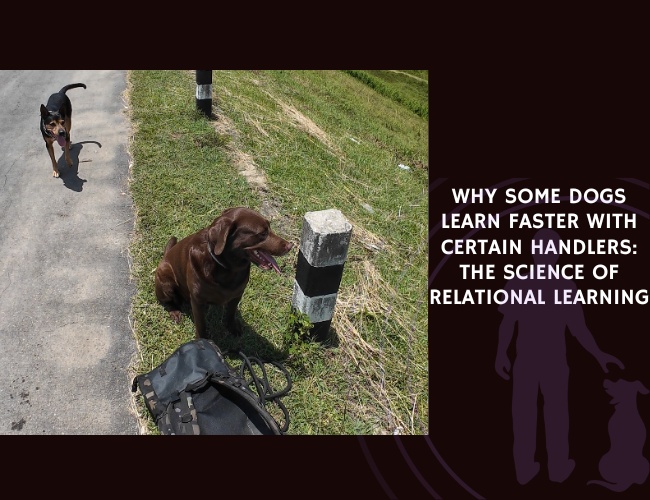
You kneel beside your dog after a beautifully executed sit-stay, voice rising with excitement, hands reaching for enthusiastic petting, energy flowing through every word of “Good boy! Yes! Such a good boy! You’re amazing!” And then you notice it—your dog’s eyes drift away, their body shifts, focus dissolves like morning mist. The very praise meant to strengthen the behavior seems to scatter their attention like leaves in wind.
This moment holds a paradox that puzzles many thoughtful dog guardians: how can positive reinforcement, delivered with genuine love and enthusiasm, sometimes work against learning rather than for it? The answer lies not in whether praise matters, but in understanding the intricate dance between emotional arousal, cognitive capacity, and the subtle art of clear communication.
Let us guide you through the neuroscience and behavioral dynamics that reveal why less can be more, why calm can be clearer, and how the quality of acknowledgment often matters far more than its volume. This is not about withholding affection—it’s about discovering how emotional clarity serves learning better than emotional overflow.
The Arousal Paradox: When Excitement Overwhelms Focus
Understanding Emotional Arousal and Cognitive Capacity
Your dog’s brain, like yours, operates within an optimal arousal zone for learning. Picture it as a bell curve: too little arousal leads to disengagement and boredom, while too much creates a cognitive flood that drowns out the ability to process information clearly. Excessive praise, particularly when delivered with high energy, elevated volume, or vigorous physical contact, can push your dog beyond this optimal threshold into a state of over-arousal.
When this happens, several neurological systems activate simultaneously. The limbic system—the brain’s emotional hub—becomes highly engaged, triggering the release of neurotransmitters and hormones associated with excitement and social bonding. While these chemical cascades feel wonderful, they simultaneously compete with the prefrontal cortex functions responsible for working memory, impulse control, and sustained attention. Your dog’s internal experience shifts from focused task engagement to emotional reactivity.
Research in affective neuroscience reveals that different emotional states engage distinct neural pathways. When praise becomes overstimulating, it primarily activates what researchers call the PLAY system (associated with joyful, social interaction) and the CARE system (linked to nurturing and bonding). These systems are beautiful and vital for your relationship, but they can inadvertently suppress the SEEKING system—the exploratory, goal-directed neural network that underlies effective learning and task focus.
The Competing Neural Systems
Think of your dog’s brain as an orchestra. The SEEKING system represents the section focused on the musical score—attentive, precise, goal-directed. When excessive praise floods in, it’s as though the percussion and brass sections suddenly play fortissimo, drowning out the melody the orchestra was carefully following. The music doesn’t stop, but coherence dissolves into noise.
This neural competition manifests behaviorally as what trainers observe in the moment: a dog who was locked onto a task suddenly becomes socially oriented, jumping, wiggling, seeking more interaction rather than awaiting the next cue. The shift isn’t disobedience—it’s a predictable neurological response to overwhelming emotional input. The dog’s cognitive resources have been redirected from executive function (staying, waiting, following sequential cues) toward social engagement and play anticipation.
For emotionally sensitive breeds like Cavalier King Charles Spaniels, Golden Retrievers, Cocker Spaniels, or Staffordshire Bull Terriers, this threshold arrives even more quickly. Their breeding history selected for dogs who deeply attune to human emotional states, making them exquisitely responsive to social cues—but also more vulnerable to becoming overwhelmed by emotional intensity. What reads as enthusiasm to you may register as an invitation for heightened social interaction to them, pulling focus away from the training objective entirely.
Breeds Most Susceptible to Praise-Driven Over-Arousal:
- Cavalier King Charles Spaniels: Bred for companionship, extremely human-focused
- Golden Retrievers: High social drive, eager to please, emotionally responsive
- Labrador Retrievers: Enthusiastic temperament, strong desire for interaction
- Cocker Spaniels: Sensitive, affectionate, highly attuned to handler emotions
- Staffordshire Bull Terriers: Intensely people-oriented, excitable when engaged
- English Springer Spaniels: High energy, socially motivated, responsive to human emotion
- Boxer Dogs: Exuberant personality, easily aroused, playful disposition
- Vizslas: Velcro dogs, emotionally sensitive, crave constant connection
- Weimaraners: High-strung, socially dependent, intense in their attachments
- Australian Shepherds: Emotionally intelligent, highly responsive to subtle cues
Recognizing Over-Arousal in Your Dog
How do you know when praise has crossed from supportive to distracting? Your dog’s body offers clear signals:
Physical Indicators of Over-Arousal:
- Sudden inability to hold previously mastered positions or commands
- Increased movement, fidgeting, or inability to remain still
- Mounting behaviors directed at objects, people, or other dogs
- Jumping that seems compulsive rather than joyful
- Repetitive actions like spinning, circling, or pacing
- Excessive barking or whining triggered by praise
- Dilated pupils that remain enlarged beyond initial excitement
- Rapid panting unrelated to temperature, exertion, or health
- General loss of responsiveness to familiar, well-established cues
- Mouthing or nipping that emerges during praise moments
Cognitive Indicators of Overwhelm:
- Difficulty processing new information immediately after receiving praise
- Significantly slower response times to subsequent cues
- Apparent “deafness” to verbal instructions that normally work
- Scattered attention that bounces between you, environment, and random stimuli
- Inability to chain behaviors that were previously performed fluently
- Forgetting known behaviors in the moment of high arousal
- Offering random behaviors (throwing everything at you) rather than thinking
- Lack of problem-solving capability during or after intense praise
Emotional Indicators You’ll Notice:
- Frantic enthusiasm that seems almost anxiety-tinged rather than purely joyful
- Persistent attempts to escalate interaction into play rather than continuing work
- Body language showing stress despite your positive intention (whale eye, lip licking)
- Paradoxical shutdown response in dogs who find intensity overwhelming
- Avoidance behaviors like looking away or backing up during praise
- Hypervigilance toward you, watching obsessively for the next praise moment
- Loss of food or toy interest despite previous motivation
Through the NeuroBond approach, we recognize that connection serves learning best when it remains within the dog’s cognitive comfort zone—present, warm, but not overwhelming. The goal isn’t emotional suppression but emotional clarity. 🧡
Motivation Dynamics: The Devaluation of Constant Reward
When Reinforcement Loses Its Power
Imagine receiving a standing ovation for every small action throughout your day—brushing your teeth, sending an email, walking to the kitchen. The first few ovations might feel wonderful, but by the afternoon, the gesture would lose all meaning. The lack of differentiation between mundane and meaningful would render the feedback useless as a guide for understanding what truly matters.
Your dog experiences a parallel phenomenon with excessive, undifferentiated praise. In operant conditioning terms, the effectiveness of any reinforcer depends partly on its informational value—its ability to clearly signal that a specific behavior was correct, desired, or exceptional. When praise flows constantly and predictably for every minor action, it transforms from a meaningful marker into background noise, losing its power to shape behavior or motivate performance.
This devaluation occurs through several mechanisms. First, predictability reduces salience. The brain’s reward system, heavily mediated by dopamine, responds most powerfully to unexpected rewards or those that carry uncertainty. When praise becomes entirely predictable, dopaminergic responses flatten, and the motivational impact diminishes. Your dog’s internal experience shifts from “That feedback tells me something important” to “That’s just what happens constantly.”
Signs Your Praise Has Lost Its Reinforcement Value:
- Your dog seems indifferent to verbal praise that once excited them
- Performance quality remains unchanged whether you praise or not
- Your dog continues behavior after praise without waiting for release
- Eye contact during training becomes minimal or absent
- Your dog appears to “go through the motions” without genuine engagement
- Known behaviors are performed with visible reluctance or slowness
- Your dog seeks out environmental rewards (sniffing, exploring) over your interaction
- Training sessions feel like you’re working harder than your dog
- Your dog performs better in the first few minutes before praise saturation sets in
- Other trainers or family members get better responses with less praise
Second, constant external reward can actually undermine intrinsic motivation. Research on motivational systems reveals that some dogs—particularly those bred for independent problem-solving or task completion—derive profound satisfaction from the act of successfully navigating a challenge. The intrinsic reward of mastering an obstacle, successfully tracking a scent, or correctly interpreting a complex cue sequence can be more powerfully motivating than continuous external acknowledgment.
Recognizing Dogs with Strong Intrinsic Motivation:
- They show intense focus during problem-solving tasks even without handler interaction
- Completion of a task visibly satisfies them more than verbal praise
- They return to challenging activities voluntarily and repeatedly
- Their energy and engagement increase as task difficulty rises
- They seem annoyed or distracted when you interrupt their focus with praise
- Environmental rewards (access to sniff, explore, chase) motivate them more than social feedback
- They work independently and check in with you only when genuinely uncertain
- Their tail wags and body language relax after successfully completing something difficult
- They lose interest in tasks that become too easy or repetitive
- They prefer newer, more complex challenges over rehearsing known behaviors
The Neuroscience of Intrinsic vs. Extrinsic Motivation
Your dog’s dopamine system responds differently to task completion than to social praise. When a dog successfully solves a problem independently—perhaps working through a complex retrieve or figuring out how to navigate an agility sequence—dopamine release occurs in a pattern associated with what researchers call “prediction error learning.” The brain registers, “I attempted something uncertain, invested cognitive effort, and succeeded.” This creates a sustained motivational state that reinforces persistence and focus.
External praise, especially when overused, tends to trigger more transient dopamine spikes followed by rapid decline. The dog experiences a brief “feel-good” moment, but the effect fades quickly, sometimes leaving them seeking the next praise hit rather than engaging deeply with the task itself. This pattern resembles aspects of reward habituation seen in addiction research—not that praise creates addiction in any clinical sense, but the neural principle holds: constant, predictable rewards can lead to diminished response.
For certain dogs, this means the most powerful reinforcement strategy involves allowing them to experience task satisfaction with minimal external commentary. A Border Collie successfully guiding sheep through a gate, a Labrador cleanly delivering a retrieve, a German Shepherd correctly discriminating scents—these moments carry intrinsic satisfaction that excessive verbal praise might actually dilute rather than enhance.
Breed Differences in Reward Responsiveness
Not all dogs experience rewards identically. Your understanding of breed tendencies can inform how you structure reinforcement:
Herding breeds (Border Collies, Australian Shepherds, Belgian Malinois) often find the work itself intensely rewarding. For these dogs, the opportunity to engage in the task—to exercise their problem-solving intelligence and drive—serves as primary reinforcement. Calm acknowledgment works better than effusive praise, which can interrupt their intense focus.
Sporting breeds (Retrievers, Spaniels, Setters) typically show high responsiveness to social praise, but quality matters more than quantity. These emotionally intelligent dogs read your emotional state with precision, and clarity of feedback—not volume—guides their learning most effectively.
Independent hunting breeds (Beagles, Dachshunds, Siberian Huskies) possess strong intrinsic motivation tied to scent work, pursuit, or endurance activities. For them, excessive verbal praise often registers as irrelevant interruption rather than meaningful feedback. The completion of self-directed goals motivates them more powerfully than human enthusiasm.
Guardian breeds (Rottweilers, Dobermanns, Cane Corsos) tend toward stoic focus and respond best to calm, consistent acknowledgment. Excessive emotional praise may actually trigger suspicion or wariness, as these dogs interpret emotional stability as a marker of trustworthy leadership. Overly effusive feedback can read as social instability to their observational nature.
Breed-Specific Reinforcement Preferences:
Herding Group (Task-Focused):
- Border Collies: Opportunity to work > verbal praise; prefer action-based rewards
- Australian Shepherds: Calm acknowledgment during work, celebration after completion
- German Shepherds: Respect consistency over enthusiasm; value purposeful direction
- Belgian Malinois: Task access is the reward; minimal social interruption preferred
Sporting Group (Socially Responsive but Balanced):
- Golden Retrievers: Appreciate warmth but need calm to maintain focus
- Labrador Retrievers: High praise tolerance but benefit from micro-praise during precision work
- English Springer Spaniels: Moderate praise works best; too much creates overwhelm
- Vizslas: Need reassurance but can become dependent on constant feedback
Hound Group (Independent Motivators):
- Beagles: Scent access motivates more than verbal praise
- Dachshunds: Stubborn independence means intrinsic satisfaction matters most
- Bloodhounds: Environmental rewards far outweigh social feedback
- Basset Hounds: Low social dependency; food rewards more effective than praise
Terrier Group (Self-Directed Workers):
- Jack Russell Terriers: Task completion is inherently rewarding
- Border Terriers: Moderate praise acceptance; prefer activity-based rewards
- Airedale Terriers: Independent decision-makers; minimal external validation needed
Working Group (Purposeful and Stoic):
- Rottweilers: Calm approval over effusive praise; distrust emotional inconsistency
- Dobermanns: Clear markers appreciated; emotional displays create wariness
- Cane Corsos: Minimal praise; leadership clarity is the true reward
- Great Danes: Gentle acknowledgment; size makes excited praise physically overwhelming
Toy Group (Variable Social Needs):
- Cavalier King Charles Spaniels: Highly social but easily over-aroused
- Italian Greyhounds: Sensitive; moderate warmth without intensity
- Papillons: Smart and task-oriented despite size; appreciate clear feedback
- Pugs: Social but benefit from calm interaction during focus work
This isn’t about rigidly categorizing every dog by breed—individual variation always matters—but understanding these tendencies helps you calibrate your reinforcement approach to your specific dog’s motivational profile. 🧠
Communication Clarity: When Signals Become Confusion
The Problem of Layered Input
Your dog processes information through multiple sensory channels simultaneously—auditory (your voice), visual (your body language), tactile (physical touch), and olfactory (chemical signals from your body). In clear communication, these channels align coherently, delivering a unified message. But excessive praise often creates what trainers call “layered signal confusion,” where multiple intense inputs arrive simultaneously, overwhelming the dog’s processing capacity.
Imagine trying to follow complex driving directions while someone simultaneously plays loud music, repeatedly touches your shoulder, and waves their hands in your peripheral vision. Each input demands cognitive resources, and together they create sensory overload that makes following the core instruction—the directions—nearly impossible.
When you deliver praise through simultaneous channels—excited voice, vigorous petting, animated body movements, intense eye contact—your dog experiences a similar overwhelm. Their brain must process the auditory information, interpret the physical sensation, decode your body language, and simultaneously try to understand what this means for their behavior and what comes next. This cognitive load can exceed their processing capacity, resulting in scattered attention or complete shutdown.
Common Layered Signal Combinations That Create Confusion:
- High-pitched voice + vigorous petting + bending over the dog + rapid movement
- Verbal praise + treat delivery + leash tension + forward body pressure
- “Good boy!” + hair ruffling + face-to-face positioning + excited breathing
- Marker word + squealing tone + jumping toward dog + hands reaching
- Calm words but anxious tone + tense body + forced smile + tight grip
- Multiple people praising simultaneously with different timing and intensity
- Praise + trying to position dog + giving next cue + environmental distractions
- Verbal cue + physical manipulation + treat lure + leash guidance all at once
Praise as an Unintended Terminal Marker
Dogs are brilliant pattern learners. When a specific sequence consistently ends with enthusiastic praise, they learn to interpret that praise as a terminal marker—a signal that the interaction or task sequence has concluded. This creates a significant training challenge when you intend for work to continue beyond the praise moment.
Consider this common scenario: You ask your dog to sit, they comply, you deliver enthusiastic praise (“Good boy! Yes! Such a good sit!”), and your dog immediately stands and approaches for more interaction. From your perspective, they broke position. From their perspective, they correctly read your communication: the praise signaled completion, releasing them from the sit requirement.
Situations Where Praise Commonly Becomes an Unintended Release Cue:
- Stay training: Enthusiastic praise causes dog to break position and approach
- Down-stay: Verbal approval prompts dog to stand up or shift into sitting
- Heel work: Praise during walking causes dog to turn toward you or stop
- Wait at doors: “Good wait!” interpreted as permission to go through
- Place training: Acknowledgment while on bed/mat causes dog to get up
- Recall training: Praising as dog approaches causes them to veer off or circle
- Loose leash walking: Excitement during nice walking creates pulling
- Focus exercises: Verbal feedback breaks eye contact immediately
- Distance work: Praise from afar signals dog to return rather than hold position
- Multi-step sequences: Praise after step one causes dog to stop rather than continue
This misunderstanding becomes even more pronounced when the volume, duration, and emotional intensity of praise consistently precede the end of a training session or task sequence. Your dog learns the pattern, and the praise itself becomes a conditioned cue for disengagement. They’re not being disobedient—they’re responding perfectly to the communication pattern you’ve inadvertently established.
The Principle of Congruence
Dogs possess extraordinary ability to detect incongruence—mismatches between different aspects of your communication. When your verbal message (“Good!”), your tone (anxious or uncertain), your body language (tense or hurried), and your timing (slightly off) don’t align, your dog perceives the inconsistency and struggles to understand what you actually mean.
Through the Invisible Leash philosophy, we recognize that true guidance flows from calm, aligned energy rather than from volume or intensity. When your acknowledgment matches your inner state—genuinely calm approval rather than performance anxiety masked as enthusiasm—your dog receives clear, trustworthy feedback. This congruence creates the foundation for focused learning, as your dog doesn’t need to invest cognitive resources trying to decode mixed signals.
Think of it this way: incongruent praise forces your dog to simultaneously process multiple conflicting data streams. Their brain essentially asks, “Which signal do I trust? The words say ‘good,’ but the tone suggests uncertainty, the timing seems off from what I did, and the body language feels tense. What does this actually mean?” This internal processing consumes the cognitive capacity needed for task focus and learning consolidation.
Examples of Incongruent Praise Your Dog Can Detect:
- Words say “Good!” but tone carries anxiety, frustration, or impatience
- Verbal praise delivered but body remains tense, rigid, or moving away
- Timing delayed from actual behavior, creating confusion about what was correct
- Smiling face but tight jaw, narrow eyes, or held breath (micro-expressions)
- Enthusiastic words but hand delivering treat shows hesitation or uncertainty
- Praise given but immediately followed by correction or repositioning
- Happy voice but leash tension increases simultaneously
- “Good boy!” but you’re looking at phone, scanning environment, or distracted
- Verbal approval but your energy reads as “let’s just get through this”
- Celebration that feels performed rather than genuine (dogs sense authenticity)
Micro-Praise: The Art of Minimal Meaningful Feedback
The alternative to excessive praise isn’t cold silence—it’s precisely calibrated acknowledgment. Micro-praise involves brief, calm, well-timed markers that provide clear feedback without triggering over-arousal or confusion. A simple “Yes” delivered in a neutral-to-pleased tone at the exact moment of correct behavior offers clarity without cognitive overwhelm.
This approach maintains your dog’s optimal arousal state for learning. They receive the information—”That behavior was correct”—without the system-flooding rush that pulls them out of task focus. The timing precision matters immensely: micro-praise delivered at the instant of correct behavior creates a clear contingency link, whereas delayed or prolonged praise muddies that connection.
Micro-Praise Implementation Guidelines:
- Choose one consistent marker word: “Yes,” “Good,” or even just “Mm”
- Keep marker to one second or less in duration
- Deliver in neutral-to-pleased tone, avoiding dramatic pitch changes
- Time the marker to the instant the correct behavior occurs, not after
- Remain physically still during the marker moment
- Separate marking from reward delivery by 1-2 seconds when using treats
- Practice the marker without your dog first to build muscle memory
- Use the marker only for correct behavior, maintaining its informational clarity
- Avoid adding the dog’s name or extra words to the marker
- Keep your breathing steady and body relaxed during marker delivery
What Micro-Praise Sounds Like in Practice:
- “Yes” (calm, brief, neutral tone) when dog sits
- “Good” (one second, pleasant but not excited) during heel position
- “Mm” (short hum of approval) for eye contact
- Click from clicker (mechanical marker, zero emotional content)
- “That” (matter-of-fact acknowledgment) for completing a behavior chain
Micro-praise also preserves what trainers call “behavioral momentum”—the flow state where your dog chains behaviors smoothly, moving from one cue to the next without interruption. When acknowledgment is brief and calm, it functions like punctuation in written language—necessary for clarity but invisible in its execution. The reader (your dog) processes the meaning without the punctuation pulling attention away from the content (the task).
Quiet. Clear. Effective.
Praise should guide, not overwhelm.
When human enthusiasm turns into emotional overflow, the dog’s focus dissolves. What feels like encouragement to us can feel like noise to them—flooding their nervous system with excitement instead of clarity. Training requires calm acknowledgment, not emotional escalation.
Too much emotion blocks cognition.
Excessive praise activates the dog’s PLAY and CARE systems, overpowering the SEEKING system—the neural pathway for learning, focus, and behavior shaping.

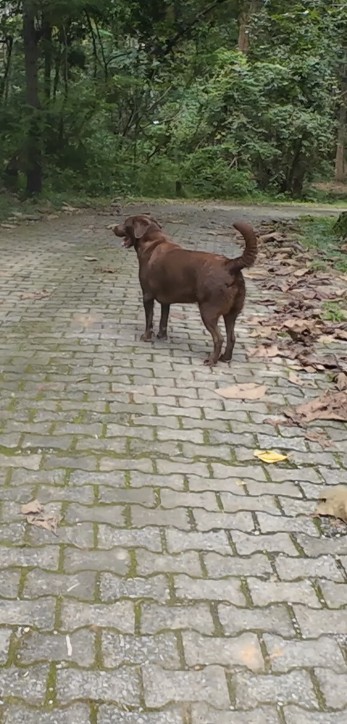
Connection refines, not amplifies.
Your dog learns best when your acknowledgment is steady, grounded, and emotionally attuned. Calm praise strengthens clarity. Controlled energy preserves focus.
Training Dynamics: Timing, Intensity, and Learning Flow
The Critical Window of Reinforcement
In behavioral science, the temporal relationship between a behavior and its consequence determines the strength of learning. This “contiguity” principle means that reinforcement must occur within a brief window—typically within one to two seconds—for the dog to clearly associate the feedback with the specific action.
Common Timing Mistakes That Undermine Learning:
- Praising after dog has already shifted position or moved (reinforcing the movement, not the original behavior)
- Delivering prolonged praise that extends 10-30 seconds, creating temporal confusion
- Starting praise before the complete behavior finishes (interrupting a stay, for example)
- Waiting too long while you fumble for treats, losing the critical association window
- Praising while dog is still processing what you asked, before they’ve committed to the behavior
- Delivering feedback during your emotional reaction rather than at the dog’s correct action
- Marking one behavior but delivering reward during a different behavior
- Creating lag time with conversation (“Oh, good boy, yes, you did it, that was so good…”)
- Praising the approach after a recall rather than the turn-and-come moment
- Acknowledging completion but then immediately giving another cue, blurring the message
Excessive praise often violates this principle in multiple ways. First, the duration of praise itself can extend far beyond this critical window. If your “Good boy!” evolves into thirty seconds of petting, verbal enthusiasm, and interaction, the temporal link between the original behavior (perhaps a sit) and the reinforcement becomes diffuse. Your dog may wonder: am I being reinforced for sitting, for maintaining the sit, for something I did during the praise, or for the interaction itself?
Second, highly intense praise can interrupt the behavior before it’s complete. If you’re teaching a stay and you begin praising before the stay duration is finished, you’ve inadvertently reinforced partial performance or even the breaking of position. The timing precision required for effective learning becomes impossible when emotional enthusiasm overrides disciplined timing.
Third, poorly timed praise can create superstitious conditioning—your dog associates the reward with whatever they happened to be doing at the moment of praise delivery rather than the intended behavior. If there’s a lag between their sit and your enthusiastic response, and they shifted their weight or looked away during that lag, you may inadvertently reinforce those unintended actions.
🧠 When Praise Becomes Noise: The Distraction Paradox
Understanding how excessive enthusiasm can overwhelm your dog’s learning capacity and what to do about it
Phase 1: Recognition
Identifying When Praise Disrupts Focus
🔬 The Neural Reality
Your dog’s brain operates within an optimal arousal zone for learning. Excessive praise floods the limbic system with emotional intensity, overwhelming the prefrontal cortex functions needed for working memory and sustained attention. The PLAY and CARE systems override the SEEKING system responsible for focused, goal-directed behavior.
⚠️ What You’ll Notice
• Dog breaks position immediately after praise
• Scattered attention that bounces between you and environment
• Inability to chain previously fluent behaviors
• Frantic enthusiasm that seems anxiety-tinged rather than joyful
🚫 Critical Warning Signs
Highly social breeds (Cavaliers, Golden Retrievers, Spaniels, Staffies) reach over-arousal threshold fastest. Their breeding selected for deep human attunement, making them exquisitely responsive to emotional intensity—but also most vulnerable to overwhelm.
Phase 2: Motivation Analysis
Understanding What Really Drives Your Dog
💡 Reward Devaluation Science
When praise becomes entirely predictable, dopaminergic responses flatten and motivational impact diminishes. Your dog’s brain shifts from “that feedback tells me something important” to “that’s just constant background noise.” The reinforcement loses its informational value and power to shape behavior.
✅ Intrinsic vs. Extrinsic Motivation
Some dogs derive profound satisfaction from task completion itself—successfully solving problems, tracking scents, or mastering challenges. For these dogs, constant external praise can actually undermine intrinsic motivation, diluting the powerful reward of independent achievement.
📊 Signs of Devaluation
• Dog seems indifferent to verbal praise that once excited them
• Performance remains unchanged whether you praise or not
• Your dog appears to “go through the motions” without genuine engagement
• Training feels like you’re working harder than your dog
Phase 3: Communication Clarity
Reducing Signal Confusion
⚡ Layered Signal Overload
Excited voice + vigorous petting + animated body movements + intense eye contact creates sensory overwhelm. Your dog’s brain must process multiple intense inputs simultaneously, exceeding processing capacity and resulting in scattered attention or complete shutdown.
🎭 The Congruence Problem
Dogs detect incongruence with precision. When your words say “Good!” but your tone carries anxiety, your body remains tense, or timing feels off, your dog perceives the inconsistency. This internal processing consumes cognitive resources needed for task focus and learning consolidation.
🎯 Micro-Praise Solution
Brief, calm, precisely-timed markers (“Yes,” “Good,” “Mm”) provide clear feedback without triggering over-arousal. This maintains optimal arousal state for learning—your dog receives information without system-flooding emotional rush. Through the Invisible Leash philosophy, guidance flows from calm, aligned energy rather than volume or intensity.
Phase 4: Timing Precision
The Critical Window for Reinforcement
⚙️ The Contiguity Principle
Reinforcement must occur within 1-2 seconds for your dog to clearly associate feedback with the specific action. Prolonged praise that extends 10-30 seconds creates temporal confusion—your dog wonders: “Am I being reinforced for sitting, maintaining the sit, or something during the praise itself?”
🔄 Praise as Release Cue
Dogs are brilliant pattern learners. When enthusiastic praise consistently precedes the end of task sequences, they learn to interpret praise as a terminal marker—a signal that interaction has concluded. This creates breakdown: you intend continuation, they read completion.
✨ Marking vs. Rewarding
Separate these functions: marker identifies correct behavior (instant, brief), reward provides motivation (can follow after brief pause). Keep marker to one second maximum. Deliver in neutral-to-pleased tone at the exact instant behavior occurs. This precision creates clear contingency links.
Phase 5: Human Self-Awareness
Whose Emotions Are We Really Managing?
💭 The Uncomfortable Truth
Excessive praise often serves the human’s emotional needs more than the dog’s learning requirements. We carry anxiety about our dogs’ happiness, uncertainty about our training competence, and desire for emotional warmth. Enthusiastic praise soothes these human needs, providing us with a sense that we’re being good guardians.
🌊 Emotional Contagion Reality
Dogs mirror their human companions’ emotional states. When you express high arousal through enthusiastic praise, your dog experiences corresponding arousal spike—heart rate increases, stress hormones shift, attention broadens from focused to socially responsive. This contagion serves relationships but works against learning sequences requiring sustained focus.
🧘 Emotional Clarity Practice
Ask yourself: “Is this acknowledgment serving my dog’s learning, or my emotional needs?” When you deliver acknowledgment from genuine calm approval rather than performance anxiety or emotional neediness, your communication becomes transparent. Your dog receives clear feedback uncontaminated by confusing emotional undercurrents.
Phase 6: Individual Calibration
Reading Your Unique Dog
🧬 Temperament Dimensions
Your dog’s temperament encompasses sociability (how much they seek human interaction), arousal baseline (how easily they become excited), stress resilience (overwhelm threshold), and learning style (sequential vs. exploratory). Understanding these dimensions helps you calibrate feedback appropriately.
🌸 Soft Temperament Signals
• Backs away or moves away during enthusiastic praise
• Shows whale eye (whites visible) when you’re excited
• Lowers body, tucks tail, or exhibits calming signals during praise
• Freezes or becomes unresponsive when intensity increases
• Performs beautifully calm but struggles when you’re animated
🔧 Task-Focused Dogs
Some dogs prioritize task completion over social interaction. For these individuals, excessive social feedback registers as unwelcome interruption. Allow extended problem-solving time, use extremely brief markers, and provide access to preferred work as primary reward. Honor their cognitive style rather than forcing social-reward frameworks.
Phase 7: Practical Implementation
Building New Habits Gradually
📋 6-Week Transition Plan
Week 1: Awareness—record yourself and count praise instances
Week 2: Marker introduction while maintaining usual patterns
Week 3: Reduce volume by 30%, shorten duration to 3 seconds max
Week 4: Practice physical stillness during marking
Week 5: Implement strategic silence between behaviors
Week 6: Variable reinforcement for known behaviors
🎯 Neutral Handling Essentials
• Keep voice volume and tone consistent throughout session
• Avoid sudden movements, jumping, or lunging toward dog
• Maintain upright or slightly back-weighted posture
• Use physical touch only for necessary guidance
• Breathe steadily, avoiding breath-holding during tense moments
🌟 Life Rewards Alternative
Not all reinforcement needs verbal praise. Use environmental access (permission to sniff), activity rewards (tug game, retrieves), or Premack Principle applications (complete recall → release to play with dog friend). These bypass praise complications entirely while providing potent motivation.
Phase 8: Self-Regulated Focus
Building Independent Engagement
🎓 The Ultimate Goal
Develop a dog who maintains focus without requiring constant external management of emotional or motivational state. Dogs with self-regulated focus show thinking behaviors (pausing to consider), resilience to distractions, and smooth behavioral transitions without handler prompting. Through Soul Recall, these moments reveal the deepest partnership—engagement from genuine understanding rather than dependence on external validation.
🤝 The Mature Partnership
As partnership deepens, communication becomes nearly invisible—subtle, efficient, almost telepathic. Slight body shifts communicate direction, barely-there markers acknowledge correctness, silence carries meaning. Your dog reads intent through energy and presence. This evolution emerges from clarity, consistency, and mutual understanding rather than emotional intensity.
💫 Appropriate Celebration
Enthusiastic praise still has its place: after genuine breakthroughs, at natural conclusion points, during relationship-building activities outside training, and for emotionally reserved dogs needing confidence. The key lies in intentionality—using enthusiasm deliberately for specific purposes, not as unconscious default.
📊 Breed Group Praise Response Patterns
🐕 Herding Group
Response: Task-focused, work itself is reward
Best Approach: Calm acknowledgment, minimal interruption
Examples: Border Collies, Australian Shepherds, Malinois
Risk: Effusive praise interrupts intense focus
🦮 Sporting Group
Response: Socially responsive but need balance
Best Approach: Moderate warmth, micro-praise during precision work
Examples: Retrievers, Spaniels, Setters
Risk: High praise tolerance but easily over-aroused
🐾 Hound Group
Response: Independent, scent/activity motivated
Best Approach: Environmental rewards over verbal praise
Examples: Beagles, Dachshunds, Bloodhounds
Risk: Verbal praise registers as irrelevant interruption
🛡️ Working/Guardian Group
Response: Stoic, interpret emotional stability as leadership
Best Approach: Consistent calm approval, no effusion
Examples: Rottweilers, Dobermanns, Cane Corsos
Risk: Excessive praise creates suspicion or wariness
🐕🦺 Terrier Group
Response: Self-directed, task completion rewarding
Best Approach: Activity-based rewards, brief markers
Examples: Jack Russells, Airedales, Border Terriers
Risk: Social feedback less motivating than work itself
🎀 Toy/Companion Group
Response: Variable—some highly social, others task-oriented
Best Approach: Calibrate individually, moderate warmth
Examples: Cavaliers (easily over-aroused), Papillons (task-focused)
Risk: Size misleads—sensitive systems need careful calibration
⚡ Quick Reference Formula
Optimal Praise Equation: Brief marker (1 second max) + Precise timing (within 1-2 seconds) + Neutral tone + Physical stillness = Clear communication without over-arousal
Warning Threshold: If your dog’s focus scatters, body language becomes frantic, or they break position after praise → You’ve exceeded their optimal arousal zone
The Calibration Test: Record a session, count praise instances, observe dog’s responses. Does focus improve or deteriorate after each praise moment? Your dog provides the answer.
🧡 The Zoeta Dogsoul Perspective
Through the NeuroBond approach, we recognize that trust becomes the foundation of learning—not through emotional intensity, but through emotional clarity. The Invisible Leash reminds us that true guidance flows from centered presence, from calm energy that informs rather than overwhelms. When we honor our dogs’ cognitive capacity and communication preferences, we create space for Soul Recall—those profound moments where partnership transcends technique, where understanding replaces dependency, where silence speaks louder than noise.
Your dog doesn’t need your perfect performance. They need your honest presence, your clear intention, and your willingness to communicate in ways that serve their learning rather than your emotional needs. That balance between science and soul, between clarity and connection, between knowledge and wisdom—that’s the essence of Zoeta Dogsoul. When praise becomes signal rather than noise, when acknowledgment informs rather than overwhelms, we discover that the deepest training relationship lives not in constant validation but in mutual understanding.
© Zoeta Dogsoul – Where neuroscience meets soul in dog training
Reinforcement Schedules and Cognitive Expectations
Dogs, like all mammals, learn to predict patterns in their environment. When reinforcement follows a completely predictable schedule—praise after every single instance of a behavior—learning initially occurs quickly but can lead to several challenges:
The behavior becomes dependent on continuous reinforcement, meaning performance deteriorates when praise is absent. Your dog learns “I only perform this when praise follows,” rather than developing an intrinsic understanding of the behavior itself or appreciation for variable reinforcement patterns that more closely mirror real-world contingencies.
Predictable reinforcement can also reduce engagement and focus. When your dog knows exactly what’s coming, the anticipatory interest that drives attention diminishes. Variable reinforcement schedules—where acknowledgment occurs intermittently and unpredictably—tend to create more sustained motivation and focus because the dog remains in a state of attentive anticipation.
This doesn’t mean randomly withholding deserved acknowledgment, but rather building toward a reinforcement pattern where your dog learns to trust that good work receives recognition eventually, without needing constant external validation for every correct repetition. This approach mirrors how intrinsic task satisfaction functions—the work itself becomes rewarding, with occasional external acknowledgment serving as confirmation rather than as the sole motivation.
Building Steady Focus Through Neutral Handling
Neutral handling represents a training philosophy that minimizes extraneous emotional input, allowing your dog to develop focus based on task understanding rather than emotional arousal. This approach doesn’t mean you become cold or robotic—it means you cultivate calm, intentional presence that provides clarity without distraction.
In practice, neutral handling involves:
Maintaining steady emotional baseline: Your energy remains consistent whether your dog performs brilliantly or makes mistakes. This stability communicates confidence and trustworthiness, allowing your dog to focus on understanding expectations rather than monitoring your emotional state.
Core Neutral Handling Practices:
- Keep your voice volume and tone consistent throughout the session
- Avoid sudden movements, jumping, or lunging toward your dog
- Maintain upright or slightly back-weighted body posture, not leaning forward
- Use physical touch only for necessary guidance, not for emotional reassurance
- Deliver verbal feedback without accompanying physical celebration
- Breathe steadily and naturally, avoiding holding breath during tense moments
- Keep facial expressions neutral-to-pleasant without exaggeration
- Position your body at angles rather than face-to-face confrontational stances
- Move deliberately and predictably rather than reactively
- Create clear distinction between training time and play/affection time
- Stay grounded and centered rather than matching your dog’s energy level
- Minimize your talking during work sequences, using only necessary cues
- Maintain spatial awareness, giving dog appropriate working distance
- Keep hands quiet and by your sides unless actively signaling or rewarding
Using minimal physical cues: Excessive touching, petting, or physical manipulation during training often distracts rather than helps. Neutral handling employs physical guidance only when necessary for instruction, not for emotional reassurance or celebration.
Delivering verbal markers efficiently: Words become precise tools rather than emotional overflow. A single calm “Yes” or “Good” provides all the information needed. Additional verbalization adds cognitive load without adding clarity.
Creating predictable structure: Neutral handling emphasizes clear beginning and end points for tasks, consistent cue delivery, and structured progression through training sequences. This predictability reduces anxiety and allows focus to deepen naturally.
Through this approach, something remarkable emerges: your dog develops what might be called “self-regulated focus”—the ability to engage deeply with tasks without requiring constant external emotional management. They learn to find satisfaction in the work itself, in the clarity of communication, and in the predictable structure of learning. This is where Soul Recall operates most powerfully—in those moments when your dog connects to the intrinsic satisfaction of partnership and understanding rather than seeking constant external validation.

The Human Factor: Whose Emotions Are We Really Managing?
Praise as Emotional Regulation for Humans
Here lies an uncomfortable truth: excessive praise often serves the human’s emotional needs more than the dog’s learning requirements. We humans carry anxiety about our dogs’ happiness, uncertainty about our training competence, and a deep desire for the emotional warmth that comes from effusive interaction with our beloved companions. Praising enthusiastically soothes these human emotional needs, providing us with a sense that we’re being good guardians, that our dogs feel loved, that the relationship is thriving.
Signs Your Praise Might Be Serving Your Needs Rather Than Your Dog’s:
- You feel anxious or guilty when you don’t praise frequently
- Your praise increases when you feel uncertain about your training approach
- You praise more when others are watching (performance anxiety)
- The volume of your praise correlates with your stress level, not dog’s performance quality
- You use praise to make yourself feel better after making a training mistake
- Your praise seeks to prove to yourself that you’re a “good” dog owner
- You feel emotionally satisfied by praising regardless of your dog’s response
- You praise to avoid the discomfort of silence or stillness during training
- Your praise fills your need for interaction more than marking specific behaviors
- You notice you praise more when you’re having a difficult day emotionally
- Your dog’s response (confusion, distraction) doesn’t change your praise patterns
- You feel resistant to reducing praise because it makes you feel less connected
- You’re praising to manage your own frustration or impatience
- The act of praising relieves your anxiety about the training not working
This human-centric use of praise isn’t malicious—it’s deeply understandable. The emotional bond between dogs and humans involves real neurochemical responses. When you interact warmly with your dog, both your brains release oxytocin, creating feelings of bonding and well-being. This biochemical reward loop feels wonderful and strengthens attachment, which is genuinely valuable for your relationship.
However, when training focus shifts from “what does my dog need to learn this skill effectively” to “what makes me feel like a loving guardian,” the communication becomes muddy. Your emotional needs and your dog’s learning needs may not align, and when excessive praise emerges from your emotional state rather than from your dog’s behavioral progress, the feedback loses its instructional value.
The Projection of Human Social Norms
Humans exist within cultures that often emphasize effusive verbal praise as a primary form of social reinforcement. We grow up hearing “Good job!” “Excellent!” “I’m so proud of you!” accompanied by enthusiastic tone and often physical affection. These norms become so deeply ingrained that we unconsciously project them onto our dogs, assuming they need the same volume and style of acknowledgment that we do.
But dogs didn’t evolve within human verbal culture. Their communication systems rely heavily on subtle body language, energy, and context. Canine social interactions involve relatively minimal vocalization compared to human exchanges. When dogs communicate approval or contentment with each other, it typically manifests through calm proximity, relaxed body language, and the absence of threat signals rather than through anything resembling human-style verbal enthusiasm.
This doesn’t mean dogs can’t learn to enjoy and respond to verbal praise—they absolutely can and do. But understanding that excessive verbal enthusiasm isn’t their native communication style helps explain why it sometimes confuses or overwhelms them. You’re essentially speaking a different language at high volume, when a few words in a shared dialect would communicate more clearly.
Emotional Contagion and Social Pressure
Dogs experience emotional contagion—they tend to mirror the emotional states of their human companions. This capacity, likely evolved through domestication, creates deep empathetic bonds. When you feel anxious, your dog often becomes vigilant. When you’re calm, they often relax. This mirroring serves survival and social harmony.
How Emotional Contagion Manifests During Training:
- Your excitement level directly correlates with your dog’s arousal state
- Your anxiety about performance translates into your dog’s nervous behaviors
- Your frustration causes your dog to become uncertain or avoidant
- Your rushed energy makes your dog move quickly without thinking
- Your calm confidence helps your dog settle into focused work
- Your disappointment creates hesitation in your dog’s responses
- Your fear of failure increases your dog’s stress behaviors
- Your genuine joy creates relaxed, happy engagement in your dog
- Your impatience shortens your dog’s attention span and willingness
- Your scattered attention produces distracted behavior in your dog
However, emotional contagion also means that when you express high arousal through enthusiastic praise, your dog experiences a corresponding arousal spike. Their physiology responds to yours: heart rate increases, stress hormones shift, attention broadens from focused to socially responsive. This contagion serves relationships in many contexts, but during learning sequences that require sustained focus, it can work against training goals.
Moreover, your dog may experience what could be called social pressure—an implicit expectation to match your emotional intensity. If you’re expressing high excitement, they may feel a need to reciprocate with similarly elevated behavior. This social obligation can override their natural inclination to maintain task focus, creating internal conflict between what the training scenario requires (calm focus) and what your emotional display seems to request (excited social engagement).
Finding Emotional Clarity Through NeuroBond Principles
The NeuroBond model invites you to examine your emotional state and communication with honesty and self-awareness. It asks: “Is this acknowledgment serving my dog’s learning, or is it serving my emotional needs? Am I communicating clearly, or am I creating confusion through emotional overflow?”
This self-examination isn’t about self-criticism—it’s about cultivating emotional clarity that serves your partnership. When you can deliver acknowledgment from a place of genuine calm approval rather than performance anxiety or emotional neediness, your communication becomes transparent. Your dog receives clear feedback uncontaminated by confusing emotional undercurrents.
Emotional clarity also means matching your internal state to your external expression. If you feel uncertain about your dog’s progress but cover it with forced enthusiasm, your dog perceives the incongruence. If you feel genuinely pleased with their effort and express it through calm, centered acknowledgment, they receive aligned, trustworthy feedback.
This is the essence of the Invisible Leash—guidance that flows from centered presence rather than from emotional manipulation or intensity. Your dog learns to trust your feedback because it remains congruent, timely, and oriented toward their learning rather than toward managing your emotional experience. 🧡
Understanding Individual Differences: Your Unique Dog
Temperament and Praise Responsiveness
While breed tendencies offer useful general guidance, individual temperament ultimately determines how your specific dog responds to different reinforcement styles. Some dogs within typically praise-responsive breeds show minimal interest in verbal acknowledgment, while some dogs from typically independent breeds surprise their guardians with their enthusiasm for social feedback.
Your dog’s temperament encompasses several dimensions relevant to praise responsiveness:
Temperament Dimensions That Influence Praise Response:
Sociability Spectrum:
- High sociability: Seeks constant human interaction; praise highly motivating but risks over-arousal
- Moderate sociability: Values connection but can work independently; balanced praise works well
- Low sociability: Prefers task focus over social feedback; minimal praise more effective
Arousal Baseline:
- Naturally high arousal: Becomes excited easily, slow to settle; praise must be very calm
- Moderate arousal: Balanced energy; can handle moderate praise without losing focus
- Naturally low arousal: Needs slightly elevated praise to maintain engagement and interest
Stress Resilience:
- Low threshold: Overwhelmed by intensity; requires whisper-level acknowledgment
- Moderate threshold: Handles normal training stress well; standard praise appropriate
- High threshold: Confident in various situations; can handle stronger feedback when appropriate
Learning Style Preferences:
- Sequential learners: Need clear step-by-step markers with precise feedback timing
- Exploratory learners: Prefer discovering solutions with minimal handler interference
- Social learners: Learn best through interaction and relationship-based feedback
- Environmental learners: Motivated by access to stimuli rather than social rewards
Sensitivity to Sensory Input:
- Touch-sensitive: Physical praise overwhelming or aversive
- Sound-sensitive: Loud voices or enthusiastic tones create stress
- Motion-sensitive: Quick movements or animated gestures are distracting
- Low sensitivity: Requires more noticeable feedback to register acknowledgment
Sensitivity and the Easily Overwhelmed Dog
Certain dogs—regardless of breed—possess what trainers call “soft” temperaments. These sensitive souls become easily overwhelmed by intense sensory input, emotional intensity, or environmental stimulation. For them, excessive praise isn’t merely distracting—it can be genuinely aversive.
Clear Indicators Your Dog Has a Soft Temperament:
- Backs away or moves away from you during enthusiastic praise
- Averts eyes or shows whale eye (whites of eyes visible) when you’re excited
- Lowers body posture, tucks tail, or exhibits calming signals during praise
- Excessive lip licking or yawning in response to your enthusiasm
- Freezes or becomes still and unresponsive when praise intensity increases
- Shows stress scratching, sniffing ground, or shaking off after intense feedback
- Performs beautifully when you’re calm but struggles when you’re animated
- Seems to “shut down” emotionally during training sessions with frequent praise
- Becomes increasingly reluctant to engage as session progresses
- Seeks distance from you during training rather than proximity
- Offers appeasement behaviors (low body, soft eyes, slow movement) when you praise
- Works better with other handlers who naturally use less enthusiasm
- Shows relief behaviors when you stop talking or touching them
- Responds to whispered cues better than normal volume instructions
For sensitive dogs, the path forward involves discovering their “just right” level of acknowledgment—feedback that registers as positive without crossing into overwhelming. This often means whispered praise, gentle eye contact, calm proximity, or even just a release to a preferred activity as reinforcement. Your sensitivity to their sensitivity creates the foundation for confident learning.
The Stoic Worker: Dogs Who Prefer Task Over Talk
Some dogs simply don’t prioritize social interaction as their primary motivation. These individuals—often from working, hunting, or guardian backgrounds, but not exclusively—find task completion, problem-solving success, or environmental interaction more reinforcing than human verbal praise.
For these dogs, excessive social feedback may register as an unwelcome interruption to their focus on what actually interests them. Imagine being deeply absorbed in solving a complex puzzle when someone repeatedly interrupts with enthusiastic commentary. The interruption doesn’t help—it breaks your concentration and dilutes your satisfaction in the work itself.
Training these dogs effectively means understanding that your role shifts from being the primary source of reward to being the facilitator of opportunities for intrinsic satisfaction. You might:
Alternative Reinforcement Strategies for Task-Oriented Dogs:
- Allow extended problem-solving time before offering any verbal feedback
- Use silence as your primary communication during their focus work
- Employ extremely brief markers (“Mm”) that don’t create social obligation
- Provide access to preferred work (scent games, retrieving, herding) as primary reward
- Create increasingly complex challenges that satisfy their drive to solve problems
- Release to environmental exploration as reinforcement rather than using treats or praise
- Structure training so successful completion grants access to the next challenge
- Minimize your own movement and presence, allowing them space to think independently
- Use opportunity to continue working as the reward (the work itself is reinforcing)
- Acknowledge breakthrough moments with calm satisfaction rather than celebration
- Respect their focus by not interrupting with social demands
- End sessions while they’re still engaged, leaving them wanting more
- Pair them with appropriate work partners (other dogs, stock, equipment) as motivation
- Allow them to “own” the task rather than constantly directing every moment
This approach honors their cognitive style rather than trying to force them into a social-reward framework that doesn’t match their natural motivations. Through understanding, you build trust and effective communication rather than creating conflict between their preferences and your training methods.
Practical Applications: Training With Precision and Clarity
Assessing Your Current Praise Patterns
Before adjusting your approach, develop honest awareness of your current patterns. Over the next few training sessions, observe yourself:
Self-Assessment Questions for Your Praise Patterns:
Frequency Analysis:
- How many times do you verbally praise during a 10-minute training session?
- Do you praise after every single correct response or intermittently?
- Does praise frequency increase as the session progresses or stay consistent?
- Do you praise more when your dog struggles or when they succeed easily?
Intensity Evaluation:
- On a scale of 1-10, what’s your typical praise volume and enthusiasm level?
- Does your voice pitch rise significantly when you praise?
- How long do individual praise episodes last (1 second vs 10 seconds)?
- Does your intensity vary based on your mood rather than dog’s performance?
Body Language Awareness:
- Do you remain still during praise or move toward your dog?
- Do you reach out to touch, pat, or pet while praising?
- What does your facial expression do during enthusiastic praise?
- Are you creating additional visual stimuli with hand gestures or body animation?
Timing Precision:
- Can you deliver praise within 1 second of the correct behavior?
- Do you praise during the behavior, after completion, or during transition?
- Does your praise timing remain consistent or vary unpredictably?
Dog Response Observation (Most Critical):
- Does your dog maintain focus after praise or does attention scatter?
- Can they smoothly transition to the next behavior or does praise create disruption?
- Do they seek more social interaction or return to task orientation?
- Does their arousal level increase, decrease, or stabilize with your praise?
- Do they perform better earlier in sessions before praise accumulates?
This assessment requires honesty without judgment. The goal isn’t to discover you’re “doing it wrong”—it’s to gather data about what currently happens and how your dog responds to it.
Implementing Micro-Praise Techniques
Transitioning to micro-praise involves building new habits gradually:
Step-by-Step Micro-Praise Transition Plan:
Week 1: Awareness Phase
- Record yourself training and count praise instances without changing anything
- Note your dog’s responses to different praise intensities
- Identify patterns: when do you praise most? When does it disrupt focus?
- Practice your chosen marker word alone, without your dog, 50 times daily
Week 2: Marker Introduction
- Begin using your single marker word while still maintaining your usual praise patterns
- Practice timing: marker at the instant of correct behavior, praise can follow after
- Keep marker neutral in tone while experimenting with volume that works
- Observe if your dog begins responding differently to the brief marker vs longer praise
Week 3: Intensity Reduction
- Reduce praise volume by approximately 30% from baseline
- Shorten praise duration, working toward 3 seconds maximum
- Practice delivering marker + short pause + reward (treat or release)
- Notice any changes in your dog’s focus or behavioral fluidity
Week 4: Physical Stillness Practice
- Work on remaining still during marker delivery
- Separate petting/touching from the marking moment by 2-3 seconds
- Practice neutral body language with relaxed shoulders and grounded stance
- Reward yourself when you maintain stillness (positive reinforcement for humans too!)
Week 5: Strategic Silence Implementation
- Allow 2-3 second pauses between behaviors in a chain with no verbal input
- Use silence as communication: stillness means “you’re on the right track”
- Notice how silence affects your dog’s thinking behaviors and focus depth
- Experiment with when silence helps vs when brief marking serves better
Week 6: Variable Reinforcement Integration
- Begin praising intermittently rather than after every correct response
- Use the best-quality marker timing for the most difficult or new behaviors
- Maintain consistency for behaviors in acquisition, variability for known behaviors
- Assess overall focus improvement and behavioral fluency changes
Structured Session Design
How you structure entire training sessions affects whether praise helps or hinders:
Elements of Well-Structured Training Sessions:
Session Framework:
- Clear verbal “ready to work” cue that signals training context begins
- Defined working area or space that dog associates with focus time
- 5-15 minute focused intervals depending on dog’s age and experience level
- Built-in break periods between intervals with clear release cue
- Consistent ending ritual that communicates session completion
- Post-session decompression time before returning to normal household activities
Within-Session Structure:
- Start with easiest/most fluent behaviors to build confidence and engagement
- Progress toward more challenging tasks once dog is mentally warmed up
- Include 2-3 “bank” behaviors (already mastered) between new skill attempts
- Allow processing pauses of 3-5 seconds between behavior requests
- End on a successful repetition of something dog does well
- Avoid ending session during frustration or confusion for either party
Reinforcement Architecture:
- Continuous reinforcement (every correct response) only for brand new behaviors
- Variable reinforcement (intermittent) once behavior is understood
- Higher rate reinforcement for difficult tasks or challenging environments
- Lower rate reinforcement for well-established behaviors in familiar settings
- Jackpot rewards (multiple treats, extended play) for breakthrough moments
- Life rewards (release to sniff, explore, play) integrated throughout
Environmental Considerations:
- Begin in low-distraction environment for new skills
- Gradually increase environmental complexity as proficiency builds
- Reduce reinforcement rate as distraction level increases
- Return to easier environments if dog shows overwhelm or confusion
- Create predictable training spaces dog can anticipate and prepare for mentally
The Role of Life Rewards
Not all reinforcement needs to come through praise or food treats. Life rewards—access to preferred activities, environmental interaction, or social opportunities—can serve as powerful reinforcement while completely bypassing the potential complications of excessive verbal praise.
Effective Life Reward Examples by Category:
Environmental Access Rewards:
- Permission to sniff a particularly interesting spot for 10-30 seconds
- Release to explore a new area or environment
- Access to interesting textures (grass, sand, leaves, water)
- Opportunity to investigate novel objects or surfaces
- Permission to dig in an appropriate area
- Access to elevated surfaces for observation-oriented dogs
- Release to check out other people or dogs at appropriate distance
Activity-Based Rewards:
- Brief game of tug with favorite toy
- 3-5 retrieves of preferred object
- Chase games or running alongside handler
- Swimming or water play for water-loving breeds
- Short tracking or scent work exercises
- Permission to perform breed-specific behaviors (herding breeds moving stock)
- Agility sequence or jumping opportunity
Social Rewards (Non-Praise):
- Calm proximity to handler without demands
- Gentle, slow petting in dog’s preferred zones
- Quiet companionship and stillness together
- Release to greet another dog appropriately
- Opportunity to interact with favorite person
- Parallel walking or hiking together
- Cooperative activities (tricks, partner work)
Premack Principle Applications:
- Complete recall → release to return to play with dog friends
- Hold stay → permission to go through door to exciting area
- Loose leash walking → reach the destination (park, trail, friend’s house)
- Wait politely → receive dinner bowl
- Eye contact during distractions → release to investigate the distraction
- Complete training sequence → end session and go home (for dogs who dislike training)
- Perform less-preferred behavior → access to high-preference behavior
These reward types often prove especially effective for dogs who find excessive social feedback overwhelming or distracting, as they provide motivation without the cognitive load of intense human interaction.
Long-Term Perspective: Building Self-Regulated Focus
From External Dependency to Internal Confidence
The ultimate training goal extends beyond teaching specific behaviors—it’s about developing a dog who can maintain focus and engagement without requiring constant external management of their emotional or motivational state. This self-regulated focus emerges when training prioritizes clarity and understanding over emotional manipulation or constant reinforcement.
Characteristics of Dogs with Self-Regulated Focus:
Behavioral Indicators:
- Maintains attention on task even when reinforcement becomes intermittent
- Returns attention to handler quickly after environmental distractions
- Shows “thinking behaviors”: pausing, considering, processing before responding
- Demonstrates smooth transitions between behaviors without handler prompting
- Holds positions (sit, down, stay) with relaxed body language, not tension
- Offers eye contact voluntarily to check in with handler
- Recovers quickly from mistakes without shutting down
- Shows persistence when problem-solving through challenges
Emotional Indicators:
- Remains within optimal arousal zone without handler management
- Displays calm confidence rather than frantic eagerness
- Shows resilience to novel stimuli without requiring handler reassurance
- Exhibits relaxed body language during work: soft eyes, natural breathing
- Demonstrates enjoyment of work itself, not just handler interaction
- Maintains steady emotional baseline regardless of reinforcement timing
- Shows appropriate enthusiasm proportional to task difficulty
Cognitive Indicators:
- Processes new information efficiently without constant handler feedback
- Chains behaviors fluently based on environmental cues and context
- Discriminates between similar cues with increasing precision
- Shows generalization of learned behaviors across contexts
- Demonstrates problem-solving initiative when faced with challenges
- Retains learning across sessions with minimal warm-up needed
- Exhibits creativity in appropriate contexts (trick training, problem-solving games)
This capacity doesn’t emerge through any single technique but rather through consistent experiences of clear communication, appropriate challenge levels, and reinforcement that informs rather than overwhelms. Through the Soul Recall framework, we recognize these moments as the deepest form of partnership—where your dog engages not from dependence on your emotional energy but from genuine understanding and shared purpose.
The Mature Training Relationship
As your partnership deepens over months and years, the role of explicit reinforcement naturally evolves. In mature training relationships, much communication becomes nearly invisible to observers—subtle, efficient, almost telepathic in its efficiency.
You’ve built a shared language where a slight shift in your body orientation communicates direction, a barely-there verbal marker acknowledges correctness, and silence itself carries meaning rather than confusion. Your dog reads your intent through energy and presence rather than requiring dramatic external cues.
This evolution doesn’t happen through reducing affection or diminishing your bond—quite the opposite. It emerges from a relationship built on clarity, consistency, and mutual understanding rather than on emotional intensity or constant external validation. The affection remains profound; it simply manifests through respect, trust, and smooth collaboration rather than through effusive displays that ultimately serve human needs more than canine ones.
In these mature partnerships, praise still has a place, but it arrives as genuine celebration of exceptional performance or breakthrough moments rather than as constant background noise. Its rarity makes it meaningful; its timing makes it clear; its calmness makes it trustworthy. That balance between science and soul—that’s the essence of Zoeta Dogsoul. 🧠
When Praise Works: Finding the Balance
Appropriate Uses for Enthusiastic Celebration
To be clear: this article doesn’t argue that all praise is problematic or that you should never express joy in your dog’s achievements. Rather, it illuminates the distinction between praise as a precise training tool and praise as relationship expression, helping you understand when each serves best.
Enthusiastic celebration absolutely has its place:
Appropriate Contexts for Enthusiastic Praise:
Breakthrough Achievement Moments:
- First time your dog successfully performs a complex behavior they’ve been struggling with
- Overcoming a significant fear (entering water, navigating scary surface, approaching novel object)
- Breakthrough in confidence or emotional healing for rescue or reactive dogs
- Successfully performing behavior in highly challenging environment for first time
- Solving a complex puzzle or problem independently
Natural Conclusion Points:
- End of a training session after sustained focus and good effort
- Completion of a full behavioral chain or sequence
- Finishing a trial, test, or performance successfully
- After working through something genuinely difficult or uncomfortable for your dog
- Concluding a challenging day of training or new experiences
Relationship-Building Activities (Outside Formal Training):
- Casual play sessions with no training objectives
- Reunion after separation (though keep it moderate to avoid over-arousal)
- Celebratory moments of everyday life together
- Social walks with no training goals in mind
- Bedtime or morning greeting rituals
- Spontaneous joy moments during ordinary activities
Special Circumstances:
- Building engagement with emotionally reserved or aloof dogs
- Helping fearful dogs build positive associations with training context
- Young puppies learning that interaction with humans is wonderful
- Senior dogs who need extra encouragement due to physical limitations
- Dogs recovering from illness, injury, or trauma who need emotional support
- Working through rehabilitation after adverse training experiences
The key lies in intentionality—using enthusiastic praise deliberately, for specific purposes, rather than as an unconscious default that occurs constantly regardless of context or your dog’s response.
Calibrating to Context and Purpose
Different training contexts call for different feedback approaches:
Precision obedience or focus work: These contexts benefit most from minimal, precisely timed markers with calm energy. The goal is sustained, clear-minded engagement, which excessive feedback disrupts.
Confidence-building exercises: When helping a fearful or anxious dog develop courage, warmer feedback might support emotional security, but still should avoid intensity that creates arousal conflicts.
Play-based training or trick work: More casual learning contexts where creativity and enthusiasm from the dog are desired might accommodate more playful, energetic feedback as part of the activity itself.
Public performances or competitions: These high-stakes environments often require dogs to maintain focus despite environmental pressure. Dogs trained with calm, minimal feedback often handle these situations better than those dependent on handler enthusiasm.
Understanding these contextual differences allows you to flex your approach appropriately rather than applying a single style across all situations.
Context-Specific Praise Calibration Guide:
Precision Obedience/Competition Work:
- Micro-praise only: single word, neutral tone, precise timing
- Minimal physical movement during marking
- Strategic silence between behaviors
- Save celebration for after complete routine or session end
- Goal: Sustained focus without arousal fluctuation
Confidence-Building for Fearful Dogs:
- Moderate warmth without intensity that creates pressure
- Calm, reassuring tone rather than excited enthusiasm
- Gentle acknowledgment paired with removal of fear trigger
- Physical presence/proximity as reinforcement over verbal volume
- Goal: Emotional security without overwhelming sensitive system
Play-Based Learning/Trick Training:
- More animated feedback acceptable as part of play context
- Enthusiasm matches play arousal without exceeding dog’s threshold
- Mix of verbal praise, physical play, and toy rewards
- Energy level can be higher because focus demands are lower
- Goal: Joyful engagement and creative exploration
Behavior Modification/Reactivity Work:
- Extremely calm, almost whispered acknowledgment
- No sudden movements or intensity changes
- Mark desirable behavior with minimal fanfare
- Primary reinforcement through distance from trigger or high-value food
- Goal: Maintain sub-threshold arousal, prevent trigger stacking
Public Performance/Competition Environment:
- Pre-trained calm markers that cut through environmental stress
- No reliance on handler enthusiasm to maintain performance
- Dog accustomed to working without constant feedback
- Minimal handler communication during performance
- Goal: Independence and focus despite high-pressure context
Puppy Foundation Training:
- Slightly warmer tone to build engagement and positive associations
- More frequent reinforcement during acquisition phase
- Balance enthusiasm with teaching impulse control from start
- Gradually reduce intensity as puppy matures and learns
- Goal: Develop love of learning without creating dependency on excitement
Senior Dog Maintenance Work:
- Gentle, patient acknowledgment without physical demands
- Shorter sessions with more frequent reinforcement
- Appreciation for effort regardless of performance precision
- Extra warmth appropriate as relationship is well-established
- Goal: Maintain engagement while honoring physical limitations
Moving Forward: Your Journey to Clearer Communication
Self-Awareness as the Foundation
Improving how you use praise begins with honest self-observation. Record training sessions, watch them objectively, and notice patterns you might not recognize in the moment. Ask yourself:
When do I praise most? Is it truly in response to my dog’s behavior, or does it correlate with my own emotional needs or anxieties?
What happens immediately after I praise? Does my dog show improved focus and smooth progression to the next behavior, or does focus scatter and behavior change?
Am I using praise to communicate information to my dog, or to manage my own emotions during training?
These questions aren’t meant to induce guilt but to build awareness that serves both you and your dog.
Experimentation and Adaptation
As with all training approaches, theory means little without practical experimentation with your unique dog. Try implementing micro-praise for several sessions and genuinely observe what changes:
Does your dog seem more focused or less? Do they appear confused initially, or do they settle into deeper engagement?
Can you chain behaviors more smoothly? Do sequences that previously involved disruption points flow better with reduced feedback?
How does your own experience change? Do you feel more or less connected to your dog? More or less in control of the learning process?
Let your dog’s responses guide your approach rather than rigidly adhering to any methodology. The goal is finding what creates the clearest communication and deepest learning for your specific partnership.
Building a Training Philosophy
Ultimately, how you use praise reflects your broader training philosophy—your beliefs about what learning should look like, what the human-dog relationship means, and what serves your dog’s welfare most fully.
Core Questions for Developing Your Training Philosophy:
Regarding Your Dog’s Individuality:
- What motivates my specific dog more: social interaction or task completion?
- How does my dog’s arousal baseline affect their optimal learning state?
- What communication style does my dog respond to most clearly?
- Does my dog show preference for verbal, physical, or environmental rewards?
- How does my dog signal overwhelm, and am I attending to those signals?
Regarding Communication Clarity:
- Am I communicating to inform my dog or to manage my own emotions?
- Does my feedback arrive with precise timing or emotional delay?
- Can my dog predict what behavior earns acknowledgment, or is it inconsistent?
- Do my verbal, physical, and energetic signals align congruently?
- Am I creating clarity or adding noise to our communication channel?
Regarding Learning Philosophy:
- Do I believe learning requires constant external motivation, or can intrinsic satisfaction develop?
- Am I teaching my dog to work for me, or to think with me?
- Does my approach build independence or create dependency?
- Am I developing self-regulated focus or requiring constant external management?
- What role does challenge, struggle, and problem-solving play in my training?
Regarding Relationship Values:
- Do I prioritize my dog’s comfort with my methods or my comfort with my methods?
- Is my training building confidence and capability or creating emotional neediness?
- Does our training relationship include space for my dog’s preferences and boundaries?
- Am I treating my dog as a partner capable of thought or as a performer following commands?
- Does my approach honor my dog’s cognitive style and natural tendencies?
Regarding Long-Term Goals:
- What does success look like: perfect performance or genuine understanding?
- Am I building skills that serve my dog’s welfare across their lifetime?
- Does my training prepare my dog for calm, confident navigation of real life?
- Will my methods age well as my dog matures and our relationship deepens?
- Am I creating a foundation for partnership that transcends technique?
A training philosophy grounded in respect recognizes that your dog possesses their own cognitive style, motivational profile, and communication preferences. Respecting these individual characteristics means adapting your methods to serve them rather than expecting them to accommodate human social norms that don’t match their natural tendencies.
A philosophy grounded in clarity understands that ambiguous communication creates stress, confusion, and impaired learning. Clarity serves welfare by reducing unnecessary cognitive load and emotional overwhelm.
A philosophy grounded in partnership recognizes that the deepest bonds emerge not from emotional intensity but from mutual understanding, consistent communication, and shared purpose. Through the NeuroBond model, trust becomes the foundation of learning—trust built through reliability, clarity, and emotional congruence rather than through performance or intensity.
As you move forward, let these principles guide you: Praise when it serves clarity. Celebrate with intention. Create space for focus to deepen. Trust that your dog reads your genuine emotions more accurately than your performance of emotions. Honor their cognitive style. Build communication that transcends words, arriving at that silent understanding where partnership becomes art.
Your dog doesn’t need your perfect performance. They need your honest presence, your clear intention, and your willingness to communicate in ways that serve their learning rather than your emotional needs. When you find that balance, something beautiful emerges: a working partnership built on understanding rather than on dependency, on clarity rather than on noise, on trust rather than on constant external validation.
That journey toward clearer communication—that’s where the deepest connection lives.