

Have you ever noticed your dog’s attention drifting during training, despite your best efforts to communicate clearly? You might be surprised to learn that the very thing you’re using to help—your voice—could be creating an invisible barrier to understanding. Let us guide you through a fascinating exploration of how excessive verbal input shapes your dog’s ability to learn, focus, and trust.
Understanding the Hidden Impact of Too Many Words
Picture this: you’re teaching your dog to sit, and the words tumble out: “Sit, sit, good boy, come on, sit, that’s it, sit down…” Sound familiar? This pattern, known as overcueing and verbal flooding, represents one of the most overlooked challenges in modern dog training. While our intentions are pure—we want to encourage, guide, and connect—we may inadvertently be creating cognitive chaos for our canine companions.
Overcueing occurs when we repeat commands multiple times in quick succession, while verbal flooding happens when we maintain a constant stream of human speech during training sessions. Both phenomena can significantly disrupt the delicate process of canine learning, affecting everything from basic obedience to complex behavioral work.
The science behind this challenge reveals something profound: dogs process verbal information fundamentally differently than we do. When we flood their auditory environment with words, we’re not providing clarity—we’re creating confusion. Through the NeuroBond approach, we understand that true communication relies not on volume or repetition, but on intentional silence and emotional regulation.
The Cognitive Architecture of Canine Learning
How Your Dog’s Brain Processes Verbal Cues
Your dog’s cognitive system operates like a sophisticated filtering mechanism, constantly sorting relevant information from background noise. When you deliver a verbal cue, that sound travels through complex neural pathways—from the auditory cortex where initial processing occurs, to the prefrontal cortex where executive decisions are made.
This neurological journey requires precision. The prefrontal cortex acts as your dog’s mental command center, managing attention, working memory, and decision-making. When this system receives clear, distinct signals, learning flourishes. But when verbal cues overlap, repeat, or merge with unnecessary chatter, this delicate machinery begins to falter.
The signal-to-noise ratio becomes critical here. Think of it this way: every meaningful command is a signal trying to reach your dog’s brain through a sea of noise. Each repeated word, each filler phrase, each piece of background conversation adds to that noise, making the true signal harder to detect and process.
Research into dopaminergic signaling reveals another layer of complexity. The reward pathways in your dog’s brain—those crucial circuits that reinforce learning through positive associations—depend on clear, predictable cues paired with consistent outcomes. When cues lose their distinctiveness through repetition, these neural reward systems struggle to establish strong connections between action and consequence. 🧠
When Repetition Becomes Problematic
You might wonder: at what point does helpful repetition cross into harmful overcueing? The answer lies in understanding cue desensitization—a process where your dog’s brain begins to filter out commands that have lost their informational value.
Imagine your dog hears “sit” ten times before finally sitting. The brain starts to recognize a pattern: the word “sit” doesn’t actually signal an immediate requirement. Instead, it becomes part of a verbal preamble, background noise preceding the “real” moment when sitting becomes necessary. This creates learned non-responsiveness, where your dog waits for additional context clues rather than responding to the verbal cue itself.
Signs your dog may be experiencing cue desensitization:
- Increased response latency – Your dog takes progressively longer to respond to familiar commands
- Selective responsiveness – They respond only after multiple repetitions or when your tone becomes urgent
- Environmental dependency – Commands work in some contexts but not others, despite consistent training
- Attention wandering – Your dog looks away or shows disinterest when you begin speaking
- Reliance on body language – They wait for physical gestures rather than responding to verbal cues alone
The threshold for desensitization varies by individual dog, but research suggests that even three to four repetitions of a cue without clear consequence can begin to erode its effectiveness. This mechanism mirrors habituation in neuroscience—when a stimulus appears repeatedly without significant outcome, the nervous system downregulates its response to conserve cognitive resources.
The Confusion of Inconsistent Delivery
Beyond repetition, inconsistency in how we deliver cues creates another layer of complexity. Dogs are masterful readers of multimodal communication, integrating vocal tone, body language, timing, and environmental context to understand our intentions. When these elements conflict, confusion naturally follows.
Common inconsistencies that disrupt learning:
- Varying vocal tone – Using a cheerful voice one moment and a stern voice the next for the same command
- Mismatched body language – Saying “stay” while leaning forward or making inviting gestures
- Timing delays – Delivering the cue after your dog has already begun the behavior
- Emotional leakage – Allowing frustration or anxiety to seep into your vocal delivery
- Context switching – Expecting the same response in vastly different environments without proper generalization training
Consider this: you say “stay” with an anxious tone while your body language suggests you’re about to move. Your dog receives conflicting information—the word suggests stillness, but your emotional state and physical cues suggest something is wrong or about to change. This ambiguity makes forming clear stimulus-response associations nearly impossible.
According to Polyvagal Theory, a calm, prosodic voice supports feelings of safety and facilitates learning by activating the ventral vagal complex—the neural pathway associated with social engagement. Conversely, a harsh or stressed tone can trigger defensive mobilization responses, shutting down the learning state entirely. The consistency of your emotional regulation becomes as important as the words themselves.
The Neurobiological Reality of Verbal Overload
Auditory Processing and Arousal States
When we examine the neurological impact of verbal flooding, a fascinating picture emerges. Your dog’s auditory system doesn’t simply turn sounds into meaning—it integrates those sounds with emotional valence, arousal level, and attentional capacity to determine appropriate responses.
Auditory overstimulation creates a cascade of neurological effects. Constant verbal input elevates arousal states, potentially pushing your dog into a heightened stress response. In this elevated state, the sympathetic nervous system becomes dominant, redirecting resources away from learning and toward survival-oriented vigilance. Attention allocation suffers dramatically because the brain cannot distinguish between sounds requiring action and those that are merely ambient.
How verbal flooding impacts your dog’s nervous system:
- Elevated cortisol levels – Chronic exposure to overwhelming verbal input can maintain stress hormone elevation
- Reduced working memory capacity – Overstimulation fills cognitive space needed for processing and retaining new information
- Impaired attention filtering – The brain struggles to separate relevant commands from background speech
- Sympathetic dominance – The fight-or-flight system overrides the calm, social engagement system necessary for learning
- Decision paralysis – Overwhelmed by too many inputs, your dog may freeze or default to familiar patterns rather than attempting new behaviors
Working memory—the cognitive workspace where your dog holds and manipulates information in real time—has inherent limitations. Cognitive Load Theory explains that verbal flooding imposes excessive extraneous load, leaving insufficient capacity for the germane cognitive processes of learning. Your dog can’t simultaneously process your stream of consciousness narration and also focus on understanding which specific cue requires which specific response.
This cognitive overwhelm explains why dogs in busy, verbally chaotic environments often appear “stubborn” or “distracted.” They’re not being disobedient—they’re cognitively overloaded, unable to extract meaningful signals from the noise.

The Emotional Toll of High-Arousal Communication
The tone of your voice carries profound neurochemical consequences. When you speak to your dog with stress, frustration, or urgency in your voice, you’re not just conveying words—you’re transmitting an emotional state that directly impacts their neurobiological functioning.
High-arousal vocal tones activate threat detection systems in your dog’s brain. The amygdala, responsible for processing potential dangers, responds to the emotional prosody of speech even when the words themselves might seem neutral. This activation triggers a cascade that can impair the very neurochemical pathways essential for trust, bonding, and learning.
Neurochemical pathways affected by stressed vocal tone:
- Oxytocin suppression – The “bonding hormone” decreases when threat is perceived, reducing trust and social connection
- Serotonin disruption – Stress-induced changes affect this neurotransmitter crucial for emotional stability and impulse control
- Dopamine dysregulation – Reward pathway signaling becomes erratic, making positive reinforcement less effective
- Cortisol elevation – Prolonged stress hormone presence interferes with memory consolidation and learning
- Vagal tone reduction – The calming influence of the parasympathetic nervous system diminishes, leaving your dog in a defensive state
Through the lens of Polyvagal Theory, we see that successful social interactions—including training sessions—require physiological safety. Your calm, regulated voice signals to your dog’s nervous system that the environment is secure, activating the ventral vagal pathway that supports curiosity, engagement, and learning. When this pathway is active, trust deepens naturally.
Conversely, when your dog perceives threat in your tone, older defensive systems engage. The Invisible Leash that connects you—that subtle awareness and energetic synchrony—becomes tense or breaks entirely. Your dog may physically comply but emotionally disconnect, creating the illusion of training success while actually eroding the relationship foundation.
Behavioral Manifestations of Verbal Overload
Impact on Engagement and Confidence
The behavioral symptoms of overcueing and verbal flooding often masquerade as training problems or personality traits. You might observe decreased motivation, apparent stubbornness, or what seems like a lack of intelligence. In reality, these behaviors frequently reflect cognitive and emotional overwhelm rather than any inherent limitation in your dog.
When verbal cues lose their clarity through repetition and flooding, your dog faces an impossible puzzle. They want to succeed—dogs are inherently cooperative creatures who thrive on clear communication and positive feedback. But when every training session becomes a confusing barrage of words, frustration naturally follows.
Observable signs of overcueing impact:
- Reduced enthusiasm – Your dog approaches training with less energy or excitement than before
- Avoidance behaviors – Looking away, moving away, or showing disinterest when training begins
- Increased stress signals – Yawning, lip licking, panting, or body tension during sessions
- Performance inconsistency – Behaviors your dog “knows” suddenly become unreliable
- Shortened attention span – Your dog can only focus for brief periods before mentally checking out
- Displacement behaviors – Scratching, sniffing, or other seemingly irrelevant actions emerge during training
- Confidence erosion – Your dog becomes hesitant or seeks constant reassurance before attempting behaviors
Frustration tolerance diminishes progressively. Early in the overcueing process, your dog might persist through confusion, trying various responses to determine what you want. Over time, as the pattern continues without resolution, learned helplessness can develop. Your dog concludes that their actions have no reliable effect on outcomes, leading to a pervasive sense of powerlessness.
This erosion of confidence represents one of the most insidious effects of verbal flooding. A dog who once approached training with joy and curiosity may become tentative, constantly second-guessing whether they’ve understood correctly. The trusting relationship between handler and dog—the very foundation of effective training—begins to crack.
When Overwhelm Triggers Defensive Responses
In more severe cases, verbal flooding can trigger primitive defensive responses. Your dog’s nervous system, perceiving the overwhelming input as a form of pressure or threat, may activate ancient survival strategies rather than remaining in a learning-ready state.
Defensive responses to verbal overload:
- Freezing or shutdown – Your dog becomes still, unresponsive, appearing “stubborn” when actually in a defensive immobilization state
- Avoidance and escape – Active attempts to leave the training space or create distance from you
- Hypervigilance – Constant scanning of the environment, unable to settle or focus on the task
- Reactive outbursts – Sudden barking, jumping, or other high-arousal behaviors as a pressure release
- Appeasement behaviors – Excessive submission signals like rolling over, even when not appropriate to the context
- Dissociation – A glazed expression or seeming disconnection, as though your dog is “not present”
These responses align perfectly with Polyvagal Theory’s description of defensive states. When the ventral vagal pathway that supports social engagement becomes inhibited, older vagal pathways take over. The sympathetic nervous system may drive mobilization responses like hyperactivity or escape attempts. Alternatively, the dorsal vagal pathway may activate, creating immobilization or shutdown.
Understanding these responses as neurobiological reactions rather than behavioral choices changes everything. Your dog isn’t being defiant—they’re experiencing a nervous system state incompatible with learning. The path forward isn’t more commands or stronger corrections, but rather a return to physiological safety through calm, minimal verbal input.
The Loss of Signal Discrimination
Perhaps the most challenging consequence of verbal flooding is the progressive inability to discriminate meaningful commands from background speech. Once cue salience is lost, your dog faces a nearly impossible cognitive task: determining which sounds in the constant stream of human speech actually require action.
How dogs lose the ability to identify relevant cues:
- Pattern confusion – Unable to identify where one cue ends and another begins in rapid speech
- Contextual dependency – Relying entirely on situation rather than verbal cues to guide behavior
- Generalized responsiveness – Responding to tone or energy rather than specific words
- Selective deafness – Appearing to ignore all verbal input because none of it has proven reliably meaningful
- Visual dominance – Shifting primary attention to hand signals or body language, effectively tuning out voice
- Environmental scanning – Looking for contextual clues in the environment rather than attending to verbal cues
This phenomenon directly reflects Signal-to-Noise Ratio Theory. When the ratio falls too low—when noise overwhelms signal—the brain’s filtering mechanisms can no longer extract useful information. Your dog may hear you perfectly well but cannot process which specific sounds require specific actions.
The tragic irony is that many handlers respond to this decreased responsiveness by increasing verbal input, creating a vicious cycle. More words lead to more confusion, which prompts even more verbal attempts at clarity, further degrading the signal-to-noise ratio. Breaking this cycle requires conscious silence and intentional communication design. 🧡
The Handler’s Role in Communication Clarity
How Your Verbal Style Shapes Learning Outcomes
Your communication style—the specific ways you use your voice, timing, and words—creates the entire learning environment for your dog. While we often focus on what we teach, the how of our teaching may matter even more.
Research into human-animal communication reveals that clarity, brevity, and tonal consistency correlate strongly with canine responsiveness and sustained attention. When handlers speak concisely, using distinct verbal markers with calm, predictable tone, dogs demonstrate longer attentional duration and more accurate responses. Conversely, verbose, emotionally variable speech patterns correlate with shorter focus periods and increased error rates.
Elements of effective handler verbal style:
- Clarity – Using distinct, consistent words for specific behaviors without variation
- Brevity – Single-word cues or short phrases rather than sentences
- Tonal stability – Maintaining calm, even prosody rather than shifting between emotional extremes
- Strategic silence – Incorporating pauses that allow processing time
- Timing precision – Delivering cues at the exact moment they’re relevant, not before or after
- Emotional regulation – Managing your own state to keep voice calm regardless of training challenges
Consider the difference between these approaches:
High verbal load: “Okay buddy, let’s try this again, come on, you can do it, sit, I know you know this, sit down, that’s it, good, sit, please just sit…”
Clear communication: [Brief pause] “Sit.” [Wait] [Mark and reward]
The second approach provides unambiguous signal, minimal cognitive load, and clear timing. Your dog knows exactly which sound matters and exactly when the requirement exists. The silence surrounding the cue actually amplifies its importance rather than diminishing it.
Disruptive Speech Patterns That Undermine Focus
Certain human speech patterns prove particularly challenging for canine processing. Understanding these patterns helps you recognize and modify habits that may inadvertently sabotage your training efforts.
Speech patterns that increase cognitive load and reduce focus:
- Fast pacing – Rapid speech makes individual words difficult to distinguish and process
- Frequent tone shifts – Moving between cheerful, stern, anxious, and excited tones creates uncertainty
- Filler words – “Um,” “like,” “you know,” and similar verbal placeholders add meaningless noise
- Run-on instructions – Combining multiple cues without pause between them
- Narrating actions – Providing constant commentary on what’s happening or about to happen
- Questioning tone – Using rising inflection that suggests uncertainty rather than clarity
- Emotional spillover – Allowing frustration, stress, or excitement to distort vocal delivery
Fast-paced speech creates particular challenges because dogs process human language differently than we do. They lack the sophisticated linguistic parsing abilities that allow humans to separate words in rapid speech. What sounds like clear, quick instructions to you may register as an indistinguishable verbal blur to your dog.
Emotional tone shifts prove equally problematic. Research on emotional speech processing demonstrates that emotional prosody is processed alongside linguistic content—your dog hears not just the word “sit” but also “sit with underlying anxiety” or “sit with enthusiasm.” When these emotional undertones shift unpredictably, your dog must navigate not just learning the behavior but also interpreting your emotional state, doubling the cognitive load.
Filler words, while unconscious for most speakers, represent pure noise in canine communication. These verbal placeholders carry no actionable information but consume auditory processing capacity nonetheless. Eliminating fillers from your training vocabulary immediately improves signal-to-noise ratio.
The Transformative Power of Strategic Silence
Silence, paradoxically, may be the most powerful communication tool available to you. When used strategically, pauses and quiet moments restore attention, reduce cognitive load, and reestablish trust in ways that words simply cannot.
Benefits of incorporating silence into training:
- Attention restoration – Brief quiet periods allow your dog’s focus to reset and prepare for the next cue
- Processing time – Pauses give your dog the cognitive space to integrate information and form responses
- Cue amplification – Silence surrounding a verbal cue makes that cue more distinct and memorable
- Stress reduction – Quiet moments lower arousal and activate calming parasympathetic responses
- Trust rebuilding – Consistent calm presence without constant verbal demands signals safety
- Self-regulation practice – Silence allows both you and your dog to practice emotional regulation together
Through the NeuroBond approach, silence becomes a form of communication itself—a signal that conveys presence, patience, and confidence. When you pause before delivering a cue, you’re telling your dog: “I’m present with you, I’m calm, and I trust you to understand what comes next.”
This practice aligns beautifully with Polyvagal Theory. Your regulated, calm presence—even in silence—signals safety through multiple channels: your relaxed body language, your steady breathing, your grounded energy. Your dog’s ventral vagal pathway responds to this constellation of safety cues, creating the neurobiological conditions optimal for learning and connection.
Consistent emotional regulation by the handler proves essential for rebuilding trust in overcued dogs. When your dog has learned that training time means confusion and pressure, your calm consistency becomes the anchor that invites them back into engagement. Moments of Soul Recall—those instances when deep trust and intuitive understanding suddenly resurface—often emerge from these quiet, regulated spaces rather than from increased verbal instruction.
Noise. Numb. Disconnect.
Words lose meaning through excess. Every repeated cue blurs the message, turning guidance into static. Silence sharpens understanding where chatter dulls connection.
The brain filters confusion first. When language floods faster than clarity, focus falters. Commands lose weight, and emotion becomes the only signal left to read.

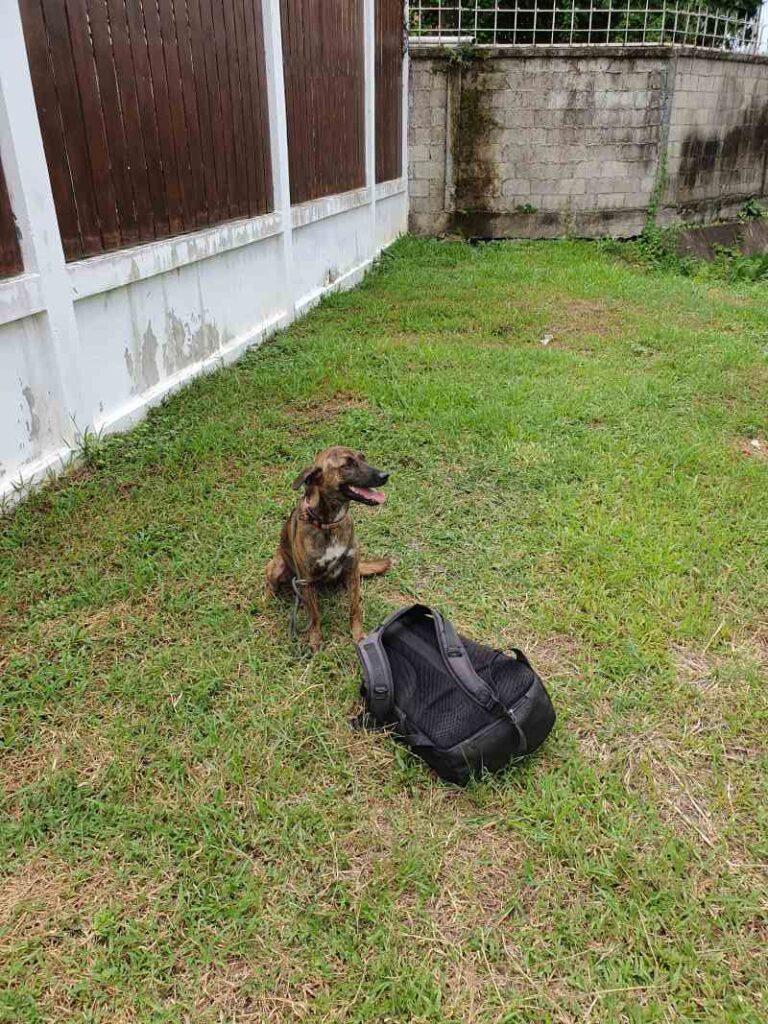
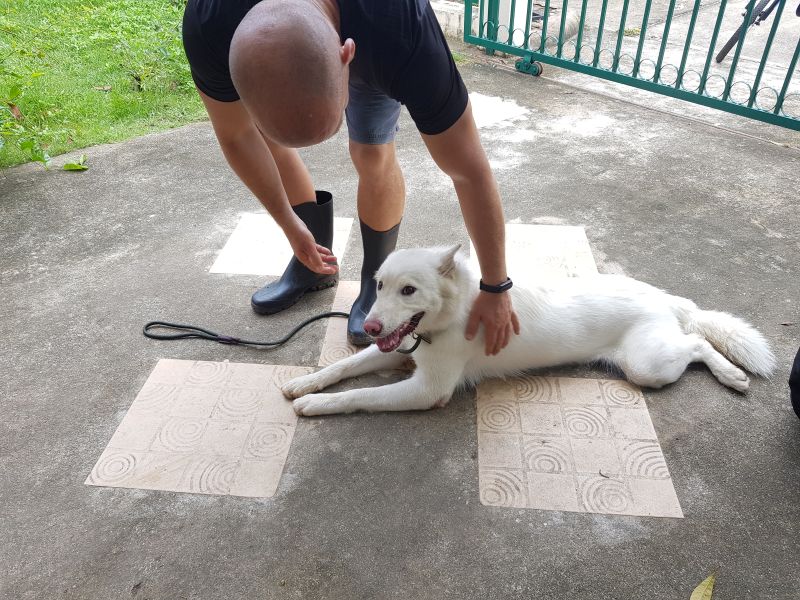
Calm speech anchors trust. Precision, timing, and quiet authority rebuild responsiveness. In stillness, your dog finally hears what you mean—not just what you say.
Practical Applications for Training and Welfare
Implementing a “Cue Detox” Program
For dogs who have experienced significant overcueing and verbal flooding, a structured rehabilitation approach can reset communication patterns and restore learning capacity. A “cue detox” program temporarily reduces or eliminates verbal cues, focusing instead on non-verbal communication channels.
Structure of an effective cue detox program:
- Phase 1: Assessment (Week 1) – Observe and document your dog’s current responsiveness to verbal cues, noting which commands work reliably and which have become degraded. Record your own verbal patterns during training sessions to identify overcueing habits.
- Phase 2: Verbal Reduction (Weeks 2-3) – Shift primary communication to hand signals and body language. Use verbal cues only once, if at all, and resist the urge to repeat. Practice conscious silence between interactions.
- Phase 3: Non-Verbal Emphasis (Weeks 4-5) – Conduct entire training sessions using only visual cues. This recalibrates both your communication style and your dog’s attention to non-verbal signals.
- Phase 4: Selective Reintroduction (Weeks 6-8) – Gradually reintroduce verbal cues one at a time, pairing each with its corresponding hand signal. Use each verbal cue only once per request, maintaining the discipline of silence.
- Phase 5: Integration and Maintenance (Ongoing) – Continue using minimal verbal cues with strategic silence. Monitor for any return to old patterns and course-correct immediately.
Expected outcomes from cue detox:
- Improved attention span and focus during training
- Faster response times to reintroduced verbal cues
- Increased confidence and willingness to engage
- Reduced stress signals during training sessions
- Stronger handler-dog synchrony and mutual awareness
- Enhanced ability to read subtle non-verbal communication
This approach directly addresses the Signal-to-Noise Ratio problem by eliminating verbal noise entirely, then reintroducing signal with careful intentionality. The temporary shift to non-verbal communication also strengthens your dog’s ability to read subtle cues, creating multiple redundant communication channels that enhance reliability.
Integrating Silent and Gesture-Based Training Phases
Beyond rehabilitation, integrating silent or gesture-based communication into regular training protocols benefits all dogs, regardless of their history with overcueing. This approach reduces cognitive load from the outset and creates clearer learning pathways.
Practical implementation strategies:
- Silent sessions – Dedicate specific training sessions to entirely wordless communication, using only hand signals, body positioning, and timing
- Gesture-first teaching – When introducing new behaviors, teach the hand signal first, adding the verbal cue only after your dog reliably responds to the visual cue
- Alternating modalities – Practice sessions where you alternate between verbal-only, visual-only, and combined cues to build flexibility
- Environmental silence – Train in quiet locations before adding environmental distractions, allowing your dog to develop focus without auditory competition
- Marker diversity – Use clickers, hand flashes, or other non-verbal markers instead of verbal praise during focused training
Key principles for gesture-based training:
- Keep gestures distinct and consistent—each behavior should have a unique, easily distinguished signal
- Position yourself where your dog can easily see the gesture without neck or body strain
- Use motion in your gestures rather than static positions, as dogs detect movement more readily
- Pair gestures with your calm, regulated presence rather than excited or anxious energy
- Practice your gestures without your dog present to ensure your execution is smooth and consistent
This methodology proves particularly effective because visual cues provide unambiguous information that doesn’t suffer from the acoustic challenges of verbal communication. A clear hand signal against a stable background offers high signal-to-noise ratio by default.
Additionally, gesture-based training naturally encourages you to move more slowly and deliberately, which automatically reduces cognitive load for your dog. The physical act of raising your hand for a signal takes more time than speaking a word, built-in processing pause that benefits learning.
🗣️ From Verbal Flooding to Clear Communication 🧠
A step-by-step journey to restore signal clarity and rebuild trust through conscious communication
Phase 1: Recognition & Assessment
Understanding your current communication patterns
When you repeat commands multiple times, your dog’s auditory cortex struggles to identify which repetition is the actual signal. The prefrontal cortex becomes overwhelmed trying to filter relevant cues from verbal noise, creating a low signal-to-noise ratio that makes learning nearly impossible.
- Your dog waits for 3-5 repetitions before responding
- Increased response latency to familiar commands
- Attention wandering or looking away when you speak
- Stress signals: yawning, lip licking, body tension during training
- Record 2-3 training sessions on video
- Count how many words you speak versus actual cues given
- Track how many times you repeat each command
- Note your dog’s stress signals throughout the session
Phase 2: Understanding the Science
Why less truly means more in canine learning
Your dog’s working memory has limited capacity—just like yours. Verbal flooding fills this cognitive space with irrelevant information, leaving no room for actual learning. Each unnecessary word is mental clutter that prevents your dog from processing the meaningful cue.
When your tone carries stress or frustration, your dog’s amygdala perceives threat. This suppresses oxytocin and serotonin—neurochemicals essential for bonding and emotional stability. Your dog may comply physically but disconnects emotionally, eroding the relationship foundation.
True communication happens through synchrony, not volume. When you reduce verbal interference and regulate your emotional state, you create the neurological conditions for trust, learning, and deep connection. Your calm presence becomes the foundation of the NeuroBond.
Phase 3: Preparation & Commitment
Setting yourself up for transformation success
- Commit to saying each cue only ONCE per request
- Practice 3-5 second pauses after every cue delivery
- Eliminate all filler words and verbal narration
- Maintain calm, neutral tone regardless of outcomes
- Target 60% silence during training sessions
- Reduce cue repetition from average 4x to 1x within 4 weeks
- Decrease stress signals by 50% within 3 weeks
- Increase response speed and accuracy progressively
Don’t expect instant results. Your dog needs time to recalibrate their understanding of communication patterns. Avoid reverting to old habits when frustrated—this is when conscious practice matters most. Never punish non-compliance that results from confusion you created.
Phase 4: The Cue Detox Program
Weeks 1-3: Resetting communication through silence
Shift primary communication to hand signals and body language. Use verbal cues only ONCE if needed, but prioritize non-verbal communication. Your dog’s attention will begin shifting from filtering verbal noise to reading your intentional signals. Practice conscious breathing and emotional regulation.
Conduct entire training sessions using only visual cues, body positioning, and environmental arrangement. No words. This dramatic reduction allows your dog’s nervous system to recalibrate. You’ll notice increased attention, calmer demeanor, and moments where the Invisible Leash between you becomes palpable.
- Days 1-5: Confusion phase—your dog adjusts to new patterns
- Days 6-12: Attention improvement—focus duration increases
- Days 13-21: Synchrony emergence—deeper connection develops
- Week 3+: Trust restoration—confidence and joy return to training
Phase 5: Selective Verbal Reintroduction
Weeks 4-6: Rebuilding verbal cues with precision
Reintroduce verbal cues individually, pairing each with its corresponding hand signal. Start with your dog’s most reliable behavior. Say the word once, show the gesture, wait. No repetition. If no response within 5 seconds, use gentle physical guidance or environmental arrangement—never repeat the cue.
- Calm, prosodic tone that signals safety (ventral vagal activation)
- Moderate volume—never loud or harsh
- Clear articulation without rushing
- Consistent emotional regulation regardless of performance
- Strategic pauses before and after each cue
Your dog responds to the first cue delivery consistently. Response latency decreases to under 2 seconds. Body language remains relaxed during training. Eye contact and check-ins with you increase naturally. Those precious moments of Soul Recall emerge—when understanding flows effortlessly between you.
Phase 6: Lifestyle Integration
Making conscious communication your new default
- Morning silence ritual: 5 minutes of quiet presence before the day begins
- Mealtime one-cue practice: single “wait” before feeding
- Walk synchrony: practice non-verbal guidance and energetic connection
- Evening reset: wordless companionship to close the day
Schedule monthly silent training sessions to recalibrate your baseline. Use environmental reminders—sticky notes saying “ONE CUE” or “BREATHE” in training spaces. Connect with other conscious communicators for support and accountability. Video record quarterly to track long-term progress and catch pattern drift early.
- Automatic pausing before speaking becomes natural
- Training feels flowing and effortless rather than effortful
- Your stress during training nearly disappears
- Deep synchrony moments become frequent
- Others comment on your dog’s calmness and attentiveness
Phase 7: Troubleshooting & Refinement
Addressing challenges and fine-tuning your approach
Solution: Recognize that stress triggers automatic behaviors. When you notice yourself repeating cues, pause completely. Take three deep breaths. Reset your nervous system before continuing. Your regulation is the foundation—without it, conscious communication fails.
Solution: This indicates the cue needs rebuilding from scratch. Return to silent training for this specific behavior. Teach it entirely through shaping with non-verbal markers. Only after 80% reliability should you add a fresh verbal cue—consider using a new word entirely.
Once your dog responds reliably in quiet environments, gradually add controlled distractions. Park training, friend visits, or outdoor spaces. Maintain your one-cue discipline regardless of environmental noise. Your consistency becomes their anchor in chaos.
Phase 8: Mastery & Beyond
Living the philosophy of conscious connection
At mastery level, communication transcends technique. You and your dog exist in synchrony—the Invisible Leash guides without tension. Your dog reads your intention before you speak, responding to shifts in energy and attention. Training becomes meditation, each session deepening the NeuroBond between you.
- Distance work using only body positioning and energy
- Public demonstrations where cues are nearly invisible
- Complex behavior chains flowing without verbal prompts
- Emotional co-regulation in challenging environments
- Teaching others the conscious communication methodology
By transforming your communication, you’ve offered your dog profound gifts: reduced stress, enhanced understanding, cognitive space for learning, and deep trust. Your commitment to consciousness has created not just obedience, but true partnership. This is the essence of what training can be—connection that honors both souls.
📊 Communication Styles: Before vs. After Transformation
Before: 50-100+ words per training session, constant narration and repeated commands
After: 10-20 words per session, 60%+ silence with strategic pauses
Before: 5-10 seconds, waiting for multiple repetitions or urgent tone escalation
After: Under 2 seconds, immediate response to first cue delivery
Before: Frequent yawning, lip licking, avoidance behaviors, tension during training
After: Relaxed body language, maintained focus, eager engagement and tail wagging
Before: Overwhelmed working memory, unable to process amid verbal flooding
After: Clear mental space, full cognitive resources available for learning
Before: Physical compliance without emotional connection, eroded trust
After: Deep synchrony, mutual understanding, frequent Soul Recall moments
Before: 20+ minutes for simple behavior, many failed attempts, handler frustration
After: 5-10 minutes for complex behaviors, high success rate, calm confidence
Signal-to-Noise Ratio Formula:
Clarity = Meaningful Cues ÷ Total Words Spoken
Aim for 0.5 or higher (50% of words should be actual cues/markers)
The 1-3-5 Rule:
• 1 cue delivery per request
• 3-5 second pause after each cue
• 5 words maximum in any instruction phrase
Cognitive Load Threshold:
If your dog shows stress signals, you’ve exceeded their processing capacity—reduce verbal input by 50% immediately.
Trust Restoration Timeline:
Week 1: Adjustment | Week 2-3: Breakthrough | Week 4+: Transformation
🧡 The Zoeta Dogsoul Way: Where Science Meets Soul
Overcoming verbal flooding isn’t just a training technique—it’s a journey back to authentic connection. Through the NeuroBond approach, we recognize that true communication happens in the spaces between words, in the synchrony of regulated nervous systems, in the trust that builds when we honor our dogs’ cognitive and emotional needs.
The Invisible Leash that guides your dog isn’t created through constant commands—it emerges from calm presence, clear intention, and emotional coherence. When you reduce verbal interference, you create space for this energetic connection to flourish, allowing awareness and understanding to flow naturally between you.
Those precious moments of Soul Recall—when your dog gazes at you with complete understanding, when training becomes effortless flow, when trust deepens beyond words—these emerge from the foundation you’re building now. Every conscious pause, every regulated breath, every single-cue delivery is an investment in this profound connection.
This is the essence of conscious communication: honoring your dog’s neurobiological reality while nurturing the intangible bond that makes training transcend into partnership. When neuroscience meets soul, when technique serves connection, when silence speaks louder than words—that’s when transformation happens.
© Zoeta Dogsoul – Where neuroscience meets soul in dog training
The NeuroBond Approach to Communication Coherence
The NeuroBond framework offers a comprehensive methodology for rebuilding and maintaining communication coherence with your dog. This approach integrates insights from neurobiology, ethology, and polyvagal theory into practical training principles that honor both human and canine nervous systems.
Core principles of the NeuroBond approach:
- Synchrony over commands – Focus on achieving emotional and attentional alignment with your dog before attempting to cue behaviors. When you’re truly synchronized, communication becomes nearly effortless.
- Calm tone as safety signal – Maintain a gentle, prosodic voice quality that activates your dog’s social engagement system. Your tone should consistently communicate: “You are safe, I am stable, we are together.”
- Minimal verbal interference – Use the fewest words necessary to convey information. One clear cue beats three repeated ones every time.
- Responsive communication – Observe and respond to your dog’s emotional state and nervous system signals before escalating communication intensity. If they’re showing stress, reduce input rather than increasing it.
- Energy awareness – Recognize that communication extends beyond words to include your emotional state, breathing pattern, and physical presence. Your regulated nervous system supports your dog’s regulation.
Practical NeuroBond exercises:
- Synchronized breathing – Spend time simply being present with your dog, matching your breathing rhythm to theirs. This practice builds co-regulation capacity and deepens your connection.
- Silent walks – Take walks where you consciously avoid verbal communication, instead practicing energetic connection and subtle body language cues.
- Minimal cue challenges – Set a goal of using no more than five verbal cues during an entire training session, forcing yourself to communicate more through presence and timing.
- Emotional check-ins – Before each training interaction, pause to assess your own nervous system state. If you’re dysregulated, take time to calm yourself before engaging your dog.
- Trust restoration sessions – Spend time with your dog in activities they find inherently rewarding (exploration, play, rest) without any training agenda, rebuilding the emotional foundation.
The Invisible Leash concept within NeuroBond captures something essential: when communication coherence is restored, control becomes unnecessary. Your dog follows your lead not from obedience but from connection, reading your subtle shifts in attention and energy naturally.
This approach recognizes that training isn’t simply about installing behaviors—it’s about creating a relationship characterized by mutual understanding and trust. When that foundation is solid, specific cues become almost unnecessary. Your dog knows what you need before you ask because you’ve built such strong synchrony through conscious, minimal, regulated communication.
The Science Behind Communication Efficiency
Understanding Signal-to-Noise Ratio in Practice
The concept of signal-to-noise ratio, borrowed from information theory and neuroscience, provides a powerful framework for understanding why overcueing and verbal flooding disrupt learning. In the training context, every meaningful cue is a signal attempting to reach your dog’s cognitive processing centers through a field of competing information—the noise.
When signal-to-noise ratio is high, communication is clear and efficient. The cue stands out distinctly from background information, allowing rapid processing and accurate response. When the ratio drops—when noise increases relative to signal—communication degrades exponentially.
Factors that increase “noise” in dog training:
- Repeated commands without clear timing or consequence
- Environmental auditory distractions (traffic, other dogs, household sounds)
- Filler words and verbal narration between cues
- Inconsistent cue words or phrases for the same behavior
- Overlapping cues where multiple commands are given in quick succession
- Handler’s emotional vocalizations (sighs, frustration sounds, anxious chatter)
Factors that strengthen “signal”:
- Single, clear cue delivery at the precise moment of relevance
- Consistent use of the same word or sound for each specific behavior
- Strategic silence before and after cues to create contrast
- Calm, neutral tone that doesn’t add emotional noise to the communication
- Pairing verbal cues with visual or environmental signals for redundancy
- Immediate, consistent consequences following cue delivery
The mathematical reality of signal-to-noise ratio reveals why small reductions in noise create disproportionately large improvements in communication clarity. If you can reduce verbal noise by even 50%—cutting your word count in half during training—you may double or triple the effectiveness of your actual cues.
Classical and Operant Conditioning Depend on Clarity
The foundational learning theories that govern canine training—classical and operant conditioning—both require clear, consistent, and predictable signals to function optimally. Overcueing and verbal flooding undermine these basic mechanisms.
How verbal flooding disrupts classical conditioning:
Classical conditioning involves pairing a neutral stimulus (like a verbal cue) with a significant stimulus (like food or play) until the neutral stimulus predicts the significant one. For this association to form strongly, the neutral stimulus must be distinct and consistently predictive.
When you say “come” multiple times before your dog receives a reward, which repetition is the actual predictor? The first “come”? The final one? The loudest or most urgent one? This ambiguity weakens the associative connection. The dog’s brain cannot establish reliable prediction when the temporal and qualitative relationship between cue and outcome remains unclear.
How overcueing undermines operant conditioning:
Operant conditioning involves learning through consequences—behaviors followed by rewards increase, while those followed by unpleasant outcomes decrease. The timing and consistency of consequences relative to behaviors is critical.
When you repeat a cue multiple times, you’re inadvertently rewarding non-compliance or delayed responses. If you say “sit” five times and then reward your dog when they finally sit, you’ve actually reinforced sitting on the fifth cue, not the first. This creates a trained pattern of waiting for multiple repetitions before responding.
Additionally, the cognitive load imposed by constant verbal input interferes with the consolidation process necessary for operant learning. Your dog needs mental space to process the cause-effect relationship between their action and the consequence. Verbal flooding fills this processing space with irrelevant information.
Optimal conditions for both conditioning types:
- One clear cue, delivered once, at the moment action is required
- Consistent consequence following the cue (whether compliance or non-compliance)
- Sufficient silence before and after to allow processing and consolidation
- Emotional neutrality in delivery to avoid adding fear or anxiety to the association
- Environmental stability to reduce extraneous variables affecting the association
Cognitive Load Theory in Canine Learning
Cognitive Load Theory, originally developed to optimize human instructional design, translates remarkably well to canine learning contexts. The theory proposes that working memory—the cognitive workspace where active thinking occurs—has inherent capacity limitations. Learning happens most efficiently when instructional design minimizes extraneous load and optimizes germane load.
Three types of cognitive load:
- Intrinsic load – The inherent difficulty of the task itself. Teaching a complex behavior sequence carries higher intrinsic load than teaching a simple sit.
- Extraneous load – Mental effort wasted on poorly designed instruction. Verbal flooding creates massive extraneous load by forcing your dog to process irrelevant verbal information while trying to learn.
- Germane load – Productive mental effort that contributes to learning and skill acquisition. This is the type of cognitive load we want to maximize.
Working memory capacity in dogs appears limited, much like in humans. When extraneous load (verbal flooding) consumes most of this capacity, little remains for germane load (actual learning). Your dog literally cannot think about what you’re trying to teach because their cognitive resources are exhausted processing the flood of words.
Practical implications:
- Reduce verbal input to only essential cues and markers
- Structure training sessions with clear beginnings and ends rather than ongoing verbal interaction
- Allow processing pauses between repetitions
- Break complex behaviors into smaller components that fit within working memory capacity
- Minimize environmental distractions during initial learning phases
- Ensure your dog is in a calm state with available cognitive resources before training
By consciously managing cognitive load, you create optimal conditions for learning efficiency. Your dog can dedicate their mental resources to understanding and consolidating new behaviors rather than struggling to parse excessive verbal input. 🧠
Restoring Trust and Building Emotional Safety
The Polyvagal Perspective on Voice and Safety
Polyvagal Theory, developed by neuroscientist Stephen Porges, revolutionizes our understanding of how vocal communication affects nervous system state and, consequently, learning capacity. The theory describes three hierarchical neural circuits that govern our responses to safety and threat.
The three vagal circuits:
- Ventral vagal complex (social engagement) – The newest evolutionary circuit, active when we feel safe. Supports social connection, communication, and learning. This is the optimal state for training.
- Sympathetic nervous system (mobilization) – Activated under perceived threat, driving fight-or-flight responses. Dogs in this state are reactive, hypervigilant, and unable to learn effectively.
- Dorsal vagal complex (immobilization) – The oldest circuit, activated under extreme threat or overwhelm. Produces shutdown, freeze responses, and dissociation.
Your voice serves as one of the most powerful regulators of which circuit is active in your dog. A calm, prosodic voice with gentle melodic variation signals safety, activating the ventral vagal circuit and supporting social engagement. This is the voice of connection, the tone that says: “We are safe together.”
Conversely, a harsh, tense, or anxious voice signals potential threat, deactivating the social engagement system and mobilizing defensive circuits. Even if your words are technically correct (“sit,” “stay”), if your tone carries stress or frustration, your dog’s nervous system receives a threat signal that overrides the verbal content.
Vocal qualities that support ventral vagal activation:
- Gentle, moderate volume without sudden loudness changes
- Melodic prosody with natural rise and fall
- Slower pacing that mirrors calm breathing
- Warm, relaxed vocal quality without tension or strain
- Consistency across training contexts
- Absence of sharp, staccato delivery
Vocal patterns that trigger defensive states:
- Loud, sharp, or harsh tones
- Rapid, tense speech patterns
- Monotone or emotionally flat delivery
- Unpredictable volume or emotional shifts
- High-pitched urgency or anxiety
- Aggressive or threatening vocal quality
Understanding this neurobiological reality transforms how we approach training challenges. When your dog isn’t responding, the solution isn’t louder or more urgent commands—it’s a return to calm vocal quality that reactivates the social engagement system.
Rebuilding Trust After Verbal Overwhelm
For dogs who have experienced chronic overcueing and verbal flooding, rebuilding trust requires conscious, patient work. The relationship has been strained by confusing communication, and your dog may have learned that training time means stress and uncertainty rather than connection and success.
Stages of trust restoration:
- Stage 1: Establish safety through presence – Before attempting any training, focus on simply being a calm, predictable presence. Sit quietly with your dog, practice synchronized breathing, take slow walks without agenda. Your regulated nervous system becomes the foundation.
- Stage 2: Introduce non-demanding interaction – Engage in activities your dog finds naturally rewarding without any training requirements. Play, exploration, gentle grooming, or simply resting together. These experiences rebuild positive associations with your presence.
- Stage 3: Practice minimal-cue communication – When you begin reintroducing training, commit to using each verbal cue only once. If your dog doesn’t respond, use gentle physical guidance or environmental arrangement rather than repeating the command.
- Stage 4: Create success experiences – Focus on behaviors your dog already knows well, making success easy and frequent. This rebuilds confidence and reestablishes the understanding that communication leads to clarity and reward.
- Stage 5: Gradual complexity increase – Slowly introduce new behaviors or more challenging contexts, maintaining your commitment to clear, minimal verbal input and calm emotional regulation throughout.
Signs that trust is being restored:
- Your dog seeks you out voluntarily for interaction
- Tail wagging and relaxed body language when training begins
- Willingness to offer behaviors without excessive hesitation
- Maintained attention for longer periods
- Reduced stress signals during training sessions
- Faster response times to cues
- More frequent eye contact and check-ins with you
The process of rebuilding trust cannot be rushed. Your dog’s nervous system needs time to recalibrate its expectations about what communication with you means. Each calm, clear interaction deposits positive experience into the relationship account, gradually shifting the balance from uncertainty to confidence.
Oxytocin, Serotonin, and the Neurochemistry of Connection
The neurochemical foundations of trust and bonding play a crucial role in effective training. When communication is clear and emotionally regulated, beneficial neurochemical pathways flourish. When communication creates stress and confusion, these pathways become impaired.
Key neurochemical systems affected by communication quality:
- Oxytocin (bonding and trust) – Often called the “love hormone,” oxytocin facilitates social bonding, trust formation, and positive social interactions. Calm, positive interactions with your dog increase oxytocin in both of you, strengthening your connection. Stressful, confusing interactions suppress oxytocin release, weakening the bond.
- Serotonin (emotional stability) – This neurotransmitter regulates mood, impulse control, and emotional resilience. Chronic stress from overwhelming training environments can deplete serotonin, leading to increased anxiety, reactivity, and difficulty with impulse control.
- Dopamine (reward and motivation) – The primary neurotransmitter in reward pathways, dopamine drives motivation and reinforces learning. Clear cue-consequence relationships support healthy dopamine signaling, while confused, unpredictable training environments create dysregulated dopamine responses.
- Cortisol (stress hormone) – While acute cortisol spikes can enhance learning in appropriate doses, chronic elevation from ongoing stress impairs memory consolidation, reduces immune function, and interferes with emotional regulation.
When you maintain a calm, regulated communication style with minimal verbal interference, you’re not just training behaviors—you’re creating neurochemical conditions that support bonding, emotional stability, and optimal learning. The NeuroBond approach recognizes this reality, understanding that how you communicate shapes brain chemistry as much as it shapes behavior.
Your dog’s trust in you has a biological signature. It shows up in oxytocin levels that rise during your interactions, in serotonin pathways that maintain emotional equilibrium, in dopamine responses that make working with you inherently rewarding. Protecting these neurochemical systems through conscious communication becomes an act of care that extends far beyond obedience training. 🧡
Real-World Applications Across Training Contexts
Companion Dog Training: Everyday Communication
For companion dogs living in family environments, the principles of minimal verbal input and strategic silence create calmer, more harmonious households. The typical family environment often involves constant human chatter, creating chronic verbal flooding that can leave dogs in a state of perpetual low-level stress.
Practical strategies for family environments:
- Establish quiet hours – Designate periods where verbal interaction with the dog is minimized, allowing their nervous system to rest and recalibrate
- One-cue household rule – Ensure all family members commit to saying commands only once, resisting the urge to repeat
- Designated communicator – During training moments, one person gives cues while others remain silent, preventing overlapping verbal input
- Narration awareness – Notice habits of narrating every action (“Let’s go outside now, come on, where’s your ball, do you want this?”) and consciously reduce unnecessary speech
- Calm greeting protocols – When arriving home, greet your dog calmly and quietly rather than with excited verbal fanfare that elevates arousal
Benefits for companion dogs:
- Reduced overall stress and anxiety in the home environment
- Clearer understanding of what’s being asked during daily routines
- Improved responsiveness to actual commands when they’re given
- Better impulse control and emotional regulation
- Deeper sense of security through predictable, calm communication
The transformation in many households is remarkable. Dogs who seemed perpetually anxious or “hyperactive” often become noticeably calmer when verbal flooding decreases. They’re not inherently anxious—they’ve been living in a state of chronic auditory overstimulation.
Sport and Performance Dogs: Precision Under Pressure
For dogs engaged in competitive sports, agility, obedience trials, or other performance contexts, communication clarity becomes even more critical. The precision required in these activities demands that every cue carries maximum informational value.
Competition-specific considerations:
- High-distraction environments – Competition venues present massive amounts of environmental noise. Clear verbal cues with optimal signal-to-noise ratio become essential for cutting through distractions.
- Speed and timing requirements – Many dog sports require split-second timing. Repeated or delayed cues cost precious time and create confusion about exactly when behaviors should occur.
- Handler stress management – Competition pressure often causes handlers to become verbose, speeding up their speech and adding unnecessary cues. Conscious breath work and pre-performance routines help maintain communication discipline.
- Mistake recovery protocols – When errors occur, trained silence rather than verbal correction prevents escalating stress and maintains focus for subsequent tasks.
Training protocols for performance dogs:
- Practice runs conducted entirely in silence to build confidence in non-verbal cues
- Video analysis of handlers to identify verbal flooding patterns under pressure
- Systematic desensitization to competition environments while maintaining minimal verbal input
- Emergency “reset” cues that signal a pause and refocus without blame or pressure
- Post-performance quiet time to allow nervous system recovery before training debrief
Performance dog trainers who adopt minimal verbal interference approaches often report dramatic improvements in both performance scores and the dog’s apparent enjoyment of the work. The Invisible Leash between handler and dog becomes palpable—they move as a synchronized unit, communication flowing through subtle energy and intention rather than constant verbal direction.
Working Dogs: Clarity in Critical Situations
For working dogs—including service dogs, therapy dogs, detection dogs, and protection dogs—communication failures can have serious consequences. These dogs must respond reliably in high-stakes, often chaotic environments where clear communication can mean the difference between success and failure, or even life and death.
Working dog communication requirements:
- Reliability across contexts – Working dogs must respond to cues consistently whether in quiet training environments or chaotic real-world situations
- Discrimination precision – Many working roles require distinguishing between similar cues with different meanings; verbal flooding would catastrophically degrade this ability
- Stress resilience – These dogs often work in inherently stressful situations; their training must build rather than deplete their capacity for regulation under pressure
- Handler communication diversity – Some working dogs must respond to multiple handlers; consistent minimal-cue protocols across handlers become essential
Specialized training approaches:
- Cue words selected for maximum acoustic distinction from one another
- Extensive proofing in varied environmental noise conditions
- Handler self-regulation training as primary curriculum component
- Backup non-verbal cues for every verbal command
- Regular assessment of cue responsiveness with retraining as needed
- Stress monitoring and recovery protocols between working periods
The stakes in working dog contexts highlight why these principles matter so profoundly. A detection dog who has been overcued may miss critical alerts because they’ve learned to filter out verbal input. A service dog experiencing verbal flooding may become too stressed to perform necessary tasks. Clear, minimal communication isn’t just best practice—it’s essential for mission success and dog welfare.
Behavior Modification and Rehabilitation
For dogs undergoing behavior modification for anxiety, reactivity, aggression, or trauma-related issues, communication style becomes a primary intervention rather than a peripheral concern. These dogs often have compromised stress tolerance and hypersensitive threat detection systems, making them especially vulnerable to the negative effects of verbal flooding.
Behavior modification considerations:
- Hypervigilant nervous systems – Reactive or anxious dogs exist in a state of heightened arousal. Additional verbal input pushes them further toward threshold, making learning impossible.
- Trauma history – Dogs with trauma backgrounds may have negative associations with human voices, particularly harsh or loud tones. Verbal flooding can trigger traumatic stress responses.
- Trigger stacking – Verbal flooding acts as an additional stressor that combines with environmental triggers, creating overwhelm that might not occur with better communication management.
- Counter-conditioning requirements – Building new positive associations requires that the dog remain below stress threshold. Verbal flooding prevents maintaining this crucial window.
Specialized rehabilitation protocols:
- Initial training phases conducted almost entirely through silent shaping and non-verbal communication
- Extreme emphasis on handler calm and regulated presence
- Very gradual verbal cue introduction only after significant stress reduction
- Voice quality training for handlers to ensure soothing rather than activating tones
- Environmental management to reduce total sensory load, not just visual triggers
- Regular nervous system recovery periods between training sessions
Success in behavior modification often correlates directly with handler ability to maintain silence and emotional regulation. The concept of Soul Recall becomes particularly relevant here—those moments when a traumatized or reactive dog suddenly softens, making eye contact, choosing connection over defensiveness. These precious moments almost invariably occur in spaces of calm, quiet presence rather than verbal instruction.
Behavior professionals increasingly recognize that what we call “reactivity” or “anxiety” often includes a significant component of chronic stress from verbal overstimulation. Reducing this source of stress through conscious communication changes everything.
Moving Forward: Creating a Culture of Conscious Communication
Assessment: Understanding Your Current Patterns
Before you can change your communication patterns, you must first become aware of them. Most handlers have little conscious understanding of their verbal habits during training. These patterns have become automatic, invisible to the person creating them.
Self-assessment strategies:
- Video recording – Record several training sessions and watch with the specific intention of counting verbal cues, repetitions, and filler words. You’ll likely be surprised by what you discover.
- Verbal logging – Have a friend observe a training session and tally every word you speak. Calculate the ratio of meaningful cues to total words.
- Response latency tracking – Note how many times you repeat a cue before your dog responds. If the average is above 1.5 repetitions, overcueing has likely become established.
- Stress signal monitoring – Document your dog’s stress signals during training (yawning, lip licking, looking away, tension). Correlation between your verbal volume and their stress signals reveals impact.
- Emotional state awareness – Before, during, and after training, assess your own emotional state. Notice when frustration, anxiety, or impatience enters, and how it affects your verbal patterns.
Common patterns to identify:
- Repeated cues (saying “sit” multiple times)
- Narration habits (“Good boy, here we go, let’s try this, okay now…”)
- Filler words and verbal placeholders
- Tone inconsistency (switching between cheerful, stern, anxious)
- Fast-paced speech when stressed
- Lack of pauses between cues
- Verbal “leaking” (sighs, frustrated sounds, anxious chatter)
The assessment phase requires honest self-observation without judgment. You’re not identifying failures—you’re gathering data about patterns that developed unconsciously and can be consciously changed.
Goal Setting: Defining Your Communication Transformation
Once you understand your current patterns, establish clear, measurable goals for change. Vague intentions like “talk less” rarely create lasting transformation. Specific, actionable goals with concrete metrics support real change.
Effective goal examples:
- Cue repetition elimination – “I will say each verbal cue only once per request, using physical guidance or environmental arrangement if my dog doesn’t respond, rather than repeating the cue.”
- Silence ratio improvement – “I will achieve at least 60% silence during training sessions, speaking only to deliver cues and markers.”
- Processing pause integration – “I will pause for 3-5 seconds after every cue delivery and every marker, giving my dog processing time.”
- Tone consistency – “I will maintain a calm, neutral vocal tone throughout training, regardless of whether my dog performs correctly.”
- Filler elimination – “I will remove all filler words and unnecessary narration from training sessions.”
Tracking progress:
- Weekly video reviews comparing early baseline sessions to current sessions
- Response latency measurements showing improvement over time
- Training duration increases as your dog’s focus capacity expands
- Stress signal frequency decreases
- Your own stress levels during training decrease
- The quality of connection and synchrony you feel with your dog improves
Setting goals and tracking progress transforms what could feel like an overwhelming change into a structured, achievable process. Small wins accumulate into significant transformation.
Integration: Making Conscious Communication Your Default
The final stage involves moving from conscious practice to automatic habit—making minimal verbal communication and strategic silence your natural communication style rather than something you must remember to do.
Integration strategies:
- Daily micro-practices – Throughout each day, practice moments of conscious silence with your dog. Simply be present together without speaking. These micro-practices build the neural pathways of calm connection.
- Routine anchors – Attach your communication practices to existing routines. Every time you feed your dog, practice one-cue delivery. Every walk becomes practice in non-verbal guidance.
- Environmental reminders – Place visual cues in training spaces: a small sign saying “ONE CUE” or “BREATHE” can interrupt automatic patterns.
- Community support – Connect with other handlers committed to minimal verbal communication. Share challenges, celebrate progress, practice together.
- Regular resets – Weekly or monthly, return to silent training sessions to recalibrate your baseline and prevent pattern drift.
Indicators that conscious communication has become integrated:
- You automatically pause before speaking rather than having to remind yourself
- Your dog’s attention to you increases noticeably
- Training feels easier and more flowing rather than effortful
- You catch yourself before repeating cues, course-correcting naturally
- Your own stress during training decreases significantly
- Moments of deep synchrony and connection become frequent rather than rare
- Other people comment on how calm and attentive your dog is
The ultimate goal isn’t perfection—it’s creating a communication style that supports both your dog’s learning and your relationship. That balance between science and soul, between technique and connection—that’s the essence of Zoeta Dogsoul.
Conclusion: The Path to Communication Clarity
The journey from verbal flooding to conscious, minimal communication represents far more than a training technique adjustment. It’s a fundamental shift in how you conceptualize the relationship between you and your dog, moving from a paradigm of control through commands to one of connection through understanding.
We’ve explored how overcueing and verbal flooding disrupt cognitive processing, elevate stress, impair neurochemical pathways essential for bonding and learning, and ultimately erode the trust that makes training possible. We’ve examined the neurobiological mechanisms—from dopaminergic signaling to polyvagal responses—that explain why less truly becomes more in dog training communication.
The practical applications span every context: from companion dogs living in busy households, to performance dogs requiring split-second precision, to working dogs in high-stakes environments, to behaviorally challenged dogs needing rehabilitation. In every context, the principles remain consistent: clarity, brevity, silence, and emotional regulation create optimal conditions for learning and connection.
Your next steps:
- Assess your current verbal patterns through video recording and honest observation
- Implement a cue detox program if your dog shows signs of desensitization
- Commit to saying each cue only once, using patience and silence rather than repetition
- Practice strategic silence, creating space for processing and attention restoration
- Monitor and regulate your own emotional state, recognizing your calm as your dog’s safety signal
- Integrate gesture-based and non-verbal communication to diversify your communication channels
- Trust the process, knowing that communication clarity builds progressively over time
Remember that every moment of conscious, clear communication is an investment in your dog’s cognitive capacity, emotional wellbeing, and trust in you. Every time you choose silence over unnecessary words, you’re choosing your dog’s welfare. Every time you deliver a single clear cue with calm confidence, you’re building reliability and understanding.
The Invisible Leash that connects you to your dog grows stronger not through more commands, but through better communication. The NeuroBond you share deepens not through verbal volume, but through emotional regulation and presence. Those moments of Soul Recall—when understanding flows effortlessly between you—emerge from the quiet spaces where connection can flourish.
Your dog has been waiting for this clarity. Their nervous system yearns for the calm, predictable communication that signals safety and enables learning. By transforming your verbal patterns, you’re not just improving training outcomes—you’re offering a profound gift of reduced stress, enhanced understanding, and deeper trust.
The path forward begins with a single conscious choice: to pause, to breathe, to speak only when your words carry meaning, and to trust that your calm, regulated presence communicates more powerfully than any flood of language ever could.
Welcome to a new way of connecting with your dog—one grounded in neuroscience, honored by silence, and transformed by the recognition that sometimes the most powerful thing you can say is nothing at all. 🧡










