
Introduction: When Training Becomes a Burden
Imagine this: you’re learning a new skill, and every mistake you make is met with immediate criticism. No encouragement, no gentle guidance—just correction after correction. How long would it take before you stopped trying? Before you simply shut down?
This is the reality for countless dogs trained under correction-heavy methodologies. While many trainers focus solely on achieving compliance, a deeper question emerges: what happens to the dog’s inner world when training becomes a constant stream of “no?
The phenomenon known as cognitive shutdown represents one of the most overlooked welfare concerns in modern dog training. When a dog experiences relentless correction, something shifts internally. The spark of curiosity dims, problem-solving abilities decline, and engagement with the world—and with their human—fades into a state of emotional withdrawal.
Understanding this isn’t just about improving training techniques. It’s about recognizing that our dogs are sentient beings whose emotional and cognitive health depends on how we guide them. Through the lens of neuroscience, behavioral psychology, and the emerging NeuroBond framework, we can begin to see that effective training isn’t about control—it’s about connection.
Let us guide you through the science, the signs, and the solutions that can transform how we approach canine education. Because the cost of constant correction is far higher than we’ve been willing to acknowledge.
The Neural Reality: What Happens Inside Your Dog’s Brain
The Architecture of Stress
Your dog’s brain is remarkably similar to yours in its fundamental emotional circuitry. When correction follows correction, neural pathways light up in ways that have profound implications for learning and wellbeing.
The amygdala—your dog’s emotional alarm system—becomes hypersensitive. Each harsh word, each leash correction, each sharp “no” activates this ancient structure, flooding the system with stress hormones. Over time, the threshold for activation lowers. What once required significant pressure now triggers with minimal input. Your dog exists in a state of hypervigilance, constantly anticipating the next correction.
Meanwhile, the prefrontal cortex—the seat of decision-making, problem-solving, and learning—begins to go offline. When the brain perceives threat, it prioritizes survival over thinking. This isn’t a choice; it’s neurobiology. The cognitive resources needed for learning are diverted to managing stress, leaving little capacity for processing new information or engaging in creative problem-solving.
The dopamine dilemma becomes particularly striking. Dopamine, often called the “seeking” neurotransmitter, fuels curiosity, exploration, and the joy of learning. In correction-heavy environments, dopamine signaling diminishes. The SEEKING system—one of the primary emotional systems identified in affective neuroscience—becomes suppressed. Your dog stops wanting to explore, to try, to engage. The very drive that makes learning possible begins to fade.
Learned Helplessness: When Effort Feels Pointless
Research on learned helplessness reveals something heartbreaking: when an individual repeatedly experiences unavoidable negative consequences, they eventually stop trying to escape or avoid them—even when escape becomes possible.
Picture a dog who receives corrections regardless of what they do. They sit—correction for being too slow. They come when called—correction for not coming fast enough. They look away—correction for being distracted. Over time, the dog learns a devastating lesson: nothing they do matters. Effort becomes pointless.
This isn’t stubbornness or defiance. It’s a rational response to an irrational situation. The dog’s brain has calculated that the safest option is to do as little as possible, to become invisible, to shut down. What trainers might interpret as “calming down” or “settling” is often the first sign of emotional withdrawal. 🧠
The Polyvagal Perspective: Survival States
Polyvagal theory offers a profound framework for understanding these shutdown responses. The vagus nerve, which regulates our physiological and emotional states, has two distinct pathways. The ventral vagal pathway supports social engagement, playfulness, and learning. The dorsal vagal pathway, activated under extreme threat, triggers shutdown.
When a dog experiences chronic correction, their nervous system shifts from social engagement to survival mode. First comes the sympathetic activation—the fight-or-flight response. Heart rate increases, muscles tense, cortisol floods the system. If the threat continues and escape seems impossible, the system flips into dorsal vagal shutdown. The dog becomes immobile, disengaged, disconnected. Their eyes may glaze over, their body goes still, and learning becomes neurologically impossible.
This isn’t relaxation. This is dissociation—a state where the nervous system has determined that the only safe option is to check out entirely.
Behavioral Signatures: Reading the Signs of Shutdown
The Subtle Language of Stress
Dogs communicate their internal states constantly, but many of their signals are so subtle that they go unnoticed until shutdown is already underway. Learning to read these early warning signs can mean the difference between intervention and crisis.
Early-Stage Stress Indicators:
- Lip licking when no food is present—a self-soothing behavior that appears when tension rises
- Yawning during training sessions—not tiredness, but a displacement behavior signaling discomfort
- Increased panting despite moderate temperature—the sympathetic nervous system activating
- Whale eye (showing the whites of their eyes)—often while tracking the handler’s movements
- Tucked tail or tail held unnaturally low—a clear signal of apprehension
- Ears pinned back against the head—defensive body language indicating fear
- Slow, deliberate movements—attempting to appear non-threatening and avoid triggering correction
Mid-Stage Withdrawal Behaviors:
- Gaze aversion—actively avoiding eye contact with the handler, even when called
- Freezing in place—immobility as a strategy to avoid doing the “wrong” thing
- Decreased responsiveness to familiar cues—not defiance, but cognitive overload
- Sniffing the ground excessively during training—redirecting attention away from stressful stimuli
- Reduced tail wagging or mechanical, stiff wagging without full body engagement
- Tight, closed mouth—versus the relaxed, slightly open mouth of a comfortable dog
- Retreating behavior—moving away from the handler or training space when given opportunity
Advanced Shutdown Symptoms:
- Complete stillness—a dog who barely moves, appearing almost frozen in time
- Glazed or unfocused eyes—looking through rather than at their environment
- Unresponsiveness to rewards—even high-value treats fail to elicit interest
- Compliance without engagement—performing behaviors robotically, with no enthusiasm
- Lowered body posture—appearing smaller, compressed, defeated
- Absence of exploration—no curiosity about new environments or objects
- Emotional flatness—neither happy nor visibly distressed, just… absent
From Engagement to Shutdown: The Behavioral Trajectory
The progression from an engaged learner to a shut-down dog doesn’t happen overnight. It follows a predictable pattern that every dog owner and trainer should recognize.
Phase 1: Active Learning (Healthy State)
In this optimal state, your dog exhibits behaviors that signal genuine engagement. Their eyes are bright and focused, tracking your movements with interest. When you present a cue, they respond with enthusiasm, often anticipating what comes next. Problem-solving is evident—if they make a mistake, they try different approaches, experimenting to find the right answer. Their body language is loose and fluid, with a softly wagging tail and forward-tilted posture. Play behavior emerges naturally between training repetitions, and they actively seek interaction with you.
Phase 2: Stress Compensation (Warning Stage)
As corrections accumulate, you’ll notice your dog working harder to avoid mistakes. They become more cautious, checking in with you frequently for reassurance. Response latency increases—there’s a noticeable pause between your cue and their action as they mentally calculate the safest option. Mistakes trigger visible distress, and recovery time between errors lengthens. The dog may start offering previously rewarded behaviors repeatedly, even when inappropriate, trying to find something that won’t result in correction. Their enthusiasm dims, though compliance may actually improve temporarily.
Phase 3: Cognitive Overload (Critical Stage)
This is where learning begins to break down. Working memory becomes impaired—behaviors that were solid suddenly become unreliable. Your dog struggles to hold information or sequence actions. Generalization fails; they can’t transfer learning from one context to another. Novel situations trigger freezing rather than curiosity. Attention span plummets, and even simple tasks feel overwhelming to them. They may start refusing food during training—a significant red flag indicating that stress has overwhelmed their reward system.
Phase 4: Shutdown (Crisis State)
The final stage represents a complete emotional and cognitive withdrawal. The dog appears robotic, performing familiar behaviors mechanically if at all. There’s no joy, no curiosity, no connection. They may become impossible to motivate, as neither rewards nor corrections elicit much response. Their nervous system has essentially gone offline, prioritizing survival over engagement. This is the state where rehabilitation becomes necessary, and simple training adjustments are no longer sufficient.

The Physiology of Constant Correction
Cortisol: The Chronic Stress Marker
When we talk about stress in dogs, cortisol is the physiological smoking gun. This hormone, produced by the adrenal glands as part of the HPA (Hypothalamic-Pituitary-Adrenal) axis, serves as the body’s primary stress response mechanism.
In acute situations, cortisol is helpful. It mobilizes energy, sharpens focus, and prepares the body for action. But chronic elevation tells a different story. Studies comparing aversive-based training to reward-based approaches consistently show higher post-training cortisol levels in dogs subjected to frequent correction. These aren’t small differences—they’re substantial enough to indicate genuine welfare concerns.
What elevated cortisol means for your dog:
- Impaired immune function—making them more susceptible to illness and infection
- Reduced neurogenesis—the creation of new neurons, particularly in the hippocampus (memory center), slows or stops
- Disrupted sleep patterns—preventing the restorative processes that consolidate learning
- Increased anxiety baseline—making them more reactive to all stressors, not just training
- Digestive disturbances—from decreased appetite to gastrointestinal issues
- Slower wound healing—affecting both physical and emotional recovery
The insidious nature of chronic cortisol elevation is that it creates a self-perpetuating cycle. High cortisol makes learning harder, which leads to more mistakes, which triggers more corrections, which elevates cortisol further. Breaking this cycle requires intervention at the training methodology level.
Heart Rate Variability: The Window into Nervous System Balance
While cortisol tells us about sustained stress, Heart Rate Variability (HRV) offers real-time insight into nervous system regulation. HRV measures the variation in time between heartbeats—and counterintuitively, higher variability generally indicates better health and adaptability.
When a dog is in a calm, socially engaged state, their HRV is high. The parasympathetic nervous system (rest and digest) balances the sympathetic system (fight or flight), creating natural fluctuation. During correction-heavy training, HRV typically plummets. The sympathetic system dominates, driving heart rate up and reducing variability. The dog is locked into survival mode.
What low HRV reveals:
- Reduced cognitive flexibility—the brain can’t shift between different types of thinking
- Impaired attention and focus—making it harder to process training cues
- Decreased frustration tolerance—small challenges feel overwhelming
- Limited emotional regulation—the dog swings between anxiety and shutdown more easily
- Poor stress recovery—taking longer to return to baseline after each correction
Research in both humans and animals shows that sustained sympathetic activation—indicated by chronically low HRV—directly impairs working memory and attention span. Your dog isn’t being stubborn when they can’t remember a cue they knew yesterday. Their nervous system is too dysregulated to support higher cognitive functions.
The Oxytocin Factor: Trust’s Neurochemical Signature
While cortisol and sympathetic activation represent the stress side of the equation, oxytocin offers hope. Often called the “bonding hormone,” oxytocin is released during positive social interactions, gentle touch, and moments of trust and connection.
What makes oxytocin particularly relevant to this discussion is its role as a negative-feedback regulator of the HPA axis. In simpler terms: oxytocin helps turn down the stress response. When your dog experiences genuine positive reinforcement, calm guidance, and emotional safety, oxytocin levels rise. This doesn’t just feel good—it actively counters the physiological stress cascade.
Studies examining reward-based training show increased oxytocin levels in both dogs and their handlers, creating a bidirectional bond that strengthens with each positive interaction. This is the neurochemical foundation of the NeuroBond approach—trust isn’t just emotional, it’s measurable in the body’s chemistry. 🧡
The Handler Factor: How Human Emotion Shapes Dog Response
Emotional Contagion: Your Stress Becomes Their Stress
Dogs are masters at reading human emotional states. Centuries of domestication have fine-tuned their ability to detect subtle changes in our voice tone, facial expressions, body language, and even our scent. This sensitivity served them well in becoming our companions, but it also means they’re exquisitely vulnerable to our negative emotional states.
When a handler becomes frustrated during training, dogs don’t just notice—they internalize it. Research demonstrates that stress is contagious between humans and dogs, operating through multiple channels simultaneously.
How handler stress amplifies dog shutdown:
- Voice tone shifts—even slight tension in vocal quality triggers canine stress responses
- Body language tightens—dogs read postural rigidity as threat or discomfort
- Breathing changes—shallow, rapid breathing signals danger to your dog’s primitive brain
- Cortisol synchronization—studies show that handler and dog cortisol levels often mirror each other
- Reduced patience—leading to more frequent and harsher corrections, accelerating the shutdown spiral
- Inconsistent cues—frustration makes handlers less precise, confusing the dog further
The cruel irony is that correction-based training often creates handler frustration when it inevitably fails to produce engaged learning. The handler corrects more, the dog shuts down more, the handler becomes more frustrated, and the cycle intensifies. Breaking this requires addressing both ends of the leash.
The Power of Vocal Tone: More Than Words
Your dog doesn’t speak English, German, or Mandarin—but they are fluent in the language of emotional prosody. Research examining trainer speech has revealed something profound: it’s not what you say, but how you say it that shapes your dog’s emotional and behavioral response.
“Nice” speech characteristics:
- Higher pitch variation—musicality that signals friendliness and safety
- Softer volume—indicating calm rather than threat
- Slower pace—giving the dog time to process without pressure
- Warm tone—activating the dog’s social engagement system
- Encouraging inflection—supporting confidence and willingness to try
“Reprehensive” speech characteristics:
- Sharp, staccato delivery—triggering startle and defensive responses
- Harsh, flat tone—signaling displeasure and potential threat
- Loud volume—overwhelming sensitive auditory systems
- Rapid pace—creating pressure and urgency that impairs thinking
- Descending inflection—conveying finality and warning
Studies show that dogs subjected to reprehensive speech display more stress behaviors, reduced performance, and signs of negative emotional states. Conversely, friendly, encouraging speech supports better task completion and positive emotional responses. This isn’t about being permissive—it’s about understanding that tone is a training tool in itself, one that either opens the door to learning or slams it shut.
Inconsistency: The Invisible Stressor
Perhaps nothing undermines learning more effectively than inconsistency. Dogs thrive on predictability; it’s how they make sense of their world and develop a secure foundation for learning. When handlers are inconsistent—correcting a behavior one day and ignoring it the next, or worse, alternating between praise and punishment for the same action—they create cognitive dissonance that scrambles the dog’s ability to form clear associations.
Forms of handler inconsistency:
- Variable criteria—what counts as “good enough” changes unpredictably
- Mood-dependent training—responses vary based on handler’s emotional state rather than dog’s behavior
- Mixed signals—body language contradicts verbal cues
- Timing errors—corrections delivered too late or too early to be meaningful
- Multiple-handler confusion—family members applying different rules and methods
This inconsistency doesn’t just slow learning—it creates anxiety. Your dog becomes hypervigilant, trying desperately to identify patterns where none exist. The mental load of this constant uncertainty exhausts cognitive resources and accelerates the path to shutdown.
Through the NeuroBond framework, we understand that consistency isn’t rigidity—it’s the predictable emotional safety that allows a dog to relax into learning, knowing the rules won’t suddenly change.
When Correction Loses Its Instructional Value
The Threshold Question: How Much Is Too Much?
There’s a critical distinction between feedback and suppression. Well-timed, appropriate feedback can provide information: “not that, try this instead.” But when does correction cross the line from instructive to suppressive?
Research and clinical observation suggest several factors that determine this threshold, though individual dogs vary significantly based on temperament, history, and context.
Warning signs that correction has become suppressive:
- Frequency exceeds reward by 2:1 or more—when corrections outnumber positive markers, learning suffers
- Emotional response exceeds behavioral response—the dog shows fear before compliance
- Duration of recovery lengthens—it takes longer for the dog to “bounce back” after each correction
- Generalization of avoidance—the dog becomes wary of all training contexts, not just specific behaviors
- Reduction in voluntary behaviors—the dog stops offering new actions or taking initiative
- Compliance becomes mechanical—behaviors are performed without any signs of positive emotional engagement
The intensity of correction matters as much as frequency. A harsh verbal reprimand or physical correction can be more damaging in a single instance than multiple gentle redirections. Sensitive dogs may reach shutdown with relatively few corrections if those corrections are emotionally overwhelming.
The Problem with “Balance”
Many trainers advocate for “balanced” training—combining rewards with corrections. On the surface, this sounds reasonable. But the neurological reality is more complex. When you alternate praise and correction unpredictably, you create what behaviorists call a “variable ratio schedule of reinforcement” for anxiety.
Your dog never knows which response they’ll receive. Will this repetition earn praise or correction? This uncertainty keeps the sympathetic nervous system activated, preventing the dog from ever fully relaxing into learning. The cognitive load of managing this ambiguity drains resources that should be devoted to processing information and building skills.
Moreover, research shows that the presence of aversive stimuli fundamentally changes how dogs experience rewards. A treat given in a context where corrections also occur doesn’t create the same positive emotional state as the same treat in a purely positive context. The shadow of potential correction colors everything.
This doesn’t mean dogs can’t handle challenges or that they need to be coddled. It means that the challenge should come from the task itself, not from the fear of getting it wrong. The Invisible Leash concept reminds us that true control comes not from the threat of correction, but from the dog’s willing engagement and trust in your guidance.
Rehabilitation: Restoring the Spark
Recognizing the Need for Intervention
If you’re reading this and recognizing your dog in these descriptions, first: take a breath. Awareness is the first step toward change, and seeking better answers shows you care deeply about your dog’s wellbeing.
Signs your dog needs rehabilitation, not just training adjustments:
- Persistent avoidance—your dog actively tries to leave training areas or shows reluctance to engage
- Emotional flatness—no joy in activities they once enjoyed
- Failure to respond to high-value rewards—food, toys, and praise no longer motivate
- Hypervigilance or dissociation—unable to find a middle ground of calm attention
- Behavioral suppression—extremely “well-behaved” but with no spark of personality
- Physical symptoms—stress-related issues like digestive problems, excessive shedding, or skin conditions
Rehabilitation from cognitive shutdown isn’t quick, and it requires patience. You’re not just teaching new behaviors; you’re rebuilding trust and helping a nervous system recalibrate from survival mode to social engagement.
The NeuroBond Approach to Recovery
The NeuroBond framework offers a roadmap for rehabilitation that prioritizes emotional safety as the foundation for all learning. This isn’t permissiveness—it’s neuroscience-informed training that works with, rather than against, your dog’s natural learning systems.
Core principles of NeuroBond rehabilitation:
1. Establish Safety First Before asking for any behaviors, focus purely on helping your dog feel safe in your presence and in the training environment. This might mean simply sitting quietly together, offering calm presence without demands. Watch for signs of nervous system downregulation: softer eyes, relaxed mouth, slower breathing, voluntary proximity.
2. Rebuild the SEEKING System Encourage exploration and curiosity without pressure. Scatter food in the grass and let your dog sniff and search at their own pace. Introduce novel objects with no expectation attached—just the opportunity to investigate. The goal is to reawaken the dopamine-driven joy of discovery.
3. Practice Co-Regulation Your calm becomes their calm. Breathwork, intentional body language, and genuine emotional regulation on your part provide a template for your dog’s nervous system. This is the essence of the Invisible Leash—connection that guides without force.
4. Emphasize Synchrony Over Commands Rather than drilling obedience, focus on building attunement. Walk together, matching pace. Sit quietly and practice simply being together. Play games that require cooperation rather than compliance. These shared experiences rebuild the relational foundation that shutdown damaged.
5. Celebrate Micro-Progress In rehabilitation, a soft eye or a voluntarily offered behavior is massive progress. Acknowledge every tiny sign of engagement, not with overwhelming excitement that might feel like pressure, but with quiet recognition. Soul Recall teaches us that dogs remember emotional experiences more than specific events—make the memories positive.
6. Reintroduce Structure Gradually Once your dog shows consistent signs of re-engagement—curiosity, playfulness, voluntary attention—you can begin reintroducing trained behaviors. But keep sessions impossibly short (2-3 minutes), criteria laughably easy, and reward rates extravagantly high. Build confidence before complexity.
Correct. Comply. Collapse.
Repetition replaces learning. When every action meets correction, the brain trades curiosity for caution. Safety becomes silence.
Neurons retreat under pressure. The amygdala alarms, dopamine dims, and the SEEKING system shuts its doors. Thought yields to survival; obedience masks exhaustion.
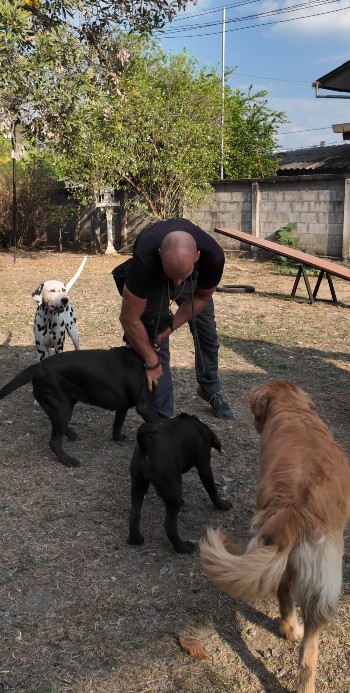


Connection reopens cognition. Replace control with co-regulation. When understanding precedes direction, trust returns—and with it, the courage to think again.
Practical Rehabilitation Protocol
Week 1-2: Pure Decompression
- No formal training—none. Zero. Your only job is to help your dog remember what safety feels like
- Enrichment activities—sniffing walks, food puzzles, gentle play initiated by the dog
- Calm presence—be available but don’t demand interaction
- Monitor baseline behaviors—sleeping patterns, eating, play, curiosity
- Track small wins—keep a journal noting moments of voluntary engagement
Week 3-4: Gentle Re-engagement
- Name game—say your dog’s name in a happy tone, reward when they glance at you (no criteria for duration or intensity)
- Hand touches—let your dog touch your hand with their nose if they want to, reward lavishly
- Following games—walk around slowly, reward your dog for choosing to follow
- Counter-conditioning to training space—if they have negative associations with certain areas, use high-value treats scattered there with no demands
- Play without purpose—just enjoy each other’s company
Week 5-8: Rebuilding Skills
- Reintroduce one familiar cue—choose the easiest, most confident behavior they know
- Maintain 90%+ success rate—if they’re failing more than 1 in 10, your criteria are too high
- Keep sessions micro-short—3-5 minutes maximum, stop before they want to
- Use ultra-high value rewards—whatever makes their eyes light up
- Focus on emotional state—happy, engaged performance matters more than technical precision
Week 9-12: Expanding the Repertoire
- Add new behaviors slowly—one at a time, building confidence before progressing
- Practice in easy environments first—success at home before adding distractions
- Watch for stress signals—if they reappear, scale back immediately
- Maintain high reward rate—3-5 rewards per minute is not too much
- Celebrate personality—encourage that unique spark that makes your dog who they are
This timeline is approximate. Some dogs bounce back in weeks; others need months. Honor your dog’s individual pace. Rushing rehabilitation recreates the pressure that caused shutdown in the first place.
🧠 The Journey from Shutdown to Thriving 🧡
Understanding and Reversing Cognitive Shutdown in Dogs: A Science-Based Pathway
Phase 1: Recognition
Identifying the Signs of Cognitive Shutdown
The amygdala becomes hypersensitive while the prefrontal cortex goes offline. Your dog’s brain prioritizes survival over learning, diverting cognitive resources to managing stress rather than processing new information.
• Glazed, unfocused eyes
• Mechanical compliance without engagement
• Freezing or extreme stillness
• Gaze aversion and retreating
• Unresponsiveness to rewards
If your dog shows compliance without joy, performs tasks robotically, or has lost all curiosity and playfulness, these are emergency signals requiring immediate intervention—not more training.
Phase 2: Understanding
The Science Behind the Shutdown
Chronic correction elevates cortisol levels, impairing immune function, reducing neurogenesis in the hippocampus (memory center), and creating a self-perpetuating cycle where stress makes learning harder, leading to more mistakes and more corrections.
Under chronic threat, the nervous system shifts from social engagement (ventral vagal) through fight-or-flight (sympathetic) to dorsal vagal shutdown—a dissociative state where the dog “checks out” entirely because the system determines safety lies in disconnection.
When corrections occur regardless of what the dog does—too slow, not fast enough, looking away—the brain calculates that effort is pointless. This isn’t stubbornness; it’s a rational survival response to an unpredictable situation.
Phase 3: Cessation
Stopping the Harm Immediately
Complete cessation of all correction-based training for a minimum of 4-6 weeks. No verbal reprimands, no leash corrections, no “no.” This isn’t permissiveness—it’s creating the neurological space for recovery to begin.
• Remove all aversive equipment (prong collars, choke chains, e-collars)
• Switch to comfortable harnesses or flat collars
• Use long lines for safety, not control
• Create physical comfort as foundation for emotional safety
Practice breathwork, emotional regulation, and frustration awareness. Your dog reads your internal state through voice tone, body language, and even cortisol synchronization. Your calm becomes their calm—this is co-regulation in action.
Phase 4: Decompression
Creating Space for Nervous System Recovery
No formal training whatsoever. Focus on enrichment: sniffing walks, food puzzles, gentle play initiated by your dog. Simply help them remember what safety feels like. Track small wins: moments of curiosity, voluntary proximity, softening eyes.
• Improved sleep quality and duration
• Return of appetite consistency
• Voluntary exploration of environment
• First signs of playfulness
• Reduced stress behaviors (lip licking, panting, yawning)
During decompression, cortisol levels begin normalizing, HRV increases, and the parasympathetic system re-engages. The hippocampus can resume neurogenesis, and the SEEKING system starts to reawaken—the foundation for genuine learning.
Phase 5: Re-engagement
Rebuilding the Joy of Learning
• Name game: Say their name happily, reward any acknowledgment
• Hand touches: Let them choose to engage
• Following games: Reward proximity without demands
• Play without purpose: Just enjoy being together
Scatter feeding, hide-and-seek with toys, novel object exploration—all activities that reawaken dopamine-driven curiosity. The goal isn’t obedience; it’s reigniting the spark of “I wonder what happens if…”
This phase prioritizes synchrony and emotional safety. Trust-based reinforcement creates the neural pathways for confident learning. You’re not just teaching behaviors—you’re rebuilding your dog’s belief that trying is safe and worthwhile.
Phase 6: Skill Building
Introducing Structure with Emotional Safety
Start with ONE familiar behavior—their easiest, most confident skill. Keep sessions 3-5 minutes maximum. Maintain 90%+ success rate by keeping criteria laughably easy. Stop before they want to. Make them hungry for more, not exhausted by demands.
• Tail wagging during training (loose, full-body)
• Voluntary attention checks
• Pulling toward training space, not away
• Quick recovery from mistakes
• Offering creative solutions to problems
Aim for 3-5 rewards per minute—this isn’t excessive, it’s neuroscience. High reinforcement rates keep dopamine elevated, maintain engagement, and create positive emotional associations with the learning process itself.
Phase 7: Expansion
Growing Confidence and Complexity
Add new behaviors ONE at a time. Practice in easy environments first—home success before adding distractions. Generalize gradually: same behavior, slightly different context. Watch for stress signals; if they appear, scale back immediately without judgment.
As trust deepens and engagement becomes voluntary, you’ll notice something magical: your dog attunes to you without coercion. They check in because they want to. They follow your guidance because it makes sense. This is the Invisible Leash—connection that guides without force.
Look for: bright eyes with soft focus, problem-solving attempts, playful energy between reps, resilience after errors, personality shining through. These engagement metrics matter infinitely more than perfect compliance.
Phase 8: Maintenance
Sustaining Thriving Partnership Long-Term
• Regular decompression periods built into routine
• Continued high reward rates (never “fade out” praise)
• Prioritize enrichment alongside training
• Monitor emotional state before behavioral precision
• Celebrate personality and individual expression
Your dog will remember how training made them feel long after they’ve forgotten specific cues. Every positive session creates emotional memories that strengthen their willingness to engage. This is Soul Recall—the deep knowing that learning with you is safe and joyful.
Stay aware of stress signals without obsessing. If you notice early-stage shutdown behaviors reappearing, respond immediately: increase reward rate, decrease criteria, add more play breaks, check your own emotional state. Prevention is always easier than rehabilitation.
📊 Correction-Based vs. Engagement-Based Training: The Real Comparison
Correction-Based: Chronically elevated, impairing immune function and neurogenesis
Engagement-Based: Normal baseline with healthy acute spikes during challenges, quick recovery
Correction-Based: Impaired working memory, reduced problem-solving, suppressed SEEKING system
Engagement-Based: Enhanced neuroplasticity, creative thinking, active exploration and experimentation
Correction-Based: Mechanical compliance, context-dependent, fragile under stress
Engagement-Based: Reliable, enthusiastic performance that generalizes across contexts
Correction-Based: Anxiety, hypervigilance, learned helplessness, dissociation
Engagement-Based: Confidence, curiosity, joy, emotional resilience and flexibility
Correction-Based: Fear-based compliance, reduced proximity-seeking, lower oxytocin
Engagement-Based: Trust-based partnership, secure attachment, mutual enjoyment, elevated oxytocin
Correction-Based: Increased reactivity, behavioral suppression, potential aggression, compromised welfare
Engagement-Based: Behavioral flourishing, emotional stability, enhanced quality of life, true partnership
For every instance of guidance or redirection, provide at least 9 instances of positive reinforcement.
Session Formula: 3-5 rewards per minute × 3-5 minute sessions = 15-25 positive moments per training block
Success Rate Minimum: 90%+ — if your dog is getting it wrong more than 1 in 10 times, your criteria are too high, not their effort too low
Decompression Ratio: For every 1 minute of focused training, provide 2-3 minutes of free choice activity, play, or rest
Reversing cognitive shutdown isn’t just about changing techniques—it’s about transforming relationships. Through NeuroBond, we recognize that trust and co-regulation restore prefrontal engagement, creating the neurological foundation for genuine learning. The Invisible Leash emerges not from control, but from deep attunement where awareness guides the path forward. And Soul Recall reminds us that dogs remember how training made them feel—every positive moment creates lasting emotional memories that strengthen the bond and willingness to engage.
When we honor the dog’s emotional experience alongside their behavioral development, we move beyond obedience into true partnership. That’s where science meets soul, where neurobiology meets heart, and where both ends of the leash transform together.
© Zoeta Dogsoul – Where neuroscience meets soul in dog training
Redefining Success: Beyond Compliance
The Engagement Metric Revolution
Traditional dog training has long measured success through a narrow lens: compliance. Did the dog sit when told? Come when called? Stay in position? These metrics tell us about behavior, but they tell us nothing about the dog’s internal experience.
The NeuroBond framework advocates for a revolutionary shift: measuring engagement rather than mere compliance. An engaged dog is a learning dog. An engaged dog is a thriving dog. Compliance without engagement is just suppression wearing a different mask.
What engagement looks like in practice:
- Bright, soft eyes—focused on you with interest, not hypervigilance
- Voluntary attention—your dog checks in with you because they want to, not because they’re worried
- Problem-solving behavior—when uncertain, they try different options rather than freezing
- Full-body wagging—not just the tail, but loose, fluid movement throughout
- Playful energy—the ability to transition into play easily, showing emotional flexibility
- Resilience after mistakes—errors don’t derail them; they bounce back quickly
- Seeking interaction—your dog actively wants to train with you, pulling toward the training space rather than away
- Offering behaviors—they volunteer actions, showing confidence and creativity
When you measure success through engagement, your training naturally becomes more humane. You can’t force a dog to be genuinely engaged. You can only create conditions where engagement becomes possible—and that requires emotional safety, clear communication, and trust-based reinforcement.
The Welfare-Centric Training Paradigm
Modern animal welfare science increasingly recognizes that absence of negative experiences isn’t enough. True welfare requires the presence of positive experiences—opportunities for joy, exploration, agency, and meaningful connection.
Key welfare indicators in training:
- Anticipation—does your dog show excitement when you prepare for training?
- Agency—do they have opportunities to make choices and influence outcomes?
- Variety—is training enriching, or just repetitive drilling?
- Rest—are breaks and downtime built in, or is training relentless?
- Success rate—are they experiencing frequent wins, or constant failure?
- Recovery—after challenges, can they reset emotionally?
- Relationship quality—is your bond strengthening or eroding through training?
These questions shift us from asking “Is my dog obedient?” to “Is my dog flourishing?” That’s a fundamentally different—and far more ethical—approach to training success. ## The Science Speaks: Research Findings
Comparing Training Methodologies
The scientific literature has grown increasingly clear: aversive-based training compromises welfare while reward-based training yields superior outcomes across virtually every metric that matters.
Key research findings:
Study 1: Cortisol and Training Methods A landmark study comparing aversive-based and reward-based training found that dogs in aversive training groups showed significantly higher cortisol levels post-training compared to reward-based groups. More concerning, the aversive group showed signs of chronic stress that persisted between training sessions, indicating the effects extended beyond the training hour itself.
Study 2: Behavioral Stress Indicators Research analyzing video footage of training sessions identified substantially more stress-related behaviors in dogs undergoing aversive training. These dogs displayed more frequent lip licking, yawning, panting, and body tension. They also showed more retreating behaviors and reduced eye contact with their handlers.
Study 3: Learning Outcomes Contrary to the assumption that aversive methods produce faster results, studies show that reward-based training often achieves comparable or better behavioral outcomes while maintaining significantly higher welfare standards. Dogs trained with rewards showed better generalization of learned behaviors across contexts and more reliable performance over time.
Study 4: Cognitive Bias Testing Using cognitive bias tasks—which assess whether dogs view ambiguous situations optimistically or pessimistically—researchers found that aversively trained dogs exhibited more pessimistic biases. This suggests that training methodology doesn’t just affect behavior in the moment; it shapes the dog’s fundamental outlook and emotional state.
Study 5: Human-Animal Bond Quality Perhaps most importantly, studies measuring attachment and relationship quality show that reward-based training strengthens the human-dog bond, while aversive training can undermine it. Dogs trained with positive reinforcement show increased proximity-seeking to their handlers, more social referencing, and higher oxytocin levels during interactions.
The Neurobiological Evidence
While we can’t easily put dogs in fMRI machines during training sessions, convergent evidence from multiple lines of research paints a clear picture of what’s happening neurologically.
Hippocampal Function and Learning The hippocampus, critical for forming new memories and spatial learning, is exquisitely sensitive to stress. Chronic cortisol elevation, such as that seen in correction-heavy training, has been shown to reduce neurogenesis (the birth of new neurons) in the hippocampus. This directly impairs learning capacity. Your dog isn’t just stressed—their brain’s ability to encode new information is being actively suppressed.
Amygdala Sensitization Repeated aversive experiences create lasting changes in amygdala function, lowering the threshold for threat detection. This manifests as increased reactivity, anxiety, and fearfulness that extend far beyond the training context. The dog becomes more reactive to all stressors, not just training-related ones.
Prefrontal Cortex Regulation The prefrontal cortex, responsible for executive function, impulse control, and decision-making, requires a calm nervous system to operate effectively. Under stress, blood flow shifts away from the prefrontal cortex toward more primitive brain structures. This is why stressed dogs struggle with impulse control and problem-solving—their “thinking brain” is literally offline.
Dopamine and Motivation Chronic exposure to punishment and correction depletes dopamine signaling in reward pathways. This creates a state similar to anhedonia in humans—the inability to experience pleasure. When the SEEKING system is suppressed, dogs lose motivation not just for training, but for life itself. The cost of constant correction extends into every corner of their experience. 🧠
Practical Applications: Training That Honors the Dog
Building a Positive Training Plan
Understanding the neuroscience of cognitive shutdown is valuable only if it transforms how we actually train. Here’s a practical framework for creating training plans that build engagement rather than suppression.
Foundation Elements:
1. Environmental Setup
- Choose calm, low-distraction spaces—especially for new learning
- Control variables—keep sessions predictable in location, time, and format initially
- Create positive associations—training space should signal good things, not pressure
- Minimize stressors—no audience, no tight leashes, no harsh sounds
2. Session Structure
- Start with connection—a few moments of calm presence before asking for anything
- Keep sessions short—3-5 minutes for new behaviors, 10-15 minutes maximum for confident skills
- End on success—always finish with something easy your dog loves
- Build in play breaks—training isn’t a grind; it’s an interactive game
3. Criteria Management
- Begin ridiculously easy—set your dog up for immediate success
- Progress in tiny increments—make success the default, not the exception
- Maintain high reward rate—aim for 3-5 rewards per minute, especially during learning phases
- Regression is feedback—if your dog struggles, your criteria jumped too fast
4. Communication Clarity
- Consistent markers—use the same word/sound to mark correct behavior every time
- Clear cues—one word, one behavior, no ambiguity
- Predictable consequences—right behavior always yields positive outcome
- Emotional congruence—your tone and body language match your message
The Art of Reinforcement
Not all rewards are created equal, and effective positive reinforcement requires more sophistication than just “give treats.
Types of Reinforcement:
- Primary reinforcers—food, water, essential resources
- Secondary reinforcers—toys, praise, petting
- Premack reinforcers—using preferred activities to reinforce less preferred ones (sniffing after heeling)
- Life rewards—access to environments, social interactions, freedoms
- Play reinforcement—games and interactive fun as training rewards
Matching Reinforcement to Dog:
- High-energy dogs—may value play and movement as much as food
- Food-motivated dogs—use variety in treats to maintain interest
- Toy-obsessed dogs—incorporate retrieval and tug into training
- Social dogs—make your attention and interaction the primary reward
- Independent dogs—life rewards and freedom of choice become powerful
Timing and Delivery:
- Mark the instant—use a clicker or marker word exactly when the right behavior happens
- Deliver within 1-2 seconds—maintain the associative link
- Vary reward placement—sometimes from your hand, sometimes tossed, sometimes hidden to find
- Jackpot occasionally—unexpected extra-large rewards for breakthrough moments
Through the Invisible Leash concept, we recognize that the most powerful reinforcement isn’t food or toys—it’s the quality of connection between you and your dog. When your dog works because they want to be in partnership with you, you’ve transcended basic training and entered the realm of true collaboration.
The Handler’s Inner Work
Emotional Regulation as a Training Tool
You cannot offer your dog emotional safety if you’re dysregulated yourself. This truth makes emotional regulation not just a nice-to-have, but a fundamental training skill.
Practices for Handler Regulation:
Before Training:
- Breathwork—three minutes of intentional breathing to activate your parasympathetic system
- Intention setting—remind yourself this is about connection, not perfection
- Expectation adjustment—plan for your dog’s actual skill level, not your ideal
- Body scan—notice and release tension in your shoulders, jaw, hands
During Training:
- Pause between repetitions—give yourself reset moments, not just your dog
- Monitor your voice—notice when it tightens or harshens
- Notice frustration early—the moment you feel it rising, take a break
- Reframe “mistakes”—your dog isn’t failing; you’re gathering information
After Training:
- Reflect without judgment—what worked? What needs adjustment?
- Celebrate effort—both yours and your dog’s
- Let go of the session—don’t carry frustration forward
- **Plan adjustments—**how can you make the next session clearer?
Developing Training Intuition
The best handlers develop an almost intuitive sense of their dog’s state—reading subtle signals and adjusting in real-time. This isn’t magic; it’s practiced observation and responsiveness.
Building Observational Skills:
- Video your training—you’ll see things you missed in the moment
- Watch without training—spend time simply observing your dog’s natural behavior
- Study other species—understanding horse, cat, or even human body language improves overall literacy
- Find patterns—what does your dog do right before shutting down? Right before breakthrough?
- Trust your gut—if something feels off, it probably is
Questions to Ask Yourself:
- Is my dog’s tail loose or tight?
- Are their eyes soft or hard?
- Is their movement fluid or choppy?
- Are they offering behaviors or waiting to be told?
- Do they recover quickly from mistakes or need longer reset time?
- Am I seeing personality, or just compliance?
These questions keep you grounded in your dog’s actual experience rather than your training agenda. That balance between structure and flexibility is where the NeuroBond approach comes alive—it’s not a method you apply mechanically, but a way of being with your dog that honors both your knowledge and their inner world.
Moving Forward: A Call for Change
Rethinking Professional Standards
The dog training industry remains largely unregulated, meaning anyone can call themselves a trainer regardless of education, methodology, or ethical standards. This creates a landscape where correction-heavy approaches persist despite mounting scientific evidence of their harm.
What needs to change:
Educational Requirements
- Mandatory welfare science education—trainers should understand stress physiology, learning theory, and behavioral health
- Ethological foundation—grounding in natural canine behavior and communication
- Recognition of cognitive shutdown—specific training in identifying and preventing shutdown states
- Emotional intelligence development—handlers need tools for their own regulation and awareness
Ethical Standards
- Welfare-first frameworks—training protocols should prioritize emotional and cognitive health alongside behavioral outcomes
- Transparency in methods—clients deserve full disclosure about approaches and potential risks
- Informed consent—handlers should understand what techniques will be used and their scientific support
- Accountability mechanisms—professional organizations should have enforcement power for ethical violations
Continuing Education
- Stay current with research—the science of animal behavior and welfare evolves rapidly
- Peer review and supervision—trainers benefit from collaborative learning and accountability
- Specialization pathways—recognition that working with fearful dogs requires different skills than competition training
The Role of Veterinary Medicine
Veterinarians occupy a unique position in the dog training ecosystem. Pet owners trust their veterinary recommendations, making vets powerful advocates for welfare-centered approaches.
Opportunities for veterinary involvement:
- Behavioral screening—routine assessment for stress-related conditions linked to training
- Referral networks—maintaining lists of force-free, science-based trainers
- Client education—discussing training methodology during wellness visits
- Recognizing shutdown—identifying physical and behavioral signs during examinations
- Collaborative care—working with qualified behavior consultants for complex cases
Some of the most common behavioral issues seen in veterinary practice—anxiety, reactivity, compulsive behaviors—have roots in or are exacerbated by training methodologies. Addressing training at the veterinary level could prevent countless welfare concerns.
Empowering Dog Owners
Ultimately, change happens when dog owners demand better. You have more power than you might think to shift the training landscape.
Questions to ask potential trainers:
- What’s your educational background in animal behavior and learning theory?
- What professional organizations are you affiliated with, and what are their ethical standards?
- Can you explain your training approach and the science supporting it?
- How do you measure training success—compliance only, or engagement and wellbeing?
- What equipment do you use, and why?
- How do you handle dogs who show stress signals during training?
- Can I observe a class before enrolling?
- What’s your policy if my dog seems uncomfortable or stressed?
Red flags that should concern you:
- Guarantees of specific results—ethical trainers know outcomes vary by individual
- Secrecy about methods—”just trust me” isn’t sufficient
- Dismissing stress signals—”they’ll get over it” reveals dangerous ignorance
- Blaming the dog—language about dominance, stubbornness, or spite
- Pressure to continue despite obvious distress—your dog’s welfare should never be negotiable
- Defensive responses to questions—professionals welcome informed clients
Your rights as a client:
- Stop a session at any time—if something feels wrong, it probably is
- Ask questions—understanding the “why” behind techniques is reasonable
- Seek second opinions—especially if you’re seeing signs of shutdown
- Change trainers—you’re not obligated to continue with someone who doesn’t align with your values
- Advocate for your dog—you know them best; trust your instincts
Through the NeuroBond framework and the concept of Soul Recall, we understand that dogs remember how training made them feel long after they’ve forgotten specific cues. That emotional memory shapes their relationship with learning, with you, and with life itself. Choosing training that honors this reality isn’t being soft—it’s being scientifically informed and ethically grounded.
Conclusion: Training as a Path to Connection
The Bigger Picture
This exploration of cognitive shutdown and the cost of constant correction isn’t ultimately about training techniques. It’s about how we relate to the beings who share our lives, depend on us, and offer us their trust.
Every correction delivered, every harsh word spoken, every moment of pressure or punishment leaves a trace. Sometimes those traces build into patterns—patterns of anxiety, of withdrawal, of learned helplessness. But the beautiful truth is that positive traces accumulate too. Every moment of patience, every celebration of effort, every instance of emotional safety creates neural pathways toward confidence, curiosity, and connection.
The science is clear: correction-heavy training compromises welfare, impairs learning, and damages the human-animal bond. But knowing this intellectually and changing ingrained habits are different challenges. If you’ve been using correction-based methods, this isn’t about shame or guilt. Most of us trained the way we were taught, operating with the best intentions and the information available at the time.
What matters is what you do now. Every interaction with your dog is an opportunity to choose connection over control, to prioritize engagement over compliance, to remember that the goal isn’t a perfectly obedient dog—it’s a thriving partnership built on mutual trust and respect.
Practical Takeaways for Everyday Life
You don’t need to be a professional trainer to implement these principles. Here’s what you can do, starting today:
In Daily Interactions:
- Notice stress signals—become fluent in your dog’s language before it escalates to shutdown
- Adjust your expectations—meet your dog where they are, not where you wish they were
- Celebrate small wins—every voluntary check-in, every moment of calm, every bit of offered engagement
- Build in decompression time—not every moment needs to be structured or productive
- Practice patience—with your dog and with yourself
In Training Moments:
- Keep sessions short and sweet—end on success, not exhaustion
- Increase reward rate—you probably can’t reinforce too much, but you can definitely reinforce too little
- Watch your tone—how you speak matters as much as what you say
- Give choices when possible—agency builds confidence and motivation
- Stop if stress appears—pushing through is how shutdown develops
In Your Mindset:
- Shift from fixing to understanding—behavior is communication; listen to what your dog is telling you
- Value engagement over perfection—a happy “almost” beats a miserable “exactly”
- Trust the relationship—when in doubt, choose the option that strengthens your bond
- Stay curious—about your dog, about behavior, about better ways forward
- Remember the long game—you’re building a partnership that will span years; there’s no rush
The Invisible Leash in Practice
The Invisible Leash isn’t about achieving off-leash perfection or demonstrating control. It’s about the energetic and emotional connection that exists between you and your dog—the way they tune into your state, and you tune into theirs. It’s the awareness that makes external control unnecessary because internal alignment has taken its place.
This level of connection doesn’t develop through dominance or correction. It emerges through thousands of small moments where you demonstrate that you’re trustworthy, predictable, and attuned to your dog’s needs. It grows when your dog learns that being near you, being attentive to you, and cooperating with you leads to positive experiences.
When you’ve cultivated this kind of relationship, training transforms. Cues become invitations rather than commands. Your dog participates because they want to, not because they’re avoiding correction. The joy in their eyes when they see you prepare for a training session tells you everything you need to know about whether you’re on the right path.
Final Thoughts: The Essence of Zoeta Dogsoul
Everything we’ve explored—the neuroscience of shutdown, the physiology of stress, the pathway to rehabilitation, the importance of engagement—comes together in a simple truth: dogs are sentient beings whose emotional lives matter.
Training isn’t just about behaviors. It’s about the relationship that develops through the process, the trust that either builds or erodes with each interaction, and the quality of life that our training choices create for our dogs.
That balance between science and soul, between knowledge and intuition, between structure and flexibility—that’s the essence of Zoeta Dogsoul. It’s recognizing that we can be informed by neuroscience while remaining guided by compassion. We can have clear training goals while honoring our dog’s emotional state. We can achieve remarkable results while prioritizing wellbeing.
The cost of constant correction is simply too high: cognitive shutdown, emotional suppression, damaged relationships, and compromised welfare. But the alternative isn’t chaos or permissiveness. It’s thoughtful, science-based training that works with your dog’s natural learning systems rather than against them.
Your dog is waiting—not for perfection, but for partnership. Not for control, but for connection. Not for dominance, but for mutual respect and genuine care. Every choice you make in training either opens or closes the door to that possibility.
Choose wisely. Choose kindly. Choose with both your head and your heart engaged.
Because in the end, that’s what truly transforms both ends of the leash.










