
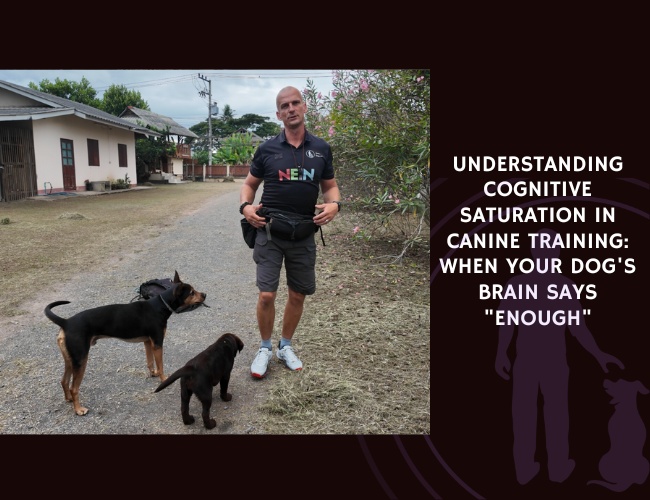
Have you ever noticed your furry friend suddenly struggling with commands they usually nail perfectly? Or perhaps your typically eager learner starts offering every behavior except the one you’re asking for? You might be witnessing cognitive saturation—a state where your dog’s mental capacity becomes overwhelmed, much like when we humans feel mentally drained after cramming for an exam. Let us guide you through understanding this crucial aspect of canine learning that could transform how you approach training with your four-legged companion.
Introduction: The Hidden Challenge in Dog Training
Picture this: You’re working with your Border Collie on a new agility sequence, and after thirty minutes of practice, they start knocking bars they cleared perfectly just moments ago. Or maybe your German Shepherd, usually razor-sharp in obedience work, begins offering sits when you ask for downs. These aren’t signs of stubbornness or regression—they’re your dog’s brain waving a white flag, signaling cognitive overload.
The concept of cognitive saturation in dogs mirrors what we experience as humans when we’ve studied too long or attended one too many meetings. Just as our brains have limits for processing and retaining information, so do our canine companions’. This phenomenon affects everything from basic obedience to complex working dog tasks, yet it remains one of the most overlooked aspects of dog training.
Understanding cognitive saturation means recognizing that our dogs’ remarkable intelligence comes with biological boundaries. Their prefrontal cortex—the brain region responsible for decision-making and working memory—can only handle so much before performance begins to deteriorate. By learning to identify and respect these limits, we can create training experiences that are not only more effective but also more enjoyable for both ends of the leash. 🧠
Character & Behavior: How Mental Fatigue Shapes Your Dog’s Response
The Working Memory Window
Your dog’s working memory operates like a mental workspace where information is temporarily held and manipulated. Think of it as their cognitive desktop—there’s only so much space available before files start falling off the edges. Research on similar neural mechanisms in humans shows that the dorsolateral prefrontal cortex, a region dogs share with us, plays a critical role in maintaining this workspace. When we push training sessions beyond this capacity, we’re essentially asking our dogs to juggle while someone keeps throwing more balls.
During optimal training conditions, your dog’s brain efficiently transfers information from working memory to long-term storage. But when cognitive saturation sets in, this transfer process breaks down. You might notice your Labrador successfully performing a new trick five times in a row, only to completely forget it the next day. This isn’t forgetfulness—it’s the result of information never making it past the overwhelmed working memory stage.
The fascinating part? Different breeds and individual dogs have varying working memory capacities. Your high-drive Belgian Malinois might maintain focus for extended periods, while your laid-back Basset Hound might reach saturation much sooner. Understanding your individual dog’s cognitive threshold is key to preventing mental overload.
Neural Fatigue Patterns
When we overtrain our dogs, specific neural fatigue patterns emerge that mirror what researchers observe in human cognitive studies. The prefrontal cortex, responsible for executive function and decision-making, begins showing signs of reduced efficiency. Imagine trying to solve math problems after pulling an all-nighter—your brain knows what to do, but the execution becomes increasingly sloppy.
While research hasn’t definitively proven dopamine depletion in overtrained dogs, we can observe behavioral changes suggesting neurotransmitter imbalances. That sudden lack of enthusiasm for treats that usually drive your dog wild? Or the glazed expression replacing their typically alert focus? These could be signs that the reward pathways in their brain are temporarily exhausted.
The theta and alpha oscillations in your dog’s brain, which help process complex information and social signals, can become disrupted under cognitive strain. This explains why an overtrained dog might misread social cues from other dogs or fail to respond appropriately to your body language—their brain’s communication frequency is essentially experiencing static interference.
Vocalization & Communication: When Your Dog’s Brain Speaks Through Behavior
The Language of Mental Exhaustion
Dogs experiencing cognitive saturation develop a unique vocabulary of stress signals that often go unrecognized. You might notice your usually quiet Golden Retriever beginning to whine during training, or your vocal Husky becoming unusually silent. These vocalization changes aren’t random—they’re your dog’s way of communicating mental strain.
Frustration vocalizations tend to escalate in a predictable pattern. First come the subtle sighs and huffs, barely audible expressions of mental effort. As saturation increases, these might evolve into whines, groans, or even demand barking—not because your dog is being difficult, but because their overwhelmed brain is seeking an escape route from the cognitive pressure.
Interestingly, some dogs become hypervigilant to environmental sounds when mentally fatigued, barking at stimuli they’d normally ignore. This heightened reactivity isn’t true alertness but rather a sign that their cognitive filter—the mental process that helps them determine what’s important—has temporarily shut down. 🐾
Displacement Behaviors and Avoidance Signals
When cognitive overload hits, dogs often display displacement activities—behaviors that seem completely out of context. Your Border Collie might suddenly become obsessed with sniffing the ground during a recall exercise, or your Poodle might start scratching despite having no itch. These aren’t acts of defiance; they’re pressure valves for an overwhelmed nervous system.
Avoidance behaviors become increasingly creative as mental fatigue deepens. Some dogs develop what trainers call “creative incompetence”—suddenly forgetting commands they’ve known for years. Others might offer every behavior in their repertoire except the one being asked for, a phenomenon known as “behavioral spillover.” Your German Shepherd might cycle through sit, down, spin, and shake when all you asked for was “stay.”
The latency between command and response—that pause before your dog acts—becomes noticeably longer during cognitive saturation. Where a fresh mind might respond in milliseconds, an oversaturated brain might take several seconds to process and execute even simple requests. This increased latency isn’t stubbornness; it’s processing delay caused by mental fatigue.
Training & Education: Optimizing Learning Without Overload
The Science of Distributed Practice
The secret to preventing cognitive saturation lies in understanding distributed practice—spreading learning across multiple short sessions rather than marathon training blocks. Research consistently shows that this approach not only prevents mental fatigue but actually enhances long-term retention. Think of it like watering a plant: frequent small drinks are better than occasional flooding.
For puppies under 12 months, whose cognitive capacities are still developing, micro-sessions of 3-5 minutes can be remarkably effective. These brief encounters with learning allow their young brains to process information without becoming overwhelmed. You might practice “sit” for two minutes in the morning, “down” for three minutes at lunch, and “come” for two minutes in the evening—achieving more than a 30-minute session ever could.
Adult dogs benefit from what researchers call the “spacing effect.” Training the same skill with 24-hour intervals between sessions produces superior retention compared to repetitive practice in a single day. Your Labrador learning to retrieve might benefit more from three 10-minute sessions spread across three days than an hour-long session on Saturday afternoon.
Reading Your Individual Dog’s Threshold
Every dog has a unique cognitive saturation point influenced by breed, age, temperament, and even daily factors like sleep quality and stress levels. High-drive breeds like Belgian Malinois or Jack Russell Terriers might maintain focus longer, but they’re also more prone to frustration when they hit their limit. Meanwhile, more laid-back breeds like Bulldogs or Shih Tzus might reach saturation sooner but show gentler signs of overload.
Temperament plays a crucial role in susceptibility to cognitive overload. Research shows that dogs with high excitability might reach saturation faster in stimulating environments, while those with nonsocial fear might struggle with cognitive tasks when stressed. Your anxious Chihuahua might have a brilliant mind but reach overload quickly in a busy training class, while your confident Rottweiler might maintain focus despite distractions.
The key is learning to read your individual dog’s early warning signs. These might include subtle changes in tail position, ear set, or breathing patterns. Some dogs begin yawning excessively (not from tiredness but as a stress signal), while others might start offering appeasement behaviors like lip licking or looking away. Recognizing these early indicators allows you to end sessions while learning is still positive. 😄

Environmental Factors and Cognitive Load
The training environment significantly impacts how quickly dogs reach cognitive saturation. A quiet living room presents minimal cognitive load, allowing your dog to focus entirely on the task. But that same task in a busy park requires your dog to filter out distractions—children playing, other dogs, interesting smells—dramatically increasing cognitive demand.
Research on cognitive overload clearly demonstrates that environmental complexity and distractions accelerate mental fatigue. Training your Beagle to heel in your backyard might take 10 minutes before signs of saturation appear, but attempting the same exercise at a dog park might trigger overload in just 3 minutes. This isn’t failure; it’s your dog’s brain working overtime to process multiple streams of information simultaneously.
Consider environmental factors like temperature, noise levels, and even lighting. A hot day increases physiological stress, reducing cognitive capacity. Fluorescent lighting in some training facilities can create visual stress for sensitive dogs. By managing environmental complexity, you can extend your dog’s cognitive stamina and make learning more efficient.
Performance & Activities: Maintaining Peak Mental Performance
Working Dogs and Cognitive Endurance
Working dogs—whether search and rescue, police K9s, or service dogs—face unique cognitive demands that require careful management to prevent burnout. These remarkable animals often push through mental fatigue due to their high drive and desire to work, making it crucial for handlers to recognize subtle saturation signals before performance deteriorates.
Search and rescue dogs, for instance, must maintain intense focus while processing multiple sensory inputs—scent discrimination, terrain navigation, handler communication—all simultaneously. Studies show that while these dogs might not display obvious exhaustion signs, their physiological markers tell a different story. Heart rate variability changes, altered cortisol patterns, and subtle behavioral shifts all indicate when cognitive resources are depleting.
The fascinating aspect of working dogs is their ability to develop cognitive endurance through appropriate training. Like athletes building physical stamina, these dogs can gradually increase their mental capacity through progressive training protocols. However, this must be balanced with adequate recovery. A detection dog working multiple searches needs mental rest periods just as much as physical ones—perhaps even more so.
Sport Dogs and Competitive Performance
Agility, obedience, and other dog sports demand rapid cognitive processing and decision-making. Your Border Collie navigating an agility course isn’t just running and jumping—they’re constantly processing visual cues, remembering sequences, and adjusting their body position based on split-second calculations. This intense mental workout can lead to cognitive saturation even in highly trained competitors.
Competition environments add another layer of cognitive stress. The excitement, unfamiliar venues, and presence of other dogs all contribute to mental load. You might notice your usually flawless performer making uncharacteristic errors in competition—missing weave pole entries, taking wrong obstacles, or failing to hold positions. These aren’t necessarily “ring nerves” but could be signs of cognitive overload from the accumulated mental demands.
Successful competitors understand the importance of mental warm-ups and cool-downs. Just as we wouldn’t ask our dogs to run agility without physical preparation, we shouldn’t expect peak cognitive performance without mental preparation. Short, successful repetitions of well-known behaviors can help prime the cognitive system without depleting resources needed for competition.
Think. Strain. Spillover.
The cognitive cap. Your dog’s prefrontal cortex runs on limited bandwidth. Each new cue, repetition, and adjustment adds to the load. Once that “mental desktop” is full, accuracy nosedives—not from disobedience, but from saturation.
Fatigue in patterns. Neural fatigue shows up as sloppy sits, misplaced downs, or forgotten sequences. Just as tired humans misplace keys, dogs under saturation default to random or previously reinforced behaviors.



Train within thresholds. Shorter, sharper sessions preserve focus. Build in rest, play, and decompression. Respecting the brain’s limits keeps learning sticky, reduces frustration, and turns training into progress rather than burnout. 🧠
Nutritional Recommendations: Feeding the Thinking Brain
Brain Food for Cognitive Resilience
Your dog’s brain consumes approximately 20% of their body’s glucose supply, and this percentage increases during intensive training. Proper nutrition becomes crucial for maintaining cognitive function and preventing premature mental fatigue. Think of it as premium fuel for a high-performance engine—the quality of input directly affects output.
Omega-3 fatty acids, particularly DHA and EPA, play vital roles in neural function and cognitive processing. Dogs receiving adequate omega-3s show improved learning ability and may have greater resistance to cognitive saturation. Wild-caught fish, fish oil supplements, or high-quality commercial foods enriched with these fatty acids can support your dog’s mental endurance. The anti-inflammatory properties of omega-3s also help protect neural tissue from the oxidative stress that intensive training can produce.
B-complex vitamins are the unsung heroes of cognitive function, supporting neurotransmitter production and neural energy metabolism. Thiamine (B1) deficiency, for instance, can dramatically impair cognitive performance and increase susceptibility to mental fatigue. Ensuring your dog receives adequate B vitamins through their diet or appropriate supplementation can help maintain cognitive stamina during training sessions.
Timing Nutrition for Optimal Cognitive Performance
When you feed your dog relative to training sessions significantly impacts their cognitive performance. Training on an empty stomach might seem like a good way to increase food motivation, but it can actually accelerate cognitive fatigue. Low blood glucose levels impair brain function, reducing your dog’s ability to process and retain information.
The ideal approach involves light feeding 2-3 hours before intensive training sessions. This provides stable blood glucose without the drowsiness that can follow large meals. Think of it like eating before an exam—you want enough fuel to maintain focus without feeling sluggish. A small portion of easily digestible protein and complex carbohydrates can provide sustained energy for both body and brain.
Post-training nutrition is equally important for cognitive recovery. The brain needs resources to consolidate learning and repair from mental exertion. A balanced meal within an hour after intensive training supports this recovery process. Some trainers report success with small amounts of blueberries or other antioxidant-rich treats immediately after training, potentially helping to combat oxidative stress from mental exertion. 🧡
Health Concerns: When Mental Fatigue Becomes Problematic
The Stress Response and Long-term Impact
While acute cognitive saturation is generally reversible with rest, chronic overtraining can lead to lasting behavioral and health issues. The stress response system, particularly the hypothalamic-pituitary-adrenal axis, becomes dysregulated with repeated cognitive overload. This isn’t just about having a tired dog—it’s about potentially creating long-term changes in how your dog’s brain processes stress and learning.
Cortisol patterns in chronically overtrained dogs may show abnormal fluctuations. Instead of the healthy rhythm of higher morning levels tapering through the day, these dogs might display flattened cortisol curves or inappropriate spikes. This hormonal disruption affects not just cognitive function but also immune response, digestion, and overall health. Your seemingly healthy dog might become more susceptible to infections or develop digestive issues that stem from chronic training stress.
Heart rate variability (HRV), a key indicator of autonomic nervous system balance, often decreases in dogs experiencing chronic cognitive overload. Low HRV correlates with reduced stress resilience and impaired recovery ability. This means your dog doesn’t just struggle with current training but becomes less capable of handling future cognitive challenges—a downward spiral that can be difficult to reverse.
Behavioral Fallout from Chronic Overtraining
The behavioral consequences of chronic cognitive saturation can manifest in unexpected ways. Some dogs develop what appears to be sudden onset aggression, but it’s actually frustration and stress from chronic mental overload. Your previously social Golden Retriever might begin snapping at other dogs, not from true aggression but from a depleted capacity to handle social interactions.
“Shutdown” is another serious consequence where dogs essentially give up trying. They become passive, offering no behaviors without extensive prompting. This learned helplessness isn’t laziness—it’s a protective mechanism when the brain can no longer cope with cognitive demands. These dogs often appear depressed, showing reduced interest in activities they once enjoyed.
Some dogs develop compulsive behaviors as outlets for chronic cognitive stress. Excessive licking, tail chasing, or shadow chasing might emerge in previously normal dogs subjected to chronic overtraining. These behaviors provide a form of mental escape from overwhelming cognitive demands, similar to how stressed humans might develop nervous habits.
Recovery Protocols and Rehabilitation
If your dog shows signs of chronic cognitive overload, recovery requires more than just taking a break from training. A structured rehabilitation protocol helps restore normal neural function and stress resilience. This might begin with a complete training hiatus of 2-3 weeks, allowing the brain’s stress response systems to reset.
During recovery, focus shifts from formal training to enrichment activities that engage different neural pathways. Scent work, gentle exploration walks, and food puzzles can maintain mental engagement without the pressure of performance. Think of it as cross-training for the brain—maintaining activity while allowing overtaxed systems to recover.
Sleep quality becomes paramount during recovery. Dogs need 12-14 hours of sleep daily, with adequate REM sleep for cognitive processing and recovery. Creating an environment that supports quality sleep—quiet, comfortable, with consistent routines—accelerates healing from cognitive exhaustion. Some dogs benefit from calming supplements or pheromone diffusers during this recovery phase.

Lifestyle & Environment: Creating a Cognitive-Friendly Life
Home Environment Optimization
Your home environment significantly impacts your dog’s cognitive load and recovery capacity. A chaotic household with constant stimulation prevents the mental downtime necessary for cognitive restoration. This doesn’t mean your home needs to be silent, but rather that your dog needs access to quiet spaces where they can truly relax.
Creating designated “decompression zones” gives your dog control over their cognitive engagement. A quiet bedroom with a comfortable bed, away from household traffic, allows voluntary withdrawal when mental resources are depleted. Some dogs benefit from covered crates or den-like spaces that provide additional sensory buffering from environmental stimuli.
Consider the impact of modern technology on your dog’s cognitive load. Constant television noise, notification sounds from devices, and even LED lighting can contribute to cumulative cognitive stress. Implementing “quiet hours” or using white noise machines can help create periods of reduced cognitive demand, supporting mental recovery.
Daily Routines and Cognitive Balance
Structuring your dog’s day to balance cognitive challenges with recovery periods prevents saturation while maintaining mental fitness. Think of it like planning a workout routine—you wouldn’t do intense cardio every day without recovery. The same principle applies to mental exercise.
Morning routines might include light cognitive work when your dog’s mind is fresh—perhaps a five-minute training session or food puzzle. Midday provides an ideal time for physical exercise without cognitive demands, allowing mental recovery while maintaining physical health. Evening might involve calm enrichment activities like gentle scent work or relaxed grooming, engaging the mind without overtaxing cognitive resources.
Predictability in daily routines reduces cognitive load by minimizing decision-making demands. When your dog knows what to expect, their brain doesn’t waste resources trying to predict or prepare for various scenarios. This cognitive efficiency leaves more mental resources available for intentional training and learning.
Social Dynamics and Mental Load
Multi-dog households present unique cognitive challenges that can accelerate saturation. Constant social negotiation—determining resource access, maintaining social position, reading other dogs’ signals—creates ongoing cognitive demand. Your Border Collie might excel in solo training but struggle in group classes due to this additional social cognitive load.
Managing social dynamics to reduce unnecessary cognitive stress involves structured interactions and clear household rules. Separate feeding areas eliminate resource competition stress. Designated alone time for each dog provides cognitive recovery from social demands. Training sessions might need to be conducted separately to prevent competitive stress from depleting cognitive resources.
The human family’s interaction style also impacts cognitive load. Inconsistent rules between family members force dogs to constantly assess and adjust their behavior based on who’s present. Establishing consistent household protocols reduces this cognitive burden, leaving more mental capacity for intentional learning and bonding.
Senior Care: Protecting Aging Cognitive Function
Age-Related Cognitive Changes
As dogs age, their cognitive saturation threshold naturally decreases. The senior dog who once handled hour-long training sessions might now show fatigue after just ten minutes. This isn’t necessarily cognitive dysfunction syndrome—it’s normal aging affecting processing speed and mental stamina. Understanding these changes helps us adjust expectations and training approaches appropriately.
Neural plasticity—the brain’s ability to form new connections—remains present in senior dogs but operates more slowly. Learning new behaviors is still possible, but requires more patience and shorter sessions. Your 12-year-old Labrador can absolutely learn new tricks, but the process might take weeks instead of days, with multiple micro-sessions replacing longer training blocks.
The aging brain becomes more susceptible to environmental stressors that impact cognitive function. Temperature extremes, changes in routine, or novel environments might trigger cognitive overload more quickly in senior dogs. Recognizing these vulnerabilities allows us to create supportive conditions for continued learning and mental engagement.
Adapted Training Protocols for Senior Dogs
Training senior dogs requires reimagining what success looks like. Instead of complex behavior chains, focus on maintaining existing skills and gently challenging cognitive function without causing frustration. A senior dog maintaining known behaviors is achieving just as much as a young dog learning new ones.
Session duration for senior dogs might be just 2-3 minutes of focused work, repeated several times throughout the day. These brief encounters prevent cognitive fatigue while maintaining neural pathways. Think of it as cognitive physiotherapy—gentle, consistent exercise to maintain function rather than build new capacity.
Incorporating cognitive support into training can help senior dogs maintain focus longer. This might include using higher-value rewards to maintain motivation, training in familiar environments to reduce cognitive load, or using visual and verbal cues together to support processing. Some senior dogs benefit from supplements supporting cognitive function, like medium-chain triglycerides or antioxidants.
Quality of Life Considerations
Preventing cognitive saturation in senior dogs isn’t just about training—it’s about maintaining quality of life. Mental engagement remains crucial for senior dogs’ wellbeing, but it must be balanced with their reduced cognitive capacity. Forcing cognitive work beyond their comfortable threshold can create anxiety and learned helplessness.
Enrichment activities for senior dogs should focus on success and enjoyment rather than challenge. Simple food puzzles they can easily solve, gentle scent work at their own pace, or calm social interactions with familiar dogs provide mental stimulation without cognitive strain. The goal shifts from building capacity to maintaining engagement and preventing cognitive decline.
Monitoring for signs of cognitive dysfunction syndrome becomes important as dogs age. Increased confusion, disrupted sleep patterns, or sudden changes in learning ability might indicate pathological changes rather than normal aging. Early intervention with appropriate veterinary support can help maintain cognitive function and quality of life. 🐾
Conclusion: Is Your Training Approach Right for Your Dog?
Understanding cognitive saturation transforms how we approach dog training, shifting focus from repetition and duration to quality and recovery. Every interaction with your dog involves cognitive processing, and recognizing when that processing system needs rest is just as important as knowing when to push forward. Your dog’s brain, remarkable as it is, has limits that deserve respect and understanding.
The journey toward preventing cognitive overload isn’t about training less—it’s about training smarter. By implementing distributed practice, reading individual thresholds, and creating supportive environments, we can help our dogs reach their full potential without risking burnout. Whether you’re working with a high-drive sporting dog or a laid-back companion, these principles apply universally while acknowledging individual differences.
As you reflect on your training approach, consider: Are you recognizing early signs of mental fatigue? Are training sessions structured to prevent rather than push through cognitive saturation? Is your dog’s environment supporting cognitive recovery between sessions? These questions guide us toward more effective, humane training practices that strengthen rather than strain the human-canine bond.
Next, we’ll explore specific protocols for different training scenarios, helping you implement these concepts whether you’re teaching basic manners or preparing for high-level competition. Remember, a mentally healthy dog isn’t just a better learner—they’re a happier companion, ready to engage with life rather than merely endure it. The cognitive wellbeing of our dogs reflects directly in their behavior, health, and the quality of our relationship with them.
By respecting cognitive limits, we don’t restrict our dogs’ potential—we unlock it. A well-rested brain learns faster, retains longer, and engages more enthusiastically than one pushed to exhaustion. In the end, understanding cognitive saturation isn’t just about better training results; it’s about honoring the remarkable minds of our canine companions and giving them the support they need to thrive. 🧡










