
Quick Facts about the Norwich Terrier
- Origin: England
- Weight: Males: 5–6.5 kg, Females: 4.5–6 kg
- Life expectancy: 12–15 years
- Coat Colour: Red, wheaten, black and tan, or grizzle
- Breed Group: Terrier
Small. Spirited. Fearlessly affectionate. The Norwich Terrier may be one of the smallest working terriers, but their personality is anything but tiny. Bred to hunt rats and flush out foxes, they bring courage, charm, and cheekiness in equal measure.
Norwich Terrier History
The Norwich Terrier originated in East Anglia, England, during the late 19th century. Developed from small red terriers used by Cambridge University students to control vermin, they were also favoured by farmers for their compact yet fearless hunting ability.
Originally grouped with the Norfolk Terrier, the two were later separated in 1964 due to a difference in ear carriage—Norwich Terriers have erect ears, while Norfolks have folded ones. Despite their size, Norwich Terriers were and still are considered true working dogs with relentless drive.
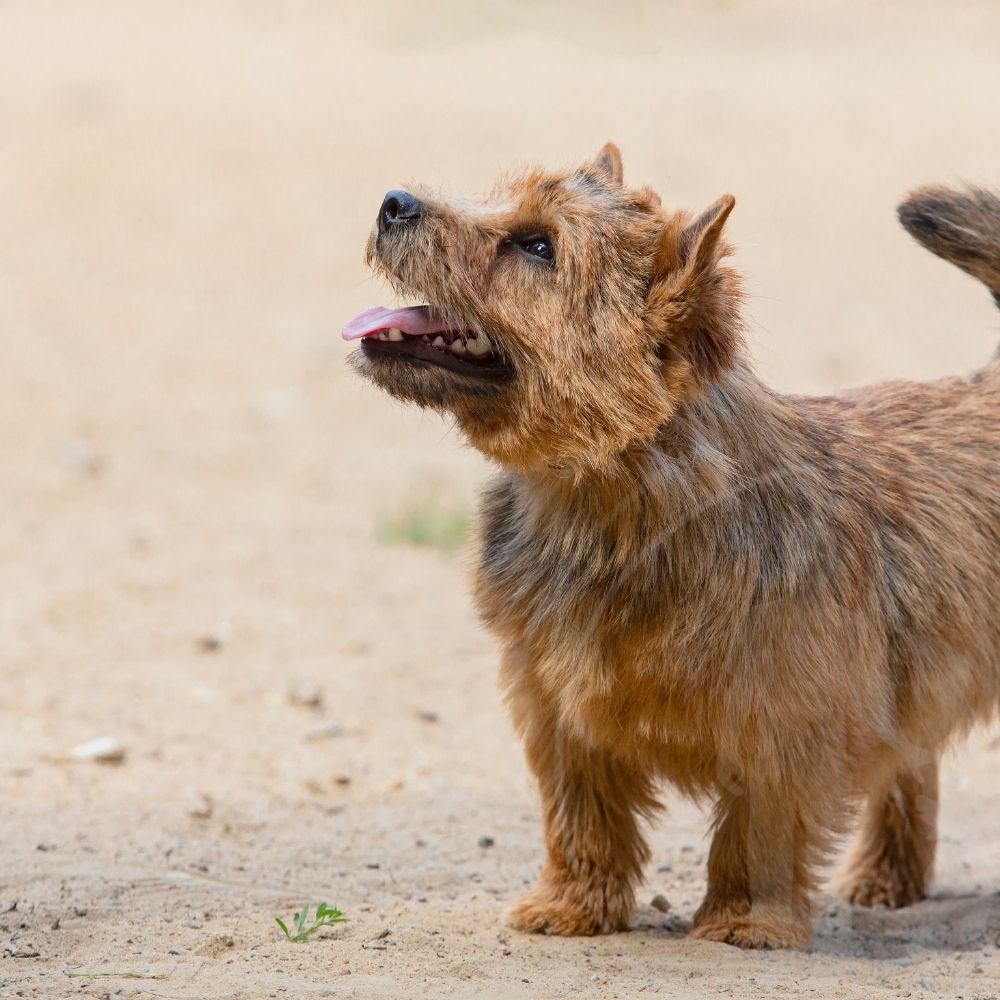
Norwich Terrier Temperament
Confident and endlessly curious, the Norwich Terrier is bold without being aggressive. They form deep attachments to their family, thrive on companionship, and are known for their cheerful disposition.
Despite their size, they do not back down from a challenge—whether it’s a squirrel in the yard or an agility course at full speed. They get along well with other dogs if socialised early but can be territorial and tenacious when provoked.
Note: Without enough daily activity, Norwich Terriers may develop excessive barking or digging habits, especially if their high energy isn’t properly channelled.
Health and wellness
Norwich Terriers are sturdy and healthy for their size, but their energetic nature requires balanced nutrition and regular mental engagement. Their wiry coat needs weekly brushing and occasional trimming.
Dental care is crucial, as small breeds are prone to periodontal disease. Watch for respiratory issues and joint sensitivity, particularly in older dogs or those bred irresponsibly.
Significant problems:
Upper airway syndrome (narrow trachea)
Patellar luxation
Epilepsy
Allergies (environmental and food-based)
Dental crowding and tartar buildup
Life expectancy: 12–15 years
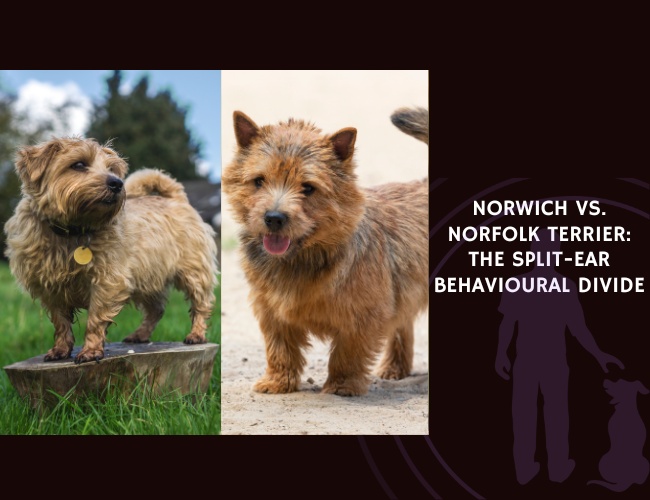
Norwich vs. Norfolk Terrier: The Split-Ear Behavioural Divide
🔍 Looking to go deeper into dog training?
Use these categories to explore targeted guides and articles on canine behavior, nutrition, obedience, entertainment, and more.










