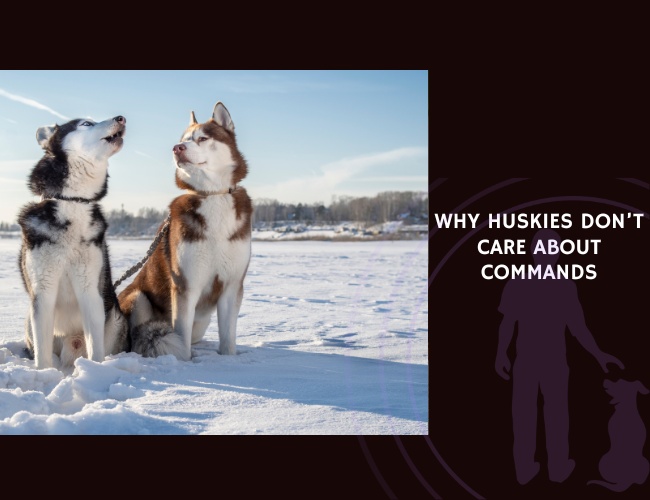
Have you ever called your Husky and watched them glance back with what can only be described as polite indifference? You’re not alone, and more importantly, you’re not dealing with a stubborn dog. You’re partnering with one of the most cognitively independent canines ever developed. The Siberian Husky’s apparent disregard for commands isn’t defiance—it’s intelligence operating under a different framework than most modern companion breeds.
Understanding why Huskies seem to selectively ignore commands requires us to journey back to the frozen expanses of Siberia, where survival depended not on obedience, but on autonomous decision-making. Let us guide you through the fascinating cognitive architecture of these remarkable dogs and discover why working with their natural intelligence, rather than against it, creates the partnership you’ve been seeking.
The Ancestral Blueprint: Born to Lead, Not to Follow
A Working History Unlike Any Other
When we examine the Husky’s relationship with commands, we must first understand their origin story. These dogs weren’t bred to herd sheep under constant human direction or retrieve birds with precision timing. Siberian Huskies evolved as long-distance sled dogs, covering vast territories across some of Earth’s most unforgiving landscapes with minimal human oversight.
Picture a sled team running across an endless white expanse, where the driver at the back can barely see the lead dogs through blowing snow. In these conditions, the dogs at the front aren’t waiting for commands—they’re making critical assessments:
- Terrain evaluation: Is the snow packed solid or hiding dangerous soft spots that could break a leg?
- Ice detection: Does the surface ahead conceal thin ice that might collapse under the team’s weight?
- Weather pattern recognition: Are wind shifts signaling an approaching storm that requires immediate shelter?
- Navigation without visual landmarks: Using scent markers, star positions, and magnetic sense to maintain direction across featureless white landscapes
- Energy conservation: Pacing the team to ensure they can complete the journey without exhaustion
- Pack coordination: Maintaining proper spacing and rhythm with teammates to maximize pulling efficiency
Each decision could mean the difference between safe passage and catastrophe.
This ancestral role demanded a high degree of autonomous decision-making. The cognitive processes that developed prioritized initiative and environmental problem-solving over immediate, rote obedience. Your Husky’s brain literally evolved to make independent judgments, assess situations, and take action without waiting for permission. What looks like ignoring you might actually be your dog processing multiple environmental variables you’re not even aware of.
The Genetics of Independence
Are Huskies genetically predisposed to prioritize environmental cues over direct human instruction? Research on animal navigation demonstrates how critical the integration of sensory information becomes for species operating in complex environments. For Huskies, this translates to an innate ability to process and prioritize information from their environment—changes in snow texture, wind direction, the scent of a trail, subtle movements of other pack members—often with greater urgency than human verbal commands.
Their hippocampal formation, crucial for navigation requiring the integration of self-movement cues, developed to excel at reading and responding to the natural world. When your Husky seems distracted by something you can’t perceive, they may be processing multiple layers of information:
- Olfactory data: Scent trails revealing what animals passed through, how long ago, and in which direction
- Wind patterns: Direction, temperature, and moisture content providing weather forecasting and navigation cues
- Ground texture changes: Subtle shifts in surface that indicate terrain transitions or potential hazards
- Pack member positions: Spatial awareness of other dogs or family members and their movement patterns
- Distant visual cues: Objects or movements at ranges far beyond typical human perception
- Sound localization: Pinpointing the origin of sounds across vast distances with remarkable accuracy
This sophisticated sensory processing makes your verbal command seem like background noise.
This isn’t disobedience. This is advanced cognitive processing designed for survival in dynamic, unpredictable environments where the dog’s assessment of danger or opportunity holds more immediate weight than a human instruction delivered from a distance.
Modern Training Meets Ancient Cognition
Does their ancestral work require initiative without immediate obedience, making modern training fundamentally mismatched to their natural cognition? Yes. A sled dog that paused to look back and wait for confirmation before every decision would be inefficient and potentially dangerous in a fast-moving environment. The ability to anticipate, react independently, and even lead the team required dogs to act without explicit, moment-to-moment human instruction.
Traditional obedience training focuses on immediate, precise responses to specific verbal cues. Sit means sit right now, every time, without evaluation or consideration. This approach assumes the human always has superior situational awareness and that compliance should be automatic. For a Husky, this feels fundamentally wrong. Their entire genetic history argues against blind obedience in favor of intelligent assessment 🧠
The Motivational Economy: Why Your Husky Weighs Every Request
Selective Engagement and Contextual Learning
Huskies exhibit what we might call a “motivational economy”—they actively weigh the perceived value and relevance of a command against their intrinsic drives and environmental interests. This isn’t stubbornness; it’s strategic resource allocation by an intelligent mind.
Think about how you prioritize tasks in your own day. If someone asks you to drop everything and perform a repetitive, seemingly pointless task while something genuinely important demands your attention, you’d at least pause to evaluate. Your Husky does the same calculation, just faster and with different priorities.
Are Huskies more likely to evaluate commands based on relevance, clarity, and context rather than habit? Their independent working history strongly suggests they are highly contextual learners. They assess a command’s relevance to their current situation, their internal drives, and their learned outcomes. A command that aligns with their natural drives—running, exploring, investigating—or provides clear, immediate benefit might be readily accepted. An arbitrary command delivered mid-investigation of a fascinating scent? That’s optional.
Redefining “Low Biddability”
The term “low biddability” frequently applied to Huskies deserves reconsideration. What experts score as poor trainability might actually reflect sophisticated independent problem-solving. Their historical role demanded critical thinking and autonomous action—qualities incompatible with unquestioning compliance.
What looks like stubbornness is often contextual evaluation in action:
- The pause before responding: Your Husky isn’t defying you—they’re processing whether your command makes sense given current circumstances
- Selective recall: They come reliably in low-distraction environments but ignore you near exciting stimuli because they’re weighing competing priorities
- Variable response times: Fast compliance when the command aligns with their current goal, slow or absent response when it conflicts
- Environmental checking: Looking around before responding because they’re assessing whether you’ve noticed something important they’ve detected
- Delayed compliance: Eventually doing what you asked, but only after completing their current priority task
Metacognition, defined as knowledge about knowledge or behavior about behavior, enables intelligent agents to monitor and control their emotions, perceptions, memories, reasoning, and decisions. A Husky’s selective response to commands could stem from a metacognitive process where they evaluate your instruction against their understanding of the environment, their internal state, and their learned outcomes. They’re not being difficult—they’re being thoughtful.
When your Husky appears to ignore your recall command but then returns moments later on their own terms, they may have determined that completing their current investigation took priority over your summons. From their perspective, they did return—just after finishing the more important task.
Intrinsic Motivation Versus Extrinsic Rewards
How does intrinsic motivation—movement, exploration, freedom—outweigh extrinsic cues like treats, praise, or repetition? Huskies possess extraordinarily strong intrinsic motivations deeply rooted in their ancestral purpose. These internal drives often prove far more powerful than typical extrinsic rewards.
The intrinsic reward of exploring a new scent, covering ground at speed, or investigating an interesting sound can far outweigh the momentary pleasure of a treat. Research on curiosity in learning agents highlights how internal drive can motivate exploration more effectively than external rewards. For Huskies, their inherent drives provide such strong internal feedback that external cues struggle to compete.
Consider the reward hierarchy from a Husky’s perspective:
High-value intrinsic rewards:
- Running at full speed with wind in their face
- Following a complex scent trail to its source
- Exploring novel environments with sensory richness
- Social play with other dogs involving chase and wrestling
- Solving problems through independent action
Low-value extrinsic rewards (from Husky perspective):
- Small food treats they’re not particularly hungry for
- Verbal praise that doesn’t connect to meaningful outcomes
- Repetitive toy play without novelty or challenge
- Physical affection when they’re in high-drive mode
- Static positions that require suppressing movement urges
This creates a training paradox. The very rewards that work brilliantly for Labs and Golden Retrievers—treats, enthusiastic praise, repetitive practice—often fall flat with Huskies because they’re competing against the neurochemical rush of running, the intellectual satisfaction of solving a problem, or the sensory richness of environmental exploration 🐾
Cognitive Prioritization: When Environment Trumps Command
The Sensory Landscape of the Husky Mind
Your Husky processes a remarkably rich array of environmental stimuli that often takes precedence over human auditory commands. Understanding this sensory dominance helps explain why your perfectly delivered “come” command might be completely overshadowed by something you can’t even detect.
Huskies possess keen olfactory capabilities, vision adapted for vast snowy landscapes, and proprioception refined for navigating varied terrain. They’re constantly processing a multitude of sensory inputs, and in their cognitive hierarchy, these inputs frequently rank higher than human speech.
Signs your Husky is prioritizing environmental input over your commands:
- Nose to ground with intense focus: Deep in scent analysis that’s providing complex information about the environment
- Scanning the horizon repeatedly: Visual tracking of distant movements or objects you can’t see
- Head tilting and ear rotation: Attempting to localize sounds and determine their significance
- Sudden freezing mid-movement: Processing unexpected sensory input that demands immediate attention
- Zigzag walking pattern: Following scent trails that shift with wind patterns
- Staring at seemingly empty spaces: Likely detecting subtle movements, shadows, or scents you’re completely unaware of
How do Huskies process environmental stimuli—movement, scent, space, direction—that compete with auditory commands? Research on path integration demonstrates the complex sensory processing involved in spatial awareness. For your Husky, a subtle shift in wind carrying a distant scent, the visual cue of a small animal a hundred yards away, or the feel of the ground signaling a change in terrain might be processed as more immediate and critical information than your verbal instruction.
Your voice becomes one input among dozens, and unless you’ve built strong relevance and emotional connection through your communication style, it may not rise to the top of their processing queue.
Neural Pathways Favor Autonomy
Do Husky neural pathways favor task autonomy and pack synchrony over handler-directed compliance? Evidence strongly suggests yes. Their survival and efficiency as sled dogs depended on coordinated movement within a team and individual decision-making in real-time. The cerebral cortex controlling automatic movement suggests that complex, coordinated movements can be deeply ingrained and automatically controlled.
For Huskies, the “automatic” response might be to maintain pack flow, pursue an environmental stimulus, or continue a self-directed task rather than halt or change direction based on a human command that disrupts these ingrained patterns. When you call your Husky while they’re in forward motion, you’re not just competing with their attention—you’re asking them to override deeply embedded neural programming that says “maintain forward momentum until there’s a compelling reason to stop.”
Dynamic Learning Over Repetition
Are Huskies less responsive to high-repetition training because their cognition prefers dynamic, exploratory tasks? High-repetition, rote training can be particularly ineffective for Huskies because their cognitive architecture is optimized for dynamic, exploratory, and problem-solving tasks rather than static obedience drills.
Such training quickly leads to disengagement or boredom. If training lacks novelty or perceived purpose beyond mere repetition, a Husky’s natural curiosity and drive for exploration will lead them to seek more stimulating activities. What trainers perceive as stubborn refusal might actually be cognitive disengagement—the dog equivalent of mentally checking out during a boring meeting.
Training activities that engage Husky cognition:
- Varied terrain navigation: Walking or running routes that change daily with new environmental challenges
- Problem-solving games: Puzzle toys, scent work, or finding hidden objects that require thinking
- Pack activities: Training alongside other dogs that adds social complexity and competition
- Goal-oriented tasks: Activities with clear purposes like pulling a sled or cart to a destination
- Exploration-based learning: Teaching commands during hikes where the environment provides natural rewards
Training activities that cause Husky disengagement:
- Static position drills: Endless repetition of sits, downs, and stays without purpose or variation
- Small-space repetition: Practicing the same behaviors in the same small yard over and over
- Pure obedience sequences: Heeling in circles or figure-eights that serve no functional purpose
- Trick training without novelty: Teaching the same trick repeatedly without building complexity
- Correction-based sessions: Training focused on what not to do rather than providing engaging alternatives
This doesn’t mean Huskies can’t learn through repetition. It means the repetition must feel purposeful, must vary enough to remain engaging, and ideally should incorporate the movement and problem-solving elements that align with their natural cognitive preferences.
Movement Drive and Arousal: The Obedience Override
High-Arousal States and Command Processing
Understanding arousal states proves crucial when working with Huskies. These dogs operate with naturally elevated baseline arousal compared to many breeds, and when they enter high-drive states, their cognitive processing fundamentally shifts.
Physical signs your Husky is in high arousal (and unlikely to process commands):
- Rapid panting with minimal physical exertion: Indicates emotional arousal rather than just heat management
- Dilated pupils: Sign of heightened sympathetic nervous system activation
- Tense, forward-leaning posture: Body preparing for explosive movement
- Hyper-focused stare: Locked onto a stimulus with tunnel vision
- Hackles raised along spine: Involuntary arousal response to exciting or challenging stimuli
- Repetitive behaviors: Spinning, jumping, or vocalizing in patterns that indicate overflow of activation
- Inability to take treats: When food motivation disappears, arousal has overridden even hunger drives
In high arousal—excited by environmental stimuli, engaged in play, or locked onto an interesting scent—a Husky’s nervous system prioritizes action over reflection. Commands that they’d respond to in a calm state suddenly become nearly invisible. This isn’t willful disobedience; it’s neurochemistry temporarily limiting their ability to process and respond to verbal cues.
The SEEKING system in Husky brains runs hot. This affective neuroscience concept describes the drive system that motivates exploration, investigation, and forward movement. When activated, it releases dopamine and creates intensely rewarding feelings. Your Husky chasing a scent or running free isn’t ignoring you out of spite—they’re experiencing a neurochemical reward so powerful that it temporarily overshadows other inputs, including your commands.

Movement as Primary Language
Beyond arousal, we must consider that Huskies communicate and understand primarily through movement and spatial relationships rather than verbal language. In sled dog teams, leadership is communicated through position, pace, and subtle shifts in direction—not through barked commands.
Can miscommunication arise because humans use obedience cues while Huskies expect movement-based leadership? Absolutely. Humans rely heavily on verbal commands and expect immediate, precise responses, which aligns with “obedience logic.” Huskies, however, look for “movement-based leadership”—clear, consistent spatial guidance, body language, and a sense of shared direction.
When you give a verbal command without accompanying spatial or energetic clarity, your Husky might perceive it as ambiguous or irrelevant. The result? A lack of response that gets misinterpreted as stubbornness rather than recognized as the communication breakdown it actually is.
Verbal command approach (often ineffective):
- Standing still and repeatedly saying “come”
- Shouting commands from a distance without visual connection
- Using words without corresponding body language
- Expecting immediate compliance from stationary position
- Relying purely on tone of voice for emphasis
Movement-based leadership approach (highly effective):
- Creating space and slight movement away to draw the dog toward you
- Using body positioning to guide direction without words
- Walking with purpose and allowing the dog to follow your lead
- Changing pace or direction to communicate intent
- Using spatial pressure (moving toward or away) to influence behavior
- Pausing and turning to invite check-ins naturally
This is where the Invisible Leash concept becomes transformative. Rather than relying on verbal commands shouted from a distance, effective Husky communication uses body position, movement patterns, and spatial pressure to guide behavior. Your Husky understands “come toward me” far better when you create space and turn slightly away than when you stand still and repeatedly yell “come.”
Why Conventional Training Fails: Reward Structure and Motivation Collapse
The Insufficiency of Standard Rewards
Are conventional training rewards—treats, toys, praise—insufficient to override the Husky’s strong environmental curiosity and movement drive? For most Huskies, yes. The thrill of a new scent, the joy of running at speed, or the curiosity about a distant object can be exponentially more rewarding than a small food item or verbal affirmation.
You might offer a high-value treat, but your Husky is calculating whether that treat is worth giving up the dopamine rush of chasing that squirrel or investigating that mysterious sound. Often, the answer is no. This isn’t greed or gluttony being rejected—it’s a genuinely more compelling reward being chosen.
Your Husky’s instant cost-benefit analysis:
Option A: Respond to your recall
- Receive one treat (duration of pleasure: 3 seconds)
- End current investigation prematurely
- Return to human’s side (possibly boring static position)
- Miss learning what that fascinating scent trail reveals
Option B: Continue current activity
- Follow scent trail to its source (duration of pleasure: several minutes)
- Satisfy intense curiosity drive (neurochemical reward surge)
- Gather critical environmental information
- Exercise problem-solving and hunting instincts
- Eventually return to human on own terms
From a purely reward-based calculation, Option B wins consistently. This creates frustration for owners who’ve been told that “all dogs can be trained with the right rewards.” It’s not that you haven’t found the right reward; it’s that you’re competing in an unfair contest where the intrinsic rewards of Husky-appropriate behaviors simply rank higher in their value system.
The Motivational Collapse of Repetitive Drilling
Does repetitive drilling cause motivational collapse—leading to avoidance, wandering off, or disengagement? Yes, and this represents one of the most common failure points in Husky training. Their intelligent, independent nature thrives on dynamic, purposeful activity. When faced with monotonous repetition of tasks that lack inherent meaning or novelty, they quickly become bored.
Signs of motivational collapse in training:
- Physically present but mentally absent: Going through motions without engagement or enthusiasm
- Increased latency in responses: Taking longer and longer to respond to familiar cues
- Active avoidance: Moving away from the training area or hiding when you prepare to practice
- Attention seeking alternative stimuli: Suddenly finding everything in the environment fascinating during training
- Stress signals: Yawning, lip licking, shaking off, or scratching when training intensifies
- Complete shutdown: Lying down and refusing to participate regardless of encouragement
- Creative non-compliance: Offering every behavior except the one requested, as if testing what will end the session
You’ll see this manifest as the Husky who performed perfectly during the first few repetitions but by the tenth trial has wandered off, is staring at something else, or is actively avoiding the training space. This isn’t defiance—it’s their brain refusing to waste cognitive resources on what it perceives as pointless activity.
Their working history provides context. Sled dogs didn’t practice pulling the same empty sled around a small circle for hours. They pulled loaded sleds across varied terrain toward meaningful destinations. The work had purpose, challenge, and constant novelty. Modern obedience drills lack all three elements that would engage a Husky’s natural cognitive orientation.
Free. Focused. Autonomous.v
Independence is their design. A Husky doesn’t ignore commands—they prioritize the environment. Their mind was built to read wind, terrain, and distance long before it was asked to listen to words.
Obedience ranks below survival. Generations of autonomous sled work shaped dogs who evaluate, decide, and act without waiting. Initiative isn’t defiance—it’s instinct.
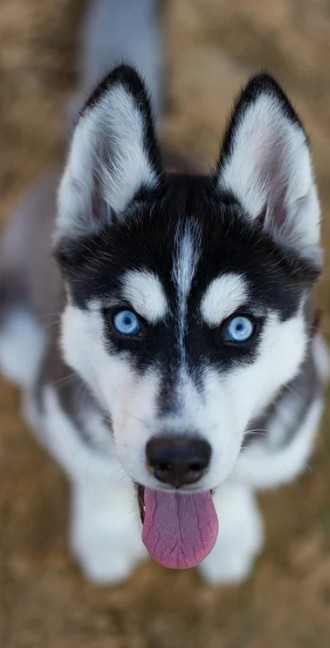
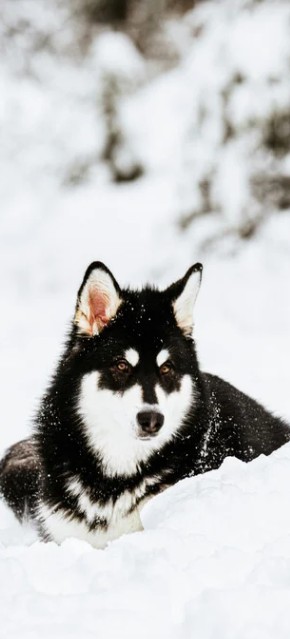
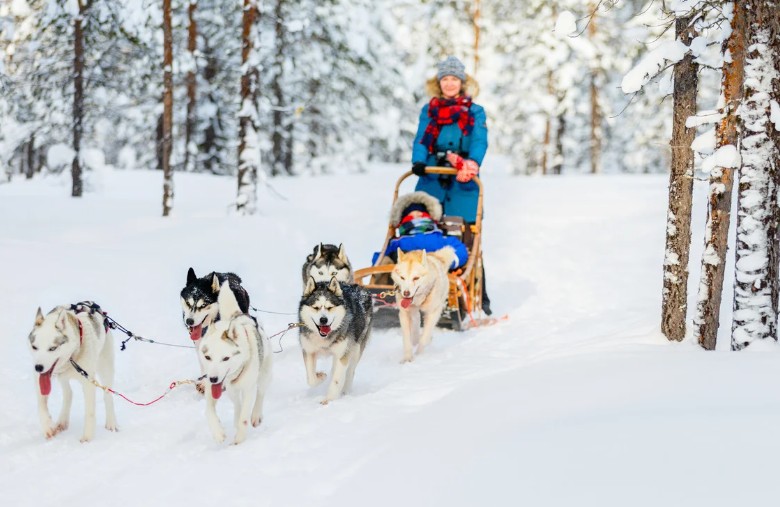
Partnership replaces control. When guidance aligns with their intelligence rather than competes with it, a Husky doesn’t obey—they collaborate.
Inconsistency Teaches Optional Compliance
Can inconsistently applied structure teach Huskies that commands are optional signals rather than actionable cues? Absolutely, and this may be the most insidious training failure point. If a command is sometimes enforced and sometimes ignored, a Husky—being an intelligent and efficient learner—quickly learns to test boundaries and respond only when the perceived cost of non-compliance is high or the reward is exceptionally compelling.
Inconsistency reinforces their natural tendency toward independent decision-making. They learn that commands are suggestions to be evaluated rather than reliable cues requiring action. Once this pattern establishes itself, rebuilding consistent responsiveness becomes exponentially harder.
Common consistency failures that train optional compliance:
- Giving commands you can’t enforce: Calling “come” when the dog is off-leash and too far away to ensure compliance
- Multiple repetitions before consequences: Saying “sit” five times before any follow-through teaches that the first four don’t matter
- Inconsistent enforcement between family members: Dad always enforces rules, but Mom sometimes lets them slide
- Mood-dependent standards: Enforcing rules strictly when you’re focused, ignoring them when you’re distracted or tired
- Context confusion: Allowing behaviors at home that are prohibited in public or vice versa
- Failed follow-through: Giving a command, then forgetting about it when the dog doesn’t comply
- Variable rewards: Sometimes rewarding compliance generously, other times barely acknowledging it
- Exception creep: Making exceptions “just this once” that gradually become the new normal
This is where many well-meaning owners inadvertently train the exact opposite of what they intend. They call “come” but don’t follow through if the dog ignores them. They say “sit” multiple times before the dog complies. They give commands they can’t enforce. Each instance teaches the Husky that verbal cues are optional, context-dependent suggestions 😄
🐺 Understanding the Independent Husky Mind 🧠
A Journey Through Ancestral Intelligence and Modern Partnership
Phase 1: Ancestral Origins
Understanding the Arctic Heritage
🧬 Genetic Programming
Huskies evolved as long-distance sled dogs operating with minimal human oversight across vast Arctic territories. Their cognitive framework prioritizes autonomous decision-making and environmental responsiveness over immediate obedience. This isn’t stubbornness—it’s survival intelligence refined over generations.
🎯 What This Means
Your Husky’s brain processes environmental cues (terrain changes, weather patterns, pack dynamics) as higher priority than verbal commands. They’re evaluating: • Is the ice safe? • What’s that scent trail revealing? • Where is the pack moving? This multi-layered assessment happens in milliseconds.
Phase 2: Motivational Economy
The Cost-Benefit Analysis
💭 The Husky’s Calculation
Every time you give a command, your Husky instantly weighs: Option A: Return for one treat (3 seconds of pleasure). Option B: Continue following that fascinating scent trail (several minutes of dopamine-fueled discovery). The intrinsic reward often wins because it’s neurochemically more compelling than external rewards.
🔬 The Science
Huskies have heightened SEEKING system activation—the brain’s exploration and curiosity drive. Movement, discovery, and problem-solving trigger stronger dopamine releases than food treats or praise. Their reward hierarchy differs fundamentally from breeds selected for biddability.
✅ Training Adjustment
Work with their intrinsic motivations: • Use access to exploration as a reward • Incorporate movement into training sessions • Make recall mean “continue the adventure in a new direction” • Channel their natural drives rather than suppressing them
Phase 3: Sensory Dominance
Processing Environmental Richness
🌐 Multi-Modal Processing
While you hear one sound, your Husky processes: scent trails revealing what animals passed and when, wind patterns providing navigation data, ground texture changes indicating terrain shifts, distant visual cues you can’t perceive, and spatial awareness of pack members. Your verbal command competes with this sensory symphony.
🔍 Recognition Signs
Your Husky is in sensory-processing mode when: • Nose intensely glued to ground • Head tilting and ear rotation • Sudden freezing mid-movement • Scanning horizon repeatedly • Zigzag walking patterns • Staring at “empty” spaces (they detect subtle movements you miss)
Phase 4: High Arousal States
When Commands Become Invisible
⚠️ Arousal Override
In high-drive states, your Husky’s nervous system prioritizes action over reflection. Physical signs: rapid panting without exertion, dilated pupils, tense forward posture, hyper-focused stare, inability to take treats. During these moments, their cognitive processing literally cannot register verbal commands—it’s neurology, not defiance.
🎯 Management Strategy
Don’t train during peak arousal—manage the environment instead. • Create distance from triggering stimuli • Use movement redirection, not verbal commands • Wait for arousal to decrease before expecting responsiveness • Build impulse control gradually in low-arousal environments first
Phase 5: Movement-Based Leadership
The Invisible Leash Approach
🌊 Spatial Communication
Huskies understand pack dynamics through movement and spatial relationships, not verbal commands. The Invisible Leash philosophy uses: body positioning to guide direction, pace changes to communicate urgency, spatial pressure without physical contact, turning away to invite approach, and parallel walking to reduce confrontational energy.
✨ Implementation
Replace shouted commands with: • Walking purposefully in your chosen direction • Creating space to draw the dog toward you • Body blocking to prevent access to areas • Pace adjustments to signal calm or urgency • Confident, relaxed posture that signals safe leadership
Phase 6: Training Failure Points
Why Conventional Methods Backfire
❌ Motivational Collapse
Repetitive drilling causes intelligent Huskies to disengage. Signs: increasing response latency, active avoidance of training area, stress signals (yawning, lip licking), lying down and refusing to participate. Their brain refuses to waste resources on pointless repetition—what looks like stubbornness is cognitive shutdown.
🔄 Inconsistency Trap
Inconsistent enforcement teaches optional compliance. Common mistakes: • Giving commands you can’t enforce • Multiple repetitions before follow-through • Mood-dependent standards • Failed follow-through when dog ignores commands. Each instance trains your Husky that verbal cues are suggestions, not reliable signals.
Phase 7: Emotional Clarity
The NeuroBond Foundation
🎭 Energy States Matter
Your emotional state directly impacts cooperation. Through the NeuroBond approach, we recognize that calm neutrality, quiet confidence, and patient expectation facilitate partnership. Conversely, frustration, anxiety, over-excitement, or demanding pressure trigger resistance. Your Husky mirrors and responds to your emotional authenticity.
🌟 Building Connection
Soul Recall emerges when deep emotional memory overrides environmental drives. Create this through: • Consistent, respectful communication patterns • Authentic presence during interactions • Emotional neutrality paired with clear guidance • Building trust where your leadership adds value to their decision-making
Phase 8: Practical Implementation
Daily Life Integration
💪 Exercise Requirements
Minimum 1-2 hours vigorous daily activity. Options: bikejoring, trail running on varied terrain, dog park sprints, skijoring, swimming, or agility. Under-exercised Huskies cannot focus—their physical and mental distress makes cooperation neurologically impossible. Meet movement needs first, then expect engagement.
🧩 Mental Enrichment
Feed their intelligent minds: scent work and nose games, puzzle feeders, novel environment exposure, training new complex skills, varied terrain navigation, observation opportunities. Mental understimulation creates behavior problems and training resistance as they seek their own enrichment.
Expect: developing recall in low-distraction environments gradually, improving leash manners with consistent work, building focus through relationship. Don’t expect: perfect off-leash recall in all situations, no pulling ever, extended static obedience positions. Set yourself up for success with achievable goals.
🔄 Paradigm Shifts: Old vs. New Thinking
Command Expectations
Old: Commands must be obeyed immediately and precisely
New: Cooperation emerges from clear communication and mutual benefit
Understanding Behavior
Old: “Stubbornness” is a character flaw requiring correction
New: Independent evaluation is intelligent decision-making
Training Focus
Old: Suppress natural behaviors through drilling
New: Channel natural behaviors toward cooperative goals
Communication Style
Old: Verbal commands as primary method
New: Multimodal with emphasis on body language and spatial cues
Relationship Dynamic
Old: Hierarchical with clear dominance structure
New: Collaborative partnership with mutual respect
Success Metrics
Old: Perfect compliance in all situations
New: Reliable engagement and contextual responsiveness
⚡ Quick Reference Formula
Husky Responsiveness = (Exercise + Mental Stimulation) × Emotional Clarity × Movement-Based Leadership ÷ Verbal Command Overload
Translation: The more you meet their physical and cognitive needs while communicating through body language and spatial cues (not constant verbal commands), the more cooperation you’ll receive. Under-exercised + over-commanded = maximum “disobedience.”
🧡 The Zoeta Dogsoul Integration
Understanding why Huskies don’t respond to commands reveals a profound truth: these dogs invite us beyond obedience into genuine partnership. Through the NeuroBond approach, we honor their cognitive architecture—recognizing that emotional connection and trust create cooperation that force never could. The Invisible Leash teaches us that true leadership flows through spatial awareness and movement, not verbal dominance. And in moments of Soul Recall, when your Husky chooses you despite compelling distractions, you witness the depth of relationship possible when we respect canine intelligence rather than demanding conformity. Your Husky isn’t broken—they’re brilliantly designed for independent thinking. The question isn’t how to make them obey, but how to become worthy of their cooperation.
© Zoeta Dogsoul – Where neuroscience meets soul in dog training
The NeuroBond Approach: Working With Husky Intelligence
Calm Directional Leadership Over Verbal Commands
The NeuroBond approach proposes a communication strategy that aligns with the Husky’s natural cognitive and behavioral predispositions rather than fighting against them. This represents a fundamental shift from traditional obedience training to partnership-based guidance.
Does calm directional leadership improve Husky engagement more than verbal commands? Evidence and practical experience strongly suggest yes. Calm directional leadership—embodying Invisible Leash principles of consistent body language, spatial pressure, and emotional neutrality—taps into pack logic that Huskies intuitively understand.
In traditional pack dynamics, leadership is communicated through subtle movements and spatial cues rather than constant verbal directives. The lead dog doesn’t bark instructions to the team; they set pace, choose direction, and communicate through position and movement. By providing clear, consistent, non-verbal guidance, humans can access this innate understanding of pack dynamics and spatial relationships.
Body language and spatial cues Huskies naturally understand:
- Spatial pressure: Moving into a dog’s space to create backward movement without physical contact
- Directional leading: Walking purposefully in a direction and expecting the pack to follow
- Pace changes: Speeding up or slowing down to communicate urgency or calm
- Body blocking: Positioning yourself to prevent access to certain paths or areas
- Turning away: Creating distance to invite approach rather than demanding it
- Relaxed posture: Loose, confident body language that signals safe, calm leadership
- Direct spatial positioning: Standing between the dog and something to claim or protect resources
- Parallel walking: Moving alongside rather than directly toward to reduce confrontational pressure
This doesn’t mean abandoning verbal cues entirely. It means integrating them into a broader communication system where your body position, movement, and energy carry equal or greater weight. Your Husky responds not because they’ve been conditioned to obey words, but because your complete communication package makes sense within their natural cognitive framework.
Emotional Clarity Reduces Autonomy-Cooperation Conflict
Can emotional clarity and spatial guidance reduce conflict between autonomy and cooperation? Yes, and this represents the heart of the NeuroBond methodology. Emotional clarity—calm, confident, neutral energy—combined with precise spatial guidance creates a predictable and understandable framework.
Emotional states that facilitate Husky cooperation:
- Calm neutrality: Neither excited nor upset, just steady and present
- Quiet confidence: Certain of your decisions without needing to prove dominance
- Patient expectation: Giving the dog time to process and choose cooperation
- Relaxed alertness: Aware and engaged but not tense or controlling
- Authentic presence: Fully focused on the interaction rather than distracted or multitasking
Emotional states that trigger Husky resistance:
- Frustration or anger: Creates tension that the dog mirrors or resists
- Anxiety or uncertainty: The dog senses your lack of confidence and fills the leadership vacuum
- Over-excitement: Matches or escalates the dog’s arousal, making calm responses impossible
- Demanding pressure: Forcing compliance creates oppositional energy
- Inconsistent energy: Shifting between permissive and controlling confuses the dog
When you communicate with emotional consistency and clear physical direction, you provide information your Husky can integrate into their decision-making process without feeling their autonomy is being directly challenged or suppressed. The conflict dissolves because you’re not demanding blind obedience; you’re offering clear leadership that respects their intelligence.
Think of it as the difference between a micromanaging boss who demands immediate compliance without explanation versus a respected leader who provides clear direction and trusts their team to execute intelligently. Your Husky responds far better to the latter approach.
This is where Soul Recall becomes relevant—those moments when deep emotional memory and trust override even strong environmental drives. When you’ve built genuine emotional connection through consistent, respectful communication, your Husky begins to include your guidance as a valuable input in their decision-making process rather than an arbitrary constraint to be resisted.
Working With Movement Logic
Is Husky responsiveness highest when humans work with their movement logic rather than against it? Without question. Instead of trying to suppress their drive to move, channel it. Use their natural desire to pull or run in structured ways. Incorporate movement into training. Turn their strong drives into assets for cooperation rather than obstacles to overcome.
This might mean teaching recall not in a static yard but during walks where coming to you means continuing the adventure in a new direction. It might mean using their pulling drive for activities like skijoring or bikejoring where pulling is the goal rather than a behavior to eliminate. It might mean structuring training sessions to include movement and exploration rather than static positions.
When training aligns with their physiological and psychological design, Huskies become remarkably responsive partners. The key is recognizing that responsiveness doesn’t always look like traditional obedience. It looks like a dog who checks in with you regularly during off-leash adventures, who adjusts their position and pace based on your movement, and who includes you as a relevant factor in their environmental assessment rather than ignoring you entirely.
The Theoretical Framework: Why This Understanding Matters
Working-Dog Ethology
From an ethological perspective, understanding that Huskies evolved to operate semi-autonomously in teams fundamentally reframes our expectations. Their behavioral design is geared toward initiative and problem-solving in a working context, making “obedience-for-obedience’s-sake” a concept foreign to their nature.
This ethological perspective is crucial for realistic expectations. You’re not working with a dog who’s broken or particularly stubborn—you’re working with a breed whose genetic programming optimizes different qualities than what traditional obedience training assumes all dogs should have.
Affective Neuroscience Insights
The affective neuroscience perspective reveals why environmental engagement, exploration, and physical activity are intrinsically highly rewarding for Huskies. Their high SEEKING activation and movement-driven dopamine systems mean these activities aren’t just pleasant—they’re neurochemically compelling.
This aligns with observations that these internal drives often outweigh extrinsic, human-provided cues. Their brain chemistry prioritizes rewards associated with natural behaviors, making conventional training rewards comparatively weak motivators.
Cognitive Independence Theory
Huskies exemplify cognitive independence, filtering commands through a lens of context, meaning, and task relevance rather than offering automatic compliance. Their “low biddability” should be reinterpreted as a manifestation of intelligent, independent decision-making.
This doesn’t mean they can’t learn or shouldn’t respond to guidance. It means the learning process must respect their cognitive orientation toward contextual evaluation rather than rote compliance.
Predictive Processing Model
Huskies constantly predict outcomes based on environmental cues. When human commands conflict with these predictions, or when commands lack clear contextual relevance, Huskies selectively dismiss them in favor of their own environmental assessments.
From a predictive processing standpoint, your Husky is running complex simulations about what happens next based on everything they’re perceiving. If your command doesn’t fit their prediction model or seems less reliable than their own assessment, they’ll default to their internal predictions.
The NeuroBond Communication Model
This model offers a practical framework for working with Husky cognition. By emphasizing calm spatial leadership and emotional neutrality, it creates alignment and cooperation without resorting to obedience pressure. This approach respects the Husky’s independent nature and leverages their innate understanding of movement and spatial dynamics.
The result is partnership based on mutual understanding rather than strict hierarchy. Your Husky doesn’t obey because they must; they cooperate because your guidance makes sense within their natural cognitive framework and because the emotional connection you’ve built through consistent, respectful communication makes including you in their decision-making process rewarding 🧡

Living Successfully With Your Independent Thinker
Practical Application of These Principles
Understanding why your Husky doesn’t respond to commands like other breeds is the first step. Application requires adjusting your approach to honor their cognitive architecture while still maintaining the structure necessary for safe, harmonious living.
Practical techniques that honor Husky cognition:
- Reduce verbal clutter: Use 50% fewer commands and make each one count with consistent follow-through
- Pair words with movement: Every verbal cue should have an accompanying body language component
- Create choice architecture: Use physical space and barriers to make good choices easy and poor choices difficult
- Build engagement through adventure: Take different routes on walks to maintain novelty and environmental interest
- Practice micro-training: Brief 2-3 minute training moments during exciting activities rather than long boring sessions
- Use environmental rewards: Access to interesting smells, continued movement, or exploration as primary reinforcement
- Establish predictable patterns: Consistent daily rhythms that help your Husky know what to expect
- Respect their assessments: When your Husky alerts to something, investigate rather than immediately dismissing their concerns
Start by reducing verbal clutter. Every unnecessary command you give and don’t enforce trains your Husky that words are optional noise. Instead, use fewer, more meaningful cues paired with clear body language and spatial positioning.
Build engagement through movement. Rather than static training sessions, incorporate learning into walks, play, and activities that satisfy their need for forward motion. Your Husky will be far more responsive when training doesn’t require them to shut down their natural drives.
Create structure through spatial management rather than constant correction. Use physical space, barriers, and positioning to make appropriate behaviors easy and inappropriate behaviors difficult. This works with their environmental awareness rather than relying solely on compliance with verbal prohibitions.
Establishing Reliable Communication
Focus on building emotional connection and consistent patterns rather than command compliance. When your Husky learns that you’re a reliable source of clear guidance, that you understand their needs, and that following your lead generally results in positive outcomes, cooperation emerges naturally.
Signs you’re building effective Husky communication:
- Voluntary check-ins: Your dog glances back at you regularly during walks without being called
- Proximity seeking: They choose to stay near you even in stimulating environments
- Mirroring your pace: Naturally adjusting speed to match yours without constant leash pressure
- Offered attention: Looking at you when uncertain rather than just making independent decisions
- Reduced pulling: Less leash tension as they begin reading your directional cues
- Calm greetings: Excitement at seeing you without frantic, out-of-control behavior
- Responsive to subtle cues: Noticing small body language shifts rather than needing repeated loud commands
- Recovery speed: When they do get distracted, returning focus more quickly over time
This is the essence of Zoeta Dogsoul philosophy—recognizing that the relationship between human and dog thrives when we honor the dog’s nature rather than demanding they conform to arbitrary standards that conflict with their genetic design. Your Husky isn’t broken, and you don’t need to “fix” them. You need to learn to communicate in their language.
Accepting and Celebrating Independence
Part of successful Husky partnership involves accepting their independence as a feature, not a bug. These dogs will never offer the eager-to-please responsiveness of a Golden Retriever, and that’s okay. What they offer instead is a thinking partner who brings their own intelligence and problem-solving capabilities to the relationship.
What to celebrate about Husky independence:
- Environmental awareness: They often detect dangers or interesting phenomena before you do
- Problem-solving ability: They can figure out complex situations without constant guidance
- Athletic partnership: They excel at activities where they can use their strength and endurance purposefully
- Emotional authenticity: Their responses are genuine, not people-pleasing performances
- Mental stimulation: Living with a thinking dog keeps you engaged and learning
- Adventure companionship: Their enthusiasm for exploration makes every outing an adventure
- Distinctive personality: Each Husky has strong individual preferences and character
- Teaching patience: They force you to become a better, more thoughtful communicator
Celebrate the moments when your Husky chooses to respond not because they’re compelled to but because they’ve decided your suggestion makes sense. Value the subtle ways they communicate with you through body language and spatial positioning. Appreciate their environmental awareness that might alert you to things you’d otherwise miss.
Health and Wellness Considerations
Physical Needs That Impact Responsiveness
A Husky’s responsiveness to training and guidance is intimately connected to whether their physical needs are being met. These dogs require substantial daily exercise—not just a walk around the block, but genuine physical exertion that engages their cardiovascular system and satisfies their drive to cover ground.
Minimum daily exercise requirements for a healthy adult Husky:
- Baseline: 1-2 hours of vigorous physical activity that elevates heart rate
- Distance: 5-10 miles of running, hiking, or pulling activities when properly conditioned
- Intensity variation: Mix of sustained moderate pace and interval high-intensity bursts
- Mental engagement: Exploration of novel environments, not just repetitive routes
- Weather consideration: More activity needed in cooler weather when they’re most energized
Exercise options that satisfy Husky drives:
- Bikejoring or scootering: Allows them to pull at speed while you cover distance efficiently
- Trail running or hiking: Variable terrain with sensory richness and exploration opportunities
- Dog park sprint sessions: Social play with running and wrestling if your dog is dog-social
- Skijoring or sledding: Seasonal activities that tap into breed heritage
- Swimming: Low-impact but high-energy exercise, especially good for hot weather
- Agility or parkour: Problem-solving combined with physical challenges
- Fetch with distance: Long-distance retrieves that require sustained running
An under-exercised Husky isn’t being disobedient; they’re experiencing physical and mental distress that makes focusing on human guidance nearly impossible. Before assuming training failures, honestly assess whether your Husky is receiving adequate exercise. Most need at least one to two hours of vigorous activity daily, and many thrive with even more.
Mental stimulation proves equally crucial. Problem-solving activities, scent work, novel environments, and varied experiences feed their intelligent minds. A mentally understimulated Husky will seek stimulation in ways you probably won’t appreciate, and their ability to engage with training will be severely compromised.
Mental enrichment activities for cognitive engagement:
- Scent work and nose games: Hiding treats or toys and encouraging searching behavior
- Puzzle feeders and toys: Problems that require manipulation and problem-solving to access rewards
- Novel environment exposure: Regular trips to new locations with different sights, sounds, and smells
- Training new skills: Learning complex behaviors or tricks that require thinking
- Social complexity: Interaction with different dogs, people, and animals in controlled settings
- Observation opportunities: Time spent in locations where they can watch activity (dog-friendly cafes, parks)
- Texture and terrain variety: Walking on different surfaces and navigating varied landscapes
- Hide and seek games: Building searching and tracking skills through play
Nutrition for the High-Energy Mind
Quality nutrition supports cognitive function, focus, and trainability. Huskies evolved on high-protein, high-fat diets that fueled both their physical endurance and mental acuity. Modern diets heavy in fillers and low in quality protein can impact energy levels, focus, and overall responsiveness.
Nutritional components that support optimal Husky function:
- High-quality animal protein (30-40% of diet): Supports muscle maintenance, energy production, and neurotransmitter synthesis
- Healthy fats (15-25% of diet): Essential for brain function, sustained energy, and coat health
- Omega-3 fatty acids: Support cognitive function, reduce inflammation, and promote neural health
- Complex carbohydrates in moderation: Provide sustained energy without blood sugar spikes
- Minimal fillers and by-products: Corn, wheat, and soy can cause inflammation and digestive issues in some dogs
- Fresh whole foods: Adding vegetables, fruits, and lean meats to commercial food increases nutrient density
- Adequate hydration: Essential for all metabolic processes and particularly important for active dogs
Consider that your Husky’s apparent distractibility might be influenced by diet-related energy crashes, nutritional deficiencies, or digestive discomfort. Working with a veterinarian or canine nutritionist to optimize diet can sometimes resolve what appeared to be purely behavioral issues.
Health Issues That Affect Behavior
Certain health conditions can manifest as apparent disobedience or lack of responsiveness. Hearing problems, which can develop with age or result from chronic ear infections, obviously impact a dog’s ability to respond to verbal commands. Vision issues might make your Husky seem unresponsive when they simply haven’t seen your gestural cues.
Health conditions that may present as behavioral problems:
- Hearing loss (congenital or age-related): Reduces or eliminates response to verbal cues
- Vision impairment: Makes reading body language and seeing directional signals difficult
- Hypothyroidism: Causes lethargy, weight gain, and reduced motivation that mimics stubbornness
- Pain from orthopedic issues: Hip dysplasia, arthritis, or injuries make movement-based compliance difficult
- Gastrointestinal distress: Chronic discomfort reduces focus and increases irritability
- Cognitive dysfunction syndrome: Age-related cognitive decline affects learning and responsiveness
- Ear infections or allergies: Cause discomfort that interferes with training focus
- Dental disease: Pain during eating or at rest impacts overall behavior and mood
Pain or discomfort from conditions like hip dysplasia, arthritis, or digestive issues can make a dog less willing to respond to commands that require movement or position changes. If your previously responsive Husky suddenly seems more “stubborn,” a veterinary examination should be your first step before assuming it’s purely behavioral.
Is a Husky Right for Your Lifestyle?
Honest Assessment of Compatibility
Understanding why Huskies don’t respond to commands like other breeds should inform your decision about whether this is the right breed for your situation. These are not dogs for everyone, and acknowledging this isn’t criticism—it’s respect for both human and canine needs.
Unrealistic expectations that will lead to frustration:
- Reliable off-leash recall in all situations: Expecting a Husky to return immediately despite compelling environmental stimuli
- Polite loose-leash walking without training: Assuming they won’t pull when pulling is genetically hardwired
- Extended static obedience: Expecting long duration sits, downs, or stays without purpose
- Quiet confinement for long periods: Leaving them alone for 8+ hours without exercise and expecting calm behavior
- Instant compliance to first command: Assuming they’ll respond like herding breeds bred for handler focus
- Suppression of prey drive: Expecting them to ignore small animals despite strong hunting instincts
- Automatic house manners: Assuming they’ll intuitively understand human domestic rules without extensive teaching
Realistic expectations that lead to success:
- Developing reliable recall in familiar, low-distraction environments with gradually increased challenges
- Improving leash manners through consistent training while accepting some pulling during high-excitement moments
- Building focus and engagement through relationship rather than demanding automatic compliance
- Providing adequate exercise and enrichment to enable calm behavior during necessary downtime
- Using management tools (secure fencing, long lines, appropriate containment) to ensure safety
- Accepting their prey drive and managing situations rather than expecting complete suppression
- Teaching house rules patiently with consistent reinforcement and physical management
If you require a dog who will reliably come when called in any situation, who will walk politely on leash without pulling, who will stay in a quiet “place” command for extended periods, or who will readily accept confinement and limited exercise, a Husky will frustrate you profoundly. These aren’t realistic expectations for the breed, and pursuing them creates suffering for both dog and human.
However, if you’re fascinated by independent thinkers, if you have the time and energy for extensive daily exercise, if you’re willing to learn a different communication style that respects canine intelligence, and if you can appreciate a partner rather than a compliant subordinate, a Husky might be exactly what you’re looking for.
Ideal lifestyle factors for Husky partnership success:
- Active outdoor lifestyle: Regular hiking, running, biking, or winter sports that include the dog
- Flexible schedule: Time for 2-3 exercise sessions daily including early morning or evening when they’re most energetic
- Secure property: Tall fencing (6+ feet) with no digging opportunities, or commitment to supervised outdoor time
- Tolerance for chaos: Accepting that shedding, occasional destruction during adolescence, and adventure mishaps will occur
- Patience for training: Willingness to invest months or years building communication rather than expecting quick obedience
- Cool climate preference: Living in or access to cooler environments where Huskies are physically comfortable
- Appreciation for independence: Actually enjoying a dog who has opinions and makes independent decisions
- Problem-solving mindset: Viewing training challenges as puzzles to solve rather than defiance to overcome
- Community connections: Access to dog sports, Husky groups, or activities that provide appropriate outlets
The Rewards of Partnership
Living with a Husky who’s understood rather than constantly corrected offers unique rewards. These dogs bring joy through their playfulness, fascination through their intelligence, adventure through their tireless energy, and humor through their independent decision-making.
Unique rewards of Husky partnership:
- Genuine companionship: Their attention and affection is earned, making it more meaningful when offered
- Athletic achievement: Sharing adventures and physical challenges that push you both to new limits
- Cognitive stimulation: Constant problem-solving and adaptation keeps your own mind engaged
- Emotional authenticity: Their responses are genuine reactions, not trained performances
- Humor and personality: Daily entertainment from their creative interpretations of rules and situations
- Nature connection: They draw you outdoors in all weather, deepening your relationship with the natural world
- Teaching patience: Forcing you to slow down, observe carefully, and communicate more thoughtfully
- Community belonging: Connection to a passionate community of Husky owners who share understanding and support
- Mutual respect: Building a relationship based on partnership rather than dominance creates deeper bonds
The Husky who chooses to stay near you during an off-leash hike not because they’re perfectly trained but because they genuinely value your companionship offers a different but equally valuable relationship to the obedient dog who stays because they’ve been conditioned to.
The satisfaction of successfully communicating with an independent thinker, of building genuine partnership based on mutual respect and understanding rather than dominance and submission, creates a depth of relationship that many Husky owners wouldn’t trade for all the automatic compliance in the world.
Moving Forward: A New Paradigm
Your Husky’s selective response to commands isn’t a training failure—it’s an invitation to evolve beyond outdated obedience paradigms toward something richer and more aligned with canine nature. These remarkable dogs challenge us to become better communicators, more observant partners, and more respectful of intelligence that operates differently than our own.
Old obedience paradigm thinking:
- Commands must be obeyed immediately and precisely
- The human always knows best and the dog should comply without question
- “Stubbornness” is a character flaw requiring correction
- Training focuses on suppressing natural behaviors
- Success means perfect compliance in all situations
- The relationship is hierarchical with clear dominance structure
- Verbal commands are the primary communication method
New partnership paradigm thinking:
- Cooperation emerges from clear communication and mutual benefit
- The dog’s environmental assessment may sometimes be more accurate than human perception
- Independent evaluation is intelligent decision-making, not defiance
- Training channels natural behaviors toward cooperative goals
- Success means reliable engagement and contextual responsiveness
- The relationship is collaborative with mutual respect
- Communication is multimodal with emphasis on body language and energy
By understanding the ancestral programming that prioritizes environmental responsiveness over verbal obedience, the motivational economy that weighs intrinsic rewards against extrinsic cues, and the cognitive architecture that values contextual evaluation over rote compliance, you can transform your relationship with your Husky from a frustrating battle of wills to a genuine partnership.
The path forward involves working with your Husky’s natural intelligence rather than against it, using movement-based leadership and emotional clarity rather than repetitive commands, and building cooperation through respect rather than demanding obedience through pressure. This is the essence of Zoeta Dogsoul—honoring the unique cognitive landscape of each breed while building deep, authentic connection.
Core principles for successful Husky partnership:
- Respect their intelligence: Treat apparent disobedience as a communication breakdown, not a character flaw
- Work with their drives: Channel pulling, exploration, and problem-solving rather than suppressing them
- Prioritize movement: Integrate training into active adventures rather than static sessions
- Reduce verbal noise: Fewer, more meaningful commands with consistent follow-through
- Lead through body language: Use spatial positioning and movement to guide behavior
- Maintain emotional neutrality: Calm, confident energy facilitates cooperation
- Provide adequate outlets: Ensure physical and mental needs are met before expecting focus
- Build genuine connection: Invest in the relationship rather than just obedience training
- Accept their nature: Celebrate independence rather than fighting against breed characteristics
- Stay patient and consistent: Building partnership takes time, but the results are worth it
Your Husky isn’t ignoring you. They’re processing a richer environmental picture than you’re aware of, operating under genetic programming refined over generations, and making intelligent decisions based on complex calculations about what matters most in each moment. Understanding this transforms everything, opening the door to the kind of partnership these magnificent dogs were always meant to have with their humans.