Introduction: The Gray Ghost’s Inner World
You’ve probably noticed it—that moment when your Weimaraner shifts from calm companion to a whirlwind of restless energy. Perhaps it’s the pacing that starts subtly, the whining that builds to a crescendo, or those explosive “zoomies” that seem to come from nowhere. If you’re living with a Weimaraner, you’re witnessing something far more complex than simple hyperactivity. You’re seeing the visible surface of deep emotional currents that run through this breed’s nervous system.
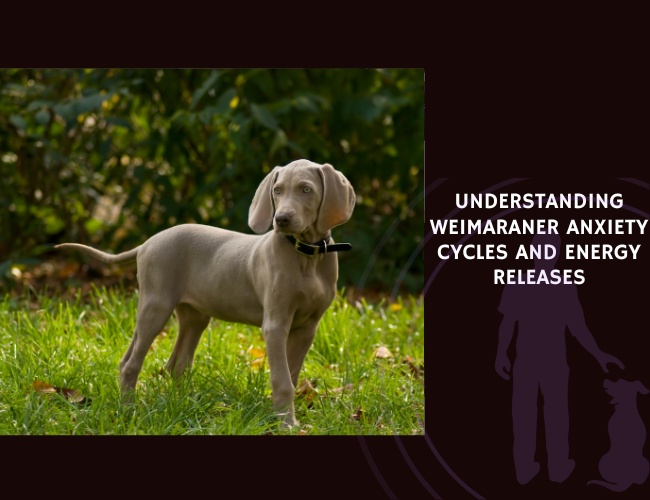
The Weimaraner, often called the “Gray Ghost” for their distinctive silvery coat and shadow-like devotion, carries a genetic inheritance that makes them simultaneously magnificent and emotionally complex. Bred for stamina, endurance, and an almost supernatural ability to track and hunt, these dogs possess a nervous system calibrated for sustained arousal and intense focus. But what happens when that heritage meets modern life—apartments, work schedules, and limited outlets for their considerable drive? 🧠
Let us guide you through the intricate dance of anxiety cycles and energy releases in Weimaraners, exploring not just what happens, but why it happens, and most importantly, how you can help your gray companion find balance in a world that wasn’t designed for their intensity.
The Genetic Blueprint: Why Weimaraners Are Wired Differently
A Heritage of High Drive
Your Weimaraner isn’t just energetic—they’re genetically designed for relentless pursuit. Originally developed in early 19th-century Germany for royalty, these dogs were bred to hunt large game including deer, boar, and even bear. This required not just physical stamina, but sustained mental focus over hours or even days.
This breeding history created a dog with a baseline arousal level that sits naturally higher than many other breeds. Think of it this way: where a Labrador might have an internal engine that idles comfortably, a Weimaraner’s engine runs at a constant hum, always ready to accelerate. This generalized brain arousal mechanism means their central nervous system is primed for activation, constantly scanning for opportunities to engage their hunting drive.
What This Hunting Heritage Means for Your Weimaraner:
- Sustained mental focus: They can concentrate intensely for extended periods, but this also means they struggle to “switch off”
- High stamina threshold: Physical exhaustion takes longer to achieve than mental overstimulation
- Environmental scanning: Constantly monitoring their surroundings for movement, sounds, and changes
- Pursuit drive activation: Even mundane triggers (squirrels, joggers, cars) can activate intense chase impulses
- Task-oriented satisfaction: They need purposeful activities with clear beginnings and endings, not just random play
The Attachment Paradox
Here’s where Weimaraners become truly unique: they combine high-drive working ability with an almost obsessive attachment to their humans. This isn’t the independent working relationship you might see in a livestock guardian breed. Weimaraners were bred to work closely alongside hunters, creating an intense bond that modern owners often describe as “velcro dog” behavior.
This attachment intensity creates a paradox. Your Weimaraner needs you constantly, yet they also need to discharge enormous amounts of energy. When these two needs conflict—when you’re away, busy, or unable to provide the engagement they crave—anxiety can take root. The emotional reactivity that makes them so attuned to you also makes them vulnerable to emotional dysregulation when that connection feels threatened. 🐾
Neurochemical Patterns in Motion
While research specific to Weimaraners is limited, we can understand their behavior through the lens of arousal and emotional processing systems. The SEEKING system, as explored in affective neuroscience, drives their relentless pursuit behavior. When activated without resolution—when your Weimaraner is ready to hunt but has nowhere to channel that drive—it creates a state of restless dissatisfaction.
Coupled with the PLAY system, which drives their social engagement and physical exuberance, over-activation without proper closure leads to a neurochemical imbalance. Dopamine surges without resolution, cortisol accumulates without proper decompression, and the result is a dog trapped in a cycle of seeking without finding, playing without satisfaction.
Arousal Regulation: Understanding the Spiral
From Excitement to Anxiety: The Invisible Threshold
Did you know that chronic hyperarousal can seamlessly transition into anxiety without you noticing the shift? Your Weimaraner starts their day excited—anticipating your wake-up, eager for breakfast, ready for action. This excitement is normal, even healthy. But when that arousal state persists hour after hour without proper regulation, something changes.
The same neurochemical systems that drive excitement begin to feed anxiety. The anticipation becomes vigilance. The eagerness becomes restlessness. Your dog’s brain, operating in a sustained state of high arousal, begins to interpret the world through an increasingly anxious lens. Loud noises become threats. New situations become overwhelming. Your absence becomes abandonment.
Signs Your Weimaraner Has Crossed from Excitement to Anxiety:
- Body language shifts: Tail carriage drops, ears pin back slightly, body tension increases
- Increased reactivity: Barking at familiar sounds, startling at normal movements
- Inability to settle: Cannot relax even in comfortable, familiar environments
- Attention fragmentation: Difficulty focusing on you or tasks, constantly distracted
- Clingy behavior intensifies: Following you obsessively, panic when you’re out of sight
- Stress signals increase: Excessive yawning, lip licking, whale eye, panting without exertion
Through the NeuroBond approach, we understand that this transition isn’t just chemical—it’s relational. Your Weimaraner’s emotional state becomes increasingly dysregulated when they lack the co-regulatory presence that helps bring their nervous system back to baseline.
The Role of Self-Regulatory Behaviors
You’ve probably seen them—those moments when your Weimaraner suddenly launches into frantic running, circles the house at full speed, or engages in repetitive behaviors like spinning or pacing. These aren’t signs of happiness or playfulness as some might assume. They’re often desperate attempts at self-regulation, your dog’s instinctive effort to discharge accumulated neurological tension.
“Zoomies” can function as a pressure release valve. When arousal builds beyond what your dog’s nervous system can contain, explosive movement provides temporary relief. The problem is that without addressing the underlying dysregulation, these episodes become part of the cycle rather than a solution. Your Weimaraner discharges energy, yes, but they may actually increase their overall arousal in the process, setting up the next episode of anxiety.
Pacing and repetitive motion serve a different purpose. These behaviors create predictable sensory input, a form of self-soothing when the world feels too unpredictable or overwhelming. When you see your Weimaraner pacing the same path repeatedly or spinning in circles, they’re trying to create order in an internal landscape of chaos.
Common Self-Regulatory Discharge Behaviors in Weimaraners:
- Zoomies (frenetic random activity periods): Explosive sprinting in circles or figure-eights, often with play bows or wild eyes
- Repetitive pacing: Walking the same path over and over, often with visible tension in the body
- Spinning or circling: Chasing tail or simply rotating in tight circles, sometimes dozens of times
- Excessive digging: Frantically excavating carpet, bedding, or yard, often without clear purpose
- Mouthing or chewing: Grabbing toys, furniture, or their own paws, not playfully but compulsively
- Vocalization patterns: Repetitive whining, barking, or howling in rhythmic sequences
- Shadow or light chasing: Obsessive pursuit of moving light patterns or shadows
The Decompression Deficit
Here’s something many Weimaraner owners miss: exercise alone isn’t enough. Your dog needs decompression—time when their nervous system can actively transition from sympathetic (aroused, alert) to parasympathetic (calm, restorative) states.
Inadequate rest or recovery time disrupts this essential process. Research shows that sleep difficulties have a strong relationship with mental distress and anxiety. For your Weimaraner, this means that constantly going, going, going—even with physical outlets—can actually worsen anxiety over time. Without structured recovery phases, your dog’s nervous system never fully resets, creating a deficit that accumulates day by day. 🧡

Environmental Factors: The Sensory Storm
Sensory Sensitivity in Working Breeds
Your Weimaraner’s alert working lineage comes with heightened sensory awareness. Those ears that can detect game in dense forest? They also pick up every car door slam, neighbor’s footstep, and distant siren. Those eyes bred for tracking movement across vast landscapes? They notice every flicker, shadow, and passing bird through your window.
In modern environments—crowded spaces, noisy streets, indoor confinement for hours—this sensory sensitivity becomes a liability. Your dog isn’t being dramatic; they’re genuinely processing an overwhelming amount of sensory information without the ability to act on it. Each stimulus triggers a micro-arousal response, and when these accumulate without resolution, anxiety builds like steam in a pressure cooker.
Common Environmental Triggers That Overwhelm Weimaraner Senses:
- Auditory chaos: Traffic noise, construction sounds, neighbors’ activities, appliance beeps, doorbell rings
- Visual overstimulation: Windows facing busy streets, flickering lights, television movement, reflections
- Spatial confinement: Small living spaces, crates for extended periods, inability to move freely
- Social crowding: Dog parks at peak hours, busy sidewalks, visitors in the home, multi-dog households
- Unpredictable schedules: Irregular meal times, random comings and goings, inconsistent routines
- Sudden changes: Furniture rearrangement, new objects in the home, construction or renovation
- Weather sensitivity: Thunderstorms, high winds, barometric pressure changes, temperature extremes
The Predictability Principle
Environmental predictability plays a crucial role in anxiety management for Weimaraners. Think about it from your dog’s perspective: in their ancestral role, they operated in partnership with humans, with clear patterns, purposes, and protocols. There was structure, routine, and predictable outcomes to their efforts.
When the environment becomes unpredictable—irregular schedules, random changes, inconsistent boundaries—your Weimaraner’s nervous system remains on high alert. Without predictability, there’s no safety, and without safety, there’s no calm. The environment constantly signals potential danger, maintaining a state of vigilance that feeds directly into anxiety cycles.
Spatial freedom matters too. Confined spaces, especially without environmental enrichment or the ability to engage in natural behaviors, intensify the feedback loop between stress and energy bursts. Your Weimaraner needs space to move, choices about where to be, and the ability to create distance when overwhelmed.
Natural Movement as Emotional Medicine
Restricted outlets for natural movement don’t just create physical frustration—they intensify emotional dysregulation. When your Weimaraner’s drive to run, track, and explore is constantly thwarted, that energy doesn’t disappear. It transforms, often manifesting as anxiety-driven behaviors that look like the movement they’re craving but lack the satisfaction of purposeful action.
This is where understanding becomes crucial. That destructive behavior when you’re away? It might not be separation anxiety in the traditional sense—it could be accumulated energy and arousal that has nowhere else to go, combined with the emotional distress of isolation. 🐾
Human Co-Regulation: Your Emotional Influence
The Mirror Effect
Here’s something that might surprise you: your emotional state directly influences your Weimaraner’s anxiety cycles. This breed’s intense attachment and emotional sensitivity mean they’re constantly reading your energy, your tension, your emotional consistency—or lack thereof.
When you’re anxious, rushed, or emotionally inconsistent, your Weimaraner mirrors this dysregulation. They don’t have the cognitive ability to understand that you’re stressed about work; they just feel the tension radiating from you and interpret it as something being wrong in their environment. This emotional mirroring can reinforce and even amplify anxiety cycles.
Owner Behaviors That Unintentionally Reinforce Anxiety:
- Rushed morning routines: Frantic energy before leaving signals danger and abandonment concerns
- Inconsistent emotional responses: Calm one day, irritated the next, creating unpredictability
- High-stress phone calls or arguments: Your tension becomes your dog’s environmental threat
- Anxiety about your dog’s anxiety: Your worry feeds their perception that something is wrong
- Unpredictable physical contact: Sometimes affectionate, sometimes dismissive, creating attachment confusion
- Tense leash handling: Your grip tightness and arm tension communicate fear or concern
- Dramatic departures or arrivals: Making leaving or coming home a big emotional event
The Invisible Leash concept reminds us that what guides our dogs isn’t physical control but energetic connection. When your energy is scattered, tense, or unpredictable, you’re sending constant signals of instability to a dog whose entire system is calibrated to read your emotional state.
Co-Regulation vs. Control
There’s a profound difference between obedience-based control and calm-state co-regulation, and Weimaraners respond dramatically differently to each approach. Traditional obedience training focuses on behavioral suppression—sit, stay, stop—which might control the visible behavior but does nothing to address the underlying arousal and anxiety.
Co-regulation, by contrast, involves you actively helping your dog’s nervous system find calm. This means your presence becomes a regulating force, not just a source of commands. When you’re calm, grounded, and emotionally consistent, you provide external nervous system stability that your Weimaraner’s dysregulated system can synchronize with.
This is particularly important during high-arousal moments. If your Weimaraner is spiraling into anxiety and you respond with tension, commands, or your own escalation, you’ve just added fuel to their fire. But if you can maintain calm presence, breathe slowly, and provide grounded energy, you become the anchor they need to begin their descent back to baseline.
Driven. Restless. Sensitive.
Energy mirrors emotion.
A Weimaraner’s bursts of motion and vocal release aren’t chaos—they’re nervous system discharges shaped by genetics that demand outlets for focus, movement, and purpose.
Ancestry fuels arousal.
Bred for endurance and constant readiness, their brain idles high, scanning for opportunities to act. Without structured tasks, this drive spirals into anxiety loops and restless pacing.



Regulation restores balance.
When given rhythm, challenge, and meaningful engagement, their intense energy transforms from turbulence into harmony—proof that stability for a Weimaraner begins in the mind, not the muscles.
The Over-Stimulation Trap
Many well-meaning owners worsen their Weimaraner’s anxiety by trying to “tire them out” through constant stimulation. More play, more training, more activities, more excitement. The logic seems sound: a tired dog is a calm dog, right?
Not necessarily. For a breed prone to anxiety and arousal dysregulation, over-stimulation through play or training can actually heighten nervous system sensitivity rather than provide relief. Each play session, each training session, each exciting outing adds arousal. Without equal or greater periods of decompression, you’re teaching your dog’s nervous system to operate at increasingly high baseline levels.
Signs Your Weimaraner Is Over-Stimulated Rather Than Healthily Exercised:
- Cannot settle after activity: Still pacing, panting, or seeking engagement 30+ minutes post-exercise
- Increased reactivity: More barky, jumpy, or aroused than before the activity began
- Frantic water drinking: Gulping water desperately rather than drinking calmly
- Wild eyes and dilated pupils: Signs of sustained sympathetic nervous system activation
- Restless sleep or inability to sleep: Physically exhausted but mentally wired
- Mounting obsession with activity: Becoming increasingly frantic about balls, toys, or play
- Next-day escalation: Needing more intense stimulation each day to achieve the same “tired” state
This creates a paradox where your dog seems to need more and more stimulation to settle, when what they actually need is help learning to settle without stimulation. Through moments of Soul Recall, where your emotional connection provides the context for calm, you can help your Weimaraner learn that safety and satisfaction exist in stillness, not just in action. 🧠
Exercise and Energy Management: Beyond Physical Exhaustion
Activity Type Matters
Not all exercise affects your Weimaraner’s nervous system equally. Understanding the difference between activities that discharge energy versus those that amp arousal is crucial for managing anxiety cycles.
Endurance running or biking can be excellent for Weimaraners—it engages their genetic predisposition for sustained movement without the explosive arousal of ball chasing or wrestling. The rhythmic, steady-state nature of endurance exercise can actually promote parasympathetic activation while still providing physical output.
Tracking and scent work offers mental engagement that satisfies the SEEKING system in a focused, purposeful way. When your Weimaraner uses their nose to follow scent trails, they’re engaging their ancestral purpose, which provides deep satisfaction that random play cannot match.
Decompression walks might not look like much exercise, but they’re often the most therapeutic. These are walks where your dog sets the pace, stops to sniff, explores freely, and processes their environment at their own speed. No commands, no agenda, just sensory exploration that allows nervous system decompression.
In contrast, activities like fetch, high-energy dog parks, or intense training sessions can over-excite the nervous system. The explosive starts and stops, the competition, the constant vigilance—these can actually increase baseline arousal rather than provide genuine relief.
Activities Ranked by Nervous System Impact:
Calming & Regulating Activities:
- Decompression walks with free sniffing (low arousal, high satisfaction)
- Slow-paced tracking or nose work (focused engagement without explosive movement)
- Swimming at their own pace (rhythmic, full-body, naturally calming)
- Calm hiking on varied terrain (environmental enrichment with steady movement)
Moderate Activities (Can Go Either Way):
- Structured obedience training (depends on your energy and session intensity)
- Jogging or biking at steady pace (good if followed by proper cool-down)
- Playing with calm, balanced dogs (beneficial if not competitive or overwhelming)
High-Arousal Activities (Use Sparingly):
- Fetch or ball chasing (explosive, repetitive, often addictive)
- Agility training (high intensity, requires excellent recovery protocols)
- High-energy dog parks (social stress, competition, unpredictable interactions)
- Tug-of-war or wrestling (can escalate arousal if not carefully managed)
The Recovery Phase
Here’s what many Weimaraner owners miss: structured recovery after activity is just as important as the activity itself. Your dog’s nervous system doesn’t automatically downshift from high arousal to calm just because the activity ended.
After physical exertion, your Weimaraner needs intentional calm time. This might look like:
- A cool-down period with slow, aimless walking
- Quiet time in a comfortable space with minimal stimulation
- Gentle, slow-paced interaction (calm petting, massage)
- Access to water, rest, and the ability to decompress at their own pace
Elements of an Effective Recovery Phase:
- Duration: Minimum 20-30 minutes of intentional calm after intense activity
- Environment: Quiet space with reduced sensory input (dim lighting, minimal noise)
- Your presence: Calm, grounded energy without demands or engagement requirements
- Physical comfort: Access to comfortable resting spots, water, appropriate temperature
- Gentle transition activities: Slow walking, light stretching, calm massage or grooming
- No new stimulation: No training, play, or exciting interactions during this window
- Monitoring: Watch for signs their breathing has normalized and body language has softened
Without these recovery phases, your dog’s arousal from one activity carries into the next event, then the next, building a chronic state of elevated tension that feeds anxiety cycles. Think of it as never letting the engine cool—eventually, something overheats. 🐾
Short Sessions vs. Long Hauls
The question of whether short, frequent grounding sessions or single intense exercise bouts better maintain calm-state balance doesn’t have a universal answer—it depends on your individual Weimaraner and their current state of regulation.
For dogs already caught in anxiety cycles, short, frequent sessions of calm activity (15-20 minutes of decompression walking multiple times daily) may be more therapeutic than one long intense session. These frequent touchpoints help the nervous system find and maintain baseline more consistently.
However, a Weimaraner in good regulation might thrive on one longer session that fully engages their endurance capacity, followed by adequate recovery. The key is reading your individual dog and adjusting based on their response.
Behavioral Cycles and Long-Term Stability
Reading the Warning Signs
Learning to identify behavioral markers that predict the onset of an anxiety-energy buildup cycle is essential for proactive management. Your Weimaraner is communicating their internal state constantly; you just need to learn their language.
Early warning signs might include:
- Increased restlessness or inability to settle
- More frequent attention-seeking (nudging, pawing, vocalizing)
- Heightened reactivity to normal environmental stimuli
- Subtle changes in eye expression (wider eyes, harder stare)
- Increased panting or pacing without obvious physical cause
- Fixation on particular objects, sounds, or movements
- Whining or vocalization that seems unprompted
When you catch these early signs, you have a window of opportunity to intervene before the cycle escalates. This might mean initiating a decompression walk, creating a calm, quiet environment, or simply offering your regulating presence.
The Power of Routine
Rhythmic routine and environmental structure can interrupt anxiety loops before they fully develop. This doesn’t mean rigidity—it means predictable patterns that allow your Weimaraner’s nervous system to anticipate and prepare rather than constantly react.
A structured day might include:
- Consistent wake-up and meal times
- Predictable exercise windows
- Scheduled decompression periods
- Regular training or enrichment sessions at the same times
- Established rest periods and bedtime routines
This predictability provides security. Your dog’s brain doesn’t need to remain vigilant for when something might happen because they know the pattern. This reduction in cognitive load and vigilance directly supports anxiety reduction.
Physical Release and Emotional Decompression: The Balance
Here’s the critical insight for long-term welfare: physical release and emotional decompression must exist in balance. You cannot exercise your way out of anxiety, nor can you expect emotional work alone to satisfy a high-drive breed’s physical needs.
Physical release without emotional decompression leaves your Weimaraner physically tired but emotionally unsettled. They may collapse from exhaustion but still startle easily, remain hypervigilant, or struggle with anxiety. Their body is spent, but their nervous system never found resolution.
Conversely, emotional work without physical outlet leaves your dog calm in spirit but frustrated in body. That genetic drive to move, to work, to pursue—it doesn’t disappear with emotional regulation alone.
The sweet spot is integration: physical activities that allow for emotional processing, recovery phases that include both physical rest and emotional safety, and a lifestyle that honors both the body’s need for movement and the mind’s need for peace. 🧡
The Neurological Foundation: Understanding What’s Happening Inside
Arousal Regulation Theory in Action
High-drive breeds like Weimaraners experience feedback loops between excitation and stress when not guided toward parasympathetic recovery. This isn’t theory—it’s observable in your living room.
When your Weimaraner engages in arousing activity (play, training, alerting to stimuli) without subsequent parasympathetic activation (rest, calm, decompression), their baseline arousal gradually escalates. Each day without proper recovery, the starting point gets a little higher. What began as healthy energy becomes chronic tension. What started as alertness becomes hypervigilance.
This feedback loop is self-reinforcing. Higher baseline arousal makes your dog more reactive to stimuli, which creates more arousal, which raises the baseline further. Breaking this cycle requires intentional intervention to promote parasympathetic activation and allow the system to reset.
Affective Systems and Behavioral Drive
The over-activation of SEEKING and PLAY systems without closure creates restless dissatisfaction—a state many Weimaraner owners know all too well. Your dog seems unable to settle, constantly seeking something but never quite satisfied when they find it.
This happens because these affective systems are designed to drive behavior toward a goal, with satisfaction coming from achieving that goal. But modern life rarely provides clear goals and satisfying conclusions for hunting dogs. There’s no successful hunt, no game brought down, no purpose fulfilled. Just fragments of activation without resolution.
Understanding this helps you reframe your approach. Your goal isn’t to eliminate these drives—it’s to provide appropriate outlets and, crucially, satisfying conclusions. This might mean structuring scent work with a clear “find” moment, ending play sessions with a calm closure ritual, or creating routines that provide clear beginning, middle, and end points.
The Polyvagal Perspective
Weimaraners oscillate between sympathetic mobilization (fight/flight) and ventral vagal calm (social engagement/rest). Instability arises when transitions between these states become difficult or fail entirely.
Your dog should be able to move fluidly: arousing to meet challenges, returning to calm when the challenge passes. But in anxious Weimaraners, this flexibility is lost. They get stuck in sympathetic activation, unable to downshift to calm even when safe. Or they swing wildly between extremes, never finding the middle ground of alert but relaxed.
Supporting healthy polyvagal function means helping your dog practice state transitions. This happens through co-regulation—your calm, safe presence helping their nervous system remember how to move from arousal back to rest. Over time, with consistent support, this ability strengthens, and your Weimaraner develops greater self-regulation capacity. 🐾
Practical Integration: Building a Life That Works
Daily Structure for Nervous System Support
Creating a lifestyle that supports your Weimaraner’s emotional stability isn’t complicated, but it does require intention. Here’s what daily support might look like:
Morning: Begin with a decompression walk before breakfast. Let your dog’s nose lead, allow sniffing and exploration. This isn’t exercise—it’s nervous system preparation for the day. After breakfast, provide a calm settling period before any arousing activity.
Midday: If possible, offer another decompression session or quiet enrichment (frozen Kong, sniff mat, gentle chewing). This prevents arousal accumulation during your absence if you work.
Afternoon/Evening: This is your window for more intense physical activity—running, hiking, or structured exercise. Follow with a proper cool-down and recovery period. Resist the urge to launch into training or play immediately after.
Night: Establish a pre-bedtime ritual that signals nervous system downregulation. This might include gentle massage, slow walking, or simply calm presence. Ensure your dog’s sleeping area is quiet, dark, and secure.
Environmental Modifications
Simple environmental changes can significantly impact anxiety cycles:
- Create quiet zones where your Weimaraner can retreat from sensory stimulation
- Use white noise or calming music to buffer environmental sounds
- Provide elevated resting spots so your dog can observe without engaging
- Minimize visual stimulation near windows if your dog is reactive
- Ensure access to both social connection and solitary decompression space
Specific Environmental Modifications for Anxiety Reduction:
- Window film or barriers: Reduce visual triggers from passing people, dogs, or vehicles
- Designated calm space: A bedroom, crate area, or quiet room that’s always available and protected
- Sound masking: White noise machines, calming music playlists, or fans to buffer startling noises
- Scent enrichment: Lavender or chamomile in their rest areas (ensure dog-safe essential oils)
- Temperature control: Cool spaces in summer, warm bedding in winter—thermoregulation affects anxiety
- Predictable pathways: Arrange furniture so your dog has clear routes through spaces
- Low lighting options: Dimmer switches or lamps instead of harsh overhead lights in evening
- Enrichment rotation: Keep some toys/activities available, others stored, rotating weekly to maintain novelty without chaos
Training for Regulation, Not Just Obedience
Shift your training focus from behavioral control to supporting nervous system regulation. This includes:
- Teaching “settle” as a rewarded behavior, not just a command
- Practicing calm in the presence of arousing stimuli
- Rewarding choice of disengagement over reactivity
- Building duration of calm states gradually
- Using your presence as the primary reinforcer
Training Priorities for Nervous System Regulation:
- Calm duration building: Reward every second of voluntary settling, gradually increasing time requirements
- Disengagement from triggers: Mark and reward when your dog chooses to look away from exciting stimuli
- Impulse control with low stakes: “Wait” before meals, doors, toys—building patience without pressure
- Body awareness exercises: Teaching “touch,” “chin rest,” or standing still to develop proprioceptive awareness
- Breath observation training: Rewarding calm, deep breathing patterns (watch their sides, mark quiet exhales)
- Choice-based interactions: Allow your dog to choose engagement or distance, never forcing prolonged interaction
- Predictable release words: Clear communication about when constraints end reduces vigilance
- Calm reinforcement schedule: Higher reward rate for calm behavior than for excited compliance
The Invisible Leash approach recognizes that true partnership comes from emotional guidance rather than physical control. Your Weimaraner following you with calm focus because they trust your regulation is far more valuable than obedience achieved through suppression. 🧠
Conclusion: Finding Balance in the Gray Ghost’s World
Living with a Weimaraner means partnering with a being of remarkable intensity—emotional, physical, and relational. Their anxiety cycles and energy releases aren’t flaws to eliminate but features to understand and work with. This breed’s sensitivity is the flip side of their devotion, their arousal potential is the engine that once powered incredible working ability, and their need for connection is the foundation of their legendary loyalty.
Your role isn’t to “fix” your Weimaraner but to help them find equilibrium in a world that wasn’t designed for their particular wiring. This means honoring both their need for physical expression and their capacity for emotional depth. It means providing structure without rigidity, outlets without over-stimulation, and connection without codependence.
Through understanding the interplay of arousal regulation, environmental factors, co-regulation dynamics, and appropriate exercise management, you can help your gray companion find sustainable calm. This isn’t a quick fix—it’s a lifestyle approach that respects the complexity of who they are while supporting their capacity for balance.
Watch for those early warning signs. Build in recovery as intentionally as you plan activities. Become the calm center they can orient to when their world feels chaotic. Create routines that provide security and activities that offer satisfaction. Most importantly, remember that your Weimaraner’s intensity is also their gift—channel it wisely, and you’ll discover depths of partnership few other breeds can offer.
That balance between honoring their drive and supporting their need for peace, between physical outlets and emotional decompression, between connection and independence—that’s the essence of Zoeta Dogsoul. 🧡
Is a Weimaraner Right for Your Life?
If you’re considering bringing a Weimaraner into your life, or if you’re struggling with your current gray companion, ask yourself these questions:
- Can you provide multiple opportunities for decompression daily, not just exercise?
- Are you willing to become emotionally consistent and regulated yourself?
- Do you have the time and space to honor their intensity without suppressing it?
- Can you commit to understanding their language of anxiety before it escalates?
- Are you prepared for a relationship of profound depth and corresponding responsibility?
If these questions resonate and you can answer honestly yes, the Weimaraner’s complexity becomes their beauty. If they feel overwhelming, that’s valid too—this breed isn’t for everyone, and acknowledging that is wisdom, not failure.
For those walking this path already, remember: every day you help your Weimaraner find balance, you’re not just managing behavior—you’re supporting a sentient being’s quality of life. That matters. Your effort matters. And your gray ghost, with their silver coat and golden eyes, knows it even when they can’t tell you. 🐾
Understanding your Weimaraner’s anxiety cycles is just the beginning. Next, we’ll explore advanced co-regulation techniques and how to build a personalized arousal management protocol for your individual dog.