
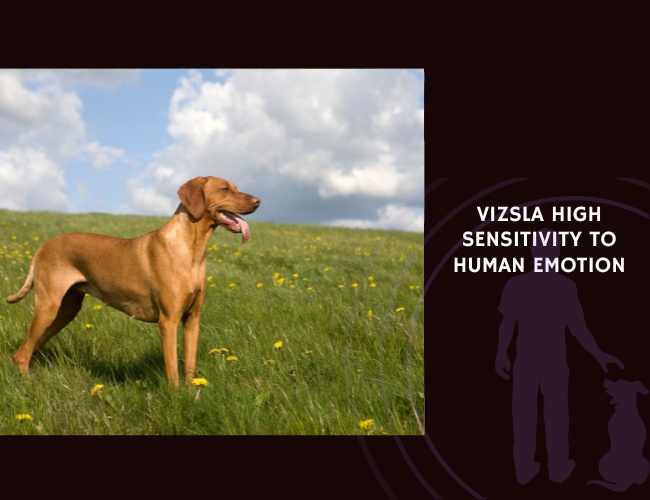
When you walk through the door after a difficult day, your Vizsla knows. Before you speak a word, before you even set down your keys, they have already read the tension in your shoulders, the shift in your breathing, the micro-expression that flashed across your face. This is not coincidence or folklore—this is the remarkable emotional architecture of the Vizsla breed, a dog whose very neurobiology seems designed to sync with human feeling.
The Vizsla’s sensitivity to human emotion extends far beyond typical canine attentiveness. These dogs possess an extraordinary capacity for emotional contagion, physiological synchrony, and empathic responsiveness that shapes every aspect of their behavior. Understanding this profound connection is essential for anyone who shares their life with a Vizsla, because their emotional wellbeing is intimately tied to yours.
The Neurobiological Foundation of Vizsla Emotional Intelligence
How Affective Systems Shape Connection
Your Vizsla’s emotional sensitivity begins deep within their brain structure. Research in affective neuroscience reveals that basic emotional systems—particularly those governing care-seeking and social play—are profoundly activated in this breed. These systems create an intrinsic motivation for social connection that goes beyond simple companionship. The Vizsla brain is wired to prioritize human interaction, making emotional attunement not just a behavior but a fundamental drive.
This heightened activation of care and play systems means your Vizsla experiences social connection as a primary need, similar to hunger or sleep. When they follow you from room to room, when they rest their head on your knee during a quiet moment, they are not being clingy—they are fulfilling a neurobiological imperative to maintain emotional proximity.
Signs Your Vizsla’s Care System is Actively Engaged:
- Physical proximity seeking that feels purposeful rather than anxious, such as sitting beside you while maintaining calm body language
- Gentle nudging or paw placement on your leg during quiet moments, initiating contact without demanding attention
- Soft eye contact that conveys connection rather than neediness, often accompanied by relaxed facial muscles
- Following you between rooms but settling quickly once you stop, showing they seek presence rather than constant interaction
- Bringing toys or initiating play as a way to share positive emotional experiences and strengthen your bond
- Leaning against you during rest periods, using physical touch to maintain emotional connection and co-regulate
The Vagal Tone Advantage
The polyvagal theory offers insight into why Vizslas are particularly receptive to subtle emotional cues. Their highly developed social engagement system, regulated by the vagus nerve, allows them to detect changes in vocal tone, facial expressions, and breathing patterns that might escape less attuned breeds. This sophisticated vagal regulation means your Vizsla can distinguish between your genuinely calm voice and the forced cheerfulness you adopt when stressed.
You might notice your Vizsla responding to emotional shifts you thought you had hidden. This is their social engagement system at work, processing micro-signals through a neural network designed for deep interpersonal connection. Through this lens, we begin to understand how the NeuroBond approach recognizes emotional congruence as the foundation of trust—your Vizsla literally feels what you feel, and this shared experience becomes the basis of your relationship.
Subtle Emotional Cues Your Vizsla Reads Constantly:
- Micro-changes in vocal pitch and prosody that reveal underlying stress, excitement, or sadness even when your words remain neutral
- Breath rhythm alterations that signal anxiety, relaxation, or anticipation before you consciously recognize your own emotional state
- Facial micro-expressions lasting less than a second that flash across your features during emotional processing
- Postural tension patterns in your shoulders, neck, or jaw that telegraph stress or discomfort you may be trying to hide
- Walking pace and gait changes that reflect your energy level, mood, or mental preoccupation throughout the day
- Hand gesture tempo and fluidity that shifts when you transition between calm and stressed states
Attachment and Emotional Synchrony
The Biology of Pair-Bonding
The Vizsla’s reputation as a “velcro dog” has deep biological roots. Their strong pair-bonding drive translates into an enhanced ability to detect subtle affective cues from their primary attachment figure. Research shows that individual attachment styles profoundly influence sensitivity to social signals, and this principle applies to dogs as strongly as it does to humans.
When you form a close bond with your Vizsla, you are not simply creating a pleasant relationship—you are activating neural pathways involved in salience detection, interoception, and mentalization. These are the same brain regions that allow humans to share emotions and build deep attachments. Your Vizsla’s brain literally tunes itself to you, becoming more responsive to your specific emotional patterns over time.
This synchronous tuning creates what researchers call “emotional co-modulation.” Your heart rate variability influences your Vizsla’s physiological state, and vice versa. During calm interaction, your breathing patterns may synchronize. During stress, your cortisol levels may mirror each other. This is not anthropomorphism—this is documented physiological reality in human-dog attachment relationships.
Oxytocin and Heart Rate Synchrony
When you make eye contact with your Vizsla, both of you experience oxytocin release—the same bonding hormone that connects mothers to infants. For Vizslas, this oxytocin response appears particularly pronounced. Their strong attachment drive suggests they experience higher physiological synchrony with their owners compared to more independent breeds.
You have probably noticed moments when your Vizsla seems to calm simply from your presence, or conversely, when your anxiety seems to transfer directly to them. These are not imagined phenomena. Heart rate variability studies show that dogs and owners engaged in close interaction demonstrate measurable physiological coupling. For a breed selected for centuries to work in intimate partnership with humans, this coupling runs especially deep.
Observable Signs of Heart Rate and Physiological Synchrony:
- Your Vizsla’s breathing naturally slows and deepens when you consciously relax, creating visible chest rise patterns that match your rhythm
- During calm petting sessions, both of you experience decreased heart rate within minutes, creating a shared parasympathetic state
- Your stress produces immediate physical responses in your Vizsla such as increased panting, restlessness, or alertness even without obvious environmental triggers
- Shared settling patterns where your dog begins to relax within moments of you genuinely releasing tension from your body
- Mutual arousal during exciting activities where your enthusiasm directly amplifies their energy and engagement level
- Synchronized waking and sleeping patterns that reflect emotional and circadian alignment between you both
Secure Versus Anxious Attachment Patterns
Not all emotional mirroring is equally adaptive. Attachment security plays a crucial role in determining whether your Vizsla’s sensitivity enhances or undermines their wellbeing. A securely attached Vizsla uses emotional synchrony for co-regulation—they read your cues to understand when to relax, when to be alert, and how to navigate uncertain situations.
An anxiously attached Vizsla, however, may develop hypervigilance or exaggerated mirroring. Instead of finding comfort in your presence, they become overly focused on every shift in your emotional state, never quite able to settle. This hyperactivation of their emotional detection systems can lead to dysregulation—where your stress amplifies their stress in an escalating feedback loop.
The difference often traces back to consistency in early attachment experiences. A Vizsla raised with clear, predictable emotional communication from their owner develops secure attachment patterns. One exposed to inconsistent responses or chronic anxiety may struggle to regulate their own emotions, becoming overly dependent on external cues for stability. 🧡
Secure Attachment Characteristics in Vizslas:
- Comfortable seeking proximity but can also settle independently when appropriate, showing emotional flexibility in different contexts
- Uses your presence as a secure base for exploration, checking in periodically but not requiring constant reassurance
- Recovers quickly from stressful events when you provide calm guidance, demonstrating trust in your leadership
- Shows appropriate emotional responses matched to situations rather than over-reacting to minor changes
- Can tolerate brief separations without panic, understanding that your absence is temporary and you will return
- Responds well to training because they trust your guidance and can focus without anxiety overwhelming their attention
Anxious Attachment Characteristics in Vizslas:
- Excessive shadowing where they follow you constantly, unable to relax unless maintaining visual contact at all times
- Hypervigilance to your every movement and mood shift, creating constant tension and inability to settle fully
- Exaggerated stress responses to minor separations or environmental changes that securely attached dogs handle easily
- Difficulty focusing during training because attention remains divided between the task and monitoring your emotional state
- Appeasement behaviors like excessive lip licking, yawning, or submissive postures even when no correction has occurred
- Slow recovery from stress and tendency to remain aroused long after the triggering event has passed
Cognitive and Sensory Processing
Reading the Invisible Language
Your Vizsla processes an extraordinary amount of nonverbal information every moment you interact. While all dogs attend to human communication, Vizslas appear particularly adept at interpreting the subtle elements that constitute emotional meaning—micro-expressions that flash across your face in milliseconds, the slight rise in vocal pitch when you are anxious, the tension or relaxation in your posture and gait.
This capacity mirrors what researchers observe in human intersubjectivity: the rapid, reciprocal exchange of visual-facial, auditory-prosodic, and tactile-gestural communications that allow emotional understanding without words. Given the Vizsla’s history as a close-contact hunting partner, they have evolved to excel at this form of communication. Your relationship is built on thousands of these micro-exchanges each day, most occurring beneath conscious awareness.
When you feel your Vizsla “just knows” what you are feeling, you are recognizing this multisensory integration at work. They are not reading your mind—they are synthesizing information from your facial expressions, body language, breathing patterns, and vocal qualities into a coherent emotional understanding.
Components of Multisensory Emotional Communication:
- Visual Processing: Reading facial expressions from forehead tension, eye gaze direction, pupil dilation, lip compression, and overall facial muscle tone
- Auditory Interpretation: Detecting vocal pitch, speaking tempo, volume variations, and the emotional prosody embedded in your word choices
- Olfactory Detection: Sensing stress hormones, pheromones, and biochemical changes in your scent that accompany different emotional states
- Kinesthetic Awareness: Perceiving your movement quality, gesture speed, postural alignment, and the tension or fluidity in your physical presence
- Temporal Pattern Recognition: Tracking daily routines, ritual consistency, and the predictability of your behavioral patterns over time
- Contextual Integration: Synthesizing all sensory inputs within the framework of past experiences, learned associations, and relationship history

Neural Systems for Empathic Response
The neuroscience underlying this sensitivity involves several interconnected brain regions. Studies using functional magnetic resonance imaging have identified that attachment styles modulate responses in the amygdala and striatum during social appraisal. These same regions, along with the anterior cingulate cortex, appear central to the dog-human bond.
For your Vizsla, these neural pathways facilitate what we might call empathic responsiveness. When they see you smile, their ventral tegmental area and striatum likely activate, creating a rewarding sensation that motivates continued social engagement. When they detect your stress, their amygdala registers salience—this is important information requiring attention.
The role of oxytocin in this system cannot be overstated. This neuropeptide not only strengthens bonding but also enhances social cognition. It makes your Vizsla more attentive to your emotional signals and more motivated to respond appropriately. The oxytocin system essentially amplifies their natural sensitivity, creating the profound attunement characteristic of the breed.
Early Socialization and Sensitivity Thresholds
The sensitivity your adult Vizsla displays is partly influenced by their early life experiences. Puppies who experience synchronous, responsive interactions during critical developmental periods develop more refined emotional detection abilities. Early socialization that includes varied human emotional expressions—gentle play, calm training, appropriate boundaries—helps calibrate their sensitivity thresholds appropriately.
Conversely, puppies raised in emotionally chaotic or neglectful environments may develop either blunted sensitivity (as a protective mechanism) or hyperreactivity (never having learned what emotional signals mean). Responsible breeders who provide rich social environments and emotionally attuned care set the foundation for healthy emotional intelligence in adult Vizslas.
This early tuning influences not just what they detect, but how they respond. A well-socialized Vizsla can distinguish between emotions that require their attention and those that do not concern them. They develop emotional flexibility—the capacity to remain regulated even when you experience passing frustration or stress. 🐾
Early Developmental Experiences That Support Healthy Emotional Sensitivity:
- Exposure to varied human emotional expressions during the critical 3-12 week period when puppies learn to interpret social signals
- Consistent, responsive interactions from breeders who read and appropriately respond to puppy communication cues
- Gradual introduction to mild stressors followed by recovery periods that teach resilience and emotional regulation
- Positive socialization with multiple calm, emotionally stable people who model appropriate interaction styles
- Opportunities for independent problem-solving that build confidence separate from constant human guidance
- Clear boundaries and structure that help puppies understand which emotional signals require response and which do not
Emotional Contagion and Regulation
The Mirror of Physiological Mimicry
Emotional contagion in Vizslas operates through physiological mimicry—your stress literally becomes their stress through measurable biological pathways. Heart rate variability coupling means that when your nervous system shifts into sympathetic activation during stress, your Vizsla’s physiology follows. Cortisol levels can synchronize, creating shared stress responses between you.
This physiological link explains why your Vizsla may become restless during your work deadline stress, or why they settle immediately when you finally relax in the evening. You are not separate emotional entities—you are a connected system where one partner’s state influences the other. For a breed as attachment-driven as the Vizsla, this connection runs particularly deep.
The mechanism involves both direct observation of your behavior and neurochemical resonance. Your Vizsla detects your rapid breathing, tense movements, and sharp vocal tones. These signals trigger their own stress response systems. Additionally, the emotional atmosphere you create—through pheromones, energy, and subtle behavioral cues—becomes the environment they inhabit emotionally.
Chronic Anxiety and Behavioral Stability
When emotional contagion becomes chronic, the consequences extend beyond momentary stress sharing. A Vizsla consistently exposed to anxious or inconsistent human emotions faces significant challenges to their long-term behavioral stability. Attachment theory teaches us that the quality of caregiver-child interaction shapes emotion regulation capacities—the same principle applies to the human-dog bond.
If you struggle with chronic anxiety, your Vizsla may develop an insecure attachment style characterized by hypervigilance, restlessness, and difficulty self-soothing. They become constantly alert to your emotional state, unable to fully relax because the emotional foundation of your relationship feels unstable. This is not their fault or yours—it is the natural consequence of how deeply connected you are.
You might observe stress-induced behaviors like excessive whining, shadowing (following you constantly), destructive behavior when separated, or displacement activities like excessive grooming. These are not signs of a “bad” dog but rather symptoms of emotional dysregulation stemming from chronic exposure to unpredictable emotional input.
Behavioral Signs of Chronic Stress-Induced Dysregulation:
- Excessive vocalization including whining, barking, or howling that increases during periods of owner stress or absence
- Compulsive shadowing where your Vizsla cannot remain in a separate room even briefly without distress
- Destructive behaviors focused on exit points, personal items with your scent, or self-soothing through chewing
- Displacement activities such as excessive licking of paws or flanks, repetitive circling, or obsessive toy fixation
- Hyperstartle responses to normal household sounds that previously did not trigger alarm or anxiety
- Inability to settle or achieve deep rest, remaining in a constant state of low-level arousal and vigilance
- Gastrointestinal symptoms including stress-induced diarrhea, vomiting, or appetite changes without medical cause
- Regression in house training or other previously mastered behaviors when under emotional stress
Attuned. Empathic. Connected.
Emotion guides interaction.
Your Vizsla reads micro-expressions, tone, and posture with uncanny precision, responding not to commands but to the emotional frequencies beneath them.
Connection drives behaviour.
Their brain prioritises social synchrony—following, touching, leaning—because emotional proximity feels as vital as food or rest, anchoring their sense of safety.



Regulation flows both ways.
Your calm restores their calm; your tension fuels their unrest. In the Vizsla, empathy is reciprocal—teaching that leadership begins with emotional balance.
Empathy, Separation Anxiety, and Co-Dependency
The very trait that makes Vizslas such extraordinary companions—their heightened empathy—can also predispose them to separation anxiety and co-dependent behaviors. When they become overly reliant on your presence for emotional regulation, temporary separations become genuinely distressing rather than merely unpleasant.
This is different from normal attachment. A securely attached Vizsla experiences some discomfort during separation but can self-regulate using internalized memories of your consistent care. A co-dependent Vizsla experiences genuine panic because they have not developed independent emotional regulation capacities—their stability depends entirely on your presence.
Through the Invisible Leash framework, we understand that true connection does not require constant physical proximity. It is built on awareness and emotional clarity that persists even when you are apart. Your Vizsla should feel your calm leadership as an internalized resource, not something that exists only in your immediate presence. 🧠
Training and Behavioral Context
Emotional Synchrony in Cooperative Tasks
The same sensitivity that makes Vizslas emotionally vulnerable also makes them exceptional working partners when properly supported. Emotional synchrony dramatically improves performance in cooperative tasks like obedience, tracking, and therapy work. When you and your Vizsla achieve emotional congruence, you unlock a level of communication and coordination that feels almost telepathic.
This is because emotional synchrony stabilizes both your parasympathetic balance and trust. During training, your Vizsla is not simply learning commands—they are reading your emotional state to understand what you truly mean. A command given with calm confidence produces a different response than the same command spoken with frustration or doubt. Your Vizsla perceives the emotional context and responds accordingly.
Research on synchronized interaction in cooperative tasks shows that shared rhythms—whether physical movement or emotional resonance—elicit positive affect and enhance engagement. For Vizslas working closely with handlers, this synchrony becomes the invisible foundation of their performance. You have likely experienced moments when your Vizsla anticipated your needs or responded to subtle shifts in your intention before you gave explicit cues. This is emotional synchrony manifesting as practical cooperation.
Signs of Optimal Emotional Synchrony During Training:
- Your Vizsla maintains soft eye contact and responsive body language that shows engagement without stress or tension
- Commands are understood and executed with minimal repetition because your emotional clarity matches your verbal instruction
- Your dog shows initiative and problem-solving rather than waiting passively for micromanaged direction
- Recovery from corrections or challenges happens quickly, with your Vizsla bouncing back to enthusiastic participation
- Training sessions feel effortless and joyful for both of you, with energy flowing naturally between partners
- Your Vizsla accurately reads your intentions during complex tasks, responding to shifts in focus or direction before explicit cues
🧠 Understanding Your Vizsla’s Emotional Superpower 💜
Your Vizsla doesn’t just notice your emotions—they feel them. This profound sensitivity is rooted in neurobiology, attachment systems, and centuries of intimate human partnership. Here’s how to honor their gift while supporting their wellbeing.
🔬 The Neurobiological Foundation
Why Vizslas Are Emotional Mirrors
Your Vizsla’s brain is wired with heightened activation of care and social play systems. These neural pathways create an intrinsic drive for connection that goes beyond typical canine attachment. Their highly developed vagal tone allows them to detect micro-changes in your vocal pitch, breathing patterns, and facial expressions that you may not even consciously express.
Physiological Synchrony in Action
When you interact with your Vizsla, measurable biological changes occur in both of you:
• Your heart rate variability influences theirs, creating physiological coupling
• Oxytocin release during eye contact strengthens your emotional bond
• Cortisol levels can synchronize, meaning your stress becomes their stress
• Breathing patterns naturally align during calm, connected moments
🧘 Mastering Co-Regulation Practices
Daily Techniques for Emotional Balance
Supporting your Vizsla’s sensitivity requires conscious emotional leadership:
• Conscious Breathing: Take three deep, slow breaths when stress rises—your Vizsla will mirror this shift to calm
• Physical Grounding: Use slow, rhythmic petting to engage both your parasympathetic systems
• Emotional Clarity: Align your internal state with external expression—authenticity reduces confusion
• Recovery Rituals: After stressful events, intentionally spend calm time together to reinforce that stress is temporary
Building Independent Confidence
Balance connection with activities that develop self-reliance: place training for calm independence, scent work that engages problem-solving without constant guidance, and confidence-building exercises that teach your Vizsla to trust their own capabilities alongside your leadership.
🎯 Emotional Synchrony in Training & Work
How Connection Enhances Performance
When you achieve emotional congruence with your Vizsla, training transcends simple obedience. They read not just your words but the emotional context behind them. A command given with calm confidence produces entirely different results than the same words spoken with frustration or doubt. This is why Vizslas excel in cooperative work—their sensitivity becomes a superpower when supported by clear, consistent emotional leadership.
Signs of Optimal Training Synchrony
• Soft eye contact and responsive body language without stress
• Commands understood with minimal repetition because clarity matches instruction
• Initiative and problem-solving rather than passive waiting
• Quick recovery from corrections with enthusiastic re-engagement
• Training feels effortless and joyful for both partners
• Your Vizsla anticipates intentions before explicit cues
⚠️ When Sensitivity Becomes Dysregulation
Recognizing Chronic Stress Symptoms
When emotional contagion becomes chronic or attachment feels insecure, watch for:
• Excessive vocalization that increases during your stress periods
• Compulsive shadowing—inability to remain separate even briefly
• Destructive behaviors focused on exit points or your personal items
• Hyperstartle responses to normal household sounds
• Inability to achieve deep rest or settle completely
• Gastrointestinal symptoms without medical cause
The Impact of Emotional Inconsistency
Unpredictable emotional signals—calm one moment, stressed the next without clear patterns—create hypervigilance in sensitive Vizslas. They become emotional detectives, expending enormous energy trying to predict your state. The solution isn’t suppressing emotion but developing emotional clarity: authentic feeling with consistent behavioral responses.
⚡ The Co-Regulation Formula
Your Emotional Clarity + Consistent Presence = Your Vizsla’s Secure Attachment
When your internal state aligns with your external expression, your Vizsla’s sensitivity becomes adaptive rather than overwhelming. They can trust what you show because it matches what you feel. This authenticity—not constant happiness—creates the foundation for emotional resilience and confident independence within deep connection.
🧡 The Zoeta Dogsoul Perspective
Through the NeuroBond framework, we understand that emotional congruence stabilizes parasympathetic balance and builds trust without creating dependency. The Invisible Leash reminds us that true connection doesn’t require constant physical proximity—it’s built on awareness and clarity that persists even when apart. Soul Recall teaches us that emotional memory shapes behavior, so every moment of consistent, calm leadership creates a reservoir of safety your Vizsla can draw upon during uncertainty.
Your Vizsla’s sensitivity is not a flaw—it’s an evolutionary gift that creates the possibility for a relationship unlike any other. When you meet their emotional intelligence with your own conscious awareness, you unlock the full potential of this remarkable breed. That balance between science and soul is where true partnership lives.
© Zoeta Dogsoul – Where neuroscience meets soul in dog training
When Inconsistency Creates Hypervigilance
Emotional inconsistency from owners triggers maladaptive patterns in sensitive breeds. When your emotional signals are unpredictable—calm one moment, stressed the next, without clear reasons your Vizsla can understand—they develop hypervigilance as a coping mechanism. They watch you constantly, trying to predict and prepare for emotional shifts they cannot anticipate.
This over-attunement manifests as excessive focus on your every movement, inability to settle even when you are relaxed, and appeasement behaviors aimed at de-escalating tension they perceive but you may not intend. Your Vizsla essentially becomes an emotional detective, expending enormous energy trying to solve the puzzle of your unpredictable emotional landscape.
The solution is not to suppress your emotions—that is neither possible nor healthy. Instead, the goal is emotional clarity: allowing yourself to feel what you feel while maintaining consistent behavioral responses and clear communication. Your Vizsla can handle your occasional stress or sadness when the emotional “rules” of your relationship remain stable.
Common Patterns of Emotional Inconsistency That Create Hypervigilance:
- Responding to the same behavior with affection one day and irritation the next, creating confusion about acceptable actions
- Using calm words while broadcasting stress through body language, creating cognitive dissonance your Vizsla must navigate
- Oscillating between over-involvement and emotional withdrawal without predictable patterns or clear communication
- Applying training cues inconsistently based on your mood rather than your dog’s behavior or the situation
- Expressing frustration about behaviors you previously ignored or even encouraged, sending mixed signals
- Sudden changes in routine, interaction style, or emotional availability without transition or explanation
- Being emotionally present and engaged some days but distracted and dismissive on others without apparent reason
Co-Regulation Through NeuroBond Principles
NeuroBond-based co-regulation offers a framework for supporting sensitive Vizslas without creating unhealthy dependency. The approach recognizes that emotional congruence—genuine alignment between your inner state and your expressed behavior—creates the foundation for trust and secure attachment.
When you practice co-regulation, you acknowledge your Vizsla’s emotional sensitivity while taking responsibility for your own emotional clarity. You learn to recognize when your stress is transferring to them and develop skills for returning to parasympathetic balance—not by suppressing emotion but by processing it consciously rather than unconsciously broadcasting it.
Co-regulation also means helping your Vizsla develop their own emotional resilience. Through consistent, calm leadership, you provide a secure base from which they can experience and recover from stressors. You model emotional flexibility—the ability to move between arousal and calm, between alertness and relaxation—teaching them through experience that emotional shifts are normal and manageable.
This reduces secondary stress (the stress your Vizsla experiences from absorbing your stress) and builds confidence. When they know you will remain emotionally steady even during challenges, they develop trust not just in you but in their own capacity to handle uncertainty. Soul Recall reminds us that emotional memory shapes behavior—by creating consistent patterns of safety and recovery, you help your Vizsla build a reservoir of positive emotional associations to draw upon during stress. 😄
Practical Co-Regulation Techniques for Daily Use:
- Conscious Breathing: When you notice stress rising, pause and take three deep, slow breaths, allowing your Vizsla to mirror your physiological shift toward calm
- Physical Grounding: Use slow, rhythmic petting along your dog’s body to engage both your parasympathetic systems simultaneously
- Verbal Anchoring: Develop a calm, consistent phrase or tone you use when returning to emotional center, teaching your Vizsla this signals safety
- Movement Meditation: Take slow, mindful walks where you consciously release tension, allowing your Vizsla to match your relaxed pace and energy
- Structured Transition Rituals: Create predictable routines between activities that signal emotional shifts, helping your Vizsla anticipate and prepare
- Emotion Naming: Quietly acknowledge your emotional state to yourself, creating internal clarity that reduces the mixed signals your Vizsla receives
- Recovery Practice: After stressful events, intentionally spend time in calm presence with your Vizsla, reinforcing that stress is temporary and resolution follows
Breed-Specific Implications
The Legacy of Close-Contact Partnership
The Vizsla’s neurological wiring for rapid affective feedback loops likely traces back to their historical role as close-contact hunting partners. For centuries, these dogs worked in intimate coordination with human handlers, often at distances where verbal commands were impractical. Success required acute awareness of human emotional state, intentions, and subtle cues.
This selective pressure favored individuals with enhanced neural pathways for processing and responding to human emotions. Over generations, the breed developed brain responses that prioritize the personal significance of human expressions—your facial expressions carry more meaning to your Vizsla than they would to a more independent breed.
This is why your Vizsla seems to read your mind during activities requiring cooperation. They are not psychic—they are the product of centuries of selection for dogs who could maintain an invisible thread of communication with their human partners even in complex, dynamic environments. The rapid affective feedback loops that served hunters now serve the modern owner-dog relationship, creating the profound connection Vizsla owners recognize instantly.
Stress-Induced Behaviors and High Sensitivity
The connection between Vizsla sensitivity and stress-induced behaviors becomes clear through this neurobiological lens. Whining, shadowing, and restlessness are not personality flaws but logical consequences of their emotional architecture. When they internalize your stress through emotional contagion, or when they cannot decipher inconsistent emotional signals, their highly sensitive systems become overwhelmed.
These behaviors represent their attempt to manage dysregulation they did not create but nonetheless experience. Whining may function as a stress release or a bid for your attention to re-establish emotional connection. Shadowing represents their need for proximity when feeling uncertain. Restlessness reflects an inability to settle when their emotional detection systems remain on high alert.
Understanding these behaviors as symptoms rather than choices fundamentally changes how we respond. The solution is not punishment for “being needy” but rather addressing the underlying emotional environment causing dysregulation.
Balancing Sensitivity with Calm Leadership
How can you honor your Vizsla’s sensitivity without creating over-attunement or dependency? The answer lies in what we might call emotionally intelligent leadership—being genuinely present while maintaining your own center.
Emotional clarity means your internal state aligns with your external expression. Your Vizsla’s sensitivity becomes adaptive rather than overwhelming when they can trust that what you show is what you feel. This does not mean you must always be happy or calm—it means you are authentic and consistent in how you process and express emotion.
Calm leadership provides predictable emotional territory. Your Vizsla learns that your stress is not a crisis requiring their intervention, that your sadness will pass without destabilizing your bond, that joy can be shared without dependency. You become a secure base precisely because you maintain your own emotional regulation rather than relying on your dog to manage your feelings.
This approach preserves the depth of connection that makes the Vizsla relationship so special while preventing the maladaptive patterns that emerge from unmanaged emotional enmeshment. Your Vizsla remains deeply attuned to you, but this attunement supports their wellbeing rather than undermining it. That balance between science and soul—that is the essence of Zoeta Dogsoul.
Creating an Environment for Emotional Flourishing
Daily Practices for Emotional Health
Supporting your Vizsla’s emotional sensitivity requires intentional daily practices that promote regulation and security. Start with consistent routines that create predictable rhythms—feeding times, walks, play sessions, and rest periods that anchor their day in reliability. Vizslas thrive when they can anticipate the structure of their life.
Incorporate practices that build independent confidence alongside connection. This might mean teaching place training where your Vizsla learns to settle on a mat while you work, developing the capacity to be calm in your presence without constant interaction. Or it could involve scent work or puzzle toys that engage their mind independently, building their sense of competence separate from your direct involvement.
Activities That Build Independent Confidence in Sensitive Vizslas:
- Place training where your dog learns to remain on a designated mat or bed while you move about, creating calm independence within proximity
- Scent work or nose games that engage their hunting instincts and problem-solving abilities without requiring your constant guidance
- Food puzzle toys or slow feeders that provide mental engagement and self-soothing activities during alone time
- Brief separation exercises that gradually increase duration, teaching your Vizsla they can successfully manage short periods independently
- Novel object exploration where you encourage independent investigation of new items while you remain calm and observant
- “Go find it” games where you hide treats or toys throughout the house, encouraging autonomous searching behavior
- Confidence-building agility or body awareness exercises that help your Vizsla trust their own physical capabilities and decision-making
Physical exercise matters, but emotional balance matters more. A tired Vizsla with an anxious owner is still an anxious dog. Prioritize activities that promote shared calm—gentle walks where you both relax, quiet time together, training sessions that emphasize connection over performance. These create positive emotional memories that stabilize your bond.
Recognizing and Responding to Dysregulation
Learn to recognize the signs that your Vizsla is absorbing stress or becoming emotionally overwhelmed. These might include: increased shadowing, inability to settle, excessive panting without physical exertion, displacement behaviors like excessive licking, hypervigilance to environmental sounds, or exaggerated startle responses.
When you notice these signs, resist the impulse to dismiss them as attention-seeking. Instead, consider what emotional environment you might be creating. Have you been stressed? Inconsistent? Emotionally distant? Your Vizsla’s behavior often reflects the emotional field they inhabit.
Co-Regulation Response Strategies When You Notice Dysregulation:
- Pause and Center Yourself First: Before addressing your dog’s anxiety, take a moment to check your own emotional state and consciously release tension
- Lower Your Physical Energy: Sit or lie down, reducing your height and activity level to signal safety and calm to your Vizsla
- Slow, Rhythmic Touch: Use gentle, predictable strokes along their body rather than excited or erratic petting that increases arousal
- Breathing Together: Position yourself close to your Vizsla and breathe deeply and slowly, allowing them to sync with your respiratory rhythm
- Quiet Presence: Sometimes regulation requires no action beyond being calmly present, providing emotional stability without trying to “fix” their state
- Redirect to Calming Activities: Offer a long-lasting chew, a snuffle mat, or other low-arousal activities that engage without overstimulating
- Environmental Adjustment: Reduce stimulation by dimming lights, lowering noise levels, or moving to a quieter space if sensory overload contributes to dysregulation
Respond with co-regulation rather than correction. This might mean taking a few minutes to breathe deeply and consciously relax your own body, creating a parasympathetic state your Vizsla can mirror. Or it might involve gentle physical contact—slow petting or massage that engages their social engagement system and helps them down-regulate.
Building Resilience Through Secure Attachment
The goal is not to eliminate your Vizsla’s sensitivity—that would be impossible and undesirable. Instead, you are building resilience within that sensitivity, developing their capacity to experience emotions without being overwhelmed by them.
This happens through repeated experiences of stress and recovery within a secure attachment relationship. Your Vizsla encounters a mildly stressful situation, looks to you for emotional guidance, receives your calm confidence, and successfully navigates the challenge. Each repetition strengthens their belief that they can handle uncertainty, that stress is temporary, that you remain steady regardless of circumstances.
Over time, this creates what attachment researchers call “earned security”—a stable emotional foundation built through consistent experience rather than merely inherited temperament. Your Vizsla’s sensitivity becomes integrated into a larger framework of confidence and emotional flexibility. 🧡
When to Seek Professional Support
Signs of Serious Dysregulation
While many sensitivity-related challenges can be addressed through improved emotional clarity and co-regulation, some situations require professional support. Consider consulting a veterinary behaviorist or qualified trainer if your Vizsla shows:
Severe separation anxiety with destructive behavior, self-harm, or complete inability to cope with your absence. Generalized anxiety that persists despite environmental changes and consistent emotional support. Aggressive responses rooted in fear or resource guarding that escalate despite clear communication. Compulsive behaviors like excessive licking, tail chasing, or shadow chasing that interfere with quality of life.
These symptoms may indicate that your Vizsla’s emotional dysregulation has become entrenched, requiring structured behavior modification and potentially medication support. This is not failure—it is recognition that some challenges exceed what training alone can address.
The Role of Medical Evaluation
Before attributing all behavioral challenges to emotional sensitivity, rule out medical causes. Pain, thyroid dysfunction, neurological conditions, and other health issues can all manifest as apparent anxiety or behavioral problems. A thorough veterinary examination, including appropriate bloodwork, ensures you are addressing the actual source of your Vizsla’s distress.
Some Vizslas have genuine neurochemical imbalances that contribute to their behavioral challenges. In these cases, medication can provide the stability needed for behavioral interventions to succeed. There is no shame in pharmacological support when indicated—it is simply another tool for supporting your dog’s wellbeing.
The Gift of Sensitivity
Your Vizsla’s emotional sensitivity is not a flaw to be corrected but a gift to be honored and channeled. This profound attunement creates the possibility for a relationship unlike any other—one where you are truly seen, where emotional connection runs deeper than words, where companionship means genuine partnership in navigating life’s emotional landscape.
The challenge and responsibility lie in recognizing how deeply your emotional state affects your Vizsla and committing to the personal growth that supports their wellbeing. They cannot change their sensitivity—it is woven into their neurobiology. But you can change how you show up emotionally, developing the clarity, consistency, and calm presence that allows their sensitivity to be adaptive rather than overwhelming.
This journey often becomes transformative for both of you. In learning to provide emotional stability for your Vizsla, you develop your own emotional intelligence. In honoring their need for consistency, you discover the peace that comes from living with integrity between your inner experience and outer expression. The relationship becomes a mirror, reflecting back areas of growth and offering opportunities for healing.
Understanding the neuroscience behind your Vizsla’s emotional sensitivity does not diminish the magic of your connection—it deepens your appreciation for the complex, beautiful architecture that makes this bond possible. Every moment of synchrony, every instance of being truly understood, every shared emotional experience rests on a foundation of neurochemical resonance, physiological coupling, and evolutionary refinement.
Your Vizsla offers you the gift of their complete emotional presence. The greatest gift you can offer in return is the commitment to emotional clarity, calm leadership, and conscious co-regulation. Together, you create not just a relationship but a system of mutual support where sensitivity becomes strength, where connection enhances rather than diminishes individual wellbeing, and where the depth of your bond serves as a foundation for both your lives.
That is the promise of understanding Vizsla emotional sensitivity—not simply managing a challenging trait but embracing the profound opportunity for connection it represents. When you meet your Vizsla’s sensitivity with wisdom, you unlock the full potential of this remarkable breed, creating a partnership that enriches every dimension of your shared experience.










