
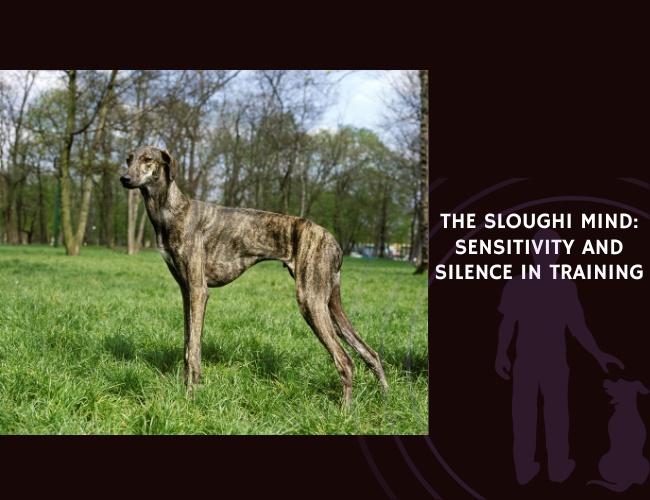
When you first meet a Sloughi, you might wonder if they’re truly engaged with you at all. That calm, observant gaze, the stillness in their posture, the absence of the eager tail-wagging you’ve come to expect from other breeds—these qualities can feel like distance. But what if that silence isn’t absence at all? What if it’s the deepest form of attention?
The Sloughi, an ancient North African sighthound bred for the vast, quiet expanses of the desert, operates on a frequency many dog owners have never encountered. This isn’t a breed that rushes toward you with unbridled enthusiasm or constantly seeks your approval. Instead, the Sloughi watches, processes, and responds with a precision that reflects thousands of years of survival in one of the world’s most demanding environments.
Understanding the Sloughi mind means rethinking everything you thought you knew about canine communication, training, and connection. It means learning to read whispers instead of shouts, to value observation over performance, and to recognize that emotional depth doesn’t always announce itself with noise.
Character & Behavior: The Observer in Your Home
The Desert’s Gift: Independence Shaped by Survival
The Sloughi’s behavioral profile wasn’t designed in a training facility or shaped by human preference—it was forged in the endless horizons of North Africa, where survival demanded something different from the traits we typically celebrate in dogs. Out there, in landscapes where prey could disappear into shimmering heat waves and danger might lurk beyond the next dune, the Sloughi developed a cognitive style built on three essential qualities: observation, energy conservation, and strategic action.
You’ll notice this heritage the moment a Sloughi enters a new environment. While many breeds rush in with curious enthusiasm, your Sloughi pauses. They scan. They process visual information with remarkable speed and depth, cataloging exits, movements, and potential threats before making their next move. This isn’t fear—it’s intelligent assessment. In the desert, rushing forward without understanding the terrain could mean the difference between life and death.
Signs of the Sloughi’s Observational Intelligence:
- Environmental scanning: They visually map a new space within minutes, noting exits, elevated surfaces, and movement patterns
- Strategic positioning: They choose locations with clear sightlines and multiple escape routes
- Delayed engagement: They wait and watch before interacting with new people, objects, or situations
- Pattern recognition: They memorize routines faster than you’d expect, often anticipating next steps before you signal them
- Energy conservation: They don’t waste movement on unnecessary exploration—each action is purposeful
This observational style extends to everything they do. A Sloughi doesn’t need to touch everything, smell everyone, or immediately interact with every stimulus. They’re watching patterns, learning routines, understanding the rhythm of your household through careful study rather than active experimentation.
Sensitivity: The Double-Edged Sword
What many owners interpret as aloofness is actually profound sensitivity. The Sloughi processes environmental and emotional information with unusual depth. They notice the subtle tension in your shoulders when you’re stressed, the slight change in your walking pace when you’re preoccupied, the shift in household energy when conflict simmers beneath polite conversation.
This sensitivity manifests in several observable ways:
Emotional noise intolerance: Raised voices, chaotic energy, and emotional inconsistency affect Sloughis more intensely than many other breeds. Where a Labrador might shake off your frustration and keep playing, a Sloughi internalizes that emotional discord. They might move to another room, lower their gaze, or simply become still—not out of defiance, but as a protective response to overwhelming stimulation.
How Emotional Noise Affects Your Sloughi:
- Household arguments: They withdraw to quiet spaces, sometimes for hours after conflict
- Raised voices: Even excitement or loud laughter can trigger retreat if sustained
- Tension between family members: They sense and internalize unspoken conflict
- Sudden emotional shifts: Rapid changes from calm to excitement confuse and stress them
- Persistent demands: Repeated requests without response time feel like pressure
- Inconsistent energy: Unpredictable emotional states from humans make them cautious
Physical space awareness: Sloughis are acutely attuned to spatial pressure. Direct frontal approaches, intense eye contact, or crowding their personal space can trigger withdrawal. They prefer to engage from angles that feel safe, with clear exit routes and emotional breathing room. This isn’t submission—it’s preference for autonomy.
Spatial Boundaries That Matter to Sloughis:
- Frontal approaches: Coming straight toward them feels confrontational; curved approaches feel safer
- Overhead reaching: Hands coming down from above trigger avoidance more than lateral gestures
- Corner positioning: Being backed into corners or small spaces increases anxiety
- Direct sustained eye contact: Long, hard stares register as threat or challenge
- Physical crowding: Multiple people surrounding them creates pressure to escape
- Forced contact: Being held, restrained, or prevented from moving away damages trust
Micro-signal reading: Your Sloughi notices things you don’t realize you’re broadcasting. A slight weight shift in your stance, a momentary tightening around your eyes, a barely perceptible change in your breathing pattern—these micro-signals inform their decisions about whether to approach, wait, or create distance.
The Paradox of Reserved Attachment
Here’s where many owners struggle: Sloughis can be deeply bonded while remaining behaviorally reserved. They’re not the breed that greets you at the door with full-body wiggles and uncontainable joy. Instead, their affection shows through subtle expressions that are easy to miss if you’re expecting conventional canine enthusiasm.
Look for these quiet indicators of connection:
- Proximity without contact: Your Sloughi chooses to be in the same room as you, positioned where they can observe you, even if they’re not seeking physical touch
- Soft eye contact: Brief, gentle eye contact that feels like acknowledgment rather than staring
- Synchronized movement: They naturally align their direction and pace with yours during walks, not because they’re trained to heel, but because they’re choosing to move as a unit
- Relaxed co-presence: The ultimate sign of trust—a Sloughi completely relaxed in your presence, breathing deeply, muscles loose, showing their vulnerability through genuine rest
Through the NeuroBond approach, we understand that connection doesn’t require constant demonstration. The Sloughi teaches us that love can be quiet, that trust can be still, and that the deepest bonds often exist in shared silence rather than performed affection. 🧡
Vocalization & Communication: The Language of Subtlety
When Silence Speaks Volumes
If you’re waiting for your Sloughi to “talk” to you the way other breeds do, you’ll misread their entire communication system. Sloughis are perhaps the quietest of all dog breeds—not because they lack the capacity for vocalization, but because their communication evolved in an environment where unnecessary noise could alert prey or attract predators.
This doesn’t mean they’re uncommunicative. It means you need to learn a different language—one written in tiny movements rather than broad gestures, in energy shifts rather than vocal announcements.
The Micro-Signal Dictionary
Ear micro-adjustments: A Sloughi’s ears move independently and with remarkable precision. A slight backward tilt isn’t just about sound—it’s often an emotional indicator. Ears slightly back with a soft face signals relaxation and trust. Ears pinned with body tension indicates stress or discomfort. Forward ears with a still body means they’re processing something that requires their full attention.
Gaze quality changes: The difference between a hard stare and soft eye contact is everything with a Sloughi. A hard gaze with dilated pupils suggests arousal, stress, or prey fixation. Soft eyes with slow blinks communicate trust and contentment. A gaze that breaks away smoothly shows respect for your space and emotional regulation. A gaze that breaks away quickly or repeatedly might indicate discomfort with the interaction.
Weight distribution shifts: Sloughis communicate through subtle changes in how they hold their body. Weight shifted slightly forward indicates interest or engagement. Weight shifted back or centered over their rear legs often precedes withdrawal or signals uncertainty. A perfectly balanced stance with relaxed muscles shows they’re comfortable and present.
Tail position vocabulary: Unlike breeds that semaphore with their tails, Sloughis use tail position more subtly. A gently curved tail, held naturally, indicates contentment. A tail tucked slightly (not fully between legs) suggests they’re managing uncertainty. A tail held higher than normal with a stiff body often appears during prey arousal or when something has captured their full attention.
The Cost of Misreading Silence
One of the most damaging patterns in Sloughi ownership occurs when humans interpret quietness as nothing happening. Your Sloughi has been communicating discomfort for several minutes through micro-signals—perhaps shifting their weight repeatedly, blinking more rapidly than usual, or turning their head slightly away from an interaction. But because these signals are so subtle, you miss them entirely.
Common Misreadings That Damage Trust:
- “They’re fine with it”: Stillness interpreted as acceptance when it’s actually frozen stress
- “They’re being stubborn”: Non-response seen as defiance when they’re actually overwhelmed
- “They don’t care”: Lack of obvious enthusiasm misread as indifference rather than calm observation
- “Nothing’s wrong”: Absence of whining or obvious distress signs taken as proof of comfort
- “They’re ignoring me”: Gaze aversion interpreted as disrespect instead of stress management
- “They need firmer handling”: Withdrawal met with increased pressure rather than reduced demands
When those quiet communications go unheard, Sloughis often escalate to the only response that feels safe: complete shutdown. They become still in a way that’s different from relaxed stillness—there’s a quality of frozen watchfulness, a held breath, a body that’s present but whose mind has retreated to safety.
This shutdown isn’t stubbornness. It’s not defiance. It’s the last line of emotional defense when their threshold has been exceeded and their attempts to communicate that fact have been ignored.
Training & Education: Rethinking Everything You Know
Why Traditional Methods Fail the Sloughi
If you approach Sloughi training with the same enthusiasm, repetition, and energy you’d bring to training a Border Collie or Golden Retriever, you’ll likely find yourself frustrated and confused. Your Sloughi might shut down, avoid you, or simply become very still while you issue commands into the void.
Traditional Training Techniques That Backfire with Sloughis:
- Repetitive drilling: Repeating commands 10-20 times feels like harassment rather than teaching
- High vocal volume: Raised voices register as aggression or instability
- Constant verbal chatter: Continuous talking creates noise they tune out
- Physical corrections: Leash pops or physical guidance trigger defensive withdrawal
- Excited praise: Overly enthusiastic rewards can be as overwhelming as corrections
- Pressure for immediate compliance: Demanding instant response creates resistance
- Group class dynamics: Chaotic energy of multiple dogs and handlers exceeds their threshold
- Performance expectations: Requiring repeated demonstrations for spectators feels pointless to them
Here’s what’s happening: the very techniques designed to motivate and engage other breeds create exactly the opposite effect in Sloughis. High repetition feels like badgering. Increased volume registers as aggression. Dramatic body language reads as instability. The pressure to perform triggers their defensive regulation mechanisms.
Understanding this isn’t about lowering your standards or accepting “less” from your Sloughi. It’s about recognizing that different cognitive styles require different communication approaches.
The Pattern-Recognition Pathway
Sloughis are extraordinary pattern learners. While you’re trying to teach a specific behavior through repeated command-response sequences, your Sloughi has already mapped the entire routine—when you typically go for walks, what you do before mealtimes, how you prepare to leave the house, which drawer you open for the leash.
They learn through observation of consistent patterns rather than through verbal instruction. This means:
Routines become language: Establish clear, predictable routines and watch your Sloughi anticipate the next step. They’ll often be ready before you’ve spoken a word because they’ve read the pattern, not the command.
Environmental cues trump verbal cues: Your Sloughi notices that you put on specific shoes before walks, that you check your phone before leaving, that you look toward the door before opening it. These environmental markers become their primary information source.
Consistency creates confidence: When patterns remain stable, Sloughis can relax into prediction. They understand what’s coming, what’s expected, and how to navigate their world. When patterns shift randomly, they become cautious and withdrawn.
The Invisible Leash: Leadership Through Energy, Not Force
The concept of the Invisible Leash captures something essential about training Sloughis—the understanding that control comes from emotional coherence and clear direction rather than physical management or verbal dominance.
Your Sloughi reads your energy first, your body language second, and your words a distant third. This means:
Calm creates capacity: When you’re emotionally regulated—breathing deeply, moving deliberately, maintaining steady energy—your Sloughi has the mental space to engage and learn. When you’re frustrated, rushed, or tense, they’re too busy managing their response to your emotional state to focus on anything else.
Direction over commands: Instead of issuing repeated verbal commands, use your body to indicate direction. Walk toward where you want them to go. Turn your body to invite movement. Pause to allow processing time. Your Sloughi will often follow clear directional leadership while resisting verbal pressure.
Training Approaches That Work for Sloughis:
- Body language emphasis: Use your position, orientation, and movement to communicate
- Minimal verbal cues: Say it once, clearly, then wait—repetition dilutes meaning
- Calm energy maintenance: Keep your breathing deep, movements deliberate, energy steady
- Processing pauses: Allow 3-5 seconds of silence after any cue for internal processing
- Choice integration: Offer options when possible—”this path or that path?”
- Environmental simplicity: Train in calm, quiet spaces before adding complexity
- Pattern establishment: Create consistent routines they can anticipate and follow
- Reward subtlety: Soft praise, gentle touch, or simply continuing the activity they enjoy
Silence amplifies clarity: Counterintuitively, reducing verbal noise often increases responsiveness in Sloughis. When every action isn’t accompanied by words, the few words you do use carry more weight. More importantly, silence gives them space to observe, process, and choose engagement.
Training Structure for Sensitive Minds
The ideal training session for a Sloughi looks nothing like traditional dog training:
Short, clean, complete: Five to ten minutes of focused work, ending on a clear note of success. Long sessions lead to mental fatigue and withdrawal.
Long processing breaks: After any training session, allow substantial time—sometimes hours—for your Sloughi to internally process what they’ve learned. They’re not being lazy; they’re consolidating learning in a way that works for their cognitive style.
Autonomy-supportive approaches: Offer choices whenever possible. “Would you like to walk this direction or that direction?” This doesn’t mean permissiveness—it means recognizing that Sloughis engage more fully when they have some agency in the process.
Environmental minimization: Train in calm, quiet spaces first. A Sloughi trying to learn while managing environmental overstimulation is a Sloughi who will shut down or disconnect. Build skills in simplicity before adding complexity.
Spatial freedom: Allow your Sloughi to position themselves where they feel comfortable during training. If they want to maintain a certain distance, honor that. As trust builds, they’ll often choose to move closer.
When “Stubborn” Means “Overwhelmed”
The word “stubborn” appears frequently in descriptions of Sloughi training challenges. But reframe that word through the lens of sensitivity and threshold tolerance, and you’ll see something different.
That “stubborn” stillness when you’re asking for a simple sit? Your Sloughi might be managing the emotional intensity of your frustration while simultaneously processing the command while also monitoring a sound outside while also feeling uncomfortable with your spatial proximity. The system has too many inputs, so they freeze.
That “stubborn” refusal to repeat a behavior they just performed successfully? They understood the task the first time. Endless repetition doesn’t reinforce learning for them—it feels pointless or overwhelming, creating resistance rather than enthusiasm.
That “stubborn” avoidance of training altogether? Something in your previous sessions exceeded their threshold—maybe your energy, maybe your volume, maybe the environmental pressure—and now the training context itself triggers their self-protective withdrawal.
Soul Recall reminds us that dogs remember emotional experiences more vividly than behavioral sequences. If your Sloughi’s training history is marked by feelings of pressure, confusion, or being misunderstood, those emotional memories will shape their future willingness to engage. 🧠
Performance & Activities: Matching Exercise to Temperament
The Sighthound Need: Space, Speed, and Silence
Despite their calm household demeanor, Sloughis are athletes with specific exercise needs that align with their original purpose. These are dogs built for explosive speed, visual tracking, and extended endurance across open terrain. Understanding how to meet these needs while respecting their emotional sensitivity creates the foundation for a balanced, content Sloughi.
Activities That Fulfill the Sloughi Spirit:
- Lure coursing: Formal sport that engages their natural chase and tracking abilities
- Straight-line sprints: Safe, enclosed areas where they can reach full speed
- Long-distance walking: Miles of steady movement through varied terrain
- Quiet hiking: Trail walking where they can range within sight but explore independently
- Visual tracking games: Activities that engage their sight-based hunting instincts
- Companionable routines: Simply being present during your outdoor activities
- Free running: Secure, fenced areas where they can move at their own pace
- Sunset/sunrise walks: Times when environments are naturally calmer with fewer people
Visual coursing activities: Sloughis come alive when they can use their extraordinary sight and pursuit drive. Whether through formal lure coursing, safe off-leash runs in enclosed areas, or even certain types of fetch that engage their chase instinct, these activities satisfy something fundamental in their nature. Watch your Sloughi during a run—that’s not just exercise, it’s expression of their deepest self.
Long, observational walks: Unlike breeds that need constant interaction during walks, Sloughis benefit from walks where they can simply be present, observing their environment at a comfortable pace. These walks serve cognitive and emotional needs as much as physical ones, allowing them to scan, assess, and process their surroundings.
Companionable activities: Activities where you’re together but not constantly interacting often suit Sloughis beautifully. Hiking where they can range within sight, lounging in a quiet garden, or simply being present while you work—these shared experiences build connection without demanding performance.
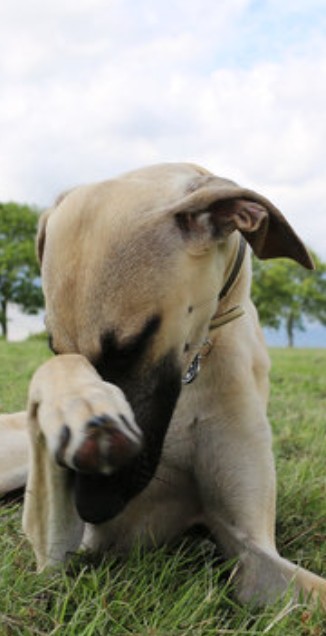
Silent. Keen. Reserved.
They don’t rush—
They read.
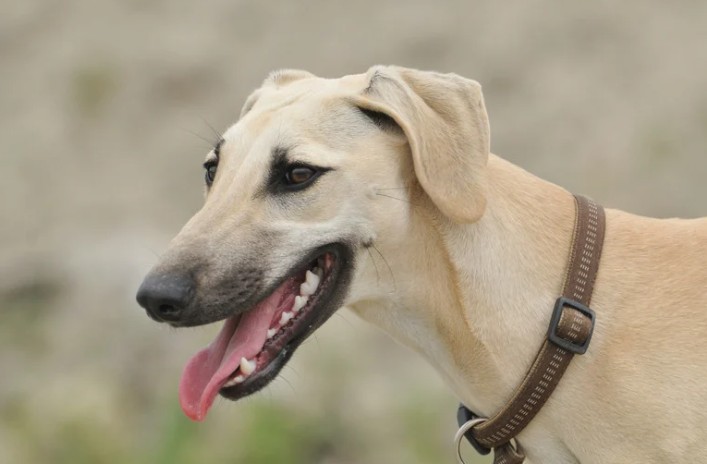
A Sloughi doesn’t respond to noise or demand immediate connection. They observe first, gathering emotional and environmental data in stillness. What appears distant is often deep engagement—measured, intelligent, and intentional.
They don’t perform—
They conserve.
Born from the vast deserts of North Africa, Sloughis were shaped for survival, not showmanship. Every movement is economical, every decision calculated.
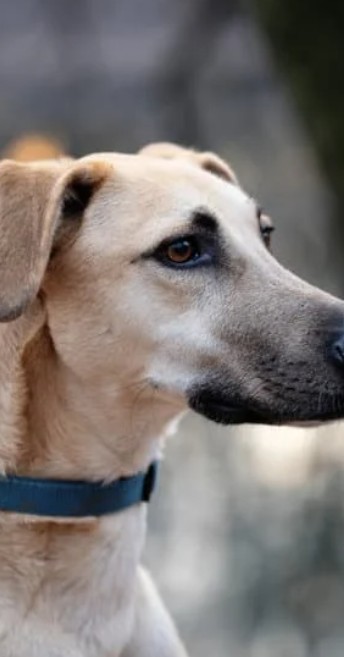
They don’t cling—
They calibrate.
This breed feels deeply but quietly. They study your mood, your posture, your inner atmosphere. Their loyalty is not loud—it is discerning, stable, and built on trust, not demand.
What Doesn’t Work: High-Intensity Social Activities
Dog parks often prove stressful rather than enjoyable for Sloughis. The chaotic energy, unpredictable social interactions, and constant stimulation exceed their comfort threshold. A Sloughi in a dog park often positions themselves at the periphery, watching rather than engaging, or seeks to leave entirely.
Environments and Activities That Overwhelm Sloughis:
- Busy dog parks: Chaotic energy, rough play, and unpredictable interactions
- Group training classes: Noise, proximity to many dogs, constant performance expectations
- Crowded public events: Festivals, markets, or gatherings with dense crowds
- High-energy play dates: Dogs with overwhelming play styles or persistent demands
- Doggy daycare: All-day exposure to social chaos without retreat options
- Agility competitions: High-pressure performance environments with audience noise
- Pet store visits: Narrow aisles, strong smells, and unpredictable encounters
- Children’s events: High-pitched voices, erratic movement, and grabbing hands
Similarly, group training classes designed for high-energy, socially enthusiastic breeds can be overwhelming. The noise, the expectation of constant performance, the proximity of other dogs and handlers—all of these factors can trigger withdrawal rather than learning.
This doesn’t mean your Sloughi can’t enjoy the company of other dogs. It means they prefer calm, predictable social interactions with compatible personalities in controlled environments. One or two well-matched canine companions met regularly in quiet spaces often works beautifully. Twenty unknown dogs in an echoing training facility does not.
🌙 The Sloughi Training Journey: From Silence to Soul Connection
Understanding the 8 Phases of Building Trust with North Africa’s Most Sensitive Sighthound
Phase 1: The Observation Window
First 2-4 Weeks – Let Them Watch
🧠 What’s Happening in Their Mind
Your Sloughi is mapping every detail of their new environment—exits, routines, your emotional patterns, and household rhythms. This isn’t passivity; it’s deep cognitive processing that lays the foundation for all future learning.
⚡ What You’ll Notice
• They position themselves where they can see you without interaction
• They seem “distant” but track your every move
• They respond to patterns faster than you expect
• They withdraw when approached directly or enthusiastically
✅ Your Action Plan
Establish predictable routines immediately—same meal times, walk schedules, and bedtime rituals. Move calmly through your home, avoid direct approaches, and let them come to you on their terms. This is not the time for training; this is the time for trust-building through consistency.
Phase 2: The First Micro-Connections
Weeks 4-8 – Reading the Whispers
🧠 Trust Begins in Subtlety
This phase reveals the first signs of connection—soft eye contact lasting 2-3 seconds, choosing to rest in the same room as you, slight tail movements when you enter. These micro-signals are your Sloughi’s way of saying “I’m beginning to trust you.”
⚡ Signals to Watch For
• Ears soften when you speak (not pinned, not fully forward)
• They follow you room to room but maintain distance
• They accept treats from your hand with gentle mouths
• Their body relaxes slightly in your presence
✅ Building on This Foundation
Begin introducing your name as a positive marker—say it softly when offering meals or starting walks. Use curved approaches rather than direct frontal ones. Practice the NeuroBond principle: your calm emotional state creates their capacity to engage.
Phase 3: Learning the Vocabulary of Silence
Months 2-4 – Communication Without Words
🧠 Their Communication System Emerges
By now, you’re beginning to read their subtle language—the meaning behind ear positions, weight shifts, and gaze quality. Your Sloughi is also learning to read you with remarkable precision, noticing emotional states you don’t realize you’re broadcasting.
⚡ Two-Way Understanding Develops
• They anticipate routines before you signal them
• They respond to your body orientation more than your words
• They show clear preferences for specific times and activities
• They begin to “check in” with brief glances during walks
✅ First Training Windows
Introduce basic directional cues using body language first, words second. Five-minute training sessions in quiet spaces, ending on success. The Invisible Leash begins here—they follow your clear energy and direction rather than verbal commands or physical pressure.
Phase 4: Athletic Expression & True Self
Months 4-6 – Witnessing Their Soul
🧠 The Transformation Moment
When your Sloughi finally has space to run—truly run—you’ll see something profound. That calm, reserved dog transforms into a creature of pure athletic grace, reaching speeds that seem impossible. This is who they really are beneath the quiet exterior.
⚡ The Balanced Sloughi Emerges
• They actively seek opportunities for visual tracking and pursuit
• Post-run relaxation is deeper and more trusting
• They show increased willingness to engage in training
• The bond strengthens through shared athletic experiences
✅ Exercise Integration
Establish regular access to safe running spaces—fenced areas, lure coursing opportunities, or long hiking trails. Notice how fulfilled exercise creates a more engaged, responsive Sloughi. Physical expression opens emotional connection.
⚠️ Critical Safety Note
Never underestimate their chase drive. Even the best-trained Sloughi can override all commands when prey is sighted. Secure fencing is non-negotiable—invisible fences will not contain them when their hunting instinct activates.
Phase 5: Navigating Sensitivity Challenges
Months 6-12 – Understanding Thresholds
🧠 When Sensitivity Becomes Visible
As your relationship deepens, you’ll inevitably encounter moments when your Sloughi’s threshold is exceeded—perhaps during a stressful vet visit, a chaotic household event, or an overly intense training session. How you handle these moments determines whether trust deepens or fractures.
⚡ Recognizing Pre-Shutdown Signals
• Increased blinking rate or averted gaze
• Repeated weight shifts or positioning changes
• Lip licking, yawning, or other stress signals
• Stillness that feels tense rather than relaxed
• Seeking distance or barriers between you
✅ Threshold Management
Learn to recognize their early signals and respond immediately by reducing pressure. End training sessions before they shut down. Create escape routes in challenging situations. Remember: preventing shutdown is exponentially easier than recovering from it.
Phase 6: Social World Navigation
Year 1-2 – Finding Their Comfort Zone
🧠 The Social Sloughi Reality
Your Sloughi will likely never be the social butterfly of the dog world, and that’s perfectly fine. This phase is about accepting their social preferences while gently expanding their comfort zone—not changing who they fundamentally are.
⚡ What Success Looks Like
• Tolerating (not necessarily enjoying) necessary social situations
• One or two canine friends they genuinely appreciate
• Calm behavior around strangers without needing to interact
• Choosing to observe social situations from a comfortable distance
✅ Socialization Strategy
Focus on quality over quantity. Brief, positive encounters with calm individuals beat lengthy exposure to chaotic environments. Let them set the pace for social engagement. Protect them from well-meaning but overwhelming interactions.
Phase 7: The Mature Partnership
Years 2-4 – Deep Understanding
🧠 Soul Recall in Action
By this stage, your Sloughi has accumulated years of emotional memories with you. Every calm response, every respected boundary, every threshold honored—these experiences have built a foundation of trust that runs deeper than any training protocol could achieve.
⚡ The Mature Sloughi Shows
• Confident independence balanced with genuine connection
• Voluntary proximity and synchronized movement
• Clear communication about needs and boundaries
• Relaxed trust that requires no constant reinforcement
• Moments of soft affection on their own terms
✅ Maintaining the Bond
Continue honoring what you’ve learned about their communication style. Maintain the routines that create security. Respect their need for both athletic expression and quiet recovery. The relationship is now a dance you both know by heart.
Phase 8: The Senior Years – Honoring Wisdom
Years 8+ – Grace and Gratitude
🧠 The Gift of Complete Trust
Senior Sloughis often reveal a level of relaxation and trust that younger dogs cannot. They’ve spent years with you, learning that you understand their language, respect their boundaries, and meet their needs. This phase can be profoundly beautiful.
⚡ Changes to Honor
• Increased need for warmth and comfortable resting areas
• Shorter exercise sessions but still consistent movement
• Possible anxiety if vision or hearing diminishes
• Even greater reliance on predictable routines
• More frequent health monitoring needed
✅ Senior Care Priorities
Your ability to read their subtle signals becomes crucial for detecting pain or discomfort early. Maintain routines even more consistently. Adapt your home for their changing needs. Let them guide the pace of activities. These years are about honoring all they’ve given you.
🔍 Sloughi vs. Other Sighthounds: Understanding the Differences
Sloughi vs. Greyhound
Sensitivity: Sloughis are significantly more emotionally sensitive and require quieter environments. Greyhounds are generally more adaptable to household activity.
Training: Greyhounds respond better to conventional repetition; Sloughis need pattern-based, low-pressure approaches.
Sloughi vs. Saluki
Observation Style: Both are observers, but Sloughis are even more reserved in expressing affection. Salukis may show slightly more overt bonding behaviors.
Social Needs: Both prefer calm environments, but Sloughis tend toward even greater social selectivity.
Sloughi vs. Whippet
Size & Impact: Whippets’ smaller size makes them more adaptable to varied living situations. Sloughis need more space for safe running.
Temperament: Whippets are often more demonstrative and adaptable; Sloughis maintain greater emotional distance.
Sloughi vs. Afghan Hound
Independence: Both value autonomy, but Afghan Hounds can be more aloof without the same depth of subtle connection that Sloughis offer.
Maintenance: Afghans require extensive coat care; Sloughis are low-maintenance physically but high-maintenance emotionally.
Sloughi vs. Borzoi
Communication: Borzois can be more emotionally expressive. Sloughis communicate through more subtle, easily-missed signals.
Climate: Borzois handle cold well with thick coats; Sloughis need significant cold-weather protection due to minimal body fat.
Common Sighthound Traits
All Share: High prey drive, visual tracking excellence, deep-chested bloat risk, anesthesia sensitivity, and preference for soft resting surfaces.
Sloughi Distinction: Most sensitive, most subtle, highest need for emotional calm.
⚡ Quick Reference: The Sloughi Training Formula
Observation Time = 2× Training Time
Processing Breaks = 3-5 seconds after every cue
Session Length = 5-10 minutes maximum
Recovery Time = 2-4 hours post-exercise or training
Verbal Cues = Say once, then wait—repetition dilutes meaning
Success Ratio = 80% success rate before adding complexity
Social Exposure = Brief, positive, and on their terms
Routine Consistency = Non-negotiable—patterns create security
🧡 The Sloughi Soul: Where Silence Speaks Loudest
Working with a Sloughi teaches us that the NeuroBond—that deep emotional connection between human and dog—doesn’t require constant demonstration to exist profoundly. Their quiet presence, their synchronized movement beside you, their choice to rest where they can observe you—these are declarations of trust as powerful as any tail wag.
The Invisible Leash finds its truest expression with Sloughis. There is no physical management, no verbal control, no constant commanding—only clear energy, consistent direction, and emotional coherence. They teach us that leadership is about creating space for another soul to choose connection, not demanding it.
Through Soul Recall, we understand why patience matters so profoundly with this breed. Every interaction, every threshold respected, every moment of understanding—these become the emotional memories that shape their willingness to trust, to engage, to reveal their true selves. Rush the process, exceed their capacity, ignore their signals, and those memories create distance instead of connection.
The Sloughi doesn’t ask you to be louder, more energetic, or more demanding. They ask you to be quieter, more observant, more emotionally consistent. In teaching you to slow down and listen to whispers, they offer something rare: the opportunity to discover that the most profound connections often exist in the spaces between words, in the shared silence that speaks of complete understanding.
© Zoeta Dogsoul – Where neuroscience meets soul in dog training
The Recovery Period: Honoring Downtime
After any significant activity—physical exercise, social interaction, training session, or novel experience—Sloughis need extended recovery time. This isn’t laziness; it’s how they process and integrate experiences.
You might notice your Sloughi seeks a quiet spot, sometimes sleeping deeply for hours after an outing. This deep rest serves essential psychological and physiological functions. Forcing interaction during these recovery periods or interpreting this withdrawal as problematic misunderstands their fundamental needs.
Nutritional Recommendations: Fueling Sensitive Systems
The Metabolic Reality of Sighthounds
Sloughis, like all sighthounds, have unique metabolic characteristics that influence their nutritional needs. Their low body fat percentage, efficient metabolism, and athletic build require careful attention to diet quality and composition.
Core Nutritional Guidelines for Sloughis:
- High-quality protein sources: Named meats (chicken, lamb, beef, fish) as primary ingredients
- Moderate fat content: Sufficient for energy but not excessive given their lean build
- Digestible carbohydrates: Easily processed grains or grain-free alternatives if sensitivities exist
- Minimal fillers: Avoid foods heavy in by-products, corn, wheat, or soy
- Appropriate portion sizes: Smaller, more frequent meals reduce bloat risk
- Fresh water access: Critical for their efficient metabolism and desert heritage
- Gradual food transitions: 7-10 day transition periods when changing foods
- Individual response monitoring: What works for one Sloughi may not suit another
Lean protein priority: High-quality protein sources support their muscular build and active lifestyle. Look for named meat proteins (chicken, lamb, beef, fish) as primary ingredients rather than meat by-products or excessive grain fillers.
Digestive sensitivity considerations: Many Sloughis exhibit sensitive digestive systems, possibly related to their overall sensitivity profile. Foods that cause no issues in other breeds might trigger upset stomachs, loose stools, or other digestive disruption in Sloughis. Introduction of new foods should happen gradually, and attention to individual response is essential.
Energy modulation: Sloughis need sufficient calories to support their activity level, but they’re not continuous grazers. Many do well with scheduled feeding times that align with their routine—remember, pattern and predictability matter to this breed in every aspect of their life.
Temperature and feeding: In cold weather, Sloughis with their minimal body fat may benefit from slightly increased caloric intake. In hot weather, they may eat less—this is often normal, though any significant appetite change warrants veterinary consultation.
What Your Sloughi’s Body Tells You
Because Sloughis carry so little excess weight, any change in body condition is immediately visible. This makes body condition monitoring straightforward:
Healthy Sloughi Body Condition Indicators:
- Rib visibility: Easily felt but not prominently visible under normal lighting
- Waist definition: Clear tuck when viewed from above and from the side
- Hip bone subtlety: May be slightly visible in very lean individuals without being prominent
- Spine feel: Easily palpable but not protruding sharply or visibly jutting
- Muscle definition: Visible muscle tone in thighs and shoulders without gauntness
- Energy levels: Sustained energy appropriate for age and activity level
- Coat quality: Smooth, glossy coat without dullness or excessive shedding
- Abdominal contour: Natural tuck that flows smoothly from ribs to hips
Individual variation exists, so work with a veterinarian familiar with sighthounds to establish your specific dog’s ideal condition rather than applying generic weight charts.
The Stress-Nutrition Connection
Here’s something many Sloughi owners discover: when their dog is stressed, eating patterns often change before behavior does. A Sloughi who suddenly becomes picky, skips meals, or shows digestive upset may be signaling emotional overwhelm before they show obvious behavioral signs.
This makes nutritional patterns another communication channel—one more subtle signal in the Sloughi’s quiet language of wellbeing.
Health Concerns: Vigilance for the Stoic
The Challenge of Quiet Pain
Sloughis present a particular challenge in health monitoring because their naturally reserved demeanor can mask discomfort or pain. A breed that shows big behavioral changes when unwell is easy to read; a breed that becomes slightly quieter or a bit more still requires much closer attention.
Common health concerns in Sloughis include:
Breed-Specific Health Issues to Monitor:
- Progressive Retinal Atrophy (PRA): Genetic vision loss requiring regular ophthalmologist screening
- Anesthesia sensitivity: Requires veterinarians experienced with sighthound metabolism
- Thyroid dysfunction: Hypothyroidism with subtle behavioral and physical symptoms
- Gastric dilatation-volvulus (bloat): Life-threatening emergency common in deep-chested breeds
- Heart conditions: Some lines show predisposition to cardiac issues
- Autoimmune conditions: Occasional reports of immune-mediated disorders
- Sensitivity to medications: Reactions to common drugs that don’t affect other breeds
- Cold weather vulnerability: Low body fat increases hypothermia risk
Progressive Retinal Atrophy (PRA): A genetic condition affecting vision that progresses gradually. Because Sloughis rely so heavily on visual processing, any vision impairment can significantly impact their confidence and behavior. Early detection through regular veterinary ophthalmologist visits is crucial.
Anesthesia sensitivity: Sighthounds in general show increased sensitivity to certain anesthetics and medications due to their low body fat and metabolic differences. Any veterinary procedure requiring sedation or anesthesia should be performed by professionals experienced with sighthound physiology.
Thyroid function: Hypothyroidism occurs with some frequency in the breed and can manifest in subtle ways—slight weight gain, coat changes, or behavioral shifts like increased lethargy or seeming depression. Because these signs overlap with the Sloughi’s naturally calm demeanor, they’re easy to miss.
Bloat/GDV risk: Like many deep-chested breeds, Sloughis face increased risk of gastric dilatation-volvulus (bloat). This life-threatening condition requires immediate veterinary intervention. Risk reduction strategies include feeding smaller meals rather than one large meal, avoiding exercise immediately after eating, and staying alert to any signs of distress after meals.
Bloat Prevention and Warning Signs:
Prevention strategies:
- Feed 2-3 smaller meals instead of one large meal daily
- Avoid exercise for 1-2 hours before and after meals
- Use slow-feed bowls if your Sloughi eats too quickly
- Minimize stress and excitement around feeding times
- Avoid elevated food bowls (contrary to old advice)
- Keep fresh water available but limit large amounts immediately after meals
- Monitor for gulping air while eating or drinking
Emergency warning signs requiring immediate veterinary care:
- Distended, hard, or bloated abdomen
- Unproductive retching or attempts to vomit
- Excessive drooling or panting
- Restlessness and inability to get comfortable
- Pale gums or rapid heart rate
- Weakness or collapse
Reading Micro-Signs of Unwellness
Given the Sloughi’s tendency to internalize rather than externalize distress, learning to recognize subtle signs of health issues becomes crucial:
- Change in resting patterns: Seeking different resting spots, difficulty settling, or restless positioning during sleep
- Micro-flinching: Small reactions to touch in areas that previously didn’t elicit response
- Gait subtleties: Minor changes in movement—slightly shorter stride, head carried differently, or reduced willingness to jump
- Eye expression changes: Duller eye appearance, increased blinking, or avoidance of bright light
- Social withdrawal: Even more distance than usual, especially from trusted people
- Stillness quality shift: The difference between relaxed stillness and tense stillness—watch for muscle tension even when the dog appears calm
The Stress-Physical Health Spiral
Remember that for sensitive dogs, chronic stress manifests physically. A Sloughi living in an environment that constantly exceeds their emotional threshold may develop digestive issues, skin problems, or weakened immune response—not because of physical disease processes, but because sustained stress affects every body system.
This means health management for Sloughis must include emotional environment assessment. Sometimes the best medicine is quieter mornings, more predictable routines, and fewer demands for social performance. 🧡
Lifestyle & Environment: Creating Sanctuary
The Ideal Sloughi Home
If you’re considering whether a Sloughi fits your life, or if you’re wondering why your Sloughi seems perpetually unsettled, environment matters profoundly.
Environmental Factors That Support Sloughi Wellbeing:
- Predictable daily routines: Consistent meal times, walk schedules, and household rhythms
- Calm baseline energy: Homes where peace is the default, not the exception
- Quiet retreat spaces: Dedicated areas where they can withdraw completely undisturbed
- Visual observation points: Window access for watching the world safely
- Secure outdoor areas: Fully fenced yards with no gaps or low points
- Climate-appropriate shelter: Protection from cold; access to shade and water in heat
- Low visitor frequency: Homes where strangers aren’t constantly arriving
- Minimal household chaos: Stable rather than turbulent emotional environments
Calm household energy: Sloughis thrive in homes where chaos isn’t the default. This doesn’t mean silence at all times, but it does mean predictable rhythms, reasonable noise levels, and emotional stability. Homes with constant drama, frequent visitors, or high-energy activity can keep a Sloughi in a state of mild stress that never fully resolves.
Space for withdrawal: Your Sloughi needs spaces where they can retreat completely—areas where they won’t be disturbed, where children won’t approach unexpectedly, where they can truly rest. A crate or dog bed in a quiet room often becomes their sanctuary.
Visual access to the world: These are visual creatures who enjoy observing. A window where they can watch the world while remaining safely inside satisfies their need to scan and process environmental information. Many Sloughis spend hours simply watching, not with anxiety, but with engaged interest.
Secure outdoor space: Given their sight-hound chase instinct, secure fencing is non-negotiable. A Sloughi who spots prey can accelerate to remarkable speeds in seconds, and their focus during pursuit overrides all training. Invisible fencing doesn’t work for this breed—if they’re motivated by movement, they’ll run through it.
Climate considerations: With minimal body fat and thin coats, Sloughis need protection from cold weather. Coats for outdoor time in winter aren’t vanity—they’re necessity. Conversely, their desert heritage means they generally tolerate heat well, though shade and water remain essential.
Family Life Considerations
Sloughis can integrate beautifully into family life, but certain factors influence success:
Children: Sloughis often do well with calm, respectful children who understand the importance of quiet approach and gentle interaction. Loud, unpredictable, or rough play typically drives Sloughis away. Teaching children to read and respect the dog’s signals becomes essential.
Guidelines for Sloughis and Children:
- Age considerations: Generally better with children 8+ who understand boundaries
- Interaction rules: No chasing, grabbing, or cornering the dog ever
- Space respect: Children must honor when the dog retreats to their safe space
- Gentle approach: Teach curved approaches and soft voices around the dog
- Reading signals: Children learn to recognize when the dog wants distance
- Supervised interactions: Always monitor child-dog interactions, especially initially
- Predictable behavior: Establish consistent rules so the dog knows what to expect
- Quiet play: Encourage calm activities near the dog rather than chaotic games
Other pets: With proper introduction and management, Sloughis can coexist peacefully with other dogs, especially other calm breeds. However, their prey drive means small animals—cats, rabbits, small dogs—may trigger chase instinct unless careful management and early socialization establish them as family members rather than prey.
Work-from-home advantages: Sloughis often thrive with owners who are home regularly, not because they need constant interaction, but because they value predictable presence and established routine. The work-from-home owner provides the stability Sloughis crave while respecting their need for independent space.
When Sloughis Struggle
Certain lifestyle factors consistently prove difficult for Sloughis:
Lifestyle Factors That Create Stress for Sloughis:
- Frequent relocations: Moving disrupts established patterns and safe spaces
- Unpredictable schedules: Irregular meal times, walks, or routines create constant uncertainty
- Boarding facilities: Noisy kennels with constant activity and no retreat options
- Performance pressure: Expectations for trick demonstrations or obedience shows
- Urban intensity: Constant sirens, traffic, crowds, and sensory bombardment
- Minimal outdoor access: Apartments without nearby quiet spaces for exercise
- Social demands: Expectations to greet visitors or tolerate handling by strangers
- Training incompatibility: Methods focused on repetition and compliance over understanding
None of these factors makes Sloughi ownership impossible, but all require conscious management and realistic expectation adjustment.
Understanding Shutdown: When Silence Becomes Concern
The Protective Silence
One of the most misunderstood aspects of Sloughi behavior is shutdown—that moment when they seem to leave the interaction entirely, becoming still, unresponsive, and internally focused. This isn’t defiance. It’s not stubbornness. It’s the final self-protective mechanism when emotional or sensory thresholds have been comprehensively exceeded.
Shutdown happens when:
Common Shutdown Triggers:
- Ignored communication attempts: Multiple subtle signals went unrecognized or unaddressed
- Sustained pressure: Repeated commands, corrections, or demands without processing breaks
- Overwhelming environments: Noise, crowds, or chaos that exceed sensory capacity
- Frightening experiences: Situations that felt dangerous with no clear escape route
- Physical restraint: Being held, cornered, or prevented from creating distance
- Emotional flooding: Too much excitement, tension, or unpredictability at once
- Cumulative stress: Small stressors building over days or weeks without recovery time
- Training intensity: Sessions that lasted too long or demanded too much too quickly
Recognizing Pre-Shutdown Signals
The key to preventing full shutdown is recognizing the cascade of signals that precedes it:
Early stage: Subtle disengagement—gaze aversion that lasts slightly longer, weight shifts becoming more frequent, slight increase in blinking rate, ears held slightly back rather than in neutral position.
Middle stage: More obvious withdrawal—turning head or body away, attempting to create physical distance, complete stillness instead of relaxed positioning, possible lip licking or yawning (stress signals).
Late stage: Obvious avoidance—actively moving away, seeking barriers or hiding spots, complete refusal to engage, or conversely, complete freezing in place with muscle tension visible.
Shutdown: Total withdrawal—present physically but mentally and emotionally absent, non-responsive to most stimuli, body held with tension or completely frozen, eyes with a distant quality.
The Recovery Process
Once a Sloughi has shut down, recovery requires time and space, not more pressure. Attempting to “fix” the situation immediately typically deepens the withdrawal.
Instead:
Shutdown Recovery Protocol:
- Immediate pressure removal: Stop whatever triggered the shutdown—end training, remove from situation
- Physical space provision: Allow retreat to their safe space without following or hovering
- No forced reassurance: Your presence might feel like continued pressure; give them solitude
- Extended recovery time: Hours to days may be needed before normal interaction resumes
- Lower expectations: Reduce all demands for days after a shutdown episode
- Routine simplification: Return to the most basic, predictable daily patterns
- Trigger identification: Analyze what exceeded their threshold to prevent repetition
- Trust rebuilding: Re-establish connection through their most comfortable activities
- Professional consultation: Consider working with a behavior specialist familiar with sensitive breeds
Provide immediate relief: Remove whatever pressure triggered the shutdown—stop the training, end the social interaction, reduce environmental stimulation.
Give space: Allow your Sloughi to retreat to their safe space without following or attempting to reassure them. Your presence might feel like continued pressure.
Reduce expectations: For hours or even days after a shutdown episode, lower your expectations for interaction and training. Focus on rebuilding trust through predictable routine and calm co-presence.
Examine the cause: What exceeded their threshold? Was it environmental, emotional, physical, or a combination? Understanding the trigger prevents repetition.
Rebuild slowly: Re-establish connection through the activities your Sloughi finds easiest and most comfortable—perhaps quiet walks, or simply being in the same space without demands.
This is where the essence of Zoeta Dogsoul becomes most apparent—the understanding that relationship transcends obedience, that communication requires more listening than commanding, and that true connection respects the deep sensitivity that makes each soul unique.
Senior Care: Honoring the Quiet Years
The Aging Sloughi
As Sloughis move into their senior years, typically around eight or nine years old, their already calm demeanor often becomes even more settled. For owners who’ve learned to read their subtle communications, these years can be profoundly beautiful—watching a soul who’s finally completely comfortable, who trusts completely, who no longer needs to maintain even minimal vigilance.
Senior Sloughi Care Essentials:
- Adjusted exercise: Shorter, more frequent walks instead of long, intense outings
- Joint support: Orthopedic beds, ramps for furniture, supplements as recommended by vets
- Enhanced warmth: Extra coats for outdoors, heated beds for indoor comfort
- Gentler handling: Increased sensitivity to touch in arthritic or painful areas
- Vision/hearing accommodation: Approaching from visible angles, using more touch cues
- Dental attention: Regular dental care to prevent painful tooth issues
- Routine preservation: Even more consistent schedules as they age
- Patience with changes: More time needed for processing, responding, or moving
- Regular health monitoring: More frequent vet visits to catch age-related issues early
Energy shifts: Senior Sloughis need less intense exercise but still benefit from gentle, consistent movement. Shorter, more frequent walks often work better than longer outings. Watch for any reluctance to walk or jump—this may indicate arthritis or other age-related discomfort.
Sensory changes: Vision and hearing may diminish, which can actually prove more distressing for Sloughis than for many breeds, given their reliance on visual processing. A Sloughi losing vision may become more anxious or vigilant, trying to compensate for their primary sense’s decline.
Comfort needs: Already sensitive to cold, senior Sloughis need even more environmental protection. Orthopedic beds, warm sleeping areas, and protective clothing become increasingly important.
Routine becomes sacred: While routine always mattered to your Sloughi, in their senior years, predictability provides even more security. Changes that a younger Sloughi might manage with mild stress can genuinely distress an older one.
The Gift of Knowing Them Deeply
One beautiful aspect of Sloughi ownership reveals itself in these later years: because you’ve spent years learning to read subtle signals, you can detect small changes that indicate discomfort, pain, or illness long before obvious symptoms appear. This allows early intervention and pain management that significantly improves quality of life.
Your senior Sloughi trusts you to understand what they need without them having to ask loudly. They’ve spent their life communicating in whispers—don’t make them shout now.
Is the Sloughi Right for You? Understanding the Match
Who Thrives With a Sloughi
Sloughis are extraordinary dogs, but they’re not the right match for everyone. Understanding whether this breed fits your personality, lifestyle, and expectations prevents frustration for both human and dog.
You might thrive with a Sloughi if you:
Personality Traits That Match Well with Sloughis:
- Value quiet companionship: Prefer presence over constant interaction
- Appreciate subtlety: Can read and respond to micro-communications
- Have observational patience: Comfortable with dogs who watch before engaging
- Enjoy predictable rhythms: Naturally create and maintain consistent routines
- Respect autonomy: Don’t need constant obedience demonstrations or control
- Provide athletic outlets: Can offer secure space for running and visual activities
- Embrace calm presence: Want a dog who is with you without being demanding
- Understand connection variety: Recognize that attachment has many expressions
- Think before reacting: Process situations calmly rather than with immediate intensity
- Value depth over display: Appreciate bonds that exist beneath the surface
Who Might Struggle
Conversely, a Sloughi might not fit if you:
Expectations That Create Sloughi-Owner Mismatch:
- Need enthusiastic greetings: Expect full-body wiggles and obvious excitement when you arrive home
- Want immediate compliance: Require instant response to every command given
- Enjoy performance activities: Love showing off tricks and obedience routines to others
- Need constant affection: Require frequent physical contact and overt displays of love
- Have chaotic households: Live with unpredictable schedules and high-energy environments
- Frequent busy social spaces: Regularly attend dog parks, pet events, or crowded gatherings
- Expect rapid training progress: Want quick, obvious results from training efforts
- Interpret reserve as rejection: Feel hurt when dogs aren’t constantly seeking attention
- Prefer highly biddable breeds: Most comfortable with dogs who live to please
- Use traditional training methods: Rely on repetition-based, correction-heavy techniques
The Learning Curve
Every Sloughi owner goes through a learning curve. You might spend the first months wondering if your dog even likes you, frustrated by their seeming indifference, confused by their non-response to training techniques that worked with other breeds.
But somewhere in that process, if you’re paying attention, something shifts. You notice the slight tail movement when you enter the room—subtle, but it’s there. You realize your Sloughi positions themselves where they can see you, even when they’re not seeking interaction. You catch that soft eye contact that wasn’t happening before. You understand that when they choose to rest beside you, they’re saying something profound in their quiet language.
That moment of understanding—when you realize you’ve been communicating all along, just not in the language you expected—that’s the beginning of something remarkable. 🧡
Conclusion: The Wisdom of Silence
The Sloughi teaches us something essential about connection: that presence doesn’t require performance, that understanding runs deeper than words, and that the most profound relationships often exist in the space between demands.
These North African sighthounds, shaped by millennia in demanding landscapes, bring a cognitive and emotional style that challenges conventional dog training wisdom. They ask us to slow down, to observe before acting, to communicate with clarity and calm rather than volume and repetition.
Living with a Sloughi successfully means becoming fluent in subtlety—learning to read ear positions and weight shifts, understanding that stillness can mean deep processing rather than disengagement, recognizing that their reserved affection runs as deep as any more obviously demonstrative breed.
Essential Sloughi Truths to Remember:
- Silence is communication: Quiet doesn’t mean disengaged—they’re constantly observing and processing
- Sensitivity is strength: Their awareness of subtle cues makes them responsive to clear, calm guidance
- Observation precedes action: They learn by watching patterns, not through repetitive drilling
- Reserve protects depth: Their emotional distance isn’t coldness—it’s self-regulation
- Stillness has meaning: Freezing signals threshold exceeded, not stubbornness
- Connection varies: Proximity and synchronized movement express attachment as much as overt affection
- Energy reads first: They respond to your emotional state before your words or actions
- Routine provides security: Predictability allows them to relax and engage more fully
It means embracing the Invisible Leash principle in its purest form: leadership through emotional coherence and clear direction rather than force or constant verbal management. It means understanding that Soul Recall—the emotional memory of every interaction—matters more than any individual training session.
Most importantly, it means recognizing that the NeuroBond you build with a Sloughi looks different from bonds with other breeds, but reaches just as deep. Perhaps deeper, because it’s built not on their performance for you, but on your willingness to meet them where they are, to honor their nature, and to value what they offer: the gift of quiet companionship, observant presence, and a soul that, once it trusts you, offers a loyalty so profound it needs no announcement.
The Sloughi doesn’t need to prove their worth through constant display. They simply are—elegant, sensitive, intelligent, and fundamentally themselves. The question isn’t whether they’re the right dog. The question is whether you’re ready to learn their language, to honor their silence, and to discover that sometimes the quietest voices carry the deepest wisdom.
That balance between observation and action, between independence and connection, between science and soul—that’s what makes the Sloughi extraordinary. And once you understand them, once you’ve learned to communicate in whispers rather than shouts, you’ll find that they’ve been speaking to you all along. You just needed to learn how to listen. 🧠










