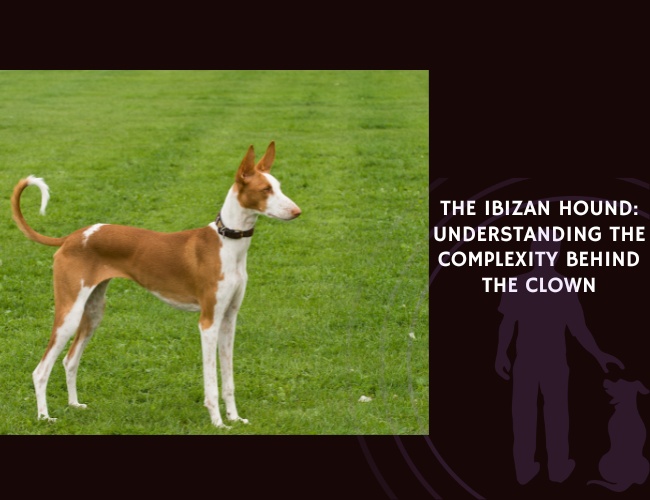
When you first meet an Ibizan Hound, you might find yourself laughing. Their playful antics, theatrical movements, and seemingly endless energy create an impression of a carefree, easygoing companion. But beneath this enchanting performance lies something far more intricate—a sensitive, intelligent sighthound whose clownish exterior often masks a deeply thoughtful interior world.
The Ibizan Hound carries within its elegant frame thousands of years of hunting heritage from the rocky Mediterranean terrain of Ibiza and the Balearic Islands. These dogs were bred not just to chase, but to think independently, to make split-second decisions across challenging landscapes, and to pursue prey with unwavering focus. This ancient purpose shaped every aspect of who they are today, from their cognitive patterns to their emotional regulation strategies.
What makes the Ibizan truly fascinating is the contrast between what you see and what’s actually happening beneath the surface. That silly bounce? It might be joy—or it might be a sophisticated coping mechanism. That theatrical play bow? Perhaps genuine invitation, or possibly emotional deflection. Understanding this breed means learning to read beyond the performance, to recognize the sensitive soul navigating a world that often misunderstands its complexity.
The Sighthound Mind: Independence Built Into Every Fiber
Your Ibizan Hound’s approach to the world differs fundamentally from many companion breeds, and this difference stems directly from centuries of selective breeding for autonomous hunting. While herding dogs were developed to take constant direction from shepherds, and retrievers to wait for commands, the Ibizan was designed to make independent decisions in real-time.
Picture the original context: open Mediterranean terrain, rocky hillsides, rabbits darting between ancient stone walls. The hunter needed a dog who could spot movement from a distance, assess the situation instantly, calculate pursuit angles, and execute the chase—all without waiting for human input. This cognitive architecture doesn’t simply disappear when an Ibizan moves from hunting grounds to your living room.
This independence manifests in what many owners initially perceive as selective hearing or stubbornness. Your Ibizan isn’t being defiant when they ignore your third repetition of “sit.” They’re genuinely questioning the purpose. Why sit again when they’ve already demonstrated they understand the concept? To them, meaningless repetition feels arbitrary, like being asked to solve the same simple math problem twenty times in a row.
Their responsiveness flows through different channels than you might expect. An Ibizan often registers your body language, spatial positioning, and movement patterns more acutely than verbal commands. Visual cues they naturally read include:
- Weight shifts and body positioning: A slight lean forward signals forward movement; stepping back creates space
- Walking pace changes: Slowing your gait often slows theirs; quickening pace can energize them
- Gaze direction: Where you look often indicates where they should focus attention
- Hand gestures and arm movements: Open palms, pointing, sweeping motions communicate direction more clearly than words
- Shoulder orientation: Turning your shoulders away can release pressure; facing them directly creates engagement
- Spatial proximity: Your distance from them regulates their arousal—closer proximity increases intensity
This visual intelligence shaped their survival for generations, allowing them to coordinate with hunters across vast distances where verbal commands wouldn’t carry.
The prey pursuit sequence—lock on, scan, accelerate—creates what behaviorists call “target fixation.” When your Ibizan’s visual system registers movement, particularly something small and fast, their attention narrows to an intense, singular focus. This isn’t disobedience; it’s neurology. The same neural pathways that made them exceptional hunters can make them seem unreliable in daily training contexts. That squirrel across the park isn’t just interesting—it triggers ancient pursuit circuits that temporarily override other considerations.
Decoding the Clown: Performance as Complex Communication
You’ve probably noticed how your Ibizan can transform into a comic performer at seemingly random moments. Those exaggerated play bows, the bouncy sideways movement, the theatrical pouncing on toys—it’s endearing, entertaining, and often hilarious. But this “clown layer” serves multiple functions beyond simple joy, and understanding these functions changes how you interpret and respond to the behavior.
Genuine play and arousal regulation certainly occur. Movement helps Ibizans process energy and emotion, creating a physical outlet for their naturally high SEEKING and PLAY systems. When your dog zooms around the yard after being inside all morning, that’s healthy self-regulation through movement. The silliness releases accumulated energy in a socially acceptable way.
However, clowning frequently emerges as displacement behavior—a deflection strategy when your Ibizan feels pressure, perceives emotional demand, or wants to create distance without direct confrontation. Common triggers for performance clowning include:
- Training sessions that feel too long or repetitive: When mental processing capacity depletes
- Visitors focusing too intently on petting or interaction: Overwhelming social attention
- Household emotional tension: Arguments, stress, or intense human emotions
- New or unpredictable situations: Uncertainty about what’s expected
- Direct eye contact or “face-to-face” human positioning: Feels confrontational to some Ibizans
- Being asked to do something they’re unsure about: Deflects from the difficult request
- Veterinary exams or grooming sessions: Coping with handling they find invasive
- After being corrected or perceiving disapproval: Attempting to “fix” the social tension
The performance can function as a social buffer, a way to diffuse situations that feel overwhelming while maintaining friendly engagement.
Many owners inadvertently strengthen this performance pattern through well-meaning responses:
- Laughing enthusiastically at every antic: Teaches that silly behavior earns high-value attention
- Calling family members to watch the “funny” behavior: Makes performance a social event
- Filming or photographing clowning for social media: Creates anticipation and reinforcement
- Engaging in escalating play when dog gets silly: Rewards increasing arousal with interaction
- Using excited voice tones during clowning: Adds energetic fuel to the behavior
- Seeking out the “entertaining side” as the preferred interaction: Dog learns calm isn’t valued
- Interpreting all silliness as joy: Missing the stress-coping signals underneath
There’s nothing inherently wrong with enjoying your dog’s playful nature, but when performance becomes their primary strategy for managing stress or gaining attention, you’re missing opportunities to know the calmer, deeper dog underneath.
The performance also protects. By keeping interactions playful and theatrical, your Ibizan controls the emotional depth and duration of connection. It’s easier to perform than to be truly present, especially for a sensitive dog navigating a confusing social landscape.
The Sensitivity Beneath the Speed
Here’s what catches many owners off guard: beneath all that animation and energy lives one of the more emotionally sensitive sighthound breeds. The very speed and exuberance that define the Ibizan’s exterior can effectively camouflage their profound attunement to environmental and emotional subtleties.
When your Ibizan bounces and plays and zooms, it’s easy to assume robustness and resilience. But watch more carefully for these micro-signals that flash across their face before they launch into silly behavior:
- Momentary lip tension: Corners tighten or pull back slightly
- Quick gaze aversion: Sharp break in eye contact, often with slight head turn
- Split-second freeze: Brief suspension of all movement (1-3 seconds)
- Increased blink rate: Rapid blinking unrelated to light or irritation
- Subtle ear position changes: Ears pull back or flatten briefly
- Muscle tension in face or shoulders: Visible tightening before movement explosion
- Brief lip lick or nose lick: Quick self-soothing gesture
- Widened eyes with dilated pupils: Heightened alertness or concern
These subtle indicators reveal a nervous system processing information at high speed, often managing low-level stress through motion.
Your Ibizan’s sensitivity expresses through what looks like unpredictability. They oscillate between states—fully “on” with animated performance, or noticeably “off” with withdrawal and disengagement—often with less middle ground than other breeds. This isn’t moodiness; it’s a sensitive system managing stimulation through distinct operational modes. When input exceeds their processing capacity, they shift states rather than finding gradual equilibrium.
This explains the startle response you’ve probably observed. A sudden noise, an unexpected movement, and your Ibizan launches several feet in surprise. They recover quickly in the moment, bouncing back to apparent normalcy within seconds. But here’s the complexity: while they physically recover fast, they store memory traces of overwhelming experiences for remarkably long periods. That dog-reactive dog they encountered four months ago? The veterinary exam that felt invasive? Your Ibizan remembers, and those memories shape future behavior in similar contexts, creating what appears as situational anxiety or avoidance.
When overstimulation tips into overload, you’ll see signs of dysregulation that differ from healthy play:
Dysregulated Movement (Overload):
- Chaotic, random direction changes without purpose
- Inability to settle even when physically tired
- Excessive barking that escalates rather than releases
- Zoomies that seem desperate rather than joyful
- Mounting arousal that doesn’t decrease with activity
- Wild eyes with no focus or connection
Healthy Play (Self-Regulation):
- Purposeful movement with clear motivation
- Natural winding down after 5-10 minutes
- Playful vocalizations that remain controlled
- Zoomies that end with a satisfied settling
- Arousal that peaks then naturally decreases
- Bright eyes with engagement and awareness
This isn’t “bad” behavior—it’s dysregulation. Your dog’s coping capacity has been exceeded, and movement becomes the emergency release valve for a nervous system under pressure.
Reading Your Ibizan’s Stress Signals: A Practical Recognition Guide
Learning to recognize your Ibizan’s subtle communication prevents most behavioral problems before they escalate. Unlike more obvious breeds who clearly signal discomfort, Ibizans communicate through micro-expressions and small postural shifts that flash by in fractions of a second. Missing these early warnings means you’ll eventually face the louder communications—reactivity, snapping, or complete shutdown.
Early Warning Signals (Green to Yellow Zone):
These appear when your Ibizan first begins processing stress but still maintains control. Catch them here, and you can prevent escalation entirely.
- Lip tension: Watch the corners of your dog’s mouth. When relaxed, their lips sit softly, perhaps slightly parted. Under early stress, you’ll notice a subtle tightening—the lips press together more firmly, or the corners pull back slightly in what looks almost like a grimace. This tension often precedes other signals by several seconds.
- Quick gaze aversion: Your Ibizan breaks eye contact abruptly, looking away from whatever triggered discomfort. Unlike casual looking around, this movement has quality—sharp, deliberate, often accompanied by a slight head turn. They’re actively avoiding visual engagement with the stressor.
- Momentary freeze: A brief suspension of movement. Your Ibizan might be walking or sniffing, then suddenly stop all motion for one to three seconds before resuming. This micro-pause indicates processing overload—their system briefly halted to assess the situation.
- Increased blinking or squinting: Unrelated to light conditions, signals rising stress. The eyes might narrow slightly, or you’ll notice rapid blinking that differs from their normal rate.
- Tongue flicks: Quick, small tongue movements that aren’t related to eating or drinking—function as self-soothing gestures. Watch for the tongue tip briefly appearing and disappearing, sometimes repeatedly.
- Ear position shifts: Ears may pull back slightly or rotate away from the source of stress, even while head remains forward.
- Weight shifting: Subtle rocking or shifting weight from front to back legs, indicating readiness to move away.
- Slow, deliberate movements: Replacing their normal fluid motion with careful, measured steps suggests uncertainty.
Escalating Signals (Yellow to Orange Zone):
When early warnings go unheeded, your Ibizan moves to clearer communication. They’re still managing, but capacity is depleting rapidly.
- Physical distancing: Your dog actively creates space—stepping back, moving behind furniture, positioning themselves at the edge of social interactions rather than in the center. This isn’t random wandering; it’s strategic positioning for escape routes.
- Head turns and body curves: Your Ibizan literally turns away from the source of stress. Their body might curve into a C-shape, head facing away while feet remain planted. This posture communicates “I need this to stop” without confrontation.
- Performance layer intensification: Clowning, silly behavior, or excessive playfulness that seems out of context often indicates mounting pressure. When your calm Ibizan suddenly transforms into a theatrical performer during a training session or social situation, they’re likely coping through displacement behavior.
- Panting unrelated to temperature or exercise: Appears when stress hormones rise. The breathing becomes faster and shallower than normal exertion would cause.
- Stress yawning: Occurs outside of tired or wake-up contexts and functions as a stress reliever. These yawns are often bigger and more exaggerated than sleepy yawns.
- Displacement behaviors: Scratching, shaking off, or grooming behaviors that interrupt other activities serve as self-soothing rituals. Your Ibizan might suddenly scratch when they weren’t itchy, or shake their entire body as if wet when they’re dry.
- Lowered tail or tucked tail: Tail position drops from neutral or moves between legs, signaling discomfort.
- Lip licking or nose licking: Repeated, rapid licking that’s clearly not about food or taste.
- Seeking handler proximity: Attempting to hide behind you or press against your legs for security.
Critical Signals (Orange to Red Zone):
At this stage, your Ibizan’s tolerance is nearly exhausted. Immediate intervention is necessary to prevent complete collapse or defensive reaction.
- Full body stiffness: The fluid, elastic movement quality disappears, replaced by rigid, tight muscles. Their entire frame looks tense, as if bracing for impact.
- Whale eye: Showing the whites of their eyes—occurs when your Ibizan’s head faces one direction while their eyes track something else. This creates a crescent of white visible at the corners.
- Raised hackles: Along the spine or shoulders indicate high arousal, whether from fear, excitement, or overstimulation. In Ibizans, this often accompanies the transition from coping to crisis.
- Excessive or absent vocalization: Unusual for your individual dog signals distress. Some Ibizans go silent under extreme stress, while others become uncharacteristically vocal.
- Complete shutdown: Total withdrawal. Your previously animated dog becomes utterly still, unresponsive to normal cues, seemingly “checked out” from the environment. This isn’t calm—it’s overwhelm so complete that they’ve essentially shut down all systems.
- Frantic, purposeless movement: Differs from playful zoomies. This movement has a quality of desperation—random direction changes, inability to settle, movements that don’t seem to provide relief.
- Air snapping or muzzle punches: Warning behaviors showing they’re at the end of tolerance.
- Growling or showing teeth: Clear communication that they need space immediately.
- Hyper-vigilance: Constantly scanning environment, unable to focus, unable to settle even momentarily.
Context-Specific Patterns:
Certain situations trigger predictable patterns in many Ibizans. Recognizing these helps you anticipate and prevent problems.
During training sessions, watch for the sudden shift from engagement to distraction or clowning. When your Ibizan goes from focused to silly within seconds, they’ve hit their processing limit for that session. End immediately on a positive note rather than pushing through.
In social situations with unfamiliar people or dogs, notice the progression from interested approach to polite tolerance to subtle distancing. Most Ibizans have a clear social timer—they genuinely enjoy the first few minutes, tolerate the middle period, and desperately need extraction by the end. The shift from tolerance to distress happens quickly.
Around children, rapid escalation is common. Children’s unpredictable movements, high pitch, and tendency to pursue create compounding stress. Your Ibizan might show all early signals within minutes rather than the gradual progression you’d see with adult interactions.
In confined spaces—cars, veterinary exam rooms, crowded areas—watch for the freeze-then-explode pattern. Your Ibizan might become very still, almost statue-like, then suddenly burst into frantic movement or performance behavior.
What to Do When You Recognize Stress Signals:
Recognition means nothing without appropriate response. The moment you identify stress signals, your job shifts from continuing the current activity to helping your dog regulate.
Immediate Actions:
- Create space immediately: Physical distance from the stressor often provides instant relief. Move your Ibizan away from whatever triggered the signal, even if it means interrupting your plans or looking “rude” to others.
- Lower all stimulation: Reduce noise, stop talking, slow your movements. Your calm, quiet presence helps their nervous system begin to settle.
- Offer decompression movement if possible: A brief walk where they can sniff at their own pace, or simply standing quietly in a less stimulating environment, helps process the stress.
- Remove social pressure: Stop asking for behaviors, end training sessions, excuse yourselves from social situations. Give your dog permission to simply exist without performance expectations.
- Provide physical barrier if needed: Position yourself between your dog and the stressor, or create visual barriers using your body, furniture, or environment.
What NOT to Do:
- Never punish or correct stress signals: These communications are gifts—your dog is telling you they’re struggling before they have to resort to more dramatic behavior. Punishing the early warnings teaches them to skip straight to the final stages.
- Don’t force continued exposure: “Pushing through” doesn’t build confidence; it creates trauma and teaches your dog you won’t listen to their communication.
- Avoid excessive reassurance or coddling: Anxious energy from you validates their concern. Stay neutral and confident instead.
- Don’t ignore the signals hoping they’ll pass: Early intervention prevents escalation. What’s manageable at yellow zone becomes dangerous at red zone.
Trust the signals over your assessment: If your Ibizan shows stress signals but you think the situation “should be fine,” believe your dog. Their experience matters more than your expectations.
By developing fluency in this language, you transform your relationship. Your Ibizan learns that you listen to their quiet voice, which means they rarely need to shout. The trust this builds becomes the foundation for everything else—training, social confidence, and genuine cooperation. 🐾

Movement as Emotional Language
For your Ibizan Hound, movement isn’t just physical activity—it’s the primary language of emotional regulation and internal state management. Understanding this connection transforms how you interpret behavior and structure your dog’s environment.
When your Ibizan feels uncertain, pressured, or overstimulated, their instinctive response is motion. This might look like silly behavior, sudden zoomies, or even attempts to flee or create distance. While other breeds might freeze or seek comfort, the Ibizan processes emotional energy through their body. Movement provides self-soothing, helps discharge arousal, and allows them to literally run through their feelings until equilibrium returns.
This is why confined spaces present such challenges. When your Ibizan can’t move freely to regulate themselves, stress compounds. Common problematic situations include:
- Tight leash walks: Constant tension prevents natural movement rhythms and creates frustration
- Small rooms during gatherings: Unable to create adequate distance from stimulation
- Crowded environments: Bodies pressing close, limited escape routes, overwhelming sensory input
- Crate confinement during high arousal: Trapped with stress hormones and no outlet
- Car travel in small spaces: Movement restriction during already stressful experience
- Veterinary exam tables: Elevated surface, handling restriction, scary stimuli all at once
- Grooming restraints: Physical restriction during invasive procedures
You might notice an escalation of performance behaviors, increased clowning as displacement, or paradoxically, sudden shutdown when the restriction feels inescapable. Neither response indicates a “bad” dog; both reveal a sensitive system trying to cope without its natural tools.
Structured decompression becomes essential rather than optional. Your Ibizan needs regular opportunities for free movement in safe, enclosed spaces where they can process accumulated stress through their body. This isn’t just exercise—it’s nervous system maintenance. Activities like long-line exploration, where they can range and investigate at their own pace, or scent mapping exercises that engage their nose while moving freely, provide the sensory and motor input their system craves.
Notice how your Ibizan settles after these decompression sessions. The frenetic quality often softens. The need to perform diminishes. Through the NeuroBond approach, we recognize that calm presence emerges not from forced stillness, but from a system that’s been allowed to regulate through its natural channels. When movement needs are met, stillness becomes possible.
Decompression Protocols: Practical Implementation Guide
Understanding that your Ibizan needs decompression is one thing—knowing exactly how to provide it is another. These protocols translate theory into actionable practice, giving you concrete tools to support your dog’s nervous system regulation.
Scent Mapping: Engaging the Nose to Calm the Mind
Scent work provides intensive mental engagement while encouraging natural, self-paced movement. Unlike fetch or running, which can increase arousal, scent mapping allows your Ibizan to use their nose in ways that genuinely settle their system.
Start with your space. Choose a safe, enclosed area—your fenced yard works perfectly, but even a quiet room can serve for initial sessions. The key is security without distraction.
Create scent stations by placing small, high-value treats in various locations throughout the space. Begin simply: five to seven stations placed at different heights and in varied locations—under a bush, behind a flower pot, tucked into grass, on a low wall. The goal isn’t to make it difficult, but to encourage thorough investigation.
Release your Ibizan without fanfare. No excited “go find it!” or theatrical encouragement. Simply open the door or unclip the leash and step back. Let them discover the activity organically.
Watch their process without interfering. You’ll notice a shift happen—usually within two to three minutes—where their movement quality changes. The frantic, purposeless energy transforms into focused, methodical investigation. Their pace slows. Their breathing deepens. This is regulation happening in real-time.
Duration matters more than intensity. A 15-minute scent mapping session where your Ibizan works steadily provides more nervous system benefit than five minutes of high-arousal activity. Aim for at least 10-15 minutes per session.
Progression comes naturally as your Ibizan becomes proficient:
Level 1 – Foundation (Weeks 1-2):
- 5-7 treats placed in obvious locations at ground level
- Easy-to-find spots that build confidence
- Same familiar space each session
- 10-15 minute sessions
Level 2 – Intermediate (Weeks 3-4):
- 8-12 treats at varied heights (ground, low walls, bushes)
- Slightly hidden but discoverable locations
- Begin varying the space slightly
- 15-20 minute sessions
Level 3 – Advanced (Month 2+):
- 12-20 treats in challenging locations
- Under objects, in crevices, elevated spots requiring investigation
- Different spaces to maintain novelty
- 20-30 minute sessions
Level 4 – Expert (Month 3+):
- Multiple treat types creating scent discrimination challenges
- Complex hide patterns requiring systematic searching
- Varied environments (indoor, outdoor, different terrains)
- 25-30 minute sessions with increased mental challenge
Some owners eventually create elaborate courses that take 20-30 minutes to complete, incorporating multiple search types and environmental challenges.
Frequency recommendations vary by individual need. Dogs in high-stress situations benefit from daily sessions. Those in calmer environments might need structured scent work three to four times weekly. Watch your Ibizan’s baseline arousal levels—if performance behaviors increase or settling becomes difficult, increase decompression frequency.
Long-Line Technique: Freedom Within Structure
Long-line work provides the movement autonomy Ibizans crave while maintaining safety. This isn’t simply a longer leash—it’s a specific training and decompression tool that requires proper technique.
Equipment selection matters significantly for safe, effective long-line work:
Recommended Equipment:
- Long-line length: 15-30 feet (20-25 feet ideal for most situations)
- Material: Biothane (weatherproof, doesn’t absorb moisture/odors, easy to clean)
- Alternative materials: Flat nylon webbing (avoid round rope that causes rope burn)
- Attachment point: Y-front or back-clip harness, never collar
- Hardware: Sturdy but lightweight clip that won’t weigh down the line
- Width: 1/2 inch to 3/4 inch depending on dog size (avoid too heavy)
- Handle: Padded handle for emergency stops without hand injury
Equipment to Avoid:
- Retractable leashes: Create constant tension, teach pulling, dangerous mechanisms
- Chain or heavy rope: Too heavy, causes fatigue, sounds trigger stress
- Cotton rope: Absorbs water and odors, becomes heavy when wet
- Collar attachment: Risk of neck/trachea injury during sudden movements
- Elastic/bungee lines: Unpredictable tension, can snap back dangerously
- Lines over 30 feet for beginners: Too difficult to manage safely
The line should attach to a properly fitted harness that distributes pressure across the chest rather than concentrating force on the neck.
Location choice requires thought to provide safe, enriching decompression:
Ideal Characteristics:
- Low traffic: Minimal people and dogs to allow focus on exploration
- Varied terrain: Mix of grass, paths, slight elevation changes
- Natural scent sources: Trees, bushes, wildlife traces (not active wildlife)
- Visual interest: Different environmental features to investigate
- Secure perimeter: Natural or fenced boundaries preventing escape
- Moderate size: Large enough for real exploration (at least 50×50 feet ideal)
- Weather appropriate: Shaded areas in summer, wind blocks in winter
Specific Location Ideas:
- Quiet parks during off-peak hours (early morning, weekday afternoons)
- Empty schoolyards or sports fields (when not in use)
- Rural trails with low foot traffic
- Fenced private property (with permission)
- Beach areas during off-season or restricted hours
- Wooded areas with defined boundaries
Locations to Avoid:
- Dog parks or high-traffic areas
- Spaces with extensive wildlife that might trigger prey drive beyond management
- Areas near roads without adequate buffer zone
- Locations with off-leash dogs approaching without permission
- Spaces with hazards (broken glass, toxic plants, steep drop-offs)
- During peak times when crowds create stress
The technique itself follows specific principles. Hold the line loosely, allowing it to drape in a J-shape with slack. Your job isn’t to guide or direct, but to ensure safety while your Ibizan explores autonomously. When they move, you follow at a distance that maintains slack. When they stop to investigate, you stop.
Let them make choices. Which direction to move, how long to sniff a particular spot, when to change focus—these decisions belong to your dog. Your only interventions are safety-related: preventing encounters with hazards, managing proximity to triggers, ensuring they don’t entangle themselves.
Movement quality shifts during successful long-line sessions. Initially, many Ibizans will test the boundary, moving quickly to the end of the line. Within 5-10 minutes, this typically settles into a more organic rhythm—varying speeds, natural pauses, genuine investigation rather than purposeless motion.
Duration recommendations suggest 20-40 minutes for most Ibizans. Shorter sessions don’t provide adequate time for the nervous system to shift states. Beyond 40 minutes, diminishing returns occur for most dogs.
Practice this distinct from training walks. Your standard neighborhood walk serves different purposes—bathroom needs, socialization, brief exercise. Long-line decompression focuses purely on allowing autonomous exploration. Don’t combine them in the same session.
Sample Weekly Decompression Schedule
Structure prevents decompression from becoming an afterthought. This sample schedule adapts to most lifestyles while ensuring adequate nervous system support.
For High-Stress Situations (new home, recent trauma, reactive dog, significant life changes):
Monday: 20-minute morning scent mapping + 30-minute evening long-line session Tuesday: 30-minute long-line session Wednesday: 20-minute scent mapping + 15-minute free movement in secure space Thursday: 30-minute long-line session Friday: 20-minute scent mapping + quiet home day with minimal demands Saturday: 40-minute long-line session in new environment Sunday: 30-minute scent mapping + optional light training (only if dog shows engagement)
Total: 7-8 dedicated decompression sessions weekly, plus reduced general demands
For Moderate Needs (typical sensitive Ibizan, stable home, managed environment):
Monday: 15-minute morning scent mapping Tuesday: 30-minute long-line session Wednesday: Rest day or very light activity Thursday: 30-minute long-line session Friday: 15-minute scent mapping Saturday: 40-minute long-line exploration in varied terrain Sunday: 20-minute scent mapping + free play if dog initiates
Total: 5-6 decompression sessions weekly
For Maintenance (well-adjusted adult, low-stress lifestyle, strong foundation):
Monday: 30-minute long-line session Wednesday: 20-minute scent mapping Friday: 30-minute long-line session Weekend: One longer decompression activity (40+ minutes) plus unstructured yard time
Total: 4 structured sessions weekly plus casual decompression opportunities
Recognizing Successful Decompression:
Watch for these indicators that your protocols are creating genuine nervous system regulation:
Short-Term Indicators (Within Sessions):
- Settling time decreases from 20 minutes initially to 5 minutes after several sessions
- Breathing patterns deepen and slow during activity
- Movement quality shifts from frantic to methodical
- Facial muscles relax visibly
- Natural pauses emerge where dog simply observes environment
- Tail position rises from low/tucked to neutral or relaxed
Medium-Term Changes (Over Weeks):
- Performance behaviors diminish in frequency and intensity
- Clowning still occurs but feels genuinely joyful rather than compulsive
- Training cooperation increases without additional drilling
- Recovery time from stressful events shortens
- Social tolerance expands slightly in duration and intensity
- Fewer intense stress signals during normal interactions
Long-Term Development (Over Months):
- Sleep quality improves dramatically—deeper rest, less twitching, peaceful waking
- Sleep positions become more relaxed (fully stretched out vs. tightly curled)
- The “middle ground” emerges—calm-but-present states appear more frequently
- Baseline arousal decreases overall
- Resilience increases—bouncing back from stress more quickly
- Trust in you deepens as they learn you respond to their communication
- Genuine cooperation replaces compliance or performance
The most notable development often takes weeks or months but represents fundamental nervous system regulation: your Ibizan exists in calm presence rather than oscillating between “on” and “off.”
Adjusting Based on Individual Response:
Not every Ibizan responds identically to these protocols. Watch your individual and adjust accordingly.
If performance behaviors increase after sessions:
- Reduce environmental novelty (use same familiar space)
- Shorten session duration significantly
- Lower treat value to reduce arousal
- Choose calmer times of day
- Minimize your own energy and excitement
If your Ibizan seems bored or disengaged:
- Increase complexity gradually (harder hiding spots)
- Vary environments more frequently
- Extend session duration
- Introduce new scent sources
- Add multiple search types in one session
If stress signals appear during decompression:
- Too much environmental stimulation—choose quieter location
- Sessions too long for current capacity—reduce by 50%
- Inadvertent pressure from your energy—step back, be more passive
- Wrong time of day—try different schedule
- Physical discomfort—check equipment fit, ground surface
Seasonal Adjustments:
- Summer heat: Early morning or evening sessions, emphasize shaded scent work, shorter duration
- Winter cold: Midday sessions when warmer, provide warm-up movement first, consider indoor alternatives
- Rainy weather: Indoor scent work, covered areas, or embrace the rain if dog enjoys it
- High pollen seasons: May affect scent work quality, monitor for allergic responses
Life Change Recalibration:
- Moving homes: Triple decompression frequency for first 2-4 weeks
- Adding family members: Increase sessions, provide more safe space
- Changing work schedules: Temporarily boost support until new normal stabilizes
- After trauma/scary event: Return to foundation level protocols regardless of previous advancement
The ultimate goal isn’t permanent dependence on structured decompression, but rather teaching your Ibizan’s nervous system how to regulate. Over time, with consistent support, many dogs develop improved baseline regulation. They still benefit from decompression activities, but the desperation quality disappears. It becomes enrichment rather than emergency intervention. 🧡
Playful. Sensitive. Complex.
Performance Hides Depth
The Ibizan’s clownish behaviour often masks a thoughtful inner world. What looks like silliness can be emotional regulation rather than simple joy.
Independence Drives Choices
Bred for autonomous hunting, they evaluate purpose before responding. Repetition without meaning disengages a mind built for decision-making.


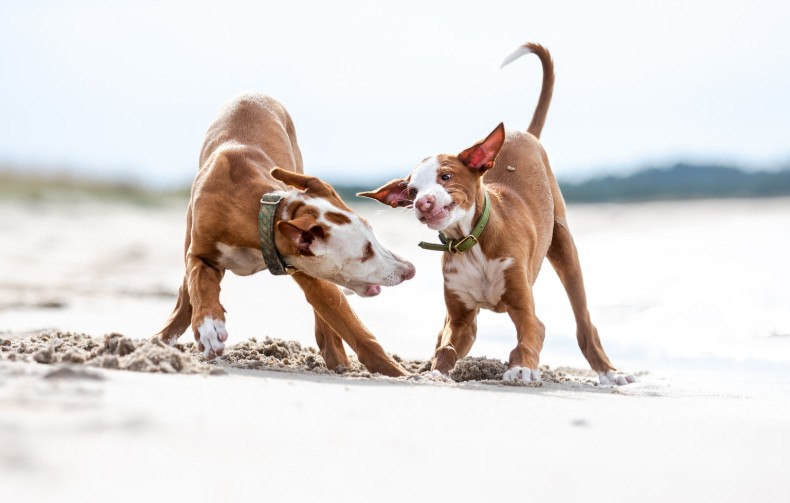
Vision Leads Behaviour
Their intelligence prioritises movement, space, and body language over words. When guided visually, cooperation feels natural instead of forced.
Social Style: Friendly on Their Own Terms
Your Ibizan typically enjoys people and other dogs, but their social approach comes with specific requirements that differ from more socially flexible breeds. Understanding these requirements prevents the “tolerance collapse” that catches many owners by surprise.
Ibizans generally appreciate social contact, but they need strict control over its parameters—timing, duration, intensity, and method of engagement all matter. They prefer to initiate interactions when they’re ready and to end them when they’ve reached capacity. This isn’t aloofness or unfriendliness; it’s boundary-sensitive sociability. Your Ibizan has a social “budget” that depletes with interaction, and they need the autonomy to manage that budget themselves.
Watch what happens when someone—particularly an enthusiastic child or unfamiliar adult—pushes past those boundaries. Your Ibizan might tolerate the interaction initially, remaining polite but slightly stiff. Their early warnings are subtle but consistent:
- Lean away from reaching hand: Body weight shifts backward even while remaining in place
- Head turn breaking eye contact: Deliberately looking away from the person approaching
- Soft step back: One or two steps of retreat, testing if person respects the signal
- Lip lick or nose lick: Quick self-soothing gesture during unwanted interaction
- Ears pinned or pulled back: Flattening against head signals discomfort
- Tail tuck or lowered tail: Drops from neutral position toward or between legs
- Stiffening or freezing: Muscles tense, movement stops, hoping the interaction will end
- Curve away: Body curves to create distance while keeping person in peripheral vision
- Yawn: Stress yawn during social interaction they want to end
- Closed mouth, tight lips: Facial tension replacing relaxed expression
If these signals go unnoticed or ignored, tolerance can collapse suddenly. What looked like acceptance one moment becomes a clear “no” the next, sometimes escalating to a warning snap if the person continues to push.
This is why “he’s always been fine with kids” can become “he suddenly snapped at a child” in households where the dog’s subtle communication gets misread. Your Ibizan was communicating boundaries throughout—the humans just weren’t listening to the quiet language that precedes the louder one.
Successful social interactions with Ibizans follow their lead:
Do’s for Respectful Interaction:
- Let them approach you rather than approaching them
- Keep initial contact brief (30 seconds to 2 minutes maximum)
- Pet under chin or chest rather than reaching over their head
- Watch continuously for their signals about readiness to end interaction
- Step back immediately when they signal discomfort
- Allow them to disengage without following or pursuing
- Remain calm and quiet rather than excited and loud
- Respect their choice to observe from a distance rather than participate
Don’ts That Push Boundaries:
- Leaning over them or trapping them in corners
- Prolonged direct eye contact (feels confrontational)
- Reaching toward their face or head without permission
- Following them when they create distance
- Restraining them for cuddles or petting
- Forcing interaction when they show avoidance
- Loud voices or sudden movements during contact
- Multiple people interacting simultaneously
Teaching Children Ibizan Respect:
- “Let the dog come to you, don’t chase”
- “Watch for the dog’s signals to stop”
- “Gentle touches only, not grabbing or hugging”
- “If the dog walks away, that means ‘no more right now'”
- “Quiet voices near the dog”
- Supervise 100% of interactions until child demonstrates consistent understanding
Understanding that a friendly dog isn’t automatically a dog who wants constant physical contact prevents most boundary violations. 🐾
🎭 Understanding Your Ibizan Hound’s Complexity
A Progressive Guide to Reading Beyond the Performance Layer
Phase 1: Recognizing the Duality
Understanding What You’re Really Seeing
That theatrical behavior you’re witnessing isn’t simple joy—it’s a sophisticated communication system. Your Ibizan uses clowning as both genuine play AND strategic deflection. The exaggerated movements, silly antics, and theatrical play bows can mask stress, create social distance, or regulate overwhelming emotions.
• Clowning that intensifies during training or social pressure
• Performance increasing when visitors arrive or emotions run high
• Silly behavior replacing calm engagement consistently
• Theatrical antics appearing when they’re asked to do something challenging
Assuming “funny means fine” leads to pushing your Ibizan into overwhelming situations because they “seem to handle it.” This misreading creates accumulated stress that eventually manifests as behavioral problems.
Phase 2: Learning the Subtle Language
Reading Stress Signals Before Escalation
• Lip tension: Corners tighten or pull back slightly
• Quick gaze aversion: Sharp eye contact breaks with head turn
• Momentary freeze: 1-3 second pause in all movement
• Tongue flicks: Quick self-soothing licks unrelated to food
• Physical distancing: Strategic positioning for escape routes
• Body curves: C-shaped posture turning away from stressor
• Performance intensification: Clowning escalates dramatically
• Stress yawning: Big, exaggerated yawns outside tired contexts
When you spot early signals: create immediate distance from the trigger, lower all stimulation (noise, talking, movement), offer brief decompression walk, and never punish these communications. Trust their signals over your assessment of the situation.
Phase 3: Movement as Emotional Regulation
Why Your Ibizan Needs to Move to Feel
For Ibizans, movement isn’t just exercise—it’s their primary emotional processing tool. When pressured, uncertain, or overstimulated, their instinct is to move. This releases emotional energy, provides self-soothing, and helps their nervous system return to equilibrium through physical action.
Tight leashes, small rooms, crowded spaces, and restrictive handling prevent their primary coping mechanism. When movement is blocked, stress compounds rapidly—leading to performance escalation, shutdown, or reactive outbursts as they struggle without their natural regulation tool.
• Scent mapping: 15-20 minute sessions exploring hide-and-seek treats
• Long-line work: 20-40 minutes of autonomous exploration on 20-30 foot line
• Safe running: Enclosed space for full-speed movement
• Frequency: Daily during high-stress periods, 3-4x weekly for maintenance
Phase 4: Training the Autonomous Mind
Respect Independence While Building Reliability
Repetitive drilling feels arbitrary to independent thinkers. Your Ibizan questions the fifth “sit” in a row—not defiance, but genuine cognitive processing. They understand quickly but disengage when tasks feel pointless, leading to avoidance or performance deflection.
• Duration: 3-5 minutes maximum per session
• Repetitions: 3-5 successful attempts, not 20-30
• Ending: Before they lose interest, not after disengagement
• Feedback: Calm “yes” + treat, not excited celebration
• Cues: Visual signals work better than repeated verbal commands
Calm pacing, spatial clarity, and low-drama leadership create environments where Ibizans can think rather than react. When pressure stays low but expectations remain clear, genuine cooperation emerges naturally through the Invisible Leash connection.
Phase 5: Prey Drive & Safety Protocols
Honest Risk Management Over Wishful Thinking
When your Ibizan locks onto movement, sight-triggered prey drive will likely override training. This isn’t training failure—it’s ancient sighthound neurology. The neural pathways driving pursuit are remarkably resistant to override, making off-leash freedom in unfenced areas genuinely dangerous.
• Long-line practice: Safe exploration preventing self-reinforcing chases
• Pattern recalls: Predictable sequences becoming habit
• Reward variety: Novel, high-value treats maintaining interest
• Emergency cues: Distinct signals for dangerous situations
• Directional cooperation: Moving together rather than absolute obedience
6+ foot secure fencing with double-gate airlock systems, properly fitted harnesses with backup collars for walks, GPS collars for high-risk individuals, microchipping with current information, and realistic environmental assessment before allowing any freedom. Your Ibizan’s life literally depends on these structures.
Phase 6: Understanding Trigger Stacking
Why “Sudden” Problems Aren’t Actually Sudden
Each stressor depletes capacity even when your Ibizan appears fine. Vet visit Monday (-30%), construction noise Tuesday (-20%), houseguests Wednesday (-25%), mail carrier Thursday (-15%). By Friday, capacity is at 10%—one more “normal” encounter triggers what looks like unpredictable reactivity.
• Veterinary or grooming appointments
• Visitors or overnight houseguests
• Schedule changes or routine disruptions
• Loud environmental noises (construction, storms, fireworks)
• Social interactions without adequate recovery time
• Missed decompression sessions creating deficit
Track stressful events across days and weeks. Provide extra decompression after known stressors. Build in “nothing days” for recovery between challenging events. Reduce demands during high-stress periods. Recognize cumulative effects before capacity depletes completely.
Phase 7: Respecting Social Boundaries
Preventing Tolerance Collapse
Ibizans enjoy social contact but need strict control over timing, duration, and intensity. They prefer initiating and terminating interactions on their terms. This isn’t aloofness—it’s a social “budget” that depletes with interaction, requiring autonomy to manage effectively.
• Lean away from reaching hands
• Head turn breaking eye contact
• Soft step back creating distance
• Lip licking during unwanted interaction
• Body curve positioning for escape
• Tail drop from neutral position
Let them approach rather than approaching them. Keep contact brief (30 seconds to 2 minutes). Pet under chin/chest, not over head. Watch continuously for disengagement signals. Step back immediately when they communicate discomfort. Teach children absolute respect for these boundaries.
Phase 8: Building Foundation in Puppyhood
Prevention Through Critical Period Awareness
Most critical period for shaping lifelong emotional responses. Prioritize quality over quantity—one calm, successful interaction teaches more than ten overwhelming ones. Expose to varied surfaces, sounds, and visual stimuli in 5-10 minute sessions. Never force interaction; respect hesitation and allow observation from safe distance.
Brain becomes particularly sensitive to frightening experiences. Single traumatic events can create lasting fear responses. Maintain normal routines but avoid deliberately challenging situations. Skip busiest parks and overwhelming events. Protect from unexpected scares during this vulnerable window.
Respond to silliness with warm but measured acknowledgment, not theatrical reactions. Reward calm behavior heavily. Notice when clowning appears as deflection and reduce pressure rather than laugh. Balance attention between entertaining and calm states, teaching that peaceful presence earns connection.
🔍 Ibizan Hound vs. Other Sighthounds: Key Distinctions
Performance Layer: Ibizans use clowning more extensively as coping mechanism. Greyhounds tend toward calm reserve.
Social Style: Ibizans more boundary-sensitive requiring strict interaction control. Greyhounds often more socially flexible.
Sensitivity Level: Both highly sensitive, but Ibizans show more oscillation between “on” and “off” states.
Independence: Ibizans demonstrate stronger autonomous decision-making and lower tolerance for repetitive training.
Cognitive Style: Similar autonomy levels, but Ibizans use more deflection strategies.
Movement Regulation: Both use movement for emotional processing, but Ibizans show more dramatic dysregulation when confined.
Emotional Expression: Ibizans more theatrical and expressive. Afghans typically more aloof and reserved.
Training Approach: Both independent, but Ibizans respond better to short, varied sessions versus Afghan’s complete training disinterest.
Puppies (8-12 months): Performance patterns emerging, critical socialization windows, high neuroplasticity allowing foundation building.
Adults (2+ years): Established patterns harder to modify, deeper trust takes longer to build, but capable of profound partnership.
High-Stress: Daily decompression required, performance behaviors intensify, tolerance window shrinks dramatically.
Stable: 3-4x weekly decompression maintains balance, wider tolerance for novelty, more “middle ground” states emerge.
Training Sessions: 3-5 minutes maximum, 3-5 repetitions per behavior
Decompression Frequency: Daily (high-stress) or 3-4x weekly (maintenance)
Social Interaction Duration: 30 seconds to 2 minutes before checking for disengagement signals
Fencing Height: Minimum 6 feet, ideally 7-8 feet for athletic individuals
Long-Line Length: 20-25 feet optimal for exploration and safety balance
Stress Signal Response Time: Immediate intervention at first yellow zone signal
Critical Socialization Window: 8-12 weeks (quality over quantity always)
The Ibizan Hound embodies the profound truth at the heart of Zoeta Dogsoul: authentic connection emerges when we stop demanding performance and start witnessing presence. Through the NeuroBond framework, we recognize that the clownish exterior protects a sensitive soul navigating overwhelm—not entertaining us, but surviving complexity. The Invisible Leash teaches us that true leadership flows through calm spatial communication, not force or endless repetition. When we honor their autonomy while providing clear structure, cooperation becomes natural rather than coerced. Soul Recall reminds us that these ancient hunters remember everything—the vet visit that felt invasive, the child who grabbed too hard, the moment we finally listened to their quiet signals. By building relational safety rituals and respecting their complex emotional architecture, we invite the stable depth beneath the performance layer. This is where genuine partnership lives: in the space between honoring who they are and providing what they need. That balance between science and soul—that’s the essence of Zoeta Dogsoul.
© Zoeta Dogsoul – Where neuroscience meets soul in dog training
Training the Autonomous Mind: Cooperation Over Compliance
Traditional obedience training—repetitive drills, predictable sequences, extensive practice sessions—often creates more problems than progress with Ibizan Hounds. Their cognitive architecture requires a fundamentally different approach that respects their independence while building reliable cooperation.
When you ask your Ibizan to repeat the same command multiple times in succession, you’re working against their natural learning style. They understand quickly but become disengaged when the task feels pointless. The fifth “down” in a row doesn’t deepen their understanding—it teaches them that training is boring and arbitrary. Engagement drops, avoidance increases, and you might see an uptick in deflection through clowning or simple withdrawal.
Short, precise training sessions work far better for autonomous Ibizans:
Ideal Session Structure:
- Duration: 3-5 minutes of focused work maximum
- Frequency: Multiple short sessions daily rather than one long session
- Repetitions: 3-5 successful repetitions of a behavior, not 20-30
- Ending point: Before they lose interest, not after they disengage
- Success rate: Aim for 80% success to maintain confidence
- Difficulty progression: Tiny incremental increases, not big leaps
Signs to End Session Immediately:
- First moment of distraction or looking away
- Engagement decreases even slightly
- Performance becomes sloppy or careless
- They offer clowning or displacement behaviors
- Stress signals appear (yawning, scratching, etc.)
- You’ve achieved 3-5 successful repetitions
- They glance toward exit or preferred activity
- Response latency increases (slower to respond)
What Makes Sessions Feel Purposeful:
- Clear, achievable goal for each session
- Obvious connection to real-life application
- Varied rewards keeping interest high
- Built-in choice points where dog opts in
- Immediate success leads to immediate reward
- Novel elements preventing boredom
- End with play or preferred activity
Three to five minutes of clear, purposeful work with high-value outcomes generates more learning than thirty minutes of repetitive drilling.
This brings up an important point about praise and emotional intensity. While many dogs respond well to enthusiastic celebration, Ibizans often find excessive praise disruptive.
Excessive Praise (Disruptive for Ibizans):
- “GOOD BOY! YES! AMAZING! YOU’RE SO SMART!”
- Jumping up and down or dramatic body movements
- High-pitched, loud, excited voice tones
- Rapid-fire repeated praise (“yes yes yes yes yes!”)
- Clapping or other sharp sounds
- Immediately launching into play as reward
- Calling others to witness the success
Effects of Over-Excitement:
- Scatters their focus and breaks concentration
- Triggers over-arousal or performance behavior
- Creates anticipation of excitement rather than learning
- May deflect into clowning to manage your energy
- Disrupts their processing of what they just learned
Calm, Clear Feedback (Effective for Ibizans):
- Quiet “yes” or “good” in normal speaking voice
- Single word marker (“yes,” “nice,” “that”)
- Smooth, immediate food reward delivery
- Gentle touch or brief eye contact
- Calm body language, no dramatic movements
- Moment of connection acknowledging their choice
- Release to chosen activity after brief pause
Why Calm Works Better:
- Allows them to process information without emotional overwhelm
- Keeps arousal at optimal learning levels
- Respects their sensitivity to human emotional intensity
- Reinforces the behavior rather than triggering management response
- Maintains focus on the training rather than your reaction
They respond more reliably to calm, clear feedback—acknowledging their choice without emotional overwhelm.
The Invisible Leash principles apply beautifully here. Clear spatial communication, calm pacing, and low-drama leadership create an environment where your Ibizan can think rather than react. When you remain emotionally neutral—engaged but not intense—you invite genuine cooperation rather than performance. Your dog feels less pressure to manage your emotions through entertaining behavior and more space to actually learn.
Visual cues often work more effectively than verbal ones. Remember, your Ibizan’s heritage prioritized reading environmental and spatial information. A hand signal, a directional gesture, even your body positioning can communicate more clearly than repeated verbal commands. This doesn’t mean they can’t learn words, but pairing verbal cues with visual information plays to their natural processing strengths.
The Prey Drive Reality: Managing the Unmangeable
Let’s address this directly: your Ibizan Hound’s prey drive, when fully triggered by sight, will likely override training in real-world conditions. This isn’t a failure of your training or your dog’s intelligence. It’s fundamental sighthound neurology, shaped by thousands of years of selective breeding for exactly this response.
When your Ibizan locks onto movement—a rabbit, a deer, even a plastic bag blowing across a field—their visual pursuit system activates with stunning intensity. The world narrows to target and trajectory. Background noise, including your recall cue, essentially disappears from their awareness. The neural pathways driving pursuit behavior are ancient, powerful, and remarkably resistant to override through training alone.
This reality requires honest risk management rather than wishful thinking about recall reliability. Off-leash freedom in unfenced areas carries genuine danger for most Ibizans, regardless of training quality. They can be hundreds of yards away before the pursuit drive releases enough for them to register your presence again.
Effective recall structures for Ibizans focus on building patterns and creating high-value associations rather than expecting absolute compliance under distraction:
Long-Line Work for Recall Foundation:
- Practice in progressively more distracting environments
- Start in boring, familiar spaces and gradually increase novelty
- Allow exploration, then call when they naturally pause or look toward you
- Reward generously with novel, high-value treats
- Practice “casual recalls” throughout walk, not just at end
- Never call for anything unpleasant (ending play, going inside)
Pattern Recalls (Building Habit Strength):
- Create predictable sequences: explore → recall → reward → release → explore
- Practice same pattern across different locations
- Time intervals between recalls (every 2-3 minutes initially)
- Gradually increase distraction while maintaining pattern
- Pattern becomes self-reinforcing over time
Reward Variety for Maintaining Interest:
- Rotate between chicken, cheese, hot dogs, freeze-dried treats
- Sometimes toy play instead of food
- Occasionally just release back to exploration
- Novel rewards create anticipation and enthusiasm
- Never use the same treat exclusively
Emergency Turn Cues (Interrupt Early Fixation):
- Distinct sound or word different from regular recall (“turn,” whistle, squeaker)
- Practice without distractions first until automatic
- Train to near-automatic levels (hundreds of successful repetitions)
- Very high-value reward every single time
- Use only for genuine emergencies to maintain power
- Teaches pivot away from distraction, not full return
Check-In Training (Voluntary Connection):
- Reward when dog looks at you without being called
- Creates habit of monitoring your location
- Builds into natural pattern during long-line work
- Strengthens bond and communication
- Foundation for reliable recall in real situations
The most realistic approach focuses on directional cooperation: teaching your Ibizan to move with you, to check in regularly, to respond to cues that guide their movement through space. This creates partnership rather than demanding absolute obedience, which aligns better with their autonomous nature. Through Soul Recall, we understand that genuine response emerges from emotional connection and environmental habits rather than forced compliance.
Safety protocols become non-negotiable when managing powerful prey drive:
Fencing Requirements:
- Height: Minimum 6 feet, preferably 7-8 feet for athletic individuals
- Material: Solid or minimal gaps (Ibizans can squeeze through surprisingly small spaces)
- Ground level: Buried or barriers preventing digging under
- Top security: Some Ibizans climb—consider coyote rollers or angled tops
- Gate integrity: Self-closing, self-latching mechanisms
- Double gates: Create airlock entry system for added security
- Regular inspection: Check weekly for damage, gaps, or potential escape routes
Walking Equipment:
- Harness: Properly fitted Y-front or back-clip that can’t slip off
- Backup collar: Martingale or limited-slip collar as secondary attachment
- Double-clip leash: Attached to both harness and collar simultaneously
- Regular equipment checks: Inspect for wear, fraying, or hardware failure
- Proper fit verification: Two-finger rule for collar tightness when snug
Environmental Assessment Protocol:
- Scan for wildlife before allowing any freedom
- Identify escape routes in unfamiliar areas
- Note proximity to roads or other hazards
- Check for off-leash dogs approaching
- Verify fence integrity in new locations
- Consider time of day (dawn/dusk = higher wildlife activity)
Emergency Preparedness:
- Recall training is never “finished”—maintain throughout life
- Have emergency contact info readily accessible
- Microchip with current contact information
- Recent photos for lost dog posters
- GPS collar for high-flight-risk individuals
- Know emergency vet locations in areas you frequent
Your Ibizan’s life may literally depend on these structures—prey drive deaths from car strikes or getting lost are tragically common in sighthounds.
Common Misinterpretations: When Help Creates Harm
Many behavioral problems in Ibizan Hounds stem not from inherent temperament flaws but from well-intentioned misunderstandings that accumulate into significant stress.
Many behavioral problems in Ibizan Hounds stem from specific, well-intentioned misunderstandings:
Misinterpretation #1: “They’re clowning, so they’re fine”
- Reality: Clowning often masks stress or functions as coping mechanism
- Consequences: Overexposure to overwhelming situations, social flooding, accumulated stress
- What happens: Eventually behavioral breakdown when coping strategies fail
Misinterpretation #2: “They’re just being stubborn/defiant”
- Reality: Questioning the purpose of meaningless repetition is intelligence, not defiance
- Consequences: Punishment for natural cognitive style, damaged trust, increased avoidance
- What happens: Dog learns training is arbitrary and unpleasant, disengages entirely
Misinterpretation #3: “More socialization will fix their sensitivity”
- Reality: Forcing exposure increases stress rather than building confidence
- Consequences: Trigger stacking, tolerance collapse, developing fear or reactivity
- What happens: Dog becomes more reactive and avoidant, not less
Misinterpretation #4: “Playful dogs don’t need boundaries”
- Reality: Lack of clear structure increases internal stress significantly
- Consequences: Performance behaviors intensify, uncertainty creates anxiety
- What happens: Dog works harder to manage unpredictable environment through clowning
Misinterpretation #5: “They’ll grow out of it”
- Reality: Patterns established in puppyhood often intensify without intervention
- Consequences: Missing critical learning windows, allowing problems to become habitual
- What happens: Adult dog with entrenched behavioral issues requiring extensive rehabilitation
Misinterpretation #6: “Exercise will solve behavioral problems”
- Reality: Physical exhaustion without emotional regulation creates more dysregulation
- Consequences: Increasingly wired dog who can’t settle despite fatigue
- What happens: Spiraling arousal levels, decreased ability to regulate
The most common misreading treats clowning as evidence of an easygoing, bomb-proof temperament. Owners see the playful antics and assume their Ibizan can handle anything—busy events, constant visitors, extended social interactions, frequent handling. But remember: that clowning often functions as a coping mechanism, not proof of comfort.
Reactivity, training refusal, or sudden aggression in Ibizans often represents secondary responses to unaddressed pressure. The dog has been communicating discomfort through subtle signals for weeks or months, but those signals went unrecognized. When the subtle language fails, they escalate to behavior that finally gets noticed—unfortunately, by then, the stress has compounded significantly.
Trigger stacking plays a major role in apparent behavioral unpredictability:
How Trigger Stacking Works:
Each stressor depletes capacity even if the dog appears to handle it fine. Without adequate recovery time between stressors, tolerance drops dramatically.
Example Timeline Showing Trigger Stacking:
Monday Morning (Fresh capacity):
- Vet visit for vaccinations: -30% capacity (70% remaining)
- Dog recovers somewhat overnight: +10% (80% remaining by Tuesday)
Tuesday:
- Neighbor’s construction noise all day: -20% (60% remaining)
- Brief recovery: +5% (65% remaining by Wednesday)
Wednesday:
- Houseguests arrive: -25% (40% remaining)
- No adequate decompression time
Thursday:
- Mail carrier encounter: -15% (25% remaining)
- Children playing loudly nearby: -15% (10% remaining)
Friday:
- Normally manageable situation (another dog on walk): -15%
- Capacity exceeded: Reactive outburst that seems “unpredictable”
What It Looks Like to Owners:
- Monday-Thursday: “He handled everything fine!”
- Friday: “He suddenly snapped at that dog for no reason!”
- Reality: Capacity was depleted over days; Friday’s dog was the final stressor
Individual Stressors That Stack:
- Vet or grooming appointments
- Visitors or houseguests
- Changes in routine or schedule
- Loud noises (construction, fireworks, storms)
- Social interactions (dog parks, greeting people)
- Training sessions (especially long or frustrating ones)
- Travel or car rides
- Environmental changes (moving furniture, renovation)
- Handling (nail trims, baths, medical care)
- Missed decompression sessions
Prevention Strategy:
- Track stressful events across days and weeks
- Provide extra decompression after known stressors
- Reduce demands during high-stress periods
- Build in “nothing days” for recovery
- Recognize cumulative effects before capacity depletes
Your Ibizan might handle one stressor well, but when small stresses accumulate throughout a day or week without adequate decompression, their tolerance for additional challenges drops dramatically. What they could manage on Monday becomes impossible by Friday, not because they’re being difficult but because their nervous system has reached capacity.
Paradoxically, a lack of clear boundaries increases internal stress despite outward playfulness. Many owners assume that a fun-loving, playful dog doesn’t need much structure. But your Ibizan actually thrives on predictability and clear communication. When the rules feel inconsistent or boundaries remain unclear, they invest energy managing uncertainty that could go toward genuine relaxation. Performance behaviors may intensify as they try to navigate an unpredictable social landscape.
Understanding these patterns allows you to see behavior problems as communication rather than defiance. Your Ibizan isn’t “bad”—they’re stressed, overwhelmed, or working without the information and support they need to feel secure.

Health and Physical Considerations
The Ibizan Hound’s elegant, athletic build requires specific health attention:
Temperature Sensitivity Management:
Cold Weather Concerns:
- Lean physique with low body fat means rapid heat loss
- Provide warm bedding, heated beds, or blankets
- Coats or sweaters for outdoor time below 50°F
- Shorter outdoor sessions in freezing temperatures
- Watch for shivering, reluctance to go outside, seeking heat sources
Hot Weather Concerns:
- Dark coloring in some individuals increases heat absorption
- Provide shade, cooling mats, fresh water constantly available
- Exercise during cooler parts of day (early morning, evening)
- Watch for excessive panting, drooling, reluctance to move
- Know signs of heat stroke: bright red gums, vomiting, collapse
Joint Health Maintenance:
Risk Factors:
- High-speed running with sudden stops and sharp turns
- Jumping and leaping during play
- Hard surfaces impact on joints over time
Preventive Measures:
- Maintain lean body condition (visible waist, palpable ribs)
- Provide soft surfaces for high-impact play when possible
- Joint supplements (glucosamine, omega-3s) starting around age 5-6
- Monitor for early signs: stiffness after rest, reluctance to jump, slower rising
Bloat Prevention Protocol:
High-Risk Factors:
- Deep chest structure predisposes to gastric torsion
- Single large meals increase risk
- Exercise immediately before or after eating
Prevention Strategies:
- Feed 2-3 smaller meals daily instead of one large meal
- Use slow-feeder bowls to prevent gulping
- Wait 1 hour after eating before vigorous exercise
- Wait 30 minutes after exercise before feeding
- Know emergency symptoms: unsuccessful vomiting attempts, distended abdomen, restlessness, drooling
- Have emergency vet contact readily available
Skin Sensitivity Care:
Common Triggers:
- Harsh grooming products or chemicals
- Rough fabrics (some collar materials)
- Environmental irritants (grass types, pollens)
- Flea/tick preventatives in some individuals
Management:
- Use gentle, hypoallergenic grooming products
- Choose soft, breathable collar/harness materials
- Monitor for reactions when introducing new products
- Protect skin during outdoor adventures in rough terrain
Dental Health Requirements:
Breed Tendencies:
- Prone to periodontal disease without consistent care
- Sensitivity to handling complicates dental care
Care Protocol:
- Daily tooth brushing ideal (minimum 3-4 times weekly)
- Build positive associations from puppyhood
- Annual professional cleaning as recommended by vet
- Dental chews and appropriate toys for mechanical cleaning
- Monitor for signs: bad breath, difficulty eating, pawing at mouth
The breed generally enjoys good longevity, often reaching 12-14 years with appropriate care. Supporting their health means understanding their unique physical characteristics and adjusting your care accordingly. 🧡
Nutrition: Fueling the Athlete and the Thinker
Your Ibizan’s nutritional needs reflect both their athletic physiology and their cognitive intensity:
Protein Requirements:
- High-quality animal protein as primary ingredient (chicken, beef, fish, lamb)
- Minimum 25-30% protein for active adults
- 28-32% for highly active or working Ibizans
- Lean muscle maintenance requires consistent protein intake
- Avoid grain-heavy fillers that provide empty calories
Caloric Needs (Highly Individual):
Average Guidelines:
- 800-1,200 calories daily for 45-55 lb Ibizan
- Adjust based on activity level, age, metabolism
Activity-Based Adjustments:
- Sedentary/older: Lower end of range (800-900 calories)
- Moderate activity: Mid-range (900-1,100 calories)
- Very active/athletic: Higher end (1,100-1,200+ calories)
Individual Variation:
- Some remain lean on substantial food amounts
- Others gain weight easily and need careful monitoring
- Regular body condition assessment (monthly) helps adjust portions
Signs of Ideal Body Condition:
- Visible waist when viewed from above
- Ribs palpable with light pressure (not visible but easily felt)
- Visible muscle definition without excessive fat
- Slight abdominal tuck when viewed from side
- Hip bones slightly palpable but not protruding
Common Food Sensitivities:
Proteins to Watch:
- Chicken (surprisingly common trigger despite being common ingredient)
- Beef in some individuals
- Grain proteins (wheat, corn, soy)
Manifestations of Sensitivity:
- Skin issues (itching, hot spots, rashes)
- Digestive upset (loose stools, gas, vomiting)
- Ear infections recurring
- General discomfort or behavior changes
Elimination Diet Protocol:
- Novel protein for 8-12 weeks (duck, venison, fish)
- Single protein source only
- Monitor symptoms throughout trial
- Reintroduce previous proteins one at a time
- Document reactions to identify specific triggers
Feeding Schedule Impact on Behavior:
Bloat Prevention Schedule:
- Minimum 2 meals daily, ideally 3 for puppies/active adults
- Morning meal after first exercise/bathroom break
- Evening meal at least 2-3 hours before bedtime
- Snacks/training treats counted in daily calorie total
Behavioral Timing Observations:
- Some Ibizans settle better after meals
- Others become sleepy and less available for training
- Experiment to find optimal training windows relative to feeding
- Consider small pre-training snack if dog more focused when slightly hungry
Hydration Requirements:
- Fresh water available at all times
- Multiple water stations in house and yard
- Increased needs in warm weather or after intensive movement
- Monitor intake (sudden increase or decrease can signal health issues)
- Encourage drinking after exercise sessions
- Clean water bowls daily to maintain palatability
Fresh water availability matters enormously. These athletic dogs can dehydrate quickly, particularly in warm weather or after intensive movement sessions. Encouraging regular drinking, especially after exercise, supports recovery and overall health.
Living with an Ibizan: Environment and Lifestyle Match
The honest truth: Ibizan Hounds aren’t for everyone. Their unique combination of traits creates specific lifestyle requirements:
Physical Environment Needs:
Fencing Specifications:
- Minimum 6 feet height (7-8 feet for athletic individuals)
- Solid or minimal-gap construction
- Buried barriers or ground-level security to prevent digging
- Some climb—consider coyote rollers or inward-angled tops
- Self-closing, self-latching gates
- Double-gate airlock entry system as backup
- Weekly inspection for damage or escape routes
Home Space Requirements:
- Room to move freely indoors (cramped apartments challenging)
- Protected quiet space for retreat and decompression
- Soft surfaces for resting (hard floors uncomfortable for lean bodies)
- Climate control for temperature-sensitive breed
- Secure yard or regular access to safe running space
Exercise and Enrichment Needs:
Not Just Physical Exhaustion:
- Regular opportunities for full-speed running (2-3 times weekly minimum)
- Mental engagement through varied activities
- Sensory variety (different environments, novel experiences)
- Autonomy to explore and make choices within safe parameters
- Example: 30-minute walk with autonomous sniffing > 60-minute forced jog
Structured Activities:
- Daily decompression protocols (scent work, long-line exploration)
- Short training sessions (3-5 minutes multiple times daily)
- Safe running in enclosed spaces
- Novel environments for investigation
- Low-pressure social opportunities
Ideal Household Characteristics:
Energy and Rhythm:
- Calm household energy (not chaotic or unpredictable)
- Predictable daily routines and schedules
- Low-drama interpersonal dynamics
- Owners who can maintain emotional neutrality
- Peaceful home environment for sensitive nervous system
Time and Availability:
- Someone home most of the day or able to check in regularly
- Ability to provide multiple daily interactions
- Commitment to ongoing training and enrichment
- Flexibility to adjust schedule around dog’s needs
- Patient approach to long learning curve
Compatibility Considerations:
Young Children Factors:
- Requires constant supervision (no exceptions)
- Teaching children to read and respect subtle signals
- Ensuring dog has protected retreat space
- Managing unpredictable child movements
- Full-time management project requiring significant energy
Other Pets Complexity:
- Small animals (cats, rabbits, small dogs) trigger prey drive
- Some individuals coexist peacefully; others never fully adapt
- High-motion cat lifestyle particularly triggering
- Careful introductions and ongoing management essential
- Individual temperament assessment critical
Work Schedule Reality:
- 10-hour workdays poorly tolerated
- Midday dog walkers help but don’t fully compensate
- Anxiety or destructive behaviors develop with frequent isolation
- Need substantial time with their people
- Not suitable for frequently traveling owners
Your home needs secure, high fencing—at least six feet, and your Ibizan will still test its limits. Their jumping ability and climbing skills surprise owners who assume standard fencing suffices.
The NeuroBond Approach: Revealing the Dog Beneath the Performance
Everything discussed so far points toward a central truth: the complexity you see in your Ibizan Hound requires understanding that goes beyond standard dog training. The NeuroBond framework offers an approach specifically suited to sensitive, autonomous breeds whose behavior often gets misread.
The Invisible Leash principles—calm pacing, spatial clarity, low-drama leadership—fundamentally shift how your Ibizan experiences interaction with you. When you move through the world with quiet confidence rather than anxious management, when your expectations remain clear but pressure stays low, when your emotional state doesn’t demand constant monitoring, your dog’s nervous system can finally relax.
Notice what happens when you stop trying to make your Ibizan be a certain way. When the pressure to perform, to be “good,” to meet expectations lifts, space opens for genuine presence. The clowning diminishes because it’s no longer needed as a buffer. The real dog—thoughtful, sensitive, capable of profound focus and connection—emerges from behind the performance layer.
Emotional neutrality from you creates safety for authenticity from them. Your Ibizan has likely learned that emotional intensity from humans requires management, whether through entertaining performance or careful withdrawal. When you maintain calm consistency instead—engaged but not demanding, present but not pushy—they can lower those defensive strategies.
Relational safety rituals build this foundation practically through small, consistent patterns:
Quiet Greeting Rituals:
- No excited “hello!” when arriving home
- Allow dog to approach you rather than rushing to them
- Calm voice tone, slow movements
- Brief acknowledgment without overwhelming attention
- Wait for dog to settle before increasing interaction
- Teaches that your arrival doesn’t require performance
Decompression Time After Stimulation:
- Protected quiet time after vet visits, social events, or stressful experiences
- No demands for tricks, training, or forced interaction
- Access to safe space (crate, bedroom, quiet room)
- Minimal household activity during recovery period
- Duration based on intensity of event (30 minutes to several hours)
Predictable Daily Transitions:
- Consistent wake-up routine (same order of activities)
- Regular meal times (within 30-minute window)
- Predictable walk schedule
- Bedtime ritual that signals day ending
- Warning before leaving house (same preparation sequence)
- Helps dog anticipate and prepare rather than being surprised
Safe Space Respect:
- Designated area dog can retreat to without following
- Never disturb dog in their safe space
- No interaction when dog chooses withdrawal
- Children taught absolute respect for this boundary
- Provides genuine control over social exposure
Transition Warnings:
- Verbal or visual cue before activity changes
- “Let’s go” before leaving house
- “Settle” before expecting calm
- Consistent phrases for predictable events
- Gives dog time to mentally prepare
Low-Pressure Contact Options:
- Parallel activities (you read while they rest nearby)
- Proximity without interaction demands
- Option to be near you without performing
- Contact on their terms when they initiate
- Teaches presence can be peaceful, not demanding
These aren’t grand gestures; they’re small, consistent patterns that communicate safety and respect.
When your Ibizan knows what to expect, when they can trust that you won’t push them beyond capacity, when they feel genuinely seen rather than managed or entertained by, cooperation becomes natural. Not because you’ve trained compliance, but because you’ve built relationship where cooperation makes sense.
That balance between honoring who they are and providing clear structure—that’s the essence of Zoeta Dogsoul. Not forcing an independent thinker into blind obedience, but creating partnership where both parties contribute their strengths toward shared harmony.
Raising an Ibizan Puppy: Building the Foundation Right
The first year with your Ibizan puppy determines much of your future relationship. During these critical months, you’re not just teaching commands—you’re shaping how your dog experiences the world, regulates emotion, and relates to humans. Get this foundation right, and you’ll have a confident, cooperative partner. Miss these developmental windows, and you might spend years undoing problematic patterns.
Critical Developmental Periods: What Happens When
Understanding your puppy’s neurological development helps you provide appropriate experiences at optimal times:
8-12 Weeks: Primary Socialization Window (CRITICAL)
What’s Happening Neurologically:
- Brain actively categorizing experiences as “safe” or “threatening”
- Building foundational database for lifetime responses
- Maximum neuroplasticity and adaptability
- Most influential period for temperament development
Exposure Priorities:
- Varied surfaces: grass, gravel, wood, tile, carpet, metal grates
- Household sounds: vacuum, dishwasher, TV, music, doorbell
- Environmental sounds: traffic, children playing, bicycles, skateboards
- Visual stimuli: umbrellas, wheelchairs, people in hats/sunglasses, strollers
- Gentle handling: paws, ears, mouth, tail (brief, positive sessions)
- Novel objects: boxes, bags, novel toys, household items
Quality Over Quantity Rules:
- 5-10 minutes per exposure session maximum
- Each experience ends positively with puppy feeling capable
- Never force interaction or proximity
- Respect hesitation and allow observation from distance
- One calm, successful interaction > ten overwhelming ones
12-16 Weeks: Fear Impact Period
What’s Happening Neurologically:
- Brain becomes particularly sensitive to frightening experiences
- Single traumatic event can create lasting fear responses
- Increased wariness as survival instinct develops
- Critical period for preventing fear-based behaviors
What to Do:
- Maintain normal routines without deliberately challenging situations
- Avoid first vet visit unless medically necessary (wait until after this period)
- Skip busiest parks, crowded events, overwhelming social situations
- Protect from unexpected scares (loud noises, chaotic dog greetings)
- Don’t introduce major novelty during this window
If Something Frightening Happens:
- Create immediate distance from trigger
- Maintain calm presence (no anxious energy)
- Allow observation from safety
- Don’t coddle excessively or dismiss fear
- Show you take concerns seriously while handling situation confidently
4-6 Months: Second Fear Period and Adolescent Emergence
What’s Happening Neurologically:
- Brain reorganizing, creating sophisticated threat assessment
- Hormonal changes beginning
- Testing boundaries and independence
- Previous confidence may temporarily waver
What to Expect:
- Wariness of familiar things
- Inconsistent responses (recall works one day, ignored the next)
- Performance layer often emerges during this time
- Two steps forward, one step back pattern
How to Support:
- Maintain consistent expectations without increasing pressure
- Expect temporary regression as normal
- Don’t interpret inconsistency as defiance
- Continue building foundation without demanding perfection
- Watch for deflection through clowning when uncertain
6-12 Months: Adolescence Intensifies
What’s Happening:
- Hormonal surges affecting behavior
- Testing independence while still needing security
- Prey drive strengthening significantly
- Social maturity beginning
Management Focus:
- Safety protocols become critical (stronger prey drive)
- Consistency in boundaries while allowing appropriate independence
- Continue short, positive training sessions
- Increase decompression as energy levels rise
- Patience with seemingly “forgotten” training
12-18 Months: Young Adulthood
What’s Happening:
- Settling into adult temperament
- Final physical maturation
- Patterns established now become harder to change later
- Social maturity with dogs developing
Foundation Solidification:
- Patterns from first year becoming habitual
- Window for easy modification closing
- Investment in foundation pays off now
- Continue building skills without adding pressure
Building Emotional Regulation from the Start
How you respond to your puppy’s emotions teaches them how to manage those emotions throughout life.
Teaching Settling vs. Exhausting:
Many puppy owners fall into the exhaustion trap—exercising their puppy relentlessly hoping for calm. But exhaustion isn’t the same as regulation. An exhausted Ibizan puppy often becomes more wired, unable to process the day’s stimulation because they’re too tired to regulate effectively.
Instead, teach active settling. Create environments where your puppy can choose to rest. Use a comfortable crate or pen with enrichment they can engage with or ignore—a frozen Kong, a safe chew, soft bedding. Don’t force sleep, but provide the conditions where sleep becomes appealing.
Practice “doing nothing” training. Sit quietly with your puppy in various environments—your living room, the yard, a quiet corner of a park. Don’t engage, don’t entertain, just exist together peacefully. When your puppy settles—even for 30 seconds initially—quietly acknowledge with a gentle touch or soft word. This teaches that calm presence earns attention, not just performance.
Preventing Performance Patterns:
Your responses to your puppy’s behavior now determine whether clowning becomes their stress response or just occasional playfulness.
Actions That Prevent Performance Dependency:
- Measured response to silliness: Warm smile and brief acknowledgment, not theatrical reaction
- No audience creation: Don’t call family members to watch, no social media documentation mid-behavior
- Reward calm heavily: Quiet resting, gentle eye contact, peaceful presence deserve treats and attention
- Notice deflection patterns: When clowning appears during training, new situations, or with strangers
- Respond to stress, not entertainment: If puppy clowns when uncertain, reduce pressure rather than laugh
- Balance attention: Give equal or more focus to calm behavior than silly behavior
- Calm voice tones: Keep voice neutral rather than excited during clowning
- End sessions before clowning starts: Stop training when puppy still engaged, not after they deflect
Actions That Accidentally Create Performance Dependency:
- Excessive laughter or high-pitched excitement during antics
- Calling others to witness the “funny” behavior
- Filming or photographing for social media during clowning episodes
- Engaging in escalating play when puppy gets silly
- Using excited voice tones that add energy to behavior
- Seeking out entertaining side as primary interaction mode
- Interpreting all silliness as pure joy (missing stress signals)
- Continuing training sessions until puppy deflects into performance
Teaching Active Settling:
- Comfortable crate or pen with optional enrichment (frozen Kong, safe chew)
- Don’t force sleep, create conditions where rest appeals
- “Doing nothing” training: Sit quietly together without engaging
- Practice in living room, yard, quiet park corners
- When puppy settles (even 30 seconds), gentle touch or soft word acknowledgment
- Gradually extend duration of peaceful coexistence
- Teaches calm presence earns attention, not just performance
Recognition Point: When your puppy lies quietly, makes gentle eye contact, or simply exists peacefully in your presence, this deserves acknowledgment. A treat delivered calmly, soft praise, or gentle touch reinforces that you value their calm self as much as—ideally more than—their entertaining self.
Socialization Guidelines Specific to Sensitive Ibizan Puppies
Standard puppy socialization advice often pushes Ibizan puppies too hard, too fast. Their sensitivity requires modification.
Quality over quantity remains the governing principle.
One positive interaction with a calm, gentle dog teaches appropriate social skills. Ten chaotic encounters at a puppy party teach your Ibizan that other dogs are overwhelming and unpredictable.
Choose playmates carefully. Look for adult dogs with excellent social skills who can teach your puppy polite interaction. Avoid puppy groups where play escalates into chaos, where older puppies practice rehearsing predatory sequences on younger ones, or where human intervention constantly interrupts natural communication.
Watch for your puppy’s signals during social interaction. The moment you see stress indicators—those subtle signs from the recognition guide earlier—end the interaction. Better to leave them wanting more than to push into overwhelm.
Create positive human associations through calm, predictable interactions. Invite friends to your home and ask them to largely ignore your puppy initially. Provide treats your visitors can offer when your puppy approaches voluntarily. This teaches that humans respect boundaries and that social interaction happens on your puppy’s terms.
Early Training: Setting Cooperation Patterns
The training methods you establish with your puppy create templates for all future learning.
Keep sessions impossibly short. Two to three minutes of focused work, multiple times daily, builds more skill than one 15-minute session. Your Ibizan puppy’s attention span and processing capacity are limited. Respect these limitations to build positive associations with training.
Use visual cues from the beginning. Pair every verbal command with a clear hand signal or body movement. Your puppy will likely learn the visual cue faster and more reliably, which aligns with their sighthound heritage.
Make training feel like a game they can win. Set up situations where success is easy, where your puppy figures out what you want quickly, where rewards are generous and varied. This builds confidence and engagement.
End every session before they want to. Watch for that first moment of distraction or reduced enthusiasm, and immediately end the session with a reward and release to play or rest. This teaches that training is a brief, successful experience rather than a test of endurance.
Never use training as a way to tire your puppy mentally. While mental stimulation is valuable, using training to exhaust an Ibizan puppy often backfires, creating negative associations with learning and increasing reliance on performance behaviors to manage the pressure.
Red Flags in Young Ibizans: When to Seek Help Early
Some puppy behaviors warrant immediate professional support rather than “wait and see”:
Regulation and Anxiety Concerns:
- Constant, compulsive performance: Clowning that doesn’t decrease even in quiet, familiar spaces with environmental changes
- Inability to settle: Cannot calm even briefly in low-stimulation environment, seems to need constant motion
- Extreme separation distress: Intense panic (destructive behavior, excessive vocalization, elimination, self-harm attempts) even with brief separations
- Hyperarousal threshold: Regularly crosses into frantic, uncontrollable behavior unable to respond to any cues
- No “off switch”: Cannot transition to calm state regardless of intervention attempts
Fear and Social Concerns:
- Complete social avoidance: Extreme fearfulness that doesn’t improve with patient, gradual exposure over 4+ weeks
- Freezing with familiar humans: Cannot approach or accept treats from household members after adjustment period
- Generalized fear: Fearful of nearly everything, not just novel stimuli
- Panic responses: Full panic (urination, defecation, escape attempts) to normal household events
- No recovery: Fear doesn’t decrease even with removal of trigger and time
Aggressive or Defensive Behaviors:
- Unprovoked aggression: Growling, snapping, or biting without obvious provocation or warning buildup
- Disproportionate responses: Extreme reaction to minor triggers (intense bite for gentle touch)
- Resource guarding escalation: Guarding that intensifies rather than improves with management
- Predatory drift: Treating small children or other pets as prey (intense stare, stalking, pouncing)
- Lack of bite inhibition: Biting hard enough to break skin during normal play
Social and Communication Issues:
- No social signaling: Doesn’t give warning signals before escalation
- Ignoring all boundaries: Doesn’t respond to other dogs’ or humans’ clear communication
- Obsessive behaviors: Fixation on lights, shadows, or repetitive actions that interfere with daily function
- Self-harming behaviors: Tail chasing to injury, excessive licking creating wounds, head pressing
When to Act:
- Single concerning behavior persisting beyond 2-3 weeks despite appropriate management
- Multiple moderate concerns appearing together
- Behavior intensifying rather than improving with age
- Your instinct says something isn’t right
- Quality of life (yours or puppy’s) significantly impacted
Finding Appropriate Help:
- Look for professionals experienced with sighthounds specifically
- Avoid trainers promising “quick fixes” or using punishment/dominance methods
- Seek force-free, fear-free certified professionals
- Veterinary behaviorist for severe cases
- Early intervention prevents patterns from becoming entrenched
Important Note: While some wariness is normal during fear periods, a puppy who can’t approach familiar humans, freezes completely in new but non-threatening situations, or shows intense panic needs support. The sensitive Ibizan architecture can develop problems quickly without proper guidance, but also responds well to early, appropriate intervention.
The Long View: Investment Now Pays Forever
Raising an Ibizan puppy requires more conscious effort than many breeds. You can’t coast on generic puppy-raising advice or assume that socialization means maximum exposure. Their sensitivity and autonomy demand thoughtful, measured approaches that respect their unique architecture.
But this investment creates dividends throughout your dog’s life. An Ibizan raised with attention to emotional regulation, respect for boundaries, and understanding of their cognitive style becomes a remarkably cooperative, confident adult. The foundation you build now determines whether you spend the next decade managing performance behaviors and sensitivity issues or enjoying genuine partnership with a thinking, feeling companion who trusts your leadership.
The choice belongs to you, made in countless small moments during these critical first months. Choose patience over pressure, quality over quantity, and understanding over expectations. Your adult Ibizan will show you the wisdom of this approach. 🐾
Is the Ibizan Hound Right for You?
By now, you understand that the charming, athletic dog you see at the park or in photos represents only a fraction of the Ibizan Hound story. Behind those elegant lines and playful antics lives a complex, sensitive soul who requires specific understanding and commitment.
This breed suits you if:
You appreciate independence in your companions and don’t need constant obedience or eager-to-please energy. You understand that a thinking partner offers different rewards than a compliant follower.
You can provide secure, substantial exercise space and commit to daily mental enrichment. You recognize that physical exhaustion doesn’t equal contentment, and you’re willing to engage their cognitive needs through varied, interesting activities.
You possess patience for a long learning curve. Ibizans reveal themselves slowly, often requiring months or years before they fully trust and relax into genuine connection. You’re in this for the long relationship, not quick results.
Your household tends toward calm, predictable energy. You can maintain clear boundaries and consistent routines without becoming rigid, and you don’t need a dog who thrives in chaos or constant activity.
You’re fascinated by complexity and willing to learn subtle communication. You enjoy the challenge of understanding an individual whose language differs from more obvious breeds.
This breed challenges you if:
You need reliable off-leash recall in unfenced areas. Even with excellent training, prey drive presents genuine safety concerns.
Your lifestyle includes frequent travel, long work hours, or extended absences. Ibizans need substantial time with their people and struggle with isolation.
You prefer straightforward training where the dog clearly wants to please and follows direction readily. Autonomous breeds require different motivations and approaches that don’t come naturally to everyone.
You have young children or small pets. While not impossible, this combination requires exceptional management and realistic assessment of individual temperament.
You want an adventure companion who can join you anywhere. Many Ibizans experience stress in busy public environments that would excite more outgoing breeds.
The Ibizan Hound rewards those who can meet them where they are—independent yet sensitive, playful yet serious, athletic yet thoughtful. They offer profound connection to owners who earn their trust through patient understanding rather than demanding compliance. Behind the clownish exterior waits a remarkable dog whose depth reveals itself slowly to those willing to truly see.
If you’re prepared for the complexity, if the combination of sensitivity and autonomy intrigues rather than frustrates you, if you can appreciate a dog who makes you work for their cooperation while offering genuine partnership in return—the Ibizan Hound might just be your perfect match. Just remember: the performance you initially fall for is only the beginning. The real relationship starts when you learn to see past the clown to the remarkable individual underneath.