
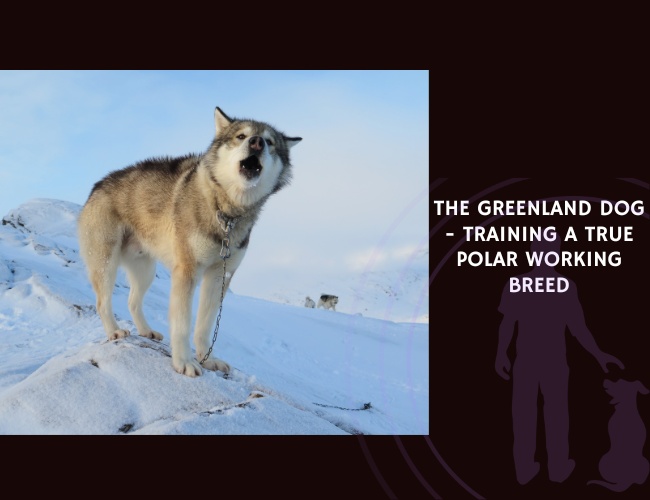
When you first encounter a Greenland Dog, you might feel you’re looking at something ancient, something untamed. And you’re right. This is not a breed shaped by show rings or suburban backyards. This is a polar survivor carrying 9,000 years of Arctic wisdom in their genes, a working partner designed for life-or-death decisions on sea ice, a pack hunter built for endurance that would exhaust most modern dogs. If you’re considering bringing a Greenland Dog into your life, or if you’re already struggling to understand one, let us guide you through what makes this breed profoundly different from conventional companion dogs.
The Greenland Dog challenges everything you might think you know about dog training. Their “stubbornness” is actually situational intelligence. Their “disobedience” is contextual evaluation. Their “wildness” is authentic working integrity. Understanding this breed means unlearning modern obedience paradigms and embracing something far older: cooperative partnership built on mutual respect, purposeful work, and evolutionary honoring.
Arctic Origins & the Weight of Ancient Design
Your Greenland Dog carries one of the oldest canine lineages on Earth. Recent genetic studies reveal remarkable facts about their ancient heritage:
- Nearly 9,000 years of Arctic adaptation dating back to Siberian origins
- Direct ancestors living in Alaska approximately 4,000 years ago
- Intentional wolf admixture with higher wolf DNA proportions than most domestic breeds
- Three genetically distinct populations: Kitaa (West), Tunu (East), and Avanersuaq (North)
- Cultural integration so deep that genetic divisions mirror human dialect boundaries
Unlike most modern breeds created through selective breeding in the last few centuries, the Greenland Dog is essentially a genetic time capsule.
What This Means for Your Training Approach
This deep Arctic heritage created specific behavioral adaptations that directly impact how you work with your dog today:
- Survival-grade decision making: Autonomous choices about energy conservation, risk assessment, and resource prioritization
- Endurance over sprint: Cognitive systems optimized for sustained effort across vast distances
- Collective intelligence: Pack-based problem solving for navigating treacherous terrain and detecting threats
- Contextual evaluation: Assessing terrain stability, weather conditions, and energy expenditure before responding
- Independent judgment: Decision-making ability that kept ancestors alive when compliance meant death
When your Greenland Dog seems to ignore your command, they might actually be running these survival calculations. This isn’t defiance—it’s the intelligence that survived 9,000 years of Arctic conditions.
Historical Functions That Shape Modern Behavior
For over a millennium, Greenland Dogs served multiple critical roles that shaped every aspect of their psychology:
- Sled traction work: Pulling hunters and supplies across sea ice and tundra, often 50-100 miles in brutal conditions
- Hunting support: Tracking, cornering, and holding dangerous prey like seals and polar bears
- Camp protection: Alerting to polar bear approaches and other threats
- Cultural partnership: Living as working partners rather than pets, in relationships defined by mutual survival dependence
These functions created dogs fundamentally different from conventional companion breeds.
You might wonder why your Greenland Dog doesn’t respond like your neighbor’s Labrador or Border Collie. The answer lies in these historical functions. Labradors were bred for handler-focused retrieval work. Border Collies were shaped for precise, directed herding under constant human guidance. Greenland Dogs were bred for contextual evaluation, energy conservation, threat detection priority, and pack coordination.
The Behavioral Pragmatism You’ll Encounter
Your Greenland Dog demonstrates working breed pragmatism through:
- Terrain assessment: Evaluating surface stability, weather conditions, and danger before responding
- Energy conservation: Refusing unnecessary effort that could compromise survival capacity
- Environmental awareness: Maintaining threat detection even during directed tasks
- Pack coordination: Responding to group dynamics and collective movement more than individual commands
- Contextual logic: What others call “stubbornness” is actually situational intelligence
This creates what many people mistakenly label as disobedience. But here’s the critical insight: Greenland Dogs were never bred for handler-focused obedience or performance precision. Their selective cooperation is actually situational logic—a survival feature carefully preserved across millennia, not a training defect to be corrected. 🧠
Understanding Pack Logic vs. Handler-Centric Training
Let’s address something important right away: if you’ve read about “alpha dominance” or “pack hierarchy” requiring you to “be the alpha,” you need to understand that modern research has thoroughly refuted these concepts.
Dominance Myths Debunked by Science:
- “Alpha wolf” theory: Disproven by wolf biologists themselves—wolves form family units, not military hierarchies
- “Eat first” ritual: Ignores research showing dogs understand resources, not symbolic dominance displays
- “Walk through doors first”: No scientific basis for establishing leadership through doorway order
- “Pinning into submission”: Subjects dogs to cruelty while damaging the cooperative relationship you need
For your Greenland Dog, these outdated techniques don’t just fail—they actively destroy the partnership foundation essential for this breed.
How Greenland Dogs Actually Organize
In sled teams, Greenland Dogs operate through distributed leadership rather than rigid hierarchy:
- Situational leadership: Different dogs lead based on terrain expertise, threat detection, or navigation skills
- Collective momentum: Forward movement creates behavioral alignment more effectively than verbal commands
- Cooperative decision-making: Individual dogs contribute specialized knowledge to group success
- Responsive flexibility: Leadership shifts fluidly based on changing conditions
You’ll notice your dog responds more readily to collective motion cues than individual direction. This makes sense when you understand their evolutionary context. On sea ice, the team that moved together survived. Dogs that waited for explicit permission for every decision got left behind or endangered the group.
Social dynamics in your multi-dog household follow similar patterns. Resource clarity reduces friction—clear feeding protocols and resting positions matter more than dominance displays. Dogs use ritualized displays like stiff posture and silent stares before escalation. Some friction actually maintains pack alertness and work drive, serving a functional purpose.
Why Traditional Obedience Training Fails
Traditional obedience training makes several assumptions that clash fundamentally with Greenland Dog psychology:
What Traditional Training Assumes:
- Individual dog-handler dyad is the primary relationship
- Verbal commands are primary communication
- Compliance measures success
- Food or praise universally motivate
Greenland Dog Reality:
- Pack context processes before individual instruction
- Physical positioning and directional flow matter more than words
- Forward progress and mission completion outweigh treats
- Micromanagement creates conflict or shutdown
The NeuroBond approach recognizes that trust and shared understanding form the foundation of cooperation with polar working breeds. You’re not training a servant; you’re building a partnership with a decision-making being whose ancestors survived conditions that would kill most modern dogs in hours.
Motivation Architecture: Purpose Over Rewards
Here’s something that frustrates many Greenland Dog owners: treats don’t work the way they do with other breeds. You might offer your dog a piece of chicken for sitting, and they’ll look at you like you’ve lost your mind. This isn’t lack of intelligence or food drive. It’s motivation architecture shaped by Arctic survival.
Forward Motion as Primary Reinforcement
For Greenland Dogs, movement itself activates powerful reward circuits:
- SEEKING system activation: Exploration and forward motion provide intrinsic neurological satisfaction
- Environmental progress: Covering distance and exploring territory rewards them deeply
- Team coherence: Synchronized movement with pack members creates social reward
- Mission fulfillment: Reaching destinations satisfies purpose-driven cognition
This is why your Greenland Dog comes alive the moment you pick up the harness or leash for a long walk. It’s not the walk itself but the purposeful forward motion, the mission, the covering of ground that fulfills something deep in their design.
Why Treat-Heavy Training Creates Problems
From your Greenland Dog’s perspective, food rewards create multiple conflicts:
- Survival pragmatism: Food is for sustenance and energy storage, not performance games
- Work ethic mismatch: Treats feel transactional rather than purposeful
- Arousal disruption: Food rewards break focus during high-drive work states
- Dependency creation: Treat-reliance undermines the autonomous decision-making that makes this breed functional
- Mission interference: Stopping for treats disrupts the forward momentum that actually motivates them
Additionally, food rewards can break focus during high-drive work. When your dog is in full pulling mode, locked into forward motion with their team, stopping for treats disrupts the very state you want to cultivate.
Structured Work as the Real Reward
Effective alternatives align with evolutionary design:
- Harness work: Canicross, bikejoring, or freight pulling provides purpose-driven satisfaction
- Route missions: Clear start and end points engage navigation instincts
- Weighted backpacks: Pulling resistance during walks gives meaningful work
- Terrain challenges: Varied surfaces, inclines, and obstacles engage problem-solving abilities
- Distance goals: Long missions that satisfy the ranging drive
The work itself becomes the reward. This principle transforms training from a struggle to impose compliance into a partnership around shared missions. Through the Invisible Leash philosophy, you learn that awareness and purposeful direction guide more effectively than constant commands and food bribes.
Movement as Emotional Regulation
You might notice that your Greenland Dog seems calmer, more focused, and more cooperative after long periods of movement. This isn’t coincidence—it’s neurobiology. For polar working breeds, movement serves multiple crucial regulatory functions that modern confinement disrupts.
Decompression and Stress Release
Sustained movement regulates your dog’s nervous system through multiple mechanisms:
- Neurochemical reset: Cortisol regulation and endorphin activation
- Cognitive processing: Rhythmic motion allows mental integration of experiences
- Arousal modulation: Physical exertion prevents chronic hypervigilance
- Sensory integration: Environmental inputs process during movement rather than building as stress
Think about what happens when your dog has been cooped up for days due to weather or your schedule. The pacing starts. The circling. The fence-running. The excessive vocalization. These aren’t behavioral problems to punish—they’re your dog’s nervous system screaming for the regulation that movement provides.
Focus and Behavioral Stability
Forward motion provides clear behavioral direction, anchoring attention in purposeful activity. Endurance work builds patience and self-regulation far more effectively than any obedience drill. Covering territory satisfies exploratory drives that, when thwarted, manifest as destructive or escape behaviors.
When movement is inadequate, you’ll see predictable escalation patterns:
- Frustration behaviors: Pacing, circling, fence-running, repetitive patterns
- Excessive vocalization: Howling, yipping, demand barking increases
- Destructive relief: Digging, chewing, property damage as energy outlet
- Escape behaviors: Fence climbing, door blasting, barrier testing intensifies
- Arousal dysregulation: Hyperreactivity, poor impulse control, sometimes aggression
The Critical Duration Distinction
Here’s what many people get wrong: Greenland Dogs don’t need brief high-intensity exercise. They need sustained, moderate-intensity movement. A 30-minute sprint won’t cut it. Neither will throwing a ball for an hour. These activities might tire your dog temporarily, but they don’t provide the rhythmic endurance that regulates their nervous system.
Optimal Exercise Profile:
- Duration: 2-4 hours of varied activity daily
- Intensity: Moderate, sustainable pace (not sprinting)
- Variety: Terrain changes, temperature variation, sensory complexity
- Purpose: Goal-oriented routes rather than aimless wandering
- Rhythm: Consistent, steady movement that builds endurance
A word of caution: exceeding exercise needs can be unhealthy, especially for dogs with health concerns. The key is rhythmic endurance, not exhaustion. You’re aiming for satisfied tiredness, not collapse. 🧡
Containment Challenges & Escape Prevention
One of the most frustrating realities of Greenland Dog ownership is their remarkable ability to escape seemingly secure spaces. Before you blame your dog’s character or training, understand that you’re fighting 9,000 years of evolutionary design for vast territorial range. These dogs were built to cover 50-100 miles per day across open Arctic landscapes without barriers. Modern fencing creates a fundamental conflict with their biology.
Why Containment Creates Conflict
From your Greenland Dog’s perspective, fences are unnatural obstacles contradicting everything their genes expect. In the Arctic, their ancestors navigated open landscapes with vast sight lines, following seasonal migration patterns with human communities and exploring territories for resource location. Spatial restriction feels fundamentally wrong to them.
The conflict intensifies when they can see beyond barriers without accessing what they observe. This visual frustration combines with movement deprivation—the inability to satisfy ranging instincts that scream for covering ground. Eventually, barrier breaching becomes a cognitive challenge, a problem to solve, an outlet for their considerable intelligence.
High-Risk Escape Behaviors You’ll Encounter
Your Greenland Dog has an impressive toolkit for defeating containment:
- Fence climbing: Athletic ability to scale 6-8 foot barriers using chain-link like a ladder or finding purchase points on wooden fences
- Systematic digging: Excavating several feet under fencing, working over days to create complex tunnel systems
- Door blasting: Rushing exits with speed and force when opportunities arise, potentially knocking you aside
- Barrier testing: Walking fence lines regularly, pushing, pulling, testing for weak points and compromised sections
- Learning patterns: Identifying which gates don’t latch properly, which posts wobble, which corners might yield
The determination and engineering involved can be remarkable. These aren’t random attempts—they’re problem-solving exercises for a highly intelligent breed.
Structural Solutions That Actually Work
Effective containment requires engineering, not hoping:
- Double gates: Airlock-style entry/exit systems eliminating door-blasting opportunities
- Visual barriers: Solid fencing or privacy slats reducing external stimulation and visual frustration
- Dig guards: Underground barriers extending 2-3 feet below ground, concrete footings, or L-footer wire
- Height with angle: 8-foot fencing with 1-2 feet angled inward at the top defeating climbing attempts
- Reinforced corners: Extra support at vulnerable points where pressure testing concentrates
These solutions represent significant investment, but the alternative—escaped dogs facing traffic, wildlife, getting lost, or causing problems—costs far more.
Behavioral Management Strategies
Structural solutions work best when combined with behavioral management:
- Structured yard time: Scheduled, supervised outdoor periods rather than all-day access
- Controlled departures: Calm, predictable exit protocols following the same pattern every time
- Movement satisfaction: Adequate exercise covering real distance reduces desperation to breach boundaries
- Purpose provision: Work tasks and training challenges redirect problem-solving intelligence
- Mental engagement: Enrichment activities that channel the brain toward cooperation rather than escape
When your dog receives adequate exercise covering real distance, their desperation to breach boundaries decreases dramatically. A dog exhausted from a 15-mile mission cares far less about the fence.
The reality is harsh but simple: inadequate containment with this breed creates dangerous situations. Escaped Greenland Dogs face traffic, wildlife encounters, getting lost, causing livestock problems, or frightening neighbors. Prevention requires investment, but the alternative costs far more. 🐾

Vocalization: Communication, Not Misbehavior
If you live with a Greenland Dog, you’ve heard the howling. The yipping. The vocalizations that make your neighbors peer over fences with concerned expressions. Before you try to suppress this behavior, understand what it means and what suppression costs.
Vocal Behavior as Social Regulation
Greenland Dogs use vocalization for essential pack coordination:
- Pack assembly: Howling synchronizes group activity and gathering
- Location signaling: Yipping maintains contact during dispersed work
- Arousal modulation: Collective noise regulates excitement levels across the group
- Threat alerting: Distinctive vocalizations warn of dangers approaching
- Social bonding: Group howling strengthens pack cohesion
In their evolutionary context, a silent dog was often a dead dog. Communication kept teams coordinated on sea ice, alerted to threats, and maintained social cohesion when visibility was poor. This is wired deep.
What Punishment Does to Vocal Dogs
When you punish vocalization, you create cascading problems:
- Internal stress accumulation: Blocked communication increases anxiety without outlet
- Conflict escalation: Dogs may skip warning signals and escalate directly to aggression
- Pack dysfunction: Multi-dog households lose essential coordination mechanisms
- Behavioral displacement: Suppressed stress redirects into other problem behaviors
- Trust erosion: Your dog learns you punish natural communication, damaging partnership
What’s suppressed doesn’t disappear—it redirects into potentially worse manifestations.
Environmental Amplifiers
Certain conditions increase vocalization predictably:
- Crowding: Insufficient personal space creating proximity stress
- Boredom: Lack of purposeful activity with excess unused energy
- Inconsistent routine: Unpredictable schedules creating anxiety
- Proximity frustration: Seeing other dogs without interaction opportunity
- Barrier frustration: Visual access to areas they can’t reach
The solution isn’t suppression but structured outlets. Designated howling sessions. Controlled pack activities. Purposeful work that channels energy. When your dog’s need to communicate has appropriate outlets, excessive vocalization naturally decreases. 😊
Independence, Decision-Making & Selective Cooperation
This is where many people struggle with Greenland Dogs. Your dog seems to “know” what you want but chooses not to comply. They’ll execute perfectly one day and completely ignore you the next. They seem to weigh whether your direction makes sense before responding.
That’s exactly what they’re doing.
Contextual Evaluation Over Blind Compliance
Your Greenland Dog assesses your direction through multiple filters simultaneously:
- Utility assessment: Does this make sense given terrain, weather, and safety?
- Energy conservation: Is this necessary, or wasted effort?
- Purpose clarity: What’s the actual mission here?
- Environmental conditions: Cold, wind, ice stability considerations
- Terrain challenges: Slope, surface quality, obstacle assessment
- Distance calculations: Energy required versus energy available
- Pack state: Other dogs’ readiness and positioning
This creates what looks like selective obedience but is actually informed cooperation. Your dog isn’t being difficult; they’re being appropriately cautious and energy-conscious.
The Paradox of Autonomy
Here’s the paradox that frustrates conventionally trained handlers: the more you micromanage, the less cooperation you receive. Conversely, when you provide clear purpose and trust your dog’s judgment within boundaries, cooperation increases.
Micromanagement Creates:
- Decision fatigue and cognitive conflict
- Contradictory or unnecessary direction eroding trust
- Ignored autonomy triggering shutdown or opposition
- Learned helplessness or defensive resistance
Respectful Partnership Builds:
- Clear mission definition without constant commands
- Predictable structure providing security
- Calm leadership without micromanagement
- Respectful autonomy within safety boundaries
Through Soul Recall, moments arise where your dog’s emotional memory and instinctive response align with your direction—not because they’re obedient, but because you’re working as a team toward a shared goal.
Building Respectful Partnership
This requires reframing your expectations. You’re not training a robot to execute commands precisely. You’re building partnership with a thinking, evaluating being. Clear mission definition matters more than constant commands. Predictable structure provides security. Calm leadership without micromanagement creates trust. Respectful autonomy within safety boundaries preserves working integrity.
When you align your approach with their cognitive design, “stubbornness” transforms into purposeful partnership.
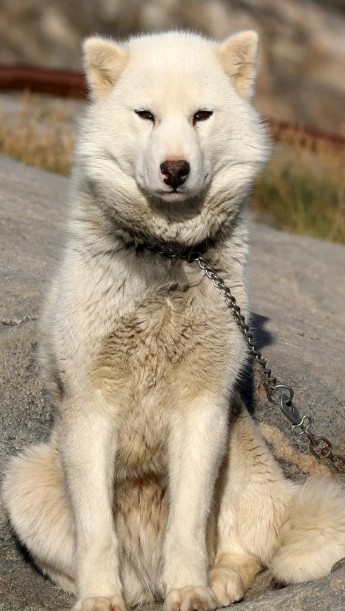
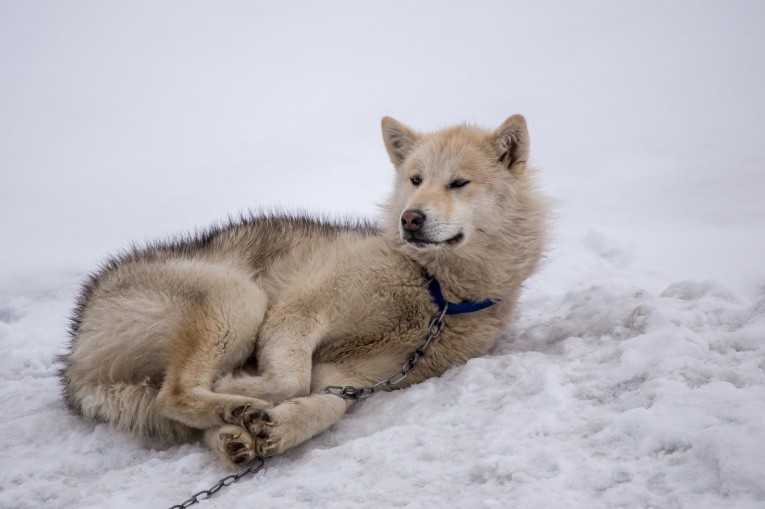
Ancient. Pragmatic. Autonomous.
Survival Drives Choices
Greenland Dogs evaluate commands through survival logic rather than obedience reflexes. What looks like resistance is often contextual intelligence at work.
Arctic Shaped Minds
Thousands of years of polar labour built dogs who conserve energy, assess terrain, and prioritise safety. Their cooperation is situational, not automatic.
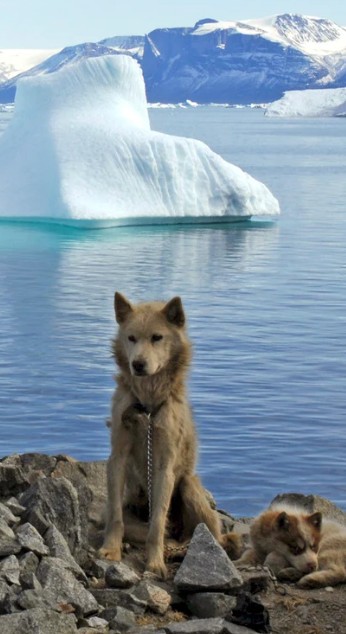
Partnership Over Control
They respond to mutual respect and shared purpose instead of dominance rituals. When treated as working partners, their reliability emerges naturally.
Endurance Cognition & Long-Duration Rhythm
Your Greenland Dog’s brain works differently than sprint-focused breeds. They don’t experience the world in short bursts of intensity followed by rest. They’re designed for sustained effort over hours and days, and this shapes their entire cognitive and emotional landscape.
The Endurance Mindset
Endurance cognition means your dog processes information while moving. Problem-solving happens during sustained activity, not before or after. Emotional regulation occurs through rhythmic motion. Focus deepens with distance covered.
This is why “training sessions” in a backyard often fail. You’re asking your dog to learn in a context—short duration, stationary focus, repetitive drills—that’s antithetical to how their brain engages. Their ancestors learned by doing, over distances, with real consequences.
Patience and Delayed Gratification
Interestingly, endurance breeds often show better delayed gratification than sprint breeds. Your Greenland Dog can wait. They can conserve energy. They can defer immediate satisfaction for long-term goals. This makes them seem “lazy” or “unmotivated” in conventional training when actually they’re being strategically patient.
You need to work with this, not against it. Short, frequent training sessions frustrate them. Long missions with embedded learning opportunities engage them. The difference isn’t duration—it’s context and purpose.
🐺 Training Journey with the Greenland Dog ❄️
A 12-Month Partnership Building Process with Arctic’s Ancient Working Breed
Phase 1: Foundation & Relationship
Months 1-3: Building Trust Before Commands
🧠 Understanding Your Arctic Partner
Your Greenland Dog carries 9,000 years of autonomous decision-making in their DNA. This phase isn’t about obedience—it’s about establishing mutual respect. They’ll evaluate your consistency, emotional stability, and whether you understand their need for purposeful work rather than arbitrary commands.
👀 What to Expect
• Testing boundaries through systematic barrier assessment
• Selective cooperation—responding when it makes sense to them
• High energy without proper movement outlets
• Strong pack awareness if you have other dogs
✅ Training Focus
• Establish predictable daily routines (feeding, exercise, rest)
• Begin harness familiarization with light pulling work
• Build movement foundation: 2-3 hour daily walks on varied terrain
• Practice calm tethering without panic responses
Phase 2: Purpose Development
Months 4-6: From Movement to Mission
🧠 The Shift to Purposeful Work
This is where the Invisible Leash concept becomes tangible. Your dog begins understanding that you provide direction toward meaningful goals, not arbitrary control. They’re not following commands—they’re partnering on missions. Work becomes its own reward, replacing treat-dependency with genuine cooperation.
✅ Training Advancement
• Introduce pulling tasks: canicross, bikejoring, or freight work
• Teach directional cues during movement: left, right, straight, wait
• Begin distance commands: close, out, back
• Extend daily exercise to 3-4 hours with clear start/end points
⚠️ Common Challenges
Escape behaviors may intensify as your dog becomes more athletic and confident. Reinforce containment now. If small animals trigger chase responses, begin strict management protocols—this won’t improve without intervention.
Phase 3: Cooperative Reliability
Months 7-9: Autonomous Partnership Emerges
🧠 Soul Recall in Action
You’ll notice moments where your dog responds not to commands but to shared understanding. Soul Recall describes this alignment—your dog’s emotional memory and working drive sync with your direction because the partnership feels right. This is cooperation without coercion, the hallmark of working breed success.
✅ Advanced Training
• Extended missions: 10-15 mile routes with varied terrain
• Complex directional sequences through challenging environments
• Allow situational decision-making opportunities
• Begin controlled urban exposure at low-stress times
👀 Progress Indicators
Your dog seeks you to initiate activities, responds to directional cues during movement without repetition, remains calm during necessary confinement, and shows reduced barrier testing. These signal genuine partnership, not just compliance.
Phase 4: Urban Competency
Months 10-12: Building Environmental Tolerance
🧠 Distance-Based Coexistence
Urban tolerance for Greenland Dogs means functional coexistence, not enthusiastic participation. Your dog learns to pass other dogs at appropriate distance, tolerate traffic and crowds, and handle necessary proximity situations like vet visits—all while maintaining emotional equilibrium.
✅ Exposure Strategies
• Gradual distance reduction from stimuli (start 100+ feet away)
• Sub-threshold training keeping arousal below reactive levels
• Parallel walking with stable dogs as models
• Movement-based exposure rather than static positioning
🚫 Never Do This
Avoid dog parks, forced greetings, crowded events, and prolonged tight-space confinement. These create flooding—overwhelming stress that teaches your dog urban environments are unbearable, not manageable.
Phase 5: Pack Dynamics Mastery
Ongoing: Multi-Dog Household Stability
🧠 Cooperative Tension vs. Dysfunction
Some pack friction is normal and functional—it maintains alertness and establishes situational hierarchies. Your role is recognizing the difference between healthy competition and concerning escalation. Not every interaction needs your intervention.
✅ Management Protocols
• Separate feeding with clear spacing and order
• Individual attention time preventing resource competition
• Collective movement creating behavioral alignment
• Spatial interruption for tension without punishment
👀 Warning Signs
Watch for stiff posture with raised hackles, silent stares, resource guarding, spatial pressure, and displacement behaviors. These early signals allow intervention before fights occur.
Phase 6: Containment & Safety
Critical Infrastructure: Prevent Dangerous Escapes
⚠️ High-Risk Escape Behaviors
Greenland Dogs can scale 6-8 foot fences, dig tunnel systems several feet deep, door blast with enough force to knock you over, and systematically test barriers for weak points. This isn’t misbehavior—it’s problem-solving driven by 50-100 mile daily ranging instincts.
✅ Structural Solutions
• 8-foot fencing with inward-angled tops
• Double gates creating airlock systems
• Dig guards extending 2-3 feet underground
• Visual barriers reducing external stimulation
🧠 Behavioral Prevention
The most powerful escape prevention is movement satisfaction. A dog who’s completed a 15-mile mission cares far less about the fence. Structured yard time, controlled departures, and purpose provision redirect problem-solving intelligence toward cooperation.
Phase 7: Predatory Drive Management
Ongoing: Safety with Small Animals & Wildlife
⚠️ Predatory Reality Check
These dogs hunted seals and bears for millennia. Cats, small dogs, chickens, and wildlife trigger deep predatory sequences. Even dogs who seem “fine” have injured animals when arousal spiked. If you have small pets, assume incompatibility until proven otherwise through months of careful management.
👀 Predatory Drift Warning Signs
Watch for play becoming one-directional (pursuing vs. fleeing), intensity without breaks, body language shifting from loose to stiff and focused, silent concentration, and neck-targeting behaviors. Intervene before escalation.
✅ Management Strategy
• Separate living spaces for small animals
• Controlled, supervised exposure only
• Interrupt fixation before chase begins
• Accept this is management, not elimination
Phase 8: Mature Partnership
Year 2+: Deepening NeuroBond Connection
🧠 The Culmination of Trust
By year two, the NeuroBond framework becomes natural. Your emotional alignment shapes communication without conscious effort. Your dog reads your intentions through energy and positioning. Cooperation flows from mutual understanding rather than command-compliance. This is partnership in its truest form.
✅ Maintenance Requirements
• Daily: 2-4 hours varied movement, structured work, calm rest periods
• Weekly: 15-25 mile endurance missions, novel terrain
• Monthly: Physical evaluation, behavioral monitoring, containment checks
• Seasonal: Temperature-appropriate adjustments
🎯 Success Markers
Your dog seeks you for mission initiation, demonstrates calm in varied contexts, shows respectful autonomy (evaluating but cooperating), maintains stable pack dynamics, and clearly enjoys shared work. You’ve built something rare: genuine partnership with a polar survivor.
❄️ Greenland Dog vs. Other Arctic Breeds 🐺
Greenland Dog
Autonomy: Highest – evaluates before responding
Endurance: Extreme – 50-100 mile capability
Prey Drive: Very high – hunting heritage
Training: Purpose-driven, not treat-motivated
Siberian Husky
Autonomy: High – but more handler-friendly
Endurance: High – medium distances
Prey Drive: Moderate to high
Training: More food-motivated, social
Autonomy: Moderate – more cooperative
Endurance: Heavy freight, shorter distances
Prey Drive: Moderate
Training: Stronger handler bond possible
Samoyed
Autonomy: Lower – more people-oriented
Endurance: Moderate pulling capacity
Prey Drive: Lower than working sled dogs
Training: Most responsive to conventional methods
Autonomy: Moderate – hunting independence
Endurance: Medium – hunting stamina
Prey Drive: High – tracking specialist
Training: Better handler focus than Greenland Dog
Canadian Eskimo Dog
Autonomy: Highest – very similar to Greenland Dog
Endurance: Extreme – Arctic working heritage
Prey Drive: Very high
Training: Nearly identical challenges and approach
⚡ Quick Reference: Daily Requirements
Movement Formula: 2-4 hours daily at moderate, sustainable pace across varied terrain
Exercise ≠ Exhaustion: Goal is rhythmic endurance, not collapse
Work = Reward: Purpose-driven tasks (pulling, carrying, navigating) replace treat-dependency
Containment Minimum: 8-foot fencing with dig guards and double gates
Routine Reliability: 70% improvement with predictable daily patterns
Temperature Sweet Spot: Below 70°F (21°C) for comfort, below 50°F (10°C) for peak performance
Cooperation Formula: Clear purpose + Calm leadership + Respected autonomy = Partnership
🧡 The Zoeta Dogsoul Approach with Arctic Breeds
Training a Greenland Dog isn’t about imposing control—it’s about building the NeuroBond connection where trust becomes the foundation of every interaction. Through the Invisible Leash philosophy, you learn that calm awareness guides more effectively than constant commands, that purposeful direction creates cooperation without coercion. Soul Recall moments emerge naturally when your dog’s emotional memory aligns with your shared mission—not because they’re obedient, but because the partnership serves you both. With polar working breeds, success means honoring 9,000 years of Arctic intelligence while building modern cooperative reliability. That balance between science and soul, structure and autonomy, purpose and partnership—that’s the essence of what we do at Zoeta Dogsoul.
© Zoeta Dogsoul – Where neuroscience meets soul in dog training
Routine, Predictability & Environmental Structure
One of the most powerful tools you have with a Greenland Dog is predictability. These dogs thrive on routine in ways that might surprise you given their independent reputation. Research confirms what experienced handlers know intuitively: dogs trained with predictable routines exhibit up to 70% more reliable behavior compared to those in chaotic, unpredictable environments.
Why Routine Matters
In Arctic survival contexts, predictable patterns meant efficiency and safety. Dogs knew when to expect feeding, rest, and work. This reduced anxiety and allowed energy conservation. Unpredictability meant potential danger.
Your modern Greenland Dog carries this preference. Consistent feeding times reduce resource anxiety. Predictable work schedules create security. Regular routines support emotional stability. Clear environmental structure reduces decision fatigue.
The Science of Routine-Based Learning
The benefits of predictability extend beyond simple comfort:
- Faster learning: Dogs anticipate and prepare for activities, arriving mentally ready rather than reactive
- Reduced anxiety: Calm state necessary for information processing and skill acquisition
- Better self-control: Understanding schedules builds patience and impulse regulation
- Enhanced focus: Dedicated training times signal “this is learning time” through environmental context
- 70% more reliable behavior: Research-backed improvement compared to chaotic, unpredictable environments
When your Greenland Dog knows that 6 AM means breakfast, 7 AM means the long walk, 5 PM means evening activity, and 9 PM means rest, their nervous system settles into productive patterns. The predictability itself becomes a training tool.
Creating Effective Routine
Daily rhythm matters more than rigid scheduling. Your dog needs to know that morning means certain activities, evening means others. Structure your routine around these elements:
- Fixed feeding times: Same hours daily for digestive consistency and resource security
- Consistent exercise windows: Morning and evening patterns your dog can anticipate
- Predictable training sessions: Regular times and locations signaling focused work
- Structured rest periods: Designated downtime where your dog knows they won’t be disturbed
- Reliable transitions: Clear signals for activity changes reducing anxiety
This doesn’t mean boring sameness. Within predictable structure, you can vary routes, terrain, and activities. The framework stays consistent while details change, providing both security and mental stimulation.
Environmental Management
Your Greenland Dog needs clear spatial boundaries. Designated rest areas where they know they won’t be disturbed. Work zones where they understand activity happens. Social areas where pack interaction occurs. Physical barriers that communicate limits without constant verbal reminders.
Secure containment isn’t about restricting freedom—it’s about preventing the anxiety and conflict that comes from unclear boundaries. A well-fenced area where your dog knows the limits relaxes them more than loose supervision requiring constant management.

Pack Dynamics in Modern Multi-Dog Households
If you have multiple dogs, understanding pack dynamics becomes essential. Greenland Dogs in groups behave differently than as individuals, and this affects everything from feeding to training to daily management.
Resource Management
Clear protocols prevent conflict. Feeding happens in order with sufficient spacing. High-value items are distributed fairly or removed. Resting spots have designated hierarchies that you support rather than disrupt.
You might see ritualized displays—stiff posture, silent stares, minor positioning adjustments. These are normal conflict resolution mechanisms. Intervention should only happen when escalation threatens injury, not at every minor interaction.
Cooperative Tension vs. Dysfunction
Some friction maintains pack alertness and work drive. Dogs challenge each other, establish temporary hierarchies for specific contexts, and compete in ways that enhance rather than damage relationships. This is cooperative tension—normal, functional, even beneficial.
Dysfunction looks different. Chronic stress in subordinate dogs. Resource guarding that escalates to violence. Constant intervention required to prevent fights. Dogs isolating or showing fear-based behaviors.
Understanding the difference requires observation without projection. Not every interaction needs your management. Often, your presence during minor disputes escalates rather than resolves conflict.
Collective Training
Training multiple Greenland Dogs together leverages their pack orientation. They learn from watching each other. Collective movement creates behavioral alignment. Group work provides social reinforcement.
Start with basic movement coordination. Then add directional cues the group follows. Build complexity through terrain challenges the pack navigates together. This approach feels natural to dogs designed for team work.
Predatory Drive & Risk Management
Your Greenland Dog carries the genetic legacy of Arctic hunters who tracked and held dangerous prey across sea ice. This predatory heritage manifests in modern life through behaviors that can range from inconvenient to dangerous if not understood and managed.
Historical Context Shapes Current Risk
For over a millennium, Greenland Dogs assisted in hunting seals, bears, and other Arctic prey. This required high prey drive and chase instinct, sustained pursuit over long distances, coordinated pack hunting strategies, and the ability to engage dangerous animals without backing down. These traits were survival necessities, carefully preserved through breeding.
In your suburban backyard or urban neighborhood, these same instincts create serious management challenges.
Small Animal Risks You Must Address
The predatory drive creates serious management challenges:
- Cats: Many Greenland Dogs view cats as prey; movement patterns, size, and behavior trigger predatory sequences
- Small dogs: Your dog may not differentiate between small dogs and prey animals, especially at dog parks
- Chickens and rabbits: Backyard poultry or small livestock trigger immediate chase and capture responses
- Wildlife pursuit: Deer, squirrels, birds—any animal that runs activates the chase response instinctively
- Size-based targeting: Animals under 20 pounds particularly vulnerable to predatory misidentification
Even dogs who seem “fine” with small animals have injured or killed them when arousal spiked. Assume incompatibility unless proven otherwise through extremely careful, supervised exposure over months.
Predatory Drift: When Play Becomes Dangerous
Predatory drift describes the escalation from play to predatory behavior. Warning signs include:
- One-directional play: Your dog pursuing, other dog fleeing without reversal
- Increased intensity: Play escalating without natural breaks or calming
- Fixation patterns: Targeting one specific dog repeatedly
- Body language shift: From loose and playful to stiff and focused
- Vocalization decrease: Silent focus indicating predatory mode engagement
- Neck targeting: Grabbing or shaking behaviors during play
This most commonly happens when a smaller dog makes high-pitched sounds or rapid movements, arousal crosses a threshold during intense play, multiple dogs gang up on one creating pack hunting dynamics, or rough play involves sustained neck grabbing.
Movement Triggering Beyond Animals
Running children can trigger chase responses, especially when they’re squealing, moving erratically, or in groups. Your dog doesn’t necessarily want to hurt the child, but the movement pattern activates instincts that override judgment.
Cyclists and joggers create similar triggers. The fast movement at your dog’s peripheral vision can spark pursuit. This becomes dangerous when your dog is inadequately contained or when someone passes too close.
Vehicles sometimes trigger chase behavior, particularly in dogs with insufficient exercise outlets. The movement, sound, and speed activate predatory circuits, creating extreme danger.
Inter-Dog Aggression Patterns
Same-sex aggression appears frequently in Greenland Dogs, particularly between mature adults. Resource competition over food, space, or handler attention can escalate quickly. Hierarchical disputes intensify during social maturity (18-36 months) as dogs establish adult relationships.
Arousal escalation represents another risk. Play between Greenland Dogs can transition to conflict when excitement builds. What starts as wrestling can become fighting, especially in multi-dog households where pack dynamics add complexity.
Early Warning Signals You Must Recognize
Learning to read early warning signals prevents escalation:
- Stiff posture: Rigid body with raised hackles indicating rising tension
- Silent stares: Prolonged eye contact without vocalization suggesting conflict brewing
- Resource guarding: Blocking access to food, toys, or spaces
- Displacement behaviors: Yawning, lip-licking, or turning away showing stress that can precede aggression
- Spatial pressure: Crowding, blocking, or herding other dogs signaling dominance assertion
- Freeze responses: Sudden stillness before explosive action
Understanding these signals allows intervention before injury occurs. Many people miss the subtle warnings and only notice the fight.
Safe Intervention Protocols
Prevention outweighs correction:
Prevention Strategies:
- Clear resource management with separate feeding areas and toy protocols
- Adequate space provision ensuring all dogs can retreat
- Structured interactions under supervision preventing unsupervised escalation
- Individual attention giving each dog one-on-one time
- Routine consistency with predictable schedules reducing tension
Intervention Techniques:
- Spatial interruption: Calmly create distance between dogs without drama
- Redirection: Offer alternative focus through movement or tasks
- Neutral removal: Take one dog away without punishment or emotional loading
- Environmental reset: Change location or activity to break tension pattern
- Professional assessment: Consult behaviorist for persistent issues
For persistent issues, professional assessment by someone experienced with working breeds becomes essential. Not every trainer understands the difference between normal Greenland Dog behavior and genuine pathology.
Reality Check for Potential Owners
If you have cats, small dogs, or small livestock, seriously reconsider this breed. If you have young children under 8 years old, understand the significant management burden. If you live in dense urban areas with off-leash dogs and wildlife, expect constant vigilance.
The predatory drive isn’t a flaw to fix—it’s a feature of the breed’s design. Management, not elimination, is the realistic goal. 🧠
Energy, Arousal & Emotional Neutrality
Your emotional state profoundly affects your Greenland Dog’s behavior. These dogs read energy, tension, and arousal with extraordinary sensitivity, and they respond to what they feel more than what you say.
The Mirror Effect
When you’re anxious, your dog becomes vigilant. When you’re excited, their arousal spikes. When you’re frustrated, they become conflicted or oppositional. This isn’t personal—it’s neurological mirroring shaped by pack coordination needs.
Your dog needs you to be their emotional anchor, not another source of instability. Calm leadership doesn’t mean passivity. It means decisive action without emotional charge.
Arousal Management
High arousal impairs learning and cooperation. Your overstimulated dog can’t process directions, make good decisions, or regulate behavior effectively. This is why excited corrections and high-energy praise often backfire.
You need strategies to modulate arousal. Structured tethering practice teaches calm during restraint. Rhythmic movement provides arousal outlets. Environmental desensitization reduces reactivity. Predictable routines prevent anxiety-driven arousal spikes.
The Neutral Tone Challenge
Many people struggle with emotional neutrality. You want to celebrate when your dog cooperates, comfort when they’re stressed, correct when they make mistakes. But emotional loading of these moments often creates the opposite effect you intend.
Practice neutral acknowledgment. Your dog completes a recall? Simple “good” without excitement. They refuse a command? Quiet redirection without frustration. They show stress? Calm presence without anxiety.
This feels unnatural to humans but speaks clearly to dogs evolved for steady, purposeful partnership.
Leadership Style Impact on Training Success
The way you lead determines whether your Greenland Dog cooperates or resists.
Calm, Decisive Leadership Creates:
- Emotional neutrality reducing conflict in intensity-reactive breeds
- Clear direction using unambiguous cues without excessive repetition
- Consistent boundaries with predictable rules preventing confusion
- Respectful autonomy allowing decision-making input within structure
Problematic Approaches That Damage Partnership:
- Confrontational methods: Escalate conflict and erode trust through physical dominance
- Constant correction: Creates learned helplessness or reactivity when everything receives negative feedback
- Emotional intensity: Amplifies arousal and reduces cooperation through excited or angry energy
- Micromanagement: Suppresses autonomy and problem-solving by directing every step
This leadership style works because it aligns with your dog’s evolutionary expectations. Arctic sled teams needed handlers who stayed calm in life-threatening conditions, made clear decisions without panic, and trusted their dogs’ judgment about terrain and danger.
Why These Approaches Fail Specifically With Polar Breeds
Understanding why matters. These dogs evolved for distributed leadership where situational expertise mattered more than hierarchy. They expect handlers to provide overall direction while respecting their input on terrain, pacing, and threat assessment.
When you use confrontational methods, you create conflict where cooperation should exist. When you constantly correct, you override the autonomous decision-making that makes this breed functional. When you bring emotional intensity, you destabilize the calm steadiness they need. When you micromanage, you prevent them from contributing their considerable intelligence to the partnership.
The result? A dog who either shuts down completely, losing all working drive, or who opposes you at every turn, making life exhausting for both of you. Neither outcome serves anyone. 😊
Temperature, Weather & Seasonal Considerations
Your Greenland Dog was designed for Arctic conditions. Modern climate reality means you’re probably not keeping them in their optimal thermal environment, and this affects behavior, health, and training approach.
Heat Sensitivity and Management
Greenland Dogs suffer in heat. Their double coat, metabolic rate, and limited panting efficiency make temperatures above 70°F (21°C) uncomfortable and above 80°F (27°C) dangerous. Heat stress manifests as lethargy, reduced cooperation, irritability, and health risks.
Summer management requires schedule adjustments—work during cool morning and evening hours. Provide constant access to shade and water. Consider cooling vests or wet towels during activity. Reduce exercise intensity and duration when temperatures climb.
Watch for heat stress signs: excessive panting, drooling, bright red gums, stumbling, disorientation, or collapse. These constitute emergencies requiring immediate cooling and veterinary attention.
Cold Weather Opportunities
When temperatures drop, your Greenland Dog comes alive. This is their element. You’ll notice increased energy, improved focus, enhanced cooperation, and obvious joy in movement.
Winter provides optimal training conditions. Your dog’s endurance increases. Their attention sharpens. Work that seemed difficult in summer becomes effortless. This is the season to build skills and deepen partnership.
Surprisingly, very few Greenland Dogs need protective gear. Their natural insulation handles extreme cold. Some might benefit from paw protection on salted roads, but coats and booties usually interfere with their thermoregulation.
Seasonal Behavioral Patterns
Expect behavioral shifts with seasons. Summer may bring reduced activity interest and increased rest periods. Your dog isn’t being lazy—they’re being thermally intelligent. Winter may bring higher arousal and stronger work drive. Spring and fall shedding can affect comfort and temperament.
Adjust your expectations seasonally rather than demanding year-round consistency that fights their biology.
Nutrition for Working Endurance
Feeding a Greenland Dog requires understanding their unique metabolic needs. This isn’t a breed that does well on standard maintenance formulas designed for sedentary pets.
Metabolic Differences
Working endurance breeds metabolize fat efficiently for sustained energy. They require higher protein levels to support muscle maintenance during long-duration activity. Their caloric needs vary dramatically based on work level and temperature.
A Greenland Dog doing serious pulling work in cold weather might need 2-3 times the calories of a house pet. Conversely, a sedentary dog in summer needs much less. You can’t rely on package recommendations—you need to monitor body condition and adjust feeding accordingly.
Feeding Protocol
Most Greenland Dogs do well with once-daily feeding after work, mimicking ancestral patterns of eating when food was available. This prevents bloat risk from exercising on a full stomach and aligns with their natural rhythm.
High-quality protein sources should dominate their diet. Fish-based foods align with historical diets. Adequate fat provides endurance fuel. Carbohydrates matter less than for sprint breeds.
Avoid feeding immediately before or after intense work. Allow 1-2 hours before activity and 30-60 minutes after for digestion and cool-down.
Hydration During Endurance Work
Greenland Dogs often don’t drink adequately during work, evolved for eating snow rather than carrying water weight. You need to ensure hydration opportunities during long missions, especially in warm weather.
Monitor urine color and skin elasticity. Offer water regularly during breaks. Consider adding moisture to food if your dog doesn’t drink enough independently.
Health Considerations & Genetic Realities
Greenland Dogs are generally healthy, but they carry specific predispositions that responsible ownership requires understanding.
Hip Dysplasia Awareness
Like many large working breeds, hip dysplasia occurs in Greenland Dogs. Responsible breeders screen breeding stock, but risk remains. Early signs include reluctance to jump or climb, bunny-hopping gait, decreased activity interest, or discomfort after rest.
Management involves maintaining lean body condition to reduce joint stress, appropriate exercise that builds muscle support without excessive impact, and veterinary monitoring if symptoms develop.
Eye Conditions
Progressive Retinal Atrophy (PRA) appears in some lines, causing gradual vision loss. Cataracts can develop, particularly in aging dogs. Regular veterinary eye exams help catch problems early.
Gastric Dilatation-Volvulus (Bloat) Risk
Deep-chested breeds face bloat risk—a life-threatening condition where the stomach fills with gas and potentially twists. Prevention strategies include feeding smaller meals, avoiding exercise immediately before or after eating, using slow-feed bowls if your dog eats too rapidly, and monitoring for distension, retching, or restlessness after meals.
Bloat constitutes a veterinary emergency. Minutes matter. Know your emergency vet location and have a plan.
The Over-Exercise Risk
While Greenland Dogs need substantial movement, they can be over-exercised, particularly in inappropriate temperatures or before skeletal maturity. Young dogs (under 18-24 months) shouldn’t do intense pulling work. Growth plates need protection.
Watch for limping, reluctance to work, behavioral changes after exercise, or prolonged recovery periods. These suggest you’ve exceeded healthy limits.
Training Philosophy: Cooperation, Not Compliance
Everything we’ve discussed comes together in training philosophy. With Greenland Dogs, you’re not teaching commands—you’re building cooperative reliability through shared purpose.
Foundation Principles
Start with relationship and trust before demanding precision. Provide clear purpose for every training activity. Work with their pack orientation rather than against it. Use movement as primary reinforcement. Accept contextual evaluation as intelligent, not defiant. Maintain emotional neutrality during all interactions. Build gradually from foundation to complexity.
That balance between science and soul, structure and autonomy, purpose and partnership—that’s the essence of Zoeta Dogsoul.
What Success Looks Like
Reliable cooperation doesn’t mean robot-like obedience. It means your dog consistently responds to directional cues during movement. They remain calm during tethering and containment. They show appropriate arousal regulation in varied contexts. Pack dynamics stay stable without frequent conflict. They engage purposefully in work tasks. They demonstrate respectful autonomy—evaluating situations but ultimately cooperating. Escape attempts and boundary pressure decrease. Urban tolerance develops without flooding.
The partnership quality reveals itself in subtle ways. Your dog seeks you for mission initiation. You maintain mutual awareness during activities. Interactions become calm and predictable. Cooperation happens without coercion. You both enjoy work and movement. Communication flows respectfully in both directions.
Is the Greenland Dog Right for You?
This breed isn’t for everyone. Let’s be honest about what successful Greenland Dog ownership requires, because the cost of getting this wrong is high—for you and for your dog.
Lifestyle Requirements
You need genuine commitment to 2-4 hours of daily movement across varied terrain and weather. You need access to safe spaces for endurance work—trails, forests, beaches, or rural areas. You need tolerance for vocalization and working breed behaviors. You need secure containment with 6-foot fencing minimum. You need acceptance of seasonal coat shedding and maintenance. You need realistic expectations about obedience and companionship styles.
Climate Considerations
If you live in consistently warm climates, seriously reconsider this breed. You’ll fight their biology daily. They’ll be uncomfortable most of the year. Health risks increase. Their quality of life suffers. This isn’t about dedication—it’s about biological mismatch.
Cool or cold climates suit them naturally. If you have harsh winters and mild summers with access to air conditioning during heat, they can thrive.
Experience Level
First-time dog owners should probably choose a different breed unless they have extensive support and are truly committed to learning. Greenland Dogs require understanding of canine behavior, comfort with independence and strong will, physical capability for managing powerful dogs, problem-solving orientation rather than recipe-following, and patience for long-term relationship building.
Family and Living Situation
Greenland Dogs can work in families with older children who understand boundaries and respect. Very young children and polar working breeds create safety risks and stress for both.
They need space—apartments and small yards don’t provide adequate environment. They do best in rural or suburban settings with outdoor access.
Other pets present challenges. Their prey drive makes cats, small dogs, and livestock risky. Successful multi-species households require extensive management and aren’t guaranteed.
The Honest Question
Are you willing to structure your life around this dog’s needs for years? To rise early for long walks before work? To drive to appropriate exercise locations? To manage containment and supervision constantly? To accept that your dog may never be “good” by conventional standards?
If yes, you might find the Greenland Dog to be an extraordinary partner. If no—and there’s no shame in this—choose a breed better suited to your real life rather than your idealized dog ownership fantasy.
Socialization: Urban Mismatch & Distance-Based Coexistence
Understanding how to socialize a Greenland Dog requires first understanding the fundamental mismatch between their evolutionary design and modern environments. Getting this wrong creates reactive, stressed dogs who can’t function in everyday life. Getting it right builds urban competency without breaking their spirit.
The Environmental Design Conflict
Your Greenland Dog’s ancestors evolved in open, cold landscapes with vast sight lines where they could see threats and opportunities from great distances. They lived in low population density with infrequent encounters with unfamiliar humans or dogs. Their environment followed predictable seasonal patterns with clear territorial boundaries understood by all.
Modern urban and suburban reality creates the opposite conditions. High density surrounds them with strangers, traffic, and noise. Tight spaces and leash restriction prevent natural avoidance behaviors. Unpredictable stimuli and chaos assault their senses constantly. Forced proximity to unfamiliar dogs contradicts every instinct about appropriate social distance.
This mismatch explains why your Greenland Dog might seem “antisocial” or “reactive” in environments where other breeds cope easily. They’re not broken—they’re responding appropriately to conditions that violate their biological expectations.
Distance-Based Coexistence Principles
Successful socialization for Greenland Dogs centers on distance-based coexistence rather than close interaction. Your dog thrives when they can maintain spatial buffer from strangers and unfamiliar dogs. Parallel exposure where they observe others without interaction requirement builds tolerance. Controlled greetings that are handler-mediated, brief, and purposeful work better than prolonged contact. Avoidance options giving them ability to create distance when uncomfortable prevent flooding.
This approach honors their preference for observational assessment over forced interaction. Your dog can learn that other dogs and people exist without needing to greet every one they encounter.
What NOT to Do: Common Socialization Mistakes
These approaches consistently create problems rather than building tolerance:
- Dog parks: Unstructured chaos, high arousal, unpredictable dog behavior, inability to maintain distance
- Forced greetings: On-leash face-to-face meetings eliminating escape options and creating confrontational positioning
- Crowded events: Festivals, markets, dense urban areas overwhelming sensory processing
- Prolonged confinement: Tight spaces with no escape route building panic (crowded vet waiting rooms, stuck elevators)
- Excessive exposure: Pushing too far too fast without reading stress signals
What you intend as positive exposure becomes flooding when these conditions exist. Your dog learns that other dogs and crowded spaces predict uncomfortable, overwhelming situations.
Tolerance-Building Without Flooding
Effective exposure strategies begin with gradual distance reduction. Start far enough from stimuli that your dog notices but stays calm—this might be 100 feet or more. Over weeks and months, slowly decrease distance as your dog demonstrates relaxed observation.
Sub-threshold training keeps arousal below reactive threshold throughout exposure. If your dog shows stress signals, you’ve moved too close too fast. Back up, reduce intensity, and progress more gradually.
Predictable patterns using consistent routes, times, and contexts help your dog anticipate and prepare mentally. When socialization happens during structured activities they understand, they cope better than during unpredictable encounters.
Movement integration means conducting exposure during purposeful walks rather than static positioning. Your dog handles stress better when moving with clear direction than when forced to stand still while stimuli approach.
Pack support leverages stable pack members to model calm behavior. If you have a confident, well-socialized dog, parallel exposure with that dog helps your Greenland Dog learn appropriate responses.
Warning Signs of Flooding
Learn to recognize when exposure becomes counterproductive:
- Prolonged stress signals: Panting, drooling, trembling indicating exceeded coping capacity
- Behavioral shutdown: Freezing or going still (overwhelmed, not calm)
- Aggression or panic: Lunging, snapping, or frantic escape attempts
- Regression: Previously learned behaviors deteriorating under stress
- Avoidance behaviors: Actively trying to leave, hiding behind you, refusing to move forward
- Dilated pupils: Physical stress response visible in eye changes
When you notice these signs, immediately reduce intensity. Create distance, remove your dog from the situation, and plan more gradual exposure for next time. Pushing through flooding doesn’t build tolerance—it creates trauma.
Building Urban Competency
The goal isn’t to make your Greenland Dog love crowds and constant social interaction. The goal is building competency to navigate urban environments calmly without constant stress or reactivity. This means they can walk through town, pass other dogs at reasonable distance, tolerate traffic and noise, and handle necessary proximity like veterinary visits.
Set realistic expectations. Your Greenland Dog may never enjoy bustling dog parks or greeting every passerby. That’s perfectly fine. Urban competency means functional tolerance, not enthusiastic participation. 🐾
Training Foundations: Building Cooperative Reliability
When you commit to training your Greenland Dog, you’re embarking on a multi-year journey. There are no shortcuts. But done right, you’ll build something remarkable: a working partnership with a polar survivor that feels less like ownership and more like chosen kinship.
Phase One: Relationship and Routine (Months 1-3)
Begin with environmental acclimation. Let your dog learn your home, yard, and immediate area without pressure. Establish predictable feeding schedules and rest periods. Create clear spatial boundaries using physical barriers, not constant commands. Introduce basic tethering and containment practice in calm, brief sessions.
Movement foundation starts immediately. Daily walks of gradually increasing duration build stamina and connection. Introduce harness familiarization with short pulling sessions. Explore varied terrain to engage environmental processing. Practice calm following without excessive commands—you walk, they join you.
Arousal baseline work begins now. Learn to recognize your dog’s arousal levels through body language. Practice calm tethering so restraint doesn’t trigger panic. Provide structured vocalization outlets so communication has appropriate channels. Introduce environmental desensitization to urban stimuli gradually.
Phase Two: Purpose and Direction (Months 4-6)
Now you build work orientation. Start pulling tasks with appropriate weight and duration. Teach directional cues—left, right, straight—during movement. Introduce distance commands like close, out, and back. Use landmark-based navigation to build mission awareness. Teach pace regulation with easy, hike, and whoa cues.
Social exposure advances carefully. Begin with distance-based observation of other dogs. Practice parallel walking with stable dogs. Conduct controlled, brief greetings. Build urban tolerance using sub-threshold exposure—close enough to notice, far enough to stay calm.
Continue arousal management work. Structured vocalization outlets prevent suppression problems. Calm tethering practice extends duration. Use movement for arousal regulation after overstimulating experiences. Environmental desensitization progresses to busier areas.
Phase Three: Cooperative Reliability (Months 7-12)
Advanced work tasks challenge and satisfy. Plan extended distance missions of 10+ miles. Work in variable terrain and weather conditions. Coordinate multi-dog team dynamics. Build complex directional sequences.
Autonomy integration happens here. Create opportunities for situational decision-making. Allow terrain assessment and route input. Respect threat detection and alerting behaviors. Give your dog energy conservation choices within mission framework.
Urban competency develops through controlled city exposure. Build traffic and crowd tolerance. Practice leash restriction management in challenging environments. Establish emergency recall protocols for safety.
Pack dynamics need refinement in multi-dog households. Prevent inter-dog conflict through resource management protocols. Maintain hierarchical stability without excessive intervention. Practice group arousal regulation.
Ongoing Management Requirements
Daily essentials never change: 2-4 hours varied movement across different terrain, weather, and intensity. Structured work tasks involving pulling, carrying, or navigating. Pack interaction time if you have multiple dogs. Calm rest periods with clear boundaries.
Weekly priorities include extended endurance missions of 15-25 miles. Novel terrain exploration keeps mental engagement high. Social exposure maintenance prevents reactivity regression. Training skill reinforcement preserves reliability.
Monthly assessments catch problems early. Evaluate physical condition and body weight. Monitor behavioral pattern changes. Check containment security. Adjust training goals based on progress and challenges.
Seasonal adaptations matter. Time activities appropriately for temperature. Modify work based on weather conditions. Manage coat through shedding seasons. Vary environmental challenges to match seasonal opportunities.
Red Flags and When to Seek Help
Even with excellent management, problems can develop. Recognizing warning signs early makes intervention more successful.
Behavioral Warning Signs
Watch for increased escape attempts or boundary testing. Excessive vocalization beyond normal breed patterns. Destructive behaviors or property damage. Inter-dog conflict escalation. Predatory behavior toward small animals. Aggression toward humans or dogs. Withdrawal, depression, or shutdown behaviors.
These indicate unmet needs, environmental problems, or developing behavioral pathology. They don’t appear randomly—they’re communication.
When Professional Help Becomes Necessary
Seek qualified help for persistent aggression despite management efforts. Severe separation anxiety or panic responses. Compulsive behaviors like spinning or tail-chasing. Extreme fear or phobic responses to common stimuli. Health-related behavioral changes. Multi-dog household violence.
The key phrase is “qualified help.” Not every trainer understands working breeds. Many will apply conventional obedience methods that worsen problems. Look for professionals with specific sled dog or working breed experience who understand purpose-based training.
The Path Forward: Honoring Arctic Heritage in Modern Life
The Greenland Dog challenges conventional companion dog paradigms at every turn. Success with this breed requires reframing training from control to cooperation, from obedience to partnership, from suppression to respectful channeling of innate drives.
These dogs carry 9,000 years of Arctic adaptation in their genes. Training must honor that evolutionary reality. Purpose motivates them more powerfully than any treat. Their selective cooperation reflects situational logic, not disobedience. Movement regulates their emotions and behavior more effectively than any calming protocol. Pack context shapes their individual behavior more than your commands ever will.
The Cost of Misunderstanding
When Greenland Dogs are forced into conventional pet frameworks, the results are predictable and tragic. Behavioral deterioration manifests through escape, destruction, aggression, and chronic vocalization. Psychological distress creates stress, anxiety, and depression. The relationship breaks down entirely. Often, the dog is labeled “untrainable” or “dangerous” and faces rehoming or euthanasia.
The tragedy is that these outcomes reflect training failure, not breed deficiency. We fail them when we demand they be something they’re not.
Success Through Partnership
The alternative exists. Educate yourself on breed history and evolutionary design. Commit genuinely to movement and purpose provision. Establish predictable routines and clear structure. Practice calm, decisive leadership without micromanagement. Respect autonomy while maintaining safety boundaries. Seek breed-specific guidance rather than generic obedience training.
When you align your expectations with the breed’s evolutionary reality, something remarkable emerges: cooperative reliability without broken spirit. Your Greenland Dog becomes a working partner who chooses cooperation because the partnership serves you both. 🧡
The Greenland Dog stands as a living connection to humanity’s ancient partnership with canines—a relationship built not on dominance or obedience, but on mutual survival, shared purpose, and cooperative achievement. In an era of increasing urbanization and sedentary lifestyles, this breed reminds us that some dogs are not meant to be pets. They are workers, partners, and polar survivors whose integrity depends on honoring their design.
The choice is yours: suppress a polar worker into a dysfunctional pet, or embrace a true partnership that allows this ancient breed to thrive in modern life while remaining authentically itself. That decision determines not just your success with this breed, but whether you truly understand what partnership with a working dog means.










