
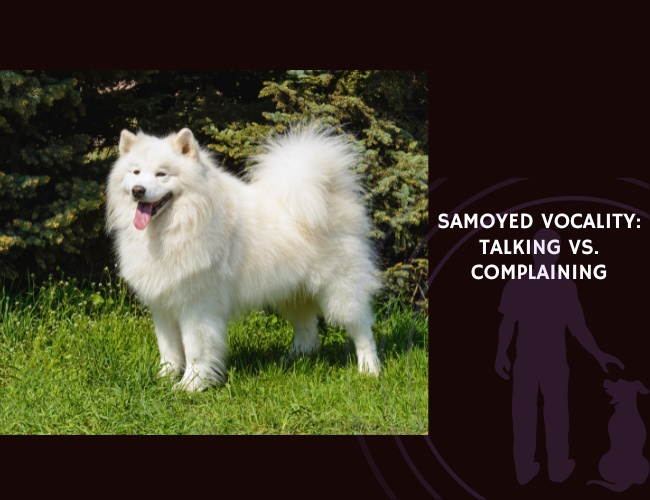
Subtitle: Decoding the Rich Vocal Repertoire of One of the World’s Most Expressive Breeds
When your Samoyed tilts their head back and releases a melodic series of sounds that seem to tell an entire story, you might wonder: is this conversation, or is this complaint? The Samoyed, with their cloud-like white coat and perpetual smile, carries within them a vocal expressiveness that few other breeds can match. Their sounds range from gentle “talking” that feels almost human in its conversational quality to persistent complaints that signal something deeper is at play.
Understanding the difference between these vocal patterns isn’t just about managing noise—it’s about reading the emotional language of a breed shaped by thousands of years alongside humans in the harsh Arctic landscape. When you learn to distinguish between your Samoyed’s affiliative talking and their frustration-based complaining, you open a doorway to deeper understanding, stronger connection, and a relationship built on genuine communication rather than guesswork. 🐾
Let us guide you through the fascinating world of Samoyed vocality, where science meets soul, and where every sound carries meaning.
The Arctic Origins: Why Samoyeds Became Master Communicators
A History Written in Snow and Sound
The Samoyed’s vocal nature didn’t emerge by accident. For over 3,000 years, these dogs worked alongside the Samoyede people in Siberia, where survival depended on close cooperation between human and canine. Unlike breeds developed for independent work or guarding at a distance, Samoyeds lived in intimate proximity with their human families—herding reindeer, pulling sleds across frozen tundra, and even sleeping in family tents to provide warmth during brutal Arctic nights.
This shared existence created evolutionary pressure for clear, nuanced communication. A Samoyed needed to signal when reindeer strayed from the herd, when danger approached, or when conditions changed. But they also needed to communicate without aggression, maintain social harmony in close quarters, and develop a vocabulary that humans could understand and respond to effectively.
Genetic Wiring for Vocal Expression
Research on domesticated animals shows that breeds selected for close human cooperation often develop heightened sensitivity to human emotional cues and more varied vocal repertoires. The Samoyed’s genetic predisposition toward baseline vocal communication exceeds that of many other breeds because their survival—and their value to their human partners—depended on this skill.
When we examine the acoustic structure of animal vocalizations, we find that sounds evolve to serve specific communicative functions. The Samoyed’s “talking” likely developed as a form of social bonding and information sharing, while their complaint vocalizations served to signal unmet needs or distress in environments where being heard could mean the difference between life and death.
Key factors in vocal development:
- Close sleeping proximity with humans created opportunities for subtle, nuanced communication
- Cooperative work tasks required clear signaling without aggression or excessive alarm
- Arctic conditions meant vocal communication often preceded visual contact
- Social cohesion in small family groups favored dogs who could “speak” rather than simply react
Through the NeuroBond approach, we recognize that this vocal heritage isn’t a behavioral problem to fix—it’s an inherent part of who the Samoyed is, a bridge between species that has been refined over millennia. 🧡
Next, we’ll explore how to distinguish between the different types of vocalizations your Samoyed uses every day.
Decoding the Sounds: Talking vs. Complaining
The Acoustic Signature of “Talking”
When your Samoyed engages in what we call “talking,” you’re witnessing affiliative vocalization—sounds produced to maintain social connection, express positive emotional states, or engage in playful interaction. These vocalizations have distinct characteristics that set them apart from complaint behaviors.
Talking behaviors typically include:
- Varied tonal range with melodic quality, almost song-like in nature
- Higher pitch variability that mimics conversational patterns
- Softer volume that invites interaction rather than demands it
- Occurs during greetings, play, or when the dog is engaged and content
- Often accompanied by relaxed body language: soft eyes, relaxed mouth, gently wagging tail
- The dog remains responsive and can be easily redirected or engaged
You might notice your Samoyed “talking” when you come home, when they’re anticipating something enjoyable like a walk, or during play sessions. This vocalization feels interactive—your dog pauses, watches your response, and adjusts their sounds based on your feedback. It’s genuine communication, a back-and-forth exchange that strengthens your bond.
The Sound of Frustration: Complaint Vocalization
Complaint vocalization emerges from a very different emotional source. These sounds signal frustration, unmet needs, anxiety, or arousal that has no appropriate outlet. The acoustic structure shifts noticeably.
Complaint behaviors typically show:
- Repetitive, insistent patterns with less tonal variation
- Narrower pitch range that can sound harsh or strained
- Increased volume and intensity over time if needs remain unmet
- Occurs during confinement, during anticipation without release, or when the dog feels powerless
- Often accompanied by stress signals: pacing, dilated pupils, tension in the body, inability to settle
- The dog becomes less responsive to redirection and may escalate behavior
When your Samoyed complains, they’re not being difficult—they’re expressing genuine emotional distress. The sound emerges from activation of neural circuits associated with frustration, panic, or the SEEKING system running without fulfillment. Understanding this distinction transforms how you respond. 🧠

The Role of Arousal in Vocal Expression
Arousal level—whether from excitement, frustration, or anxiety—dramatically shapes your Samoyed’s vocal output. According to polyvagal theory, voice tone and pitch directly reflect autonomic nervous system state. When your Samoyed is in a calm, socially engaged state (ventral vagal activation), their vocalizations remain melodic and controlled. When they shift into high arousal (sympathetic activation) or distress (dorsal vagal activation), vocal quality changes accordingly.
High arousal excitement produces loud, rapid-fire vocalizations with sharp pitch changes—think of the sounds your Samoyed makes when they know you’re about to play fetch. Frustration arousal creates repetitive, increasingly insistent sounds as the dog’s nervous system remains activated without resolution. Anxiety-based vocalization often manifests as whines, whimpers, or low-intensity repetitive sounds that signal the dog’s inability to cope with their current situation.
The key insight: vocal behavior isn’t just about what your dog wants—it’s about what their nervous system is experiencing in that moment.
The Neuroscience Behind the Noise
Neural Circuits and Emotional Drivers
When your Samoyed vocalizes, specific neural circuits activate to coordinate the behavior. The amygdala, particularly involved in emotional processing and arousal, plays a central role in determining when and how intensely a dog vocalizes. The periaqueductal gray (PAG) in the midbrain serves as a critical coordinating center for vocalization, connecting emotional states to physical sound production.
Research on vocal emotion across species reveals that the acoustic forms of vocalizations directly correlate with their communicative functions. Your Samoyed’s brain doesn’t randomly generate sounds—each vocalization pattern emerges from specific emotional and physiological states.
The affective neuroscience framework identifies key emotional circuits:
- SEEKING system: Drives exploration, anticipation, and goal-directed behavior; when activated without fulfillment, produces frustrated complaining
- PLAY system: Generates joyful, social engagement; associated with playful “talking” and interactive sounds
- PANIC/GRIEF system: Activated during separation or isolation; produces distress vocalizations, whining, and persistent calling
- RAGE system: Engaged during frustration when goals are blocked; can intensify complaint vocalizations
When you understand which emotional circuit is active, you can address the underlying need rather than simply trying to quiet the symptom.
Stress Hormones and Vocal Intensity
Cortisol and adrenaline—your dog’s primary stress hormones—directly influence vocal behavior. Elevated cortisol increases overall reactivity and lowers the threshold for vocal responses. A Samoyed experiencing chronic stress will vocalize more frequently and with greater intensity than one in a calm, predictable environment.
Adrenaline surges during moments of high arousal amplify vocal intensity and frequency. This is why your Samoyed might go from quiet to extremely vocal in seconds when they perceive something exciting or threatening—their sympathetic nervous system has flooded their body with activation chemicals.
Individual Differences: Sensory Sensitivity and Temperament
Not all Samoyeds vocalize equally. Individual differences in sensory processing and baseline sympathetic drive create a spectrum from relatively quiet to exceptionally expressive dogs. Some Samoyeds show heightened sensory sensitivity—they react more strongly to sounds, movements, and environmental changes, which naturally leads to more frequent vocal responses.
Others may have what we might call temperamental reactivity: their nervous system shifts quickly from calm to aroused states, and vocalizing becomes their primary strategy for managing that internal experience. Through moments of Soul Recall, where emotional memory and present experience intertwine, a Samoyed who was inadvertently reinforced for vocal behavior as a puppy may carry that pattern throughout their life.
Understanding your individual dog’s neurological wiring helps you set realistic expectations and develop tailored strategies for supporting healthier communication patterns. 🐾
The Human Factor: How We Shape Vocal Behavior
Inadvertent Reinforcement of Complaining
Here’s a truth many Samoyed owners discover too late: we often teach our dogs to complain without realizing it. When your Samoyed whines at the door and you let them out, they learn that whining produces results. When they vocalize for attention and you look at them, touch them, or even scold them, you’ve just reinforced the behavior—because from their perspective, any response is better than being ignored.
This creates what behaviorists call an intermittent reinforcement schedule, one of the most powerful learning mechanisms in existence. Your Samoyed doesn’t need you to respond every time; responding occasionally is enough to keep the behavior strong and persistent.
Common reinforcement patterns include:
- Responding to vocal demands inconsistently, teaching the dog to “keep trying”
- Providing attention (even negative attention like “quiet!”) when the dog vocalizes
- Giving in to vocal demands after initially trying to ignore them, teaching persistence
- Showing emotional reactivity yourself, which elevates the dog’s arousal and vocal intensity
- Failing to reward quiet, calm behavior, making vocalization the most reliable path to engagement
The Power of Calm Leadership
Through the Invisible Leash principle—where awareness and calm presence guide behavior more effectively than force or tension—we find that owner emotional state profoundly influences Samoyed vocality. Research on human-animal emotional synchrony demonstrates that dogs match human energy patterns. When you approach your vocalizing Samoyed with tension, urgency, or frustration in your body, you inadvertently escalate their arousal and increase their vocal output.
Conversely, when you maintain calm body language, steady breathing, and emotionally neutral responses, you provide a regulatory presence that helps your dog’s nervous system settle. This isn’t about ignoring your dog’s needs—it’s about meeting those needs from a state of groundedness rather than reactivity.
Effective calm leadership includes:
- Breathing deeply and releasing tension from your shoulders before engaging with vocal behavior
- Using slow, deliberate movements rather than quick, reactive gestures
- Speaking in a lower, steadier tone rather than high-pitched or sharp corrections
- Rewarding moments of quiet with genuine attention and engagement
- Creating predictable routines that reduce uncertainty and anticipatory arousal
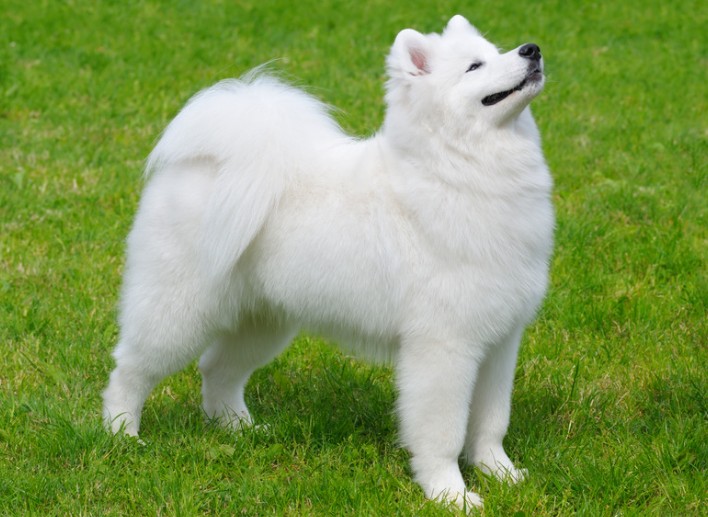
Expressive. Ancient. Intentional.
Vocality carries history.
Your Samoyed’s melodic chatter and layered sounds reflect millennia of Arctic partnership, where communication—not silence—ensured survival and social harmony.
Emotion shapes sound.
Their “talking” emerges from connection and engagement, while complaint tones surface when needs go unmet or sensory stress rises, revealing a sensitive, communicative mind.


Understanding builds trust.
When you attune to tone, rhythm, and context, you transform noise into dialogue—strengthening the bond through clarity, not correction.
Social Contact-Seeking vs. Frustration Discharge
A critical distinction exists between vocalizations that seek social connection and those that discharge built-up frustration. Samoyeds, as deeply social animals bred for constant human proximity, genuinely need regular interaction and inclusion in family activities. Vocal behavior that says “I want to be near you” or “I want to participate” reflects legitimate social needs.
However, vocalizations that emerge from under-stimulated SEEKING circuitry—when your dog has insufficient mental enrichment, physical activity, or problem-solving opportunities—represent frustration rather than simple attention-seeking. These sounds indicate that your Samoyed’s hardwired drive to work, explore, and engage has no appropriate outlet.
The solution differs dramatically. Social contact-seeking needs connection; frustration discharge needs fulfillment of working-drive needs before calm can be achieved. 🧡
Environmental and Contextual Triggers
The Under-Stimulated Mind
Samoyeds were bred to work—to pull sleds across miles of frozen terrain, to herd reindeer through challenging conditions, to problem-solve and make decisions alongside their human partners. When we place these intelligent, driven dogs in modern homes without adequate outlets for their natural drives, their nervous systems respond with restlessness, which often manifests as increased vocalization.
Low-stimulation environments activate complaint vocalization because the SEEKING system—the neural circuitry that drives exploration, engagement, and purposeful activity—runs constantly without fulfillment. Imagine feeling perpetually motivated to do something important but having no way to satisfy that drive. Your Samoyed experiences this when confined indoors for extended periods without mental or physical challenge.
Signs your Samoyed is under-stimulated:
- Increased vocal behavior in the afternoon or evening after a day of inactivity
- Restless pacing combined with vocalizing
- Fixating on windows, doors, or outside stimuli with persistent vocalization
- Difficulty settling even when physically tired
- Escalating vocal intensity when denied access to activity
Temperature, Confinement, and Anticipation
The Samoyed’s Arctic heritage means they’re exquisitely sensitive to temperature. Heat creates physical discomfort and can lower their arousal threshold, making them more reactive and vocal. You might notice increased complaint vocalization during warmer months or in inadequately cooled indoor spaces.
Indoor confinement triggers vocal behavior differently than outdoor restriction. Many Samoyeds experience what we might call environmental frustration—they can see, hear, or smell interesting things happening outside but cannot access them. This creates a state of perpetual anticipation without resolution, which the nervous system finds deeply frustrating.
Anticipation of activity produces perhaps the most intense vocal behavior. When your Samoyed knows a walk is coming, can see you preparing their leash, or hears the jingle of car keys associated with adventure, their arousal spikes dramatically. The gap between “knowing something good is coming” and “actually experiencing it” creates vocal behavior that intensifies with each passing second.
The Gift of Predictable Routine
Here’s where we find practical relief: predictable routines significantly reduce complaint vocalization. When your Samoyed’s day follows consistent patterns—meals at regular times, walks on a reliable schedule, play sessions that happen predictably—their nervous system can relax. Uncertainty breeds anxiety; predictability breeds calm.
This doesn’t mean rigidity. It means creating rhythm in your dog’s life where they can anticipate what comes next without needing to demand or complain about it. When morning always includes a walk after breakfast, your Samoyed stops needing to lobby for it. When evening consistently brings family time and mental enrichment, they can settle because they trust the pattern.
The Invisible Leash operates through this kind of structure—not rigid control, but mindful awareness of how predictability shapes emotional experience. 🐾
Welfare Implications and What Your Samoyed Is Really Saying
When Complaining Signals Unmet Needs
Excessive complaint vocalization isn’t a training problem—it’s often a welfare indicator. Your Samoyed’s brain is wired for purpose, movement, and problem-solving. When these core needs go unmet day after day, the resulting frustration manifests as persistent, escalating vocal behavior that becomes increasingly difficult to interrupt.
Working-drive needs that may be unmet:
- Physical movement: Samoyeds need sustained aerobic activity, not just brief bathroom breaks
- Mental challenge: Problem-solving activities, scent work, or training sessions that engage their intelligence
- Social purpose: Feeling included in family activities and having a “job” or role within the household
- Sensory enrichment: Novel experiences, varied environments, and opportunities to use their natural abilities
When your Samoyed complains persistently despite having food, water, and access to outdoor space, look deeper. What purpose are they lacking? What drive are they unable to fulfill? This vocal behavior is their language for saying “I need more than just physical care—I need a life that engages who I am.”
Reading Emotional Exhaustion and Overstimulation
Interestingly, excessive vocality can signal both under-stimulation and overstimulation. A Samoyed pushed beyond their emotional capacity—through chaotic environments, unpredictable social dynamics, or constant high arousal—may vocalize more as their nervous system struggles to regulate.
Signs of emotional exhaustion include:
- Vocal behavior that seems frantic or uncontrolled rather than purposeful
- Inability to settle even after needs have been met
- Vocalizing in response to minor or neutral stimuli
- Vocal patterns that seem disconnected from any specific want or need
- Accompanying behaviors like excessive panting, dilated pupils, or inability to make eye contact
These dogs need the opposite of more stimulation—they need help downregulating their nervous systems through calm environments, predictable routines, and reduced arousal triggers until they can find their baseline again.
The Balance Between Expression and Distress
Not all vocalization indicates distress. Healthy Samoyed communication includes varied sounds throughout the day—greeting barks, play vocalizations, gentle “talking” during interactions, and occasional alert barking. These sounds reflect a dog engaging appropriately with their environment and social group.
The concern arises when vocalization becomes:
- Persistent and resistant to meeting the dog’s needs
- Increasingly intense or frantic in quality
- Accompanied by other stress indicators like pacing, excessive panting, or destructive behavior
- Disruptive to the dog’s ability to rest, eat normally, or engage in positive activities
Your goal isn’t silence—it’s supporting your Samoyed in finding emotional balance where their communication reflects genuine engagement rather than chronic distress. 🧠
Training Approaches That Honor the Samoyed Voice
What NOT to Do: Suppression vs. Transformation
Let’s address the ineffective approaches first. Punishment-based methods for vocal behavior—shock collars, citronella spray collars, or harsh verbal corrections—don’t address the underlying emotional drivers. They may temporarily suppress the sound, but they leave the frustration, anxiety, or unmet needs completely intact.
Worse, these methods damage the trust foundation of your relationship. Your Samoyed learns that expressing their emotional state leads to discomfort or fear, which doesn’t eliminate the emotion—it only teaches them to suffer in silence or to develop other problem behaviors as outlets.
Similarly, simply ignoring all vocalization without addressing root causes rarely works with Samoyeds. These dogs were bred for persistence in challenging conditions. Ignoring them often just teaches them to vocalize longer and louder until they break through your defenses.
Building Alternative Communication Pathways
Effective training focuses on teaching your Samoyed alternative ways to communicate their needs while simultaneously ensuring those needs are actually met. This is where the NeuroBond approach shines—by addressing both the emotional foundation and the behavioral expression.
Practical strategies include:
Teaching a “quiet” cue during calm moments: Practice rewarding silence when your dog is already quiet, building value for the behavior before you need it in arousing situations
Creating clear communication signals: Teach your Samoyed specific behaviors for “I need to go out” (touching a bell), “I want to play” (bringing a toy), or “I need attention” (sitting calmly near you) that are more effective than vocalizing
Rewarding check-ins and calm behavior: When your Samoyed looks at you quietly or settles near you without demanding, mark and reward that behavior richly
Implementing predictable fulfillment schedules: Ensure that walks, play, training, and social time happen reliably enough that your dog doesn’t need to lobby for them
Using enrichment to satisfy SEEKING drives: Puzzle feeders, scent work, training sessions, and novel experiences that engage your dog’s mind reduce frustration-based vocalization
The Power of Calm Consistency
Perhaps the most transformative element: your own emotional consistency. When you respond to vocal behavior from a place of calm awareness rather than reactivity, you become a regulatory presence in your dog’s life. This doesn’t mean being robotic or cold—it means being the stable emotional anchor your Samoyed can trust.
When your dog complains at the door, take a breath before responding. Move with deliberate calm. Wait for a moment of quiet before opening the door, rewarding the silence rather than the demands. When your Samoyed escalates vocally during play anticipation, pause the preparation until they settle, teaching them that calm brings what they want faster than vocalization does.
This approach respects your Samoyed’s need to communicate while gradually shaping healthier patterns. Through repeated experiences, your dog’s nervous system learns that emotional regulation is more effective than escalation—and their vocal behavior transforms to reflect this new understanding. 🧡
Creating a Vocally Balanced Life: Practical Implementation
Daily Structure for Vocal Harmony
Let’s build a framework that supports your Samoyed’s nature while reducing excessive complaint vocalization. This isn’t about controlling your dog—it’s about creating conditions where they can thrive emotionally.
Morning routine that sets the tone:
- Begin with a calm greeting that acknowledges your dog without over-exciting them
- Provide outdoor time within 30 minutes of waking to prevent anticipatory vocalization
- Include a short training session or puzzle feeder with breakfast to engage their mind
- If possible, schedule aerobic exercise before you leave for work, fulfilling movement needs early
Midday management:
- For dogs left alone, ensure they have puzzle toys, safe chew items, and comfortable resting spaces
- Consider hiring a dog walker or using doggy daycare to break up long stretches of solitude
- Keep the environment temperature-controlled, especially during warmer months
- Leave calm background music or white noise to buffer external sounds that trigger alert barking
Evening engagement:
- Provide focused attention and interaction when you return, preventing attention-seeking vocalization later
- Include mental challenges: training new skills, scent games, or problem-solving activities
- Ensure adequate physical exercise: a tired Samoyed is typically a quieter Samoyed
- Create a wind-down routine 30-60 minutes before sleep that signals the day is ending
Enrichment Activities That Reduce Vocal Frustration
The most effective long-term strategy for reducing complaint vocalization is ensuring your Samoyed’s working-drive needs are genuinely met. These activities engage the SEEKING system appropriately, providing fulfillment rather than frustration.
High-impact enrichment options:
Scent work and nose games: Hide treats around your home or yard, teach your Samoyed to find specific scents, or create scent trails to follow—engages their powerful olfactory abilities and provides mental challenge
Pulling activities: Bikejoring, skijoring, or even pulling a loaded sled or cart honors the Samoyed’s historical purpose and provides intense physical satisfaction
Advanced training and trick work: Teaching complex behaviors or skill chains engages problem-solving abilities and strengthens communication between you
Social play with appropriate dogs: Regular interaction with play-compatible dogs satisfies social drives and provides physical and emotional outlets
Adventure walks in novel environments: Varied locations provide sensory enrichment that repetitive neighborhood loops cannot match
Recognizing Individual Patterns
Your specific Samoyed will have unique triggers and patterns. Keep a simple journal for one week, noting when vocal behavior occurs, what preceded it, and what resolved it. Patterns will emerge quickly.
You might discover that your dog complains most between 3-5 PM (indicating under-stimulation during the day), primarily when they can see but not access outdoor activity (environmental frustration), or mainly when family members arrive home (social excitement and greeting behavior).
These patterns guide your intervention. The dog who complains from under-stimulation needs more enrichment earlier in the day. The dog who complains from environmental frustration might benefit from moving their resting area away from windows. The dog who complains during greetings needs help learning calm greeting behaviors that still honor their social nature.
Through this observational awareness—a practice that embodies the Invisible Leash philosophy—you develop nuanced understanding of your individual dog’s communication style. 🐾
The Deeper Connection: What Vocal Understanding Really Means
Moving Beyond Control to Understanding
Throughout this exploration of Samoyed vocality, we’ve moved from surface-level “how do I make them quiet” to deeper questions: What is my dog experiencing? What do they need? How can I support their emotional wellbeing while honoring who they are?
This shift from control to understanding represents the heart of the NeuroBond approach. Your Samoyed’s vocalizations aren’t problems to eliminate—they’re communications to decode. Each sound carries information about their internal state, their needs, and the quality of their emotional life.
When you learn to distinguish talking from complaining, you’re not just managing behavior—you’re developing genuine fluency in your dog’s language. You become someone who truly understands, who responds to need rather than merely reacting to sound.
The Gift of the Samoyed Voice
There’s something profound about living with a breed that refuses to suffer silently, that insists on being heard, that fills your home with sound that ranges from joyful to frustrated to everything in between. The Samoyed voice, in all its varied expressions, reminds us that our dogs are feeling beings with rich emotional lives.
Yes, excessive complaining can be challenging. But that same vocal expressiveness means your Samoyed tells you when they’re happy, shares in your excitement, and makes their presence a constant, audible part of your life together. These dogs don’t fade into the background—they participate, vocally and fully, in the family experience.
When you honor that nature while teaching healthier expression, you create space for genuine connection. Your Samoyed learns they don’t need to escalate to be heard. You learn to read subtle shifts in vocal quality that signal changes in emotional state. Trust deepens. Communication becomes fluid.
That balance between honoring nature and supporting regulation—that’s where the magic happens. That’s the essence of Zoeta Dogsoul. 🧡
Conclusion: Your Samoyed’s Voice, Your Shared Language
The distinction between talking and complaining in Samoyeds isn’t just academic—it’s practical wisdom that transforms daily life. When you understand that melodic, varied “talking” reflects positive social engagement while repetitive, insistent complaining signals unmet needs or emotional distress, you can respond appropriately to each.
Your Samoyed’s vocal nature is their heritage, refined over thousands of years alongside humans who needed clear communication in harsh environments. This isn’t a flaw to fix but a feature to understand and guide. Through awareness of the emotional drivers, neurological mechanisms, and environmental factors that shape vocal behavior, you become a partner in communication rather than an adversary to their expression.
Remember these key principles:
- Vocal behavior reflects emotional state and nervous system activation, not willful disobedience
- Different sounds serve different communicative functions and require different responses
- Under-stimulation and overstimulation can both produce excessive vocalization
- Your emotional state and consistency profoundly influence your dog’s vocal patterns
- Effective intervention addresses root causes while teaching alternative communication
- The goal is balance and understanding, not silence and suppression
As you move forward with your remarkably expressive companion, listen with both your ears and your heart. Notice the nuances in pitch, pattern, and context. Respond to the emotion beneath the sound. Create a life that meets your Samoyed’s deepest needs for purpose, connection, and engagement.
When you do this work, something beautiful unfolds: your Samoyed’s voice becomes less of a challenge and more of a conversation. Their sounds gain meaning you can reliably interpret. The bond between you strengthens because they know they’re understood.
And in those moments when your Samoyed settles beside you with a contented sigh instead of a demanding vocalization, or when their “talking” conveys joy rather than frustration, you’ll know—this is what it means to truly speak each other’s language. 🐾
That’s the journey we’re on together, you and your vocal, expressive, wonderful Samoyed—learning to hear each other with clarity, respond with wisdom, and build a relationship where every sound strengthens the bond between you.










