
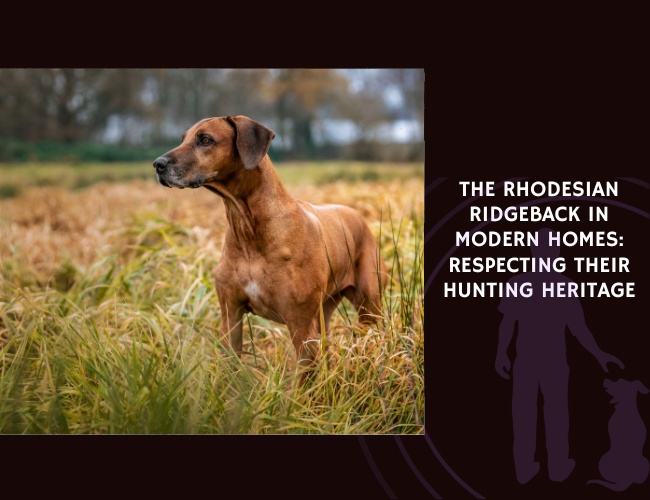
When you look into the eyes of a Rhodesian Ridgeback, you’re meeting a soul shaped by centuries of purpose. This magnificent breed carries within its DNA the echo of African plains, the thrill of the hunt, and the courage to face lions. Yet today, most Ridgebacks live in suburban homes, navigate city streets, and sleep on comfortable couches. The question isn’t whether they can adapt—it’s whether we can create environments that honor who they truly are.
Let us guide you through understanding this remarkable breed’s needs in the modern world. The Rhodesian Ridgeback isn’t just a large dog with a distinctive ridge along their spine—they’re a living bridge between wild heritage and domestic partnership. When you choose to share your life with a Ridgeback, you’re not simply getting a pet; you’re becoming the guardian of an ancient legacy that requires respect, understanding, and thoughtful accommodation. 🧡
Understanding the Hunter’s Heart: Heritage & Behavioral Foundations
The Legacy Written in Their Genes
Did you know that your Ridgeback’s tendency to scan the horizon constantly isn’t anxiety—it’s ancestral excellence? For generations, these dogs were bred to track dangerous game across vast African territories, often working independently for hours without human guidance. This historical role has imprinted behavioral patterns that don’t simply disappear because they now live in climate-controlled homes.
The Ridgeback’s brain carries what we might call a “neurobiological map” for pursuit, tracking, and endurance. Their intense prey drive isn’t a behavioral problem—it’s a feature, not a bug. When your Ridgeback fixates on a squirrel or pulls toward an interesting scent, they’re expressing thousands of years of functional selection. The dopamine-driven SEEKING system in their brain lights up with an intensity that most companion breeds simply don’t experience.
The Three Pillars of Ridgeback Heritage:
- Endurance Beyond Measure: Bred to sustain long pursuits across challenging terrain, your Ridgeback possesses cardiovascular and muscular systems designed for marathon efforts, not sprint-and-stop suburban life
- Independence and Autonomy: Unlike breeds developed to work closely with handlers, Ridgebacks were selected for autonomous decision-making when tracking dangerous game far from human oversight
- Territorial Awareness: Guardian instincts run deep—these dogs were protectors of homesteads and families, creating a natural vigilance that persists in modern contexts
The Neurochemistry of the Hunt
Your Ridgeback’s brain chemistry tells a fascinating story. Research suggests that hunting-line breeds exhibit more pronounced activation of dopamine pathways associated with seeking, exploration, and pursuit. This means that when your dog encounters movement, scent trails, or novel stimuli, their neurological response is significantly more intense than you might expect from other breeds.
This heightened sympathetic drive explains why Ridgebacks can seem “over the top” in their reactions. Their baseline arousal tends to run higher, making them quicker to excitement and potentially slower to settle. It’s not hyperactivity—it’s genetic expectation meeting environmental reality. Through the NeuroBond approach, we learn that understanding these neurochemical realities helps us create training and management strategies that work with the dog’s nature, not against it. 🐾
Next, we’ll explore how modern living environments impact these powerful genetic predispositions.
The Modern Challenge: Environmental Fit & Urban Living
When Space Becomes a Limiting Factor
You might notice your Ridgeback becoming restless after what seems like adequate exercise. Here’s why: a 30-minute neighborhood walk doesn’t come close to simulating the sensory complexity and physical demands of tracking across open terrain. Low-stimulation environments—apartments without visual variety, small yards with limited scent complexity, homes lacking cognitive challenges—create what behaviorists call “frustrated activation.”
Your Ridgeback’s SEEKING system remains chronically unfulfilled. Imagine feeling hungry but never quite satisfied no matter how much you eat—that’s the emotional equivalent of what under-stimulated Ridgebacks experience. This frustration doesn’t just disappear; it transforms into displacement behaviors: destructive chewing, excessive vocalization, or compulsive patterns like fence-running or shadow-chasing.
Common Environmental Stressors for Urban Ridgebacks:
- Confinement Effects: Limited space triggers arousal buildup, leading to increased destructiveness, escape attempts, and difficulty settling into calm states
- Sensory Overload: Urban environments bombard dogs with constant noise, visual chaos, and crowd density that hunting breeds weren’t designed to process continuously
- Decompression Deficit: Lack of quiet, natural spaces where dogs can engage in self-directed exploration and sensory processing without human intervention
The Apartment Ridgeback: Possible but Demanding
Can Ridgebacks live in apartments? Technically yes, but the commitment required is substantial. You’ll need to become creative about meeting their needs. This isn’t a breed that tolerates “weekend warrior” exercise schedules. Your Ridgeback requires daily opportunities for sustained physical exertion, scent-directed activities, and mental challenges that engage their problem-solving abilities.
The smaller your living space, the more intentional you must be about structured decompression—time when your dog can exist in low-arousal environments without constant stimulation. This might seem counterintuitive, but teaching calm is as important as providing exercise. Dogs living in confined spaces need explicit training in relaxation protocols to prevent chronic stress accumulation.
Without adequate environmental enrichment and physical outlets, you may observe heightened territorial guarding, reduced frustration tolerance, and difficulty with impulse control. These aren’t character flaws—they’re predictable responses to unmet genetic expectations. 🧠
Let’s explore how training approaches can bridge the gap between heritage and modern reality.
Building Partnership: Training & Communication with Purpose
Why Traditional Obedience Often Falls Short
Have you ever felt your Ridgeback deliberately ignoring you? Here’s the truth: they probably aren’t being stubborn—they’re being authentic to their breeding. Ridgebacks were selected for autonomous decision-making in high-stakes situations. When they evaluate a situation and determine that your cue doesn’t make sense or isn’t sufficiently motivated, they reserve the right to choose differently.
This breed-specific independence fundamentally affects training dynamics. High-repetition obedience drills often create compliance without understanding, leading to selective hearing and slow response times. Your Ridgeback isn’t trying to challenge your authority—they’re waiting for clarity about why this behavior matters and what’s in it for them beyond avoiding correction.
The Ridgeback Training Reality:
- Context is Everything: These dogs need to understand the functional purpose of behaviors, not just memorize mechanical responses to cues
- Relationship Precedes Response: Without genuine engagement and trust, you’ll constantly battle their natural inclination toward self-directed decision-making
- Motivation Matters: Food, toys, and praise work, but intellectual satisfaction and purpose-driven activities create deeper cooperation

The NeuroBond Alternative: Connection Over Compliance
Relational training models offer a more effective pathway for Ridgebacks. When you build what we call NeuroBond—a genuine emotional connection based on mutual respect and clear communication—training transforms from a battle of wills into collaborative partnership. This approach recognizes your dog’s intelligence and works with their natural drives rather than suppressing them.
Start by establishing clear context for every interaction. Ridgebacks thrive when they understand the rules of engagement. Inconsistent expectations create conflict behaviors that look like disobedience but actually reflect confusion. When your communication is clear, consistent, and fair, most Ridgebacks prove remarkably responsive.
Key Training Principles for Ridgebacks:
- Use marker-based training to provide precise feedback about desired behaviors
- Incorporate problem-solving tasks that engage their cognitive abilities
- Build impulse control gradually through rewarded choice-making rather than forceful suppression
- Create training scenarios that simulate hunting-context challenges (tracking, search games, distance work)
- Celebrate autonomous good decisions rather than only responding to direct cues
Remember, the goal isn’t absolute obedience—it’s reliable partnership. Your Ridgeback should want to work with you because the collaboration itself is rewarding, not because they fear consequences. This foundation becomes particularly crucial when managing their powerful drives in real-world situations.
Next, we’ll examine the physical and sensory requirements that keep Ridgebacks balanced. 🐾
Meeting the Physical Beast: Exercise & Sensory Fulfillment
Beyond the Basic Walk: What Real Exercise Looks Like
You’ll quickly discover that walking your Ridgeback around the block twice daily doesn’t cut it. These dogs were built for endurance—their cardiovascular system, muscular structure, and metabolic efficiency all reflect breeding for sustained exertion. A Ridgeback in proper condition can run for hours, maintain pursuit over miles, and recover quickly for the next adventure.
What does adequate exercise actually mean? For most adult Ridgebacks, you’re looking at a minimum of 90-120 minutes of vigorous activity daily, not gentle strolling. This might include trail running, bikejoring, long-distance hiking, or sustained fetch sessions. The activity needs to elevate their heart rate significantly and maintain that elevation long enough to create true physical tiredness.
Exercise That Actually Satisfies:
- Distance Running: 5-10 mile runs at moderate pace, ideally on varied terrain that requires navigation and engagement
- Bikejoring or Canicross: Structured pulling activities that engage their power and endurance simultaneously
- Trail Hiking: 2-3 hour adventures with elevation changes, stream crossings, and sensory complexity
- Swimming: Low-impact option that provides intense physical work while protecting joints
- Lure Coursing: Simulates prey pursuit in controlled, safe environments
The Power of Scent: Why Nose Work Matters
Here’s something many Ridgeback owners discover too late: physical exercise alone isn’t enough. Your dog’s nose represents their primary way of understanding the world, and scent-directed activities provide regulatory benefits that pure physical exertion can’t match. When your Ridgeback engages in tracking or nose work, you’re activating neural pathways specifically designed for this purpose.
Scentwork creates what researchers call “voluntary focus”—your dog chooses to concentrate deeply on a task, which naturally regulates arousal and promotes calm satisfaction afterward. A 20-minute tracking session can provide more mental tiredness than an hour of fetch because it engages problem-solving, decision-making, and sustained concentration.
Incorporating Scent Activities:
- Lay scent trails in your yard or local parks using treats or scent articles
- Hide objects for your dog to locate using only their nose
- Consider formal nose work training classes that build tracking skills progressively
- Create scent discrimination games where your dog identifies specific odors
- Allow extended sniffing time on walks rather than constantly moving forward
Managing Visual-Motion Reactivity
Did you know your Ridgeback’s intense focus on moving objects isn’t random? Their historical pursuit role created heightened visual-motion reactivity—they’re neurologically primed to track movement patterns and predict trajectory. This explains why they might lunge at joggers, cyclists, or even cars. It’s not aggression; it’s pursuit drive activated by movement.
Managing this requires both physical outlets and cognitive training. You can’t simply suppress the drive through corrections; you must teach alternative responses and provide appropriate outlets. Through the Invisible Leash concept, we understand that true control comes from your dog’s internal regulation, not physical restraint alone. Teaching them to notice but choose not to chase creates lasting behavioral change. 🧡
Understanding these physical needs sets the foundation for exploring specific behavioral challenges next.
Heritage. Instinct. Presence.
Ancient purpose shapes behaviour.
Your Ridgeback’s constant scanning, quick arousal, and powerful drive reflect centuries of selection for endurance, autonomy, and guardian instincts that still pulse beneath their modern routines.
Neurobiology fuels intensity.
Dopamine-driven seeking pathways light up rapidly in this breed, making movement, scent, and novelty trigger stronger pursuit responses and higher baseline arousal than most companion dogs experience.


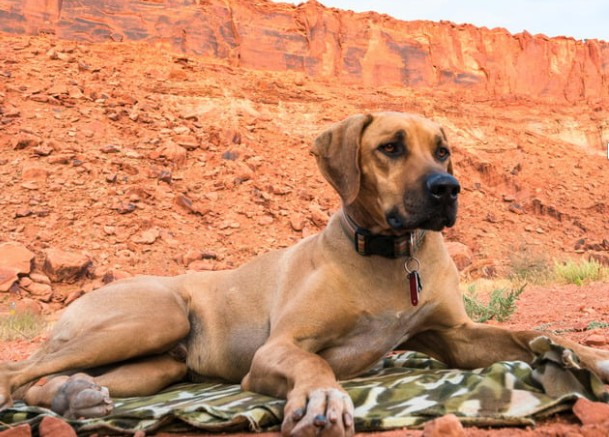
Respect unlocks harmony.
When you honour their hunting heritage with structure, outlets, and connection, their independence transforms from challenge to partnership, allowing their true nature to thrive in modern homes.
When Heritage Meets Reality: Behavioral Risks & Management
The Under-Stimulated Ridgeback: A Recipe for Trouble
Have you noticed your Ridgeback becoming increasingly reactive, restless, or destructive? You’re likely witnessing the consequences of unmet genetic expectations. When powerful drives for pursuit, tracking, and autonomous work remain unfulfilled, the energy doesn’t disappear—it redirects into problematic outlets.
Under-stimulation manifests differently depending on the individual dog and their specific genetic intensity. Some Ridgebacks become hypervigilant, constantly scanning for anything that might satisfy their SEEKING system. Others develop territorial over-guarding, treating every sound or sight near their property as a potential threat requiring response. Still others disengage entirely, appearing depressed or unmotivated—what we call “shutdown” behavior.
Common Behavioral Manifestations:
- Prey-Driven Lunging: Intense, often uncontrollable reactions to moving stimuli—squirrels, bikes, other dogs, even leaves blowing across the yard
- Territorial Escalation: Progressively intense reactions to people or dogs passing the home, fence-fighting, or doorway guarding
- Destructive Behaviors: Targeted destruction of items with your scent when left alone, or generalized chewing as an outlet for arousal
- Hyper-Focused Scanning: Inability to relax on walks due to constant environmental monitoring for potential “prey” or threats
- Escape Artistry: Digging under fences, learning to open doors, or dangerous attempts to pursue perceived prey
The Frustration Cycle: Breaking the Pattern
Here’s what happens neurologically: when your Ridgeback’s innate drives activate but cannot reach completion (chase initiated but prey not caught, scent detected but tracking not allowed), the sympathetic nervous system stays partially elevated. Over time, this creates a lower threshold for arousal—your dog becomes increasingly reactive to smaller stimuli because they’re starting from a higher baseline.
This frustration cycle builds momentum. Each unfulfilled activation makes the next one more intense. Eventually, you have a dog who seems unable to settle, overreacts to everything, and appears chronically stressed. The solution isn’t more corrections or stricter control—it’s providing appropriate outlets for the drives themselves.
Breaking the Cycle Requires:
- Daily opportunities for successful completion of tracking or pursuit behaviors in controlled settings
- Gradual desensitization to triggers combined with alternative behaviors that satisfy the underlying drive
- Structured decompression periods where your dog can exist in low-arousal environments without demands
- Physical exercise intense enough to create genuine tiredness, not just brief energy expenditure
- Mental challenges that engage problem-solving abilities and provide cognitive satisfaction
The Danger of Behavioral Suppression
You might be tempted to simply correct every unwanted behavior—stop the lunging with leash pops, punish the barking, prevent the digging through constant supervision. This approach creates what behaviorists call “behavioral suppression,” where the outward expression stops but the internal drive remains unchanged and often intensifies.
Ridgebacks subjected to constant correction without appropriate outlets frequently develop learned helplessness, anxiety, or sudden explosive reactions. Their independent nature makes them particularly vulnerable to emotional burnout when their natural behaviors are continuously punished without alternative fulfillment. Through the Soul Recall perspective, we recognize that memories of constant correction can create deep emotional imprints that damage the human-animal bond. 🐾
Let’s explore practical welfare strategies that honor your Ridgeback’s nature.
Designing for Success: Welfare & Household Adaptation
Enrichment That Actually Enriches
Not all enrichment activities are created equal. For Ridgebacks, the most powerful regulatory activities tap directly into their hunting heritage. Puzzle feeders might occupy time, but they don’t satisfy the same neurological pathways as scent tracking or long-range exploration. You need to think like a behavioral architect, designing your dog’s daily experience to include specific types of engagement.
High-Value Enrichment Activities:
- Tracking Games: Hide treats or toys along progressively longer scent trails, teaching your dog to follow their nose with sustained focus
- Long-Range Exploration: Safe, off-leash or long-line adventures in varied terrain where your dog can make autonomous choices about what to investigate
- Problem-Solving Challenges: Multi-step tasks requiring planning and persistence (opening boxes, navigating obstacle courses, finding hidden items)
- Structured Decompression Walks: Slow-paced outings where you allow extensive sniffing, environmental investigation, and self-directed exploration
- Hunting Simulation: Flirt pole work, hide-and-seek with family members, or drag-scent tracking that mimics pursuit patterns
Creating Calm in the Home Environment
Your home layout and daily routines significantly impact your Ridgeback’s ability to achieve calm states. These dogs need clearly designated rest areas where they feel secure and aren’t constantly monitoring their environment. Without this, they remain in a state of perpetual vigilance that prevents deep relaxation.
Consider visual access carefully. While some dogs benefit from window views, Ridgebacks with strong territorial instincts may become chronically aroused by watching neighborhood activity. You might need to manage sightlines to reduce over-stimulation while still providing environmental interest.
Home Environment Strategies:
- Establish a “den” area—crate, bed, or corner—that signals safety and rest time
- Create routines that alternate activity with enforced rest periods
- Use white noise or calming music to buffer environmental sounds that trigger alertness
- Rotate toys and enrichment items to maintain novelty without constant over-stimulation
- Provide elevated resting spots that satisfy monitoring instincts without requiring constant response
- Consider environmental temperature—Ridgebacks often prefer cooler spaces that allow comfortable rest
The Art of Simulation: Meeting Hunting Needs Ethically
You obviously can’t allow your Ridgeback to pursue actual prey in modern contexts, but you can simulate the neurological satisfaction of hunting through thoughtful activity design. The key is understanding that hunting involves a sequence: searching, tracking, pursuing, catching, and consuming. Each stage activates specific neural pathways.
Ethical Hunting Simulation Activities:
- Scent Trail to Food: Drag a treat bag through your yard, creating a trail your dog must follow to find their meal
- Retrieve Chains: Progressive retrieves where finding one item provides information about the next location
- Barn Hunt or Similar Sports: Structured activities where dogs locate prey scent (typically rats safely contained) in hay bale mazes
- Advanced Hide-and-Seek: Family members hide with high-value rewards, requiring your dog to search, track, and “capture”
- Variable Distance Recalls: Practice recalls at increasing distances in safe areas, building the “pursuit and return” pattern
The goal isn’t perfection—it’s progress. Each day that includes appropriate outlets for your Ridgeback’s heritage drives is a day where behavioral problems become less likely. 🧠
The Reality Check: Is a Ridgeback Right for Your Life?
Honest Assessment of Lifestyle Compatibility
Let’s be direct: Ridgebacks aren’t for everyone. If your ideal dog is a couch companion who’s content with minimal exercise and doesn’t require extensive behavioral management, this breed will disappoint you. But if you’re drawn to their intelligence, independence, and powerful presence, understanding whether you can truly meet their needs becomes crucial.
You might thrive with a Ridgeback if:
- You genuinely enjoy and can commit to 1.5-2 hours of daily vigorous exercise, regardless of weather or your schedule
- You appreciate independent-minded dogs and don’t require constant obedience or people-pleasing behavior
- You have experience with training high-drive breeds or are willing to invest significantly in professional guidance
- You own a home with adequate space, preferably including secure outdoor areas for self-directed exploration
- Your lifestyle includes regular outdoor adventures—hiking, running, or other activities your dog can join
- You’re prepared for a dog who may show territorial behaviors and requires careful socialization
- You understand that training will be ongoing throughout their life, not just a puppy phase
A Ridgeback may not be suitable if:
- Your available exercise time is limited or inconsistent due to work demands or other commitments
- You live in a small apartment without easy access to large outdoor spaces
- You prefer a highly trainable, eager-to-please breed that responds quickly to conventional obedience training
- You’re unprepared for the potential costs of professional training, behavioral support, or breed-specific enrichment
- Your household includes small pets that might trigger prey drive (cats, rabbits, etc.) without extensive management
- You want a dog for off-leash hiking in unfenced areas where prey animals are abundant
- You’re seeking a low-maintenance companion who adapts easily to varied circumstances
The Commitment Beyond Puppyhood
Here’s what experienced Ridgeback owners want you to know: these dogs don’t “settle down” at 18 months like many breeds. Their physical demands remain high through middle age, typically until 7-8 years old. Even senior Ridgebacks often maintain significant exercise requirements compared to other breeds their age.
The behavioral management is also lifelong. You don’t train a Ridgeback once and finish—you maintain and refine throughout their lives. Their intelligence means they continue learning, for better or worse, so consistency and ongoing engagement remain essential. Through the essence of Zoeta Dogsoul, we understand that the deepest partnerships emerge when we respect a dog’s authentic nature rather than forcing them into a mold that doesn’t fit.
When Ridgebacks Flourish: Success Stories
Despite the challenges, Ridgebacks in the right homes create profound partnerships. Owners describe relationships characterized by mutual respect, deep loyalty, and genuine companionship. These aren’t dogs who constantly seek your approval, but when they choose to connect with you, it carries weight.
Successful Ridgeback ownership often looks like:
- Active families who integrate their dog into outdoor adventures naturally
- Individuals with flexible schedules allowing for extensive daily exercise
- Homes where the dog participates in activities like bikejoring, trail running, or tracking sports
- Owners who appreciate the breed’s dignified independence and don’t require constant affection
- Households willing to invest in ongoing training, behavioral enrichment, and breed-specific activities
The Partnership Payoff:
When you successfully meet a Ridgeback’s needs, you gain a dog who is remarkably reliable, deeply loyal to their family, and impressive in their capabilities. They become trusted partners who can handle complex situations with minimal guidance, protect without excessive aggression, and provide companionship without neediness. That distinctive ridge along their spine becomes a daily reminder that you’re living with something extraordinary—a bridge between wild heritage and domestic partnership. 🧡
Moving Forward: Creating Your Ridgeback Success Plan
First Steps for Prospective Owners
If you’re still reading and feeling drawn to this breed, let’s create a realistic preparation plan. The best Ridgeback relationships begin long before you bring a dog home. Education, honest self-assessment, and advance preparation make the difference between struggling and thriving.
Pre-Adoption Preparation:
- Connect with experienced Ridgeback owners or breed clubs to observe adult dogs in home environments
- Evaluate your local resources: trainers experienced with independent breeds, appropriate exercise locations, nose work classes
- Audit your schedule honestly—where will exercise time come from on difficult days?
- Research veterinary care specific to the breed’s health concerns (hip dysplasia, dermoid sinus)
- Consider your long-term life plans: moves, career changes, family additions that might impact your capacity
- If possible, foster or dog-sit for a Ridgeback to experience the daily reality
For Current Owners: Optimizing Your Approach
Already living with a Ridgeback? Perhaps you’re struggling with specific behaviors or simply want to deepen your partnership. It’s never too late to reassess and adjust your approach to better honor your dog’s heritage while meeting modern life demands.
Optimization Strategies:
- Conduct a honest audit of current exercise quality and quantity—are you truly meeting endurance needs?
- Experiment with scent-directed activities to assess whether mental stimulation reduces behavioral issues
- Consider whether behavioral problems stem from under-stimulation rather than training deficits
- Evaluate your training approach: are you building partnership or fighting natural independence?
- Look for breed-specific activities or sports that provide appropriate outlets (lure coursing, barn hunt, tracking)
- Connect with other Ridgeback owners for support, ideas, and realistic perspective on breed-normal behaviors
The Long View: Growing Together
Living with a Ridgeback is a journey of mutual adaptation. You learn to read their subtle communication, understand their motivations, and provide what they truly need rather than what training books suggest. They learn to trust your guidance, accept household routines, and channel their powerful drives into appropriate outlets.
This partnership isn’t without challenges. You’ll have frustrating days when their independence seems like pure stubbornness, when their prey drive embarrasses you on walks, or when their energy seems inexhaustible despite your exhaustion. But you’ll also have moments of profound connection—watching them track a scent trail with intense focus, observing their dignified presence, or feeling their selective but genuine affection.
The Ridgeback teaches us that successful dog ownership isn’t about molding animals to our convenience. It’s about understanding who they are at their core and creating lives that honor both their needs and ours. That balance between heritage and modernity, wildness and domesticity, independence and partnership—that’s where the magic lives. 🐾
Conclusion: The Bridge Between Worlds
The Rhodesian Ridgeback stands at a fascinating crossroads in canine evolution. They’re close enough to their working heritage that the drives remain intense and authentic, yet they’ve been companion animals long enough to form deep attachments to human families. This makes them simultaneously challenging and rewarding—dogs who demand we rise to meet their needs while offering extraordinary partnership in return.
Success with this breed requires three fundamental commitments: respecting their heritage by providing appropriate outlets for hunting drives, building genuine partnership through connection-based training rather than force, and maintaining consistent physical and mental enrichment throughout their lives. When these elements align, Ridgebacks reveal themselves as remarkable companions—intelligent, loyal, capable, and dignified.
Your Ridgeback isn’t a broken dog who needs fixing when they scan the horizon, pull toward interesting scents, or make independent decisions. They’re a functioning member of a hunting breed doing exactly what thousands of years of selection designed them to do. Your role isn’t to suppress these instincts but to channel them, honor them, and create a life where wild heritage and domestic partnership coexist harmoniously.
That distinctive ridge along their spine tells a story—of African plains, of courage facing dangerous game, of independence forged through necessity. When you run your hand along that ridge, you’re touching history. When you meet their steady gaze, you’re connecting with something ancient and powerful. The question isn’t whether Ridgebacks can adapt to modern homes—it’s whether modern homes can adapt to honor what Ridgebacks truly are.
If you can provide the space, time, activity, and understanding this breed requires, you’ll discover a partnership unlike any other. If you can’t, that’s okay too—choosing the right breed matters more than choosing a breed because they’re impressive or unusual. Honest assessment of fit benefits both humans and dogs.
The Rhodesian Ridgeback in modern homes isn’t a problem to solve—it’s an opportunity to create something extraordinary. A life where ancient instincts find modern expression, where power pairs with partnership, and where respecting heritage creates deeper connection. That’s the invitation these remarkable dogs offer us.
Are you ready to accept it? 🧡










