When you watch a Podenco freeze mid-step, their entire body vibrating with focus as they track something invisible to your eyes, you’re witnessing thousands of years of survival intelligence at work. These ancient Mediterranean hunters don’t just behave differently from other breeds—they think differently, process the world differently, and relate to humans through a lens shaped by harsh terrains and semi-feral existence. Understanding a Podenco means stepping into a cognitive world where environmental data speaks louder than your voice, where independence isn’t stubbornness but survival wisdom, and where that beautiful, frustrating prey drive represents the very essence of what makes them extraordinary.
Let us guide you through the neurological architecture, sensory processing, and survival logic that defines Podenco behaviour. This isn’t about fixing your dog—it’s about understanding the magnificent intelligence you share your life with.
Ancient Lineage: How Mediterranean Survival Shaped Modern Behaviour
The Pharaoh’s Legacy in Modern Paws
Your Podenco carries a lineage that stretches back to ancient Egypt, brought to the Iberian Peninsula by Phoenician traders thousands of years ago. Unlike breeds developed through intensive human companionship, Podencos evolved as working tools rather than pets, maintained in conditions requiring significant self-sufficiency. In Spain, they remain legally classified as “working dogs” rather than companion animals, excluded from animal welfare protections afforded to pets. This legal positioning reflects their historical role as semi-autonomous hunters and scavengers.
Three Main Podenco Types:
- Podenco Andaluz: Small mainland hunters specialising in rabbit pursuit, possibly bred from original Pharaoh hounds crossed with African Basenjis
- Podenco Ibicenco: Island-adapted hunters with refined sensory capabilities and elegant build
- Podenco Canario: Canary Island specialists with unique terrain adaptations and versatile hunting abilities
Regional Variants:
- Podenco Maneto: Smallest variety with short legs for terrain-specific hunting
- Podenco Campanero: Largest type used for boar hunting in northern Spain
- Podenco Oritos: Medium-sized hunters adapted to specific regional prey
- Xarnego Valencianos: Cross-bred hunters from Valencia region
Semi-Feral Ecology and the Architecture of Self-Sufficiency
This semi-feral existence created powerful selection pressures that still echo in your living room today:
Key Survival Selection Pressures:
- Environmental Scanning: Constant threat assessment became neurologically prioritised over human attention—dogs that could independently detect danger, locate food sources, and navigate escape routes survived to reproduce
- Resource Independence: Scarcity conditions favoured dogs capable of self-directed foraging and opportunistic feeding rather than those dependent on human provisioning
- Distance-Based Safety: Mediterranean terrain made flight distance and spatial awareness critical survival tools—dogs with superior escape intelligence had higher survival rates
- Low Human Micromanagement Tolerance: Selection for independent hunting decisions rather than constant handler direction developed cognitive systems optimised for autonomous problem-solving over social compliance
Scarcity Logic and Decision-Making Architecture
When your Podenco pauses before following a command, they’re running an ancient calculation. The Mediterranean landscape shaped Podenco cognition through specific environmental demands:
Mediterranean Survival Logic:
- Scarcity Calculation: Unpredictable food availability created cost-benefit decision-making frameworks—every action evaluated against energy expenditure, risk level, and potential reward
- Escape Route Mapping: Rocky, uneven terrain with multiple elevation changes required constant spatial awareness and route planning—modern Podencos retain this neurological bias toward environmental mapping
- Thermal Regulation Intelligence: Mediterranean heat extremes favoured dogs that could self-regulate activity levels, seek shade independently, and make autonomous decisions about energy conservation
- Terrain Navigation: Multiple elevation changes, loose rocks, and unstable surfaces demanded sophisticated proprioceptive awareness and foot placement precision
The Tri-Sensory Experience: When the World Is Louder Than Your Voice
Simultaneous Sighthound, Scenthound, and Hearing Hound
Podencos possess a unique cognitive profile among canines—they are simultaneously sighthounds, scenthounds, and hearing hounds. This tri-sensory integration creates a fundamentally different perceptual experience than breeds specialising in single sensory modalities. Unlike breeds selected for handler focus like Border Collies or German Shepherds, Podencos evolved with sensory systems prioritised for environmental scanning.
Tri-Sensory Processing Architecture:
- Visual Motion Detection: Sighthound heritage provides exceptional ability to detect movement at extreme distances, even subtle motion in peripheral vision
- Scent Discrimination and Tracking: Scenthound capability allows detailed scent trail following and discrimination between similar scents
- Auditory Localization: Exceptional hearing range detects sounds humans cannot perceive, pinpointing direction and distance with remarkable accuracy
- Integrated Processing: All three sensory systems work simultaneously, creating layered environmental awareness far exceeding single-sense specialists
This creates a cognitive architecture where environmental stimuli naturally override social cues. Through the NeuroBond approach, understanding this isn’t about forcing attention—it’s about recognizing that their nervous system simply processes environmental data as higher-priority information for survival.
Hunt-State Lock-On: The Neurological Hijack
When a Podenco detects interesting environmental stimuli, their cognitive flexibility dramatically decreases. This phenomenon—hunt-state lock-on—reflects the predatory motor pattern sequence becoming activated. The sequence follows: Orient → Eye → Stalk → Chase → Grab-bite → Kill-bite → Dissect → Consume.
Once this sequence initiates, particularly past the “eye” stage, cognitive resources redirect from social processing to prey pursuit. This isn’t disobedience—it’s a neurological state change where the environment becomes exponentially “louder” than human communication. Research on sensory processing demonstrates that Podencos have low thresholds for environmental stimuli, making them highly sensitive to movement, scent, and sound, yet high thresholds for social stimuli, requiring more intense or repeated cues to register handler communication.
The Sensory Flooding Reality
Consider the sensory experience from your Podenco’s perspective during a simple walk. Their environmental input includes 47 distinct scent trails within 10 meters, three birds in peripheral vision showing flight patterns, rustling sounds from six different directions indicating potential prey, wind direction changes carrying information about animals 200+ meters away, ground vibrations from approaching vehicles, and thermal gradients indicating animal passage times.
Your handler input? A single verbal cue, a visual gesture, possibly a treat scent competing with 47 other scents. Your communication represents a tiny fraction of the sensory data flooding their nervous system. Their apparent “ignoring” reflects sensory prioritisation, not defiance. The environment is simply orders of magnitude louder than the human.
Vacuum Activities and Cognitive Narrowing
When prey drive activates, Podencos experience what ethologists call “vacuum activities”—behaviours that occur even without appropriate external stimuli because the drive itself demands expression.
Hunt-State Cognitive Changes:
- Cognitive Flexibility Decreases: Problem-solving narrows to prey-pursuit strategies—alternative behaviours like recall become neurologically inaccessible
- Time Perception Alters: The dog enters a flow state where minutes feel like seconds—they genuinely don’t register how long they’ve been gone or distance traveled
- Risk Assessment Changes: Normal caution about roads, heights, or other dangers diminishes as prey pursuit drive overrides safety calculations
- Sensory Tunneling: Vision, hearing, and scent focus exclusively on prey-related information—handler cues become literally invisible and inaudible
- Motor Pattern Lock: Each stage of the predatory sequence (Orient → Eye → Stalk → Chase) makes the next more likely and harder to interrupt
This explains why recall collapses under real prey conditions even after extensive training—the training occurred in a different neurological state than the hunt-state, making learned behaviours difficult to access when the predatory sequence activates.
Intelligence Without Obedience: Redefining “Trainability”
The Misconception of the “Untrainable” Breed
Podencos frequently perform poorly in traditional obedience contexts while demonstrating exceptional problem-solving abilities in other domains. This apparent contradiction reflects a fundamental misunderstanding of intelligence types.
Traditional Obedience Training Assumptions:
- Repetition builds reliability
- Social compliance motivates performance
- Handler approval functions as primary reinforcement
- Consistency creates predictability that dogs find rewarding
Podenco Cognitive Reality:
- Repetition creates boredom and disengagement
- Environmental mastery motivates performance
- Functional outcomes (access, freedom, prey) function as primary reinforcement
- Consistency without purpose feels meaningless
Research on canine cognition demonstrates that executive function, learning capacity, and memory vary independently from social compliance. Podencos may score high on problem-solving tasks while showing low responsiveness to repetitive commands, not because they can’t learn, but because the learning framework doesn’t align with their cognitive architecture.
Survival Logic Over Social Obligation
Podencos evaluate commands through survival logic rather than social obligation. Each cue triggers an unconscious calculation:
The Podenco Cost-Benefit Analysis:
- Energy Expenditure Required: How much physical or mental effort does this demand?
- Risk Level Involved: Does compliance put me in a vulnerable position?
- Opportunity Cost: What am I giving up by complying right now?
- Reward Value: Is what’s offered actually worth it to me?
- Environmental Context: Is this safe and appropriate given current conditions?
- Handler Reliability History: Does this person follow through on what they indicate?
When the equation doesn’t favour compliance, the Podenco “refuses”—but this refusal represents intelligent decision-making rather than defiance. They’re asking: “Why should I sit when there’s a rabbit 50 meters away?” From a survival perspective, this is entirely logical. This contrasts sharply with breeds selected for social compliance like retrievers or herding dogs, where handler approval itself functions as sufficient reward. For Podencos, approval is pleasant but not motivating enough to override environmental opportunities or safety concerns.
Contextual Brilliance
What appears as “refusal” often reflects contextually appropriate decision-making. When recall fails, the handler perspective might be “He’s being stubborn and ignoring me,” while the Podenco perspective calculates “I’ve detected prey scent. Pursuing this could mean food. The handler’s call offers no comparable reward. Survival logic dictates I investigate the scent trail.”
When leash pulling occurs, you might think “She’s dragging me everywhere,” while your Podenco processes “Multiple interesting scents ahead require investigation. Slowing down means missing critical environmental information. The handler’s resistance is tolerable compared to information loss.” This isn’t misbehaviour—it’s a different cognitive priority system at work.
Training That Honours Their Intelligence
Working with Podenco intelligence means abandoning repetitive drilling in favour of approaches that honour their cognitive architecture:
Training That Honours Podenco Intelligence:
- Problem-Solving Games: Puzzle toys, hide-and-seek, figure-it-out challenges that engage their analytical abilities
- Environmental Challenges: Agility courses, terrain navigation, spatial awareness activities
- Functional Training: Behaviours serve clear purposes rather than existing for compliance alone
- Scent Work: Engages their natural tracking and discrimination abilities
- Trick Training With Variety: Constantly new behaviours prevent boredom and maintain engagement
- Lure Coursing and Flirt Pole: Appropriate outlets for prey drive that build handler cooperation
- Short Sessions: 5-10 minutes maximum to prevent disengagement
- Choice-Based Learning: Allowing the dog to make decisions within training structures
The Invisible Leash reminds us that awareness, not tension, guides the path. Training becomes collaboration when you recognise their decision-making intelligence and work with it rather than against it. You might notice that once a Podenco understands the functional purpose of a behaviour, their performance improves dramatically. They need the “why” before the “what” makes sense. 🧡
Understanding Fear vs. Caution: The Rescue Reality
The Shadow of Past Experience
Many Podencos entering homes today carry more than breed-typical caution—they carry learned fear responses that overlay their natural traits, creating behavioral presentations that appear extreme even for this independent breed. Understanding the distinction between what’s breed-typical and what’s trauma-induced becomes critical for appropriate intervention, realistic expectations, and compassionate care.
The challenge lies in recognizing these patterns because they can appear similar superficially but require fundamentally different approaches. Breed-typical caution responds to gradual exposure and positive experiences. Trauma requires systematic desensitization, counter-conditioning, and often professional behavioral support. Misidentifying one for the other creates frustration and can worsen the dog’s state.
Distinguishing Caution from Trauma
Breed-typical caution reflects survival-oriented intelligence—these dogs assess before engaging, maintain optimal safety distances, and evaluate trustworthiness over time. This caution serves them well and shouldn’t be pathologized. Trauma-induced fear, however, reflects learned associations where specific triggers predict danger based on past negative experiences.
Breed-Typical Caution Behaviors:
- Slow approach to novel stimuli
- Distance-seeking when uncertain
- Preference for observation before engagement
- Selective social bonding
- Environmental scanning before settling
- Wariness of sudden movements or loud noises
Trauma-Induced Fear Behaviors:
- Startle responses to specific triggers
- Generalized avoidance of entire categories (men, leashes, enclosed spaces)
- Shutdown/freeze responses under pressure
- Panic-level arousal to stimuli others find neutral
- Difficulty recovering from stress exposure
- Hypervigilance even in safe environments
Assessment Framework:
| Behavior | Breed-Typical Caution | Trauma-Induced Fear |
|---|---|---|
| Novel person approach | Observes from distance, may approach slowly if person is calm and still | Avoids entirely, shows stress signals (lip licking, yawning, averted gaze), may flee |
| Recovery time | Returns to baseline within minutes once threat passes | Remains elevated for hours or days after trigger exposure |
| Generalization | Specific to context (cautious in new places, relaxed in familiar ones) | Broad categories (all men, all vehicles, all enclosed spaces) |
| Body language | Alert but loose, may show curiosity | Tense, frozen, or frantic; shows multiple stress signals simultaneously |
| Response to reassurance | Accepts comfort, uses handler as secure base | May avoid handler contact or show conflicted approach-avoidance |
You might notice your Podenco showing slow approach to novel stimuli, distance-seeking when uncertain, preference for observation before engagement, selective social bonding, and environmental scanning before settling. These represent healthy breed characteristics, not problems requiring fixing.
Early Deprivation and Nervous System Sensitization
Podencos’ history as “working tools” in Spain often involves experiences that create lasting neurological changes. Minimal human socialization during critical developmental periods, harsh living conditions including chaining or outdoor kennels with inadequate shelter, inconsistent or absent positive human interaction, exposure to frightening hunting practices, and abandonment when no longer useful—these experiences create nervous system sensitization where the dog’s threat detection system becomes hypervigilant.
Research on stress and learning demonstrates that early adverse experiences create lasting changes in how the nervous system processes information. The neurological impact includes lower thresholds for threat detection, prolonged stress hormone elevation after triggers, difficulty returning to baseline after arousal, generalization of fear to similar contexts, and reduced cognitive flexibility under stress.
This means rescued Podencos often operate with a nervous system already primed for threat detection, making them appear more fearful or reactive than breed characteristics alone would predict. Their caution isn’t excessive for their experience—it’s adaptive given what they’ve survived. 🧡
Memory Traces and Context-Specific Fear
Dogs store emotional memories differently than factual memories. A Podenco who experienced trauma involving a man with a loud voice may develop fear responses to all men through gender generalization, loud voices through sound generalization, the specific location where it occurred through context-dependent fear, similar times of day through temporal association, and objects present during the event like leashes or vehicles.
These memory traces don’t require conscious recall to activate. The dog’s nervous system recognizes pattern similarities and triggers defensive responses automatically. This explains why your Podenco might react to something that seems random to you—their brain has identified a pattern connection you cannot see.
Common Trauma-Linked Triggers in Rescued Podencos:
- Men (often the hunters and handlers who abandoned them)
- Leashes (associated with restraint and loss of control)
- Loud noises (gunshots, shouting during hunts)
- Enclosed spaces (transport crates, small kennels)
- Hands reaching overhead (punishment history)
- Specific locations (hunting grounds, abandonment sites)
- Vehicles (associated with transport to abandonment)
- Raised voices or arguments (predicting human unpredictability)
Understanding these as learned associations rather than breed traits proves essential. A Podenco who fears men isn’t “naturally suspicious of strangers”—they’ve learned that men predict danger based on their specific history. This distinction matters profoundly for treatment approaches.
Working With Fear: Patience and Perspective
If your Podenco shows trauma-induced fear, accept that recovery happens on their timeline, not yours. Rushing creates setbacks. Forced exposure increases fear rather than reducing it. The goal isn’t making them “normal”—it’s helping them feel safe enough to navigate their world.
Counter-conditioning pairs feared triggers with positive experiences at a distance where the dog remains below threshold. If your dog fears men, this might mean having a male friend toss treats from 20 feet away without approaching or making eye contact. Gradually, over weeks or months, the distance decreases as the dog’s emotional response shifts from fear to positive anticipation.
Systematic desensitization involves controlled, gradual exposure to feared stimuli at intensities that don’t trigger fear responses. You’re teaching the nervous system that the trigger no longer predicts danger. This requires patience, precise observation of stress signals, and willingness to proceed slower than you think necessary.
Professional support from trainers or behaviorists experienced with fearful dogs and sighthound breeds can accelerate progress and prevent common mistakes. Some Podencos benefit from anxiety medication during the rehabilitation process, helping their nervous system stay below panic thresholds while learning new associations. This isn’t “giving up” on training—it’s providing neurological support for learning to occur.
Moments of Soul Recall reveal how memory and emotion intertwine in behavior. When you understand that your Podenco’s fear responses reflect their history rather than their nature, compassion replaces frustration. They’re not being difficult—they’re being protective of themselves based on what they’ve learned about the world. Your patience teaches them something new is possible. 🧠

Social Connection on Podenco Terms
Parallel Coexistence vs. Direct Engagement
Podencos demonstrate a social style that confuses owners expecting typical companion dog behavior. They are naturally friendly but slow to trust, preferring what might be called “parallel coexistence”—being near their people without constant interaction. This isn’t aloofness or lack of attachment. It reflects a different attachment style shaped by thousands of years of semi-independent living.
Typical Companion Dog Social Style:
- Seeks direct engagement through eye contact and physical contact
- Initiates interaction frequently throughout the day
- Responds enthusiastically to attention and praise
- Tolerates or enjoys handling from familiar people
- Shows distress when separated from bonded humans
- Thrives on constant social feedback
Podenco Social Style:
- Prefers proximity without pressure or demands
- Observes rather than engages initially
- Responds selectively to attention based on context and mood
- May tolerate handling but doesn’t actively seek it
- Shows independence when separated with less overt distress
- Values choice-based interaction over constant engagement
This doesn’t indicate lack of attachment—it reflects attachment expressed through choice-based proximity rather than constant interaction. You might notice your Podenco chooses to be in the same room as you but not on your lap, follows you from room to room but maintains personal space, watches you work but doesn’t demand attention, and seems most relaxed when near you but not interacting directly. This is healthy Podenco attachment. They bond deeply but express that bond through chosen proximity rather than physical effusiveness.
Why Forced Affection Backfires
High-intensity praise, forced physical contact, and enthusiastic greetings can actually undermine a Podenco’s sense of safety rather than building connection. Their nervous system interprets intense social pressure as potentially threatening, triggering avoidance or stress responses. This proves particularly problematic with sensory-sensitive individuals.
Research on sensory processing shows that individuals with environmental sensory sensitivity—which Podencos demonstrate through their tri-sensory processing architecture—often experience intense social stimulation as overwhelming. What feels like enthusiastic affection to you may feel like sensory assault to your dog.
Impact of Forced Affection on Podencos:
- Increased Cortisol: Stress hormone rises rather than oxytocin (bonding hormone)
- Approach-Avoidance Conflict: Want to be near you but uncomfortable with interaction style
- Negative Association: Proximity to humans predicts uncomfortable experiences
- Escalating Avoidance: Subtle avoidance behaviors escalate if ignored
- Trust Erosion: Repeated boundary violations damage developing trust
- Shutdown Responses: Some dogs freeze or dissociate rather than flee
Through the NeuroBond approach, connection emerges from respecting autonomy rather than demanding engagement. Trust becomes the foundation of learning when your Podenco experiences you as safe, predictable, and respectful of their boundaries. The relationship deepens not through forced contact but through consistent respect for their communication.
Subtle Boundary Communication: The Escalation Ladder
Podencos communicate boundaries early and subtly rather than escalating to overt warnings. This creates risk when handlers don’t recognize or respect these early signals, potentially forcing the dog into more dramatic communication. Learning to read subtle distance-increasing signals prevents relationship damage and keeps everyone safe.
Subtle Distance-Increasing Signals:
- Averted gaze (looking away, showing whites of eyes)
- Ears pulled back
- Lip licking
- Yawning
- Leaning away
- Lowering head, tail, or body
- Moving away slowly
- Freezing or stillness
These signals communicate: “I’m uncomfortable. Please reduce social pressure.” When handlers miss or ignore these cues, dogs may escalate to more obvious signals because subtle communication proved ineffective.
The Escalation Ladder:
- Subtle avoidance (turning head, leaning away)
- Active avoidance (moving away, hiding)
- Freeze/shutdown (hoping to become invisible)
- Warning signals (growl, lip curl, air snap)
- Defensive aggression (bite)
Most Podencos never reach levels 4-5 because they’re skilled at creating distance through earlier strategies. However, when confined on leash or in small spaces, or when handlers repeatedly ignore subtle signals, they may feel forced to escalate. Prevention means learning to recognize and respect steps 1-2, never pushing your dog to step 3 or beyond. 🧡
Selective Bonding and the Timeline of Trust
Podencos don’t bond indiscriminately—they evaluate trustworthiness over time before offering deep attachment. This reflects their survival-oriented cognition where trust must be earned through consistent, predictable, safe interactions. Understanding this timeline prevents frustration and unrealistic expectations.
Trust-Building Timeline (highly individual, can vary significantly):
Weeks 1-4: Assessment Phase
- Dog observes handler patterns
- Tests boundaries
- Evaluates safety
- May seem distant or disengaged
- Needs space and time without pressure
Months 2-6: Tentative Trust
- Dog begins choosing proximity
- Accepts interaction more readily
- Shows relaxation in your presence
- May still startle or retreat occasionally
- Building positive associations
Months 6-12: Deepening Bond
- Dog seeks handler in uncertainty
- Shows preference for handler’s company
- Demonstrates attachment behaviors
- More consistent emotional regulation
- Increasing confidence in relationship
Year 2+: Secure Attachment
- Dog fully integrates handler into their safety system
- Shows confidence in handler’s leadership
- Offers affection spontaneously
- Demonstrates full trust through relaxed body language
- Deep, stable bond established
This timeline assumes consistent, appropriate handling. Punishment, unpredictability, or forced interaction can reset or permanently damage trust development. You might notice that progress isn’t linear—stress, environmental changes, or negative experiences can temporarily set back trust building.
Handler Reliability: The Foundation of Everything
For Podencos, trust develops through pattern recognition over time. They’re watching whether you’re predictable, whether you respect their communication, whether you prove safe when they feel vulnerable, and whether you follow through on what you indicate. Inconsistency damages trust with this breed more profoundly than with socially compliant breeds.
How Inconsistency Damages Trust:
- Broken Promises About Freedom: Saying “walk soon” then leaving for hours
- Unreliable Recall Meaning: Sometimes recall means treats, sometimes means end of fun
- Inconsistent Response to Their Signals: Respecting boundaries one day, ignoring them the next
- Unpredictable Emotional States: Calm and patient sometimes, frustrated and harsh others
- Empty Threats or Warnings: Warnings without follow-through teach them to ignore you
- Changing Rules: What’s allowed today is forbidden tomorrow without clear communication
- Inconsistent Household Members: One person respects boundaries, another doesn’t
Each instance of unreliability gets logged in your Podenco’s excellent long-term memory. They’re not holding grudges—they’re making rational assessments about your predictability. When you prove unreliable, they default to self-sufficiency rather than cooperation.
Specific Trust Indicators to Watch For:
- Voluntary Proximity: Dog chooses to be in the same room as you without being called
- Relaxed Body Language: Soft eyes, loose body, slow tail wags in your presence
- Food Acceptance: Accepts food and treats from your hand without hesitation
- Interest Without Fear: Shows interest in your activities without stress signals
- Seeking in Uncertainty: Looks to you when uncertain or frightened (you’ve become their safe base)
- Play Behaviors: Offers play bows, brings toys, or initiates gentle interaction
- Sleep Vulnerability: Sleeps in your presence with relaxed posture (ultimate vulnerability)
- Soft Eye Contact: Makes gentle eye contact without stress signals like averted gaze or whale eye
- Object Sharing: Brings toys, sticks, or objects to show you
- Choosing Connection: Chooses to rest near you even when doors are open and other options exist
- Recovery Seeking: Returns to you after frightening experiences for comfort
The Invisible Leash reminds us that awareness, not tension, guides the path. When your Podenco trusts you, they choose connection not because they must but because you’ve proven yourself worthy of their selective attachment. That choice makes the bond infinitely more meaningful than forced compliance ever could. 🧠
Ancient. Alert. Autonomous.
Survival Shapes Thinking
Podencos process the world through environmental data before human cues. Their focus reflects survival intelligence, not disconnection.
Independence Is Logic
Semi-feral heritage selected for self-directed problem solving over compliance. What appears stubborn is often autonomous evaluation.


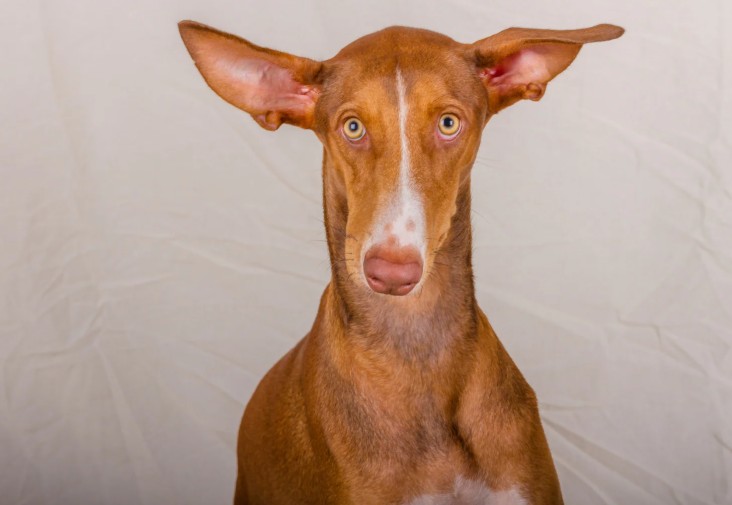
Space Creates Safety
Distance and scanning are core regulation tools for this breed. When respected, cooperation emerges without force.
Vocalization and Communication: The Language of the Hunt
The Ancient Voice of the Pack
Podencos possess a distinctive vocalization repertoire that reflects their hunting heritage. Unlike breeds selected for quiet companionship, these dogs were valued for their ability to communicate location and prey status across rugged Mediterranean terrain. Their vocalizations aren’t nuisance barking—they’re functional communication tools refined over thousands of years.
Podenco Vocal Repertoire:
- “Singing” or Baying: Excitement and arousal, often triggered by prey scent or sighting—allowed hunting packs to coordinate without visual contact across rocky landscapes
- Short, Sharp Barks: Alertness or alarm signals warning pack members of potential threats
- Whining and Soft Vocalizations: Frustration, typically when environmental access is restricted
- Extended Howl: Loneliness or pack-calling—hauntingly beautiful attempt to locate separated pack members
- Low Growl: Warning signal or resource guarding (less common but important to recognize)
- Yodel or Warble: Excitement mixed with uncertainty, often during play or greeting
🐕 Understanding the Podenco Mind: From Ancient Hunter to Modern Companion
A journey through the unique cognitive architecture, sensory processing, and survival intelligence that defines Mediterranean hounds
Phase 1: Ancient Origins
The Mediterranean Survival Blueprint
Evolutionary Heritage
These ancient dogs trace their lineage to Egyptian Pharaoh Hounds, brought to the Iberian Peninsula by Phoenician traders thousands of years ago. Unlike breeds developed for human companionship, Podencos evolved as semi-feral working tools in harsh Mediterranean terrain—rocky landscapes, extreme heat, and unpredictable food sources shaped every aspect of their cognition.
What This Means for Modern Behavior
Your Podenco’s brain prioritizes environmental scanning over human attention, values independence over social compliance, and runs cost-benefit calculations before “obeying” commands. This isn’t stubbornness—it’s survival intelligence. • Environmental data speaks louder than your voice • Every action is evaluated against energy expenditure and reward value • Self-sufficiency remains a core operating system
Phase 2: Tri-Sensory Processing
When the World Is Louder Than Your Voice
Simultaneous Sighthound, Scenthound, and Hearing Hound
Podencos possess a unique cognitive profile—they process visual motion detection, scent discrimination, and auditory localization simultaneously. During a simple walk, their nervous system processes 47+ distinct scent trails, 3+ birds in peripheral vision, rustling sounds from 6+ directions, and wind carrying information about animals 200+ meters away. Your verbal cue? A tiny fraction of this sensory flooding.
Working With Sensory Reality
Through the NeuroBond approach, you recognize that their nervous system processes environmental data as higher-priority information for survival. Training becomes collaboration when you work with their sensory architecture rather than against it. • Use high-value environmental rewards (sniff time, exploration access) • Train in gradually increasing distraction levels • Accept that some environments will always overwhelm training
Hunt-State Lock-On Warning
Once the predatory sequence activates (Orient → Eye → Stalk → Chase), cognitive flexibility collapses. Time perception alters, risk assessment changes, and trained behaviors become neurologically inaccessible. This is brain-state reality, not disobedience. Physical management, not recall training alone, keeps them safe.
Phase 3: Redefining “Trainability”
Survival Logic Over Social Obligation
The Podenco Cost-Benefit Equation
Each command triggers an unconscious calculation: energy expenditure required, risk level involved, opportunity cost, reward value, environmental context, and handler reliability history. When the equation doesn’t favor compliance, they “refuse”—but this represents intelligent decision-making, not defiance. They’re asking: “Why should I sit when there’s a rabbit 50 meters away?”
Training That Honors Their Intelligence
Abandon repetitive drilling for problem-solving games, environmental challenges, and functional training where behaviors serve clear purposes. • Short sessions (5-10 minutes) prevent boredom • Variety maintains engagement • Choice-based learning increases motivation • Scent work, lure coursing, and trick training with variation work best • The Invisible Leash reminds us: awareness, not tension, guides the path
Phase 4: Understanding Fear & Trauma
The Rescue Reality
Breed-Typical Caution vs. Trauma-Induced Fear
Healthy caution means slow approach to novelty, distance-seeking when uncertain, and observation before engagement—returning to baseline within minutes. Trauma creates generalized avoidance of entire categories (all men, all vehicles), remains elevated for hours or days after triggers, and shows multiple stress signals simultaneously. Know the difference to provide appropriate support.
Common Trauma Triggers in Rescued Podencos
• Men (often hunters who abandoned them) • Leashes (restraint and loss of control) • Loud noises (gunshots, shouting) • Enclosed spaces (transport crates, kennels) • Hands reaching overhead (punishment history) • Specific locations or times of day. These aren’t breed traits—they’re learned associations requiring patience, counter-conditioning, and professional support.
Soul Recall and Compassionate Recovery
Moments of Soul Recall reveal how memory and emotion intertwine in behavior. When you understand that fear responses reflect history rather than nature, compassion replaces frustration. Recovery happens on their timeline, not yours. Rushing creates setbacks; patience teaches them something new is possible.
Phase 5: Connection on Podenco Terms
Parallel Coexistence vs. Direct Engagement
A Different Attachment Style
Podencos bond deeply but express attachment through choice-based proximity rather than constant interaction. They prefer being near you without pressure, observe rather than engage initially, and respond selectively based on context. This isn’t aloofness—it’s healthy Podenco attachment shaped by thousands of years of semi-independent living.
Why Forced Affection Backfires
High-intensity praise and forced physical contact increase cortisol (stress hormone) rather than oxytocin (bonding hormone). Their sensory-sensitive nervous system interprets intense social pressure as threatening. What feels like enthusiastic affection to you may feel like sensory assault to them.
Trust Timeline: Weeks to Years
Weeks 1-4: Assessment phase—they’re observing your patterns. Months 2-6: Tentative trust begins. Months 6-12: Deepening bond emerges. Year 2+: Secure attachment fully develops. Handler reliability—following through on promises, respecting boundaries, maintaining consistency—accelerates this timeline. Inconsistency can reset it entirely.
Phase 6: Movement as Regulation
The Neurological Need for Distance
Why Movement Regulates Emotion
Movement is their primary emotional regulation strategy. Proprioceptive input calms the nervous system, distance creation reduces threat proximity, environmental scanning provides information that reduces uncertainty, and physical activity metabolizes stress hormones. Confined Podencos are being denied their regulation tool—imagine being told you can’t take a deep breath when anxious.
Trigger Stacking on Leash
Each trigger—passing dog, loud noise, interesting scent they can’t investigate—adds stress without release opportunity. This creates: increased reactivity over time, apparent training “regression,” heightened startle responses, difficulty settling after walks, and generalized anxiety. The solution isn’t more training—it’s decompression.
Decompression Environment Essentials
Optimal spaces offer open room for movement, low human/dog density, rich natural sensory input, secure boundaries, quiet, and natural elements. Activities include “sniffari” walks (dog-led, scent-focused), long-line exploration in quiet areas, and parallel walking without interaction pressure. • Urban dogs: Daily, 45-90 minutes • Suburban dogs: 3-5 times weekly, 30-60 minutes • Rural dogs: 2-3 times weekly
Phase 7: Living With Prey Drive
Management Over Magical Thinking
The Fundamental Truth
A Podenco with strong prey drive will NEVER have 100% reliable recall around real prey. This isn’t training failure—it’s breed reality. The predatory motor sequence exists at a neurological level deeper than learned behavior. When fully activated, the brain literally cannot access trained behaviors. No food reward can compete with the intrinsic reward of prey pursuit.
Realistic Safety Strategies
• Long-lines (10-30 meters) in open areas • Escape-proof harnesses (many can back out of standard harnesses) • Emergency turn cues easier than full recall: “This way,” “Stop,” “Wait” • Environmental management avoiding high-prey areas at peak times • Appropriate outlets: lure coursing, flirt pole, scent work • Celebrate 90% reliability as excellent, use physical management for the remaining 10%
Type Variations Matter
Podenco Andaluz shows hair-trigger visual reactivity and explosive speed. Podenco Ibicenco demonstrates balanced tri-sensory hunting with sustained pursuit. Podenco Canario exhibits exceptional scent discrimination with variable intensity. Individual variation also depends on genetics, early experience, age (peaks 2-5 years), and sex (males often higher intensity).
Phase 8: The Escape Artist Mind
Intelligence Applied to Barriers
Escape Capabilities
They can clear 6+ foot fences from standing position, use chain-link as ladder rungs, compress through surprisingly small gaps, excavate under barriers rapidly, test methods systematically, persist over time, and remember successful routes. This isn’t mischief—it’s the same environmental intelligence that made them successful hunters.
Boundary Obsession Cycle
Insufficient freedom → Stress accumulation → Boundary testing → Successful escape (massive reinforcement) → Expertise development → Intensifying obsession. Warning signs: extended fence-line time, systematic section testing, multiple dig locations, increased arousal near boundaries, pacing, vocalizing at barriers.
Containment Solutions
• Height: 6-7 feet minimum • Remove launch points near fences • Dig prevention: buried wire, concrete footers • Self-closing, self-latching gates • Visual barriers reduce stimulation • Enrichment within space: elevated platforms, designated dig zones, rotating toys. Ultimate containment? Making staying worthwhile through adequate freedom, enrichment, and off-property adventures.
🔍 Podenco Types: Understanding the Variations
Podenco Andaluz
Size: Small (8-22 kg)
Specialty: Rabbit hunting specialists
Prey Drive: Hair-trigger visual reactivity
Best For: Experienced handlers, lure coursing enthusiasts
Podenco Ibicenco
Size: Medium-Large (20-30 kg)
Specialty: Island-adapted versatile hunters
Prey Drive: Balanced tri-sensory, sustained pursuit
Best For: Active families with secure space
Podenco Canario
Size: Medium (18-25 kg)
Specialty: Terrain specialists, scent-focused
Prey Drive: Variable intensity, exceptional nose
Best For: Rural settings, tracking activities
Young Adults (2-5 Years)
Characteristics: Peak prey drive intensity
Needs: Maximum enrichment, daily decompression
Challenge: Highest escape risk, strongest hunting impulse
Management: Secure containment essential
Rescued Podencos
Common Issues: Trauma overlay on breed traits
Timeline: Trust builds over months to years
Triggers: Men, leashes, loud noises, enclosed spaces
Approach: Patience, counter-conditioning, professional support
Seniors (10+ Years)
Changes: Moderated prey drive, joint considerations
Needs: Adjusted activity, orthopedic support
Benefits: Calmer, deeper bond, less escape-focused
Care: Regular vet checks, weight management, warmth
⚡ Quick Reference: Podenco Success Formulas
Containment Height Rule: Add 2 feet to your Podenco’s standing jump height = minimum fence height
Decompression Frequency: Urban dogs daily (45-90 min), Suburban 3-5x weekly (30-60 min), Rural 2-3x weekly
Trust Timeline: Weeks 1-4 (assessment) → Months 2-6 (tentative) → Months 6-12 (deepening) → Year 2+ (secure)
Training Sessions: 5-10 minutes maximum to prevent boredom and disengagement
Prey Drive Peak: Ages 2-5 years = highest intensity, maximum management required
Recall Expectation: 90% reliability = excellent achievement; use physical management for remaining 10%
🧡 The Essence of Zoeta Dogsoul
Living with a Podenco teaches patience, acceptance, and respect for authentic nature. These ancient hunters won’t pretend to be something they’re not—and in our performance-focused world, that authenticity becomes profoundly valuable. Through the NeuroBond approach, trust becomes the foundation of learning. The Invisible Leash reminds us that awareness, not tension, guides the path. Moments of Soul Recall reveal how memory and emotion intertwine in behavior.
When you stop trying to make your Podenco into something they’re not and start appreciating the magnificent intelligence they are, the relationship transforms. They won’t be your shadow or your servant, but they’ll be your partner in a dance of mutual respect and authentic connection. That balance between science and soul—that’s the essence of Zoeta Dogsoul.
© Zoeta Dogsoul – Where neuroscience meets soul in dog training
Decoding Emotional States Through Sound
Your Podenco’s vocalizations carry emotional information if you learn to listen. Rapid-fire barking with high pitch indicates high arousal and excitement, often prey-related. Low, sustained baying suggests tracking behaviour, the dog processing scent trails. Frustrated whining paired with pacing signals barrier frustration or insufficient enrichment. Attention-seeking vocalizations—softer, more melodic—differ from frustration sounds in both pitch and rhythm.
Silence, interestingly, can be significant. Many Podencos go quiet during intense hunting focus, all sensory processing directed toward prey. If your usually vocal dog suddenly falls silent on a walk, they’ve likely detected something worth investigating. This auditory stillness often precedes bolt-behaviour.
Environmental Triggers and Management
Understanding what triggers vocalization helps you provide appropriate outlets while managing neighbourhood relations.
Common Vocalization Triggers:
- Prey Animal Sounds: Birds chirping, cats meowing, small animals rustling—activate hunting vocalizations instantly
- Environmental Movement: Particularly quick or erratic motion triggers alert barking
- Isolation from Pack: Whether human or canine pack members, produces loneliness vocalizations
- Barrier Frustration: Fencing or closed doors create persistent whining or barking
- Passing Dogs or People: Territory awareness triggers communication attempts
- Novel Sounds: Unfamiliar noises prompt investigation barking
- High Arousal States: Excitement from walks, play, or feeding time
Management Strategies:
- Mental enrichment through scent work, puzzle feeders, and training reduces overall arousal and vocalization
- Physical exercise appropriate to your dog’s individual needs prevents frustration buildup
- Gradual alone-time training using positive reinforcement reduces separation-related vocalizations
- Environmental management through strategic furniture placement or visual barriers reduces trigger exposure
- White noise or calming music masks external sounds that trigger barking
- Teaching a “quiet” cue with high-value rewards provides an alternative behavior
Training and Education: Working With Ancient Intelligence
The Foundation: Relationship Over Commands
Traditional training approaches assume dogs work for handler approval and social connection. Podencos require a different foundation—one built on mutual benefit, environmental access, and functional outcomes. Before drilling commands, establish what makes compliance worthwhile from your dog’s perspective. This isn’t bribery—it’s recognizing that Podencos operate on transaction logic where both parties benefit.
Trust develops when you prove reliable about environmental access. If you promise a sniff walk, deliver a sniff walk. If you indicate freedom is coming, don’t betray that signal. Podencos have excellent long-term memory for both positive and negative experiences. Handler reliability becomes the foundation for future cooperation.
High-Value Reinforcement Beyond Food
While food works as a training reward, Podencos often value environmental access more highly.
High-Value Reinforcement Beyond Food:
- Scent Investigation Permission: Allowing time to fully investigate an interesting scent trail
- Flirt Pole or Lure Chasing: Prey-drive outlets that strengthen training bonds
- Elevated Resting Spots: Access to preferred positions with good environmental views
- Social Freedom: Choice in interaction timing rather than forced affection
- Off-Leash Time: In secure areas, freedom of movement as ultimate reward
- Novel Environment Exploration: Trips to new locations for sensory enrichment
- Play With Compatible Dogs: Social time with dogs they actually enjoy
- Digging Permission: Designated dig zones where excavation is allowed
- Temperature Regulation: Access to shade, cool surfaces, or warmth depending on need
The concept of Soul Recall emerges when you understand what your individual Podenco truly values. Observe what they choose when given freedom, what they return to repeatedly, what makes their eyes light up with genuine interest. These preferences become your most powerful training tools.
State-Dependent Learning and Hunt-State Reality
Podencos learn behaviours in specific contexts and emotional states. Recall trained during calm walks exists in a different neurological state than recall needed during prey pursuit. The brain literally cannot access the trained behaviour when in hunt-state. This isn’t training failure—it’s neurological reality that demands management rather than expectation.
Build behaviours across multiple arousal levels, starting in calm environments and gradually increasing distraction. Practice recall when mildly interested in the environment, moderately engaged with scents, and watching (but not chasing) movement. Recognise the activation threshold where training breaks down and use physical management beyond that point.
Functional Cues Over Formal Obedience
Replace perfect obedience expectations with functional cues that work with your Podenco’s movement impulses.
Functional Cues Over Formal Obedience:
- “This Way”: Invites directional change rather than demanding return—works with movement impulse
- “Stop” or “Pause”: Asks for brief halt, not perfect position or sustained attention
- “Wait”: Creates momentary stillness without requiring long duration
- “Together”: Encourages proximity without formal heeling or rigid positioning
- “Check In”: Rewards voluntary attention rather than demanding constant focus
- “Find It”: Channels environmental focus into cooperative scent games
- “Let’s Go”: Signals movement initiation, often more effective than “come”
- “Easy” or “Slow”: Reduces intensity without complete stop
These cues acknowledge the Podenco’s need for environmental engagement while providing handler tools for safety and navigation. They work with the dog’s natural inclinations rather than against them, making them more accessible under stress. You might notice that once pressure decreases, cooperation increases. 🧠
Movement, Distance & Decompression: The Neurological Need
Movement as Primary Emotional Regulator
For Podencos, movement functions as their primary emotional regulation strategy. When uncertain, they move. When stressed, they flee. When overstimulated, they run. This isn’t misbehavior—it’s a neurologically-wired coping mechanism shaped by thousands of years of survival in open Mediterranean terrain where flight meant safety.
Why Movement Regulates Emotion (Neurological Basis):
- Proprioceptive Input: Body awareness through movement has calming effects on the nervous system
- Distance Creation: Reduces threat proximity, lowering arousal immediately
- Environmental Scanning: Moving while assessing provides information that reduces uncertainty
- Stress Hormone Metabolism: Physical activity metabolizes cortisol and adrenaline
- Parasympathetic Activation: Rhythmic movement (running, trotting) engages the rest-and-digest response
- Cognitive Reset: Movement shifts focus from emotional state to physical task
- Control Restoration: Choosing movement direction provides sense of agency
This explains why Podencos often seem “hyperactive” or “unable to settle” in confined spaces—they’re being denied their primary regulation tool. Imagine if someone told you that you couldn’t take a deep breath when anxious, couldn’t pace when thinking, couldn’t step away when overwhelmed. That’s what confinement feels like to a movement-regulating Podenco.
Confinement and Altered Stress Expression
When movement is restricted through leashes, crates, or small spaces, Podencos must express stress through alternative channels, often creating behaviors that concern owners. These aren’t separate behavior problems—they’re different expressions of the same underlying need for movement-based regulation being blocked.
Stress Expression Under Confinement:
- Freeze response (complete stillness, appearing “shut down”)
- Trembling (visible shaking from suppressed flight impulse)
- Frantic pulling (desperate attempts to create distance)
- Sudden bolting (explosive movement when opportunity arises)
- Displacement behaviors (excessive grooming, circling, pacing)
- Vocalization (whining, barking—less common in Podencos but possible)
- Hypervigilance (constant environmental scanning, inability to relax)
You might notice your Podenco seems perfectly calm in your fenced yard but becomes reactive on leash walks. This isn’t inconsistency—it’s the difference between having access to their regulation tool (movement and distance) versus having it restricted. The leash doesn’t just physically restrain—it removes their primary coping mechanism.
Trigger Stacking and Leash Restriction
Research on trigger stacking demonstrates that accumulated stress without recovery opportunity creates behavioral deterioration. For Podencos, leash walks in stimulating environments create continuous trigger exposure without the ability to use their primary coping mechanism—creating distance through movement.
Each trigger—a passing dog, a loud noise, an approaching person, an interesting scent they can’t investigate—adds stress to the system. Without the ability to move away, create distance, or decompress through running, this stress accumulates. What starts as mild interest or concern escalates into reactivity because the dog has no way to process and release the building arousal.
Trigger Stacking Effects on Leashed Podencos:
- Increased Reactivity Over Time: The “reactive dog” label develops from accumulated stress
- Apparent “Regression” in Training: Previously calm walks become progressively difficult
- Heightened Startle Responses: Jumping at things they previously ignored
- Difficulty Settling After Walks: Remaining aroused for hours post-walk
- Generalized Anxiety: Stress transfers to other contexts beyond walks
- Decreased Appetite: Chronic stress suppresses hunger
- Sleep Disturbance: Hypervigilance prevents deep, restorative sleep
- Lower Frustration Tolerance: Small annoyances trigger disproportionate responses
The solution isn’t more training—it’s providing decompression opportunities where your Podenco can use movement to regulate their nervous system before stress accumulates to problematic levels. 🧡
Decompression Environments: Where Nervous Systems Reset
Certain environments allow Podencos to restore nervous system regulation more effectively than others. These “decompression spaces” share specific characteristics that align with how their nervous systems naturally regulate stress.
Optimal Decompression Environment Features:
- Open space (room to move freely and create distance)
- Low human/dog density (minimal social pressure)
- Rich sensory input (varied scents, textures, sounds—natural, not urban)
- Safety (secure boundaries preventing escape while allowing exploration)
- Quiet (absence of loud, unpredictable noises)
- Natural elements (grass, dirt, trees rather than concrete/asphalt)
- Permission to self-direct (dog chooses where to go, how fast, what to investigate)
Urban parks during off-peak hours, quiet hiking trails, private secure fields, rural areas with low traffic, wooded areas with clear paths, and beaches during quiet times all can serve as decompression environments when approached with the right mindset.
Decompression Activities: Movement With Purpose
“Sniffari” Walks (dog-led, scent-focused, no destination goal) Let your Podenco choose the route and pace. They stop where they want to sniff, investigate what interests them, and move when ready. You’re along as a companion and safety net, not as a director. These walks engage their scenting abilities while allowing movement at their preferred rhythm. A 20-minute sniffari can provide more mental exhaustion and nervous system regulation than an hour of structured walking.
Long-Line Exploration in Quiet Natural Areas Use 15-30 meter long lines in secure, low-traffic areas. Your Podenco can range ahead, explore side trails, investigate interesting scents, and practice creating and closing distance with you. This builds confidence, provides mental stimulation, and allows them to regulate through movement while maintaining safety.
Parallel Walking Without Interaction Pressure Walk side-by-side with your Podenco, making no demands for attention, eye contact, or specific positioning. You’re sharing space and movement without social pressure. Many Podencos find this deeply calming—proximity to their person combined with freedom from interaction demands. Some find this more bonding than forced engagement.
Secure Field Free-Running (fenced dog parks during off-hours) When dog parks are empty or nearly empty, they provide safe space for full-speed running. This allows your Podenco to express their athletic capabilities, practice distance creation and return, and metabolize accumulated stress hormones through explosive movement. Avoid peak hours when dog density and social pressure create more stress than release.
Scent Work and Foraging Games in Safe Spaces Hide treats, toys, or scent articles across a secure area. Let your Podenco search at their own pace, moving between finds. This combines mental challenge with movement-based regulation, satisfying both their scenting abilities and their need for purposeful motion.
Decompression Frequency: Preventing Chronic Stress
How often does your Podenco need decompression opportunities? The answer depends on several factors including living environment, daily stress exposure, individual temperament, age and energy level, and access to other forms of enrichment.
General Guidelines:
- Urban environments or high-stress households: Daily decompression, 45-90 minutes
- Suburban environments with some yard access: 3-5 times weekly, 30-60 minutes
- Rural environments with significant property: 2-3 times weekly, 30-45 minutes
- High-energy young adults (2-5 years): More frequent, longer duration
- Seniors or lower-drive individuals: Less frequent, shorter duration
You might notice that after good decompression sessions, your Podenco seems calmer at home, less reactive on regular walks, easier to settle in the evening, more willing to engage in training, and showing fewer displacement behaviors. These changes indicate their nervous system has successfully regulated through movement.
Without adequate decompression, you might observe increasing reactivity, difficulty settling, barrier obsession or escape attempts, displacement behaviors like excessive grooming, reduced appetite, sleep disturbance, or generalized anxiety. These signal accumulated stress without adequate release opportunities. 🧠
Flight Response vs. Recall Training: The Neurological Reality
The Podenco flight response represents a survival-level neurological program that overrides trained behaviors when activated. Understanding this distinction proves critical for realistic safety planning and prevents the dangerous assumption that training alone can ensure safety.
Flight Response Characteristics:
- Triggered by perceived threat or overwhelming stimulation
- Bypasses conscious decision-making through limbic system activation
- Creates tunnel vision with cognitive narrowing to escape route
- Suppresses pain perception (can injure themselves fleeing)
- Overrides all training, including previously reliable recall
- Time perception alters (minutes feel like seconds)
Why does recall fail under flight conditions? Training occurs in a different brain state than flight. Recall practice happens when your dog is calm, cognitively flexible, and able to process handler cues. Flight activates a survival state where learned behaviors become neurologically inaccessible. The prefrontal cortex—responsible for learned behaviors and decision-making—goes offline when the amygdala activates the flight response.
This isn’t training failure—it’s neurological reality. No amount of recall training can override a fully activated flight response because the brain regions controlling trained behavior are temporarily offline. Accepting this prevents the dangerous assumption that your dog will “listen when it really matters.”
Realistic Safety Approach:
- Accept that recall will fail under certain conditions
- Use physical management (long-lines, secure fencing) as primary safety
- Train recall for low-to-moderate distraction contexts
- Develop emergency “turn” or “stop” cues (easier to access than full recall)
- Practice “check-in” behaviors that maintain connection before full flight activation
- Environmental management prevents exposure to flight-triggering situations
- Plan escape routes if your dog does break free (where might they go?)
The Invisible Leash reminds us that awareness, not tension, guides the path. When you understand that flight represents neurological hijacking rather than disobedience, you plan for safety through management rather than hoping training will be enough. Your Podenco isn’t choosing to ignore you—their brain has temporarily lost access to the training you’ve built together. 🧡
Performance and Activities: Fulfilling Ancient Drives
The Necessity of Appropriate Outlets
A Podenco without appropriate outlets for their hunting drives isn’t just bored—they’re experiencing drive frustration that can manifest as destructive behaviour, escape attempts, and obsessive patterns. These aren’t behaviour problems; they’re signals that ancient drives need modern expression. Providing appropriate outlets doesn’t encourage unwanted behaviour—it prevents it by satisfying needs through controlled channels.
The principle of choice-based reinforcement applies here. Rather than only offering food rewards for compliance, you provide access to activities your Podenco genuinely values. Permission to chase a lure becomes far more powerful than treats for a high-prey-drive dog. Opportunities for scent work satisfy drives more deeply than praise. When you understand what your individual Podenco values most, those preferences become your most effective training and enrichment tools.

Lure Coursing: Prey Drive in Safe Expression
Lure coursing allows Podencos to chase a mechanical lure across an open field, engaging their sighthound heritage in controlled circumstances. The activity provides intense physical exercise in short bursts, matching their natural hunting rhythm of explosive effort followed by rest. Mental satisfaction comes from completing the predatory sequence through chase and catch without actual prey. Social opportunities emerge through coursing with other sighthounds who understand this unique drive.
Many Podencos show remarkable transformation after regular coursing sessions—calmer at home, less reactive on walks, more fulfilled overall. The activity doesn’t increase prey drive; it satisfies it, reducing the pressure that drives unwanted prey pursuit. You might notice your dog sleeps more soundly after coursing days and shows reduced environmental reactivity because a fundamental drive has been appropriately met.
Frequency Recommendations:
- High-drive young adults: Weekly coursing if available
- Moderate-drive adults: Bi-weekly to monthly
- Lower-drive or senior dogs: Monthly or as interest dictates
If formal lure coursing isn’t accessible, flirt pole work provides similar benefits on a smaller scale. A flirt pole—essentially a large cat toy for dogs—allows controlled prey-chase sequences in your yard or a field.
Scent Work and Nose Games
While known for sight-hunting, Podencos possess excellent scenting abilities that deserve engagement. Scent work provides mental exhaustion that physical exercise alone cannot achieve. A 20-minute scent session can tire a Podenco as much as a two-hour walk because it engages complex cognitive processing, decision-making, and problem-solving.
Progressive Scent Activities:
Hide-and-Seek Games start with easy finds in obvious locations, gradually increasing difficulty by hiding treats or toys in more challenging spots. Use multiple rooms, varying heights, and increasingly complex hiding places. This builds confidence and teaches systematic searching.
Scent Discrimination Work involves identifying specific scents from multiple options. Start with strong-scented treats among neutral objects, progress to identifying specific essential oils or scent articles, and eventually practice discrimination between similar scents. This challenges their minds intensely.
Tracking Games follow scent trails through varied terrain. Begin with short, fresh trails in your yard, drag a treat-filled sock creating a trail to follow, gradually increase trail length and complexity, add aging time so trails aren’t fresh, and practice in different environments (grass, dirt, concrete). This engages their scenthound capabilities.
Container Searches identify which boxes or containers hold target scents. Line up several boxes, place treats in one, let your Podenco search and indicate the correct box, and reward for correct identification. This provides excellent indoor enrichment during bad weather.
Frequency Recommendations:
- Urban dogs with limited outdoor enrichment: Daily scent sessions, 15-30 minutes
- Suburban dogs with moderate outdoor access: 3-5 times weekly, 20-40 minutes
- Rural dogs with extensive exploration opportunities: 2-3 times weekly, supplementing natural exploration
Agility and Problem-Solving Activities
Podencos often excel at agility when training respects their need for autonomy and variety. They appreciate the problem-solving aspects of navigating courses and enjoy the physical challenge. Avoid excessive repetition—run different courses, change sequences, keep training sessions short and varied. Many Podencos prefer agility as a thinking game rather than speed competition.
Free-shaping training, where the dog figures out what behaviour earns rewards without luring or guidance, particularly suits Podenco intelligence. They enjoy the puzzle aspect and demonstrate remarkable creativity when given autonomy in the learning process. This approach honours their problem-solving abilities while building engagement.
Choice-Based Reinforcement in Training:
Rather than dictating every aspect of training, offer choices that increase engagement. Present two obstacles and let your Podenco choose which to navigate first. Allow route choice when possible in agility sequences. Let them decide whether to work for treats or toy play. Provide options for rest breaks during training sessions.
This autonomy increases motivation dramatically because the work feels collaborative rather than dictated. You might notice your Podenco engages more enthusiastically when they have agency in the training process.
Environmental Enrichment Through Rotation
Rather than constant access to all toys and activities, rotate enrichment options to maintain novelty and interest. Divide toys, puzzles, and activities into three or four groups. Each week, provide one group while storing the others. When rotated back in, previously “boring” items become interesting again through renewed novelty.
Living Situation Adaptations:
High-Density Urban Environments require daily off-property adventures to novel locations, frequent scent work providing mental stimulation indoors, creative use of vertical space (window perches for observation), and regular access to decompression environments. The lack of natural exploration makes structured enrichment non-negotiable.
Suburban Environments benefit from varied walking routes preventing habituation to the same stimuli, yard enrichment through scatter feeding, rotating obstacles, and hiding spots, weekly novel environment exposure, and balance between yard time and off-property adventures. Don’t assume yard access eliminates enrichment needs.
Rural Settings still need structured activities despite natural environment access. Prevent boredom through training games, lure coursing or flirt pole work, scent discrimination beyond natural tracking, and social opportunities with other dogs. Access to space helps but doesn’t replace engagement.
The Balance of Stimulation and Rest
Podencos need both intense activity and quality rest. Their heritage involves explosive hunting effort followed by extended rest periods. Modern schedules often provide neither adequate stimulation nor sufficient recovery. Structure your Podenco’s week around this natural rhythm—intense activities some days, gentle enrichment others, complete rest days when needed.
Watch for signs of overstimulation: difficulty settling, reactive behaviour increasing, stress signals like excessive panting or pacing, sleep disturbance, or reduced appetite. These indicate too much stimulation without adequate recovery. The goal isn’t constant activity—it’s appropriate challenge balanced with genuine rest.
You might notice that after rest days, your Podenco shows renewed enthusiasm for activities and demonstrates better focus during training. Recovery isn’t laziness—it’s necessary for nervous system regulation and physical restoration. Through the NeuroBond approach, understanding their natural rhythms creates partnership rather than performance pressure. 🧡
Nutritional Considerations: Fueling the Mediterranean Hunter
Lean Muscle and Metabolic Efficiency
Podencos evolved for efficient energy use in resource-scarce environments. Their lean, muscular build requires high-quality protein to maintain muscle mass while avoiding excess calories that lead to weight gain. Unlike heavy-boned breeds, every extra pound significantly impacts their movement efficiency and joint health.
Optimal Podenco Nutrition Profile:
- High-Quality Protein (25-30%): Named meat sources, not by-products
- Moderate Fat Content (12-16%): Supports skin, coat, and energy without excess weight
- Lower Carbohydrates: Compared to working breeds, prevents unnecessary weight gain
- Whole Food Ingredients: Minimal processing preserves nutrient bioavailability
- Joint Support Additions: Glucosamine, chondroitin for active dogs
- Omega Fatty Acids: For skin, coat, and anti-inflammatory benefits
Digestive Sensitivity and Food Selection
Many Podencos show digestive sensitivity, possibly reflecting their evolutionary diet of whole prey and occasional scavenging. Rich foods, excessive fats, or frequent diet changes can trigger gastrointestinal upset. Consistency in feeding routines helps maintain digestive stability.
Signs of Food Sensitivity:
- Soft stools or diarrhoea
- Excessive gas or bloating
- Skin irritation or itching
- Ear inflammation or recurring infections
- Reduced appetite or food avoidance
- Vomiting after meals
- Paw licking or chewing
Management Approaches:
- Single-protein sources for easier identification of triggers
- Limited ingredient diets reducing potential allergens
- Gradual transitions over 7-10 days when changing foods
- Food journals tracking ingredients and reactions
- Consultation with your veterinarian for persistent issues
- Elimination diets under professional guidance
Feeding Schedules and Anxiety Management
Some Podencos develop anxiety around food, possibly reflecting ancestral resource competition.
Meal Anxiety Manifestations:
- Gulping food rapidly without chewing
- Resource guarding food bowls from people or other pets
- Anxiety or pacing when food appears
- Digestive issues from rapid eating (vomiting, bloating)
- Aggression or tension during feeding time
- Food obsession or constant food-seeking behavior
Food Anxiety Management Strategies:
- Puzzle feeders or slow-feed bowls extending eating time
- Feeding in quiet, low-stress environments away from traffic
- Consistent schedules reducing anticipatory anxiety
- Portion control preventing resource-guarding escalation
- Hand-feeding to build positive associations
- Multiple small meals throughout the day (mimics natural hunting pattern)
- Separate feeding stations in multi-dog households
Hydration and Mediterranean Heritage
Podencos evolved in hot, dry climates where water conservation mattered. Some show low thirst drive compared to other breeds, potentially leading to mild chronic dehydration.
Hydration Best Practices:
- Constant access to fresh, clean water
- Multiple water stations throughout living spaces
- Water offered during and after exercise
- Moving water fountains (some dogs prefer these)
- Ice cubes as treats in hot weather
- Wet food supplementation for low-drinkers
Monitoring Hydration Status:
- Skin Elasticity Test: Gently pull skin—it should return immediately
- Gum Moisture: Should be wet and slippery, not tacky or dry
- Urine Color: Pale yellow indicates good hydration; dark yellow suggests dehydration
- Energy Levels: Lethargy can indicate dehydration
- Eye Brightness: Sunken eyes suggest serious dehydration
In hot weather or after intense activity, offer water more frequently and consider electrolyte supplementation for extended exercise sessions. 🧡
Health Concerns: The Hardy Hunter’s Vulnerabilities
Overall Robustness with Specific Sensitivities
Podencos generally demonstrate remarkable health and longevity, with many living 12-15 years or more when properly cared for. Their functional breeding history—selection based on working ability rather than appearance—contributed to generally sound structure and fewer genetic health issues than many modern breeds. However, specific concerns deserve attention.
Joint Health and Athletic Stress
The Podenco’s athletic lifestyle places significant stress on joints, tendons, and ligaments. Their explosive movements during prey pursuit, high jumping ability, and sudden directional changes create injury risk.
Common Athletic Injuries:
- Cruciate Ligament Injuries: Sudden stops and turns during chase behavior
- Sprains and Strains: High-activity dogs on uneven terrain
- Hip Dysplasia: While less common than in heavy breeds, still occurs
- Shoulder Injuries: From jumping and landing impact
- Toe and Pad Injuries: From rough terrain and high-speed running
- Muscle Tears: From explosive acceleration without warm-up
Joint Health Prevention Strategies:
- Appropriate warm-up before intense activity (5-10 minutes gradual movement)
- Controlled exercise on varied surfaces building strength and proprioception
- Weight management keeping dogs lean (rib check: should feel ribs easily)
- Joint supplements like glucosamine and chondroitin for aging or active dogs
- Rest days between high-intensity activities
- Gradual conditioning increases rather than sudden activity spikes
- Appropriate footwear for extreme terrain when needed
Warning Signs Requiring Veterinary Evaluation:
- Limping or lameness, even if intermittent
- Reluctance to jump, climb stairs, or get into vehicles
- Stiffness after rest periods, especially mornings
- Reduced activity levels or exercise intolerance
- Swelling around joints
- Yelping or sensitivity when touched in specific areas
- Changes in gait or movement patterns
Skin Sensitivity and Coat Health
The Podenco’s short, fine coat provides minimal protection against environmental irritants.
Skin Vulnerabilities:
- Insect Bite Sensitivity: Developing localized reactions to flea, tick, or mosquito bites
- Sun Exposure: Particularly for light-colored dogs—sunburn on ear tips, nose, belly
- Contact Irritation: From plants, chemicals, or rough surfaces
- Cold Sensitivity: Short coat provides minimal insulation
- Scrapes and Abrasions: From rough terrain during high-speed running
- Allergic Reactions: Environmental or contact allergies
Skin Protection Strategies:
- Regular parasite prevention (flea, tick, heartworm)
- Sun protection for light-colored dogs during peak hours (10am-4pm)
- Dog-safe sunscreen on exposed areas
- Checking skin after outdoor activities for irritation or injury
- Gentle grooming maintaining coat health without stripping natural oils
- Coats or sweaters in cold weather
- Paw balm for rough terrain protection
- Immediate treatment of minor injuries to prevent infection
Dental Health and Jaw Structure
Podencos possess strong jaws and well-developed dentition reflecting their prey-catching heritage. However, dental disease remains a concern, potentially causing systemic health issues if untreated.
Dental Care Routine:
- Daily tooth brushing when possible (gold standard)
- Dental chews and toys promoting mechanical cleaning
- Annual veterinary dental checks
- Professional cleaning when recommended by veterinarian
- Raw meaty bones under supervision (if appropriate for your dog)
- Dental wipes or finger brushes as alternatives to brushing
- Water additives supporting dental health
Gradual Desensitization for Tooth Handling:
- Touch the muzzle with high-value rewards
- Progress to lifting lips briefly
- Gentle gum massage with finger
- Introduce toothbrush without paste
- Add dog-safe toothpaste
- Build duration gradually
Patience creates cooperation that lasts a lifetime.
Anaesthesia Sensitivity in Sighthounds
Like other sighthounds, Podencos can show increased sensitivity to certain anaesthetics due to their low body fat percentage affecting drug metabolism. Always inform veterinary staff that your dog is a sighthound before any procedure requiring sedation or anaesthesia. Veterinarians can adjust protocols and dosages accordingly, monitoring recovery more closely than with other breeds.
This sensitivity makes preventive health care particularly important—avoiding unnecessary procedures reduces anaesthetic exposure. Maintain current vaccinations, parasite prevention, dental health, and weight management minimising medical intervention needs.
Lifestyle and Environment: Creating the Ideal Podenco Home
Space Requirements and Freedom Needs
Podencos can adapt to various living situations, but their environmental needs remain non-negotiable. These dogs require regular off-property adventures regardless of home size. A large yard doesn’t replace varied environmental exposure—in fact, some Podencos with access to yards become more, not less, focused on boundary testing because they never experience true freedom.
Daily walks through different environments provide mental stimulation through novel scents, sights, and sounds. Weekly adventures to new locations prevent environmental habituation. Secure field time for running and exploration satisfies freedom needs. Urban environments work well when owners commit to frequent, varied outings. Rural settings offer natural advantages but require equal commitment to engagement.
Secure Containment: The Non-Negotiable Foundation
Podencos’ escape capabilities make secure containment essential for their safety. Fence height should be minimum 6 feet, with many requiring 6-7 feet for reliable containment. Jump prevention requires eliminating objects near fences providing launch points, removing chain-link that acts as ladder rungs, and considering coyote rollers or inward-leaning extensions at fence tops.
Dig prevention needs attention at fence bases. Chicken wire buried 12+ inches underground prevents digging under. Concrete or gravel strips along fence lines deter excavation. Regular inspection identifies and repairs any dig attempts before they succeed. Some owners install motion-activated sprinklers deterring fence-line activity.
Gate security matters enormously. Self-closing, self-latching gates prevent escape through carelessness. Double-gate systems create airlocks for entering/exiting property. Keypad locks prevent children or visitors accidentally releasing the dog. Visual checks confirming the dog’s location before opening gates become essential habits.
Climate Considerations and Temperature Management
Mediterranean heritage makes Podencos well-suited to warm climates but potentially vulnerable to cold. In hot weather, they cope well but still require shade access, fresh water availability, activity during cooler hours (early morning, evening), and rest during peak heat.
Cold weather demands more attention. Their thin coat and low body fat provide minimal insulation. Winter protection includes coats or sweaters for outdoor time, heated beds or warm sleeping areas, reduced outdoor exposure during extreme cold, and paw protection from ice, salt, and snow. Some Podencos refuse outdoor elimination in cold weather—patience and protected areas help.
Multi-Pet Households: Prey Drive Considerations
Introducing Podencos to homes with small animals requires honest assessment of prey drive intensity and the individual dog’s ability to differentiate household animals from prey. Some Podencos live peacefully with cats, rabbits, or small dogs—others never fully suppress prey responses toward these animals.
Safe integration requires slow, controlled introductions with the Podenco on leash, positive reinforcement for calm behaviour around small animals, management preventing any practice of chase behaviour, and recognition that some combinations simply aren’t safe. Never leave a high-prey-drive Podenco unsupervised with small animals, regardless of apparent habituation. The predatory sequence can activate instantly with movement or sound, overriding previous calm behaviour.
Dog-dog relationships often work better, particularly with dogs of similar size and energy level. Podencos often enjoy canine companionship, playing with appropriate social skills when well-socialised. However, their play style—involving chase and quick movements—can frighten timid dogs or trigger reactivity in insecure dogs. Match playmates carefully.
The Reality of Shared Lives
Living with a Podenco means embracing a dog whose priorities differ from conventional companion breeds. They offer affection on their terms, not yours. They engage with the environment more than with you during walks. They make independent decisions about compliance based on their assessment, not your wishes. They require more management and less trust than many breeds.
Yet those who understand them discover profound connection emerging not from obedience but from respect for their nature. That balance between science and soul—that’s the essence of Zoeta Dogsoul. When you stop trying to make your Podenco into something they’re not and start appreciating the magnificent intelligence they are, the relationship transforms. They won’t be your shadow or your servant, but they’ll be your partner in a dance of mutual respect and authentic connection. 🧠
Senior Care: Honoring the Aging Hunter
The Gradual Transition
Podencos age gracefully compared to many breeds, often remaining active and engaged well into their teenage years. However, their athletic history means joint health, muscle maintenance, and energy management require attention as they age. The transition from adult to senior isn’t a sudden shift but a gradual process requiring your observation and adaptation.
Physical Changes and Activity Adjustment
Senior Podencos may show decreased stamina for extended activities, stiffness or slowness after rest (particularly in cold weather), reduced jumping ability or reluctance to jump, muscle loss despite maintaining weight, and changes in sleep patterns or sleep needs. Activity adjustment doesn’t mean elimination—it means modification. Shorter, more frequent walks replace single long outings. Lower-impact activities like swimming or gentle hiking replace intense running. Mental enrichment gains importance as physical capacity decreases.
Joint supplements including glucosamine, chondroitin, and omega-3 fatty acids support aging joints. Orthopedic beds provide pressure relief and warmth. Heated pads help arthritic joints, particularly in cold weather. Ramps or steps allow continued access to favorite elevated spots without jumping stress.
Cognitive Changes and Mental Engagement
Some senior Podencos experience cognitive decline, showing disorientation or confusion in familiar environments, changes in sleep-wake cycles (restlessness at night), reduced responsiveness to familiar cues, or anxiety about situations previously handled easily. Mental enrichment becomes crucial for maintaining cognitive function. Continued training with adjusted expectations keeps minds active. Scent work particularly suits senior dogs—lower physical demand but high mental engagement. Novel experiences in safe contexts provide stimulation without overwhelming stress.
Consistency in routines provides comfort and reduces anxiety. Maintain familiar sleeping areas, feeding schedules, and walking routes. Introduce changes gradually when necessary, allowing time for adjustment.
Dietary Adjustments for Aging Metabolism
Senior Podencos often require dietary modifications addressing reduced activity levels, changing metabolism, and specific health concerns. Lower calorie content prevents weight gain as activity decreases. Higher quality protein maintains muscle mass despite reduced consumption. Joint-supporting nutrients like glucosamine and omega fatty acids address arthritis concerns. Digestive support through probiotics or easily digestible ingredients helps aging digestive systems.
Monitor body condition carefully—weight gain stresses joints while weight loss may indicate illness. Maintain that lean, athletic build that served them throughout life.
End-of-Life Considerations
The hardest responsibility of Podenco guardianship involves recognising when quality of life declines beyond recovery. These stoic dogs often hide pain and distress, making assessment challenging. Consider pain levels and management effectiveness, ability to engage in formerly enjoyed activities, eating and drinking patterns, mobility and independence, and cognitive clarity and engagement.
Quality of life assessments help guide difficult decisions. Many veterinarians offer frameworks for evaluating whether your dog still experiences more good days than bad. Trust your knowledge of your individual dog—you know their personality, preferences, and normal behaviour better than anyone.
When the time comes, prioritise your Podenco’s comfort and dignity. In-home euthanasia services allow passing in familiar, comfortable surroundings. Being present for your dog during this final moment honours the partnership you shared. While profoundly painful, this last act of love prevents suffering and respects their deserving of peace. 🧡
Prey Drive Management: Living With the Hunt
Prey Drive Variation Across Podenco Types
While all Podencos possess prey drive as a breed characteristic, intensity and trigger profiles vary significantly across types and individuals. Understanding your specific Podenco’s type helps you anticipate likely prey drive patterns and plan appropriate management strategies.
Podenco Andaluz (Rabbit Specialists):
- High visual motion sensitivity (triggers easily on movement)
- Rapid acceleration and pursuit (explosive speed from standstill)
- Intense focus once prey detected (extreme cognitive narrowing)
- Moderate scent-following compared to other types
- Typically smaller prey targets (rabbits, rodents, birds)
- Often the highest prey drive intensity of the types
Podenco Ibicenco (Island Hunters):
- Balanced sight/scent/sound utilization (true tri-sensory hunting)
- Sustained pursuit over distance (marathon hunters)
- Excellent problem-solving around obstacles (strategic thinking during pursuit)
- Strong prey persistence (won’t give up easily)
- Versatile prey size range (from rodents to larger game)
- Often considered the most “complete” hunter
Podenco Canario (Terrain Specialists):
- Exceptional scent discrimination (nose-first hunters)
- Adaptable hunting strategies (problem-solvers)
- Strong environmental reading (terrain navigation specialists)
- Variable prey drive intensity (wider individual range)
- Larger prey capability (historically used for larger game)
- Often slightly lower visual reactivity than Andaluz
Individual Variation Factors:
Beyond type, individual dogs show significant variation based on genetic line—working-bred versus companion-bred Podencos show different drive intensities. Early experience matters tremendously; dogs with hunting exposure during developmental periods show higher prey drive than those raised only as pets. Age affects intensity, with prey drive typically peaking between 2-5 years, then moderating somewhat in seniors. Sex plays a role, with males often showing higher intensity than females. Training history can somewhat modify expression but cannot eliminate the drive itself.
You might notice your young male Andaluz shows hair-trigger reactivity to any movement, while your older female Canario primarily hunts by scent with less visual reactivity. These aren’t better or worse—they’re different expressions of ancient hunting heritage requiring tailored management approaches. 🧠
The Neurological Reality of Prey Drive
Understanding prey drive begins with accepting a fundamental truth: you cannot train away instinct. The predatory motor sequence—Orient → Eye → Stalk → Chase → Grab-bite → Kill-bite → Dissect → Consume—exists at a neurological level deeper than learned behaviour. Training can build management tools and create check-in habits, but when a Podenco enters full prey pursuit, their brain literally cannot access trained behaviours.
This isn’t training failure on your part or stubborn disobedience on theirs. State-dependent learning means dogs learn behaviours in specific contexts and emotional states. Recall trained during calm walks exists in a different neurological state than recall needed during prey pursuit. By the “chase” stage of the predatory sequence, cognitive flexibility has collapsed almost entirely.
Why Training Alone Isn’t Enough
No food reward or praise can compete with the intrinsic reward of prey pursuit. The behaviour is self-reinforcing at a neurological level through dopamine release and SEEKING system activation, making external reinforcement irrelevant. During prey pursuit, the dog’s sensory system floods with prey-related information—movement, scent, sound. Handler cues become literally inaudible and invisible in the sensory noise.
This reality demands physical management as the primary safety strategy rather than relying on training alone. Accept that a Podenco with strong prey drive will never have 100% reliable recall around real prey. This isn’t training failure—it’s breed reality.
Long-Line Protocols and Safety Systems
Long lines of 10-30 meters allow exploration while maintaining control. Proper harness fit using front-clip or dual-clip designs prevents injury during sudden stops and reduces pulling advantage. Handler training in line management prevents tangles and enables safe stopping. Gradual distance increases as your dog demonstrates check-in behaviours build trust and freedom safely. Environmental selection choosing open areas without hazards minimises risk.
Many Podencos can back out of standard harnesses—invest in escape-proof designs with proper fit assessment using the two-finger rule at all points. Test the harness before trusting it in high-stakes situations.
Emergency Turn Cues: Working With Movement
Rather than expecting full recall, train directional changes that are easier to access under arousal. “This way” signals handler direction change, inviting the dog to follow. “Stop” asks for pause without requiring return. “Wait” requests holding position briefly. “Together” encourages moving toward handler without formal recall.
These cues work with the dog’s movement impulse rather than against it, making them more accessible under stress. Practice these cues across increasing distraction levels, rewarding heavily when your dog responds despite environmental interest.
Environmental Management and Risk Reduction
Avoid known high-prey areas during peak activity times at dawn and dusk. Choose walking routes with good visibility where you can see potential prey before your dog does. Practice in gradually increasing distraction levels, building skills systematically. Use visual barriers to block prey sightlines when possible. Plan escape routes if your dog does break free—know where they might go and how to safely retrieve them.
Acceptance framework means celebrating 90% reliability as excellent achievement, using physical management for the remaining 10%, not testing recall in situations where failure means danger, and recognising that prey drive serves important functions including mental stimulation, physical exercise, and breed fulfillment. Provide appropriate outlets through lure coursing, flirt pole work, or scent games.
When prey drive creates dangerous situations despite management, your dog shows predatory behaviour toward inappropriate targets, prey drive intensity increases rather than stabilizes with age, or you feel unable to safely manage the dog, seek professional help from trainers experienced with sighthounds and prey-driven breeds.
Containment Intelligence: The Escape Artist Mind
Beyond Mischief: Understanding Escape Cognition
When your Podenco tests fence sections, calculates jump trajectories, or excavates strategic tunnel locations, they’re applying the same environmental intelligence that made them successful hunters. Escape behaviour isn’t mischief—it’s survival cognition applied to modern containment.
Podenco Escape Capabilities:
- Jumping: Can clear 6+ foot fences from standing position
- Climbing: Use chain-link as ladder rungs, scale rough surfaces
- Squeezing: Compress body through surprisingly small gaps
- Digging: Excavate under barriers rapidly and strategically
- Problem-Solving: Test multiple escape methods systematically
- Persistence: Continue escape attempts over extended periods
- Memory: Remember successful escape routes and repeat them
- Generalization: Apply successful strategies across different contexts
Neurological Basis of Escape Intelligence:
- Assess barriers for structural weaknesses
- Test integrity at multiple points
- Calculate jump trajectories and landing zones
- Evaluate risk-reward ratios of escape attempts
- Remember successful strategies for future use
- Generalize solutions across different containment types
Boundary Obsession and Freedom Deprivation
Inadequate freedom and enrichment don’t just create boredom—they can produce boundary obsession where escape becomes the dog’s primary focus.
The Boundary Obsession Cycle:
- Dog experiences insufficient freedom and enrichment
- Frustration and stress accumulate over time
- Dog begins testing boundaries as coping mechanism
- Any successful escape provides massive reinforcement (freedom + stress relief)
- Escape behaviour becomes rehearsed and refined
- Dog develops expertise in escape methods
- Boundary obsession intensifies, consuming mental energy
Warning Signs of Developing Boundary Obsession:
- Spending extended time at fence lines
- Systematic testing of different fence sections
- Digging attempts at multiple locations
- Increased arousal when near boundaries
- Pacing along fences repeatedly
- Vocalizing at barriers (barking, whining)
- Destructive behaviour focused on exit points
- Hypervigilance toward gates and doors
- Immediate investigation of any boundary weakness
Prevention Through Enrichment:
- Daily off-property adventures (walks, hikes, secure field time)
- Mental stimulation (scent work, puzzle toys, training)
- Physical exercise appropriate to individual needs
- Novel environment exposure weekly
- Social opportunities with compatible dogs
- Decompression time in natural settings
Containment Solutions That Respect Intelligence
Secure containment doesn’t fight against Podenco intelligence—it acknowledges and accommodates it.
Physical Containment Requirements:
- Height: 6-7 feet minimum for reliable containment
- Visual Barriers: Reduce environmental stimulation lowering arousal and escape motivation
- No Launch Points: Remove objects near fences that provide jumping assistance
- Dig Prevention: Buried chicken wire, concrete footers, or gravel strips at fence base
- Secure Gates: Self-closing, self-latching mechanisms
- Double-Gate Systems: Create airlocks for entering/exiting property
- Regular Inspection: Weekly checks for weaknesses or escape attempts
- Coyote Rollers: Prevent climbing over fence tops
- Inward-Leaning Extensions: Make scaling more difficult
Enrichment Within Containment:
- Interesting features (elevated platforms, tunnels, shaded areas)
- Rotating toys maintaining novelty
- Designated digging areas (sandbox filled with sand or loose soil)
- Water features or pools for cooling
- Scent trails and hiding spots for independent exploration
- Environmental complexity preventing boredom
Strategic landscaping removes jump launch points near fences, provides interesting areas for exploration, and creates natural barriers or buffer zones. Some owners create designated digging areas filled with sand or loose soil, teaching dogs where digging is acceptable and rewarding excavation in appropriate spots.
The ultimate containment isn’t physical—it’s making staying worthwhile. When your Podenco receives adequate freedom, enrichment, and adventure outside the yard, boundary testing often decreases naturally. They’re not trying to escape you—they’re trying to access a world that calls to ancient drives. Satisfy those drives appropriately, and much of the escape motivation disappears. 🧠
Is a Podenco Right for You?
Honest Self-Assessment
Podencos reward understanding with profound partnership, but they’re not the right fit for everyone. Before committing to this ancient breed, honestly assess your lifestyle, expectations, and capacity.
Podencos Thrive With Guardians Who:
- Appreciate independence over obedience
- Enjoy problem-solving and creative training approaches
- Commit to secure containment and management
- Provide varied environmental enrichment consistently
- Accept that prey drive means permanent physical management
- Value authenticity over performance
- Find joy in partnership rather than dominance
- Embrace a different relationship model
Podencos Struggle With Those:
- Expecting reliable off-leash freedom in unsecured areas
- Requiring a dog who obeys instantly and consistently
- Wanting a dog focused primarily on handler rather than environment
- Living in situations where escape could be fatal
- Expecting traditional “pet” behaviour from a working-bred hunter
- Needing constant affection and social engagement
- Unprepared for extensive management requirements
- Seeking status or validation through dog ownership
The Reality of Daily Life
Living with a Podenco involves specific daily commitments and mental shifts:
Daily Podenco Life Realities:
- Weather-Independent Exercise: Walks happen regardless of rain, heat, or cold—varied routes providing novel stimulation
- Creative Training: Requires ongoing innovation and patience—progress looks different than with biddable breeds
- Constant Management: Checking gates obsessively, never trusting fences completely, planning for “what if” scenarios
- Enrichment Investment: Ongoing commitment to activities, toys, and experiences satisfying hunting drives
- Autonomous Affection: They offer affection when they choose it, not on demand
- Mutual Benefit Engagement: Interaction happens when mutually beneficial, not because you request it
- Maintained Independence: They keep autonomy even in close partnership
- Environmental Priority: Walks are about their sensory exploration, not obedient heeling
- Management Over Trust: Physical safety measures rather than relying on recall alone
- Acceptance of Difference: Celebrating who they are rather than wishing they were different
The relationship differs from conventional dog-human bonds. Podencos offer affection when they choose it, engage with you when mutually beneficial, and maintain autonomy even in close partnership. They’re not lesser dogs—they’re different dogs. That difference either frustrates or fascinates you.
The Rewards of Understanding
Those who embrace Podenco nature rather than fighting it discover dogs of remarkable intelligence, elegant athleticism, and unexpected emotional depth. They offer moments of breathtaking beauty—a full-speed run across an open field, the focused intensity during scent work, the quiet companionship of a dog who chooses to be near you precisely because it’s not demanded.
Living with a Podenco teaches patience, acceptance, and respect for authentic nature. These dogs won’t pretend to be something they’re not. In our performance-focused, compliance-obsessed culture, that authenticity becomes profoundly valuable. They remind us that intelligence manifests in many forms, that autonomy deserves respect, and that relationships built on mutual understanding surpass those built on control.
Through the NeuroBond approach, trust becomes the foundation of learning. The Invisible Leash reminds us that awareness, not tension, guides the path. Moments of Soul Recall reveal how memory and emotion intertwine in behaviour. That balance between science and soul—that’s the essence of Zoeta Dogsoul.
If you can embrace a dog who thinks differently, processes differently, and relates differently—if you can honour ancient drives while providing modern safety—if you can find joy in partnership rather than dominance—a Podenco might offer the most rewarding relationship you’ve ever experienced with a dog. They demand much, but for those who understand them, they offer everything. 🧡