
Introduction: The Intensity Behind the Love
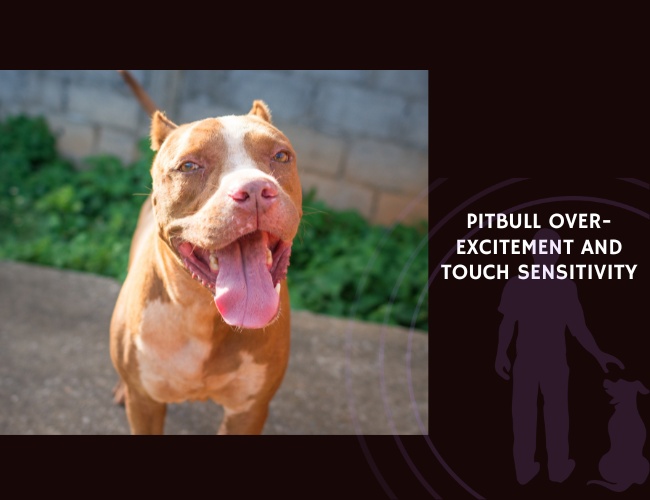
When your Pitbull greets you at the door, the entire world seems to shake with joy. Their body wiggles, their eyes sparkle, and every cell in their being radiates pure, unfiltered excitement. But sometimes, that joy tips over into something else—a whirlwind of jumping, mouthing, and energy that feels impossible to calm. You might wonder: is this just enthusiasm, or is something deeper happening beneath the surface?
Pitbull-type dogs carry a reputation for intensity, and it’s not entirely unearned. These remarkable animals were bred for resilience, unwavering loyalty, and an almost supernatural bond with their human companions. But that same genetic heritage—one built on tenacity, emotional investment, and tactile responsiveness—can create challenges when excitement becomes overwhelming or when touch triggers unexpected reactions.
This isn’t about aggression or disobedience. What you’re witnessing is often emotional dysregulation, sensory defensiveness, or a nervous system that struggles to find its off switch. The rapid shift from joyful play to frustration, the sensitivity to being held or restrained, the inability to settle even after exercise—these patterns reveal a complex interplay of neurobiology, sensory processing, and learned behavior.
Through the lens of affective neuroscience and sensory awareness, we can begin to see these moments not as problems to fix, but as windows into your dog’s emotional experience. Understanding the difference between joyful over-arousal and genuine sensory overload changes everything about how you respond, train, and connect. That’s where the NeuroBond approach becomes essential—recognizing that emotional regulation is taught through relationship, not dominance.
Let us guide you through the fascinating world of Pitbull emotional intensity, where science meets soul, and where your understanding becomes the bridge to a calmer, more connected companion. 🧡
Breed Origins & The Legacy of Intensity
Historical Roots: Resilience Meets Devotion
To understand why your Pitbull experiences the world with such emotional amplitude, we need to look back at their origins. Pitbull-type dogs descended from breeds developed for bull-baiting and later, farm work that demanded extraordinary physical and mental resilience. These weren’t dogs bred to work at a distance from humans—they were bred to work with humans, in close physical proximity, reading subtle cues and responding with split-second timing.
This selective breeding created dogs with several distinctive traits:
- High human-affiliative bonding: Pitbulls were designed to trust humans implicitly, even in high-stress situations
- Emotional investment in human connection: Their work required reading human emotional states and responding appropriately
- Tenacity combined with tactile responsiveness: They needed to be both persistent and highly aware of physical contact and pressure
- Rapid arousal systems: Quick activation was survival-critical in their historical roles
The Double-Edged Sword of Selective Traits
What made Pitbulls exceptional working partners also created the foundation for today’s challenges. That genetic predisposition toward intense human bonding means your dog doesn’t just like you—they’re emotionally invested in you at a neurobiological level. When you come home, their brain doesn’t gently register pleasure; it floods with dopamine, activating what affective neuroscientists call the SEEKING and PLAY systems simultaneously.
The same tenacity that once helped these dogs persist through challenging work now manifests as difficulty disengaging from exciting stimuli. Their nervous systems were literally selected for high activation and sustained arousal—qualities that don’t always translate well to modern living room life.
This isn’t a flaw in your dog. It’s a feature that needs understanding and gentle guidance rather than suppression. 🐾
Neurobiological Arousal & Excitement Thresholds
Inside the Excitable Brain
Your Pitbull’s tendency toward over-excitement isn’t a behavioral choice—it’s a neurobiological reality. Research in affective neuroscience reveals that dogs like Pitbulls often operate with higher baseline activation in their emotional systems, particularly in what Jaak Panksepp identified as the SEEKING and PLAY circuits.
The SEEKING system governs motivation, anticipation, and the drive to engage with the world. When it’s highly active, your dog experiences an almost compulsive need to pursue, investigate, and interact. The PLAY system amplifies this, adding layers of social joy and physical exuberance. When both systems fire simultaneously—as they often do in Pitbulls—you get a dog who can’t seem to “turn off” even when you desperately want them to settle.
The Chemistry of Escalation
Let’s talk about what’s happening inside your dog’s body during these moments of explosive excitement:
Dopamine surge: When you arrive home or a exciting stimulus appears, dopamine floods your dog’s brain, creating intense pleasure and motivation. In Pitbulls, this response can be exaggerated, leading to what feels like addictive excitement-seeking behavior.
Adrenaline cascade: As arousal builds, adrenaline kicks in, preparing the body for action. Heart rate accelerates, muscles tense, and sensory perception sharpens. This is wonderful for performance—but problematic for calm household behavior.
Cortisol accumulation: If excitement persists without resolution, stress hormone cortisol begins to rise. This is where joyful excitement can tip into frustration or irritability. Your dog isn’t being “bad”—their biochemistry is shifting beneath their behavior.
Delayed recovery: Here’s the crucial part—Pitbulls often show poor “state switching” ability. Once aroused, their nervous systems struggle to return to baseline. That ten-minute play session might leave your dog wired for an hour afterward, unable to settle despite exhaustion.
The Arousal Threshold Challenge
Think of emotional arousal like a volume dial that goes from 1 to 10. Most dogs might escalate from a 3 to a 6 during exciting moments. Pitbulls often leap from a 2 to an 9, skipping all the moderate levels in between. This “all-or-nothing” response pattern makes it difficult for them to experience mild pleasure—instead, they experience intense pleasure that quickly overwhelms their regulatory capacity.
This isn’t an inability to feel calm. It’s an inability to modulate the transition between emotional states. The pathway from aroused to calm is neurologically under-developed, requiring your help to build those missing neural connections through patient, consistent co-regulation. 🧠
Touch Sensitivity & Sensory Processing
The Complexity of Canine Touch Perception
Touch is never just touch. When your hand makes contact with your Pitbull’s fur, an entire cascade of neurological processing begins. Different types of touch activate different nerve pathways, each carrying distinct emotional and sensory information to the brain.
Research on tactile perception reveals fascinating insights into how dogs might experience our physical contact. Hairy skin contains specialized nerve fibers called C-tactile (CT) afferents, which respond specifically to gentle, slowly-moving touch—the kind of stroking that feels naturally soothing. But the emotional impact of this touch depends heavily on context, the dog’s current arousal state, and their past experiences with similar contact.
Your Pitbull’s heightened touch sensitivity likely stems from several interconnected factors:
- Low sensory inhibition thresholds: Their nervous systems may have difficulty filtering out or “gating” tactile input, making every touch feel more intense
- Rapid sensory-to-emotional pathways: Physical sensation converts to emotional reaction faster than in less reactive breeds
- Context-dependent interpretation: The same touch can feel soothing in one moment and overstimulating in another
When Touch Amplifies Rather Than Calms
You might have noticed that petting your excited Pitbull sometimes makes them more excited rather than calming them down. This isn’t perverse—it’s predictable neuroscience. During high arousal states, tactile input can act as additional stimulation rather than regulation.
The nature of your touch matters enormously:
Calming touch characteristics:
- Slow, rhythmic strokes along the direction of fur growth
- Gentle pressure applied consistently
- Touch during moments of existing calm
- Predictable patterns that allow sensory anticipation
Arousing touch characteristics:
- Rapid, patchy, or unpredictable contact
- Firm pressure during high excitement
- Touch combined with verbal excitement or squealing
- Restraint-style touch (grabbing, hugging, holding) when the dog is already stimulated
Sensory Flooding and Overstimulation
Here’s where things get particularly challenging. When multiple sensory inputs converge—your voice, your touch, movement in the environment, other family members—your Pitbull can experience sensory flooding. Their nervous system becomes overwhelmed trying to process too much information simultaneously.
Signs of sensory flooding include:
- Sudden shift from playfulness to mouthiness or nipping
- Body stiffening or “freezing” during continued petting
- Gaze aversion or turning the head away from touch
- Rapid panting despite not being hot
- Inability to hold still even briefly
What looks like defiance or excessive energy is often a dog desperately trying to manage overwhelming sensory input. They’re not choosing to be “bad”—they’re drowning in sensation and don’t yet have the skills to self-regulate. Through the Invisible Leash philosophy, we learn to read these signals before they escalate, guiding with awareness rather than correction. 🧡

Emotional Expression vs. Regulation
The All-or-Nothing Response Pattern
If you’ve ever felt like your Pitbull has two modes—explosive joy or complete shutdown—you’re observing a genuine difficulty with emotional modulation. Most dogs can experience a spectrum of emotional intensity. Pitbulls often struggle with the middle range, defaulting instead to extreme expressions.
This isn’t dramatic personality. It’s a neurological challenge in the brain circuits responsible for emotional regulation. The prefrontal cortex, which helps modulate emotional responses in humans and dogs alike, may be less effective at inhibiting the emotional centers (like the amygdala) in highly reactive dogs.
Consider these common scenarios:
Morning greeting: Instead of a gentle tail wag and calm approach, your Pitbull explodes into full-body wiggles, jumping, and vocalizing. The emotion is genuine love—but the expression is completely unmodulated.
Play escalation: What starts as gentle play rapidly intensifies into rough mouthing, body slamming, or inability to respond to “enough” cues. Your dog isn’t trying to hurt you; they literally cannot downshift their enthusiasm mid-experience.
Touch interactions: A belly rub begins peacefully but within seconds your dog becomes so overwhelmed with pleasure that they start mouthing your hands, pawing frantically, or flipping around uncontrollably.
Affection, Play, and Physical Intensity: The Blurred Lines
One of the most misunderstood aspects of Pitbull behavior is their difficulty differentiating between types of physical interaction. To them, affection is physical intensity. Play is rough contact. They don’t naturally understand the human distinction between “gentle pets” and “wrestle time.”
This confusion stems from several sources:
Their genetic heritage emphasized physical engagement as the primary mode of interaction. Touch meant work, play, or bonding—all involving significant physical presence and pressure. Modern expectations for “calm affection” don’t align with their hardwired associations.
Additionally, the same neurochemicals (oxytocin, dopamine, endorphins) flood their systems during gentle petting and during rough play. Neurologically, these experiences feel similar, making it difficult for them to calibrate their responses appropriately.
Micro-Frustrations and Emotional Conflict
Here’s a crucial insight that transforms how you might interpret your dog’s behavior: what looks like defiance or aggression is often micro-frustration. These are tiny moments of emotional conflict that accumulate when your dog experiences:
- Touch pressure they find uncomfortable but don’t know how to refuse politely
- Conflicting desires (wanting petting but feeling overstimulated by it)
- Inability to achieve what they’re seeking (your attention, play continuation)
- Miscommunication about what’s expected or allowed
These micro-frustrations don’t involve reasoning or spite. They’re immediate emotional reactions to sensory and social experiences that feel confusing or overwhelming. When you reached for their collar and they mouthed your hand, they weren’t plotting rebellion—they experienced a moment of pressure and reflexively communicated discomfort.
Through the NeuroBond approach, we recognize these moments as information rather than problems. They reveal your dog’s current capacity for regulation and show you exactly where they need support in developing better emotional skills. That shift in perspective—from “bad dog” to “overwhelmed dog”—changes everything about how effectively you can help them. 🐾
Reinforcement History & Human Influence
How We Accidentally Create Excitement Monsters
Let’s talk about an uncomfortable truth: humans often unintentionally reinforce the exact behaviors they find most frustrating. This isn’t about blame—it’s about awareness. Understanding how your responses shape your Pitbull’s emotional patterns is the first step toward change.
Consider the typical homecoming scenario. You walk through the door after work. Your Pitbull explodes with joy—jumping, spinning, vocalizing. And what do most people do? They engage. They pet the dog, talk in excited voices, maybe playfully push them down, creating a feedback loop that teaches: extreme excitement gets attention and physical contact.
Even negative attention reinforces the behavior. Saying “no” while touching your dog, pushing them off while making eye contact, or laughing at their antics all communicate engagement. To your Pitbull’s brain, engagement equals success, regardless of your frustrated tone.
The Chaotic Greeting Ritual
Greeting rituals become deeply ingrained patterns that activate automatically. If every single homecoming for the past three years has involved explosive excitement, your dog’s brain has formed strong neural pathways connecting “door opening” with “maximum arousal.”
These patterns include:
- Anticipatory arousal: Your dog begins getting excited when they hear your car, not when they see you
- Conditioned emotional response: The doorknob sound alone triggers dopamine release
- Muscle memory: The jumping, spinning, and vocalizing become automatic physical sequences
- Emotional contagion: If you feel excited or anxious about the greeting, your dog mirrors and amplifies that energy
Breaking these patterns requires consistency across every arrival, not just the times you feel patient. Intermittent reinforcement (sometimes allowing the excited greeting, sometimes not) actually strengthens the behavior by making it unpredictable and therefore more compelling to try.
Inconsistent Boundaries and Escalating Arousal
Pitbulls thrive on clarity. Their intense human-bonding drive means they’re constantly scanning for information about what works to maintain connection with you. When boundaries shift—jumping is okay on weekends but not weekdays, rough play is fine until suddenly it isn’t—they experience confusion that elevates baseline anxiety and arousal.
Inconsistent rules create dogs who:
- Test boundaries constantly, seeking clarity through trial and error
- Remain in higher arousal states due to uncertainty
- Struggle to develop reliable self-regulation because external expectations keep changing
- Experience frequent micro-frustrations when their strategies suddenly stop working
This isn’t about being strict or harsh. It’s about being predictable. Your Pitbull’s nervous system calms when it can predict outcomes reliably.
NeuroBond Touch: Recalibrating Through Connection
Here’s where intentionality transforms everything. NeuroBond Touch refers to physical contact that consciously supports regulation rather than accidentally reinforcing dysregulation. This approach recognizes that touch is a powerful tool for shaping your dog’s nervous system over time.
Principles of NeuroBond Touch:
Timing: Initiate calm touch during calm moments, not during excitement. You’re building associations between your hands and parasympathetic nervous system activation.
Pressure and rhythm: Use slow, consistent pressure with rhythmic quality. This activates those CT afferents we discussed earlier, triggering the neurobiological pathways associated with safety and bonding.
Predictability: Develop touch patterns your dog can anticipate. Perhaps three slow strokes down the shoulder always signal “time to settle.” Consistency builds neurological expectation.
Respect for communication: When your dog signals discomfort (turning away, lip licking, stiffening), honor it immediately. This teaches them that their communication matters, reducing the need for more dramatic signals.
State-dependent application: Recognize that the same touch serves different functions depending on your dog’s arousal level. During high excitement, touch stimulates. During calm, it soothes. During fear, it may do either depending on context.
Over weeks and months, intentional touch practices literally reshape your dog’s neurological responses. The nervous system learns: calm human contact predicts safe, manageable experiences. This is Soul Recall in action—building emotional memories that inform future behavior, creating a foundation of trust that transcends individual training moments. 🧠
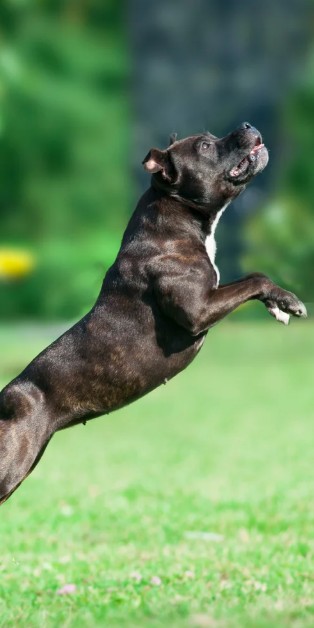
Electric. Sensitive. Unfiltered.
Excitement isn’t always joy.
When your Pitbull’s body wiggles with uncontainable energy, you’re not just seeing happiness—you’re witnessing a nervous system built for rapid activation and deep human bonding.
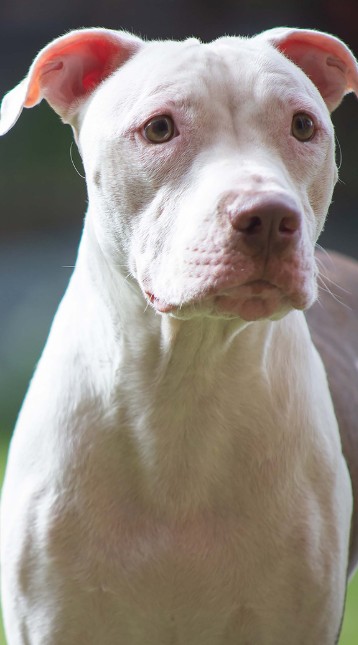
Touch isn’t always comfort.
Pitbulls were bred for close human partnership, making their nervous system highly responsive to physical contact—sometimes soothing, sometimes overstimulating.
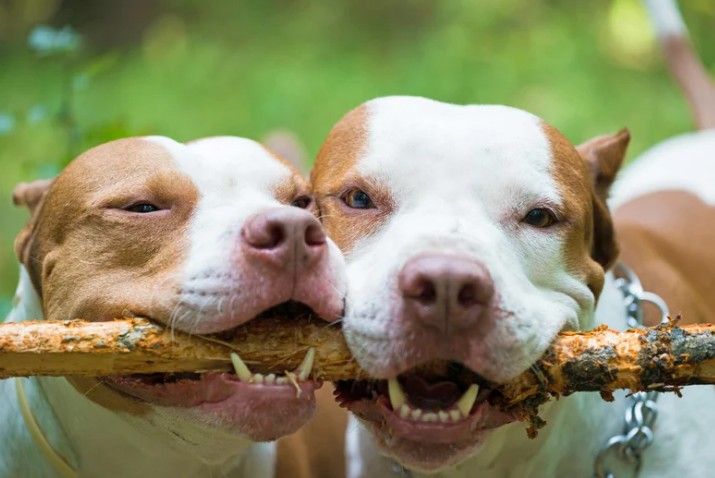
Regulation doesn’t come from control.
Over-excitement isn’t solved through commanding stillness—it’s cultivated through co-regulation. When you ground your own energy—slow hands, soft voice, steady breathing—their nervous system mirrors yours.
Training, Regulation & Behavior Management
Beyond Obedience: Teaching Emotional Skills
Traditional obedience training focuses on commands: sit, stay, come, heel. These are valuable, but they don’t address the core challenge your Pitbull faces. Your dog doesn’t need to learn what to do—they need to learn how to regulate their internal state so they can access those behaviors when emotions run high.
This is the fundamental shift the NeuroBond model brings to training. We’re not training behaviors; we’re training nervous systems. We’re building your dog’s capacity for emotional flexibility, state-switching, and self-regulation.
Co-Regulation: The Foundation of Change
Co-regulation is the process by which one nervous system helps another find equilibrium. Before your Pitbull can self-regulate, they need extensive experience being co-regulated by you. Your calm, predictable presence becomes the external regulator their developing internal system can gradually internalize.
Here’s how co-regulation works in practice:
Shared breathing: When your dog is escalating, sit nearby and breathe slowly and deeply. Don’t touch them yet. Simply be present with regulated breath. Over time, nervous systems synchronize—your calm influences their physiology.
Parallel calm: Engage in calm activities near your aroused dog without demanding they participate. Read a book, fold laundry, move slowly through space. You’re modeling what “settled” looks like.
Predictable responses: React the same way to the same behaviors every time. This external consistency helps their internal system develop reliable patterns.
Emotional witnessing: Acknowledge their big feelings without trying to immediately change them. “I see you’re very excited right now” validates their experience while you maintain your own regulation.
The goal isn’t to suppress your dog’s emotions. It’s to expand their window of tolerance—the range of arousal within which they can still think, learn, and respond to cues.
🧠 Understanding Pitbull Over-Excitement & Touch Sensitivity
A Complete Neurobiological Journey from Arousal to Regulation
Phase 1: Recognition
Identifying Over-Arousal vs. Joy
💡 Neurobiological Reality
Pitbulls experience higher baseline activation in SEEKING and PLAY systems. What looks like “too much energy” is actually neurochemical flooding—dopamine and adrenaline surges that overwhelm regulatory capacity. Their nervous systems leap from calm to intense without middle gears.
🔍 What You’ll Notice
• Full-body wiggles that seem uncontrollable
• Jumping that persists despite your attempts to stop it
• Mouthing that increases with petting
• Inability to settle even after exercise
• Rapid escalation from calm to explosive
✅ First Step
Stop labeling this as “bad behavior.” Reframe it as emotional dysregulation—your dog needs help building skills they don’t yet have. Recognition without judgment opens the door to effective support.
Phase 2: Touch Processing
How Sensory Input Affects Arousal
💡 Sensory Science
Touch activates C-tactile (CT) afferents designed for affective connection. But during high arousal, these same pathways amplify excitement instead of calming. Your petting becomes additional stimulation rather than regulation—the nervous system can’t process it correctly when flooded.
🔍 Touch Sensitivity Signals
• Increased mouthiness when you pet them
• Body stiffening during hugs or restraint
• Rapid panting during gentle handling
• Gaze avoidance while being touched
• Sudden escalation from calm petting to wild behavior
⚠️ Common Mistake
Never increase touch intensity to “calm down” an aroused dog. This creates sensory flooding—when multiple inputs overwhelm processing capacity, triggering frustration bites or explosive behavior that looks aggressive but is actually overwhelm.
Phase 3: Building Regulation Foundation
Creating the Capacity for Calm
💡 Co-Regulation Science
Before self-regulation develops, your dog needs co-regulation—your calm nervous system helping theirs find equilibrium. Nervous systems synchronize through proximity, breath patterns, and predictable responses. You become their external regulator while internal capacity develops.
✅ Practical Application
• Create designated calm zones with comfortable surfaces
• Practice “parallel calm”—sit nearby reading while dog settles
• Use slow, deep breathing near your dog without demanding interaction
• Reward stillness with brief, gentle praise
• Build positive associations with calm spaces through feeding and massage
🔍 Timeline Expectations
Initial settling capacity builds over 2-4 weeks of consistent practice. True self-regulation develops over 3-6 months. This isn’t fast, but it’s neurologically sound—you’re literally growing new neural pathways for state-switching.
Phase 4: Restructuring High-Arousal Moments
Breaking Explosive Greeting Patterns
💡 Pattern Recognition
Every homecoming has reinforced explosive greetings for possibly years. Your dog’s brain has formed strong neural pathways: door sound → dopamine flood → jumping behavior → your attention. Even negative attention strengthens this loop because it’s still engagement.
✅ New Protocol
• Enter home without eye contact, words, or touch initially
• Move to a neutral space and wait for calm (even 2 seconds counts)
• Reward stillness with brief, calm acknowledgment
• Gradually extend the calm duration required
• Practice this protocol 100% consistently—no exceptions
⚠️ Critical Point
Inconsistency destroys progress. If you allow explosive greetings even occasionally, you’re creating intermittent reinforcement—the strongest type of learning. Every single arrival must follow the new pattern for 4-6 weeks minimum.
Phase 5: NeuroBond Touch Protocols
Recalibrating Tactile Responses
💡 Touch as Neuroscience
Intentional touch reshapes nervous system responses over time. When applied during calm states with consistent rhythm and pressure, touch activates CT afferents properly—building associations between your hands and parasympathetic activation rather than arousal.
✅ Implementation Steps
• Begin touch only during existing calm moments
• Use slow strokes (3-5 seconds per stroke) along fur direction
• Apply gentle, consistent pressure—avoid patchy or rapid contact
• Develop predictable patterns (three shoulder strokes = settle cue)
• Stop immediately if dog shows discomfort signals
• Practice daily for 5-10 minutes in calm environments
🔍 Progress Markers
Week 1-2: Dog tolerates touch without escalating. Week 3-4: Dog begins relaxing into touch (softer eyes, lowered head). Week 5-8: Touch actively helps dog transition from mild arousal to calm. This is Soul Recall developing—emotional memory connecting your touch with safety.
Phase 6: Activity Modulation
Smart Exercise vs. Arousal Amplification
⚠️ The Exercise Paradox
More exercise doesn’t equal calmer dog. High-intensity activities spike adrenaline and cortisol, raising baseline arousal for hours afterward. Your dog seems “wired not tired” because their neurochemistry is flooded with stress hormones.
✅ Regulation-Focused Activities
• Sniff walks where dog controls pace and direction
• 15-minute scent work sessions (mentally engaging, low arousal)
• Slow feeding puzzles and foraging games
• Training sessions teaching body awareness and impulse control
• Brief play (5-10 minutes) followed by mandatory settle periods
💡 The Cool-Down Protocol
After any stimulating activity: 5-minute slow walk, offer water, then 20-30 minutes of enforced quiet time. This teaches the nervous system how to transition from arousal to baseline—the state-switching skill your dog needs most.
Phase 7: Early Warning Recognition
Preventing Escalation Through Awareness
💡 The Invisible Leash Principle
True connection means reading signals before obvious behavioral escalation. Your dog communicates constantly through micro-expressions and subtle body language. When you learn this language, you guide through awareness rather than correction—the essence of the Invisible Leash.
🔍 Overstimulation Early Signs
• Increased tongue flicking or lip licking
• Brief yawning during interaction
• Gaze avoidance—looking away from stimulus
• Slight body stiffening through shoulders
• Weight shifting away from touch or interaction
• Respiration rate increase
• Brief pauses in activity before resumed intensity
✅ Intervention Strategy
When you notice 2-3 signals clustering: create immediate reset opportunity. Move to different space, offer brief simple task (nose touch), or initiate calm protocol. You’re intervening while dog still has cognitive capacity to respond—before threshold is crossed.
Phase 8: Sustainable Regulation
Building Lifelong Emotional Resilience
💡 Neuroplasticity in Action
After 3-6 months of consistent practice, your dog’s brain has literally changed. New neural pathways for state-switching have developed. The prefrontal cortex better modulates emotional centers. What required constant support now happens more automatically—true self-regulation emerging.
✅ Maintenance Practices
• Continue daily calm protocols even after improvement
• Maintain consistent boundaries and greeting rituals
• Practice intentional touch during calm moments
• Reinforce settling behaviors regularly
• Protect your dog from unnecessary overstimulation
• Celebrate small wins—each calm moment matters
🔍 What Success Looks Like
Not the elimination of excitement—that’s your dog’s joyful nature. Success means excitement within manageable ranges, ability to recover to calm within minutes, acceptance of touch without escalation, and trust that allows your dog to communicate discomfort before exploding. This is the NeuroBond in full expression.
🔄 Understanding Different Response Patterns
Joyful Over-Arousal
Characteristics: Loose body, seeking interaction, wiggly movements, easy redirection to toys
Cause: Dopamine flood without regulation
Response: Redirect early, reward calm, provide alternatives
Emotional Dysregulation
Characteristics: All-or-nothing responses, rapid mood shifts, difficulty settling
Cause: Poor state-switching capacity
Response: Co-regulation, consistent protocols, patience
Sensory Defensiveness
Characteristics: Stiffening during touch, gaze avoidance, sudden nipping
Cause: Low sensory thresholds, poor filtering
Response: Gentle desensitization, respect boundaries, intentional touch
Pressure-Induced Conflict
Characteristics: Mouthing during restraint, escalation when held
Cause: Conflicting desires, communication frustration
Response: Teach alternative communication, honor “no” signals
Puppy (Under 18 months)
Pattern: Extreme over-arousal, minimal impulse control
Focus: Building foundation skills, extensive co-regulation
Timeline: 6-12 months for noticeable improvement
Adult (2-7 years)
Pattern: Established habits, reinforced over years
Focus: Breaking patterns, consistency crucial
Timeline: 3-6 months with strict protocol adherence
⚡ Quick Reference: Threshold Management Formula
Current Arousal Level × Duration = Regulation Challenge
• If dog typically loses control after 30 seconds → End interactions at 20 seconds
• Brief high-intensity activities (fetch) require 3× calm-down time after
• Mental stimulation (scent work) requires 1× calm-down time
• Multiple arousing events in one day = compound effect (add 50% recovery time)
• One over-threshold experience can elevate baseline arousal for 24-48 hours
🧡 The Zoeta Dogsoul Perspective
When we understand that over-excitement isn’t defiance but neurobiological reality, everything changes. The NeuroBond approach recognizes that regulation is built through relationship, not dominance. Your calm becomes their compass. The Invisible Leash emerges not from physical control but from emotional connection and mutual understanding—your dog follows because they trust your guidance through life’s overwhelming moments. Through consistent, compassionate practice, Soul Recall develops: deep emotional memories that tell your dog, on a cellular level, that you are their safe harbor in the storm of sensation. This intensity isn’t a flaw to fix—it’s a feature to understand, honor, and gently shape into sustainable emotional resilience.
© Zoeta Dogsoul – Where neuroscience meets soul in dog training
Sensory-Based Behavioral Strategies
Given the sensory processing challenges we’ve discussed, behavioral strategies that work through sensory channels can be remarkably effective. These approaches work with your dog’s neurobiology rather than against it.
Pressure control exercises:
- Teach your dog to accept gentle collar holds with immediate release when they relax
- Practice body handling during calm moments, building positive associations
- Use gentle pressure points (like the chest or shoulder blade area) paired with calm verbal cues
- Never force compliance—pressure should invite calm, not create conflict
Pattern interruption:
- Develop specific sounds or cues that mean “pause and reset” (not punishment, just a pattern break)
- Use environmental changes (moving to a different room) to create natural resets
- Introduce brief, simple tasks during escalation (asking for a nose touch to your hand) that interrupt arousal loops
Calming touch protocols:
- Establish specific “settle” routines that include slow, methodical petting
- Use massage-style techniques during scheduled calm times
- Create positive associations with being touched in historically sensitive areas
Sensory enrichment for regulation:
- Provide textured surfaces for your dog to explore (different fabrics, safe materials)
- Offer activities that require focused attention but not high arousal (sniff work, slow food puzzles)
- Create calm spaces with comfortable textures and minimal stimulation
The Power of Relational Training
Pitbulls respond profoundly to relational training models precisely because of their intense human-bonding drive. Traditional obedience methods that rely on dominance hierarchies or purely mechanical reinforcement miss the opportunity to leverage their greatest strength: their desire for connection with you.
Relational training principles:
Trust as foundation: Every interaction either builds or erodes trust. When your dog trusts that you understand their signals and will help them succeed, cooperation becomes intrinsic.
Choice and agency: Offering choices within structure (would you like to sit or lie down to earn this?) develops decision-making capacity and reduces frustration.
Clear communication: Using consistent cues, body language, and environmental setups removes guesswork and lowers anxiety.
Success-based progression: Moving forward only when your dog demonstrates calm competence at the current level prevents overwhelm.
Collaborative problem-solving: When challenges arise, adjust the environment or your approach rather than increasing pressure on the dog.
Cooperative care practices fit beautifully into this framework. Teaching your Pitbull to actively participate in handling, grooming, and veterinary care through choice and communication builds profound trust while developing their self-regulation skills. They learn: I can communicate my comfort level, and my human will listen.
This is the essence of the Invisible Leash—guidance that happens through relationship and awareness rather than physical control. Your Pitbull follows because they’re emotionally connected to you, not because they’re compelled. That willing cooperation transforms everything about training, making it a conversation rather than a command structure. 🧡
Social Communication & Misinterpretation Risks
When Excitement Reads as Aggression
One of the greatest challenges Pitbull guardians face is the pervasive misinterpretation of their dog’s behavior. That wiggling, mouthy, intensely physical greeting that you recognize as overwhelming joy can look frightening to unfamiliar observers. The rapid movement, the open mouth, the lack of spatial awareness—these can be misread as dangerous intent.
This misinterpretation carries real consequences. Your dog might be labeled “aggressive” when they’re actually emotionally dysregulated. They might be punished for behavior that stems from sensory overwhelm rather than malice. Other people might react with fear or hostility, which your sensitive Pitbull will absolutely notice and potentially internalize.
Understanding the difference between over-arousal and genuine aggression protects both your dog and your relationship with them:
Over-arousal indicators:
- Loose, wiggly body posture even when intense
- Mouthing without pressure or inhibition failures
- Seeking continued interaction rather than creating distance
- Easy redirection to toys or alternative behaviors
- Recovery to friendly behavior within moments
Genuine aggression indicators:
- Stiff, frozen body posture before movement
- Purposeful, controlled bite pressure
- Attempting to increase distance or end interaction
- Sustained arousal focused on a specific threat
- Slow recovery requiring significant time or space
Most Pitbull “incidents” stem from the former, not the latter. But the consequences don’t always reflect that distinction.
The Subtle Language of Overstimulation
Your Pitbull communicates their internal state constantly through micro-signals that precede obvious behavioral escalation. Learning to read these subtle cues allows you to intervene preventatively, before your dog crosses into overwhelm.
Early overstimulation signals:
Oral behaviors:
- Increased tongue flicking or lip licking
- Yawning during interaction (not from tiredness)
- Brief mouthing that’s softer than normal play
- Drooling more than usual
Body tension:
- Slight stiffening through the shoulders or hindquarters
- Weight shifting toward or away from stimulus
- Tail position changing from relaxed wag to elevated tension
- Ears alternating between forward focus and pinned back
Engagement changes:
- Gaze avoidance—looking away from you or the interaction
- Checking in with you more frequently during play
- Brief pauses in activity followed by resumed intensity
- Displacement behaviors (sudden scratching, sniffing ground)
Arousal indicators:
- Respiration rate increasing
- Pupil dilation (though hard to see in dark-eyed dogs)
- Piloerection (raised hackles) even during “happy” moments
- Increased vocalization or pitch changes
These signals often appear in clusters. When you notice multiple indicators appearing simultaneously, your dog is telling you: I’m approaching my threshold. This is your opportunity to create a reset before behavioral escalation occurs.
Preventing Frustration and Conflict
Early recognition transforms your role from reactive manager to proactive guide. Instead of waiting until your Pitbull is over threshold and then trying to calm them down, you create pattern interrupts while they still have cognitive capacity to respond.
Practical prevention strategies:
Threshold management: Learn your dog’s specific arousal threshold and work consistently below it. If they typically lose control after 30 seconds of greeting, end greetings at 20 seconds while they’re still successful.
Reset rituals: Develop clear signals that mean “time to downshift” and practice them during calm moments so they’re accessible during arousal. This might be a specific word paired with walking to a designated calm space.
Environmental management: Control the stimulation level in your dog’s environment. Fewer guests, shorter outings, more predictable routines—these aren’t limitations, they’re scaffolding for success.
Communication training: Teach your dog specific behaviors to communicate “too much” (like walking away to a designated space) so they have alternatives to explosive release or nipping.
Recovery time: Build in mandatory calm periods after stimulating activities. If your dog plays intensely for 10 minutes, require 20-30 minutes of settling before allowing further excitement.
The goal isn’t to eliminate all arousal—that would strip away your Pitbull’s joyful nature. The goal is to keep arousal within the range where your dog can still think, learn, and communicate. Where the Invisible Leash remains intact even without physical restraint, because your connection and communication provide the guidance your dog needs.
When we recognize overstimulation signals and respond with supportive structure rather than punishment, we teach our dogs something profound: you don’t have to manage these big feelings alone. I’m here to help you find your way back to calm. That co-regulatory experience becomes the foundation for eventual self-regulation. 🐾
Lifestyle & Environment: Creating Space for Regulation
The Regulation-Friendly Home
Your physical environment either supports or undermines your Pitbull’s emotional regulation. Dogs don’t generalize well across contexts, which means creating specific spaces designed for calm profoundly impacts their ability to achieve it.
Designated calm zones: Create areas in your home where only calm behavior is practiced and reinforced. This might be a specific mat, a dog bed in a quiet corner, or even a particular room. These spaces should have:
- Comfortable, textured surfaces that feel pleasant to lie on
- Minimal visual and auditory stimulation
- Consistent temperature and lighting
- Positive associations built through feeding, gentle massage, or calm attention
Arousal management layout: Think strategically about traffic patterns in your home. If your dog becomes aroused watching activity through windows, manage sight lines. If doorway greetings are consistently problematic, create physical barriers that slow down the greeting sequence.
Sensory considerations: Remember your Pitbull’s heightened sensory sensitivity. Reduce unnecessary stimulation:
- Lower volume on TVs and music
- Use blackout curtains if outdoor activity triggers reactivity
- Provide white noise or calming music to buffer jarring sounds
- Minimize strong scents (cleaning products, air fresheners) that might add to sensory load
Exercise vs. Arousal: Getting the Balance Right
Here’s a counterintuitive truth: more exercise doesn’t always equal better behavior. For Pitbulls prone to over-arousal, high-intensity exercise can actually increase reactivity rather than reducing it.
The issue is neurochemical. Intense physical activity floods the system with adrenaline and cortisol. While this feels good during the activity, it raises baseline arousal for hours afterward. Your dog seems wired, not tired, even after a long run or intense play session.
Regulation-focused activity principles:
Emphasize mental engagement over physical intensity: Sniff walks where your dog chooses the pace and direction engage their brain without spiking adrenaline. Fifteen minutes of focused scent work can be more regulatory than an hour of fetch.
Include calm in the activity: Practice settle periods during walks or play. Walk for five minutes, stop and have your dog lie calmly for two minutes, then continue. This teaches arousal modulation in real-time.
End before excitement peaks: Stop activities while your dog can still think and respond to cues. If you wait until they’re completely wired, you’ve missed the training opportunity.
Build in cool-down periods: Just as athletes cool down after intense work, your dog needs gradual transitions from activity to rest. A five-minute slow walk after play, followed by water and then quiet time, helps the nervous system downshift smoothly.
Vary activity types: Alternate between physical, mental, and social activities. Monday might be scent work, Tuesday a calm walk, Wednesday trick training, Thursday a brief play session with a known calm dog.
Social Interactions and Relationship Circles
Your Pitbull’s social world significantly impacts their emotional regulation. Unlike some independent breeds, Pitbulls are profoundly affected by their relationships and social experiences.
Quality over quantity: A few well-matched relationships with calm, tolerant dogs teach better emotional skills than frequent interactions with varied, high-arousal dogs. Seek out playmates who match well temperamentally.
Human interaction management: Not everyone knows how to greet dogs appropriately. It’s okay—necessary, even—to advocate for your dog’s needs. Teach visitors: ignore the dog until they’re calm, then offer brief, gentle attention.
Alone time skills: Despite their social nature, Pitbulls need to develop comfort with solitude. Practice brief absences, gradually building their capacity to remain calm without your presence. This isn’t cruel; it’s building emotional resilience.
Routine and predictability: Establish consistent daily patterns. Feed at the same times, walk the same routes initially, maintain similar schedules. Predictability reduces baseline anxiety, making regulation easier.
The environment you create isn’t just about physical space—it’s about the emotional atmosphere, the predictability of experiences, and the quality of relationships. When these elements align to support regulation rather than challenge it, you’ll notice your Pitbull’s threshold expanding naturally over time. That’s the essence of Zoeta Dogsoul—creating conditions where growth happens organically through thoughtful structure and deep understanding. 🧠
Health Considerations and Body Awareness
The Physical Foundations of Emotional Regulation
We’ve focused extensively on neurobiology and behavior, but physical health profoundly affects emotional regulation. Pain, discomfort, nutritional imbalances, and health conditions all lower your dog’s threshold for overwhelm.
Pain and touch sensitivity connections: Dogs experiencing chronic low-grade pain often show increased touch sensitivity and irritability. What looks like sudden personality change might reflect:
- Joint inflammation from early arthritis
- Dental disease causing head and neck sensitivity
- Skin conditions creating uncomfortable tactile experiences
- Muscle tension from compensatory movement patterns
If your Pitbull’s touch sensitivity or over-reactivity appears suddenly or intensifies, consult your veterinarian to rule out physical causes.
Thyroid and hormonal influences: Hypothyroidism (underactive thyroid) can create symptoms that mimic emotional dysregulation:
- Increased reactivity and anxiety
- Difficulty settling or focusing
- Weight gain that affects mobility and comfort
- Skin conditions that increase tactile sensitivity
Comprehensive thyroid panels (not just basic screenings) can reveal subtle imbalances affecting behavior.
Nutritional impacts on emotional stability: The gut-brain connection is powerful. What your Pitbull eats affects neurotransmitter production, inflammation levels, and overall nervous system function:
- Protein quality: Amino acids are neurotransmitter precursors. Tryptophan supports serotonin production (promoting calm), while tyrosine supports dopamine (affecting motivation and arousal)
- Omega-3 fatty acids: Support brain health and reduce inflammation, which can affect mood and reactivity
- Digestive health: An unhealthy gut microbiome influences behavior through the vagus nerve connection between gut and brain
- Blood sugar stability: Dramatic fluctuations in blood glucose affect energy and emotional stability
Body Awareness and Proprioception
Proprioception—your dog’s awareness of their body in space—affects emotional regulation more than many realize. Pitbulls with poor proprioceptive awareness often show increased arousal and less impulse control.
Building body awareness:
Balance work: Practice on unstable surfaces (wobble boards, balance discs) to heighten body awareness. Start with all four feet on the ground, progress to two feet.
Slow movement exercises: Teaching your dog to move deliberately slowly through obstacles or targeting exercises increases conscious body control.
Pressure awareness: Gentle handling exercises where you apply slight pressure to different body areas and reward relaxed acceptance builds both body awareness and touch tolerance.
Position awareness: Teaching your dog to consciously move into specific positions (placing front feet on a target while back feet remain elsewhere) integrates body and mind.
Dogs with better proprioception show improved impulse control and emotional regulation—they’re literally more grounded in their physical experience.
Sleep and Recovery
Never underestimate the power of quality rest. Adult dogs need 12-14 hours of sleep daily, puppies and seniors even more. But arousal-prone dogs often struggle with sleep quality.
Supporting restorative rest:
- Enforce rest periods even when your dog seems energetic
- Create dark, quiet sleep environments
- Establish pre-sleep routines that signal settling time
- Avoid stimulating activities within two hours of sleep
- Consider calming supplements (like L-theanine or chamomile) if appropriate and veterinarian-approved
Quality sleep supports nervous system recovery, emotional processing, and memory consolidation—all crucial for learning new regulatory skills. 🧡
Conclusion: Is This Intensity Right for Your Life?
Understanding the Commitment
Living with a Pitbull prone to over-excitement and touch sensitivity isn’t for everyone, and that’s perfectly okay to acknowledge. These dogs offer extraordinary devotion, loyalty, and joy—but they also require specific understanding and consistent management that can feel demanding.
Ask yourself honestly:
Can you provide the emotional consistency they need? These dogs require calm, predictable responses from their humans. If your life is chaotic or your stress levels run high, that energy will amplify in your dog.
Do you have patience for gradual progress? Reshaping deeply ingrained arousal patterns takes months or years, not weeks. Can you celebrate small improvements rather than expecting quick fixes?
Can you advocate effectively for your dog? Will you set boundaries with visitors, manage social situations, and protect your dog from overwhelming experiences even when it’s socially awkward?
Is your lifestyle compatible with their needs? Do you have space for their exercise needs, time for training, and willingness to modify your routine around their regulation requirements?
The Rewards of Understanding
For those who embrace the journey, the rewards are profound. When you understand that your Pitbull’s intensity stems from deep emotional investment rather than defiance, your entire relationship transforms.
You become partners in a co-regulatory dance, where your calm presence helps them find their center. You witness the incredible intelligence and sensitivity behind the exuberance. You experience the unwavering loyalty and affection that makes these dogs so special.
Through the NeuroBond approach, you’re not just training a dog—you’re building emotional capacity, strengthening your bond, and creating a foundation of trust that transcends specific behaviors. You’re working with your dog’s neurobiology rather than against it, honoring who they are while gently expanding their capabilities.
The Invisible Leash becomes real—that sense of connection where your dog chooses to stay close, to check in, to trust your guidance because your relationship matters more than any distraction. Where Soul Recall activates automatically: your dog remembers, on a cellular level, that you are safe, predictable, and trustworthy.
Moving Forward with Awareness
If you’re already sharing your life with an excitable, touch-sensitive Pitbull, embrace this journey with compassion for both your dog and yourself. Progress isn’t linear. There will be setbacks and challenges. But every moment you respond with understanding rather than frustration, you’re building neural pathways toward better regulation.
If you’re considering bringing a Pitbull into your life, now you understand what that intensity really means. It’s not about good dogs or bad dogs—it’s about matching temperament to lifestyle and committing to the specific support these remarkable animals need.
These dogs aren’t for everyone. But for the right people—those willing to learn, to grow, and to embrace the beautiful complexity of these emotionally intense beings—the relationship becomes transformative. Not despite their sensitivity, but because of it.
That balance between science and soul, between understanding and acceptance—that’s the essence of Zoeta Dogsoul. Welcome to a deeper way of seeing, knowing, and loving the dog you share your life with. 🐾










