
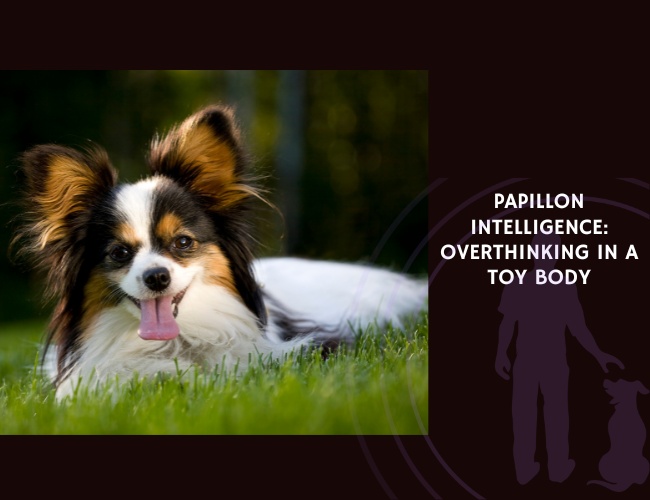
Have you ever watched a Papillon pause mid-step, ears pivoting like tiny radar dishes, processing everything around them with an intensity that seems almost overwhelming for such a small frame? Behind those butterfly-wing ears and delicate features lies one of the most cognitively complex minds in the canine world. Let us guide you through the fascinating paradox of Papillon intelligence—where exceptional cognitive abilities meet emotional hypersensitivity, creating a breed that thinks deeply, feels intensely, and sometimes struggles under the weight of their own awareness.
The Papillon’s journey from European palace companion to modern family member has shaped a unique temperament. These dogs were selectively bred not for physical prowess, but for emotional attunement and social intelligence. Their ancestors lived in the laps of aristocracy, learning to read the subtlest shifts in human mood and navigate complex social hierarchies. This heritage created a breed that excels at reading people but may struggle when those signals become overwhelming or contradictory. 🧠
Character & Behavior: The Mind Behind the Butterfly Ears
A Brain That Never Stops Analyzing
Your Papillon’s cognitive abilities rank among the highest in the toy breed category, often compared to herding breeds in problem-solving capacity. You might notice your furry friend pausing before entering a room, scanning for changes, or watching your face with an intensity that suggests they’re reading volumes in your micro-expressions. This isn’t simple observation—it’s active information processing.
Pattern Recognition Mastery sets Papillons apart from many toy breeds. They excel at identifying routines, predicting your behavior, and learning complex sequences with remarkable speed. Research into canine cognitive architecture suggests that this pattern recognition ability, while impressive, can create a tendency toward what we might call “overthinking.” When your Papillon hesitates at a familiar doorway because you moved a chair, they’re not being difficult—they’re recalibrating their entire mental map of that space.
Social Intelligence and Hyper-Observation define the Papillon experience. These dogs possess exceptional abilities in reading human social cues, often surpassing breeds bred for work. Through the NeuroBond approach, we understand that this heightened awareness creates both opportunity and challenge. Your Papillon doesn’t just see that you’re stressed—they feel it, mirror it, and may begin to anticipate stress even before it arrives.
The challenge emerges when this cognitive plasticity meets unpredictability. Papillons can develop what researchers describe as “anticipatory worry”—a state where their ability to predict patterns creates anxiety when patterns breaks. This manifests as hesitation, micro-analysis of situations, or what might appear as indecisiveness.
Signs Your Papillon Is Overthinking:
- Pausing repeatedly before entering familiar spaces
- Scanning the environment for several seconds before moving
- Hesitating when multiple options are presented
- Looking back at you frequently for confirmation during simple tasks
- Taking longer to settle into routine activities
- Showing visible stress when small environmental changes occur
The Emotional Landscape of High Intelligence
Emotional Mirroring and Cognitive Load create a unique challenge for Papillons in modern homes. When you’re tense, your Papillon doesn’t just notice—they absorb that tension, processing it through their own nervous system. This strong emotional mirroring means that inconsistent household energy or unpredictable routines don’t just confuse them; they create genuine cognitive overload.
Did you know that the autonomic nervous system in smaller breeds shows faster fluctuation patterns? This physiological reality means your Papillon experiences emotional shifts more rapidly than larger dogs. A moment of tension can spike their stress response within seconds, and recovery takes conscious effort. This isn’t emotional fragility—it’s the neurobiological reality of processing complex emotions in a compact frame.
Common Triggers for Emotional Mirroring in Papillons:
- Rushed morning routines when you’re running late
- Tense phone conversations or arguments in the household
- Anxiety before important events (visitors, vet visits, travel)
- Inconsistent energy from different family members
- Sudden changes in your typical daily rhythm
- Unexpressed worry or stress you’re trying to hide
Attachment-Based Feedback Loops develop naturally in intelligent breeds with strong social drives. Your Papillon constantly “checks in” with you, seeking social cues to guide their behavior. This checking behavior reflects their CARE system—the neurobiological drive for attachment and connection. While this creates deep bonding, it can also lead to dependency patterns where your dog struggles to make independent decisions without your emotional input.
Next, we’ll explore how this cognitive complexity shapes their communication style and what it means for daily interactions. 🐾
Communication & Expression: Reading the Overthinking Mind
Vocalization Patterns in an Anxious Mind
Papillons communicate through a sophisticated repertoire of sounds that reflects their cognitive activity. You might notice that your furry friend doesn’t just bark at sounds—they vocalize in response to perceived patterns or breaks in expected routines. This vocalization often increases when they’re processing complex or conflicting information.
Alert Barking versus Anxiety Barking requires understanding. Alert barking happens when your Papillon identifies something novel or potentially important. It’s brief, purposeful, and stops once they’ve “reported” to you. Anxiety barking, however, continues in loops, reflecting their inability to resolve the cognitive dissonance they’re experiencing. When your Papillon barks repeatedly at a familiar object in a new location, they’re not being stubborn—they’re stuck in an analytical loop, trying to reconcile what they know with what they’re seeing.
Whining and High-Pitched Vocalizations often indicate cognitive frustration. When faced with conflicting cues—perhaps you said “come” but your body language suggested you wanted them to stay—Papillons may whine as they attempt to analyze which signal to follow. This vocalization expresses their mental processing struggle more than simple neediness.
What Your Papillon’s Vocalizations Really Mean:
- Single sharp bark: Alert notification—”I detected something worth your attention”
- Repetitive barking in loops: Cognitive overwhelm—”I can’t resolve what I’m seeing”
- High-pitched whining: Decision paralysis—”I don’t know which cue to follow”
- Low grumbling: Processing discomfort—”I’m not sure about this situation”
- Quick yip-yip sounds: Excitement overload—”Too much is happening too fast”
- Sustained howling (rare): Separation distress or deep anxiety pattern
Body Language of the Thinking Dog
Ear Position and Information Gathering tells you everything about your Papillon’s cognitive state. Those distinctive butterfly ears don’t just hear—they actively scan and triangulate information sources. When both ears face forward, your dog is focused and processing. When they swivel independently, your Papillon is attempting to monitor multiple information streams simultaneously. Flattened ears don’t always mean fear in this breed—sometimes it signals cognitive overwhelm, a desire to reduce sensory input while they process what they’ve already absorbed.
Tail Carriage and Emotional State in Papillons reflects their moment-by-moment processing. A gently waving tail suggests comfortable information processing. A tail held low and still indicates hesitation or analytical pause. Rapid, tight tail movements often accompany cognitive overload or conflicting emotional states. Your Papillon’s tail essentially displays their real-time emotional processing.
The “Freeze” Response deserves special attention in cognitively complex breeds. When your Papillon suddenly freezes mid-action, they’re not simply scared—they’re often experiencing what researchers call “analysis paralysis.” Their brain has received too many inputs, created too many possible scenarios, and temporarily locked up while attempting to determine the safest or most appropriate response. This freeze differs from fear-based freezing because it’s accompanied by active scanning behavior and rapid micro-movements of the ears and eyes. 🧡
Training & Education: Working With the Overthinking Mind
Why Traditional Training Often Fails
Command-heavy training systems can overwhelm Papillons precisely because of their intelligence. Each command creates a cognitive load—your dog must process the verbal cue, recall the associated behavior, assess your emotional state, predict your response to various compliance levels, and execute while managing their own emotional response to the interaction. For a breed prone to overthinking, this becomes exhausting rather than enriching.
The Cognitive Fatigue Factor emerges quickly in Papillons subjected to repetitive task training. While they learn the task after just a few repetitions, continuing to drill it creates frustration and mental fatigue. Their brain essentially asks, “Why are we repeating something I already understand?” This frustration can manifest as refusal, avoidance, or what appears to be stubbornness.
Building Confidence Through Relational Learning
NeuroBond-Based Training prioritizes emotional attunement over command compliance. Instead of asking “How do I make my dog obey this command?” we ask “How do I help my dog feel secure enough to engage with this task?” This shift transforms training from a performance test into a collaborative problem-solving experience.
Your Papillon thrives when training focuses on building emotional safety first, skills second. Start each session by establishing calm connection—not through words, but through your own regulated nervous system. Your dog’s mirror neurons fire in response to your internal state, not your commands. When you’re genuinely calm and present, your Papillon’s cognitive load decreases, creating space for learning.
Handler Predictability and Cognitive Load Management can’t be overstated. Inconsistent routines force your Papillon to maintain constant vigilance, never knowing which version of a situation to expect. This hypervigilance depletes cognitive resources and prevents them from engaging fully with any single task. Establish clear, consistent patterns not because your dog needs rigid rules, but because predictability frees their mental energy for growth and exploration.
Addressing Conflicting Cues starts with recognizing how easily they occur. When you call your dog but your body language indicates irritation, you’ve created a cognitive puzzle with no right answer. Papillons, with their exceptional social intelligence, perceive these conflicts acutely. The solution lies in conscious congruence—ensuring your verbal cues, body language, and emotional state all communicate the same message.
Training Do’s and Don’ts for Papillons:
Do:
- Keep sessions short (5-10 minutes) to prevent cognitive fatigue
- Celebrate attempts and problem-solving processes, not just perfect execution
- Provide clear, consistent cues with matching body language
- Allow thinking time—wait for them to process before repeating
- Build confidence through graduated challenges with high success rates
- End sessions on success, even if it’s a simple known behavior
Don’t:
- Drill the same behavior repeatedly once they understand it
- Use harsh corrections that increase anxiety and overthinking
- Train when you’re stressed or rushed—they’ll mirror your state
- Push through hesitation without addressing the underlying concern
- Compare their performance to other breeds or individual dogs
- Mistake analytical pausing for defiance or stubbornness
Confidence-Building Over Task Repetition
Problem-Solving Opportunities engage your Papillon’s intelligence without overwhelming them. Instead of drilling sit-stay repeatedly, create scenarios where your dog can figure out solutions. Hide treats in puzzle toys that require multiple steps. Build obstacle courses that change slightly each time, encouraging adaptive thinking rather than rote memorization.
Choice and Agency reduce cognitive fatigue dramatically. When your Papillon can make decisions within safe parameters, they build confidence in their cognitive processes. Offer choices: “Would you like to go left or right?” “Should we train or play?” These choices aren’t about dominance or pack structure—they’re about helping your dog trust their own decision-making capacity.
Celebrating Process Over Perfection shifts the entire training dynamic. When your Papillon attempts a challenging behavior, even imperfectly, acknowledge their effort. This acknowledgment reinforces the cognitive process of trying, which matters more for their long-term confidence than perfect execution. Your dog doesn’t need to be flawless—they need to feel safe making mistakes. 🐾
Mental Stimulation & Activities: Engaging the Complex Mind
The Enrichment-Overwhelm Balance
Your Papillon needs mental engagement, but there’s a crucial difference between enrichment and overstimulation. Enrichment activates their cognitive abilities in ways that create satisfaction and closure. Overstimulation activates their cognitive abilities without resolution, leaving them mentally churning without rest.
Appropriate Mental Challenges for Papillons focus on solvable problems with clear endpoints. Scent work provides excellent enrichment because it has a definitive conclusion—either they find the target scent or they don’t. Puzzle feeders work when they’re appropriately challenging, not frustratingly difficult. The goal is to engage your dog’s problem-solving abilities without triggering the “overthinking” loop.
Best Mental Enrichment Activities for Papillons:
- Scent discrimination games: Hide treats or toys with distinct scents for them to find
- Name recognition training: Teach them names of specific toys or family members
- Simple puzzle feeders: Start easy and gradually increase difficulty over weeks
- Find it games: Hide treats in predictable patterns that become slightly more complex
- Trick training: New tricks that build on known behaviors (reducing overwhelm)
- Calm observation exercises: Practice watching the world together without reacting
- Pattern games: Create sequences they can predict and anticipate
- Choice-based activities: Let them choose between two or three options regularly
Signs of Mental Overstimulation include:
- Restless pacing without clear purpose
- Excessive self-grooming, particularly licking paws or flanks
- Inability to settle even in quiet environments
- Hyper-reactivity to normal household sounds
- Avoidance of previously enjoyed activities
- Increased “checking” behavior with family members
Decompression: The Missing Piece
Active Decompression isn’t simply rest—it’s structured cognitive downtime. Your Papillon’s brain needs time to process and integrate the information they’ve gathered. This happens through activities that engage the body without demanding complex decision-making: calm walks on familiar routes, gentle massage, parallel rest (simply being near you without interaction), and species-appropriate behaviors like controlled digging or shredding (appropriate items).
Effective Decompression Activities:
- Familiar route walking: Same path, predictable environment, gentle pace
- Sniff walks: Let them lead with their nose on a long line without destination pressure
- Gentle massage: Slow, predictable touch patterns that don’t overstimulate
- Lick mats with soft foods: Repetitive, soothing tongue motion reduces cortisol
- Parallel rest: Being in the same room without interaction requirements
- Slow feeding from snuffle mats: Engages natural foraging without problem-solving demand
- Controlled shredding: Cardboard or paper they’re allowed to tear (in designated area)
- Quiet crate/bed time: Safe space with familiar scents and minimal stimulation
Creating Mental Safe Spaces helps your Papillon self-regulate cognitive load. Designate a space in your home where your dog can retreat without any demands. This isn’t timeout or punishment—it’s a sanctuary where they can voluntarily decompress. Some Papillons prefer elevated spaces where they can observe without participating. Others want enclosed areas like crates or under furniture. Honor your individual dog’s preference.
The Invisible Leash emerges naturally when you balance engagement with decompression. Your Papillon learns to follow your emotional lead not because they must, but because they trust your guidance provides the cognitive regulation they seek.
Structured Activities That Build Rather Than Drain
Mini Agility for Cognitive Confidence offers perfect Papillon enrichment. Small obstacle courses engage their body, challenge their problem-solving, and provide clear completion points. Start simple and build complexity gradually, always ensuring your dog experiences more success than frustration.
Scent Discrimination Work plays to your Papillon’s natural abilities while providing satisfying cognitive closure. Teaching your dog to identify and indicate specific scents—family members’ items, particular essential oils, or target objects—engages their analytical mind in productive ways.
Quiet Observation Training might seem counterintuitive, but teaching your Papillon to observe without reacting provides immense cognitive relief. Practice having your dog sit with you, watching the world without needing to process or respond to everything. This builds the crucial skill of selective attention—choosing what demands cognitive resources and what can simply flow past. 🧠
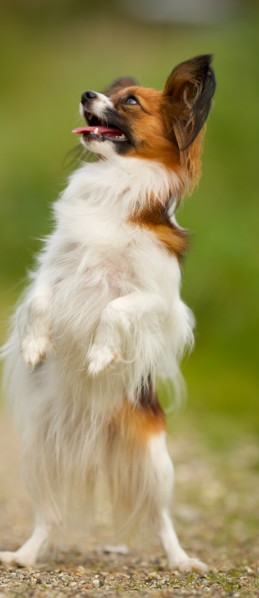
Curious. Cautious. Brilliant.
Thought never stops.
Your Papillon’s mind runs like a live wire—constantly scanning, analysing, and recalibrating with every shift in your tone, movement, or environment.
Intelligence breeds tension.
Their gift for pattern recognition and emotional reading can tip into over-analysis, where even small changes trigger hesitation and cognitive overload.


Clarity brings peace.
Predictable structure, calm energy, and gentle reassurance help their miniature mind rest, allowing brilliance to shine without the burden of overthinking.
Emotional Sensitivity & Regulation: Managing the Hypersensitive Mind
Understanding Physiological Vulnerability
Your Papillon’s emotional hypersensitivity isn’t a character flaw—it’s a neurobiological reality shaped by their size and breeding history. Smaller breeds exhibit faster autonomic nervous system fluctuations, meaning the gap between calm and stressed, or stressed and calm, happens more rapidly than in larger dogs.
The Speed of Emotional Shifts means your Papillon can go from relaxed to anxious within seconds when they perceive threat or uncertainty. This rapid response served their ancestors well—in a world of much larger animals, quick threat assessment meant survival. In modern homes, however, this same sensitivity can feel overwhelming for both dog and human.
Stress Physiology in Small Breeds involves shorter parasympathetic latency—the time it takes for their nervous system to activate stress responses. When your Papillon perceives something concerning, their cortisol and adrenaline responses trigger almost immediately. The challenge isn’t just managing their stress—it’s managing how quickly stress accumulates and how long it persists.
Emotional Intelligence Meets Physical Limitation
Papillons often possess high emotional intelligence—they read situations accurately, understand human emotional states, and respond appropriately to social contexts. But their physiological vulnerability means that even with accurate emotional reading, their physical stress response can overwhelm their capacity to regulate.
The Mirroring Challenge creates a feedback loop that’s difficult to interrupt. Your Papillon reads your stress, mirrors it physiologically, which increases their observable anxiety, which in turn increases your concern, which they then mirror more intensely. Through Soul Recall, we recognize that these moments activate deep emotional memory patterns—your dog isn’t just responding to this moment’s stress, but to every moment of uncertainty they’ve experienced.
Breaking the Mirror Loop requires conscious regulation of your own nervous system first. Your Papillon can’t regulate beyond your baseline. When you’re internally stressed but externally performing calm, they sense the incongruence and become more anxious, not less. Authentic regulation—where your internal state matches your external presentation—provides the stable reference point your dog needs.
Techniques to Break the Emotional Mirror Loop:
- Deep breathing: Slow your breath before interacting during tense moments
- Body awareness: Release tension in your shoulders, jaw, and hands before approaching your dog
- Voice modulation: Speak at a lower pitch and slower pace than your anxious default
- Predictable movement: Move deliberately and smoothly rather than quickly or jerkily
- Physical distance: Step back if your own regulation is failing—give both of you space
- Redirect attention: Guide your dog to a simple, known behavior that creates success
- Shared calm activities: Sit together doing parallel calming activities (you read, they rest)
- Reset the environment: Move to a different room or outside to change the emotional context
🦋 Papillon Intelligence: Managing the Overthinking Mind 🧠
Understanding the cognitive complexity, emotional sensitivity, and unique needs of one of the most intelligent toy breeds. When exceptional mental capacity meets a miniature frame, thoughtful care becomes essential.
🧠 Understanding Papillon Cognitive Architecture
Pattern Recognition Masters
Papillons excel at identifying routines and predicting behavior with remarkable speed. Their cognitive plasticity allows them to learn complex sequences quickly, but this same ability can lead to “anticipatory worry” when patterns break. They don’t just notice changes—they analyze them deeply, sometimes getting stuck in analytical loops.
Hyper-Observant Social Intelligence
These dogs possess exceptional abilities in reading human social cues, often surpassing working breeds. They perceive micro-expressions, tone shifts, and body language changes that most dogs miss. This heightened awareness creates both deep bonding potential and vulnerability to emotional overwhelm when human signals become inconsistent or stressful.
Physiological Reality of Small Breeds
Smaller breeds exhibit faster autonomic nervous system fluctuations, meaning emotional shifts happen more rapidly. Your Papillon experiences stress spikes within seconds and requires conscious recovery support. This isn’t fragility—it’s the neurobiological reality of processing complex emotions in a compact frame with faster metabolic rates.
🎯 Daily Management for Cognitive Wellness
Enrichment-Overwhelm Balance
Mental engagement must have clear endpoints to prevent cognitive churning:
• Scent work with definitive conclusions (find it or don’t)
• Puzzle feeders at appropriate challenge levels
• Short training sessions (5-10 minutes) focusing on process over perfection
• Choice-based activities that build decision-making confidence
• Observation exercises teaching selective attention skills
Structured Decompression Activities
Active downtime helps process accumulated information:
• Familiar route walking with predictable environments
• Sniff walks where they lead without destination pressure
• Lick mats with soft foods (reduces cortisol through repetitive tongue motion)
• Parallel rest—being near you without interaction requirements
• Controlled shredding of appropriate materials in designated areas
Routine as Cognitive Scaffolding
Consistent sequences free mental resources for learning and connection. Your Papillon doesn’t need rigid schedules, but thrives when feeding, walking, and play happen in predictable patterns. This allows them to relax vigilance about when needs will be met, reducing baseline cognitive load throughout the day.
🌱 Confidence-Based Training Approach
Why Command-Heavy Training Fails
Each command creates cognitive load—your dog must process the verbal cue, recall the behavior, assess your emotional state, predict your response, and execute while managing their own anxiety. For overthinking breeds, this becomes exhausting rather than enriching. They learn quickly but drilling creates frustration and cognitive fatigue.
NeuroBond-Based Learning
Prioritize emotional attunement over command compliance. Establish calm connection through your regulated nervous system first—your Papillon’s mirror neurons respond to your internal state, not your words. When you’re genuinely calm and present, their cognitive load decreases, creating space for genuine learning and confidence building.
Handler Predictability Matters
Essential practices for reducing cognitive load:
• Ensure verbal cues, body language, and emotional state align (congruence)
• Maintain consistent responses to your dog’s communication attempts
• Avoid conflicting signals that create unsolvable cognitive puzzles
• Celebrate attempts and process, not just perfect execution
• Allow thinking time—wait for processing before repeating cues
Building Rather Than Drilling
Focus on problem-solving opportunities with clear solutions, graduated challenges ensuring high success rates, and choice within safe parameters. This builds confidence in their cognitive processes rather than creating dependency on your constant direction. Your dog needs to trust their own decision-making capacity.
⚠️ Signs of Cognitive Overload & Chronic Stress
Behavioral Indicators
Watch for these signs that your Papillon is overwhelmed:
• Restless pacing without clear purpose or destination
• Excessive self-grooming, particularly paw or flank licking
• Inability to settle even in quiet, familiar environments
• Increased “checking” behavior—constantly seeking your cues
• Hyper-reactivity to normal household sounds
• Avoidance of previously enjoyed activities or interactions
The Mirror Loop Danger
Your Papillon reads your stress, mirrors it physiologically, which increases their observable anxiety, which increases your concern, which they mirror more intensely. This feedback loop can spiral quickly. Break it by regulating your own nervous system first—authentic calm (internal state matching external presentation) provides the reference point they desperately need.
Sleep Deprivation Effects
Fragmented sleep prevents deep restorative phases where the brain consolidates learning and clears metabolic waste. Signs include increased reactivity, difficulty retaining information, excessive grooming, decreased appetite, and paradoxically, hyperactivity. When an intelligent dog lacks restorative sleep, cognitive load increases while capacity to manage it decreases.
⚡ Core Principle for Papillon Care
Cognitive Load Management Formula:
Enrichment (with clear endpoints) + Decompression (structured downtime) + Predictability (consistent routines) + Emotional Congruence (your regulated state) = Confident, regulated Papillon
Remember: Their intelligence is both gift and challenge. Mental capacity without emotional safety creates anxiety. Provide both stimulation and sanctuary.
🧡 The Zoeta Dogsoul Perspective
Through the NeuroBond approach, we recognize that your Papillon’s exceptional mind requires your emotional attunement as much as their physical body needs nutrition. The Invisible Leash emerges not from control, but from the deep trust that develops when you become their safe anchor in a world they perceive with overwhelming clarity. This isn’t about managing a difficult dog—it’s about honoring a brilliant, sensitive soul who experiences life at an intensity most breeds never reach.
When you balance cognitive engagement with emotional safety, when you understand that their hesitation reflects depth of thought rather than defiance, when you provide the predictability that frees their mental resources for joy and connection—that’s when the magic happens. That’s the essence of living well with a thinking, feeling companion.
© Zoeta Dogsoul – Where neuroscience meets soul in dog training
Teaching Emotional Self-Regulation
Co-Regulation Before Self-Regulation is essential for Papillons. They can’t learn to manage their emotional responses in isolation—they need to first experience regulation through connection with you. This means sitting with them during stressful moments, offering your calm presence without demanding they “snap out of it” or perform recovery behaviors.
Recognizing Recovery Signals helps you support your dog’s natural regulation process:
- Deep sighs or yawning (nervous system downshifting)
- Soft blinks or looking away (voluntary attention disengagement)
- Shaking off (literally shaking off stress hormones)
- Seeking physical contact without demanding interaction
- Returning to previously abandoned activities or toys
When you see these signals, resist the urge to celebrate or engage intensely. Your dog is working through their regulatory process—enthusiastic interruption can restart the stress cycle. Instead, acknowledge quietly and maintain your calm presence.
Building Resilience Through Predictable Challenge involves gradually exposing your Papillon to manageable stressors within the safety of your regulated presence. This isn’t flooding or forced exposure—it’s carefully calibrated experience that allows their nervous system to practice recovering with support. The goal isn’t to eliminate their sensitivity, but to build confidence in their ability to return to baseline after stress. 🧡
Health & Wellness: The Body-Mind Connection
Nutrition’s Role in Cognitive Function
Your Papillon’s brain represents approximately 2% of their body weight but consumes nearly 20% of their metabolic energy. What you feed directly impacts their cognitive function, emotional regulation capacity, and stress resilience.
Neurotransmitter Precursors deserve attention in any Papillon’s diet. Tryptophan (precursor to serotonin) influences mood stability and impulse control. Tyrosine (precursor to dopamine and norepinephrine) affects motivation, focus, and stress response. High-quality animal proteins provide these amino acids, but balance matters—too much protein without adequate fat and carbohydrate can actually increase cognitive reactivity in sensitive dogs.
Omega-3 Fatty Acids support neural membrane flexibility and reduce neuroinflammation. Studies on cognitive function in dogs suggest that EPA and DHA supplementation can improve learning capacity and may reduce anxiety behaviors. For Papillons prone to cognitive overload, adequate omega-3s support their brain’s ability to process information efficiently.
Micronutrients for Neural Health include:
- B-complex vitamins (energy metabolism in neural tissue)
- Magnesium (nervous system regulation, stress response modulation)
- Zinc (neurotransmitter function and immune support)
- Antioxidants (protecting sensitive neural tissue from oxidative stress)
Brain-Supporting Foods for Papillons:
- Wild-caught fish: Salmon, sardines, mackerel for omega-3 EPA and DHA
- Eggs: Complete amino acid profile including tryptophan and tyrosine
- Blueberries: Antioxidants that cross the blood-brain barrier
- Pumpkin seeds: Natural source of magnesium and zinc
- Organ meats: Liver and kidney provide B-vitamins and iron
- Sweet potato: Complex carbohydrates for steady glucose supply to the brain
- Bone broth: Glycine and proline support neurotransmitter function
- Dark leafy greens: Folate and minerals that support neural health
Feeding Patterns and Cognitive Load matter more than many realize. Large meals create blood sugar fluctuations that can destabilize mood and focus. For anxious, thinking-intensive breeds, smaller meals throughout the day maintain steadier energy and neurotransmitter production. Consider dividing your Papillon’s daily food into 3-4 smaller meals rather than one or two large portions.
Exercise: Moving the Overthinking Body
Physical Activity as Cognitive Reset provides essential stress hormone metabolism. When your Papillon’s brain has been churning through information all day, physical movement helps process and clear accumulated cortisol and adrenaline. But the type of movement matters.
Structured Walking on familiar routes offers ideal cognitive decompression. The predictability of the path, combined with gentle sensory input and physical movement, allows your dog’s nervous system to downregulate without adding new information to process. Save novel routes for days when your dog is already regulated—new environments add cognitive load even during exercise.
Play Versus Performance represents an important distinction. Play that your Papillon initiates and controls serves as excellent stress relief. Play that you direct and structure can become another task to analyze and execute “correctly.” Watch your dog’s signals—if their play becomes intense, frantic, or doesn’t naturally wind down, it’s adding stress rather than relieving it.
Sleep and Cognitive Recovery
Sleep Architecture in Intelligent Breeds shows interesting patterns. Papillons often experience lighter sleep with more frequent waking, particularly if they’re chronically stressed. This fragmented sleep prevents the deep restorative phases where the brain consolidates learning and clears metabolic waste products.
Creating Sleep-Conducive Environments means more than providing a comfortable bed. Your Papillon needs:
- Consistent sleep location free from startling sounds or disruptions
- Temperature control (smaller dogs lose body heat faster)
- Security (some dogs sleep better in partially enclosed spaces)
- White noise or gentle sound masking to buffer against alerting noises
- Respect for their sleep-wake cycles (avoid waking them unnecessarily)
Signs of Sleep Deprivation in Papillons include increased reactivity, difficulty learning or retaining information, excessive self-grooming, decreased appetite, and paradoxically, hyperactivity. When an intelligent dog isn’t getting restorative sleep, their cognitive load increases while their capacity to manage it decreases. 🐾
Living With a Papillon: Lifestyle Considerations
The Ideal Home Environment
Household Energy and Cognitive Load should be your first consideration. Papillons thrive in homes with relatively predictable routines and moderate activity levels. This doesn’t mean boring—it means structured. They struggle in chaotic environments where schedules shift constantly, people come and go unpredictably, or household emotional energy fluctuates dramatically.
Characteristics of Papillon-Friendly Homes:
- Consistent daily routines: Meals, walks, and activities happen at roughly the same times
- Moderate noise levels: Not silent, but without frequent loud or startling sounds
- Stable household composition: Core family members are consistent day-to-day
- Predictable social patterns: Visitors and activities follow general patterns
- Calm energy baseline: Overall household emotional tone tends toward regulated
- Designated quiet spaces: Areas where your dog can retreat from stimulation
- Clear communication patterns: Family members interact with the dog similarly
- Reasonable expectations: Understanding that sensitivity is neurobiological, not behavioral
Multi-Dog Households can work beautifully or become overwhelming, depending on the dynamics. Papillons benefit from calm, stable canine companions who model regulated behavior. They struggle with high-energy dogs who demand constant interaction or create unpredictable play. If you’re considering a multi-dog home, prioritize complementary energy levels over simply providing your Papillon with companionship.
Children and Papillons requires honest assessment. These dogs can form wonderful bonds with children who understand their needs for gentle, predictable interaction. Young children who are naturally loud, quick-moving, and unpredictable can overwhelm sensitive Papillons. This isn’t about training the dog—it’s about whether the fundamental household energy suits their neurobiological needs.
Work and Separation
Alone Time and Cognitive Anxiety presents unique challenges. Your Papillon’s analytical mind doesn’t simply rest when you leave—it often analyzes the separation, attempts to predict your return, and monitors the environment for changes. Some Papillons develop what appears to be separation anxiety but is actually cognitive hypervigilance during your absence.
Teaching Independence starts with very short absences while your dog is already engaged in an activity they find absorbing. You’re not training them to “be okay” with your absence—you’re helping them discover that their world continues to function safely and predictably even when you’re not immediately present. This is fundamentally different from traditional separation anxiety training.
Progressive Steps for Building Independent Confidence:
- Practice stillness together: Sit in the same room without interaction for increasing durations
- Create distance while present: Move to different areas of the same room while they rest
- Brief separations with barriers: Step behind a door for 10-30 seconds while they’re engaged
- Gradual time increases: Build from seconds to minutes over weeks, not days
- Predictable departure cues: Develop a consistent routine so departures become expected
- Calm returns: No excited greetings—wait until they’re calm before acknowledging
- Safe enrichment during absence: Provide absorbing but not frustrating activities
- Build history of safe returns: Every departure proves you return, building security
Environmental Enrichment During Absences should decrease cognitive demand, not increase it. Complicated puzzle toys, television, or music might seem enriching but can actually add to processing load. Many Papillons do better with simple comfort objects, a view of unchanging scenery, and minimal auditory input.
Social Considerations
Selective Socialization makes more sense than broad socialization for this breed. Rather than exposing your Papillon to dozens of dogs and people, focus on building secure, predictable relationships with a smaller circle. Quality of social connections matters more than quantity for dogs prone to overthinking social dynamics.
Reading Social Fatigue prevents overwhelm. Your Papillon might appear to be enjoying a social situation—greeting visitors, playing with other dogs—but watch for subtle stress signals: more frequent checking in with you, decreased play bow responses, tighter body carriage, or reduced facial expressiveness. These signs indicate cognitive load accumulation, and your dog needs removal from the situation before full overwhelm occurs.
Through the Zoeta Dogsoul perspective, we recognize that living successfully with a Papillon means honoring their unique cognitive-emotional profile rather than trying to shape them into a more “typical” dog. 🧠
Training Philosophy: A Different Approach for Different Minds
Why Conventional Wisdom Fails
Traditional dog training operates on several assumptions that don’t hold true for cognitively complex, emotionally sensitive breeds. The assumption that repetition builds reliability works for dogs who struggle to understand or remember—but your Papillon understood on repetition three and is now questioning why you keep asking for the same behavior.
The Confidence-Task Paradigm Shift moves us from “train the behavior” to “build the confidence to engage.” When your Papillon refuses a previously known cue, they’re rarely forgetting the behavior—they’re lacking confidence in the situation, questioning whether their understanding is correct, or feeling overwhelmed by contextual factors you might not even notice.
Replacing Command-Compliance with Trust-Collaboration changes everything. Instead of asking “How do I get my dog to obey?” we ask “How do I become someone my dog trusts enough to follow?” This trust emerges from consistent emotional availability, predictable responses to their communication attempts, and respect for their cognitive-emotional limits.
Practical Application: Reactivity and Threshold Work
Understanding Papillon Reactivity as a cognitive phenomenon rather than behavioral problem reveals new solutions. When your dog reacts to triggers—barking at other dogs, freezing at novel objects, lunging at unexpected movements—they’re often experiencing cognitive overwhelm, not aggression or disobedience.
Threshold Work for Thinking Dogs focuses on maintaining cognitive function rather than simply increasing distance from triggers. The traditional approach increases distance until your dog stops reacting. The cognitive approach finds the distance where your dog can still think, process, and make choices. This is often further than traditional thresholds because we’re protecting their analytical capacity, not just managing their arousal level.
Guidelines for Effective Threshold Work:
- Identify the thinking threshold: Distance where they notice the trigger but can still take treats and respond to simple cues
- Stay well below overwhelm: Work at 1.5-2x the minimum safe distance to protect cognitive capacity
- Watch for micro-signals: Ear position, blink rate, and tail tension indicate cognitive load better than obvious reactions
- Keep sessions brief: 5-10 minutes maximum to prevent cumulative stress
- End before deterioration: Stop at the first sign of cognitive fatigue, not when they’re overwhelmed
- Vary the trigger when possible: Different dogs, different contexts help prevent pattern fixation
- Build positive associations: Reward calm observation without demanding specific behaviors
- Track progress realistically: Measure by cognitive capacity maintained, not just reduced distance
Recovery Exercises matter as much as exposure. After any threshold work session, your Papillon needs structured decompression—familiar routes, predictable activities, opportunities to process what they’ve learned. Without recovery time, each session adds to cumulative cognitive load rather than building confidence.
Daily Management Strategies
Routine as Cognitive Scaffolding provides the predictability that frees mental resources for learning and engagement. Your Papillon doesn’t need rigid schedules, but they thrive with consistent sequence patterns. If feeding, walking, and play happen in generally the same order at roughly the same times, your dog can relax their vigilance about when needs will be met.
Pre-Emptive Calming for Known Triggers works better than reactive management. If visitors trigger excitement or anxiety in your Papillon, begin calming protocols 15-20 minutes before arrival. This gives their nervous system time to downregulate proactively rather than reacting and then attempting to calm.
The “Nothing in Life is Free” Myth deserves examination for this breed. The concept that dogs should work for every resource sounds reasonable but creates constant cognitive demand. Your Papillon benefits from some resources being freely given, creating islands of rest in their day where nothing is required, nothing must be earned, and they can simply exist without analysis. 🧡
Senior Care: The Aging Papillon Mind
Cognitive Changes With Age
Normal Cognitive Aging in Papillons typically appears later than in larger breeds—often not until 10-12 years or beyond. You might notice slightly slower processing, less interest in novel stimuli, or increased reliance on established routines. These changes differ significantly from cognitive dysfunction syndrome (canine dementia).
Protecting Cognitive Health through their senior years involves maintaining mental stimulation without overwhelm. Your aging Papillon still needs their mind engaged, but with lower cognitive load than in youth. Familiar games played at slower paces, scent work with easier hides, and gentle training refreshers all keep their mind active without exhausting it.
Supporting Senior Papillon Cognitive Health:
- Maintain routine: Consistency becomes even more critical as flexibility decreases
- Simplify enrichment: Use familiar puzzles rather than introducing complex new ones
- Shorter, more frequent sessions: 3-5 minute activities several times daily
- Emphasize success: Choose activities where they excel to maintain confidence
- Support sensory changes: Brighter lights, clearer verbal cues, stronger scent markers
- Gentle physical activity: Regular movement supports brain circulation and mood regulation
- Social continuity: Maintain relationships with familiar people and compatible dogs
- Cognitive supplements: Consider omega-3s, antioxidants, and medium-chain triglycerides (consult your vet)
- Quality sleep priority: Protect their rest time more vigilantly as sleep becomes more fragmented
Environmental Modifications for senior Papillons focus on reducing unnecessary cognitive demand. Brighter lighting helps dogs with declining vision feel more secure. Non-slip surfaces reduce anxiety about movement. Consistent furniture placement means they don’t need to remap their environment constantly. These modifications preserve cognitive resources for social engagement and enjoyment.
Emotional Sensitivity in Senior Dogs
Increased Emotional Vulnerability often accompanies aging. Your senior Papillon may become more sensitive to household changes, separation, or disruptions in routine. This isn’t regression—it’s a natural consequence of reduced cognitive flexibility combined with a lifetime of accumulated emotional memories.
Supporting Senior Emotional Needs means increasing predictability, maintaining established social bonds, and respecting their increasing need for quiet rest. Your aging dog has earned the right to consistent, gentle care without demands for adaptability or performance.
Quality of Life Assessment for cognitively complex breeds includes emotional wellbeing alongside physical health. Is your Papillon still engaging with life, showing interest in their environment and relationships? Can they still find moments of joy and connection? These questions matter as much as physical comfort. 🐾
Is a Papillon Right for You? Honest Assessment
Who Thrives With This Breed
Ideal Papillon Guardians possess several key qualities:
- Appreciation for subtle communication and emotional nuance
- Patience with a dog who questions, analyzes, and sometimes hesitates
- Commitment to consistent routines and predictable household energy
- Understanding that intelligence doesn’t equal easy trainability
- Capacity to regulate their own emotional responses
- Willingness to learn alongside their dog rather than simply directing them
Lifestyle Compatibility matters profoundly. Papillons excel with people who maintain relatively stable schedules, enjoy gentle activities over extreme sports, and appreciate a thinking companion who engages actively with their environment. They struggle with chaotic households, people who want unquestioning obedience, or situations requiring constant adaptability to novel environments.
Who Should Consider Other Breeds
Let us be honest: Papillons aren’t the right choice for everyone, and that’s perfectly okay. These dogs may not suit you if:
- You want a dog who “goes with the flow” in constantly changing situations
- High-energy, physically demanding activities are your primary bonding method
- You prefer dogs who don’t require significant emotional consideration
- Your household includes very young children or highly unpredictable dynamics
- You’re looking for a dog who will be happy with minimal mental engagement
- You find emotional sensitivity frustrating rather than fascinating
The Commitment Question
Living with a Papillon means committing to their cognitive-emotional needs for 12-16 years. This isn’t simply feeding, walking, and providing shelter—it’s becoming a safe emotional anchor for a highly perceptive being who will read your every mood, anticipate your every pattern, and require your conscious presence throughout their life.
The Reward for those who embrace this commitment is a relationship of remarkable depth. Your Papillon won’t just live with you—they’ll know you, understand you, and respond to you with a subtlety that can feel almost telepathic. These dogs offer a connection that transcends simple companionship, becoming true emotional partners for those who appreciate their unique way of experiencing the world.
That balance between cognitive complexity and emotional sensitivity—between the brilliant mind that analyzes everything and the tender heart that feels everything—that’s the essence of life with a Papillon. It requires patience, understanding, and commitment, but for the right person, it offers a relationship unlike any other.
Through Zoeta Dogsoul, we understand that honoring your Papillon’s extraordinary mind means accepting both their brilliance and their vulnerability, creating space for both their deep thinking and their need for emotional safety. When you can hold space for a mind that never stops wondering and a heart that never stops feeling, you discover what makes this breed so remarkably, beautifully complex. 🧡🐾
Next steps: If you’re considering adding a Papillon to your life, spend time with the breed in various settings. Watch how they process novel situations, observe their relationships with their guardians, and honestly assess whether their needs align with your lifestyle and capacity. For current Papillon guardians, revisit your daily routines with fresh eyes—are you supporting their cognitive-emotional needs or inadvertently adding to their load? Small adjustments in household predictability, decompression time, and training approach can transform your relationship with your thinking, feeling companion.










