
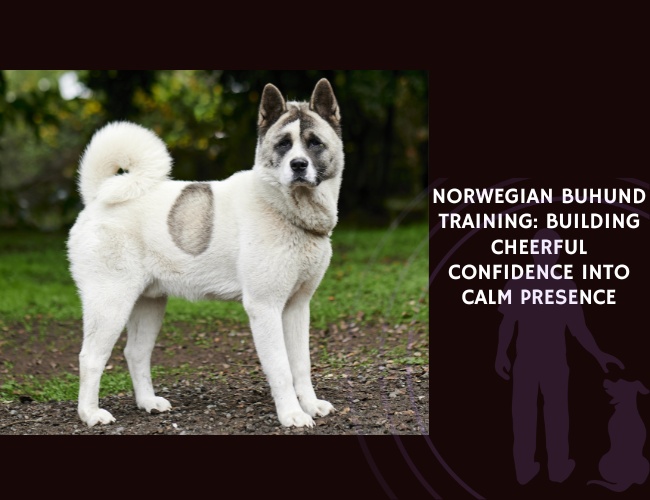
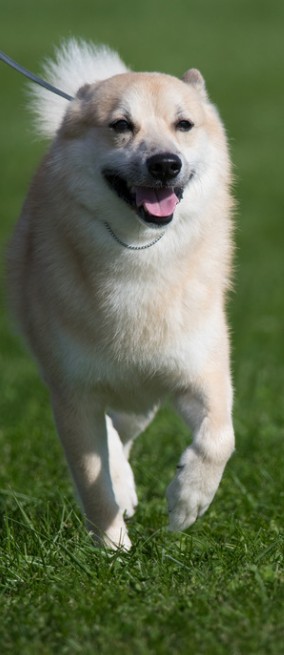
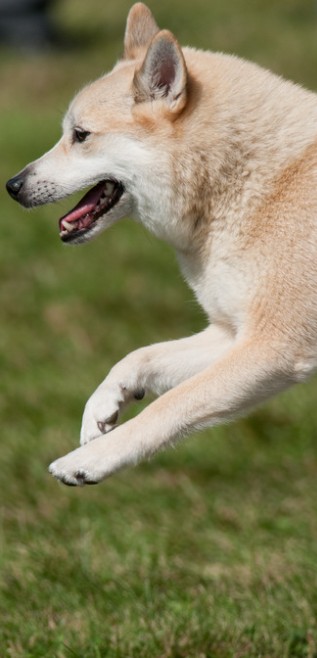
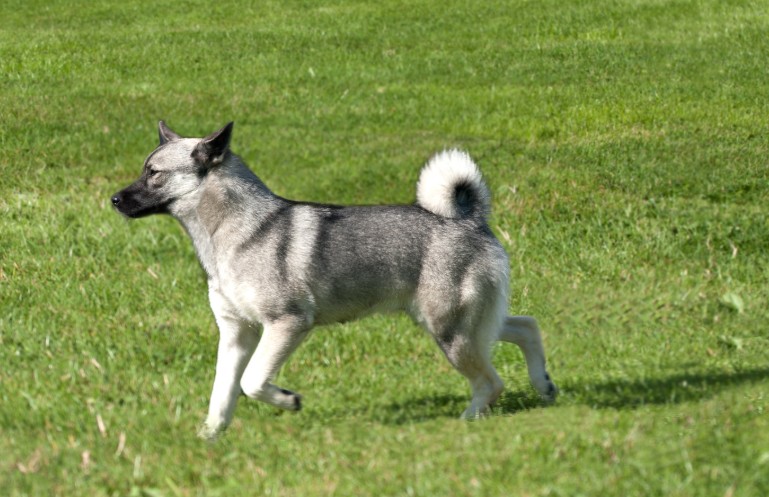
Picture a medium-sized spitz with bright eyes, a curled tail held high, and an expression that radiates pure joy. The Norwegian Buhund carries the history of Viking farms in their DNA, bred for over a thousand years to herd livestock, alert to danger, and be a cherished companion through harsh Norwegian winters. Archaeological evidence from the Gokstad Viking ship burial site, dating to around 900 AD, proves these dogs were so valued that they accompanied their owners into the afterlife. 🐾
What makes the Buhund special among spitz breeds is their people-forward nature. While most Nordic breeds work independently at a distance, the Buhund was bred to stay connected—monitoring you, anticipating your needs, and genuinely wanting to be part of everything you do. This creates a dog with spitz intelligence and problem-solving ability combined with an almost herding-breed-like desire for social inclusion. It’s a beautiful combination, but it also means your Buhund’s cheerful confidence can quickly tip into overarousal without the right guidance.
Let us guide you through understanding this remarkable breed’s training needs, where joyful enthusiasm meets the challenge of teaching calm presence in a world that constantly triggers their alert systems.
Character & Behavior: Understanding Your Cheerful Farm Companion
The People-Oriented Spitz Paradox
Your Buhund sees themselves as the center of family life—not from dominance, but because that’s exactly what they were bred to be. On Norwegian farms, these dogs didn’t just herd sheep in the morning and guard at night—they participated in everything. They alerted to strangers, played with children, monitored property boundaries, and slept near their families for warmth and companionship. This created a unique blend: they can think independently like a spitz, but they need social inclusion like a herding breed.
You’ll notice your Buhund constantly checking in with you, monitoring your emotional state, and seeking to be wherever the action is. This isn’t clinginess or insecurity—it’s sophisticated social processing that helped them anticipate needs and shift rapidly between tasks on the farm.
Common signs of Buhund social orientation:
- Following you from room to room throughout the day
- Positioning themselves where they can see you, even during rest
- Checking your facial expressions and body language frequently
- Becoming anxious or developing demand behaviors when excluded from family activities
- Greeting you enthusiastically after even brief separations
- Seeking physical proximity during downtime (lying near your feet, leaning against you)
When excluded from family activities, many Buhunds become anxious or develop demand behaviors, not because they’re poorly trained, but because isolation contradicts their entire behavioral design.
The key to living harmoniously with a Buhund is satisfying both their independence (allowing choices, avoiding micromanagement) and their social needs (providing structured inclusion, clear communication) at the same time. 🧡
Territorial Awareness Without Aggression
Buhunds are alert dogs, but they’re not aggressive dogs. Their guarding instinct works through announcement rather than confrontation—that characteristic bark that carries across mountain valleys was deliberately selected for. You needed to hear your dog alerting from far away, so silence was never the goal.
Common triggers for Buhund alert barking:
- Mail carriers, delivery drivers, or service workers approaching
- Neighbors or pedestrians walking past property boundaries
- Vehicles passing by or parking nearby
- Wildlife moving through the yard (squirrels, birds, cats)
- Unusual sounds from inside or outside the home
- Movement visible through windows (leaves, shadows, distant activity)
- Guests arriving or people approaching the door
This creates a modern challenge: your Buhund will notice and announce these events consistently, requiring thoughtful management rather than suppression.
Their sensory processing is genuinely different from many breeds. Buhunds show what researchers call “low habituation rate”—they don’t stop noticing things just because those things happen regularly. The mail truck arriving daily might still trigger barking months later, because farm dogs needed to maintain vigilance for threats that could disguise themselves as familiar patterns. This wasn’t stubbornness; it was survival.
What looks like “excessive barking” is usually your Buhund doing exactly what they were designed to do: monitoring their territory and communicating changes. Through the NeuroBond approach, trust becomes the foundation of learning, teaching your dog that you’ve received their message and are handling the situation.
Herding Drive: Spatial Management Over Predatory Behavior
Here’s something fascinating about your Buhund: their herding instinct comes from territorial drive, not modified prey drive. Unlike Border Collies who use intense eye contact and stalking movements (controlled hunting behavior), Buhunds herd through space management. They position themselves strategically, use their body to guide movement, and deploy the “heel bite”—a silent, precisely placed nip to the pastern that guides livestock without causing injury.
In modern homes, this territorial herding shows up in distinctive ways.
Common household herding behaviors:
- Attempting to keep family members gathered in one room
- Blocking doorways or positioning between people and exits
- Circling groups of people or other pets strategically
- Nipping at heels or ankles during movement or excitement
- Herding children or smaller pets during active play
- Positioning themselves to control traffic flow through spaces
Your Buhund might try to keep family members gathered in one room, block doorways, or position themselves between people and exits. They’re not being dominant—they’re managing boundaries and keeping their “flock” together. During excitement or play, especially with running children or other pets, you might see arousal-triggered nipping. This is displacement of herding drive when your dog lacks clear work boundaries; the instinct activates but has no appropriate outlet, so it expresses through the most similar available behavior.
Understanding that your Buhund is a territorial herder rather than a predatory one helps you provide appropriate outlets and recognize these behaviors as communication rather than problems to suppress. 🧠
The Joy System Running Hot
Buhunds possess what neuroscientist Jaak Panksepp called highly active PLAY and SEEKING systems. This means they experience anticipatory joy intensely—the excitement when you reach for the leash, the delight when you come home, the thrill of approaching playtime. Their default state is cheerful engagement with life, which is wonderful, but it also means they escalate into arousal quickly and downshift slowly.
Many owners discover that exercise doesn’t calm their Buhund—it actually intensifies arousal. You take your dog for an hour-long run, and they come home even more wound up, unable to settle. This isn’t unusual for the breed.
Signs your Buhund is experiencing overarousal:
- Unable to settle or lie down calmly even after extensive exercise
- Panting excessively without physical exertion
- Hyper-responsiveness to minor sounds or movements
- Difficulty focusing on commands they normally know well
- Mouthing, nipping, or increased physical interaction-seeking
- Pacing, spinning, or other repetitive movement patterns
- Demand barking or vocalization that intensifies when ignored
Farm Buhunds worked in bursts—brief, intense activity followed by calm monitoring—not sustained high-energy output. Your dog’s nervous system is designed for quick activation and voluntary downshift, but the downshift part needs to be explicitly taught as a separate skill.
Next, we’ll explore how your Buhund communicates and what their varied vocalizations actually mean.
Vocalization & Communication: Decoding Your Buhund’s Voice
Understanding the Chatterbox Nature
Did you know that Buhunds are often called the “chatterboxes” of the spitz family? Their vocal range is impressive, and each sound carries specific meaning.
The Buhund vocal repertoire:
- Alert barking: High-pitched, rapid, repetitive—designed to carry across mountain valleys
- Herding communication: Short, sharp directional barks used to guide movement
- Demand vocalization: Escalating volume and pitch when needs aren’t met or access is blocked
- Social excitement sounds: Happy yodels and trills during greeting or play
- Distress vocalization: Continuous barking or howling when separated from family
- Investigative sounds: Soft woofs or grumbles while exploring or monitoring
Learning to differentiate these helps you respond appropriately rather than treating all vocalization as “just barking.”
Alert barking is high-pitched, rapid, and repetitive—designed to carry across mountain valleys and through harsh weather. Your Buhund uses this when something requires attention, and the barking continues until they feel the alert has been acknowledged or the stimulus resolves. It’s not stubbornness; it’s communication persistence bred into them for farm safety.
Demand vocalization escalates in volume and pitch when needs aren’t met or access is blocked. This rapidly becomes habitual if inconsistently reinforced. Social excitement sounds—those happy yodels and trills during greeting or play—reflect positive emotional states and are actually a sign of healthy social engagement. 😊
The Body Language Beneath the Bark
Your Buhund’s spitz characteristics—erect ears, curled tail, thick double coat—can make subtle emotional signals less obvious than in breeds with drooping ears or longer tails. But the signals are there if you know where to look.
Key body language signals in Buhunds:
- Ear rotation: Shows where attention is focused; subtle changes indicate emotional shifts
- Tail height: Curled tightly over back (high arousal/alert), relaxed curve (calm confidence), lowered (uncertainty/stress)
- Weight distribution: Forward lean (prepared to engage), backward shift (uncertain/avoiding), even distribution (calm monitoring)
- Facial tension: Soft eyes and relaxed mouth (comfortable), tight eyes or closed mouth (stressed/focused)
- Body posture: Upright and forward (confident alert), lowered or curved (anxiety), loose and wiggly (play invitation)
Learning these distinctions helps you understand what your dog is experiencing, not just what they’re doing.
Watch your dog’s weight distribution. A Buhund leaning forward with weight on the front legs is prepared to investigate or engage. Weight shifted back or evenly distributed suggests calm monitoring. Facial tension—particularly around the eyes and mouth—provides immediate feedback about stress or comfort levels that precede behavioral changes.
Confident alert vs. anxiety-based vocalization:
Confident Alert:
- Upright stance with weight forward
- Ears pointed directly at stimulus
- Tail raised with curve over back
- Direct gaze at the trigger
- Brief alert followed by checking in with handler
Anxiety-Based Response:
- Lowered body posture or weight shifted back
- Ears pulled slightly back or rotating rapidly
- Tail tucked or held low with uncertain wag
- Averted gaze with frequent checking toward handler
- Sustained vocalization that intensifies rather than resolves
Understanding the difference between these two states helps you respond with calm clarity rather than frustration.
The Invisible Leash concept reminds us that awareness, not tension, guides the path—when you understand what your Buhund is communicating, you can respond with calm clarity rather than frustration. 🐾
Context Matters More Than Volume
One of the biggest training mistakes with vocal breeds is treating all barking the same way. Your Buhund barking at a stranger approaching the property needs acknowledgment, not suppression—they’re literally doing their job. The same dog demand-barking for attention because they’re bored needs redirection, not reinforcement. Social excitement vocalizations during appropriate play need acceptance, not correction.
The goal isn’t creating a silent Buhund (which contradicts their entire genetic design), but teaching context-appropriate communication. You’re helping your dog learn when vocalization is welcomed and when quiet presence serves better. This requires consistency across all family members and patience as your dog learns the new patterns.
Next, we’ll explore the foundation of Buhund training, where we build skills that work with their nature rather than against it.
Training & Education: Building Skills That Last
Start With Arousal Regulation, Not Obedience
Here’s a truth that surprises many Buhund owners: teaching “sit” and “down” won’t solve your dog’s jumping, barking, or nipping challenges. These behaviors emerge from arousal dysregulation, not lack of obedience knowledge. Your Buhund might know every command perfectly but still can’t execute them when emotionally elevated. This is a nervous system issue, not a training issue.
The priority is teaching voluntary downshift as a separate, practiced skill. Start in completely calm environments with zero distractions. Use a mat or bed as your dog’s “calm zone”—a specific physical location that becomes neurologically associated with relaxation.
Calm behaviors to actively reinforce:
- Lying down with head resting
- Soft, non-demanding eye contact
- Sighing or deep breathing
- Lowering the head while sitting or standing
- Choosing to go to their calm zone voluntarily
- Remaining settled when stimuli appear but don’t require action
- Brief glances at distractions followed by refocusing on you
You’re literally building new neural pathways that make calm as rehearsed as excitement. 🧠
Practice this daily for 5-10 minute sessions. Your Buhund needs to experience calm as actively rewarding, not just something that happens when they’re exhausted. Over weeks, you’ll notice your dog choosing to go to their calm zone voluntarily—seeking it out when feeling overwhelmed. This is neural pattern change happening in real time.
Consistency Across All Interactions
Buhunds are pattern-recognition specialists. They learn from every interaction, not just formal training sessions. If your dog jumps on you Monday morning and you push them down (which is attention), stays calm Tuesday and gets ignored, jumps Wednesday and receives excited greeting, you’ve taught them that jumping sometimes works. This creates persistent demand behavior that’s extremely difficult to modify later.
The attention economy concept is simple but powerful: your Buhund receives abundant attention for calm behaviors and exactly zero attention for demanding ones.
The attention economy rules:
- Zero attention for: Jumping, pawing, barking for attention, nipping, pushing with nose, whining
- Immediate attention for: Sitting calmly, standing quietly, lying down, making soft eye contact, waiting patiently
- Applies to: All family members, all visitors, all contexts—100% consistency required
- “Zero attention” means: No eye contact, no touch, no verbal response (including “no” or “stop”)
- “Attention” means: Eye contact, praise, petting, play, treats, or any acknowledged interaction
Every family member must follow this rule consistently, or the pattern won’t establish.
This isn’t being mean—it’s providing clarity. Buhunds desperately want to understand what works, and inconsistency creates anxiety and frustration. Clear patterns are kind patterns.
Working With Spitz Independence
Your Buhund can think. They solve problems, make decisions, and sometimes disagree with your requests. This intelligence is part of their charm, but it means drill-sergeant training approaches backfire.
Training approaches for spitz intelligence:
What Works:
- Collaborative problem-solving with choices within boundaries
- Short, varied sessions (5-10 minutes) with different activities
- Training integrated into daily life rather than isolated sessions
- Positive reinforcement for correct choices
- Calm, consistent leadership without emotional charge
- Acknowledging their intelligence by teaching complex behaviors
What Doesn’t Work:
- Micromanagement and constant correction
- Repetitive drilling of the same command endlessly
- Harsh corrections or punishment-based methods
- Long, boring training sessions
- Attempting to dominate or force compliance
- Treating them like a Golden Retriever or Border Collie
Buhunds resist micromanagement, repetitive drilling, and harsh corrections—not from stubbornness, but because their farm role required independent judgment.
Training works best as collaborative problem-solving. Give your dog choices within boundaries: “You can sit or lie down, but jumping doesn’t work.” “You can play with this toy or that one, but nipping me isn’t an option.” “You can walk on my left or my right, but pulling forward ends the walk.” This respects their need for autonomy while maintaining clear expectations.
Short, varied training sessions keep your Buhund engaged. Five minutes of focused work beats twenty minutes of repetitive drilling. Mix training into daily life rather than creating separate “training time”—practice calm greetings, door manners, food bowl patience, and threshold control as part of routine activities. 🐾
The Handler’s Emotional State Matters
Here’s something many people don’t realize: your Buhund reads your emotional state constantly and adjusts their behavior accordingly. When you’re anxious, rushed, frustrated, or excited, your dog’s arousal increases to match. When you’re calm, predictable, and emotionally neutral, your dog downshifts more easily.
Moments of Soul Recall reveal how memory and emotion intertwine in behavior—your Buhund associates your emotional patterns with contexts and outcomes. If you always feel stressed during walks because you’re anticipating pulling and barking, your dog feels that stress and becomes more reactive. If you approach walks with calm confidence, even before behavior improves, you’re changing the emotional context in which learning occurs.
Practice low-drama leadership: acknowledge alerts without amplifying them, provide direction without emotional charge, and maintain predictable routines that create external structure supporting your dog’s internal regulation. This is the essence of the Invisible Leash—your calm presence becomes the guide your Buhund follows.
Next, we’ll explore the critical early development period where foundations are built—or where problems begin.

Puppy Development: Building Foundations from Day One
The Critical Socialization Window (8-16 Weeks)
Your Buhund puppy experiences what behaviorists call a “sensitive period” between roughly 8 and 16 weeks of age. During this window, their brain is primed to absorb information about what’s safe, normal, and acceptable in their world. Experiences during this period create lasting impressions—both positive and negative—that shape adult behavior more powerfully than training at any other life stage.
The goal isn’t overwhelming your puppy with stimulation but rather providing calm, positive exposure to the variety they’ll encounter throughout life. Focus on quality over quantity: one positive experience with a friendly child is worth more than ten neutral or scary encounters.
Essential socialization experiences for Buhund puppies:
Different Types of People:
- Various ages (children, teenagers, adults, elderly)
- Different sizes and body types
- Various ethnicities and appearances
- People wearing unusual clothing (hats, uniforms, sunglasses, masks)
- People using mobility aids (wheelchairs, canes, walkers)
Different Surfaces:
- Grass, concrete, gravel, sand
- Metal grates and slippery floors
- Wood decking and tile
- Stairs (once joints are mature enough)
Different Sounds:
- Household appliances (vacuum, blender, dishwasher)
- Traffic noise and vehicle sounds
- Thunder recordings played softly
- Children playing and yelling
- Doorbells and knocking
Different Environments:
- Inside homes of friends
- Outdoor spaces (parks, yards, sidewalks)
- Pet-friendly stores
- Veterinary clinic (for positive visits, not just appointments)
Watch your puppy’s body language—if they seem overwhelmed (tucked tail, trying to hide, refusing treats), you’re moving too fast.
Managing the Alert Instinct from the Start
Your Buhund puppy will start alerting to novel stimuli remarkably early—often by 10-12 weeks. This is genetic expression, not learned behavior, so you can’t prevent it. But you can shape how it develops. When your puppy barks at something new, acknowledge what they’ve noticed (“Yes, I see the truck”), remain calm yourself, and redirect to something positive once they’ve alerted.
Never punish puppy alerts—this teaches your dog that novelty is genuinely dangerous (because it triggers punishment from you) rather than teaching quiet. Instead, reward the moment they stop barking naturally. You’re teaching: “Alert me once or twice, then check in with me for what happens next.” This pattern becomes the foundation for adult vocal management.
Create positive associations with common triggers early. When the mail truck arrives, toss treats. When someone walks past your property, play a quick game. Your puppy learns that these triggers predict good things rather than requiring sustained alarm. This prevention is infinitely easier than trying to change established reactivity patterns later. 🧡
Bite Inhibition and Herding Nip Prevention
All puppies mouth and bite during play—it’s how they explore their world and interact with littermates. But Buhund puppies have an additional layer: herding instinct that expresses through strategic nipping.
The bite inhibition training progression:
- Phase 1 – Soften the bite: Yelp sharply when your puppy bites too hard, withdraw attention for 10-15 seconds, then resume play calmly
- Phase 2 – Reduce bite frequency: Once bites are softer, begin withdrawing from any mouthing, teaching that teeth-on-skin ends interaction
- Phase 3 – Redirect to toys: Offer appropriate chew toys immediately when mouthing begins, rewarding engagement with the toy
- For herding nips specifically: Interrupt arousal before nipping happens, redirect to “target” hand-touch behavior, prevent rather than correct
You’ll notice your puppy targets ankles, feet, and lower legs, especially when people move quickly. This isn’t aggression or dominance; it’s genetic herding behavior activating during arousal.
For herding nips specifically, redirect the behavior before it happens. When your puppy starts getting aroused and begins stalking moving feet, interrupt with a sit cue or redirect to a toy. Teach “targeting” (nose-touching your hand on cue) as an alternative behavior—when your puppy wants to interact with moving people, they touch your hand instead of nipping ankles. Prevention plus redirection works better than correction after nips occur. 🧠
Early Arousal Regulation Training
The single most important foundation you can build with your Buhund puppy is voluntary calmness. Start from day one teaching your puppy that settling brings rewards. Use a designated mat or bed—this becomes your puppy’s “calm zone” where relaxation is both practiced and rewarded.
Multiple times daily, guide your puppy to their mat during naturally calm moments (after meals, after play, during family TV time). Stay nearby and quietly reward any settling behavior: lying down, putting head down, sighing, soft eye contact, or simply staying on the mat calmly. You’re not asking for “stay”—you’re rewarding the choice to be calm. Build duration gradually, from 30 seconds to 2 minutes to 5 minutes over weeks.
This training prevents the pattern where arousal is the only state your puppy knows. Many Buhund owners inadvertently create “on” dogs by only interacting during excitement (play, training, walks) and ignoring calm states. Your puppy learns: excitement gets attention, calmness gets nothing. Reverse this pattern by making calm behavior the most reinforced state in your puppy’s day. 🐾
Crate Training for Territorial Breeds
Buhunds’ territorial awareness makes crate training particularly valuable—it provides a defined, manageable space your puppy can truly relax in, knowing they don’t need to monitor the entire house. However, the same territorial instinct means forced confinement triggers more distress than in less alert breeds. Approach crate training with patience and positive associations.
Never use the crate as punishment. Make it the best place in your home: feed meals inside, provide special chew toys only available in the crate, and toss treats randomly when your puppy enters voluntarily. Start with the door open, letting your puppy explore freely. Progress to brief door closures (30 seconds) while you remain visible, gradually increasing duration and distance.
Puppies under 12 weeks can typically hold elimination for only a few hours, so overnight crating requires middle-of-night potty breaks. Place the crate near your bedroom—your presence provides security for your social puppy. Use white noise or soft music to buffer household sounds that might trigger alerting. As your puppy matures and proves reliable, you can move the crate if desired, but many Buhunds prefer remaining in social proximity even as adults. 🧡
Preventing Demand Behaviors Before They Start
The most valuable gift you can give your Buhund puppy is teaching them that demanding doesn’t work. Ever. Puppies are brilliant pattern learners, and they rapidly discover which behaviors produce desired outcomes. If pawing at you sometimes gets attention, barking sometimes gets food, and jumping sometimes gets greeting, you’ve created variable reinforcement—the strongest learning schedule possible.
Establish clear protocols from day one: Your puppy receives attention when sitting or standing calmly, never when jumping, barking, or pawing. Your puppy gets food at scheduled times after sitting calmly, never for demand barking at the bowl. Your puppy goes outside for potty breaks after sitting at the door, never for scratching or whining. These rules must apply 100% of the time, with every family member, in every context.
This isn’t being mean—it’s providing clarity. Your puppy desperately wants to understand the rules of their new world. Consistency teaches them quickly and clearly. Inconsistency creates anxiety and frustrated persistence, where your puppy tries increasingly intense behaviors hoping something will finally work. Prevention is exponentially easier than modifying established demand patterns later. 🧠
Puppy-Proofing for Curious Minds
Buhund puppies combine high curiosity (elevated SEEKING system) with remarkable problem-solving abilities and persistent investigation. They’ll test every cabinet, explore every corner, and investigate every object at nose level. Puppy-proofing isn’t just safety—it’s preventing the rehearsal of problem behaviors.
Puppy-proofing checklist for curious Buhunds:
Safety Essentials:
- Secure trash cans with locking lids or behind closed doors
- Remove or elevate houseplants (many are toxic)
- Cover or secure electrical cords
- Block access to stairs until joints mature (12-14 months)
- Remove small objects that could be swallowed
- Secure cabinets containing cleaning products or chemicals
Space Management:
- Use baby gates to limit access to 1-2 puppy-safe rooms initially
- Remove valuable items from low shelves
- Secure remote controls, phones, and small electronics
- Put shoes and clothing out of reach
Appropriate Outlets to Provide:
- Puzzle toys and food-dispensing toys
- Safe chewing objects of various textures
- Rotating toy selection to maintain novelty
- Cardboard boxes for supervised destruction
- Snuffle mats or scatter feeding opportunities
When your puppy’s curiosity has legitimate outlets, they’re less likely to focus investigation on your belongings. Remember: a tired puppy is a well-behaved puppy, and mental exhaustion from safe exploration is more valuable than physical exhaustion from running. 🐾
Next, we’ll explore how to prevent and manage separation anxiety—a challenge many Buhund owners face given the breed’s social nature.
Cheerful. Connected. Alert.
Joy Needs Regulation
Norwegian Buhunds radiate enthusiasm rooted in social connection. Without guidance, that joy can escalate into overarousal rather than calm confidence.
People Shape Purpose
Viking farm life selected for dogs who stayed emotionally close while thinking independently. This blend drives their constant check-ins and desire for inclusion.
Calm Is Taught
Alertness without aggression defines the breed’s guarding style. With structure and rhythm, their cheerfulness settles into steady, grounded presence.
Separation Anxiety Prevention & Management
Why Buhunds Are Prone to Isolation Distress
Remember that your Buhund was designed for constant inclusion in farm life. They didn’t spend hours alone—they participated in daily activities, monitored property continuously, and maintained visual or auditory contact with family members throughout the day. Modern life, where dogs stay home alone for 8-10 hours during work schedules, contradicts their entire genetic design.
This doesn’t mean Buhunds can never be alone—many thrive with appropriate training. But their baseline need for social proximity is higher than many breeds.
True Separation Anxiety vs. Normal Isolation Distress:
True Separation Anxiety:
- Panic-level distress during even very brief absences (5 minutes or less)
- Destructive behavior focused on exits (doors, windows)
- Self-harm attempts or injuries while trying to escape
- House soiling despite being fully housetrained
- Begins immediately upon your departure
- Doesn’t improve with extended time alone
Normal Isolation Distress:
- Manageable discomfort during extended absences (2+ hours)
- Some vocalization or restlessness but eventual settling
- Responds positively to independence training
- Improves gradually with systematic desensitization
- Often triggered by specific situations (nighttime, sudden schedule changes)
- Dog can be comfortable alone for reasonable periods once trained
What looks like “separation anxiety” is often simply normal Buhund distress at prolonged isolation. The distinction matters: true separation anxiety requires professional intervention, while isolation distress improves with training.
Understanding this helps you set realistic expectations. Your Buhund isn’t broken or unusually anxious—they’re responding normally to a situation that conflicts with their evolutionary design. Your job is teaching them that brief solitude is safe and that you always return, while ensuring their daily social needs are adequately met. 🧡
Prevention Strategies from Puppyhood
The best separation anxiety treatment is prevention. From the day your puppy arrives, build in brief periods where you’re home but not actively interacting. Your puppy needs to learn that your presence doesn’t always mean engagement, and that being alone in a room for a few minutes is completely normal.
Start with incredibly short separations—literally 30 seconds behind a closed door while your puppy is in their crate or exercise pen. Return before distress begins. Gradually increase duration: 45 seconds, 1 minute, 2 minutes, 5 minutes. The progression should be so gradual that your puppy never practices panicking. One successful 10-minute separation is worth more than twenty 30-minute sessions where your puppy cried for half the time.
Practice departures at random times, not just when you’re actually leaving for work. Put on your coat, pick up your keys, walk to the door, then sit back down and watch TV. This “fake departure” practice removes the anxiety from departure cues. Your puppy learns that coats and keys don’t always predict your disappearance. Mix very brief real departures (checking the mailbox) with fake ones throughout the day. 🧠
Independence Training Exercises
Active independence training teaches your Buhund to be comfortable with physical distance from you even when you’re home. This builds the foundation for tolerating your actual absence.
Progressive independence exercises:
- Room separation: Work in different rooms while your dog remains in their calm zone (start with 2 minutes, build to 20 minutes)
- Visual barriers: Use baby gates so you’re visible but not accessible (reduces anxiety while building independence)
- Distance stays: Practice “stay” while you move to different locations, gradually increasing distance
- Go to your place: Send your dog to their bed/mat while you’re elsewhere in the home
- Ignore periods: Designate times when you’re home but completely unavailable (reading, working, watching TV)
- Outside practice: Step outside briefly (checking mail, taking out trash) while dog remains inside
Start with simple exercises: work in different rooms while your dog remains in their calm zone, create physical barriers (baby gates) where you’re visible but not accessible, and practice “stay” exercises where you move to different locations while your dog remains.
The “Go to Your Place” exercise becomes invaluable. Teach your Buhund to go to their designated spot (bed, mat, crate) and remain there calmly while you move around the house. Build duration gradually—2 minutes, 5 minutes, 10 minutes, 20 minutes. Your dog learns that separation from you is temporary and normal, not an emergency requiring alarm.
Avoid making departures or arrivals emotional events. When you leave, be matter-of-fact: no drawn-out goodbyes, no excessive affection, no guilt-driven treats. When you return, ignore your dog completely for 2-3 minutes (yes, this is hard) until they’ve downshifted from excited greeting mode. Then provide calm attention. This teaches your dog that your comings and goings are unremarkable, not the most exciting events of their day. 🐾
Gradual Alone-Time Building
Once your Buhund can handle 20-30 minutes of independence training (you in the house but unavailable), begin actual departure training. Leave your home for very brief periods—5 minutes initially—and return before distress begins. A camera monitoring your dog helps you understand their actual comfort level versus your assumptions.
Increase duration by 5-10 minute increments only after your dog is consistently calm at the current level. There’s no rush—moving too quickly creates setbacks requiring you to start over. Some Buhunds progress quickly (reaching 1-2 hours alone comfortably within a month), while others need months of patient progression. Individual temperament and early experiences significantly affect the timeline.
For dogs who must be left alone longer than they’re comfortable with (due to work schedules during training), consider interim support: a dog walker providing midday visits, a trusted friend or neighbor checking in, doggy daycare a few days weekly, or arranging to bring your dog to work occasionally. These options prevent your dog from practicing extended panic while you’re building tolerance for appropriate-length absences. 🧡
Environmental Setup for Alone Time
Your Buhund’s physical environment during alone time significantly affects their comfort. Create a space that satisfies their monitoring instinct while limiting stimulation that triggers alerting.
Optimal alone-time environment:
Space Selection:
- Room with window view for visual monitoring
- Away from high-traffic street activity that triggers constant alerting
- Central enough that dog doesn’t feel completely isolated
- Temperature-controlled and comfortable
Sound Management:
- White noise or calming music to buffer triggering sounds
- TV or radio with human voices (some dogs find this comforting)
- Volume sufficient to mask minor outdoor noises
Mental Engagement:
- Frozen Kong stuffed with food (20-30 minutes of engagement)
- Long-lasting chews (bully sticks, dental chews)
- Puzzle toys with treats hidden inside
- Snuffle mats for extended investigation
- Rotate items so they maintain novelty
Comfort Items:
- Recently worn clothing with your scent
- Comfortable bed or crate
- Multiple water sources
- Safe toys (no small parts that could be swallowed)
Monitoring (optional):
- Pet camera to observe actual behavior
- Helps distinguish anxiety from calm alone time
Some Buhunds benefit from leaving recently worn clothing with your scent, providing olfactory security. Experiment to discover what helps your individual dog. Some owners find that crate confinement during departures provides security (a den-like space to relax in), while others discover their Buhund does better with access to a small puppy-proofed area where they can look out windows. 🧠
When Professional Help Is Needed
If your Buhund shows severe distress, professional intervention becomes essential.
Signs requiring professional behavioral support:
- Destruction focused on exits (doors, windows, door frames)
- Self-harm attempts (broken teeth, bloody paws, torn nails from escape efforts)
- Injury during panic (jumping through windows, breaking out of crates)
- House soiling despite being fully housetrained for years
- Panic begins within 5 minutes or less of your departure
- Severe vocalization that continues entire absence period
- No improvement after 4-6 weeks of systematic training
- Escalating intensity despite intervention attempts
- Owner feels overwhelmed or unable to implement training
Professional resources:
- Veterinary behaviorists: Board-certified specialists (DACVB) who can prescribe medication
- Certified separation anxiety trainers (CSAT): Specialists trained in malena demartini method
- Certified applied animal behaviorists (CAAB): PhD-level behavior specialists
- Virtual consultations: Many specialists work remotely, expanding access
- Anti-anxiety medication: Fluoxetine, clomipramine, trazodone, or others to reduce panic
Veterinary behaviorists or certified separation anxiety specialists use protocols like systematic desensitization combined with potential medication support. This isn’t “giving up”—it’s recognizing that severe anxiety is a medical condition, not just a training problem.
Next, we’ll explore the grooming needs of your Buhund’s beautiful double coat and how coat care supports overall wellbeing.
🐕 Norwegian Buhund Training Journey 🏔️
From Cheerful Confidence to Calm Presence: 8 Essential Training Phases
Phase 1: Understanding the Viking Farm Dog
Foundation Knowledge
The Buhund combines spitz independence with herding-breed social dependency—a rare combination requiring you to satisfy both their need for choices and their need for inclusion. They’re people-forward unlike most Nordic breeds, constantly monitoring your emotional state and seeking to be part of everything you do.
• High social engagement and constant check-ins
• Alert barking as communication, not aggression
• Territorial herding behaviors (gathering family, blocking doorways)
• Fast-on arousal with slower downshift capacity
Phase 2: Building the Calm Foundation
Weeks 1-3: Teaching Voluntary Downshift
Create a designated “calm zone” (mat or bed) where relaxation is actively rewarded. Practice 5-10 minute sessions daily, reinforcing lying down, sighing, soft eye contact, and head lowering. Through the NeuroBond approach, trust becomes the foundation of learning—you’re building neural pathways that make calm as rehearsed as excitement.
Exercise alone intensifies arousal rather than resolving it. Never attempt to “tire out” your Buhund with intense physical activity and expect calmness. Downshift is a separate skill requiring explicit training in calm environments first.
Phase 3: Establishing Clear Patterns
Weeks 3-6: 100% Consistency Rule
Your Buhund receives abundant attention for calm behaviors (sitting, standing quietly, lying down) and exactly zero attention for demanding ones (jumping, pawing, barking for attention). This includes no eye contact, no touch, no verbal response—even “no” is attention.
• All family members must follow identical rules
• Document which behaviors get attention, which get none
• Wait for calm before providing anything (food, walks, toys, affection)
• Variable reinforcement creates persistent demand behaviors—avoid it
Phase 4: Teaching Context-Appropriate Communication
Weeks 4-8: Channeling the Chatterbox
Alert barking (legitimate property monitoring) requires acknowledgment, not suppression. Demand barking (attention-seeking) requires zero response. Social excitement sounds (happy yodels during play) deserve acceptance. Learn to differentiate these through pitch, pattern, and context.
When your Buhund alerts, acknowledge calmly (“Yes, I see the truck”), then redirect to calm zone. Reward the moment they stop barking naturally. Create positive associations with common triggers—mail truck arrives, treats appear. The Invisible Leash reminds us that awareness, not tension, guides the path.
Phase 5: Puppy Development (8-16 Weeks)
Critical Socialization Window
Focus on quality over quantity—one positive experience beats ten neutral ones. Expose puppies to varied people, surfaces, sounds, and environments while watching body language for overwhelm signals (tucked tail, hiding, refusing treats). This sensitive period creates lasting impressions.
When puppy bites too hard, yelp sharply and withdraw attention for 10-15 seconds. For herding nips targeting ankles during movement, redirect before arousal peaks. Teach “target” (nose-touching hand) as alternative behavior. Prevention beats correction.
Phase 6: Independence Training
Weeks 6-12: Preventing Isolation Distress
Buhunds were designed for constant inclusion in farm life. Their baseline need for social proximity is higher than many breeds. What looks like separation anxiety is often normal Buhund distress at prolonged isolation. Teaching brief solitude as safe requires systematic progression.
Start with 30 seconds behind closed door while dog is in calm zone. Return before distress begins. Progress: 45 seconds → 1 minute → 2 minutes → 5 minutes. Practice fake departures (coat on, keys grabbed, then sit back down) to remove anxiety from departure cues. One successful 10-minute separation beats twenty where puppy panicked.
Phase 7: Channeling Working Drive
Ongoing: Appropriate Outlets
Herding instinct testing, treibball (pushing balls toward goals), nose work, barn hunt, and rally obedience provide mental satisfaction that fetch never can. Even urban Buhunds transform when given work aligned with their territorial drive and problem-solving abilities.
• Puzzle feeders turning meals into problem-solving
• Hide-and-seek games engaging nose and social bond
• Toy rotation maintaining novelty
• Scent work (hide treats, build to formal detection)
• New trick training providing learning stimulation
Phase 8: Creating Sustainable Structure
Month 3+: Long-Term Success
Mental territory (understanding boundaries, knowing their role, having clear routines) matters more than physical territory. Create consistent morning routine → midday quiet time → afternoon enrichment → evening calm → bedtime. Your dog’s nervous system settles into these patterns, reducing ambient anxiety.
Build 30-60 minute recovery periods after exciting events. Don’t stack activities back-to-back (walk → visitor → training). Notice baseline arousal each morning and adjust expectations. Wednesday might be fine, but Thursday with the same events plus garbage truck and a visitor becomes overwhelming without recovery time.
🔍 Buhund Training: Key Comparisons
Buhunds use territorial drive (space management, heel bites), not prey drive (stalking, intense eye). They’re collaborative problem-solvers, not pure herding specialists. Expect less intensity but more independence.
Buhunds are people-forward unlike Finnish Spitz or Norwegian Elkhounds. They possess unusual “desire to please” for spitz breeds. Expect higher social dependency and better training responsiveness.
Puppies (8-16 weeks): Focus on socialization, bite inhibition, early arousal regulation. Adults: May have established patterns requiring systematic modification. Both benefit from downshift training, but puppies are prevention while adults are intervention.
Physical exercise alone intensifies arousal. Mental enrichment (nose work, puzzle toys, training) actually tires the brain and promotes regulation. Prioritize 20 minutes of mental work over 60 minutes of running.
True SA: Panic during brief absences (5 min), self-harm, requires professional help. Isolation distress: Discomfort during extended absences, improves with training. Most Buhunds experience the latter.
Urban: More trigger stacking, requires management of constant stimuli, benefits from white noise. Rural: Closer to original farm role but may develop nuisance barking without boundaries. Both succeed with structure.
Arousal Recovery Time: 30-60 minutes of calm zone time after any exciting event
Attention Economy: 100% consistency = 0 attention for demanding, abundant attention for calm
Daily Mental Work: Minimum 15-20 minutes puzzle toys, scent work, or training
Separation Progression: Start at 30 seconds, progress when dog shows zero distress
Calm Zone Practice: 5-10 minutes daily, rewarding voluntary relaxation
Exercise Formula: Brief activity sessions + calm monitoring (not sustained intensity)
Trigger Stacking Rule: Don’t stack events—always provide recovery windows
🧡 The Zoeta Dogsoul Approach to Buhund Training
Training the Norwegian Buhund requires honoring both science and soul. Through the NeuroBond approach, we recognize that trust becomes the foundation of learning—teaching your Buhund that you acknowledge their alerts, understand their needs, and provide clear guidance through modern complexity. The Invisible Leash reminds us that awareness, not tension, guides the path—your calm presence becomes the structure within which your dog learns self-regulation.
Moments of Soul Recall reveal how memory and emotion intertwine in behavior—your Buhund associates your emotional patterns with contexts and outcomes. When you approach training with calm confidence rather than frustrated anticipation, you change the emotional landscape in which learning occurs.
The cheerfulness remains intact—now grounded in calm presence rather than dysregulated excitement. This is the Norwegian Buhund at their finest: confident without chaos, joyful without frenzy, independent within relationship. That balance between science and soul, between honoring natural drives while building regulation skills—that’s the essence of Zoeta Dogsoul.
© Zoeta Dogsoul – Where neuroscience meets soul in dog training
Grooming & Coat Care: Maintaining the Nordic Double Coat
Understanding the Buhund’s Coat Structure
Your Buhund’s coat is a marvel of cold-weather engineering: a dense, soft undercoat providing insulation, protected by a harsher outer coat that sheds water and debris. This double-coat system kept Viking dogs comfortable during Norwegian winters and cool during surprisingly warm summers (Nordic regions can reach 70-80°F during summer months). Understanding how this coat works helps you maintain it properly.
The coat is self-cleaning to a remarkable degree—dirt and mud dry and fall out naturally, requiring minimal bathing. The texture discourages mat formation compared to silky or wool-like coats. However, the sheer volume of coat during shedding season can overwhelm unprepared owners. That beautiful wheaten or biscuit-colored coat comes with the price of fur tumbleweeds and lint-roller dependency twice yearly. 🧡
Seasonal Shedding: “Blowing Coat” Twice Yearly
Buhunds “blow” their coat dramatically twice per year, typically spring and fall, triggered by changing daylight hours rather than temperature. During these 2-4 week periods, your dog loses what seems like their entire undercoat in clumps. The amount of fur is genuinely shocking if you’re unprepared—you’ll wonder how your dog isn’t bald. Then the new seasonal coat grows in, and you discover they had plenty left all along.
During coat-blowing season, daily brushing becomes essential—not for your dog’s comfort (though they appreciate it) but for your sanity and your home. The undercoat that’s shedding will come out whether you remove it or not. Either you remove it systematically through brushing, or it distributes throughout your house, covering every surface, getting into food, and forming drifts in corners.
Use this seasonal opportunity to check for skin issues, lumps, or parasites that might hide under the thick coat year-round. The increased handling during heavy shedding season provides health monitoring benefits beyond coat management. Many Buhunds find the intensive brushing relaxing once they’re acclimated to the process, treating it as a pleasant bonding ritual rather than an uncomfortable chore. 🐾
Grooming Tools and Techniques
The right tools make Buhund grooming dramatically easier.
Essential grooming toolkit for Buhunds:
- Undercoat rake or shedding blade: Removes loose undercoat, especially during blowing season
- Slicker brush: Everyday maintenance and smoothing the outer coat
- Metal comb: Checking for remaining loose undercoat and working through tangles
- Nail clippers or grinder: Regular paw maintenance
- Optional but helpful: High-velocity dryer, detangling spray, grooming table
Systematic grooming technique:
- Start at your dog’s head and work backward
- Brush in the direction of coat growth
- Use undercoat rake gently—should glide, not scrape
- Switch to slicker brush for tangles
- Finish with metal comb to verify thoroughness
- Check friction areas: ears, collar area, armpits, rear “pants”
During non-shedding seasons, 10-15 minutes of brushing 2-3 times weekly maintains the coat beautifully. During coat-blowing season, plan on 15-20 minutes daily.
Pay special attention to friction areas where matting can develop: behind the ears, under the collar, armpits, and the “pants” area on the rear legs. While Buhund coats resist matting compared to many double-coated breeds, neglecting these areas during rapid coat change can create problems. Check between your dog’s toes for debris or ice balls (in winter) that collect in the fur. 🧡
Making Grooming a Training and Bonding Opportunity
Grooming shouldn’t be something your dog merely tolerates—it should be a positive interaction they actively enjoy. From puppyhood, pair grooming with treats, praise, and calm attention. Start with very brief sessions (30 seconds of brushing followed by a treat), gradually building duration as your puppy develops positive associations.
Use grooming to practice impulse control and body handling acceptance. Teach your Buhund to stand calmly while being brushed, to offer each paw for nail inspection and trimming, and to allow ear checking and teeth brushing without resistance. These skills prove invaluable during veterinary exams and throughout your dog’s life. The calmer your dog remains during grooming, the more thoroughly you can work and the more comfortable the experience becomes for both of you.
For dogs who resist grooming, break the process into smaller steps and reward each one: reward for approaching the brush, reward for touching the brush to their coat, reward for one brush stroke, reward for five brush strokes. Never force grooming to the point of causing panic or creating negative associations. It’s better to accomplish less during each session while maintaining positive feelings than to complete thorough grooming that your dog finds traumatic. 🧠
Bathing Frequency and Methods
Buhunds rarely need bathing—every 6-8 weeks or only when genuinely dirty maintains coat health without stripping natural oils that protect the double coat system. Overbathing can dry the skin and actually worsen shedding by damaging coat texture. Many Buhund owners bathe only 3-4 times yearly unless their dog finds something particularly disgusting to roll in (farm dogs at heart, remember).
The proper bathing process:
- Pre-brush thoroughly: Remove ALL loose undercoat before wetting—bathing without this creates felted mats
- Use lukewarm water: Not hot, which can dry skin and make dogs uncomfortable
- Apply double-coat shampoo: Work all the way through to skin, not just outer coat
- Rinse thoroughly: Any remaining shampoo residue causes itching and irritation—rinse twice as long as you think necessary
- Towel-dry thoroughly: Remove as much water as possible
- Air-dry or use high-velocity dryer: Not hot human blow dryer; undercoat takes hours to fully dry
- Keep dog warm during drying: Thick wet coat can cause chilling
Many dogs, Buhunds included, experience a burst of energy post-bath (“zoomies”), making this an inconvenient time for precise grooming. Embrace the chaos, then settle your dog with a towel-dry massage. 🐾
Managing Coat During Heat
Your Buhund’s double coat insulates against both cold and heat, but summer requires special management. Never shave your Buhund except for specific medical reasons under veterinary guidance—shaving removes the coat’s insulating properties and can permanently damage the texture, sometimes preventing proper regrowth. The coat actually helps keep your dog cool by creating an insulating air layer and protecting skin from direct sun.
During hot weather, focus on keeping the undercoat well-maintained and free of excess loose fur, which allows better air circulation. Ensure your Buhund has shaded rest areas and access to cool surfaces (tiles, cooling mats). Many Buhunds enjoy lying in kiddie pools or playing in sprinklers during summer—water play provides cooling while honoring their playful nature.
Signs of overheating – seek shade/cooling immediately:
- Excessive panting that doesn’t slow with rest
- Bright red or dark purple gums and tongue
- Thick, ropey saliva
- Desperately seeking cool surfaces
- Reluctance to move or respond to cues
- Vomiting or diarrhea
- Confusion, disorientation, or staggering
- Collapse or loss of consciousness (emergency – seek vet immediately)
If your Buhund seems uncomfortable in heat despite coat maintenance and environmental management, consult your veterinarian about underlying health concerns. Some dogs have reduced heat tolerance due to factors beyond coat management. 🧡
How Grooming Affects Behavior and Comfort
Regular grooming isn’t just cosmetic—it directly impacts your Buhund’s behavior and wellbeing. A dog carrying pounds of dead undercoat is literally wearing a heavy, poorly-insulated blanket year-round. This creates discomfort that manifests as increased restlessness, irritability, and sometimes even behavior changes misattributed to temperament rather than physical discomfort.
Skin conditions hidden under thick coat (hot spots, allergies, parasites) cause constant low-level irritation that increases baseline stress and reduces frustration tolerance. The dog isn’t “being difficult”—they’re uncomfortable. Regular grooming sessions provide opportunities to detect these issues early, before they significantly impact behavior. Running your hands over your dog’s body during grooming reveals lumps, bumps, wounds, or areas of sensitivity that warrant veterinary attention.
Additionally, the calm, predictable physical contact during grooming sessions strengthens your bond and provides opportunities for that social connection Buhunds crave. The 15 minutes you spend brushing your Buhund isn’t just maintenance—it’s quality time together that satisfies their need for inclusion and physical proximity. This dual benefit makes grooming time valuable well beyond coat appearance. 🐾
Next, we’ll explore the activities and outlets that satisfy your Buhund’s working heritage while building impulse control.

Performance & Activities: Channeling Natural Drives
Herding and Tending Work
Many Buhund owners discover their dog transforms during herding training. That scattered, overaroused companion suddenly displays focused intensity, strategic positioning, and responsive obedience. This isn’t magic—it’s what happens when a working breed gets to do the work they were designed for.
Herding and working activities for Buhunds:
- Herding instinct testing: Short sessions to evaluate natural ability
- Herding training classes: Structured work with livestock under supervision
- Treibball: Urban alternative pushing large balls toward goals
- Barn hunt: Searching for rats (safely contained) in straw bale mazes
- K9 Nose Work: Scent detection games and competitions
- Rally obedience: Navigating courses with signs indicating different exercises
- Trick training: Teaching complex behavior chains
Herding provides both physical and mental satisfaction that no amount of fetch or running can replicate. You don’t need to own sheep to provide herding outlets—many areas have facilities or training classes where your Buhund can work with livestock under supervision.
Treibball (pushing large balls toward goals) offers an urban herding alternative that engages similar skills: spatial awareness, directional control, sustained focus, and cooperative work with a handler. While not identical to livestock work, it activates many of the same behavioral systems and provides genuine mental satisfaction. 🧡
Nose Work and Scent Detection
Your Buhund’s nose is extraordinary, yet many owners never engage it properly. Scent work activates the SEEKING system—that drive to search and investigate—in ways that promote focus and calm arousal rather than frantic excitement.
Nose work progression for Buhunds:
- Beginner level: Hide treats in obvious locations around one room
- Intermediate: Hide treats in less obvious spots, increase room complexity
- Advanced rooms: Multiple rooms with varied hiding spots and elevations
- Scent discrimination: Teach dog to identify specific scents (birch, anise, clove) among distractions
- Container searches: Find target scent hidden among multiple boxes or containers
- Exterior searches: Outdoor scent work in yards or safe public spaces
- Vehicle searches: Finding scent hidden in or around parked vehicles
Start simple: hide treats around your home and encourage your dog to find them. Progress to scent discrimination games where your dog learns to identify specific scents among distractions. Many communities offer K9 Nose Work classes that formalize this training into structured challenges your Buhund will find genuinely engaging.
The beauty of nose work is that it tires your dog’s brain more effectively than physical exercise, and it builds impulse control as an integral part of the activity. Your Buhund learns to work methodically rather than frantically, strengthening the very skills you need in daily life.
Agility and Obstacle Work
Agility seems perfect for energetic Buhunds, and many excel at it. However, there’s an important consideration: agility can intensify arousal issues if introduced before your dog has solid downshift skills. Running obstacle courses at high speed, amid exciting environments with other dogs present, activates all the systems that create overarousal challenges.
If you pursue agility, prioritize calm between obstacles. Practice waiting at start lines, settling between turns, and downshifting after runs. The training is as much about impulse control as physical performance. Done properly, agility becomes another context where your Buhund practices arousal regulation while enjoying activity.
Backyard obstacle courses work beautifully for Buhunds. Set up jumps, tunnels, weave poles, and platforms, then work through them at varied speeds. Mix high-energy runs with slow, precise navigation. This variability—fast, then slow, then medium, then pause—builds flexibility in your dog’s nervous system. 🐾
Daily Mental Enrichment
Beyond structured activities, your Buhund needs daily mental engagement.
Simple daily enrichment ideas:
- Puzzle feeders: Turn meals into problem-solving sessions
- Hide-and-seek: You hide, your dog finds you (engages nose and social bond)
- New trick training: Even silly tricks (“spin”, “paws up”, “bow”) provide learning stimulation
- Toy rotation: Keep 3-4 toys available, rotate others weekly to maintain novelty
- Novel objects: Cardboard boxes, different textures, safe items to investigate
- Scatter feeding: Toss kibble in grass for search-and-eat activity
- Frozen treats: Kong stuffed with food and frozen for extended engagement
- “Find it” games: Hide favorite toy, send dog to search
- Training games: Name recognition of different toys, then fetch specific ones
Rotate toys rather than leaving everything available constantly. When toys reappear after absence, they gain renewed interest. These simple additions satisfy your Buhund’s curiosity without creating excessive excitement.
Remember that your Buhund’s ancestors didn’t get formal exercise—they had purposeful work interspersed with long periods of calm monitoring. Structure your dog’s day similarly: brief activity sessions followed by quiet time, not constant stimulation.
Next, we’ll explore the nutritional foundations that support your Buhund’s energy regulation and overall health.
Nutritional Recommendations: Fueling Balanced Energy
Understanding the Moderate-Energy Metabolism
Buhunds are medium-sized dogs with moderate energy requirements, despite their enthusiastic demeanor. Many owners overfeed because they assume high activity requires high calories, but this breed’s metabolism is actually quite efficient. A typical adult Buhund weighing 26-40 pounds needs approximately 900-1,200 calories daily, adjusted for activity level, age, and individual metabolism.
Overfeeding contributes to behavior challenges. Excess calories increase baseline arousal and reduce frustration tolerance—your dog literally has more energy seeking outlets. Lean body condition (visible waist, palpable ribs without heavy fat cover) supports both physical health and behavioral stability. You should feel ribs easily but not see them prominently.
Monitor body condition monthly rather than relying solely on weight. The same 35-pound Buhund might be lean or overweight depending on body composition. If you notice increased restlessness, demand behaviors, or arousal issues, consider whether overfeeding might be contributing. 🧠
Protein Quality Over Quantity
Buhunds need quality protein sources, but excessively high protein doesn’t improve behavior or health. Adult dogs thrive on 20-28% protein from digestible sources like chicken, fish, beef, or lamb. Puppies require slightly higher protein (25-30%) to support growth, but avoid puppy formulas exceeding 32% protein, which can contribute to orthopedic development issues.
What matters more than percentage is bioavailability—how well your dog digests and utilizes the protein. Named meat sources (“chicken,” “salmon”) provide better nutrition than generic terms (“poultry meal,” “fish meal”). Look for foods listing whole meat sources in the first three ingredients, supplemented by species-appropriate additions.
Many Buhund owners report behavior improvements when switching from chicken-based to fish- or beef-based proteins. While individual sensitivity varies, chicken can trigger mild inflammatory responses in some dogs, affecting both digestive comfort and nervous system stability. If your Buhund shows persistent arousal issues despite training, consider a novel protein trial.
Omega-3 Fatty Acids for Brain Health
Your Buhund’s double coat requires quality fats for skin and coat health, but omega-3 fatty acids also support neurological function and emotional regulation. EPA and DHA (omega-3s found in fish oil) have anti-inflammatory properties that benefit brain chemistry, potentially supporting calmer baseline states.
Add fish oil or salmon oil as a daily supplement, dosing based on EPA+DHA content rather than total oil volume. A 30-pound Buhund benefits from approximately 750-1,000mg combined EPA+DHA daily. Refrigerate opened bottles and use within 2-3 months to prevent rancidity. Some owners notice improved coat quality immediately, while neurological benefits develop more gradually over 6-8 weeks.
Balance omega-3s with omega-6s (found in plant oils and poultry fat) at roughly 5:1 to 10:1 ratio. Most commercial foods already contain abundant omega-6s, so additional supplementation focuses on omega-3s to restore balance. 🐾
Meal Timing and Arousal Management
When you feed affects behavior as much as what you feed. Many Buhunds experience post-meal energy surges, making dinnertime feeding followed by calm evening expectations unrealistic. Consider feeding schedules that work with your dog’s natural patterns.
Morning and early afternoon meals (with nothing heavy within 3-4 hours of bedtime) prevent nighttime restlessness. Some owners find success with three smaller meals rather than two larger ones, maintaining steadier blood sugar and energy levels throughout the day. Avoid free-feeding, which eliminates valuable structure and makes portion control difficult.
Use meal times as training opportunities. Require brief calm before placing the bowl down, teaching impulse control twice daily. Start with just 2-3 seconds of wait time and gradually extend it as your dog’s self-control improves. This simple practice reinforces that calm behavior produces desired outcomes.
Foods and Additives to Consider Carefully
Some ingredients affect behavior through digestive discomfort or sensitivities.
Ingredients to minimize or avoid:
- Artificial colors (Blue 2, Red 40, Yellow 5/6): Linked to behavior changes in sensitive dogs
- Chemical preservatives (BHA, BHT, ethoxyquin): Potential behavior impacts
- High-glycemic carbohydrates (corn, white rice, potato as primary ingredients): Blood sugar spikes and crashes
- Generic meat terms (“meat meal”, “animal by-products”): Unknown quality and digestibility
- Excessive treats: Can constitute 20-30% of daily calories unnoticed
- Inconsistent human food: Makes identifying sensitivities impossible
Quality indicators to seek:
- Named meat sources: “Chicken”, “salmon”, “beef” vs. “poultry meal”
- Whole ingredients: Recognizable foods in first 5 ingredients
- Moderate processing: Avoid heavily processed foods
- Consistent formulations: Same recipe over time for tracking responses
- Appropriate protein levels: 20-28% for adults, 25-30% for puppies
- Omega-3 sources: Fish oil, salmon, flaxseed
- Named carbohydrates: Sweet potato, brown rice, oats vs. generic “grain
Choose foods with named ingredients you recognize, moderate processing, and consistent formulations. Frequent formula changes disrupt digestive balance and make it impossible to assess whether diet affects behavior.
Next, we’ll address the health considerations specific to Norwegian Buhunds and how they impact training and daily life.
Health Concerns: Supporting Lifelong Wellness
Hip Dysplasia and Joint Health
Hip dysplasia occurs in Buhunds at moderate rates, with responsible breeders conducting OFA or PennHIP evaluations on breeding stock. While genetics play the primary role, environmental factors during growth affect expression.
Joint-friendly activities and restrictions for puppies:
Avoid Until Growth Plates Close (12-14 months):
- Excessive jumping (furniture, vehicles, high obstacles)
- Repetitive stair climbing multiple times daily
- Sustained running on concrete or asphalt
- High-impact agility or dock diving
- Forced exercise (jogging beside bikes)
Beneficial Joint-Supporting Activities:
- Short, varied play sessions on grass or dirt (15-20 minutes)
- Swimming (excellent low-impact conditioning)
- Walking on varied terrain (builds stabilizer muscles)
- Controlled, low jumps as part of play
- Balance work (wobble boards, pillows)
Watch for subtle signs of discomfort: reluctance to jump into cars, difficulty rising from rest, stiffness after exercise, or behavior changes like increased irritability. Dogs often mask pain until it’s significant, so behavioral shifts sometimes provide the first indication of physical issues. Early intervention—weight management, joint supplements, physical therapy—improves long-term outcomes dramatically. 🧡
Eye Conditions: Progressive Retinal Atrophy and Cataracts
Norwegian Buhunds can develop hereditary eye conditions, particularly progressive retinal atrophy (PRA). Responsible breeders conduct genetic testing to identify carriers and avoid producing affected puppies. PRA causes gradual vision loss, typically becoming noticeable between 3-5 years of age.
Early signs include night blindness (reluctance to navigate in low light), increased startle responses, and bumping into objects in unfamiliar environments. While no treatment prevents PRA progression, affected dogs adapt remarkably well. Maintain consistent home layouts, use verbal cues more than visual signals during training, and provide scent markers for important locations.
Cataracts also occur in the breed, sometimes hereditary and sometimes age-related. Annual eye examinations by a veterinary ophthalmologist provide early detection. If you notice cloudiness in your dog’s eyes, changes in how they navigate, or increased anxiety in novel environments, schedule an eye exam promptly. 🧠
Behavioral Health: Anxiety and Arousal-Related Issues
While not a physical disease, arousal dysregulation functions as a health issue in Buhunds. Chronic overarousal creates stress hormone elevation (cortisol, adrenaline) that affects immune function, digestive health, and overall wellbeing.
Signs of chronic arousal requiring intervention:
- Poor sleep quality (restless, frequent waking, light sleeping)
- Digestive upset without dietary cause (loose stools, vomiting, decreased appetite)
- Excessive panting or drooling in normal conditions
- Inability to settle even after extensive exercise
- Heightened reactivity to minor stimuli
- Decreased immune function (frequent minor illnesses, slow wound healing)
- Weight loss despite adequate food intake
- Obsessive behaviors (tail chasing, shadow chasing, excessive licking)
- Aggression or irritability that’s unusual for the individual
Your dog’s inability to downshift isn’t just a training problem—it’s a health concern requiring systematic intervention.
Address arousal dysregulation as you would any health condition: with systematic intervention, environmental management, and patience. Some Buhunds benefit from short-term anxiety medication while behavior protocols establish new patterns. This isn’t “giving up” on training—it’s recognizing that behavior emerges from neurochemistry, and sometimes neurochemistry needs medical support. 🐾
Preventive Care Supporting Training
Regular veterinary care supports training success in ways owners don’t always connect. Dental disease causes pain that increases irritability and reduces frustration tolerance—your “difficult” dog might simply hurt. Intestinal parasites affect energy levels and digestive comfort, creating restlessness misattributed to behavioral issues. Undiagnosed allergies cause itching and discomfort that manifest as increased reactivity and arousal.
Maintain annual wellness exams (twice yearly for seniors), keep vaccinations and parasite prevention current, and address minor health concerns before they escalate. Pain assessment should be part of every exam—ask your veterinarian to evaluate your dog’s comfort during movement, not just obvious lameness.
Next, we’ll explore the lifestyle and environmental factors that support your Buhund’s wellbeing and make training success sustainable.
Lifestyle & Environment: Creating Structure for Success
The Urban Farm Dog Challenge
Your Buhund was designed for Norwegian farm life: acres of property to monitor, real work with livestock, natural day/night rhythms, and inclusion in all family activities. Most modern Buhunds live in suburban or urban environments with tiny yards, minimal purposeful work, and families absent during work hours. This mismatch creates the foundation for behavioral challenges.
You can’t provide a Norwegian farm, but you can provide structure that satisfies similar needs. Mental territory (understanding boundaries, knowing their role, having clear routines) matters more than physical territory.
Sample daily structure for Buhund wellbeing:
Morning (6-9am):
- Bathroom break immediately upon waking
- Breakfast after brief calm/sit
- 15-20 minute walk or play session
- Quiet time in calm zone while family prepares for day
Midday (11am-2pm):
- Bathroom break (walker/neighbor if you’re away)
- Mental enrichment (puzzle feeder, scatter feeding, nose work)
- Nap time or calm monitoring from their zone
Afternoon/Evening (4-7pm):
- Bathroom break and activity session
- Training practice (5-10 minutes)
- Family time with inclusion but not constant interaction
- Dinner after brief calm
Night (8pm-bedtime):
- Short bathroom break
- Calm family time (dog settles nearby)
- Final bathroom break before bed
- Consistent bedtime in established sleeping spot
Create predictable daily rhythms: your dog’s nervous system settles into these patterns, reducing ambient anxiety. Random, unpredictable schedules keep your Buhund in constant vigilance, never sure what’s happening next. Predictability is emotional security for working breeds. 🧡
Space Management and Boundaries
Many behavior problems stem from giving young Buhunds too much freedom too soon. A puppy or newly adopted dog shouldn’t have full house access until they’ve demonstrated reliable house manners, impulse control, and understanding of household rules.
Progressive freedom building:
Week 1-2: Single Room
- Puppy/new dog has access to one puppy-proofed room only
- All positive experiences happen here
- No freedom mistakes can occur
Week 3-4: Two Rooms
- Add one adjacent room after perfect week in first room
- Supervise all time in expanded space
- Return to single room if mistakes happen
Month 2: Main Living Areas
- Add living room/family room access during supervised times
- Still use gates to prevent unsupervised wandering
- Calm zone remains in central location
Month 3+: Gradual Full Access
- Add rooms one at a time as reliability proves consistent
- Some areas may stay off-limits long-term (upstairs, bedrooms)
- Freedom is earned, not automatically given
Use baby gates, exercise pens, or closed doors to create smaller managed spaces where your Buhund can’t rehearse problem behaviors. Gradually expand access as your dog earns it through consistent good choices. If mistakes happen (chewing, inappropriate elimination, demand barking), reduce freedom temporarily, then rebuild gradually.
Your Buhund’s “calm zone” should be in a central location where they can observe family life without being in the middle of activity. They need to feel included even during rest periods. Isolating your dog in a back room or basement contradicts their social design and creates anxiety. Visual connection to family members, even without interaction, satisfies the monitoring instinct.
Managing Trigger Stacking
Trigger stacking occurs when multiple small stressors accumulate before your dog has time to process and recover from each one. Individually minor events—doorbell, dog walking past outside, children playing loudly—might each produce brief arousal that dissipates. But when they occur close together, arousal compounds without downshift time, eventually pushing your dog over threshold into reactive behaviors.
Buhunds experience trigger stacking acutely due to their heightened awareness and slower recovery rates. Wednesday might be fine, but Thursday—with the same events plus the garbage truck, a squirrel in the yard, and a visitor—becomes overwhelming.
Practical trigger stacking prevention:
Daily Management:
- Build in 30-60 minute recovery periods after any exciting event
- Don’t stack activities back-to-back (walk → visitor → training session)
- Notice baseline arousal each morning—adjust day accordingly
- Track “high trigger” days (garbage day, lawn service day, package deliveries)
Environmental Control:
- Close curtains during high-activity times (mail delivery, school dismissal)
- Use white noise to buffer sound triggers
- Create “safe zone” where dog can retreat from stimulation
- Manage visitor arrival timing to avoid trigger stacking
Proactive Downtime:
- Enforce nap times in calm zone
- Use calm music or audiobooks during rest periods
- Practice relaxation protocols daily, not just after arousal
- Make recovery time non-negotiable part of routine
Recognition Signs:
- Dog seems “extra” or on edge
- Overreacts to normally tolerated stimuli
- Can’t settle between activities
- Demand behaviors increase
- When in doubt, add more downtime
What looks like “random” reactivity is usually accumulated arousal without sufficient recovery time. 🧠
Social Life and Companionship
Buhunds are social dogs, but that doesn’t mean they need constant dog-park visits or playgroups. In fact, chaotic multi-dog environments often increase arousal issues rather than providing positive outlets. Quality social experiences matter more than quantity—one calm, well-matched playmate beats twenty random encounters at the dog park.
Assess your dog’s social preferences honestly. Some Buhunds love active play with other dogs; others prefer human company or a single canine friend. Many are selective about play partners, preferring similar play styles and energy levels. Forcing social interaction that makes your dog uncomfortable creates stress, not enrichment.
If you work long hours, consider options that provide companionship without chaos:
Appropriate companionship solutions:
- Individual dog walker: Works with 1-2 dogs at a time, not large packs
- Small-group daycare: Maximum 6-8 dogs with enforced rest periods
- Trusted neighbor or friend: Can simply be present, doesn’t require active engagement
- Pet sitter midday visit: 30-minute break in the day for bathroom and brief interaction
- Bring dog to work: If workplace allows, even occasionally helps
- Dog-friendly coworking spaces: Growing option in urban areas
- Hiring a retired person: Neighbors who are home often appreciate dog company
- Reciprocal arrangement: Trade dog-sitting with another Buhund owner
Social needs don’t always require active engagement—sometimes calm company satisfies the inclusion instinct perfectly. One calm, well-matched playmate beats twenty random encounters at the dog park.
Seasonal Adjustments for a Nordic Breed
Buhunds evolved for cold climates and many genuinely prefer winter over summer. That thick double coat provides excellent insulation against cold but makes heat management challenging. During warm weather, adjust activity schedules to early morning and late evening when temperatures drop. Provide multiple water sources and shaded rest areas.
Watch for heat stress signs: excessive panting, bright red gums, seeking cool surfaces, reluctance to move, or confusion. Buhunds can develop heatstroke more quickly than short-coated breeds. On hot days, focus on mental enrichment indoors rather than outdoor exercise—your dog can miss one walk without harm, but heatstroke causes lasting damage or death.
Winter brings out your Buhund’s best self. Many owners report their dogs become calmer and more focused when temperatures drop, as if their nervous systems finally match their environmental design. Embrace winter activities: snow hikes, cold-weather training, and simply allowing your dog to enjoy their preferred climate. 🐾
Next, we’ll explore how to support your Buhund through their senior years, adapting care as needs change.
Senior Care: Supporting Your Aging Companion
Recognizing the Transition
Buhunds typically live 12-15 years, with many remaining active and engaged well into their teens. The transition to senior status happens gradually—you might notice slower rises from rest, longer recovery after activity, or increased sleep needs around age 8-10. Some dogs show minimal change until 11-12, while others age earlier.
Subtle early senior signs:
- Hesitation before jumping into vehicles or onto furniture
- Seeking softer resting places (moving from tile to carpet, seeking cushioned areas)
- Changing sleeping positions more frequently during rest
- Morning stiffness lasting 5-10 minutes after waking
- Slightly longer recovery time after exercise or play
- Decreased interest in sustained vigorous activity
- Increased sleep duration throughout the day
- Less tolerance for cold floors or weather
- Minor behavioral changes (less patience with young dogs, preferring quieter activities)
These aren’t emergencies, but they signal shifting needs requiring accommodation. Individual variation is significant, so watch your specific dog rather than assuming timelines.
Behavioral changes often accompany physical aging. Some seniors become less tolerant of young dogs’ rambunctious play or show increased irritability with handling. This isn’t personality change—it’s discomfort communication. A dog who once welcomed rough play might now have arthritis making physical contact painful. Honor these changes rather than pushing your senior to maintain youthful activity levels. 🧡
Activity Modifications
Senior Buhunds still need mental stimulation and physical activity, but the form changes.
Senior-appropriate activities:
- Short, frequent walks: Three 15-minute walks vs. one 45-minute trek
- Sniff walks: Let your dog set the pace, prioritize nose work over distance
- Swimming: Excellent low-impact conditioning, supports body weight
- Hydrotherapy: Professional facilities with therapy pools for arthritic dogs
- Gentle trick training: New simple tricks for mental engagement
- Scent work: Hide treats or toys at ground level for easy finding
- Puzzle toys: Mental stimulation without physical demand
- Calm socialization: Brief visits with calm dog friends, not rambunctious play
- Massage and stretching: Gentle physical contact supporting joint mobility
Replace long, demanding walks with shorter, more frequent outings. Let your dog set the pace—if they want to stop and sniff for five minutes, that’s perfect mental engagement without physical stress.
Continue training and learning throughout your dog’s life. Teach new tricks, practice old skills, engage in scent work—cognitive stimulation remains important even when physical ability declines. Mental activity keeps your senior engaged with life and maintains neural plasticity. Dogs who continue learning through their senior years often maintain cognitive sharpness longer. 🧠
Pain Management and Comfort
Never accept that pain is inevitable with aging. Multiple management strategies exist for arthritis, degenerative conditions, and age-related discomfort.
Comprehensive pain management approach:
Preventive Supplements:
- Glucosamine and chondroitin (start before pain obvious)
- MSM (methylsulfonylmethane) for inflammation
- Omega-3 fatty acids (EPA/DHA) for anti-inflammatory effects
- Green-lipped mussel extract
- Turmeric/curcumin (discuss dosing with vet)
Prescription Pain Management:
- NSAIDs (carprofen, meloxicam, deracoxib)
- Gabapentin for nerve pain
- Tramadol for moderate pain
- Adequan injections for joint health
- CBD products (veterinary formulations)
Environmental Modifications:
- Orthopedic memory foam or gel beds
- Elevated food and water bowls
- Ramps or steps for furniture access
- Non-slip rugs on slippery floors
- Warm bedding (seniors feel cold more readily)
- Dog boots for traction on ice/snow
When discomfort develops despite supplements, discuss pain medication with your veterinarian. Some owners resist medication, fearing side effects, but unmanaged pain is its own health risk.
Cognitive Health in Senior Buhunds
Some senior dogs develop cognitive decline similar to human dementia—disorientation, disrupted sleep-wake cycles, decreased recognition of familiar people, and housetraining failures after lifetime reliability. Canine cognitive dysfunction (CCD) affects multiple breeds, and while no cure exists, management strategies improve quality of life.
Supporting cognitive health in aging Buhunds:
Environmental Enrichment:
- Continue training new simple tricks
- Provide novel experiences (new walking routes, different toys)
- Engage in problem-solving activities (puzzle toys, scent work)
- Maintain social interaction with people and appropriate dogs
- Rotate toys and activities to maintain cognitive engagement
Supplements & Medications:
- SAMe (S-Adenosylmethionine) for brain health
- Medium-chain triglycerides (MCTs) for brain fuel
- Antioxidants (vitamins E and C)
- Omega-3 fatty acids (ongoing from adult years)
- Prescription selegiline (Anipryl) – can improve CCD symptoms
Routine Adjustments:
- Maintain consistent daily schedules
- Use night lights for evening/nighttime confusion
- Avoid unnecessary changes to environment
- Be patient with housetraining accidents
- Provide extra reassurance during disoriented periods
Environmental enrichment helps maintain cognitive function while consistent routines reduce anxiety. Their ability to handle novelty decreases, so predictability reduces anxiety.
End-of-Life Considerations
Quality of life assessment becomes important as your Buhund ages. Multiple veterinary organizations provide quality-of-life scales evaluating factors like pain level, appetite, hygiene, mobility, and engagement with life.
Signs that quality of life has significantly declined:
- Appetite: Consistent refusal of food despite appetite stimulants and favorite treats
- Mobility: Inability to rise or stand without assistance, reluctance to move
- Hygiene: Incontinence causing distress despite management attempts, unable to position for elimination
- Breathing: Labored breathing, persistent coughing, or respiratory distress
- Engagement: Lack of interest in previously enjoyed activities for extended periods
- Pain signs: Persistent vocalization, restlessness, inability to find comfortable position
- Mental status: Severe confusion, not recognizing family members, persistent distress or anxiety
- Good days vs. bad days: More bad days than good, with bad days becoming the norm
No single sign means it’s time—rather, accumulation of multiple factors signals declining wellbeing. These tools help you make informed decisions based on your dog’s actual experience rather than your emotional reluctance to let go.
Having conversations about end-of-life preferences with your veterinarian before crisis moments arrive helps you make decisions aligned with your values when emotions are high. In-home euthanasia services allow your Buhund to pass peacefully in familiar surroundings, surrounded by family. This final kindness—preventing suffering—is the last gift you can give your loyal companion. 🧡
Conclusion: Is the Norwegian Buhund Right for You?
The Norwegian Buhund offers remarkable companionship for the right family—one that appreciates their cheerful confidence, can provide consistent structure, and enjoys the challenge of channeling working-dog energy into appropriate outlets. Let’s be honest about what living with this breed requires.
You’ll thrive with a Buhund if you:
- Enjoy active problem-solving and see training as an ongoing partnership rather than a one-time task
- Can provide consistent daily structure with predictable routines that support arousal regulation
- Appreciate vocal communication and can manage barking through training rather than expecting silence
- Have time for mental enrichment beyond physical exercise—puzzle toys, training sessions, and purposeful activities
- Live in a home where a dog can be included in family life rather than isolated when not actively engaged
- Can commit to 12-15 years of responsive care, adapting your approach as your dog’s needs change
Reconsider this breed if you:
- Work extremely long hours with minimal mid-day interaction or relief available
- Live in apartments with strict noise policies where barking risks eviction
- Prefer dogs who are content with minimal human interaction or can entertain themselves independently
- Want a dog who will exercise heavily, then sleep quietly for hours without needing your presence
- Lack patience for adolescent exuberance that requires months of consistent boundary work to channel appropriately
- Prefer formal obedience over collaborative problem-solving relationships
The Essential Perspective
Norwegian Buhunds aren’t problem dogs—they’re precisely what centuries of breeding created: enthusiastic, responsive, socially engaged, alert farm companions. The challenge lies not in the dog but in the mismatch between their designed function and modern expectations. Success requires accepting the breed’s fundamental nature while teaching them to navigate contemporary environments.
When you understand that barking is communication, not noise; that cheerfulness needs structure to become calm confidence; that territorial drive requires appropriate outlets; that social need means inclusion, not just presence—your Buhund transforms from challenge to joy. That balance between science and soul, between honoring natural drives while building regulation skills, between accepting breed characteristics while shaping behavior—that’s the essence of Zoeta Dogsoul. 🐾
Your Buhund wants to be your partner. They’re watching you, reading your emotional state, waiting for clear guidance about how to navigate this strange modern world. Provide that guidance with consistency, patience, and understanding, and you’ll discover one of the most engaging, joyful, and loyal companions the dog world offers.
The cheerfulness will remain—now grounded in calm presence rather than dysregulated excitement. The alertness will continue—now channeled into appropriate contexts. The desire for partnership will intensify—now supported by clear communication and mutual understanding. This is the Norwegian Buhund at their finest: confident without chaos, joyful without frenzy, independent within relationship. This is the dog their Viking ancestors knew, adapted for modern life while preserving everything that makes them remarkable. 🧡










