
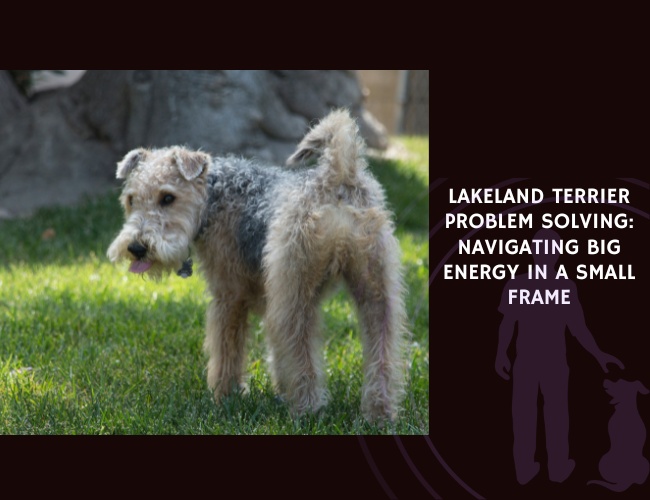
When you first meet a Lakeland Terrier, you might be charmed by their compact size and wire-haired good looks. What you may not immediately realize is that you’re looking at a canine paradox—a small dog with the determination, intelligence, and drive of breeds twice their size. If you’ve found yourself simultaneously impressed and exhausted by your Lakeland’s relentless problem-solving abilities, you’re not alone. These remarkable terriers were designed to think independently, act boldly, and never, ever give up.
Let us guide you through the fascinating cognitive world of the Lakeland Terrier, where intelligence meets impulsivity, and where understanding their brain can transform your relationship from a daily battle into a harmonious partnership. 🧠
The Working Heritage: Built for Independence
Where the Lakeland Mind Was Forged
The rugged Lake District of England isn’t just beautiful—it’s demanding. Your Lakeland’s ancestors navigated rocky terrain, pursued foxes into narrow underground dens, and made life-or-death decisions without human guidance. Think about what this required:
Terrain-Specific Adaptations:
- Compact frame allowing navigation through narrow rock crevices
- High endurance-to-weight ratio for sustained pursuit across mountains
- Bold engagement with dangerous prey despite small size
- Autonomous decision-making when working independently underground
Cognitive Requirements:
- Rapid threat assessment in confined, dark spaces
- Persistent problem-solving when prey evaded or fought back
- High pain tolerance and quick recovery from injury
- Extended periods working without human direction
This working heritage created a dog who weighs between 15-17 pounds but carries the confidence of a mastiff. The genetic selection for boldness, persistence, and autonomous decision-making didn’t disappear when Lakelands transitioned to companion life. It’s still there, expressing itself when your terrier figures out how to open the gate, when they refuse to give up on getting that toy from under the couch, or when they test every single boundary you’ve set.
The “Never Quit” Mentality
Research on working terrier lines reveals something fascinating: these dogs show consistent approach behavior toward novel stimuli and challenges. Where many companion breeds might hesitate or retreat from something new, your Lakeland moves toward it. They have low neophobia—meaning they’re not afraid of new things—and high persistence when faced with difficulty.
You might notice this when your terrier encounters a puzzle feeder for the first time. Instead of giving up when the first attempt fails, they’ll try different approaches, varying their strategy until success arrives. This same quality that made them exceptional working dogs can manifest as what owners sometimes label “stubbornness” or “mischief” in modern contexts.
Understanding the Lakeland Problem-Solving Style
Creative Experimenters, Not Passive Learners
Here’s something important to understand about your Lakeland’s brain: they learn through active experimentation rather than passive compliance. While some breeds wait to be shown what to do, Lakelands are already testing multiple solutions before you’ve finished explaining the problem.
Their Cognitive Approach Pattern:
- Rapidly test different strategies to solve problems
- Quickly abandon non-productive approaches
- Persistently vary methods until success arrives
- Form strong memories of successful solutions
This is brilliant intelligence at work—it’s just not always directed where you’d prefer.
Did you know your terrier is probably learning things you never intended to teach them?
Common Self-Taught Solutions:
- Pawing door handles creates movement and eventual opening
- Jumping on counters when you’re distracted leads to food access
- Barking long enough eventually gets attention
- Testing fence weak points discovers escape routes
- Timing your routine patterns reveals opportunity windows
These are all examples of their problem-solving intelligence finding successful patterns.
Masters of Loophole Identification
Lakelands excel at identifying inconsistencies in human behavior.
Temporal Patterns They Notice:
- “Mom says no, but Dad gives in”
- “Rules are strict in morning, loose in evening”
- “If I wait 10 minutes, the boundary disappears”
- “Weekends have different rules than weekdays”
Contextual Variations They Exploit:
- “No jumping on furniture—unless no one’s watching”
- “Recall works in yard but not at park”
- “Barking stops when visitor arrives (reinforcement achieved)”
- “House rules don’t apply at Grandma’s”
They’re also remarkably attuned to human emotional states. Your Lakeland can detect when you’re distracted, stressed, or rushed. These are the moments when rules become flexible, and your clever terrier knows it. They recognize when corrections lack follow-through, exploiting moments of reduced supervision with strategic precision. 🧡
Reframing “Bad Behavior” as Intelligent Problem-Solving
When your Lakeland gets into something they shouldn’t, it’s easy to label it as misbehavior. But let’s reframe this. What you’re seeing is often self-directed problem-solving. Your dog identified an objective—access food, reach a toy, escape boredom—and applied their considerable intelligence to achieve it. Success reinforced their creative thinking, making them even better problem-solvers next time.
Sometimes what looks like mischief is actually environmental enrichment. An unstimulated terrier brain seeks challenges. When you don’t provide them, your dog makes their own fun through exploration and manipulation. That destroyed cushion? That’s a cognitive outlet. Those dug-up flower beds? Problem-solving practice.
Even attention-seeking behaviors are communication attempts. Your Lakeland is signaling unmet needs through the most effective method they’ve discovered. “Acting out” often reflects frustration or confusion about unclear structure. Through the NeuroBond approach, we understand that intelligence doesn’t need suppression—it needs direction.
Arousal Speed: From Zero to Sixty in Seconds
The Rapid State Transition Challenge
Your Lakeland’s arousal system works like a hair-trigger. One moment they’re calmly resting beside you, the next they’re launching off the couch because a squirrel moved outside the window three houses down. This exceptionally fast shift from calm to high arousal is both fascinating and challenging.
Common Arousal Triggers:
- Movement: Squirrels, cats, running children, bicycles
- Sound: Doorbell, other dogs barking, prey-like noises, unusual sounds
- Social excitement: Visitors arriving, play invitations, dog greetings
- Novelty: New environments, unfamiliar objects, different routines
You might notice how quickly your terrier’s entire state changes when any of these triggers appear.
The neurobiological explanation helps us understand what’s happening. Research on arousal regulation shows that extreme arousal states, whether very high or very low, persist longer than intermediate states. High arousal becomes “sticky,” difficult to exit once activated. Your Lakeland’s autonomic nervous system shows rapid sympathetic activation, and recovery to baseline requires active downregulation, not just time.
When Arousal Overwhelms Impulse Control
High arousal creates predictable behavioral patterns.
Impulse Control Breakdown:
- Grabbing objects (leash, toys, clothing) without thinking
- Jumping on people or furniture in seconds
- Barking continuously without pause
- Inability to settle or hold position
- Mouthing or nipping during excitement
Cognitive Impact:
- Difficulty switching tasks or attention
- Reduced problem-solving capacity
- Impaired learning and memory consolidation
- Frustration increases when blocked from objectives
This isn’t defiance. When arousal exceeds optimal levels, cognitive flexibility decreases.
The prefrontal cortex—the thinking part of the brain—gets suppressed during high arousal. Processing shifts from cortical thinking to subcortical reactivity. Your Lakeland produces instinctive rather than learned responses, shows reduced responsiveness to training cues, and engages in emotional rather than rational behavior. Complex commands become nearly impossible to process. 🐾
Individual Recovery Patterns
Not all Lakelands recover from arousal the same way.
Fast Bounce-Back Type:
- Rapid return to calm after arousal event (5-15 minutes)
- Quick re-engagement with training
- Resilient to environmental stressors
- May cycle through multiple arousal spikes daily without stress accumulation
Prolonged Intensity Type:
- Extended arousal duration (30+ minutes after trigger)
- Difficulty settling after excitement
- Cumulative arousal across the day
- Risk of chronic stress and reactivity without management
Understanding your individual Lakeland’s recovery pattern enables you to time exercise appropriately, provide strategic rest periods between activities, recognize when arousal is accumulating, and implement proactive downregulation training before problems escalate.
Prey Drive: The Underground Hunter’s Legacy
Strong Instincts in Modern Lines
Despite generations away from working roles, your Lakeland retains strong prey drive.
Activation Thresholds by Sensory Type:
- Visual triggers: Movement of small animals, birds, even windblown leaves
- Auditory triggers: Rustling sounds, squeaking, high-pitched noises
- Olfactory triggers: Rodent scent trails, animal urine markers
- Context-dependent: Higher activation in outdoor environments, lower indoors
Line Variation in Prey Drive:
- Show lines: Moderate prey drive, more handler-focused
- Working/sport lines: Intense prey drive, high independence
- Mixed backgrounds: Variable expression requiring individual assessment
Sensory Lock-On and Recall Collapse
When prey drive activates, your Lakeland engages multiple sensory systems simultaneously. Visual lock-on creates rapid fixation on moving targets, sustained tracking, reduced peripheral awareness, and tunnel vision effect. You might call their name repeatedly without response—not because they’re disobedient, but because their visual system has captured their complete attention.
Auditory amplification enhances sensitivity to prey-associated sounds. Directional hearing helps with localization. Sound-triggered arousal spikes can happen from blocks away. Olfactory investigation activates ground-scenting behavior, with your terrier’s nose locked to the trail, head down, body in pursuit mode.
The Invisible Leash concept becomes especially relevant here. When traditional recall fails during high prey drive moments, awareness and emotional connection become your tools. Building this foundation before arousal peaks determines whether you have influence during critical moments. 🧡
Managing Environmental Triggers
Strategic environment management makes enormous difference.
Physical Environment Setup:
- Secured fencing prevents escape during prey pursuit
- Visual barriers reduce trigger exposure before arousal builds
- Controlled introduction to high-stimulation areas
- Predictable walking routes allow preparation for known trigger points
Training Protocols That Work:
- Predatory substitute outlets (controlled lure coursing, flirt pole work)
- Structured tug games with clear start and stop cues
- Nosework activities satisfying hunting instincts appropriately
- Reward-based impulse control during low-arousal states

Frustration Tolerance: Building Resilience
The Explosive Potential of Low Tolerance
Terriers selected for persistence and never-quit mentality can struggle when blocked from objectives.
Low Frustration Tolerance Manifestations:
- Barrier frustration when restrained from desired access
- Escalating intensity when objectives remain unreachable
- Displacement behaviors (spinning, excessive barking, pacing)
- Potential aggression toward blocking stimuli or people
- Destruction focused on obstacles preventing goals
You might observe this when your Lakeland sees another dog across the street but can’t greet them. Or when they want to continue playing but you’ve decided it’s bedtime. The intensity of their response often surprises owners who don’t understand the genetic foundation of terrier persistence.
Systematic Tolerance Building
Frustration tolerance isn’t something terriers naturally develop—it requires deliberate training.
Progressive Challenge Building:
- Brief waiting periods before rewards (start with 3-5 seconds)
- Controlled access to desired resources
- Structured games with pause requirements
- Gradual difficulty increase as tolerance improves
Reinforcement Strategies:
- Reward calm acceptance of delay, not just compliance
- Mark neutral emotional responses instead of only excitement
- Avoid reinforcing escalating intensity patterns
- Build positive associations with waiting itself
Through the NeuroBond approach, patience becomes a skill your terrier learns, not just something you demand.
Attention Dynamics: The Distractibility Challenge
Handler Focus in High-Distraction Environments
Lakelands demonstrate strong environmental focus, often prioritizing external stimuli over handler communication.
Environmental Focus Patterns:
- Novelty-seeking behavior drives constant scanning
- Rapid attentional shifting makes sustained focus difficult
- Handler relevance decreases in stimulating environments
- Competing reinforcement from environment constantly present
What Competes With You:
- Environmental exploration (more rewarding than handler interaction)
- Prey opportunities (trump most training rewards)
- Social interactions with other dogs (preferred over human engagement)
- Novel objects and scents (capture attention immediately)
You need to become more interesting than all of this combined.
Building Handler Value Through Strategic Reinforcement
Individual Motivation Discovery:
- High-value food treats matched to specific preferences
- Toy access for play-driven individuals
- Activity rewards (chase games, tug sessions, scent work)
- Social rewards (praise, physical affection) for connection-motivated dogs
Variable Reinforcement Patterns:
- Unpredictable reward schedules maintain engagement
- Jackpot rewards create excitement and motivation
- Strategic withholding prevents habituation
- Periodic novelty in reward types sustains interest
Your Lakeland needs to believe that you’re more interesting than the environment. This doesn’t happen automatically—it requires intentional value-building.
Functional Disengagement Training
Teaching your Lakeland to deliberately disengage from interesting stimuli builds a crucial life skill. Name recognition during moderate distraction creates foundation. Rewarding voluntary check-ins strengthens the behavior. Gradual distraction increase builds resilience. Practicing in varied contexts ensures generalization beyond training environments.
Social Dynamics: Terrier-to-Terrier Intensity
Interaction Style Characteristics
Your Lakeland’s social style reflects their working heritage.
Intensity During Interactions:
- High arousal during greetings creates overwhelming first impressions
- Body language intensity (stiff posture, direct eye contact, forward movement)
- Persistent engagement even when other dogs signal discomfort
- Escalation potential when play becomes too intense
Space Management Issues:
- Reduced distance respect entering other dogs’ personal space
- Ignoring calming signals from other dogs
- Fast approach speeds preventing gradual acquaintance
- Mounting behavior for control rather than reproduction
Understanding these patterns helps you manage social situations proactively rather than reactively. 🐾
Preventing Social Conflict
Controlled Introduction Protocol:
- Parallel walking before direct interaction
- Maintain distance until both dogs show calm interest
- Allow structured sniffing opportunities
- Monitor arousal levels throughout with timely intervention
Strategic Playgroup Selection:
- Size-matched companions prevent accidental injury
- Energy-level compatibility ensures balanced interaction
- Play style matching (rough players with rough players)
- Appropriate supervision intensity based on risk assessment
Through Soul Recall—those moments of deep relational bonding—you build the foundation that allows your Lakeland to choose connection with you over potential conflict with other dogs. This emotional memory creates the pause necessary for good decisions. 🐾
Territorial Behavior: Guardian Instincts
Property Monitoring and Alert Barking
Despite their companion role, Lakelands retain territorial awareness.
Monitoring Behaviors:
- Boundary monitoring along fence lines, windows, property edges
- Stranger approach alerts with immediate vocalization
- Vehicle sounds in proximity activate attention
- Wildlife presence demands response
Alert Barking Pattern:
- Initial alert provides security notification (useful)
- Continued alarm after acknowledgment becomes problematic
- Escalation to sustained barking disrupts household peace
- Difficulty disengaging from alert state shows arousal regulation challenge
Teaching Appropriate Territorial Response
Acknowledging Alert Behavior:
- Use “thank you” command to mark the alert
- Redirect to incompatible behavior (place, touch, sit)
- Reward quiet observation after initial alert
- Build pattern: alert → acknowledgment → quiet → reward
Environmental Modification:
- Limit visual access to street activity with strategic window covering
- White noise machines mask triggering sounds
- Provide alternative activities during high-trigger times
- Create designated observation spots allowing monitoring without constant alerting
Driven. Clever. Relentless.
Small Body Power
Lakeland Terriers carry working-dog intensity in a compact frame. Their energy reflects capability, not excess.
Independence Built In
Bred to solve problems underground without guidance, they default to autonomous action. Persistence is heritage, not defiance.



Guidance Channels Drive
Without structure, problem-solving turns into boundary testing. Clear purpose transforms effort into cooperation.
Physical Exercise: More Isn’t Always Better
The Over-Arousal Trap
Many Lakeland owners make a critical mistake: trying to tire their terrier through increasingly intense physical exercise. What happens instead often surprises them.
The Over-Exercise Trap:
- Increased cardiovascular conditioning means dog needs even more exercise
- Elevated baseline arousal creates constantly “on” state
- Reduced recovery between activities leads to cumulative stress
- Learned dependency on high activity makes calm states rare
- Physical exhaustion without mental calm intensifies reactivity
You might notice your Lakeland seems hyperactive even after hours of exercise. This isn’t insufficient exercise—it’s excessive arousal without regulation training.
🧠 Lakeland Terrier Problem-Solving Journey
Navigating Big Energy in a Small Frame: From Chaos to Channeled Brilliance
Phase 1: Understanding the Working Heritage
Foundation: Where Intelligence Meets Independence
The Lake District Legacy
Your Lakeland was bred for autonomous decision-making in narrow underground dens, pursuing foxes without human guidance. This created genetic selection for boldness, persistence, and creative problem-solving that doesn’t disappear in companion life—it redirects to your furniture, gates, and household rules.
What to Expect: The “Never Quit” Mentality
• Approach behavior toward novel challenges (not avoidance)
• Persistent experimentation until problems are solved
• Low fear of new things combined with high determination
• 15-17 pounds carrying mastiff-level confidence
Training Foundation
Begin by respecting their intelligence rather than fighting it. Provide clear, consistent boundaries from day one. Channel their problem-solving drive toward human-approved objectives through structured choices within your controlled framework.
Phase 2: Mastering Arousal Speed
Zero to Sixty in Seconds: Teaching Calm as a Skill
The Hair-Trigger System
Lakelands transition from calm to fully activated in seconds when triggered by movement, sound, or novelty. High arousal becomes “sticky”—difficult to exit once activated. The prefrontal cortex suppresses during peaks, shifting from rational thinking to reactive instinct.
Recognize Your Dog’s Recovery Pattern
Fast Bounce-Back: Returns to calm in 5-15 minutes, resilient to multiple daily spikes
Prolonged Intensity: Maintains arousal 30+ minutes, accumulates stress across the day without management
Downregulation Training Protocol
• Capture and reward settling behaviors throughout the day
• Practice “place” command with extended duration
• Strategic rest periods between high-arousal activities
• Teach calm as an active skill, not just a hope
⚠️ Over-Exercise Trap Warning
More physical exercise without arousal regulation training creates a constantly “on” dog with elevated baseline arousal. Physical exhaustion doesn’t equal mental calm—it often intensifies reactivity as tired dogs lose impulse control.
Phase 3: Channeling Prey Drive
The Underground Hunter’s Legacy in Modern Life
Multi-Sensory Lock-On
When prey drive activates, your Lakeland engages visual fixation (tunnel vision), auditory amplification (enhanced prey-sound sensitivity), and olfactory investigation (ground-scenting with head-down pursuit mode). Traditional recall collapses during these moments—you’re competing with genetic programming.
Structured Outlets Strategy
• Flirt pole work with clear start/stop rules
• Nosework activities satisfying hunting instincts
• Controlled lure coursing in safe environments
• Build the Invisible Leash through connection before high-drive moments
Environmental Management
Secured fencing prevents escape attempts. Visual barriers reduce trigger exposure before arousal builds. Predictable walking routes allow you to prepare for known trigger points. Prevention beats correction every time.
Phase 4: Building Frustration Tolerance
From Explosive to Resilient
The “Never Quit” Challenge
Terriers bred for persistence struggle when blocked from objectives. Low frustration tolerance creates barrier frustration, escalating intensity, displacement behaviors (spinning, excessive barking), and potential aggression toward obstacles.
Progressive Tolerance Training
Start with 3-5 second delays before rewards, gradually extending duration. Practice structured games with pause requirements. Reward calm acceptance of delay—not just compliance, but neutral emotional response. Build positive associations with waiting itself through the NeuroBond approach.
Training Success Markers
• Your Lakeland holds position despite distractions
• Waiting becomes anticipation, not frustration
• Neutral body language during delays
• No escalation when temporarily blocked from goals
Phase 5: Managing Social Intensity
Terrier-to-Terrier Dynamics
High-Intensity Interaction Style
Lakelands greet with overwhelming arousal, use intense body language (stiff posture, direct eye contact), and persist even when other dogs signal discomfort. Their fast approach speeds and reduced distance respect create conflict potential.
Controlled Introduction Protocol
• Parallel walking before direct interaction
• Maintain distance until both dogs show calm interest
• Monitor arousal levels with timely intervention
• Select size-matched, energy-compatible playmates
Soul Recall in Social Situations
Through moments of deep relational bonding, you build emotional memory that allows your Lakeland to choose connection with you over potential conflict. This pause—created through Soul Recall—enables better decisions during socially charged moments.
Phase 6: Developmental Journey
From Puppy to Senior: Age-Specific Strategies
Puppyhood (8-16 weeks): Foundation Phase
Absolute consistency from day one—every exception teaches rules are negotiable. Focus on bite inhibition with terrier intensity, controlled socialization without over-stimulation, and early boundary establishment. The cute puppy phase creates dangerous complacency.
Adolescence (6-18 months): The Testing Storm
Hormonal surges intensify independence and reduce handler focus. Expect selective hearing, escalating reactivity, and systematic boundary testing. This phase demands MORE consistency, not less. Long-line becomes essential; off-leash privileges may disappear entirely until maturity proves trustworthiness.
Adulthood (2-7 years): Sustained Structure
With consistent foundation, adult Lakelands show reliable patterns, predictable responses, and stable behavior. Without structure, they perpetually operate “on,” with self-directed patterns and increasing reactivity. Daily mental stimulation and clear boundaries remain lifetime requirements.
Senior Years (7+): Adapted Engagement
Maintain cognitive engagement with age-appropriate challenges. Gentler physical puzzles accommodate reduced mobility while nosework remains excellent throughout senior years. Watch for pain signals—sudden aggression often indicates medical issues, not personality change.
Phase 7: Implementing Daily Structure
Routine Creates Security and Success
Optimal Daily Framework
• 75-90 minutes varied physical activity (multiple walks with training)
• 40-50 minutes deliberate mental challenge (scent work, puzzles, training)
• 4-5 brief training sessions throughout day (5-15 minutes each)
• Enrichment feeding all meals
• Calm settling practice integrated throughout
Time Allocation Balance
Physical Exercise: 75-90 min total (quality over quantity—structured walks beat frantic fetch)
Mental Stimulation: 40-50 min cognitive engagement
Rest/Settling: 14-16 hours including sleep (downtime processes learning)
Seasonal Adaptations
Summer: Early morning/late evening exercise, triple mental enrichment during heat
Winter: Indoor exercise emphasis, increased training frequency, shorter outdoor sessions with weather protection
Phase 8: Recognizing Red Flags
Normal Intensity vs. Problematic Behavior
✓ Normal Lakeland Intensity
• Rapid arousal shifts with reasonable recovery (5-20 minutes)
• Persistent problem-solving attempts
• Context-appropriate vocalization
• High energy requiring 75-90 min daily activity
• Quick recovery after stressful events
⚠️ Anxiety/Stress Red Flags
• Inability to settle despite appropriate exercise/enrichment
• Excessive panting without heat/exertion triggers
• Destructive behavior focused on exit points (separation anxiety)
• Displacement behaviors (excessive licking, tail chasing, fly snapping)
• Hypervigilance preventing rest in safe environments
When to Seek Professional Help
Immediate veterinary attention: Sudden aggression, bite breaking skin, seizures, disorientation
Behavioral consultation: Worsening reactivity, severe separation anxiety, compulsive behaviors
Veterinary behaviorist: Complex cases requiring medication assessment
🔍 Lakeland Terrier Comparisons
vs. Jack Russell Terrier
Similarities: High energy, strong prey drive, problem-solving intelligence
Key Difference: Lakelands show more independence and less handler-focus; JRTs seek human engagement more readily
vs. Border Terrier
Similarities: Working heritage, moderate size, adaptability
Key Difference: Lakelands show higher arousal speed and intensity; Borders generally more even-tempered in daily life
Show Lines vs. Working Lines
Show Lines: Moderate prey drive, more handler-focused, slightly calmer baseline
Working/Sport Lines: Intense prey drive, high independence, elevated arousal baseline
Fast Bounce-Back vs. Prolonged Intensity
Fast Type: Returns to calm in 5-15 min, handles multiple daily arousal spikes
Prolonged Type: Maintains arousal 30+ min, accumulates stress, needs proactive management
Minimum vs. Optimal Enrichment
Minimum: 45 min exercise, 20 min mental work—prevents major issues
Optimal: 75-90 min exercise, 40-50 min mental work—creates fulfilled, cooperative dog
Normal Intensity vs. Anxiety
Normal: High energy with recovery ability, joy during activities
Anxiety: Inability to settle, hypervigilance, displacement behaviors, no joy
⚡ Quick Reference: Success Formula
Intelligence + Structure = Cooperation
Exercise without Arousal Regulation = Chaos
Consistency × Time = Reliability
Mental Exhaustion > Physical Exhaustion
Prevention through Enrichment > Punishment after Destruction
Remember: Your Lakeland’s problem-solving abilities will find expression whether you direct them or not. Channel brilliance, don’t suppress it.
🧡 The Zoeta Dogsoul Approach to Lakeland Intelligence
The NeuroBond framework recognizes that your Lakeland’s big energy in a small frame isn’t a flaw—it’s a feature requiring thoughtful channeling. Through calm containment and emotional neutrality, you create space where intelligence becomes cooperation rather than chaos. The Invisible Leash builds connection stronger than tension, guiding through awareness rather than force. In moments of Soul Recall—those deep relational bonds—your terrier learns to choose partnership over instinct. This is where neuroscience meets soul: respecting the working heritage while honoring modern life demands, transforming potential conflict into channeled brilliance. When structure meets stimulation, when boundaries create security rather than restriction, your Lakeland becomes what they were always meant to be—a remarkable mind choosing collaboration.
© Zoeta Dogsoul – Where neuroscience meets soul in dog training
Balanced Exercise Protocols
Morning calm walks with sniffing opportunities start the day without spiking arousal. Brief training sessions between activities build focus. Moderate aerobic exercise—controlled, not frantic—provides cardiovascular benefits without overstimulation. Rest period requirements teach settling as a skill.
Afternoon mental enrichment emphasizes cognitive exhaustion over physical. Scent work or nosework engages hunting instincts appropriately. Puzzle feeders satisfy problem-solving needs. Brief training review maintains skills. Controlled social interaction when appropriate provides enrichment.
Evening structured play with clear rules channels energy productively. Tug games with “take it” and “drop it” cues build impulse control. Fetch with mandatory settle between throws teaches arousal regulation. Training session focusing on calm behaviors prepares for bedtime. Settling routine signals day’s end consistently. 🧠
Mental Stimulation: Engaging the Problem-Solving Brain
Cognitive Exhaustion Strategies
Your Lakeland’s intelligence requires daily engagement.
Effective Mental Challenges:
- Nosework and scent discrimination tapping hunting heritage
- Pattern recognition games challenging problem-solving
- Trick training providing novel challenges regularly
- Environmental puzzle solving using household items creatively
Session Structure for Success:
- Short duration (5-10 minutes) prevents frustration
- Multiple sessions daily provide ongoing challenge
- Gradual difficulty increase builds confidence
- Variable challenge type prevents boredom
Preventing Self-Directed Destructive Behaviors
What Drives Destruction:
- Cognitive boredom creates need for mental engagement
- Exploration drive leads to investigating objects (often destructively)
- Frustration outlet when primary needs aren’t met
- Attention-seeking when nothing else works
Proactive Enrichment Prevents Problems:
- Rotating toy access maintains novelty
- Daily training sessions provide structure
- Supervised freedom during high-energy periods
- Chew-appropriate items satisfy oral needs
- Secured environment removes access to valuable items
Prevention through enrichment always beats punishment after destruction. 🧠
Training Framework: Structure Over Suppression
Clear Rules with Consistent Enforcement
Your Lakeland needs to know exactly where the boundaries are.
Rule Implementation Essentials:
- Non-negotiable rules apply always, without exception
- Consistent consequences follow specific behaviors predictably
- Immediate feedback (within seconds) connects action and consequence
- Neutral emotional delivery prevents oppositional reflex
Predictable Routines Create Security:
- Feeding schedule consistency stabilizes energy patterns
- Walking route familiarity allows focus on training
- Activity sequence predictability reduces anticipatory arousal
- Transition cues signal state changes clearly
Structured Choice Within Boundaries
The autonomy framework respects terrier independence while maintaining your leadership. “You may choose A or B” offers options where both outcomes are acceptable to you. This allows your Lakeland to exercise their preference while you control the overall situation. Power struggles decrease because your terrier feels they have agency.
Practical Choice Examples:
- “Sit or down” — both positions earn the reward
- “This toy or that toy” — you control what’s appropriate
- “Walk this route or that route” — preference within safe options
- “Crate or bed” — both are designated rest spaces
This approach honors their intelligence while maintaining necessary structure.
Calm Authority Without Force
Physical corrections often backfire with terriers, triggering opposition and damaging trust.
Effective Teaching Methods:
- Calm removal of reinforcement (not punishment)
- Environmental management preventing access
- Redirection to appropriate alternatives
- Positive reinforcement building desired patterns
Leadership Through Resource Control:
- You determine food access timing
- You control toy availability
- You decide freedom and restriction
- You maintain calm authority
This creates security—your terrier knows someone competent is in charge. Anxiety from uncertainty decreases. Testing behaviors reduce. Cooperation becomes habitual. 🧡

Adolescence: The Testing Period
Developmental Changes That Challenge Structure
Between six and eighteen months, your Lakeland undergoes significant changes.
Hormonal and Cognitive Changes:
- Testosterone/estrogen surge increases confidence
- Independence intensifies dramatically
- Handler focus decreases as environment becomes more interesting
- Prey and territorial drives enhance
- Risk-taking behavior increases
Predictable Behavioral Manifestations:
- Selective hearing (ignoring previously known cues)
- Escalating reactivity to triggers
- More determined and creative escape attempts
- Systematic challenges to household rules
- Reduced impulse control despite earlier training
This isn’t regression—it’s normal adolescent development requiring adjusted management.
Maintaining Leadership Through the Storm
Consistency Intensification:
- Stricter boundary enforcement than before
- Immediate consequences for testing behaviors
- Reduced freedom until reliability returns
- Increased supervision preventing successful rehearsal
Mental Stimulation Becomes Critical:
- Daily training sessions maintain connection
- Novel challenges engage developing brain
- Structured outlets prevent self-directed channeling
- Cognitive exhaustion emphasis over pure physical
Physical Management for Safety:
- Secure containment (no off-leash in unfenced areas)
- Long-line for controlled freedom during unreliable phase
- Appropriate exercise without over-arousal
- Calm activities integrated throughout day
Age-Specific Troubleshooting Guide
Early Puppyhood: 8-16 Weeks
Challenge #1: Bite Inhibition with Terrier Intensity
Your Lakeland puppy’s needle teeth come with surprising force. Their play-biting isn’t gentle mouthing—it’s rehearsal for the determination they’ll carry into adulthood.
Solution Steps:
- Immediate yelp and withdrawal when teeth touch skin
- Redirect to appropriate chew toy within seconds
- Reward gentle mouth contact enthusiastically
- Keep play sessions short preventing over-arousal
- Never use hands as toys—teaches mouths belong on skin
Challenge #2: Early Boundary Testing
Even at ten weeks, your Lakeland tests rules systematically. They’re not being “bad”—they’re gathering information about how their world works.
Solution Protocol:
- Absolute consistency from day one (no exceptions)
- All family members enforce identical boundaries
- Immediate, neutral consequences for testing
- Enthusiastic rewards for compliance
- Every exception teaches rules are negotiable
This foundation determines whether adolescence is manageable or chaotic.
Challenge #3: Socialization Without Over-Stimulation
Critical socialization period overlaps with arousal regulation challenges. Your puppy needs exposure without becoming an arousal-seeking chaos ball.
Balanced Exposure Strategy:
- Controlled introductions to new experiences (not overwhelming)
- Brief exposure followed by mandatory calm settling time
- Quality over quantity—three calm interactions beat twenty chaotic ones
- Read puppy signals: soft body, wagging tail, playful = good; stiff body, excessive jumping, frantic = too high
- End sessions while still positive, before exhaustion
This prevents creating an adrenaline junkie while ensuring proper socialization. 🐾
Young Adolescence: 4-6 Months
What to Expect:
Your previously compliant puppy suddenly develops selective hearing. Their recall becomes mysteriously unreliable. Environmental distractions become infinitely more interesting than you. This isn’t regression—it’s normal developmental exploration combined with increasing independence.
Management Strategies:
Freedom and Control Balance:
- Long-line becomes essential tool (30 feet of freedom with control)
- Back-to-basics training refreshers rebuild foundation
- Dramatically increase reward value (what worked at 12 weeks won’t compete now)
- Reduce freedom temporarily until reliability improves
- More supervision, not less, during this phase
Cognitive Development Support:
- Increase mental challenges as brain develops
- Introduce novel tricks weekly
- Puzzle feeders at every meal
- Scent work introduction channels hunting instincts
- Short, frequent training sessions beat long ones
Common Mistake to Avoid: Assuming your four-month-old is “trained” and reducing structure. This age requires more consistency, not less.
Peak Adolescence: 6-12 Months
Adolescent-Specific Interventions:
This period tests every ounce of your consistency. Your Lakeland’s confidence surges while their impulse control lags behind. Hormonal changes intensify prey drive, territorial responses, and independence.
Arousal Regulation Focus:
Teach calm as a skill, not just a hope. Capture and reward settling behaviors throughout the day. “Place” command with extended duration builds self-control. Calm leash walking—no pulling, no lunging—becomes non-negotiable. Reward check-ins and voluntary attention.
Boundary Reinforcement Protocol:
Known rules get stricter enforcement, not more lenient. Testing behaviors receive immediate, consistent consequences. Freedom is earned through reliability, not given by age. Off-leash privileges may disappear entirely until maturity demonstrates trustworthiness.
Frustration Tolerance Building:
Systematic exposure to waiting. Start with five-second delays before reward, gradually extending. Teach “leave it” with progressively difficult temptations. Practice impulse control during high arousal—sit before door opening, down before meal, wait before chase games.
Social Challenges:
Adolescent Lakelands can become overwhelmed in dog parks or develop selective aggression. Reduce chaotic social situations. Increase structured, one-on-one play with known compatible dogs. Monitor play intensity closely—intervene before arousal exceeds manageable levels.
Warning Signs Requiring Intervention:
Escalating reactivity on leash toward dogs or people signals arousal management failure. Increased aggression during resource guarding needs immediate professional guidance. Escape attempts becoming more determined and successful indicate insufficient mental stimulation. Destructive behavior despite adequate exercise points to anxiety or frustration. 🧠
Young Adulthood: 1-2 Years
Transitioning to Mature Patterns:
This phase determines whether adolescent chaos stabilizes into reliable adulthood or solidifies into permanent management challenges. Structure during this period creates lifetime patterns.
Consistency Maintains Gains:
Rules established during adolescence must continue without relaxation. Your two-year-old who finally recalls reliably will regress if you stop practicing. Mental stimulation remains daily requirement, not occasional bonus. Leadership stays calm and consistent—your terrier needs to know nothing changed.
Refining Skills:
Build on foundation with advanced challenges. Distance and duration in obedience increase. Distraction-level training progresses to real-world complexity. Off-leash reliability in controlled environments may become possible for some individuals—but never assume it.
Individual Variation Recognition:
Some Lakelands mature quickly, showing adult stability by eighteen months. Others don’t settle until three years. Your individual dog’s trajectory depends on genetics, training consistency, and environmental management. Adjust expectations to your specific terrier, not breed averages.
Establishing Sustainable Routines:
What works at two years should work at ten years. Build routines you can maintain long-term. If daily hour-long training sessions aren’t sustainable, develop fifteen-minute protocols now. Create structure that fits your actual life, not your idealized version.
Senior Years: 7+ Years
Cognitive Changes and Adaptation:
Senior Lakelands often retain their intensity longer than larger breeds, but changes eventually arrive. Decreased hearing may appear to be selective, but could be genuine. Vision changes affect environmental confidence. Arthritis reduces activity tolerance. Cognitive decline can manifest as confusion, anxiety, or altered sleep patterns.
Adapted Mental Stimulation:
Maintain cognitive engagement with age-appropriate challenges. Gentler physical puzzles accommodate reduced mobility. Scent work remains excellent throughout senior years—the nose ages slowly. Shorter, more frequent sessions prevent fatigue. Familiar routines provide security as memory declines.
Modified Exercise Requirements:
High-impact activities decrease while mental enrichment increases. Multiple short walks replace single long ones. Swimming or gentle movement supports joint health. Watch for pain signals—reluctance to jump, stiffness after rest, behavioral changes.
Environmental Modifications:
Ramps or steps for furniture access preserve independence. Non-slip flooring prevents falls. Consistent furniture placement aids navigation if vision declines. Night lights help with evening disorientation. Familiar sleeping areas provide security.
Behavioral Changes Requiring Veterinary Attention:
Sudden aggression often signals pain, not personality change. Increased anxiety might indicate cognitive dysfunction syndrome. House-soiling after years of reliability suggests medical issues. Disorientation, pacing, or altered sleep-wake cycles need professional assessment. Your senior terrier deserves comfort and appropriate medical intervention, not just acceptance of decline. 🧡

The Mature Lakeland: Potential and Pitfalls
Adult Stability Factors
With consistent structure throughout development, your mature Lakeland becomes wonderfully reliable within established routines. They show predictable responses to known cues, stable social behavior, and manageable energy levels. The intelligence that created challenges in youth becomes an asset when properly directed.
Without structure, the same dog perpetually operates in an “on” state. Self-directed behavior patterns solidify. Reactivity often increases over time. Chronic stress indicators appear—excessive licking, digestive issues, sleep disruption, or other health manifestations.
Lifelong Requirements
Even mature Lakelands need daily mental stimulation. Their problem-solving brain doesn’t retire. Clear boundaries remain necessary—ambiguity creates testing at any age. Appropriate outlets for energy and drive prevent frustration accumulation. Consistent leadership provides security throughout their life.
Daily Schedule Template: Structure That Works
Sample Daily Routine Breakdown
Morning Routine (6:00 AM – 9:00 AM)
6:00 AM – Calm wake-up. No immediate excitement or play. Brief potty break in yard—business only, not playtime.
6:15 AM – Training session (5-10 minutes). Focus on impulse control: sit-stays, down-stays, “wait” at doorways. Reward calm engagement.
6:30 AM – Controlled walk (20-30 minutes). Leash manners emphasis. Allow sniffing—this provides mental enrichment. Structured pace prevents frenetic energy.
7:00 AM – Feeding time. Use puzzle feeder or scatter feeding to extend meal duration and provide cognitive challenge. Food-motivated training opportunities during preparation.
7:15 AM – Rest period while you prepare for your day. Crate or designated calm space. This isn’t punishment—it’s teaching settling as normal state.
8:00 AM – Brief training refresher (3-5 minutes) before leaving for work. Prevents anticipatory arousal from your departure routine.
Midday (12:00 PM – 1:00 PM)
If you’re home or have dog walker:
12:00 PM – Potty break and brief sniffer walk (10-15 minutes). Mental enrichment through scent exploration.
12:20 PM – Mental enrichment activity: Kong stuffed with frozen treats, nosework game, or brief training session.
12:40 PM – Supervised freedom in safe space or return to rest area.
Afternoon/Evening (5:00 PM – 9:00 PM)
5:00 PM – Controlled exercise (30-45 minutes). Leash walk with training opportunities. Practice recall in safely enclosed areas. Allow appropriate sniffing and exploration.
5:45 PM – Training session (10-15 minutes). Work on current skill development. End on successful note with known, easy behavior.
6:00 PM – Feeding time. Again with puzzle feeder or training-based meal delivery.
6:30 PM – Calm family interaction time. Gentle play with rules—tug with “take it” and “drop it” cues. No chaotic roughhousing.
7:00 PM – Mental enrichment: scent work, puzzle toys, trick training, or brief nosework session.
7:30 PM – Calm activities. Chew time with appropriate items. Quiet companionship while you relax.
8:30 PM – Final potty break. Brief walk focused on elimination, not stimulation.
9:00 PM – Settling routine. Predictable sequence signals bedtime. Dim lights, calm energy, designated sleep space.
Time Allocations
Physical Exercise: 60-90 minutes total, spread across day. Quality matters more than quantity—structured walks beat frantic fetch.
Mental Stimulation: 30-45 minutes of deliberate cognitive engagement. Training, puzzles, scent work, problem-solving games.
Training Sessions: 3-4 sessions daily, 5-15 minutes each. Short, frequent, successful.
Rest/Settling: 14-16 hours including nighttime sleep. Lakelands need downtime to process learning and regulate arousal.
Meal Times: 20-30 minutes if using enrichment feeders. Slowing consumption aids digestion and provides mental work.
Minimum Requirements vs Optimal Enrichment
Minimum Daily Requirements:
These represent the baseline for preventing behavioral problems, not the ideal for thriving.
- 45 minutes physical exercise (one good walk)
- 20 minutes deliberate mental stimulation (training or puzzle work)
- 2-3 brief training sessions (5 minutes each)
- Structured feeding (puzzle feeder minimum)
- Consistent routine and clear boundaries
This prevents major issues but doesn’t fully satisfy your Lakeland’s considerable drive and intelligence. Expect some testing behaviors and self-directed entertainment seeking.
Optimal Enrichment Schedule:
This creates a genuinely fulfilled, cooperative Lakeland.
- 75-90 minutes varied physical activity (multiple walks, some including training)
- 40-50 minutes mental challenge (training, scent work, puzzles, problem-solving)
- 4-5 training sessions throughout day
- Enrichment feeding all meals
- Novel challenges introduced weekly
- Appropriate social interaction opportunities
- Calm settling practice integrated throughout
- Consistent structure with predictable routine
With optimal enrichment, your Lakeland’s intelligence works with you instead of against you. Destructive behaviors largely disappear. Cooperation becomes default. The relationship transforms. 🧠
Seasonal Variations
Summer Energy Management (High Heat):
Heat amplifies arousal challenges while reducing safe exercise windows. Adaptation prevents problems.
Early morning walks (5:30-7:00 AM) before temperature spikes. Focus on mental rather than physical exhaustion during midday heat. Indoor nosework, puzzle games, training sessions in air conditioning. Evening walks after temperature drops (8:00-9:30 PM). Increased water availability throughout day.
Swimming provides excellent exercise without overheating risk. Frozen treats offer enrichment and cooling. Shaded rest areas prevent heat stress. Watch for excessive panting, reluctance to move, or disorientation—heat exhaustion requires immediate intervention.
Mental exhaustion becomes primary management tool. Triple scent work and puzzle complexity. Increase training session frequency while decreasing duration. Indoor trick training fills exercise gap.
Winter Energy Management (Limited Outdoor Time):
Cold, wet weather limits outdoor activities but doesn’t reduce your Lakeland’s energy or intelligence.
Indoor exercise emphasis: hallway fetch with impulse control, stair climbing (if joints healthy), indoor agility with household furniture, tug games with strict rules. Mental stimulation increases significantly: extended training sessions, complex puzzle progressions, hide-and-seek games, trick chains.
Shorter, more frequent outdoor potty breaks replace long walks on severe weather days. Consider dog coat for extended cold exposure—short coat doesn’t provide much protection. Paw protection from salt and ice.
Arousal management becomes critical when outdoor outlets reduce. Increased structure compensates for decreased physical release. More frequent settling practice prevents cabin fever escalation.
Spring/Fall Ideal Conditions:
Moderate temperatures allow optimal activity levels. Longer walks become possible without heat/cold stress. Outdoor training in comfortable conditions. Increased socialization opportunities in appropriate settings.
These seasons offer perfect conditions for advancing training, building new skills, and establishing routines that will adapt to extreme seasons. Use this time to solidify behaviors that must continue year-round. 🐾
The NeuroBond Framework: Channeling Big Energy
Calm Containment Through Invisible Leash Principles
The NeuroBond approach addresses Lakeland-specific challenges beautifully. Calm pacing—deliberate, unhurried movement from you—reduces anxiety transmission to your terrier. It models emotional regulation clearly. It prevents arousal escalation during daily activities.
Spatial clarity provides security. Your Lakeland knows exactly where their space boundaries are. Movement patterns become predictable. Positioning expectations remain consistent. Confusion and testing decrease when structure is clear.
Predictable transitions ease state changes. Structured routines for daily activities create rhythm. Clear cues signal shifts from active to calm states. Consistent sequences build neural patterns. Anticipatory arousal reduces when your terrier knows what happens next.
Emotional Neutrality Prevents Opposition
Your emotional state matters enormously. Neutral tone prevents triggering your terrier’s opposition reflex. Conflict doesn’t escalate when you remain calm. Communication stays clear without emotional interference. Trust and cooperation build on this foundation.
Avoiding emotional triggers means understanding that anger amplifies terrier resistance. Frustration creates confusion in your dog’s mind. Anxiety transmits directly to them. Excitement increases their arousal. Calm voice regardless of behavior, neutral body language, consistent consequences without emotion, and immediate redirection without drama create the environment where learning happens. 🐾
Honoring Intelligence While Maintaining Guidance
The Lakeland Terrier’s remarkable cognitive abilities deserve respect, not suppression. Their intelligence, persistence, and independence—qualities that made them exceptional working dogs—require thoughtful channeling rather than elimination. Success emerges when structure meets stimulation, when boundaries create security, and when leadership honors their heritage while addressing modern realities.
Red Flags vs Normal Lakeland Intensity
Understanding Normal High-Energy Behavior
Your Lakeland’s intensity can feel overwhelming, but certain behaviors fall within normal range for the breed. Understanding the difference between typical terrier exuberance and problematic anxiety or stress prevents unnecessary worry while ensuring you recognize genuine issues.
Normal Lakeland Intensity Includes:
Rapid arousal shifts when triggered by prey, movement, or excitement. Your terrier goes from calm to fully activated in seconds, but can settle again within reasonable timeframe (5-20 minutes with appropriate management).
Persistent attempts to solve problems or access desired resources. They’ll work on opening that cabinet for twenty minutes, testing different approaches. This demonstrates intelligence, not compulsion.
Vocal expression during excitement, frustration, or alert situations. Lakelands bark. They vocalize during play, when excited, and when alerting to environmental changes. Context-appropriate vocalization isn’t anxiety.
High energy requiring substantial daily exercise and mental stimulation. Needing 75-90 minutes of activity daily is normal, not excessive, for this breed.
Moderate leash pulling or environmental interest during walks, especially early in training. Working terriers were bred to forge ahead, not heel perfectly.
Play style intensity with appropriate bite inhibition. Rough play with other dogs, including wrestling and mouthing, when both parties consent and arousal remains manageable.
Quick recovery after stressful events. Startles at loud noise but returns to normal within minutes. Becomes aroused during play but settles afterward. 🧠
When High Energy Crosses Into Anxiety/Stress:
Inability to settle even after appropriate exercise and mental stimulation. Your Lakeland can’t relax, constantly paces, seeks activity even when physically exhausted. This suggests chronic stress, not energy.
Excessive panting without heat or exertion triggers. Stress panting appears rapid, shallow, often accompanied by drooling or whale eye (showing whites of eyes).
Destructive behavior focused specifically on exit points—doors, windows, crates. This signals separation anxiety or barrier frustration beyond normal boundaries testing.
Displacement behaviors during calm situations: excessive licking of paws or objects, tail chasing, fly snapping at nothing, repetitive circling. These self-soothing behaviors indicate underlying anxiety.
Hypervigilance preventing rest. Your terrier constantly monitors environment, startles easily, can’t maintain relaxed body posture even in familiar, safe settings.
Aggression escalation beyond normal terrier spunk. Resource guarding intensifying over time, reactivity worsening despite consistent training, unpredictable aggressive responses to normal stimuli.
Gastrointestinal issues correlated with stress events—diarrhea before visitors arrive, vomiting during storms, appetite loss during routine changes.
Sleep disruption beyond puppyhood. Adult Lakeland sleeping less than 12 hours in 24-hour period, waking frequently, seeming restless even during designated rest times.
Behavioral Markers Requiring Veterinary/Behavioral Consultation
Medical Rule-Out Indicators:
Sudden behavioral changes in previously stable adult deserve veterinary examination before assuming training issue. Pain manifests as irritability, aggression, reluctance to engage, or changes in activity level.
Thyroid dysfunction affects behavior significantly. Hypothyroidism can cause lethargy, weight gain, and sometimes aggression. Hyperthyroidism creates anxiety-like symptoms, hyperactivity, and irritability.
Neurological issues may present as disorientation, compulsive behaviors, seizures (which can be subtle), or sudden fearfulness. Brain tumors, particularly in older dogs, alter personality and behavior.
Chronic pain from dental disease, arthritis, or internal conditions creates behavioral changes. Your previously tolerant Lakeland becoming snappy around specific body areas suggests pain investigation.
Cognitive dysfunction in senior dogs appears as confusion, altered sleep patterns, house-soiling, reduced interaction, or anxiety. This requires veterinary assessment for management options.
Behavioral Consultation Indicators:
Aggression toward family members escalating or appearing unpredictably. Any bite that breaks skin requires professional evaluation. Resource guarding intensifying despite management attempts.
Severe separation anxiety preventing normal household function. Destruction focused on exits, self-harm attempts, neighbors complaining about constant vocalization, inability to leave dog alone for any duration.
Reactivity to dogs or people worsening despite consistent training. Lunging, snapping, or intense barrier frustration that doesn’t improve with standard management.
Compulsive behaviors consuming significant daily time. Tail chasing for hours, excessive licking creating sores, repetitive pacing or circling, fly snapping throughout day.
Extreme fear responses to normal stimuli that don’t desensitize. Thunderstorm phobia causing injury attempts, fear of specific surfaces preventing normal movement, social fearfulness limiting quality of life.
Inability to settle creating household chaos despite appropriate exercise and enrichment. Dog seems perpetually stressed, can’t relax, disrupts sleep, prevents normal activities. 🐾
Checklist: When to Seek Professional Help
Work through this systematically. If you answer “yes” to multiple items in any category, professional consultation benefits you and your Lakeland.
Immediate Veterinary Attention Needed:
- Sudden aggression in previously friendly dog
- Bite that breaks skin on human or animal
- Seizure activity of any kind
- Disorientation, loss of balance, or coordination issues
- Extreme lethargy or inability to rouse
- Visible signs of pain—crying, yelping, guarding body areas
- Refusal to eat for more than 24 hours
- House-soiling in previously trained adult with other symptoms
Veterinary Consultation Recommended:
- Behavioral changes coinciding with age milestones (senior onset)
- Gradual behavior changes over weeks/months
- Excessive anxiety not responding to environmental management
- Sleep disruption persisting despite routine optimization
- Gastrointestinal issues correlated with stress
- Compulsive behaviors starting or intensifying
- Chronic high arousal despite appropriate outlets
Certified Dog Trainer/Behaviorist Consultation:
- Leash reactivity not improving with standard training
- Resource guarding beyond mild food bowl awareness
- Separation anxiety preventing normal absences
- Fear responses limiting normal activities
- Aggression toward household members
- Inability to settle despite meeting exercise needs
- Training plateaus despite consistent effort
- Preparation for major life changes (baby, move, new pet)
Veterinary Behaviorist Referral (Specialized):
- Severe aggression with bite history
- Complex anxiety disorders
- Compulsive disorders not responding to training
- Cases requiring potential medication assessment
- Behavioral issues with concurrent medical conditions
- Multiple failed training attempts with certified professionals
Self-Assessment: Is This Normal for My Lakeland?
Ask yourself these questions honestly:
Does your Lakeland show joy and engagement during appropriate activities? Normal intensity includes enthusiasm. Problematic anxiety shows as inability to enjoy anything.
Can your terrier settle after reasonable timeframe (under 30 minutes) following exciting events? Recovery ability indicates healthy arousal regulation.
Does training progress, even slowly, with consistent effort? Improvement suggests behavior within normal range. Complete lack of progress despite proper technique may indicate underlying issues.
Do behavioral challenges decrease as structure increases? Normal terrier testing responds to consistency. Anxiety-driven behaviors often worsen or remain unchanged despite perfect management.
Does your Lakeland show affection, playfulness, and normal social engagement? Anxiety and stress reduce these positive interactions.
Your Lakeland’s intensity should feel manageable with appropriate structure, even if challenging. If it feels impossible despite doing everything right, professional assessment provides clarity and solutions. 🧡
Is the Lakeland Right for Your Life?
Thriving Environments
Lakelands flourish with owners who appreciate mental challenges and commit to daily training engagement. They need people who maintain consistent structure without rigidity, who provide appropriate outlets for drive and energy, and who understand that managing arousal matters as much as providing exercise. Secure physical environment prevents escape and ensures safety.
Warning Signs of Mismatch
Some situations predict struggle. Expectation of naturally calm companion creates disappointment—Lakelands require active management. Inconsistent household rules generate constant testing. Minimal training commitment leads to self-directed chaos. Very young children may not mix well with intense terrier energy. Lack of secure containment creates dangerous escape potential.
Questions for Honest Self-Assessment
Can you commit to daily training sessions—not occasionally, but genuinely daily? Will you maintain consistent rules even when you’re tired or busy? Can you provide mental stimulation beyond physical exercise? Are you prepared for years of active management, not just the cute puppy phase? Do you have secure fencing and appropriate containment? Can you remain emotionally neutral during challenges instead of getting frustrated?
Your answers reveal whether you’re ready for the Lakeland Terrier’s big energy in their compact frame. 🧡
Synthesis: Small Body, Brilliant Mind, Big Requirements
The Lakeland Terrier represents one of canine cognition’s most interesting paradoxes. Their compact fifteen-pound frame houses determination, intelligence, and drive that rivals breeds twice their size. Understanding this paradox transforms the relationship from exhausting battle to rewarding partnership.
Their working heritage isn’t decorative history—it’s active neurobiology shaping daily behavior. The traits that made them fearless underground hunters express themselves in modern contexts through rapid problem-solving, persistent boundary testing, and intense independence. These qualities aren’t flaws requiring elimination. They’re features requiring direction.
Arousal regulation emerges as the central challenge. Physical exercise alone often increases intensity without teaching calm. Mental exhaustion through structured training creates genuine tiredness. Downregulation practice builds settling as a skill. Understanding your individual Lakeland’s arousal and recovery patterns allows strategic management rather than reactive crisis response.
Prey drive remains strong across generations despite removal from working roles. Managing this requires environmental strategy, controlled outlets, and building handler value that competes with instinctive triggers. The Invisible Leash concept—connection through awareness rather than tension—provides framework for maintaining influence during high-drive moments.
Intelligence requires structure, not suppression. Your Lakeland’s problem-solving abilities will find expression whether you direct them or not. Structured choice within clear boundaries respects their autonomy while maintaining your leadership. Consistent rules create security. Appropriate challenges engage their cognitive abilities productively.
That balance between honoring heritage and meeting modern life demands—that’s the essence of Zoeta Dogsoul. When structure meets stimulation, when boundaries create security rather than conflict, and when leadership respects intelligence while providing necessary guidance, the Lakeland Terrier becomes a remarkable companion: clever, confident, and genuinely cooperative.
The NeuroBond approach, with its emphasis on calm containment, emotional neutrality, and structured autonomy, addresses Lakeland-specific challenges directly. Calm pacing prevents arousal escalation. Spatial clarity reduces confusion and testing. Predictable transitions ease state changes. Emotional neutrality prevents oppositional responses. These elements transform potential chaos into channeled brilliance.
Your Lakeland’s big energy in a small frame isn’t a problem to solve—it’s a characteristic to understand and honor. Their intelligence deserves engagement, their persistence deserves outlets, their independence deserves respect within structure. When these needs align with consistent leadership and appropriate challenges, you don’t just manage a challenging terrier. You partner with a remarkable mind wrapped in wiry coat and terrier determination.
The journey with a Lakeland Terrier demands more than many companion dogs. It requires daily commitment, consistent structure, mental engagement, and emotional regulation—from both of you. What it offers in return is a relationship built on mutual respect, a dog whose cleverness becomes an asset rather than a liability, and the satisfaction of successfully channeling one of the canine world’s most intense cognitive engines.
That small body truly does house big energy. Understanding this, honoring it, and providing appropriate structure transforms it from overwhelming challenge into brilliant partnership. 🧠🐾










