
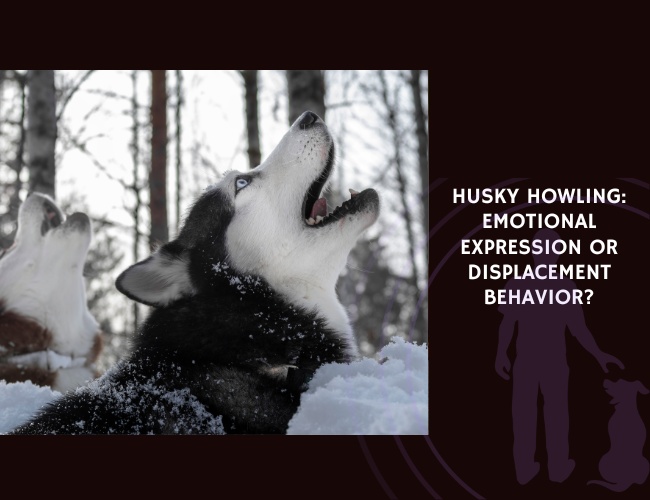
When your Siberian Husky lifts their head and releases that unmistakable, soul-stirring howl, what are they really saying? Is it joy, loneliness, or something more complex beneath the surface? If you live with a Husky, you already know that their vocal repertoire goes far beyond the typical bark. These northern breed companions seem to speak in sentences, carry conversations, and fill your home with a symphony of sounds that can be both endearing and, at times, overwhelming.
Understanding why your Husky howls is not simply about decoding noise. It is about recognizing the deep evolutionary heritage they carry, the emotional landscape they navigate, and the ways they attempt to connect with you and their environment. Some howling moments feel like pure emotional expression, a window into what they are feeling right now. Other times, howling serves a different function entirely, acting as a release valve for internal tension, uncertainty, or overstimulation that they cannot otherwise process.
Let us guide you through the fascinating world of Husky vocalization. Together, we will explore the genetic foundations that make these dogs so naturally expressive, the emotional and displacement behaviors that drive their howls, and the ways you can support your Husky in finding balance between their innate vocal nature and the calm, connected relationship you both deserve.
The Genetic Foundations of Vocalization
Arctic Ancestry and Wolf Heritage
Your Husky’s tendency to howl is not a quirk of personality. It is written into their DNA, shaped by thousands of years surviving in the unforgiving Arctic environment alongside humans who depended on their strength, endurance, and communication abilities. Unlike many companion breeds developed for specific tasks in settled communities, Huskies retained closer genetic ties to their wolf ancestors, and with those ties came the preservation of wolf-like communication patterns.
Howling in wolves serves critical survival functions. It coordinates pack movements across vast distances where visual contact is impossible. It maintains social cohesion when members are separated. It signals territory boundaries and strengthens emotional bonds within the group. When you hear your Husky howl, you are hearing echoes of this ancestral language, a communication system refined over millennia for life in wide-open, challenging landscapes where vocal signals could carry for miles.
Research into canine genetics reveals that selective breeding shapes not just physical traits but behavioral tendencies as well. The genetic preparedness that dogs exhibit for attachment to humans, for example, stems from artificial selection that increased their dependence on and connection to our species. Similarly, Huskies were selected not just for pulling power or cold tolerance, but for their ability to work in coordinated teams, respond to human handlers across distances, and maintain high arousal communication in challenging conditions.
This genetic foundation means your Husky is predisposed to vocal expressiveness in ways that other breeds simply are not. Their threshold for vocalization is lower, their repertoire is broader, and their natural inclination is to use their voice as a primary communication tool. Understanding this helps you recognize that when your Husky howls, they are often doing exactly what their genetics encourage them to do.
Key genetic influences on Husky vocalization include:
- Wolf heritage retention: Closer genetic proximity to wolves than most companion breeds, preserving ancestral communication patterns
- Arctic survival selection: Bred for environments where long-distance vocal coordination was essential for pack function and safety
- Team communication needs: Selected for ability to signal across distances during sled work and coordinate with handlers
- High arousal tolerance: Genetic predisposition for maintaining vocal expressiveness even in challenging, high-stress conditions
- Social bonding drive: Enhanced genetic preparedness for attachment and social communication compared to more independent breeds
Selection for High Arousal Communication
Working sled dogs needed to communicate effectively in high-stress, high-energy environments. They had to signal their readiness to run, their distress when injured, their excitement at feeding time, and their location when visibility was poor. This created selection pressure for dogs who could vocalize clearly, frequently, and with emotional intensity that matched the demands of Arctic survival.
Your Husky inherited this legacy. They are not being dramatic when they howl at the doorbell, the ambulance siren, or your return home after an absence. They are engaging communication systems that, in their ancestral context, would have been adaptive and necessary. The challenge for modern Huskies is that they live in environments very different from the ones their genes prepared them for, and what once served survival can now become displacement or overstimulation in a quiet suburban home.
Emotional Expression vs. Displacement Behavior
Genuine Emotional States
There are moments when howling is pure emotional expression, a direct window into what your Husky is feeling. These howls have distinct qualities that, once you learn to recognize them, tell you exactly what emotional system is activated in your dog’s brain.
Loneliness and Separation Anxiety: When your Husky howls upon being left alone, you are likely hearing the activation of what affective neuroscience calls the PANIC/GRIEF system. This is not manipulation or attention-seeking in the calculated sense. It is genuine distress, an emotional signal that their attachment figure has disappeared and they feel vulnerable. The howl serves the ancestral function of calling back the missing pack member, of saying “Where are you? I need you.” Dogs exhibit attachment to their owners that mirrors infant-caregiver bonds, and separation triggers real emotional pain.
Signs of separation distress howling:
- Howling begins within minutes of your departure
- Accompanied by pacing, whining, or attempts to follow
- May escalate in intensity if departure is prolonged
- Often includes destruction near exit points or your belongings
- Decreases or stops entirely once you return
Joy and Excitement: The howls that accompany your return home, the anticipation of a walk, or the joy of playtime reflect the SEEKING and PLAY systems. These are higher-pitched, often accompanied by full-body wiggling, and feel qualitatively different from distress howls. Your Husky is expressing genuine positive emotion, sharing their excitement with you in the way their genetics have taught them to communicate joy within a pack.
Excitement howling characteristics:
- Higher pitch and faster rhythm than distress howls
- Accompanied by play bows, tail wagging, and forward body orientation
- Typically shorter duration with frequent pauses
- May include “talking” vocalizations mixed with howls
- Dog remains socially engaged and responsive during vocalization
Frustration: Sometimes howling expresses frustration when a desired outcome is blocked. Your Husky can see the squirrel but cannot reach it. They want to greet the dog across the street but the leash prevents it. This howl carries a quality of demand or complaint, a vocal manifestation of the tension between desire and reality.
Common frustration howling situations:
- Barrier frustration when they can see but cannot reach something interesting
- Leash restriction during high-arousal encounters with other dogs or wildlife
- Delayed gratification during meal preparation or pre-walk rituals
- Window watching when unable to access outdoor stimuli
- Being confined when they can hear exciting activity elsewhere in the home
Learning to distinguish these emotional expressions helps you respond appropriately. A loneliness howl needs comfort and gradual desensitization to separation. An excitement howl might benefit from calming rituals before high-arousal activities. A frustration howl signals a need for redirection or alternative outlets.
Displacement Behavior as Self-Regulation
But not all howling expresses a clear, singular emotion. Often, howling serves as a displacement behavior, a self-regulatory mechanism when your Husky experiences internal conflict, overstimulation, or uncertainty they cannot otherwise resolve.
Internal Conflict: Imagine your Husky wants to approach a new dog but also feels hesitant. They want the treat on the counter but know they should not jump. They want to rest but also hear exciting sounds outside. When motivations clash and no clear behavioral path forward exists, displacement behaviors emerge as outlets for the resulting tension. Howling, in these moments, releases accumulated energy and helps your dog self-regulate when they feel stuck.
Signs your Husky is experiencing internal conflict:
- Alternating between two incompatible behaviors (approaching/retreating)
- Body language shows mixed signals (tail wagging with tense body)
- Sudden vocalization during behavioral indecision
- Increased displacement behaviors like scratching, yawning, or circling
- Difficulty settling even when physically tired
Overstimulation: Huskies are sensitive to environmental stimuli, and their high arousal threshold means they can become overwhelmed more quickly than some breeds. When too many things happen at once—multiple people talking, the television playing, the doorbell ringing, other dogs barking—your Husky’s nervous system may flood with activation it cannot process. Howling becomes a way to discharge this excess arousal, a vocal release that helps them cope with sensory overload.
Common overstimulation triggers:
- Chaotic household environments with multiple competing stimuli
- Visitors arriving with loud greetings and unpredictable movements
- Thunderstorms or fireworks combining multiple sensory inputs
- Busy walking routes with constant novel stimuli
- Extended high-arousal play without calm breaks
Uncertainty: When your Husky cannot predict what will happen next, when routines change unexpectedly, or when they receive inconsistent signals from their environment, uncertainty creates stress. Displacement howling in these situations is not about communicating a specific message but about managing the uncomfortable internal state that ambiguity creates.
Situations that create uncertainty-driven howling:
- Inconsistent daily routines or unpredictable schedules
- New environments or significant household changes
- Mixed signals from handlers (verbal yes, body language no)
- Transitional periods without clear structure or cues
- Ambiguous social situations with unfamiliar dogs or people
Recognizing displacement howling changes how you respond. Rather than interpreting every howl as a direct request or emotional statement, you begin to see patterns. You notice that your Husky howls more during chaotic household moments, or when their routine has been disrupted, or when they seem torn between competing desires. This awareness allows you to address the underlying arousal or conflict rather than simply reacting to the noise.
Situational Patterns Reveal the Function
Observing when, where, and how your Husky howls provides crucial insight into whether you are witnessing emotional expression or displacement behavior. Keep a simple mental or written log for a few days. What preceded each howling episode? What else was happening in the environment? How did your Husky’s body language and overall demeanor change before, during, and after the howl?
Questions to ask when tracking howling patterns:
- What time of day does howling most frequently occur?
- What activity or routine preceded the howling episode?
- Were there any environmental triggers (sounds, visitors, other animals)?
- What was my Husky’s body language immediately before howling?
- How long did the howling last, and what ended it?
- Did the howling achieve any outcome (attention, access, relief)?
- Has this same pattern occurred in similar situations before?
You might discover that morning howls consistently occur during the transition between sleep and activity, suggesting displacement around the uncertainty of the day beginning. Evening howls might cluster around dinner preparation time, revealing excitement mixed with frustration at having to wait. Mid-day howls during your absence likely reflect genuine loneliness rather than displacement.
These patterns are the language beneath the language. They reveal not just what your Husky is doing, but why they are doing it, and that understanding is the foundation for supporting them more effectively. 🧡
Arousal, Stress, and Sensory Triggers
Environmental Triggers and Auditory Activation
Your Husky’s howling is often triggered by specific sounds in their environment, and understanding why certain auditory stimuli activate their vocal response helps you anticipate and manage these moments more effectively.
Sirens and High-Pitched Sounds: Emergency vehicle sirens provoke howling in many Huskies with remarkable consistency. The frequency, pitch, and wavering quality of these sounds may activate ancient neural pathways associated with long-distance pack communication. Your Husky’s brain processes this auditory pattern as similar to wolf howls, triggering an instinctive response to join in, to signal their location, to participate in what their genetics interpret as pack vocalization.
Most common auditory triggers for howling:
- Emergency sirens: Ambulances, fire trucks, police vehicles with wavering high-pitched tones
- Musical instruments: Harmonicas, flutes, violins, and singing voices with sustained notes
- Doorbell or phone ringtones: High-pitched electronic tones that mimic vocal frequencies
- Baby crying: High-pitched distress vocalizations that activate social response systems
- Other dogs howling: The most powerful trigger, activating pack coordination instincts
- Vacuum cleaners or power tools: Sustained mechanical sounds in certain frequency ranges
Music and Rhythmic Patterns: Some Huskies howl along with musical instruments, singing, or even specific songs. This behavior likely involves predictive processing, where your dog’s brain attempts to synchronize with, predict, or interpret the patterned auditory input. They are not howling because they enjoy the music in the way humans do, but because their auditory system recognizes structure and rhythm that engages their vocal response mechanisms.
Other Dogs Howling: Perhaps the most powerful trigger is hearing other dogs howl. This speaks directly to the social function of howling as a group coordination tool. When one dog in the neighborhood begins, others frequently join in a cascading chain of vocal participation. Your Husky is responding to what their genetics understand as a pack activity, a collective behavior that strengthens social bonds and synchronizes emotional states.
Human Voices: Certain qualities of human speech—babies crying, people singing, animated conversations—can also trigger howling. Your Husky may be responding to the emotional intensity they detect in vocal patterns, attempting to participate in or modulate the emotional energy they perceive in the household.
Understanding these triggers allows you to make environmental adjustments when necessary. If ambulance sirens regularly pass your home during your Husky’s alone time, for example, you might consider white noise or calming music to mask these triggers during separation.
High Arousal and Displacement Howling
High arousal states significantly increase the likelihood of displacement howling. When your Husky’s nervous system is already activated—through anticipation, excitement, anxiety, or environmental chaos—their threshold for coping with additional stimuli drops dramatically. Small triggers that might normally be manageable now overwhelm their regulatory capacity, and howling emerges as an outlet.
Anticipation: The period before a predictable exciting event creates sustained arousal that builds over time. Your Husky knows you are about to take them for a walk. They see you gathering their leash and harness. They hear you putting on your shoes. Each cue ratchets up their anticipation, and if the actual walk does not happen immediately, that accumulated arousal needs somewhere to go. Howling releases the tension.
High arousal situations that trigger displacement howling:
- Pre-walk excitement when preparation takes longer than expected
- Waiting at the door while you finish getting ready to leave
- Meal preparation when food is visible but not yet available
- Arrival of favorite people or play partners with delayed interaction
- Car rides to exciting destinations with extended travel time
- Post-exercise cooldown when adrenaline is still high
Separation Anxiety: The moments surrounding your departure create intense arousal mixed with distress. Your Husky detects your leaving cues—keys jingling, coat on, goodbye patterns—and their nervous system floods with activation. The howling that begins as you close the door is part genuine distress, part displacement behavior managing the overwhelming internal state your absence creates.
Environmental Chaos: Parties, construction noise, thunderstorms, or multiple competing activities in the home create sensory and emotional overload. Your Husky cannot escape, cannot predict what will happen next, and cannot find calm in the chaos. Howling becomes a self-regulatory behavior, a way to release some of the accumulated tension their body is holding.
Recognizing high arousal as a precursor to displacement howling shifts your focus from reacting to the howl itself to managing the arousal buildup before it reaches the threshold where vocalization becomes necessary for your dog.
Chronic Stress and Periodic Vocal Outbursts
Not all stress is acute and obvious. Sometimes your Husky lives with low-level chronic stress that you might not immediately recognize because they are not showing constant distress signals. They adapt, they cope, they seem mostly fine. But that underlying tension accumulates, and it can manifest through periodic vocal outbursts that seem to come from nowhere.
Inconsistent Environment: If your household routines are unpredictable, if different family members enforce different rules, if your Husky never quite knows what to expect, this creates ongoing uncertainty that stresses their nervous system even when nothing overtly distressing is happening.
Signs of chronic stress in Huskies:
- Periodic vocal outbursts without obvious immediate triggers
- Restlessness or difficulty settling even after adequate exercise
- Increased reactivity to normally manageable stimuli
- Changes in appetite or digestive patterns
- Excessive grooming, licking, or other self-soothing behaviors
- Sleep disruptions or unusual sleep patterns
- Decreased interest in normally enjoyable activities
Unmet Needs: Insufficient exercise for a working breed, lack of mental stimulation, limited social interaction, or inadequate opportunities to engage their natural behaviors creates a chronic deficit that manifests as stress. Your Husky may not show obvious behavioral problems most of the time, but the accumulated pressure of unmet needs will eventually release, often through vocal outbursts.
Environmental Stressors: Living near constant noise, in a cramped space, without access to appropriate outdoor time, or in a household with high emotional volatility creates background stress that your Husky internalizes. They become habituated to the stressor in the sense that they do not constantly react to it, but it still affects their baseline arousal and stress hormone levels.
The periodic howling that emerges from chronic stress often puzzles owners because there is no obvious trigger in the moment. But the trigger is not external and immediate—it is the internal accumulation reaching a threshold where it must be released. Addressing chronic stress requires looking at the bigger picture of your Husky’s daily life, not just the specific moments when they howl. 🧠

Social Logic and Communication Function
Howling as Social Alignment
Your Husky does not experience themselves as an isolated individual. They are fundamentally social beings whose emotional and behavioral systems are designed to function within a group context. Howling serves important social functions, particularly in synchronizing emotional states and maintaining cohesion within what your Husky perceives as their pack—your household.
Research on emotional contagion demonstrates that animals can align their emotional states through behavioral synchronization. When one raven engages in play behavior, others often join in, their emotional states shifting to match the playful context. The same principle applies to howling in Huskies. When one dog howls, others frequently join in, creating a shared emotional experience that strengthens social bonds and signals collective awareness of a stimulus.
Social functions of howling in modern households:
- Emotional synchronization: Creating shared emotional experiences within the household “pack”
- Collective response: Signaling unified awareness of external stimuli (doorbell, sirens, visitors)
- Bonding ritual: Strengthening social connection through coordinated vocal activity
- Pack cohesion: Maintaining sense of group unity, especially in multi-dog homes
- Attention seeking: Inviting social engagement and acknowledgment from pack members
- Celebration: Marking significant social events like arrivals, reunions, or shared excitement
In your home, this means your Husky may howl not because they personally need to vocalize, but because howling creates and reinforces social connection. They are inviting you and any other household members to participate in a shared moment, to acknowledge the trigger together, to be emotionally present as a unit. This is why howling often increases when multiple people or animals are present—the social opportunity for collective vocalization is greater.
The NeuroBond approach recognizes this deep need for emotional alignment and shared experience. When you understand howling as partly a bid for social synchronization, you can respond in ways that honor the connection they seek while also teaching more appropriate forms of shared attention and emotional presence.
Locating, Reconnecting, and Rebalancing Distance
Howling carries across distances that barking cannot. This long-range acoustic property made it invaluable for wolves coordinating movements across miles of territory, and it serves similar functions for your Husky in the modern context of your home and neighborhood.
Locating: When your Husky howls during your absence, part of what they are doing is attempting to locate you. The howl says “I am here—where are you?” It is a call designed to travel far, to prompt a response, to re-establish connection when visual or other sensory contact has been lost.
Reconnecting: Upon your return, excited howling serves a reconnection function. It is your Husky’s way of closing the social distance that separation created, of re-establishing the emotional bond, of saying “You are back and we are together again.” This howling often has a qualitatively different tone than distress howling—it is higher pitched, accompanied by full-body excitement, and feels celebratory rather than anxious.
Rebalancing Social Distance: Sometimes your Husky will howl when you are present but not attending to them, or when you have been focused on something else for an extended period. This howling serves to rebalance what they perceive as excessive social or emotional distance. They are signaling “I need more connection, more acknowledgment, more presence from you right now.”
Understanding these social communication functions helps you see howling not as random noise or behavioral problem, but as your Husky attempting to manage their fundamental need for pack cohesion and social proximity in the only way their genetics have equipped them to do so across distance.
Human Response and Reinforcement Patterns
How you respond to howling profoundly influences both its frequency and its function over time. Dogs are brilliant observers of contingency—they notice what happens after their behaviors, and they adjust accordingly. Your Husky is constantly learning which behaviors produce which outcomes in their social environment.
Unintentional Reinforcement: If your Husky howls and you immediately go to them, talk to them, touch them, or even make eye contact, you have just reinforced howling as an effective communication strategy. Even if you are saying “No, quiet, stop howling,” you have provided attention, which is often exactly what your Husky wanted. This is unintentional reinforcement—you did not mean to strengthen the behavior, but from your dog’s perspective, howling worked to get you engaged.
Common ways owners accidentally reinforce howling:
- Making eye contact or looking at the dog when they howl
- Speaking to them, even to say “quiet” or “no”
- Moving toward them to check what’s wrong
- Letting them out immediately when they howl at the door
- Providing treats or food to quiet them during meal prep
- Laughing at theatrical or dramatic howling displays
- Picking them up or providing physical comfort during vocal episodes
- Rushing home or returning to the room when hearing howling
Intermittent Reinforcement: Perhaps the most powerful and problematic pattern is when you sometimes respond to howling and sometimes do not, with no clear rule your Husky can discern. Intermittent reinforcement creates persistence because your dog learns that if they just keep trying, eventually it will work. This is why inconsistent responses make howling problems worse rather than better.
Learning Howling as Request Behavior: Over time, many Huskies learn to use howling deliberately to request specific outcomes. They howl at the door to signal they want out. They howl at feeding time to request their meal. They howl when you are on the phone to request attention. The howl has transitioned from pure emotional expression or displacement to learned instrumental behavior—your dog has figured out that making this sound produces results they desire.
This learned component is important because it means you have influence. You can shape whether howling becomes a primary communication strategy or whether your Husky learns alternative, calmer ways to make requests and seek connection. But this requires consistency, clarity, and understanding what you are reinforcing through your responses.
The Invisible Leash and Vocal Regulation
The concept of the Invisible Leash speaks to the way calm, grounded presence can guide behavior without force or reactivity. When applied to vocal arousal in Huskies, it means that your own emotional state and energy become the primary tool for regulating your dog’s tendency to escalate into howling.
If you respond to howling with high energy—rushing to your dog, raising your voice, engaging with urgency—you match and potentially amplify the arousal level that produced the howling in the first place. Your Husky learns that vocalization creates activation in you, which can reinforce the very behavior you want to decrease.
But when you embody calm, when you do not rush, when you wait for quiet before engaging, when your energy remains steady regardless of your dog’s vocal display, you create a different learning environment. Your Husky begins to understand that escalation does not move you, but calm presence and quiet behavior do. This is the Invisible Leash at work—guidance through your own regulated state rather than through reactive management of their behavior. 🐾
Voice. Tension. Release.
Howling carries inheritance. Your Husky’s long, resonant call isn’t noise—it’s ancestral communication shaped by Arctic life, distance, and pack cohesion.
Emotion drives expression. Some howls rise from joy or connection, others from uncertainty or internal pressure seeking a way out.
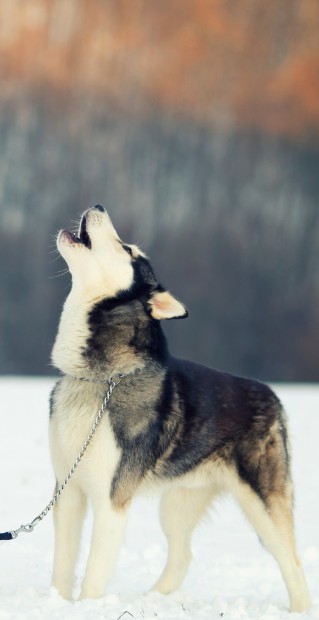
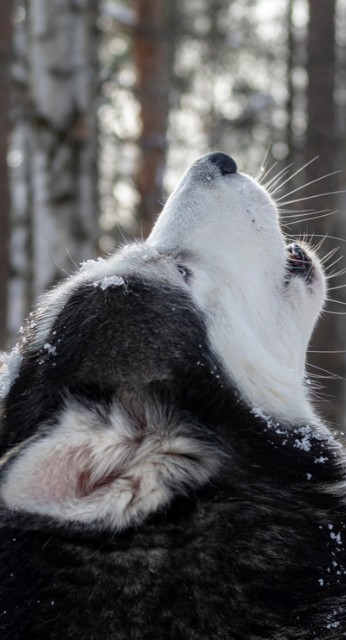

Clarity steadies the system. When your presence provides predictable structure, vocal intensity softens—expression becomes connection rather than overflow.
Cognitive Interpretation of Sound
Auditory Processing and Predictive Patterns
Your Husky’s brain is constantly working to predict, interpret, and respond to the auditory world around them. This predictive processing helps them make sense of environmental sounds and prepare appropriate responses. Understanding how your dog processes sound provides insight into why certain auditory cues trigger howling more reliably than others.
When your Husky hears a siren, their brain attempts to categorize and predict this sound based on past experiences and genetic templates. The wavering pitch, the sustained duration, the acoustic properties—all of these elements get processed through neural systems that have been shaped by thousands of years of responding to wolf howls and long-distance pack communication. The siren matches enough of these templates that your dog’s brain treats it as a social vocalization requiring participation.
This is not conscious reasoning. Your Husky is not thinking “That sounds like a howl, so I should howl back.” Rather, their auditory processing systems automatically activate vocal response pathways when specific acoustic patterns are detected. It is more like a reflex than a decision, though one that can be modulated through learning and emotional regulation.
🐺 Understanding Husky Howling 🎵
A Complete Guide to Emotional Expression and Displacement Behavior
Phase 1: Genetic Heritage
Understanding the Arctic Ancestry
Why Huskies Howl: The Science
Your Husky’s vocal tendencies are written into their DNA. Thousands of years of Arctic survival shaped their communication patterns, preserving wolf-like howling for long-distance coordination and pack cohesion. This isn’t a behavioral quirk—it’s genetic heritage.
What to Expect
• Lower vocal threshold than most breeds
• Howling in response to sirens, music, and other dogs
• Natural inclination to use voice as primary communication
• High-arousal communication inherited from sled dog ancestors
Working With Genetics
Accept that some howling is natural breed expression. Focus on managing excessive or displacement howling rather than attempting to eliminate all vocalization. Understanding genetic predisposition helps you respond appropriately instead of fighting your dog’s nature.
Phase 2: Decoding the Message
Emotional Expression vs. Displacement Behavior
Genuine Emotional Howling
Loneliness (PANIC/GRIEF system): Separation distress with genuine emotional pain
Joy (SEEKING/PLAY systems): High-pitched, wiggling excitement at reunions
Frustration: Demand-quality howls when desired outcomes are blocked
Displacement Howling Signs
• Occurs during internal conflict (approach vs. avoidance)
• Triggered by overstimulation or environmental chaos
• Emerges during uncertainty or unpredictable situations
• Functions as self-regulation when coping mechanisms are overwhelmed
Pattern Recognition Exercise
Keep a howling journal for two weeks. Track when, where, and what preceded each episode. Notice body language before and after. This reveals whether you’re witnessing emotional expression or displacement, guiding your response strategy.
Phase 3: Sensory Triggers
Understanding Environmental Activation
Primary Auditory Triggers
Emergency sirens activate ancient pack communication pathways. Musical instruments with sustained notes engage predictive processing. Other dogs howling trigger the strongest response—social coordination instincts from wolf heritage. High-pitched frequencies (1000-3000 Hz) most reliably activate vocal response.
High Arousal States
Anticipation before walks, separation anxiety during departures, and environmental chaos significantly increase displacement howling. When arousal is already elevated, small triggers that would normally be manageable overwhelm regulatory capacity. The howl becomes a pressure release valve.
Warning: Chronic Stress
Periodic vocal outbursts without obvious triggers may indicate low-level chronic stress from inconsistent routines, unmet needs, or environmental stressors. This accumulated tension eventually releases through howling even when nothing overtly distressing is happening in the moment.
Phase 4: Pack Communication
Social Logic Behind Vocalization
Emotional Synchronization
Howling serves to align emotional states within the household “pack.” When one dog howls, others join in—creating shared emotional experiences that strengthen social bonds. Your Husky may howl not from personal need, but to invite collective participation and emotional presence.
Distance Management
• Locating: “I am here—where are you?” calls during separation
• Reconnecting: Celebratory howls that close social distance
• Rebalancing: Signals when emotional or physical proximity needs adjustment
NeuroBond Insight
Through the NeuroBond approach, we understand that howling often reflects your dog’s attempt to maintain pack cohesion. Respond to the connection they seek with calm presence rather than high-energy reactions, teaching them that emotional alignment doesn’t require vocal intensity.
Phase 5: Behavioral Patterns
How Howling Becomes Habit
Unintentional Reinforcement Trap
Looking at your dog, talking to them (even saying “quiet”), moving toward them, or providing access when they howl—all reinforce the behavior. Even negative attention is still attention. From your dog’s perspective, howling achieved engagement, making it more likely to repeat.
Intermittent Reinforcement Problem
Sometimes responding to howling, sometimes not, with no clear pattern creates the most persistent behavior. Your Husky learns that persistence eventually works, making howling extremely resistant to extinction. Consistency across all handlers is absolutely essential.
Teaching Alternative Behaviors
Replace howling with calm request behaviors: quiet sitting at the door for outdoor access, gentle nose nudges for attention, settling on a mat during meal prep. Respond immediately to calm alternatives while completely ignoring howling. The contrast teaches which strategy actually works.
Phase 6: Your Emotional State
Leading Through Calm Presence
The Invisible Leash Principle
Your emotional state is your most powerful training tool. When you remain calm, breathing slowly, moving deliberately—you provide an alternative template. Your regulated state becomes the anchor that helps your Husky discover they too can remain calm. The Invisible Leash guides through your grounded presence, not reactive management.
Modeling Calm During Arousal
• Regulate your breathing with slow, deep breaths
• Soften your body and release tension
• Move slowly and deliberately, not urgently
• Maintain neutral facial expressions
• Use low, calm, brief words if speaking
• Pause before responding—create space between their behavior and your action
Presence Over Reaction
Stay aware that howling is occurring without allowing it to shift your state. Continue your activity, maintain calm, wait for quiet, then engage with the calm behavior—never with the howling. This teaches that escalation doesn’t move you, but regulated presence does.
Phase 7: Environmental Structure
Building Predictable Rhythms
Predictable Daily Rhythm
Consistent morning routines, regular exercise windows, predictable feeding schedules, and clear work-rest cycles reduce baseline arousal. When your Husky knows what to expect, their threshold for displacement behaviors increases significantly. Predictability creates security that reduces anxiety-driven howling.
Transition Cues
Build in signals that help your dog prepare for shifts: specific phrases before departures, settling rituals before excitement, clear differentiation between work and play time. These cues help regulate energy as situations change, preventing sudden arousal spikes that trigger howling.
Sound Management
White noise machines mask trigger sounds during problematic times. Position resting areas away from street-facing windows. Use calming music designed for dogs. Control auditory environment strategically while accepting that some triggers are unavoidable and occasional howling is natural.
Phase 8: Balanced Lifestyle
Meeting Fundamental Needs
Physical & Mental Outlets
60-90 minutes daily exercise appropriate for age and health. Mental stimulation through puzzle toys, training sessions, and scent work. Pulling activities that engage working-dog heritage. When fundamental needs are met, displacement howling naturally decreases because internal pressures are addressed through healthier channels.
Social Fulfillment
Regular interaction with appropriate dogs satisfies pack drive. Quality time with family members prevents isolation anxiety. Inclusion in household activities creates sense of belonging. Social connection reduces the loneliness-driven howling that stems from separation distress.
Purposeful Activity
Give your Husky jobs: carrying a backpack on walks, learning new skills, participating in canine sports. Purposeful activity channels energy productively and provides the sense of contribution that working breeds need. A fulfilled Husky has less need for displacement vocalization.
🔍 Howling Types Comparison
Separation Distress Howling
Trigger: Owner departure
Duration: Prolonged, escalating
Body Language: Pacing, whining
Emotional System: PANIC/GRIEF
Response: Gradual desensitization, build security
Excitement/Joy Howling
Trigger: Reunions, anticipation
Duration: Short bursts
Body Language: Wiggling, play bows
Emotional System: SEEKING/PLAY
Response: Calm greetings, manage pre-event arousal
Displacement/Stress Howling
Trigger: Internal conflict, overstimulation
Duration: Variable, unpredictable
Body Language: Mixed signals, tension
Emotional System: Overwhelm
Response: Address underlying stress, increase predictability
Social/Pack Howling
Trigger: Other dogs, group activities
Duration: Synchronized with pack
Body Language: Alert, engaged
Emotional System: Social bonding
Response: Accept as natural, provide appropriate outlets
Trigger-Response Howling
Trigger: Sirens, music, specific sounds
Duration: Matches trigger duration
Body Language: Focused on sound source
Emotional System: Auditory processing
Response: Manage environment, mask triggers selectively
Learned Request Howling
Trigger: Desired outcomes (door, food, attention)
Duration: Persistent until goal achieved
Body Language: Demanding, expectant
Emotional System: Instrumental behavior
Response: Teach calm alternatives, ignore howling completely
⚡ Quick Reference: Response Protocol
When Your Husky Howls:
1️⃣ Assess Context: Emotional expression, displacement, or learned behavior?
2️⃣ Regulate Yourself: Slow breathing, calm body, neutral energy
3️⃣ No Reinforcement: No eye contact, words, or movement toward them
4️⃣ Wait for Calm: Engage only when quiet behavior emerges
5️⃣ Address Root Cause: Unmet needs, chronic stress, or environmental triggers
Remember: Your calm presence teaches more than reactive corrections ever will.
🧡 The Zoeta Dogsoul Perspective
Understanding your Husky’s howling through the NeuroBond lens means seeing beyond noise to the emotional and relational dynamics beneath. When you embody the Invisible Leash—leading through calm presence rather than reactive management—you create the conditions where regulated behavior naturally emerges. Each howling episode becomes an opportunity to strengthen Soul Recall, building emotional memories where your dog learns that calm connection is always available, that separation is temporary, and that their voice is heard without needing to escalate.
This is not about silencing your Husky’s heritage. It’s about honoring who they are while gently guiding them toward the balance where both of you can thrive. That intersection of science and soul, structure and compassion, acceptance and growth—that’s where true transformation lives. Your Husky’s howl is not a problem to fix but a language to understand, a bridge to deeper connection, and an invitation to lead with the calm, grounded presence that makes all the difference.
© Zoeta Dogsoul – Where neuroscience meets soul in dog training
Frequency-Specific Responses
Not all sounds trigger howling equally. You have probably noticed that your Husky responds to some pitches and frequencies but ignores others entirely. High-pitched, sustained tones tend to be the most powerful triggers because they most closely approximate the acoustic properties of wolf howls and other canine vocalizations.
Sound characteristics most likely to trigger howling:
- High-pitched sustained tones: 1000-3000 Hz range, similar to canine vocal frequencies
- Wavering or oscillating pitches: Mimicking the natural modulation of wolf howls
- Sustained duration: Sounds lasting 3+ seconds activate response mechanisms
- Clear harmonic structure: Musical notes and overtones that create pattern recognition
- Rising or falling contours: Pitch changes that signal emotional communication
- Rhythmic repetition: Patterns that invite synchronization and participation
Lower frequency sounds, sudden sharp noises, or irregular acoustic patterns typically do not trigger howling because they do not match the genetic templates for social vocalization. Your Husky’s brain categorizes them differently, as environmental noise rather than as communication requiring response.
This frequency specificity means you can sometimes avoid triggering howling by controlling the acoustic environment. White noise machines, for example, provide continuous sound without the specific frequency patterns that activate vocal response. Calming music designed for dogs typically avoids the high-pitched sustained tones that would trigger howling while still masking potentially distressing environmental sounds.
Mimicking and Synchronization
When your Husky howls along with sirens, music, or singing, they are engaging in a form of vocal mimicry and rhythmic synchronization. Their brain detects the pattern, predicts its continuation, and produces vocalizations that align with what they hear. This synchronization behavior has deep evolutionary roots in pack coordination—wolves who could vocally synchronize were better at maintaining cohesion and coordinating group activities.
Your Husky is not trying to annoy you when they howl along with your favorite song. They are doing what their genetics encourage them to do when they detect structured, sustained sound patterns that resemble social vocalization. They are attempting to participate, to synchronize, to be part of the acoustic moment they perceive as communal.
Understanding this changes how you respond. Rather than viewing it as misbehavior, you recognize it as your dog engaging their natural communication systems in response to auditory input that activates genetic templates for social participation.
Sensory Dominance and Rapid Escalation
Huskies often show auditory sensory dominance, meaning sound is the primary sense through which they interpret their environment and make behavioral decisions. This dominance contributes to how rapidly a single auditory trigger can escalate them from calm to full vocalization within seconds.
When an auditory trigger hits, it does not just create a mild inclination to vocalize. It can flood your Husky’s nervous system with activation, triggering a cascade of arousal that manifests in howling before you even realize what happened. This rapid escalation is part of why managing vocal behavior in Huskies requires proactive environmental control and arousal regulation rather than just reactive corrections after howling begins.
Early warning signs of arousal escalation:
- Head orientation toward sound source with intense focus
- Ears perked fully forward in alert position
- Body tension or stillness as they process the auditory input
- Slight mouth opening or jaw tension
- Increased breathing rate or panting
- Whining or small vocalizations before full howling
- Tail position shift from relaxed to alert or excited
Once your Husky is in full howl, their arousal level is already peaked, and trying to interrupt or suppress it at that point often amplifies rather than reduces the behavior. Effective management means recognizing the early signs of auditory attention and redirecting before escalation completes. 🧠
Learning, Reinforcement, and Behavioral Shaping
How Unintentional Reinforcement Builds Habits
Most howling problems in Huskies develop not because owners deliberately encourage the behavior, but because they accidentally reinforce it through well-meaning responses. Your Husky howls, you react, and from your dog’s perspective, the howl achieved something—it created change in their environment, it engaged your attention, it produced movement or interaction.
Attention as Reinforcement: Even negative attention—scolding, saying “No,” telling your Husky to be quiet—is still attention, and for a dog seeking engagement, any attention reinforces the behavior that produced it. You might feel like you are punishing howling by reacting negatively, but your Husky experiences it as “When I howl, my human focuses on me, talks to me, looks at me.”
Relief as Reinforcement: Sometimes owners respond to howling by giving in to what they believe the dog wants. Your Husky howls at the door, and you let them out. They howl during dinner preparation, and you give them a small treat to quiet them. Each time this happens, you are teaching your dog that howling is an effective request behavior. The relief of having their perceived need met reinforces the vocalization that preceded it.
Laughter as Reinforcement: When your Husky engages in particularly theatrical or dramatic howling, the natural human response is often laughter. This is powerful social reinforcement. Your dog learns that certain types of vocalizations create positive emotional engagement from you, which encourages them to repeat and even embellish those vocalizations.
The challenge is that these reinforcement patterns are often invisible to us until the behavior is already well-established. Breaking the cycle requires consciously changing your response patterns and recognizing what you are teaching your Husky through your reactions.
Inconsistent Handler Responses
Perhaps nothing strengthens persistent howling more effectively than inconsistency across handlers or contexts. When your Husky cannot predict what will happen after they howl, when sometimes it works and sometimes it does not with no discernible pattern they can learn, they persist in the behavior because the occasional success makes it worth continuing.
If one family member responds to howling while another ignores it, your Husky learns that the behavior has value—they just need to try at the right time or with the right person. If you respond to howling when you are in a good mood but ignore it when you are busy, your dog cannot learn a clear rule about whether howling is effective communication or not.
This inconsistency keeps hope alive. Your Husky continues howling because it might work this time, and behavioral science tells us that intermittent reinforcement creates the most resistant-to-extinction behaviors. You cannot train your dog out of howling if your own responses are unpredictable.
Effective management requires household-wide consistency. Everyone must agree on how to respond to howling, and that response must be the same regardless of time of day, mood, or situational factors. Only then can your Husky learn clear rules about which behaviors actually produce the outcomes they seek.
Teaching Alternative Request Behaviors
If your Husky has learned to use howling as a request behavior—for attention, for access to outdoors, for food, for play—you cannot simply eliminate it without providing an alternative. Dogs need ways to communicate their needs to you, and if you suppress howling without teaching a replacement behavior, you will likely see the behavior re-emerge or transform into different problem behaviors.
Teaching Quiet Requests: Train specific, calm behaviors that reliably produce the outcomes your Husky currently seeks through howling. For outdoor access, teach them to sit quietly at the door. For attention, teach a gentle nose nudge or bringing a toy. For food, teach a calm settle on their bed during meal preparation.
Alternative behaviors to teach as replacements for howling:
- For outdoor access: Sitting or lying calmly at the door
- For attention: Gentle nose nudge, paw touch, or bringing a toy
- For food: Settling on a designated mat or bed during meal prep
- For play: Bringing a specific toy or performing a trained “play bow”
- For comfort: Going to their bed or designated comfort spot
- For greeting: Sitting for hello instead of vocal celebration
- For water/resources: Ringing a bell, touching a target, or quiet waiting
Differential Reinforcement: This means you respond immediately and reliably to the calm alternative behaviors while completely ignoring the howling. Your Husky learns that quiet sitting at the door gets the door opened within seconds, while howling produces no result. The contrast teaches them which communication strategy actually works.
Patience During Transition: When you first change your response pattern, your Husky’s howling will likely increase temporarily. This is called an extinction burst—the behavior gets worse before it gets better because your dog is trying harder to make the old strategy work. If you give in during this phase, you teach them that persistent, intense howling is what it takes to get results. Consistency through this difficult period is essential.
The Role of Soul Recall in Shaping Connection
The concept of Soul Recall speaks to the deep emotional memory and intuitive response that develops in a trusting human-dog relationship. When applied to vocal behavior, it recognizes that your Husky’s howling is often tied to emotional memory—associations between situations, emotional states, and outcomes that have been built over time.
If your Husky learned early that howling during your departures sometimes prevented you from leaving, or if howling during your absence seemed to make you return faster, those emotional memories persist. They create an intuitive response pattern where separation triggers howling not just from current distress but from the remembered association between vocalization and your return.
Reshaping these patterns requires building new emotional memories. You create experiences where your Husky learns that calm, quiet behavior during your preparations to leave predicts your reliable return. You practice departures and returns that do not involve high arousal or dramatic reunions. Over time, new emotional memories form, and the Soul Recall shifts from “separation means I must howl to bring them back” to “separation is temporary and predictable, and calm waiting brings reunion.
This is not quick conditioning. It is deep relational learning that happens through consistent, repeated experiences that build trust and new emotional associations. But it is also the most durable form of behavioral change because it works with your dog’s emotional and memory systems rather than against them. 🧡
The NeuroBond Approach to Vocal Arousal
Calm Emotional Modeling
Your emotional state is your most powerful tool for influencing your Husky’s vocal behavior. Through the NeuroBond understanding of emotional connection and trust-based training, we recognize that dogs are exquisitely sensitive to human emotional energy. Your Husky does not just observe your behavior—they feel your internal state and adjust their own arousal accordingly.
When your Husky begins to escalate toward howling, your response in that moment teaches them whether escalation is necessary or whether calm is possible. If you become anxious, frustrated, or reactive, you confirm to your dog that the situation is indeed worthy of high arousal. Your emotional state validates their escalation. But when you remain calm, breathing slowly, moving deliberately, with your energy grounded and steady, you provide an alternative template.
How to model calm during vocal arousal:
- Regulate your breathing: Slow, deep breaths signal safety to your nervous system and your dog’s
- Soften your body: Release tension in shoulders, jaw, and hands
- Lower your energy: Move slowly and deliberately rather than quickly or urgently
- Neutral facial expression: Avoid tense or worried expressions that signal concern
- Steady voice tone: If you must speak, use low, calm, brief words
- Grounded stance: Plant your feet, feel the ground, embody stability
- Pause before responding: Create space between their behavior and your action
This calm emotional modeling does not mean ignoring your dog’s needs or suppressing their emotional expression. It means that your regulated state becomes the anchor that helps them find regulation. You show them through your embodied calm that the situation does not require vocal intensity, that connection can exist without escalation, that you are present and aware without being reactive.
Dogs naturally look to attachment figures for emotional guidance. When their human models calm in the face of triggers that normally produce howling, they begin to internalize that calm as a possible response. This happens over time, through repeated experiences where your regulated state helps them discover they can also remain regulated.
Predictable Relational Pacing
Huskies thrive with predictability. When they know what to expect, when transitions are clear, when their daily rhythm is consistent, their baseline arousal stays lower and their threshold for displacement behaviors like howling increases. Predictable relational pacing means structuring your interactions and your shared routines in ways that reduce uncertainty and build a sense of security.
Consistent Daily Rhythm: Your Husky should be able to anticipate when walks happen, when meals arrive, when you leave and return, when it is time to rest. This does not mean rigid scheduling down to the minute, but it does mean patterns they can learn and trust. Predictability reduces the anxiety and arousal that contributes to excessive vocalization.
Elements of a predictable daily rhythm:
- Morning routine: Consistent wake time, bathroom break, and breakfast sequence
- Exercise windows: Regular walk or activity times that your dog can anticipate
- Work/rest cycles: Clear differentiation between active and calm periods
- Feeding schedule: Meals at roughly the same times each day
- Social time: Predictable periods of interaction and play
- Alone time preparation: Consistent pre-departure routines that signal your leaving
- Evening wind-down: Calming activities before bedtime to signal rest
Clear Transition Cues: Rather than sudden changes—you are sitting on the couch one moment and walking out the door the next—build in transition cues that help your Husky prepare for shifts. A specific phrase before departures, a settling ritual before excitement, clear signals that differentiate work time from play time. These cues help your dog regulate their energy as situations shift.
Low-Verbal Leadership: Words can create arousal, especially when delivered with emotional intensity or in high volumes. Low-verbal leadership means you communicate primarily through your energy, your body language, your calm presence. You use fewer words, delivered in neutral tones, and you allow your state to guide your dog rather than trying to verbally manage their behavior. This reduces overall household arousal and teaches your Husky to orient to your energy rather than to verbal commands that might increase their vocal response.
Through predictable relational pacing, you create a stable emotional environment where your Husky’s nervous system can rest at lower baseline arousal levels. This makes them less reactive to triggers and less likely to escalate into displacement howling when small unpredictabilities do occur.
Presence Over Reaction
The distinction between presence and reaction is central to managing vocal arousal in Huskies. Reaction means responding to your dog’s behavior with urgency, emotion, or immediate behavioral intervention. Presence means remaining aware, calm, and connected without needing to change what is happening.
When your Husky howls, your reactive options include rushing to them, verbally correcting them, trying to distract them, or becoming emotionally activated yourself. All of these reactions increase the importance and intensity of the howling episode in your dog’s experience. You have made the howl something that moves you, something significant enough to warrant immediate response.
Reactive responses that amplify howling:
- Rushing to your dog immediately when howling begins
- Verbal corrections with emotional intensity (“No! Quiet! Stop!”)
- Attempting to physically interrupt or restrain
- Providing treats or toys to distract from howling
- Opening doors or providing access to end the behavior
- Making sustained eye contact during vocalization
- Emotional activation (frustration, anxiety, anger)
Presence-based responses that reduce howling:
- Remaining in your current activity without rushing
- Breathing slowly and maintaining your own calm state
- Waiting for a pause or decrease in vocalization
- Acknowledging calm behavior rather than vocal behavior
- Providing attention only when quiet is achieved
- Maintaining neutral body language and energy
- Responding to the need, not the noise
Presence instead means you remain aware that your Husky is howling, you understand what might be triggering it, but you do not allow it to shift your own state or pull you into reactive management. You continue what you were doing, you maintain your calm, you wait for a gap or decrease in the vocalization, and only then do you engage with your dog—and you engage with the calm behavior, not with the howling.
This teaches your Husky that howling does not create change, but calm presence does. It removes the reinforcement value of vocalization while strengthening the value of regulated behavior. Over time, your dog learns that your presence and attention are always available, but they are accessed through calm, not through escalation.
The Invisible Leash at work here is subtle but profound. You are guiding your dog’s behavior not through management or control, but through the steady, grounded quality of your own being. Your presence becomes the guide that shows them where regulation and connection actually live—in calm shared space, not in vocal intensity. 🐾
Theoretical Frameworks and Integration
Affective Neuroscience and Primary Emotional Systems
Understanding howling through the lens of affective neuroscience helps us recognize which primary emotional systems are activated in different howling contexts. These emotional systems—SEEKING, PANIC/GRIEF, PLAY, FEAR, RAGE—exist in all mammals and drive core survival and social behaviors.
Primary emotional systems and their howling expressions:
- SEEKING system: Excited howling during anticipation of walks, meals, or play; forward-oriented exploration vocalizations
- PANIC/GRIEF system: Separation anxiety howls; distress calls when isolated or abandoned
- PLAY system: Joyful, social howling during interactive play or celebratory moments
- FEAR system: High-pitched, urgent howls in response to perceived threats or scary stimuli
- RAGE/Frustration system: Demanding, intense howls when blocked from desired outcomes
- CARE system: Softer, nurturing vocalizations when bonding or seeking comfort
When your Husky howls from loneliness during your absence, the PANIC/GRIEF system is active. This is the same neural system that activates when infant mammals are separated from caregivers, producing distress vocalizations designed to promote reunion. The howling is not manipulative—it is genuine emotional pain processed through ancient mammalian neural circuits.
When your Husky howls during play or in anticipation of positive events, the PLAY and SEEKING systems are active. These produce positive arousal, excitement, and the drive to engage with the environment and social partners. The howling in these contexts expresses genuine positive emotion and social engagement.
Understanding which emotional system is active helps you respond appropriately. PANIC/GRIEF howling needs comfort, gradual desensitization, and building security. SEEKING and PLAY howling needs appropriate outlets, impulse control training, and calm rituals before high-arousal activities. Treating all howling the same ignores the different emotional foundations producing the behavior.
Displacement Behavior Theory
Displacement behaviors emerge when an animal experiences conflicting motivations or unresolved tension. The behavior serves to release internal pressure when no clear behavioral path resolves the conflict. In Huskies, howling often functions as displacement when they are torn between conflicting desires or when environmental demands exceed their coping capacity.
Common displacement howling scenarios:
- Approach-avoidance conflict: Wanting to greet a dog but feeling uncertain or fearful
- Resource conflict: Desiring something that is visible but inaccessible
- Motivational deadlock: Equal competing drives with no clear priority (rest vs. activity)
- Decision paralysis: Multiple behavioral options without clear choice
- Emotional overwhelm: Arousal exceeding the dog’s processing capacity
- Redirected tension: Frustration from one source expressed vocally
- Transition difficulty: Uncertainty during shifts between activities or environments
A Husky who wants to approach something but feels hesitant, who wants attention but their person is unavailable, who is aroused but has no appropriate outlet—these situations create internal conflict that displacement howling can temporarily relieve. The vocalization does not solve the underlying conflict, but it provides a behavioral release for the accumulated tension.
Recognizing displacement howling helps you look deeper than the immediate trigger. You begin asking not just “What made my dog howl?” but “What conflicting pressures or unmet needs are creating tension that howling temporarily releases?” This shifts your approach from suppressing the symptom to addressing the underlying imbalance in your dog’s emotional or physical state.
Canine Communication Ethology
The ethological perspective reminds us that howling in Huskies is not learned behavior—it is genetically encoded communication with deep evolutionary roots. Understanding the structure and function of wolf howling illuminates what your Husky is attempting to accomplish through their vocalizations.
Wolf howling functions retained in modern Huskies:
- Long-distance coordination: Maintaining contact when pack members are separated across territory
- Social cohesion maintenance: Reinforcing bonds and group identity through collective vocalization
- Territory marking: Auditory signals that communicate presence and boundaries
- Pack assembly: Calling dispersed members together for hunting or travel
- Emotional bonding: Strengthening relationships through synchronized vocal activity
- Location signaling: Broadcasting position to facilitate reunion
- Group arousal: Synchronizing energy and readiness for collective activities
Wolves howl to coordinate pack movements across distances, to maintain social cohesion during separation, to mark territory, and to strengthen emotional bonds within the group. These functions remain relevant for your Husky even in a modern home. They are still attempting to coordinate with their pack (your family), maintain social cohesion when separated (howling during your absence), and strengthen emotional bonds through shared vocal activity.
Ethology teaches us to respect and work with innate behaviors rather than trying to completely eliminate them. Your Husky’s howling is not a behavioral flaw—it is an intrinsic part of their communication system. The goal is not to silence them entirely but to help them learn when and how their vocalizations are appropriate and to reduce the displacement howling that emerges from arousal or stress rather than genuine communication needs.
Predictive Processing Model
The predictive processing model suggests that your Husky’s brain is constantly generating predictions about sensory input and preparing appropriate responses. When they hear a siren or music, their auditory system attempts to predict the pattern, categorize it based on past experience and genetic templates, and prepare a response that matches their prediction.
If the prediction is “this is a social vocalization,” their brain automatically activates vocal response pathways. This is not a conscious decision but an automatic process happening below awareness. Understanding this helps explain why howling in response to certain sounds feels reflexive—your Husky is not choosing to howl but rather their predictive processing system is automatically activating vocal circuits when specific acoustic patterns are detected.
This model also explains why some Huskies learn to ignore triggers while others remain highly reactive. Through repeated experience where predicted outcomes do not materialize—sirens pass but no pack interaction follows—some dogs update their predictions and their automatic vocal response diminishes. Others maintain the association because the emotional arousal produced by the trigger continues to feel significant and unresolved.
NeuroBond Framework in Practice
The NeuroBond model brings these theoretical perspectives together into practical application. It recognizes that your relationship with your Husky, the emotional clarity you provide, and the calm structured environment you create are the primary tools for managing vocal arousal and displacement behaviors.
Rather than focusing on obedience commands or behavioral suppression, NeuroBond emphasizes building the emotional foundation where regulated behavior naturally emerges. You address howling not by punishing it but by creating the conditions where your Husky feels secure enough, understands their environment clearly enough, and trusts your presence deeply enough that excessive vocalization becomes unnecessary.
This approach respects your Husky’s genetic heritage and emotional needs while gently shaping which expressions of those needs are appropriate in your shared life. It is training that works with your dog’s nature rather than against it, building connection and understanding rather than compliance through suppression.
That balance between honoring who your Husky is and guiding them toward calm, appropriate behavior—that is the essence of Zoeta Dogsoul. 🧡
Practical Applications for Your Howling Husky
Reading Your Individual Dog
Every Husky is unique in their vocal patterns, triggers, and underlying motivations for howling. Becoming a skilled reader of your individual dog means observing patterns over time and learning the subtle differences between their various vocalizations.
Start keeping a simple howling journal for two weeks. Note when howling occurs, what preceded it, how long it lasted, what else was happening in the environment, and how your dog’s overall demeanor shifted before and after. Patterns will emerge that reveal whether your Husky howls more during transitions, in response to specific sounds, when arousal is high, during separation, or in displacement when they seem uncertain.
You will begin to distinguish your dog’s emotional expression howls from their displacement howls. You will recognize which triggers are most powerful and which situations create the internal conflict that drives displacement vocalization. This individualized understanding is far more valuable than generic advice because it is tailored to your dog’s specific needs and patterns.
Managing Environmental Triggers
Once you understand your Husky’s primary triggers, you can make thoughtful environmental adjustments that reduce unnecessary howling while accepting that some vocalization is simply part of living with a northern breed.
Sound Management: If sirens regularly pass your home, white noise machines or calming music can mask these triggers during times when howling is most problematic, like during your absence or late at night. Window barriers or moving your dog’s resting area away from street-facing windows can reduce auditory exposure.
Environmental management strategies:
- White noise machines: Mask trigger sounds with consistent, neutral auditory input
- Calming music: Dog-specific music or classical selections without high-pitched instruments
- Window barriers: Visual and sound barriers to reduce street-facing stimuli
- Strategic space use: Position resting areas away from high-trigger zones
- Sound-dampening materials: Curtains, rugs, and soft furnishings that absorb sound
- Designated quiet zones: Low-stimulation areas where your Husky can decompress
- Controlled exposure times: Limit trigger exposure during peak howling periods
Routine Predictability: Build consistent daily patterns so your Husky knows what to expect. The more predictable their day, the lower their baseline arousal, and the less likely they are to engage in displacement howling during transitions or uncertain moments.
Arousal Management Before Known Triggers: If you know your return home triggers excited howling, manage the arousal buildup by entering calmly, not making immediate eye contact, waiting for calm before engaging, and creating a quiet reunion ritual rather than a high-energy greeting. This teaches your Husky that your presence does not require vocal intensity.
Pre-trigger arousal management techniques:
- Calm entries: Enter your home slowly without fanfare or high energy
- Delayed greetings: Wait 5-10 minutes before acknowledging your dog
- Ignore initial excitement: Turn away from jumping, howling, or overactive greeting
- Engage only with calm: Provide attention only when your dog settles
- Low-key reunions: Speak quietly if at all, avoid exciting verbal greetings
- Consistent ritual: Create a predictable, calm reunion sequence they learn to expect
- Energy matching: If your dog must be excited, require calm periods between bursts
Building Alternative Communication Skills
Help your Husky learn that calm behaviors produce the outcomes they seek more reliably than howling. This requires patience, consistency, and clear reinforcement of alternative behaviors.
Teach a “Quiet” Marker: Rather than commanding silence, teach your dog that specific calm behaviors earn what they want. A sit, a look at you, bringing a toy, settling on their bed—these can all become alternative communication strategies that replace howling as request behaviors.
Principles of effective reinforcement timing:
- Immediate reward: Reinforce calm behavior within 1-2 seconds of occurrence
- Mark the moment: Use a marker word or clicker to identify the exact behavior you want
- Consistent criteria: Same behavior always produces same outcome
- High value rewards: Use rewards your Husky truly values for calm behavior
- Variable schedule: Once learned, reinforce intermittently to maintain behavior
- Catch quiet moments: Proactively reward calmness before howling begins
- Ignore competing behavior: Complete silence for howling, immediate response for calm
Reinforce Calm Immediately: When your Husky is quiet in a situation where they would normally howl, immediately acknowledge and reinforce that calm. You are teaching them that this state is what produces connection, attention, and desired outcomes.
Ignore the Howling, Reward the Quiet: Complete consistency is essential. Every family member must ignore howling completely while immediately responding to calm behavior. This clear contrast teaches your dog which strategy actually works.
Supporting Your Husky Through Change
If your Husky’s howling has been unintentionally reinforced for months or years, changing these patterns will take time and patience. Your dog learned that howling works, and you are now teaching them a different rule. This transition period requires compassion for both of you.
Expect an extinction burst when you first change your response patterns. Your Husky will howl louder, longer, and more intensely, trying to make the old strategy work. If you remain consistent through this phase, the behavior will diminish. If you give in during the burst, you teach them that extreme persistence is what it takes to get results.
Supporting your dog during behavioral transition:
- Expect temporary increase: Howling may worsen before improving (extinction burst)
- Maintain consistency: All family members must follow the same protocol
- Document progress: Track duration and intensity to see gradual improvements
- Provide extra support: Increase exercise, enrichment, and calm bonding time
- Celebrate small wins: Notice and acknowledge any reduction in howling
- Patience with setbacks: Regression is normal during learning
- Professional support: Consider a qualified trainer if progress stalls
Celebrate small improvements. Notice when your Husky’s howling decreases in duration or intensity. Acknowledge the moments when they choose calm over vocalization. Build on these small wins rather than expecting perfect silence immediately.
Remember that some howling is simply part of the Husky experience. Your goal is not to eliminate their voice entirely but to help them find balance—to express their genuine emotional needs appropriately while reducing the displacement and learned howling that does not serve either of you. 🧠
Living Well With a Vocal Breed
Accepting Your Husky’s Nature
Part of loving a Husky means accepting that they will never be a silent breed. Their vocal expressiveness is woven into their genetic fabric, and attempting to completely suppress it would require fighting against their fundamental nature. Instead, the goal is thoughtful management—reducing excessive, displacement, or learned howling while accepting that some vocalization is simply how your dog experiences and communicates with their world.
When you chose a Husky, you chose a breed that talks. They will comment on sirens, they will voice their opinions about your dinner preparations, they will sing along with certain sounds, they will express their loneliness when alone, and they will celebrate your return home with vocal enthusiasm. Learning to distinguish between howling that needs intervention and howling that is simply your dog being themselves brings peace to your shared life.
Howling contexts to accept as normal breed expression:
- Brief responses to sirens or emergency vehicles
- Excited greetings when you return home (if short-lived)
- Participation in family sing-alongs or music
- Social howling with other dogs during play
- Occasional commentary on neighborhood activities
- Celebration of anticipated activities (walks, meals)
Howling patterns that benefit from intervention:
- Extended duration howling (10+ minutes continuously)
- Separation anxiety that escalates when alone
- Reactive howling at every environmental sound
- Demand howling that controls household decisions
- Nighttime howling that disrupts sleep
- Aggression-linked howling during conflicts
- Distress howling indicating pain or illness
The Gift of Deep Connection
Your Husky’s howling, when understood and appropriately supported, is an invitation into deeper connection. It asks you to become more attentive to their emotional states, more aware of what creates arousal or stress, more consistent in your responses, more present in your shared moments. This level of attention and awareness strengthens your bond and makes you a more intuitive, responsive guardian.
Through the NeuroBond approach, you learn to read beyond the behavior to the emotional and relational dynamics beneath it. You discover that managing howling is not about control but about creating the conditions where calm naturally emerges from security, understanding, and trust. This is relationship-based training at its deepest level—where behavior change follows naturally from relational clarity and emotional connection.
Building a Balanced Life Together
Your Husky needs appropriate outlets for their energy, their intelligence, and their social drive. When these needs are met through adequate exercise, mental stimulation, social interaction, and purposeful activity, displacement howling naturally decreases because the internal pressures that drive it are being addressed through healthier channels.
Physical Exercise: A tired Husky is generally a quieter Husky. Ensure your dog receives appropriate physical activity for their age, health, and individual energy level. This does not mean exhausting them but rather providing regular opportunities to engage their working-dog heritage through running, hiking, or pulling activities.
Essential components of a balanced Husky lifestyle:
Physical Needs:
- 60-90 minutes daily exercise minimum (age and health dependent)
- Varied terrain and activities to maintain interest
- Off-leash running in safe, enclosed areas when possible
- Pulling activities (skijoring, bikejoring, carting) to engage breed heritage
- Swimming or water play for low-impact conditioning
Mental Stimulation:
- Puzzle toys and food-dispensing challenges
- Regular training sessions learning new skills
- Scent work or nose games
- Problem-solving activities and novel experiences
- Rotation of toys and activities to prevent habituation
Social Fulfillment:
- Regular play dates with appropriate canine friends
- Quality one-on-one time with family members
- Inclusion in household activities and family life
- Appropriate greeting opportunities with people
- Multi-dog households for constant companionship (when appropriate)
Purposeful Activity:
- “Jobs” like carrying a backpack on walks
- Participation in canine sports (agility, obedience, rally)
- Advanced training for tricks or complex behaviors
- Structured games with rules and objectives
- Contributing to household routines (helping bring items, etc.)
Social Fulfillment: Huskies are deeply social. Regular interaction with appropriate dogs, quality time with family members, and feeling included in household activities satisfies their pack drive and reduces the social anxiety that can manifest as howling.
Purposeful Activity: Giving your Husky jobs—carrying a backpack on walks, learning new skills, participating in activities like skijoring or canine sports—engages their working heritage and provides a sense of purpose that channels their energy productively.
When your Husky’s fundamental needs are met, when they understand what to expect, when they trust your calm presence, and when they have appropriate outlets for their natural drives, excessive howling naturally diminishes. You are not suppressing their voice—you are creating a life where they have less need to use it for displacement or anxiety-driven communication.
Finding Your Own Calm
Perhaps the most challenging and most important aspect of living well with a vocal breed is finding and maintaining your own calm. Your Husky’s howling can be triggering, especially when it happens at inconvenient times or persists despite your efforts. Your frustration, anxiety, or reactivity in these moments becomes part of the cycle that maintains or even amplifies the behavior.
The Invisible Leash concept asks you to lead through your own regulated state rather than through reactive management. This means doing your own work around emotional regulation, building your capacity to remain calm when your dog is not, and trusting the process of gradual change rather than expecting immediate results.
Practices for maintaining your own calm:
- Breathing exercises: Box breathing (4 counts in, hold 4, out 4, hold 4)
- Body awareness: Regular check-ins with tension in shoulders, jaw, hands
- Mindful pauses: Creating space between stimulus and response
- Realistic expectations: Accepting that change takes time and setbacks happen
- Self-compassion: Being kind to yourself when you respond reactively
- Support systems: Talking with other Husky owners who understand the challenges
- Stress management: Adequate sleep, exercise, and outlets for your own stress
- Perspective maintenance: Remembering your dog is doing their best with the tools they have
When you feel your own arousal rising in response to your Husky’s howling, pause. Breathe slowly. Ground yourself in your body. Remind yourself that this is communication from a dog doing their best to navigate a world they were not designed for, using tools their genetics gave them. Your calm in this moment teaches them more than any command or correction could.
This is not about perfection. You will have moments of frustration, times when you respond reactively, days when consistency feels impossible. What matters is the overall pattern—are you moving toward greater calm and consistency over time? Are you learning to see your Husky’s howling as information rather than as problem behavior? Are you building the relationship and environment where both of you can find more peace?
That journey toward deeper understanding and connection, that willingness to look at behavior as communication and to address underlying needs rather than just managing symptoms—that is the heart of Zoeta Dogsoul. That is how we honor both the science of behavior and the soul of the bond we share with our dogs.
Your Husky’s howl is their voice, their heritage, their way of reaching across distance and difference to connect with you. When you learn to hear what they are really saying beneath the sound, when you respond with wisdom rather than reaction, when you create the calm, structured, loving environment where they can thrive, something beautiful emerges.
Key takeaways for living well with a howling Husky:
- Howling is genetic expression, not behavioral defiance or manipulation
- Distinguish between emotional expression and displacement behavior through pattern observation
- Environmental triggers can be managed without eliminating all vocalization
- Your own emotional state is the most powerful training tool you possess
- Consistency across all handlers is essential for behavioral change
- Alternative communication behaviors must be taught, not just expected
- Chronic stress manifests in periodic howling that seems unprovoked
- Social functions of howling deserve acknowledgment and appropriate outlets
- Meeting fundamental needs reduces displacement behaviors naturally
- Accepting breed nature while managing excess creates harmony
- Progress is gradual—celebrate small improvements
- Your calm presence teaches more than reactive corrections
Not silence, necessarily, but something more valuable—understanding. And in that understanding, both of you find your way to a richer, more connected life together. 🧡










