
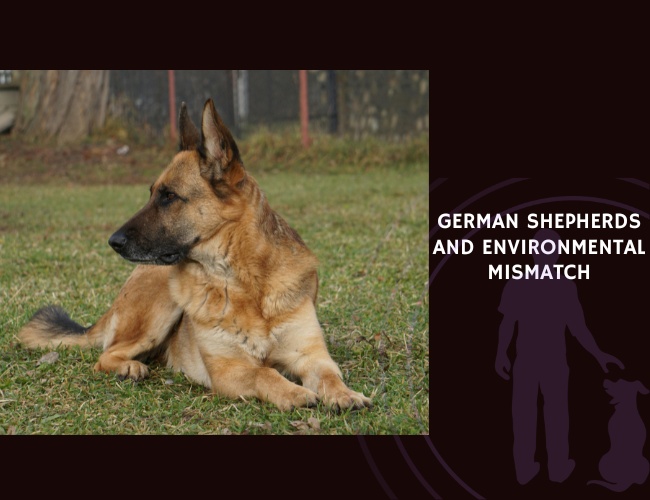
When you watch your German Shepherd scanning the neighborhood with that characteristic intensity, ears forward and body alert, you might wonder: is this vigilance natural, or is something else at play? The truth is, your German Shepherd’s behavior isn’t just about personality—it’s about how their remarkable brain interacts with the world you’ve created for them. Let us guide you through understanding what your loyal companion truly needs to thrive in modern life.
The Working Mind: What Your German Shepherd Was Designed to Do
A Heritage Built for Purpose
Your German Shepherd carries within them a legacy spanning over a century. In the late 19th century, these dogs weren’t bred to be companions—they were engineered to be working partners. Every aspect of their nervous system was carefully selected for specific tasks: herding flocks across vast landscapes, guarding properties through long nights, and eventually serving alongside military and police forces worldwide.
This means your furry friend’s brain operates differently than many other breeds. Their nervous system is optimized for:
- Continuous environmental monitoring: The ability to track multiple stimuli simultaneously
- Rapid threat assessment: Quick evaluation of environmental changes and appropriate responses
- Sustained focus on assigned duties: Maintaining attention over extended periods without distraction
- Deep cooperation with their human handler: Strong orientation toward human direction and guidance
When you notice your German Shepherd tracking sounds you can barely hear or responding to movement you didn’t even see, that’s not anxiety—that’s their working heritage expressing itself through every fiber of their being.
The Vigilance System: Always On Duty
Did you know that your German Shepherd’s baseline arousal state is naturally higher than most companion breeds? Research on working dogs suggests that generations of selective breeding created:
- Enhanced sensory processing: Increased attention to environmental changes most dogs would miss entirely
- Lower threshold for alertness: Quicker activation of vigilance systems, shifting into “ready mode” faster
- Sustained attention capacity: Ability to maintain focus over extended periods
- Pattern recognition bias: Tendency to identify and respond to environmental regularities and changes
This sustained attention capacity isn’t a flaw—it’s a feature. Your German Shepherd can maintain focus over extended periods, recognizing patterns and changes that keep their environment secure. Through the NeuroBond approach, you begin to understand that this vigilance isn’t something to suppress, but rather something to channel appropriately. Your companion’s brain is constantly asking: “What’s my job? What should I be monitoring? How can I keep my family safe?”
Territory, Structure, and Emotional Safety
Here’s something that might surprise you: your German Shepherd’s need for structure isn’t about being “controlling” or “dominant.” Environmental psychology research demonstrates that clear spatial boundaries contribute significantly to psychological well-being. For your vigilant companion, this translates into deep emotional needs:
- Clear territorial boundaries: Defined spaces with understood rules of engagement
- Role clarity: Understanding their function within your family structure
- Predictable routines: Consistent daily patterns that reduce uncertainty
- Leadership hierarchy: Clear human guidance that removes the decision-making burden
Your dog requires these elements not because they want to challenge you, but because ambiguity forces them to make decisions they’re not equipped to handle alone.
When your German Shepherd knows you’re handling the environmental management, they can finally relax. That’s the essence of what we call the Invisible Leash—the understanding that awareness, not tension, guides your shared path forward.
The Modern World Problem: When Environment and Design Collide
Urban Life: Too Much of Everything
Let’s talk about what your German Shepherd experiences in a typical urban environment. Every walk becomes a sensory assault:
- Traffic sounds from multiple directions
- Crowds of unfamiliar people with unpredictable movements
- Dogs appearing suddenly from around corners
- Construction noise and equipment
- Sirens and emergency vehicles
- Delivery trucks backing up with warning beeps
For your companion’s hyperaware nervous system, this creates excessive stimulation without purpose.
Your dog’s brain is designed to process and respond to environmental changes, but in urban settings, they’re presented with constant novel stimuli with no opportunity to respond appropriately. This creates:
- Continuous activation without resolution: Like trying to solve a hundred puzzles simultaneously
- Accumulation of unprocessed environmental data: New stimuli arrive before previous ones are evaluated
- Building pressure in their nervous system: No completion or closure for their protective drives
- Genuine cognitive overload: Not “difficult behavior” but system overwhelm
Imagine someone keeps adding new puzzles before you can finish any of them. That’s what your German Shepherd experiences. 🧠
The Boredom Paradox: When Nothing Is Wrong, Everything Is Wrong
Here’s where things get counterintuitive: insufficient cognitive engagement can be equally destabilizing for your German Shepherd. You might think a quiet, peaceful home is perfect, but for a brain designed for purposeful work, the absence of meaningful tasks creates its own form of distress.
Without a clear purpose or role, your German Shepherd’s substantial cognitive capacity starts seeking outlets. You might notice:
- Self-created monitoring jobs: Watching the street with increasing intensity
- Rigid self-directed routines: Developing strict patterns around household activities
- Excessive vigilance in absence of assigned duties: Creating work when none is provided
- Frustration from unfulfilled working drive: Emotional distress despite physical comfort
This self-directed vigilance isn’t misbehavior; it’s your dog trying to fulfill their working drive in whatever way they can.
Studies on resilience suggest that the absence of meaningful engagement can be as stressful as excessive demands. Your German Shepherd needs to know their efforts matter, that their vigilance serves a purpose beyond simply existing. When that purpose is missing, frustration builds in ways that purely physical exercise cannot resolve.
Leash-Only Living: The Loss of Natural Distance Management
Pay attention to what happens when you’re walking your German Shepherd on leash and another dog approaches. Notice how your companion’s body language changes—perhaps they stiffen, lean forward, or start vocalizing. Many handlers interpret this as aggression or fear, but something else might be happening.
In natural circumstances, dogs maintain comfortable spatial buffers around themselves. They approach and retreat based on their threat assessment, gradually habituating through controlled exposure while managing their own arousal levels. The leash interferes with this entire system:
- Blocked retreat options: Natural flight distance calculations become impossible
- Inability to create comfortable spatial buffers: Cannot establish the distance their nervous system requires
- Forced proximity beyond comfort threshold: Close encounters with perceived threats
- Learned helplessness regarding environmental control: Experience teaches them they cannot manage situations
Over time, your dog learns a powerful association: leash equals loss of control. The reactivity you see isn’t necessarily about the other dog—it’s compensatory behavior attempting to create distance when their normal tools for distance management have been removed. The Invisible Leash principle reminds us that true control comes from inner calm and spatial clarity, not from tension on a physical leash.
High-Risk Environments: Where Stress Accumulates Fastest
Some environments are particularly challenging for your German Shepherd’s nervous system. Understanding these helps you make better choices:
Dog parks represent one of the most problematic settings:
- Chaotic, unpredictable social dynamics without structure
- No clear rules or authority managing the space
- No opportunity to process interactions before new ones begin
- No escape options when overwhelmed
- Environment where nothing makes sense and everything is random
Shared hallways and elevators:
- Forced proximity with strangers with no escape options
- Confined spaces triggering protective instincts
- Natural distance management systems blocked
Busy streets:
- Overwhelming sensory input with no processing time
- New stimuli arriving before previous evaluation completes
- Continuous assessment demand without breaks
Open-plan homes:
- Unclear territorial boundaries
- Uncertainty about monitoring responsibilities
- No clear “off-duty” zones for rest
Inconsistent routines:
- Unpredictable daily patterns increasing uncertainty
- High-alert status maintained because prediction is impossible
- Constant readiness due to inability to anticipate what comes next
Hyper-Vigilance: When Protection Becomes a Burden
Understanding the Vigilance Continuum
Not all vigilance is problematic. Your German Shepherd should maintain appropriate environmental awareness—that’s part of their breed design. The question is whether this vigilance remains adaptive or has shifted into maladaptive territory.
Normal vigilance looks like appropriate environmental awareness with proportional responses to actual threats:
- Appropriate environmental awareness matching actual threat level
- Proportional responses to genuine concerns
- Ability to disengage after assessment is complete
- Maintained baseline calm between alerts
- True relaxation showing they can fully rest
Your dog assesses situations, responds if necessary, then returns to calm.
Hyper-vigilance manifests as continuous scanning without rest periods. You might notice:
- Continuous scanning without genuine rest periods
- Lowered threshold for threat perception—small stimuli trigger big responses
- Difficulty disengaging from monitoring even when you signal safety
- Elevated baseline arousal state—never fully relaxing even at home
- Inability to achieve deep relaxation in secure environments
Their nervous system stays in “ready mode” constantly.
Chronic hyper-vigilance represents the pathological end of this continuum:
- Inability to relax even in completely safe environments
- Anticipatory anxiety about potential threats that might occur
- Generalized reactivity to benign stimuli (mail carrier, neighborhood dogs, family members)
- Compromised recovery capacity—needing longer to calm after any stimulation
- System-wide dysfunction affecting all aspects of behavior
Your German Shepherd’s nervous system has shifted into permanent alert mode.
Duty-Driven Over-Responsibility: A Critical Distinction
Here’s a perspective that might completely change how you understand your German Shepherd’s behavior. Many dogs labeled as “reactive” aren’t actually fearful—they’re attempting to fulfill perceived protective duties in the absence of clear human leadership.
Fear-based reactivity characteristics:
- Defensive responses to perceived threats
- Avoidance motivation—wanting to escape or withdraw
- Classic stress signals (lip licking, yawning, whale eye)
- Visible relief when threat is removed
- Your dog is saying: “I don’t want to deal with this”
Responsibility-based reactivity characteristics:
- Proactive environmental management
- Control motivation rather than fear
- Alert but not fearful body language—monitoring and managing, not fleeing
- Continued monitoring even after “threat” passes
- Job isn’t finished just because trigger has moved away
- Your dog is saying: “I need to handle this situation”
Through Soul Recall, we recognize how deeply your German Shepherd’s sense of purpose connects to their emotional memory. When they’ve learned that you rely on them for protection, that identity becomes woven into their behavioral responses. They’re not being aggressive—they’re being responsible according to their understanding of their role in your family.
Assessment Questions: Understanding Your Dog’s Motivation
To determine whether your German Shepherd is fearful or duty-driven, ask yourself these questions:
- Does your dog show relief when you take control? If so, they were managing because they thought they had to, not because they wanted to
- Is reactivity reduced with clear leadership signals? Duty-driven dogs immediately relax when they understand you’re handling things
- Does your dog scan for your guidance before responding? This indicates they’re checking whether intervention is their responsibility
- Is the behavior context-dependent, worse when you’re uncertain? Dogs read your emotional state and fill leadership gaps when you seem unsure
- Does your dog show protective positioning rather than avoidance? Placing themselves between you and perceived threats indicates guardianship motivation, not fear
These distinctions reveal whether your German Shepherd needs confidence building or responsibility relief.
Cognitive Load: The Hidden Cost of Constant Alertness
The Depletion Cycle
Your German Shepherd’s continuous environmental monitoring doesn’t just create emotional stress—it depletes crucial cognitive resources. Research on stress and cognitive function demonstrates that sustained vigilance has measurable costs to brain function.
When your companion maintains constant alertness, several systems begin to fail:
- Reduced impulse control capacity: Reacting more quickly and strongly than when well-rested
- Decreased frustration tolerance: Minor irritations become significant triggers
- Impaired learning and memory consolidation: Difficulty retaining training or adapting to new situations
- Compromised decision-making ability: Behavioral choices not reflecting actual intelligence or training
- Depleted regulatory resources: Nothing left in reserve for self-control or thoughtful responses
You might notice this pattern: your dog performs beautifully in training sessions but falls apart in real-world scenarios. That’s not disobedience—that’s cognitive depletion. 😊
Sleep Quality: The Recovery That Never Comes
Studies on resilience emphasize the critical role of recovery periods in maintaining psychological health. For your German Shepherd, the environmental mismatch doesn’t end when the walk is over—it follows them into their rest periods.
Your companion may show:
- Difficulty achieving deep sleep states: Never reaching truly restorative rest
- Frequent arousal during rest periods: Startling awake at small sounds
- Incomplete nervous system recovery: Each day starts with less capacity than the previous one
- Cumulative sleep debt effects: Deficit accumulating over time affecting all functioning
- Never truly settling: Remaining in light sleep ready to respond instantly
True rest requires not just absence of activity, but presence of environmental safety and predictability. When your German Shepherd’s living situation lacks clear structure and boundaries, their brain cannot fully disengage from monitoring duties, even during designated rest periods.
Shutdown: The Late-Stage Warning Sign
Understanding behavioral deterioration patterns helps you recognize when your German Shepherd has moved beyond stress:
Early stage indicators:
- Increased vigilance and reactivity
- Working harder to manage environment
- Behavior often attributed to “adolescence” or “going through a phase”
Middle stage indicators:
- Cognitive fatigue becoming evident
- Inconsistent responses to commands
- Perfect performance one moment, complete ignoring the next
- Unpredictable behavior reflecting depleted nervous system
Late stage indicators (shutdown):
- Withdrawal and flat affect
- Learned helplessness presentation
- Reduced environmental engagement
- Decreased responsiveness to previously motivating stimuli
- Passive acceptance of stressors they would have reacted to before
- Loss of behavioral flexibility
By late stage, many people realize something is seriously wrong, but the pattern is well-established and recovery takes longer. 🧡
Territory and Boundaries: Creating Psychological Safety
The Need for Spatial Clarity
Environmental psychology research demonstrates what your German Shepherd already knows intuitively: clear spatial boundaries contribute to psychological well-being. Your companion needs:
- Defined zones with clear purposes: Knowing which areas serve which functions
- Consistent access rules: Understanding where they can go and when
- Predictable boundary enforcement: Rules that don’t change based on circumstances
- Logical spatial organization: Environment making sense from their perspective
Think about your home from your German Shepherd’s perspective. Do they understand which areas they’re responsible for monitoring? Are there spaces where they can truly go “off-duty”? When visitors arrive, do they know what’s expected of them? This clarity isn’t about restriction—it’s about relief. When your dog understands the territorial rules, they can finally stop making up their own.
The Open-Plan Living Challenge
Modern home design often creates significant problems for German Shepherds. Open-plan layouts might appeal to human aesthetics, but they create impossible monitoring demands for your vigilant companion.
Without defined spaces, your German Shepherd faces impossible challenges:
- Inability to establish monitoring priorities: Should they watch the front entrance? The kitchen? The hallway? All of them?
- Constant vigilance across entire space: No way to fulfill responsibility adequately
- No “off-duty” zones: Nowhere to relax with certainty someone else handles security
- Increased responsibility burden: The answer becomes “monitor everything,” which is unsustainable
Consider creating spatial divisions using furniture placement, baby gates, or teaching specific areas are “human managed” spaces. This isn’t about exclusion—it’s about giving your German Shepherd the gift of boundaries.
Guarding Behavior and Leadership Ambiguity
Guarding intensifies when certain conditions exist:
- Inconsistent human responses to visitors: Sometimes welcoming, sometimes tense
- Unclear rules about territorial access: Who’s allowed in which areas?
- Handler anxiety or uncertainty: Your tension signals something is wrong
- Lack of clear “stand down” signals: Never knowing when threat has passed or duties are complete
Your German Shepherd cannot determine appropriate response when your communication is ambiguous.
Research on stress and control suggests that ambiguous situations are particularly anxiety-provoking. Your German Shepherd would rather have clear rules they can follow than uncertain situations where they must constantly reassess and make decisions.

Adolescence: When Challenges Intensify
The Developmental Storm
If you’re living with an adolescent German Shepherd, you might feel like your well-behaved puppy has been replaced by a completely different dog. This isn’t your imagination—adolescence represents a critical period where environmental mismatch effects intensify dramatically.
Neurological changes during this developmental window include:
- Increased drive and arousal: Hormonal surges creating intensity
- Incomplete prefrontal cortex development: Adult body, developing brain
- Heightened emotional reactivity: Stronger responses to all stimuli
- Reduced impulse control capacity: Difficulty managing immediate reactions
Your adolescent German Shepherd is essentially trying to manage adult responsibilities with a brain that isn’t finished developing.
Research on early life adversity demonstrates lasting impacts on stress response systems, suggesting adolescence is a particularly vulnerable period. The experiences and patterns established during these months can influence your dog’s behavioral trajectory for years to come.
Common Adolescent Manifestations
You might notice sudden changes that seem to appear from nowhere:
- Noise sensitivity: Sudden onset of sound reactivity to stimuli previously ignored
- Leash reactivity: Escalation of on-leash responses becoming more intense and less controllable
- Handler fixation: Seeming unable to relax unless you’re in sight
- Territorial behavior: Increased guarding responses as adult protective instincts come online
- Social selectivity: Reduced tolerance for unfamiliar dogs they would have played with happily months before
These changes aren’t personality defects—they’re normal developmental processes colliding with environmental demands.
Prevention Through Structure
The good news: you can support your adolescent German Shepherd through this challenging period:
- Increased predictability during hormonal changes: External consistency when internal world feels chaotic
- Clear, consistent boundaries: No ambiguous situations to navigate with limited impulse control
- Appropriate cognitive challenges: Engaging developing capabilities without overwhelm
- Controlled exposure to novel stimuli: Gradual world expansion as nervous system matures
- Enhanced recovery periods: More downtime during rapid developmental changes
Your adolescent German Shepherd isn’t trying to be difficult—they’re navigating an overwhelming developmental transition.
The Human Factor: Your Role in Your Dog’s Experience
Handler Emotion and Behavioral Amplification
Here’s something that might make you uncomfortable: your emotional state directly affects your German Shepherd’s behavior in measurable ways. Research on social learning demonstrates that emotional contagion occurs readily between humans and dogs, with particularly strong effects in breeds selected for human cooperation.
Your German Shepherd possesses enhanced ability to read human emotional states. They’re strongly motivated to respond to your affect, showing a tendency to escalate when you escalate. When you’re anxious on walks, your companion feels that energy through the leash, through your breathing pattern, through micro-expressions you don’t even know you’re making. Maintaining calm when you feel anxious becomes nearly impossible for them.
This doesn’t mean you need to be perfect—it means you need to be aware. Your German Shepherd isn’t failing when they react to your emotions; they’re succeeding at reading you. The NeuroBond understanding recognizes that the emotional connection flows both directions, and your internal state becomes part of the environmental context your dog must navigate.
Consistency: The Leadership Language Your Dog Understands
Impact of unclear rules extends beyond simple confusion. When you’re inconsistent, your German Shepherd assumes responsibility for decision-making by default. This increases their stress significantly because they’re making judgment calls without adequate information. Over time, they develop rigid, self-directed rules that help them manage the uncertainty. Eventually, they may show resistance to your direction, not from “dominance” but from learned unreliability—experience has taught them your guidance can’t be trusted.
Consistency isn’t about being controlling—it’s about being predictable. Your German Shepherd needs to know what to expect from you so they can relax their vigilance and trust your leadership. When the rules keep changing, they’re forced into management roles they’re not equipped to handle, creating exactly the environmental mismatch we’ve been discussing.
Exercise Versus Purpose: Why More Isn’t Always Better
The Arousal Trap
You’ve probably heard the advice: “A tired dog is a good dog.” For German Shepherds, this oversimplifies a complex issue and can actually make behavioral problems worse.
Physical activity without cognitive purpose often increases arousal rather than creating calm:
- Environmental noise creation: More stimuli, more excitement, more activation without resolution
- Fitness improves but stress remains: Your dog becomes more athletic but not calmer
- Increased reactivity through arousal conditioning: High-energy activities teach that excited states are the norm
- Growing exercise requirements: Needing more and more activity while becoming increasingly reactive
- Over-arousal, not under-exercise: The nervous system is being stimulated without satisfaction
This is why some German Shepherds seem to need more and more exercise while becoming increasingly reactive. They’re not under-exercised—they’re over-aroused. The activity is stimulating their nervous system without providing the mental satisfaction and closure that purpose-driven tasks deliver.
Stabilizing Activities: What Actually Works
Research on environmental restoration suggests that structured, purposeful activities are more restorative than unstructured recreation. For your German Shepherd:
- Structured walks: Predictable routes, calm pacing, clear expectations—body movement while maintaining nervous system regulation
- Scent work: Natural behavior engagement, cognitive challenge, success-based confidence building
- Tracking: Sustained focus, problem-solving, handler cooperation, neurological reward of task completion
- Directional tasks: Clear objectives with completion satisfaction (“find the car,” “check the perimeter”)
- Boundary routines: Territory management, role clarity, protective instincts channeled under your direction
These activities engage working heritage rather than simply burning energy.
The Dog Park Problem Explained
Why do dog parks so consistently fail German Shepherds? The environment contradicts everything their nervous system requires:
- Chaotic social dynamics: No clear rules or structure governing interactions
- Unpredictable play styles: Confrontations occur without warning
- Forced socialization without choice: Expected to navigate overwhelming interactions
- Arousal without resolution: Activation that never finds closure
- Potential for negative experiences: Each visit risks sensitizing nervous system to social encounters
- Free-for-all chaos: Opposite of structured cooperation with humans they’re designed for
Your German Shepherd isn’t “antisocial” for struggling here—they’re responding normally to an abnormal environment for their breed design.
Environmental Re-Design: The Primary Solution
Shifting the Paradigm
Traditional dog training approaches focus on changing your dog’s behavior to fit your environment. But what if we’ve been asking the wrong question? What if instead of asking “How do I fix my German Shepherd?” we asked “How do I create an environment where my German Shepherd can thrive?”
Research on environmental factors and health supports the primacy of context in behavioral outcomes. Your German Shepherd’s behavioral challenges often aren’t training problems—they’re environmental problems. The dog is functioning exactly as designed; the context is what’s mismatched.
This paradigm shift moves us from behavior modification to context modification, from treating symptoms to addressing causes, from forcing dogs to adapt to environments that harm them to creating environments that support their natural functioning.
High-Impact Environmental Changes
Some modifications produce dramatically better outcomes than months of traditional training. These priority changes address the root causes of environmental mismatch.
Reduced exposure means eliminating unnecessary stressors during recovery periods. Not every walk needs to be an adventure through the busiest streets. Creating predictable daily patterns allows your German Shepherd’s nervous system to rest in the safety of routine. Limiting novel stimuli during recovery periods gives their brain actual processing time.
Predictable routes involve walking the same paths regularly so your companion can establish environmental familiarity. Gradual introduction of new locations allows controlled expansion of their world without overwhelming their system.
Task-based walks transform exercise into purposeful work. Give your German Shepherd clear objectives: “Patrol the perimeter,” “Find the stick,” “Walk to the corner.” Structured activities with completion markers satisfy their need for meaningful work.
Decompression periods after stimulation are non-negotiable. Schedule downtime following any high-arousal activity. Create quiet spaces for recovery where your dog can process experiences without new input. Protect these rest periods from interruption.
Spatial clarity within your home relieves your German Shepherd of impossible monitoring demands. Define zones with specific purposes. Establish clear access rules. Maintain consistent boundary enforcement so your dog can predict what’s expected.
The Low-Noise Architecture
Five design principles create environments where German Shepherds can function optimally:
- Predictability: Consistent daily routines remove cognitive load of constant uncertainty—your dog can relax knowing what comes next
- Clarity: Clear rules and expectations eliminate ambiguity—no guessing required, creating psychological safety
- Purpose: Meaningful activities and roles satisfy working drives—efforts matter and contribute to family functioning
- Recovery: Adequate rest and processing time allows nervous system restoration—stimulation without recovery creates depletion
- Control: Appropriate autonomy within structure gives agency while maintaining leadership—small choices within established boundaries
These principles work together creating sustainable environments for German Shepherds.
Vigilant. Driven. Unfulfilled.
Work Needs Outlet
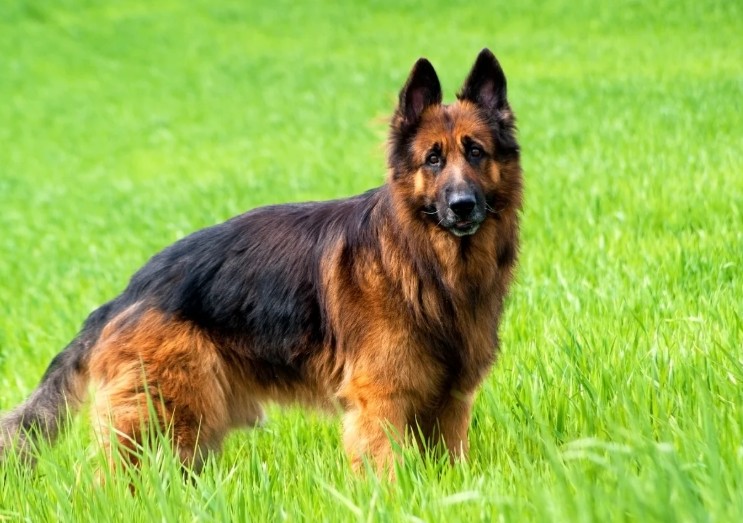
German Shepherds are wired for purposeful monitoring and task engagement. Without meaningful roles, vigilance turns into restless scanning.
Structure Creates Safety
Clear boundaries and predictable routines reduce decision overload. Leadership allows their nervous system to stand down.

Enrichment Resolves Pressure
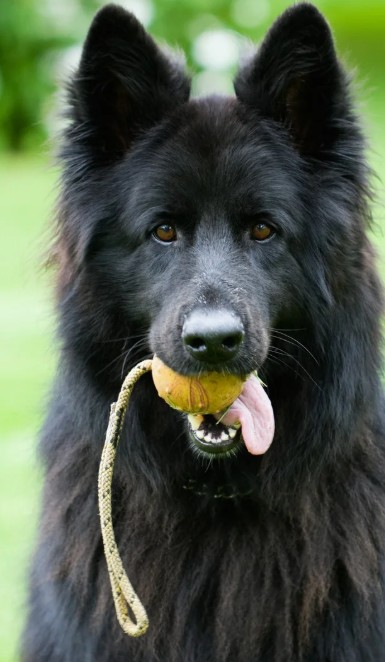
Mental work and environmental clarity give closure to protective drives. When purpose is met, intensity settles into calm presence.
Putting It Into Practice: Your Daily Blueprint
The Ideal Day Structure for Your German Shepherd
Understanding theory is valuable, but you need concrete guidance to transform your German Shepherd’s daily experience. Let’s walk through what an optimized day actually looks like, with specific timing and activities that honor your companion’s neurological needs.
Morning Routine (6:00 AM – 9:00 AM)
6:00-6:15 AM: Calm Wake-Up Your German Shepherd wakes when you do, but this isn’t playtime. Keep energy low and purposeful. Take them directly to their elimination area using the same route every morning. This predictability signals “routine mode” rather than “alert mode.” No talking, no excitement—just calm presence.
6:15-6:45 AM: Structured Morning Walk This walk serves territory patrol purposes. Choose a familiar route you walk most mornings. Your pace should be calm and steady—not rushed, not dawdling. Your German Shepherd walks beside you, not pulling ahead to “explore.” You’re communicating through your body language: “I’m leading this patrol; you’re monitoring with me.” Include 2-3 brief stops where your dog can scent-mark strategic locations. End the walk at a specific landmark every time.
6:45-7:00 AM: Feeding Protocol After the walk, your companion has earned breakfast. Feed in the same location, same bowl, same time. This isn’t just about nutrition—it’s about predictability reducing cognitive load. While they eat, you prepare for your day in calm, routine movements.
7:00-9:00 AM: Active Rest Period This sounds contradictory, but it’s crucial. Your German Shepherd should settle in their designated space while household morning activities occur. They’re not isolated—they can observe family routines—but they’re not directing or managing them. This teaches that humans handle morning chaos; their job is composed observation. Provide a long-lasting chew if needed to support settling.
Midday Routine (12:00 PM – 2:00 PM)
12:00-12:20 PM: Purposeful Midday Activity If you’re home, this is ideal for a structured task. Not a long walk—something focused. Examples: find hidden treats in the yard using scent work, practice boundary patrol routine, work on a specific training skill with clear beginning and end. The activity should have obvious completion so your dog experiences closure.
12:20-2:00 PM: Deep Rest Period This is genuine downtime. Your German Shepherd should be in their rest area—crate, bed, or designated quiet zone. Reduced stimulation allows nervous system recovery. This isn’t punishment; it’s restoration. You’re teaching that midday is processing time, not monitoring time.
Evening Routine (5:00 PM – 10:00 PM)
5:00-5:45 PM: Main Exercise Session This walk can be longer and include more engagement, but it still maintains structure. Your route may vary slightly to provide appropriate novelty, but you still dictate pace and direction. Include purposeful activities: directed sniffing sessions where you cue “search,” retrieve exercises with clear completion, or specific training scenarios. Your German Shepherd should finish this session mentally satisfied, not physically exhausted and overstimulated.
5:45-6:30 PM: Decompression and Feeding Return home to calm transition activities. Your dog may be slightly activated from the walk—that’s normal. Allow 15-20 minutes of low-stimulation decompression: perhaps they lie on their bed while you prepare dinner. Then feed their evening meal in the same structured way as morning.
6:30-8:30 PM: Family Time with Boundaries Your German Shepherd participates in evening household activities, but with clear rules. They have a designated spot during dinner where they settle. When family watches television or engages in quiet activities, your dog has a place nearby but isn’t actively managing everyone’s movements. You’re teaching: “You’re part of the family, but you’re not responsible for managing it.”
8:30-9:00 PM: Final Patrol and Elimination The last outing is brief and purposeful—similar to morning protocol. Same route, calm energy, clear beginning and end. This bookends the day with predictability.
9:00-10:00 PM: Wind-Down Protocol Evening preparation for sleep should follow consistent patterns. Dim lighting, reduced household activity, calm tones. Your German Shepherd learns these environmental cues signal transition to overnight rest mode.
10:00 PM: Overnight Rest Your companion sleeps in their designated area. For some dogs, this is a crate in your bedroom—providing security through your presence while maintaining spatial clarity. For others, it’s a bed in a specific location. The key is consistency and clear boundaries even during sleep hours.
🐕 German Shepherd Environmental Enrichment Journey 🧠
Understanding Your Working Companion’s Hidden Needs Through 8 Essential Phases
Phase 1: Understanding Working Heritage
Recognizing Your Dog’s Neurological Design
🧬 The Working Brain Architecture
Your German Shepherd was systematically developed for herding, guarding, and police work over a century. Their nervous system is optimized for continuous environmental monitoring, rapid threat assessment, sustained focus on duties, and deep cooperation with handlers. This isn’t anxiety—it’s purposeful design expressing itself.
⚡ What You’ll Notice
• Tracking sounds you can barely hear
• Responding to movements you didn’t see
• Scanning environment systematically
• Higher baseline arousal than companion breeds
✅ Key Recognition Step
Accept that your German Shepherd’s vigilance is a feature, not a flaw. Through NeuroBond understanding, recognize this isn’t behavior to suppress but to channel appropriately into purposeful activities.
Phase 2: Environmental Mismatch Assessment
Identifying What’s Not Working
🔍 The Two Extremes Problem
Modern environments create either excessive stimulation (urban chaos, unpredictable encounters, sensory overload) or insufficient engagement (no clear purpose, unused cognitive capacity, self-directed vigilance). Both extremes destabilize your German Shepherd’s nervous system equally.
⚠️ High-Risk Environments to Avoid
• Dog parks (chaotic, unpredictable dynamics)
• Shared hallways/elevators (forced proximity)
• Busy streets (overwhelming sensory input)
• Open-plan homes (unclear territorial boundaries)
• Inconsistent routines (unpredictable patterns)
📋 Your Assessment Action
Conduct a home environment audit: identify which spaces create monitoring demands, where your dog can truly rest, and which daily patterns lack predictability. This becomes your baseline for redesign.
Phase 3: Distinguishing Vigilance Types
Fear vs. Duty-Driven Behavior
🎭 The Critical Distinction
Fear-based reactivity: Shows avoidance, stress signals (lip licking, yawning), relief when threat removed. Responsibility-based reactivity: Shows proactive management, alert but not fearful body language, continued monitoring after trigger passes. Most German Shepherds labeled “reactive” are actually fulfilling perceived protective duties.
❓ Assessment Questions
• Does your dog show relief when you take control?
• Is reactivity reduced with clear leadership?
• Does your dog scan for your guidance first?
• Is behavior worse when you’re uncertain?
• Do they position protectively rather than avoid?
💡 Soul Recall Understanding
Your German Shepherd’s sense of purpose connects deeply to emotional memory. When they’ve learned you rely on them for protection, that identity becomes woven into behavior. They’re not being aggressive—they’re being responsible according to their understanding of their role.
Phase 4: Environmental Redesign Strategy
Creating Low-Noise Architecture
🏛️ Five Design Principles
• Predictability: Consistent daily routines
• Clarity: Clear rules and expectations
• Purpose: Meaningful activities and roles
• Recovery: Adequate rest and processing time
• Control: Appropriate autonomy within structure
🎯 High-Impact Changes
Reduced exposure to unnecessary stressors, predictable walking routes, task-based walks with clear objectives, scheduled decompression periods after stimulation, and defined spatial zones within your home. These produce better outcomes than months of traditional training.
🔧 Implementation Priority
Start with spatial clarity (define zones) and routine consistency (same schedule). These foundational changes enable all other interventions. Don’t attempt behavior modification before environmental optimization.
Phase 5: Daily Structure Implementation
Creating Your Optimal Schedule
📅 Morning Routine (6:00-9:00 AM)
Calm wake-up with direct bathroom access, structured patrol walk (same route, calm pacing), feeding protocol at consistent time, then active rest period where your dog observes but doesn’t manage household morning activities. Low energy, high structure.
🌅 Midday & Evening Structure
Midday (12:00-2:00 PM): Purposeful activity with clear completion (scent work, boundary patrol), followed by deep rest. Evening (5:00-10:00 PM): Main exercise with task-based activities, decompression, feeding, family time with boundaries, final patrol, wind-down protocol.
✨ Key Scheduling Principles
Consistency beats perfection. Purposeful activities trump high-energy chaos. Recovery is non-negotiable after stimulation. Weekend schedules should mirror weekdays within 30 minutes. Adjust intensity for age, maintain structure regardless.
Phase 6: Handler Self-Regulation
Managing Your Own Energy & Consistency
🔗 The NeuroBond Connection
Your emotional state directly affects your German Shepherd’s behavior. Research shows emotional contagion between humans and dogs is particularly strong in breeds selected for cooperation. Your tension becomes their environmental context—they read your breathing, stride, micro-expressions you don’t know you’re making.
⚠️ Common Handler Mistakes
• Emotional dumping (using dog as stress release)
• Inconsistent rule enforcement based on mood
• Anxiety projection (“please don’t react”)
• Rescue behavior (comforting during alerts)
• Believing more exercise solves everything
• Complete trigger avoidance vs. building capability
🎯 Invisible Leash Practice
Calm pacing sets emotional tone. Spatial clarity communicates intentions. Predictable transitions prevent startle responses. Emotional neutrality maintains your anchor role. This isn’t training—it’s a way of being with your dog that communicates safety through presence and energy.
Phase 7: Activity vs. Purpose Balance
Why More Exercise Often Fails
⚠️ The Arousal Trap
Physical activity without cognitive purpose increases arousal rather than creating calm. Unstructured exercise creates environmental noise, fitness improves but stress remains, and high-energy activities teach that excited states are the norm. Some German Shepherds need more and more exercise while becoming increasingly reactive—they’re over-aroused, not under-exercised.
✅ Stabilizing Activities
• Structured walks: Predictable routes, calm pacing
• Scent work: Natural behavior, success-based confidence
• Tracking: Sustained focus, neurological reward
• Directional tasks: Clear objectives (“find the car”)
• Boundary routines: Territory management under your direction
💡 Purpose Over Energy
Structured, purposeful activities are more restorative than unstructured recreation. Activities should engage working heritage rather than simply burning energy. Completion matters—your German Shepherd needs closure and satisfaction of task fulfillment.
Phase 8: Ongoing Assessment & Adjustment
Monitoring Progress & Warning Signs
📈 Signs of Improvement
Reduced baseline arousal, appropriate vigilance without hyper-scanning, improved recovery capacity after stimulation, enhanced behavioral flexibility, restored trust in your leadership. You’ll notice your German Shepherd finally exhales—showing they know you handle environmental management.
⚡ Early Warning Indicators
Sleep quality changes, increased scanning behavior, subtle body language shifts (tension, weight shifting), training response inconsistency, minor reactivity escalations. These signal environmental adjustments needed before patterns entrench.
🚨 When to Seek Professional Help
Immediate: Aggressive behavior toward family, self-harming behaviors, inability to settle causing sleep deprivation, panic responses posing safety risks. Within 1-2 weeks: No improvement after 4-6 weeks environmental modification, escalating stress despite increased structure, shutdown behaviors.
🔄 Environmental Needs Across Different Contexts
🐾 Life Stages
Puppy (8-16 weeks): Controlled exposure, immediate routine establishment, limited territory access.
Adolescent (8-18 months): Maximum predictability during hormonal changes, proactive trigger management.
Adult (2-7 years): Fine-tuning existing structure, maintaining cognitive challenge.
Senior (7+ years): Increased predictability, environmental simplification, enhanced comfort.
🏠 Living Situations
House with Yard: Define monitoring zones, establish boundary patrol routines, create off-duty areas.
Apartment: Master hallway protocol, use white noise, establish elevator strategies, maximize structured outdoor time.
Multi-Dog Household: Individual protocols, clear hierarchy with you managing inter-dog relationships, separate exercise when needed.
⏱️ Handler Schedules
Working from Home: Establish work mode boundaries, create designated resting location even when you’re present, schedule structured breaks.
Away All Day: Substantial morning structure before departure, create low-stimulation daytime environment, calm arrival protocol preventing evening chaos.
👁️ Vigilance Types
Normal Vigilance: Appropriate awareness, proportional responses, ability to disengage, baseline calm maintained.
Hyper-vigilance: Continuous scanning, lowered threshold, difficulty disengaging, elevated baseline—needs environmental relief.
Chronic Hyper-vigilance: Inability to relax in safe environments, anticipatory anxiety—requires immediate intervention.
👨👩👧👦 Family Situations
With Children: Clear child-dog interaction rules, separation systems during high-energy play, teach “off-duty” periods.
New Baby Preparation: Establish routine changes 2-3 months before arrival, introduce baby sounds gradually, practice management systems pre-birth.
Single Handler: Prioritize consistency, develop emergency protocols, consider professional support system.
📊 Prognosis Factors
Favorable (Rapid Improvement): Recent onset, clear triggers, handler willingness to modify lifestyle, dog shows relief with structure.
Challenging (Requires Time): Long-standing patterns, multiple stressors, limited environmental control, underlying anxiety disorders—but improvement still possible with systematic approach.
⚡ Quick Reference: Environmental Optimization Formula
Optimal GSD Environment =
(Predictable Routine × Spatial Clarity) + (Purposeful Activity – Chaotic Stimulation) + (Handler Calmness × Consistent Leadership) + (Recovery Time ÷ Stimulation Intensity)
Key Ratios:
• Structure-to-Freedom: 80/20 during first 6 weeks of implementation
• Purposeful-to-Unstructured Activity: 70/30 minimum
• Stimulation-to-Recovery: 1:2 ratio (for every hour of stimulation, provide 2 hours recovery)
• Consistency Score: Aim for 90%+ daily routine adherence
Remember: Environmental modification produces highest impact, fastest results—always address context before attempting behavior modification alone.
🧡 The Zoeta Dogsoul Philosophy in Environmental Enrichment
Your German Shepherd’s environmental needs aren’t about control—they’re about connection through understanding. The NeuroBond between you and your companion deepens when you recognize their vigilance as purposeful design requiring appropriate channeling, not suppression. The Invisible Leash reminds us that true leadership flows from your calm presence and spatial clarity—awareness without tension guiding your shared path. Through Soul Recall, we understand how deeply your dog’s sense of duty connects to emotional memory, revealing why environmental responsibility relief creates such profound behavioral transformation.
When you create an environment honoring your German Shepherd’s neurological architecture—providing structure, purpose, and recovery—you’re not just managing behavior. You’re restoring the balance between their remarkable working heritage and modern partnership, allowing science and soul to work together. That’s when your vigilant companion can finally exhale, knowing you handle the world while they stay ready. That’s the essence of true environmental enrichment through the Zoeta Dogsoul lens.
© Zoeta Dogsoul – Where neuroscience meets soul in dog training
Before and After: Environmental Redesign in Action
Let’s examine how these principles transform a German Shepherd’s actual daily experience.
Before Environmental Redesign:
Sarah’s 3-year-old German Shepherd, Kaiser, showed increasing reactivity, poor sleep, and hypervigilance. His typical day included irregular wake times depending on Sarah’s work schedule, 20-minute rush walks through busy streets with inconsistent routes, free access to all home areas including watching street activity through front windows, afternoon dog park visits three times weekly where overwhelming interactions occurred, evening walks at varying times through unpredictable locations, and bedtime whenever Sarah went to sleep with Kaiser monitoring the household throughout the night.
Kaiser exhibited constant scanning behavior, barrier frustration at windows, sleep disruption requiring investigation of every sound, leash reactivity progressively worsening, and inability to settle even in familiar environments.
After Environmental Redesign:
Sarah implemented consistent wake time regardless of her schedule, same structured morning route at calm pace with purposeful stops, blocked visual access to street activity creating clear “off-duty” zones, eliminated dog park visits entirely, added midday scent work when possible or structured rest protocol, consistent evening walk schedule with predictable routes and task-based activities, established clear bedtime routine with Kaiser’s crate in bedroom, and maintained weekend schedule variations of no more than 30 minutes from weekday timing.
Within three weeks, Kaiser showed decreased scanning behavior by approximately 60%, eliminated barrier frustration entirely, improved sleep quality with minimal nighttime arousal, reduced leash reactivity by half, and spontaneous settling during household activities. Sarah reported: “He finally seems to exhale. I didn’t realize how much responsibility he thought he was carrying.” 🧡
Key Scheduling Principles
Several core concepts make these schedules effective:
Consistency beats perfection. If your schedule must vary, maintain the sequence of activities even if timing shifts. Your German Shepherd’s brain prioritizes pattern over precision.
Purposeful > energetic. A 20-minute structured walk with clear objectives satisfies working drives more effectively than a 60-minute chaotic adventure.
Recovery is non-negotiable. Every stimulating activity must be followed by genuine rest opportunity. Stimulation without recovery creates accumulating stress.
Weekends mirror weekdays. Major schedule disruptions on days off prevent your German Shepherd from achieving stable baseline regulation. Variation is fine; disruption is problematic.
Adjust for your dog’s age and needs. Puppies require more frequent but shorter sessions. Seniors need longer recovery periods. The structure remains; the intensity adapts.
Warning Signs: Reading Your German Shepherd’s Stress Signals
Early Warning Indicators
Your German Shepherd communicates environmental mismatch long before obvious behavioral problems emerge. Recognizing these early signals allows intervention before patterns become entrenched.
Subtle Sleep Changes Watch for your dog taking longer to settle for naps, waking more frequently during rest periods, changing sleeping locations frequently seeking better security, or showing startle responses to normal household sounds during sleep. These indicate your companion’s nervous system isn’t achieving adequate recovery even during designated rest times.
Increased Scanning Behavior Notice if your German Shepherd begins watching windows or doorways more intensely, tracking household members’ movements more closely, responding to distant sounds you can barely hear, or showing difficulty disengaging attention from environmental stimuli. This reveals escalating vigilance burden.
Subtle Body Language Shifts Early stress manifests as weight shifting when approached by strangers, brief tension in facial muscles when novel stimuli appear, slight stiffening when other dogs are visible at distance, or quick glances toward you seeking guidance in neutral situations. Your dog is asking: “Do I need to handle this?”
Training Response Changes You might notice previously reliable behaviors becoming inconsistent, slower response to familiar cues, difficulty maintaining focus during training sessions, or your dog seeming “distracted” when they’re actually cognitively depleted. This signals regulatory resources being diverted to environmental management.
Minor Reactivity Escalations Small increases in reaction intensity to triggers—barking one second longer, body tension slightly higher, recovery time marginally increased. These incremental changes are easily dismissed but represent important trajectory information.
Progressive Symptoms: Mild to Moderate Stage
When early warnings go unaddressed, symptoms intensify and multiply.
Visible Hypervigilance Patterns Your German Shepherd maintains sustained alert posture for extended periods, rotates attention systematically scanning environment even in familiar settings, shows difficulty relaxing completely even during designated rest times, and responds to stimuli multiple rooms away or outside your auditory range.
Leash Reactivity Development Initial calm on-leash behavior deteriorates into pulling toward or away from triggers, vocalizing at other dogs or people at increasing distances, showing stiff body language when leaving home environment, and requiring longer recovery time after walks in stimulating areas.
Spatial Behavior Changes Your companion may begin positioning themselves at strategic monitoring locations, following family members between rooms more intensely, showing reluctance to settle in areas without visual access to main living spaces, or developing guarding behavior around resources or locations they didn’t previously protect.
Impulse Control Deterioration Commands requiring self-control become increasingly difficult. Your German Shepherd shows delayed response to “wait” or “stay,” breaks from position when stimuli appear, shows difficulty with impulse control around food or toys, and generally exhibits less behavioral flexibility than previously demonstrated.
Physical Stress Manifestations Gastrointestinal sensitivity may emerge or intensify, coat quality can diminish, minor injuries take longer to heal, and appetite may become inconsistent. The nervous system stress begins affecting physical health. 🧠

Severe Stage: When Immediate Intervention Is Critical
These symptoms indicate your German Shepherd’s coping mechanisms are failing.
Shutdown Behaviors Watch for decreased interest in previously enjoyed activities, flat affect with reduced emotional expression, passive acceptance of stressors that would previously trigger response, and withdrawal from family interaction even during calm periods. This isn’t “improvement”—it’s collapse.
Generalized Anxiety Presentation Your companion shows anxious behavior in all contexts, has difficulty settling in any environment including highly familiar ones, demonstrates anticipatory anxiety before routine activities, and exhibits hypervigilance that doesn’t decrease even with leadership intervention.
Compulsive or Displacement Behaviors Repetitive behaviors may emerge: excessive licking, tail chasing, shadow watching, repetitive vocalization patterns, or rigid routines that create distress when disrupted. These represent attempts to self-regulate when environmental support is inadequate.
Aggression or Fear-Based Responses Previously tolerant behavior shifts to growling, snapping, or biting in situations that didn’t trigger these responses before. Or your German Shepherd shows escape behavior and panic responses in normal situations. Both extremes indicate system breakdown.
Complete Loss of Behavioral Flexibility Your dog becomes unable to adapt to minor changes, shows extreme distress when routine varies even slightly, cannot recover from stimulation without extended periods, and demonstrates learning impairment where training seems impossible.
When to Seek Professional Help
Immediate professional consultation is warranted when:
- Aggressive behavior toward family members, particularly if unpredictable or increasing
- Self-harming behaviors creating lesions or physical injury
- Complete inability to settle resulting in sleep deprivation
- Panic responses posing safety risks (escaping through windows, doors, creating injury risk)
- Rapid deterioration with significant symptom progression within 2-4 weeks despite intervention
Schedule professional consultation within 1-2 weeks when:
- Environmental modifications show no improvement after 4-6 weeks consistent implementation
- Stress signals continue escalating despite increased structure
- Shutdown behaviors indicating learned helplessness
- Multiple areas deteriorating simultaneously (sleep, appetite, social behavior, training responsiveness)
- Your own stress compromises ability to provide calm leadership
Consider professional support when:
- You feel uncertain about reading your German Shepherd’s signals and need expert evaluation
- Environmental limitations prevent ideal modifications and you need creative solutions
- You want confirmation your intervention approach is appropriate before patterns solidify
- Your dog’s adolescence is particularly challenging and you want proactive support
The goal isn’t managing symptoms indefinitely—it’s understanding root causes and creating sustainable solutions. Professional support should focus on environmental assessment, handler education, and systematic intervention planning, not just behavior suppression. 😊
Home Environment Audit: Assessing Your German Shepherd’s Living Space
Room-by-Room Environmental Assessment
Walk through your home with fresh eyes, evaluating each space from your German Shepherd’s perspective. This audit identifies specific changes that reduce environmental mismatch.
Entryway/Front Door Area
Assessment Questions:
- Can your German Shepherd see or hear the front door from their typical resting locations?
- Do they have constant visual access to street activity, passing pedestrians, or delivery persons?
- Is there defined space for your dog during arrivals and departures?
- Can visitors enter without your German Shepherd immediately engaging?
Scoring:
- Optimal (3 points): Dog has designated position away from immediate door activity with limited visual access to street. Handler can control arrivals without dog intervention.
- Moderate (2 points): Some visual access to entry area but manageable boundaries exist. Dog responds to arrivals but can be redirected.
- Problematic (1 point): Unrestricted access to monitoring entry with no alternative positioning. Dog engages immediately with all arrival activity.
Recommended Modifications: If scoring 1-2, consider installing baby gate creating visual barrier while allowing airflow, teaching place command on mat/bed positioned away from door, using window film on door sidelights blocking visual access to street activity, or establishing arrival protocol where dog moves to designated location before door opens.
Living Room/Main Family Area
Assessment Questions:
- Does your German Shepherd have a defined resting spot in this space?
- Can they see multiple exits, windows, or entry points from their location?
- Is there expectation they remain settled during family activities?
- Do they have “job” monitoring all family movements?
Scoring:
- Optimal (3 points): Clear resting space exists with appropriate but not excessive environmental awareness. Dog settles during routine family activities.
- Moderate (2 points): Resting area exists but dog frequently gets up to check activities or monitor. Partial settling achievable.
- Problematic (1 point): No defined space or dog refuses settling. Constant monitoring of all family members and activities.
Recommended Modifications: Position dog’s bed/mat with backing against wall providing security while limiting visual monitoring range. Use furniture arrangement creating partial visual barriers reducing monitoring demands. Establish “off-duty” protocol during specified evening hours where monitoring is not required. Consider using calming aids like white noise reducing auditory hypervigilance.
Kitchen/Dining Area
Assessment Questions:
- Is your German Shepherd present during all food preparation and meals?
- Do they maintain position or constantly reposition monitoring activity?
- Is begging or attention-seeking behavior during meals occurring?
- Does food preparation trigger excited or vigilant behavior?
Scoring:
- Optimal (3 points): Dog has defined location during food activities and maintains position calmly. No demanding behavior.
- Moderate (2 points): Dog settles eventually but shows initial activation. Some repositioning but manageable.
- Problematic (1 point): Constant movement during food activities, demanding behavior, or exclusion necessary due to management difficulty.
Recommended Modifications: Establish place command on mat outside kitchen work triangle during food preparation. Create mealtime protocol where your German Shepherd settles in designated spot during family eating. Use baby gate creating boundary if spatial learning is initially difficult. Practice calm food preparation with gradual reduction of structure as behavior improves.
Bedroom/Sleep Areas
Assessment Questions:
- Where does your German Shepherd sleep relative to family members?
- Can they monitor doors, windows, or hallways from sleep location?
- Do they wake to investigate normal nighttime sounds?
- Is there consistent sleep/wake schedule?
Scoring:
- Optimal (3 points): Defined sleep location providing security without requiring monitoring. Consistent sleep through minor disturbances.
- Moderate (2 points): Generally settled sleep with occasional wake-ups. Returns to sleep relatively quickly.
- Problematic (1 point): Frequent waking, monitoring behavior during night, or difficulty settling initially.
Recommended Modifications: Consider crate in bedroom providing security through your presence while limiting monitoring access. Use white noise masking minor environmental sounds. Establish consistent bedtime routine signaling sleep mode. Block visual access to windows or doors if monitoring prevents settling.
Outdoor Access Points (Yard, Deck, Patio)
Assessment Questions:
- Can your German Shepherd access outdoor areas at will?
- Do they patrol fencelines or monitor neighboring properties?
- Is outdoor time structured or self-directed?
- Are there trigger points (neighbors, passing dogs) creating frequent reactivity?
Scoring:
- Optimal (3 points): Outdoor access is controlled and purposeful. Dog engages outdoor time calmly with defined activities.
- Moderate (2 points): Some self-directed patrolling but generally manageable. Occasional reactivity to external stimuli.
- Problematic (1 point): Constant vigilance, fence-running, reactive barking, or obsessive monitoring of outdoor activity.
Recommended Modifications: Transition from free outdoor access to structured outdoor sessions with specific purpose. Block visual access along fencelines using privacy screening if barrier frustration exists. Practice boundary patrol routine where you direct perimeter checking rather than self-directed vigilance. Limit duration outdoor during high-trigger times (morning/evening neighborhood activity).
Overall Environmental Match Scoring
Add your room scores to calculate total environmental match:
21-24 points (Optimal Environment): Your home supports German Shepherd needs effectively. Minor refinements may enhance already-good foundation. Focus on maintaining consistency.
15-20 points (Moderate Match): Significant improvement opportunity exists. Prioritize highest-impact modifications first. Expect noticeable behavioral improvements with targeted changes.
9-14 points (Poor Match): Substantial environmental mismatch likely contributing significantly to behavioral challenges. Systematic redesign will produce dramatic results. Consider professional consultation for implementation strategy.
Below 9 points (Critical Mismatch): Your German Shepherd’s environment fundamentally conflicts with their needs. Immediate, comprehensive changes necessary. Professional support highly recommended. Current behavioral problems are expected given circumstances.
Creating Functional Zones
Beyond room-by-room assessment, think about functional zone creation:
Safe Rest Zones: Areas where your German Shepherd can completely disengage from monitoring. No visual access to high-activity areas. Quiet, low-stimulation environment.
Active Monitoring Zones: Specific locations where appropriate vigilance is acceptable during designated times. Living room during family evening time. Position near but not blocking entry points.
Off-Limits Zones: Areas where dog presence isn’t required and creates additional monitoring burden. Home offices during work calls. Children’s playrooms during active play. Guest bedrooms.
Transition Zones: Spaces helping your dog shift between arousal states. Mudroom for pre/post walk decompression. Hallway buffer between active and rest zones.
Strategic zone creation communicates clear expectations: “Monitor here during these times. Rest here always. Never worry about there.” This spatial clarity reduces cognitive load substantially. 🐾
Handler Self-Assessment: Understanding Your Role
Your Emotional Regulation Evaluation
Your German Shepherd lives in the emotional environment you create. This assessment helps you understand your contribution to your companion’s experience.
Question 1: Walking Behavior Awareness When walking your German Shepherd and you see another dog approaching, what happens in your body before you consciously think about it?
Response A: I notice my breathing stays even, shoulders remain loose, and stride continues unchanged. Response B: I feel slight tension but can usually manage it before my dog notices. Response C: My breathing changes, muscles tighten, and I often shorten the leash instinctively.
If you answered C, your German Shepherd likely escalates before the other dog is even close. They’re responding to your tension, not necessarily the approaching dog.
Question 2: Home Arrival Energy When you arrive home after stressful days, how do you greet your German Shepherd?
Response A: I pause before entering, regulate my breathing, then greet calmly and purposefully. Response B: I’m usually carrying stress energy but try to settle quickly once inside. Response C: I enter immediately bringing external stress, often seeking comfort from my dog’s greeting.
If you answered C, you’re inadvertently teaching your companion that arrivals signal uncertainty requiring their vigilance to assess your emotional state.
Question 3: Consistency Patterns How would you describe your rule enforcement with your German Shepherd?
Response A: Rules are clear and consistently applied regardless of my mood or energy level. Response B: Generally consistent but sometimes rules slide when I’m tired or stressed. Response C: Rules vary significantly based on my mood, energy, or whether I feel like enforcing them.
If you answered C, your German Shepherd has learned they must self-manage because your leadership is unpredictable.
Question 4: Reactivity Response When your German Shepherd reacts to something, what is your typical response?
Response A: I remain calm, use consistent communication, and either redirect or calmly move away without tension. Response B: I try to stay calm but sometimes feel frustrated or embarrassed, which probably shows. Response C: I feel immediate stress, often tighten the leash, speak sharply, or show visible upset.
If you answered C, you’re confirming your dog’s assessment that the situation requires intense response—you’re joining their reactivity rather than leading through it.
Question 5: Recovery Expectation After stimulating activities or stressful events, what do you expect from your German Shepherd?
Response A: I provide structured decompression time and don’t expect immediate settling. Response B: I hope they settle quickly but understand if they need time. Response C: I expect them to “just relax” and feel frustrated when they remain activated.
If you answered C, you’re not providing the recovery support your companion needs, creating a cycle where stress accumulates.
Common Handler Mistakes and Recognition
Mistake 1: Emotional Dumping Using your German Shepherd as primary emotional support, sharing stress through physical contact or verbal processing while your dog tries to regulate their own state. They become responsible for managing your emotional regulation in addition to their own.
Recognition sign: You feel better after interacting with your dog during stress, but they seem more alert or vigilant afterward.
Mistake 2: Inconsistent Leadership Rules change based on your mood, convenience, or external factors. Your German Shepherd cannot predict what you’ll enforce, forcing them to create their own structure.
Recognition sign: Your dog seems “stubborn” or “selectively obedient”—following commands sometimes but not others, often based on your energy level.
Mistake 3: Anxiety Projection Your worry about potential problems creates the tension that triggers the problems. You anticipate your German Shepherd’s reactivity, communicating through your body that something concerning is approaching.
Recognition sign: Your dog’s reactivity worsens when you’re thinking “please don’t react” versus when you’re genuinely calm and confident.
Mistake 4: Rescue Behavior Attempting to comfort your German Shepherd during alert or reactive moments, inadvertently reinforcing that the situation warrants concern. Your comforting confirms their assessment that something is wrong.
Recognition sign: You find yourself petting, reassuring, or using soothing tones when your dog shows stress, but the behavior intensifies rather than calms.
Mistake 5: Exercise Replacement Believing more physical activity will solve behavioral problems, increasing stimulation when your German Shepherd actually needs structure and recovery.
Recognition sign: Despite increased exercise, your dog seems more reactive, takes longer to settle, and shows signs of cognitive fatigue.
Mistake 6: Avoidance Strategy Eliminating all triggers rather than building capability to handle them with your leadership. While strategic exposure reduction is valuable, complete avoidance teaches your dog the world is dangerous and you cannot manage it.
Recognition sign: Your walking routes become increasingly limited, your dog’s reactivity generalizes to more triggers, and their confidence in your leadership diminishes.
Reflection Exercises for Energy and Tension Awareness
Exercise 1: Body Scan Practice Three times daily for one week, pause and notice: Where are you holding tension? What’s your breathing pattern? What’s your mental state? Rate your internal calm 1-10. Do this especially before walking your German Shepherd. You cannot regulate your dog when you’re not regulating yourself.
Exercise 2: Walk Documentation Record five walks noting: Your stress level before leaving, any internal thoughts about potential problems, moments when your body tensed even slightly, and your German Shepherd’s behavior during those moments. You’ll likely see direct correlation between your tension and their reactivity.
Exercise 3: Consistency Audit For one week, note every time you enforce or don’t enforce a rule. Be honest. Do patterns emerge based on your tiredness, stress, or mood? Your German Shepherd sees these patterns even when you don’t.
Exercise 4: Recovery Observation After your dog shows any stress or excitement, document: How long until they settle? Do you provide structured recovery opportunity? What are you doing during their recovery period? Are you calm or still activated?
Exercise 5: Leadership Moments Identify three situations daily where your German Shepherd looks to you for guidance. Note whether you: provided clear direction, hesitated or seemed uncertain, or missed the moment entirely. These micro-moments build or undermine trust.
The truth is, addressing your German Shepherd’s environmental needs requires addressing your own emotional regulation first. Your companion is profoundly influenced by your internal state. When you become the calm, consistent, predictable leader they need, their behavior shifts dramatically. That’s the NeuroBond truth: you cannot separate their regulation from yours. 🧡
Age-Specific Environmental Needs
Puppy Period (8-16 Weeks): Building the Foundation
Your young German Shepherd is experiencing rapid neurological development while establishing core behavioral patterns. Environmental design during this crucial window shapes their entire trajectory.
Primary Needs: Controlled exposure to novelty rather than overwhelming stimulation. Your puppy needs to learn the world is interesting but manageable. Brief, positive encounters with various stimuli—surfaces, sounds, gentle people—followed immediately by return to safety. This builds confidence without creating sensitivity.
Establish routine immediately. Puppies this young are extraordinarily receptive to pattern learning. Consistent feeding times, elimination schedules, sleep/wake cycles create the predictability foundation their developing nervous system requires.
Spatial clarity begins now. Designate puppy-safe zones versus areas they’ll access later. Teaching spatial boundaries early prevents the assumption that monitoring all spaces is their responsibility.
Environmental Modifications: Limit full-house access using baby gates creating manageable territory. Too much space too soon overwhelms developing monitoring capacity. Create enriched but controlled environments: rotating toys preventing boredom without overstimulation, safe spaces for napping without household chaos interference, and protected play areas where puppy can explore without constant correction.
Critical Mistakes to Avoid: Don’t over-socialize in chaotic environments like busy pet stores or puppy socials with poor structure. Your German Shepherd puppy needs quality exposure, not quantity. Avoid inconsistent handling where different family members enforce different rules. Prevent early pattern establishment of vigilance by providing constant access to street-watching through windows.
Signs of Appropriate Progress: Your puppy shows interest in new experiences without fear or over-excitement, settles reasonably well in their designated spaces, responds positively to structure and routine, and shows trust in your guidance when uncertain.
Juvenile Period (4-8 Months): Energy Meets Capacity Limitations
Your German Shepherd’s physical energy increases dramatically while their impulse control and cognitive regulation remain underdeveloped. This mismatch creates significant challenge.
Primary Needs: Increased structured activity providing purposeful outlet for developing energy. Not more chaos—more directed engagement. Add training sessions with clear completion points, introduce scent work at basic levels, and establish boundary patrol routines.
Maintain strict schedule consistency even as demands increase. The temptation is to become more flexible as your dog seems more capable, but neurological development hasn’t matched physical capacity.
Enhanced decompression protocols become essential. Your juvenile German Shepherd processes more information daily but has limited recovery mechanisms. Scheduled downtime isn’t optional—it’s necessary for cognitive development.
Environmental Modifications: Increase supervised territory gradually, adding rooms or outdoor access only as appropriate settling demonstrates readiness. Introduce controlled novelty: new walking routes once weekly, occasional new environments with strong handler support, and structured socialization with carefully selected dogs.
Intensify spatial management during this phase. Your juvenile’s increasing confidence may manifest as expanding monitoring behavior. Reinforce clear boundaries about which spaces require their attention versus which don’t.
Critical Mistakes to Avoid: Don’t interpret increased energy as need for chaotic exercise. Avoid irregular schedules assuming your “almost adolescent” dog can handle flexibility. Don’t expand freedom faster than demonstrated capacity for self-regulation. Prevent development of self-directed vigilance patterns by maintaining clear leadership.
Signs of Appropriate Progress: Your juvenile shows more sustained focus during structured activities, demonstrates improving impulse control even with distractions, recovers more quickly from stimulation, and increasingly looks to you for guidance in uncertain situations. 😊
Adolescence (8-18 Months): The Storm Period
Everything intensifies during adolescence. The environmental mismatch effects we’ve discussed throughout this article become magnified by hormonal changes and incomplete neurological development.
Primary Needs: Maximum predictability during maximum internal chaos. When your adolescent German Shepherd’s hormones surge and their brain remodels, external consistency provides crucial stability. Increase structure rather than loosening it despite your dog’s apparent physical maturity.
Proactive trigger management reduces overwhelm during this vulnerable period. Your adolescent’s threshold for stimulation drops while their reactions intensify. Strategic exposure reduction isn’t avoidance—it’s developmental support.
Enhanced leadership clarity helps your German Shepherd navigate this confusing period. They simultaneously want more independence and need more guidance. Provide structure that offers appropriate autonomy within clear boundaries.
Environmental Modifications: Simplify daily experiences removing unnecessary complexity. Return to previously reliable walking routes if new ones trigger reactivity. Reduce novel social situations allowing your adolescent to consolidate previous learning rather than managing constant new input.
Intensify recovery periods. Your adolescent German Shepherd needs more processing time than they did as a juvenile. Increase quiet time following any stimulating activities.
Consider temporary environmental modifications addressing sudden sensitivity emergence. If noise reactivity develops, add white noise in resting areas. If visual triggers intensify, limit window access temporarily.
Critical Mistakes to Avoid: Don’t assume behavioral regression means training failure. Adolescent neural reorganization temporarily disrupts established patterns. Don’t increase exercise intensity hoping to “tire out” adolescent energy—you’ll increase arousal instead. Avoid loosening structure because your dog “should be mature enough” for more freedom. Don’t take behavioral changes personally or respond with frustration.
Signs You’re Supporting Well: Despite challenges, your adolescent shows moments of previous capability, demonstrates trust in your leadership during uncertainty, recovers from setbacks relatively quickly, and gradually re-stabilizes as they mature through this period.
Adult Maintenance (2-7 Years): Optimizing Performance
Your mature German Shepherd has completed physical and neurological development. Environmental needs shift toward maintaining optimal functioning rather than supporting development.
Primary Needs: Continued structure and routine providing psychological security. Many handlers mistakenly relax structure with mature dogs, but your German Shepherd’s need for predictability remains constant—they just handle minor variations more gracefully.
Appropriate cognitive challenge preventing boredom-driven vigilance. Your adult’s substantial cognitive capacity requires regular engagement. Without purposeful mental work, they’ll create their own jobs, often involving excessive environmental monitoring.
Maintenance of physical conditioning supporting neurological regulation. Your adult German Shepherd needs consistent exercise, but quality matters more than quantity. Structured activities supporting calm focus remain superior to chaotic high-arousal exercise.
Environmental Modifications: Fine-tune rather than overhaul. Your adult’s environment should reflect thorough understanding of their individual triggers, recovery needs, and optimal routine. Make adjustments based on seasonal changes, household circumstances, or life transitions, but maintain core structure.
Expand purposeful activities as your dog demonstrates capability. Add complexity to scent work, introduce new task-based training, or develop specific skills aligned with their interests and your lifestyle.
Critical Mistakes to Avoid: Don’t assume your mature dog “should” handle situations they find challenging. Individual differences persist regardless of age. Avoid environmental complacency where slow deterioration goes unnoticed because change is gradual. Don’t decrease structure believing your adult dog doesn’t “need” it anymore.
Signs of Optimal Maintenance: Your adult German Shepherd maintains stable behavioral patterns, demonstrates appropriate vigilance without hyperscanning, shows good recovery capacity from stimulation, maintains physical condition and mental engagement, and clearly trusts your environmental management.
Senior Considerations (7+ Years): Supporting Graceful Aging
Your senior German Shepherd’s environmental needs shift as physical and cognitive changes emerge. Thoughtful environmental support maintains quality of life while respecting changing capabilities.
Primary Needs: Increased predictability compensating for potential cognitive changes. Senior dogs benefit from even greater routine consistency as flexibility may challenge developing cognitive limitations.
Environmental simplification reducing unnecessary demands. Your senior’s regulatory capacity diminishes, making previously manageable stimulation potentially overwhelming. Adjust accordingly.
Enhanced comfort and accessibility as physical changes affect capability. Joint issues, vision changes, or hearing loss require environmental modifications supporting continued function.
Environmental Modifications: Adjust routine pacing allowing longer recovery periods. Your senior processes information more slowly and requires more rest between activities. Reduce walk distances or duration while maintaining structure and purpose. Shorter, more frequent sessions may work better than previously effective longer sessions.
Modify home environment supporting physical comfort: orthopedic bedding in all resting areas, ramps or steps for furniture access if appropriate, improved lighting compensating for vision changes, and reduced environmental noise if hearing sensitivity develops.
Maintain cognitive engagement appropriately. Your senior still needs purpose, but adjust intensity and complexity to current capability. Scent work remains accessible even as physical activity decreases.
Critical Mistakes to Avoid: Don’t assume behavioral changes are “just old age” without veterinary evaluation—pain significantly affects behavior. Avoid sudden major routine disruptions your senior’s reduced flexibility cannot accommodate well. Don’t eliminate structure believing your senior should “just rest”—they still need purpose and routine. Prevent isolation from family activities—senior dogs require connection even as their participation style changes.
Signs of Appropriate Support: Your senior maintains interest in appropriate activities, shows stable mood and behavior patterns, continues engaging with family even if less intensely, demonstrates comfort in their environment, and appears peaceful during rest periods. 🐾
Common Scenarios: Practical Solutions for Real-Life Situations
Multi-Dog Households with a German Shepherd
Living with multiple dogs creates additional complexity when one of them is a German Shepherd with specific environmental needs.
The Challenge: Your German Shepherd may assume responsibility for managing not just the environment but also other household dogs. This intensifies their monitoring burden substantially. Different dogs have different arousal levels and exercise needs, making unified routine creation difficult. Other dogs may trigger or escalate your German Shepherd’s vigilance behavior. Resource guarding dynamics can emerge when structure isn’t clear.
Practical Solutions:
Establish clear hierarchy: Your German Shepherd needs to know you manage inter-dog relationships, not them. When dogs interact, you direct, permit, or interrupt—never leaving resolution to the dogs themselves. This relieves your German Shepherd of social management responsibility.
Create individual protocols: Each dog has designated feeding locations, individual resting spaces, and separate high-value item access. Your German Shepherd shouldn’t monitor resource distribution—you handle that predictably.
Separate exercise when needed: If other dogs are chaotic or overstimulating, your German Shepherd needs structured time without managing their energy. Individual walks provide this even if you also do group outings.
Teach “not your job” communication: When your German Shepherd intervenes in other dogs’ behavior, calmly interrupt with consistent communication that you’re handling it. Over time, they learn to defer to your management.
Maintain German Shepherd priority: While other dogs have needs, environmental design must prioritize German Shepherd requirements. Their sensitivity to mismatch exceeds most breeds. Structure supporting them will benefit others even if not all dogs technically “need” it.
Real Example: Maria’s household included a German Shepherd (Thor) and two Labrador Retrievers. Thor developed increasing reactivity as he attempted to manage the Labs’ enthusiastic greetings, play arousal, and general chaos. Maria implemented separate feeding areas with Thor eating first in quiet location, individual crate training with Thor’s crate in her bedroom while Labs stayed elsewhere, one-on-one morning walks with Thor before group evening walks, and clear interruption when Thor attempted to “manage” Lab behavior. Within six weeks, Thor’s overall vigilance decreased by approximately 70% and his reactivity on group walks diminished significantly.
Apartment Living Adjustments
Your German Shepherd can thrive in apartments, but specific modifications address inherent challenges.
The Challenge: Shared hallways force proximity to strangers and unfamiliar dogs without escape options. Neighboring sounds trigger vigilance without ability to assess or respond appropriately. Limited space increases monitoring burden as your German Shepherd can see/hear all household activity. Lack of private outdoor access requires managing every elimination opportunity. Elevator encounters create high-stress forced proximity situations.
Practical Solutions:
Master hallway protocol: Before opening your apartment door, train your German Shepherd to wait in designated position away from door. You exit first, assess hallway, then signal when clear to emerge. This communicates you handle initial threat assessment. If neighbors or dogs are present, you decide whether to proceed or wait—not your dog.
Create white noise environment: Use fans, sound machines, or background music masking neighbor sounds. Your German Shepherd doesn’t need to monitor activity in adjacent units. Reducing auditory access decreases vigilance demands substantially.
Establish clear apartment zones: Even in limited space, designate areas by function. Your dog has resting zones where monitoring isn’t required, observation spots where appropriate vigilance is acceptable, and off-limits areas. Use furniture arrangement and baby gates creating this spatial clarity.
Develop elevator strategy: Never let elevators be surprise encounters. Take stairs when possible during high-traffic times. When using elevators, position yourself between your German Shepherd and others, maintaining calm presence communicating “I’m managing this space.” Exit immediately if encounter overwhelms your dog’s threshold.
Maximize structured outdoor time: Since every outdoor trip requires navigation through building, make each outing purposeful. Even brief elimination trips follow consistent route and protocol. Longer walks occur during lower-traffic times when possible.
Real Example: David’s German Shepherd (Luna) lived in a 15th-floor urban apartment. Initial severe reactivity made building navigation nearly impossible. David implemented 6 AM and 10 PM walks avoiding peak traffic times, white noise in apartment masking neighbor sounds, baby gate creating “safe room” where Luna couldn’t see apartment door, systematic hallway training during low-traffic hours gradually building tolerance, and emergency stairwell use during particularly high-stress periods. Luna’s hallway reactivity reduced enough for manageable daily life within three months, with continued gradual improvement.
Working from Home Versus Away All Day
Your work schedule significantly impacts your German Shepherd’s daily experience, requiring different environmental approaches.
Working from Home Challenges: Your constant presence may prevent your German Shepherd from learning to rest independently. They may monitor your activities continuously rather than settling. Your work stress becomes their environmental stress. Blurred boundaries between work time and dog time create confusion about expectations.
Working from Home Solutions:
Establish work mode boundaries: When you’re working, your German Shepherd has designated resting location even though you’re home. Use baby gate or closed door if needed initially. This teaches your presence doesn’t mean engagement availability.
Create work period routine: Begin work sessions identically each day—same time, same setup, same cue to your dog. End work periods consistently. Your German Shepherd learns to anticipate these transitions, reducing vigilance about when you might be available.
Schedule structured breaks: Set specific times for brief dog interactions. Midmorning bathroom break, midday training session, afternoon short walk. Predictable break timing allows your dog to rest between rather than maintaining constant readiness.
Manage your stress signals: Your work frustration affects your German Shepherd. Practice conscious emotional regulation during challenging work moments. Take brief calming breaks before transitioning to dog interactions.
Away All Day Challenges: Long periods without structure may create excessive boredom or vigilance. Your German Shepherd cannot regulate their own activity appropriately. Arriving home brings major energy shift they must process. Guilt about being away can create unhelpful overcompensation.
Away All Day Solutions:
Morning structure is critical: Substantial structured activity before departure settles your German Shepherd for the day. This isn’t frantic exercise—it’s purposeful engagement followed by calm departure.
Create daytime environment: Limit access to high-stimulation areas. If your dog watches street activity all day, redirect to interior room with enrichment items. Consider midday dog walker providing structure break if finances allow.
Arrival protocol prevents chaos: Don’t arrive home and immediately engage intensely. Enter calmly, allow your German Shepherd brief greeting, then provide short decompression period before main evening activities begin. Your calm arrival sets tone for entire evening.
Evening routine provides purpose: Structure evening time intentionally. Your German Shepherd waited all day—they deserve purposeful engagement, not just your distracted presence while you decompress from work.
Family with Children Considerations
Children’s unpredictable energy and behavior create unique challenges for your German Shepherd’s regulation.
The Challenge: Children’s movements are erratic and arousal levels fluctuate rapidly. High-pitched voices and sudden sounds trigger vigilance responses. Your German Shepherd may feel responsible for monitoring children’s safety. Inconsistent child behavior regarding dog rules creates confusion. Children’s friends introduce frequent novel stimuli.
Practical Solutions:
Clear child-dog interaction rules: Establish and enforce consistent boundaries both directions. Children don’t approach dog during rest times, don’t interrupt feeding, use calm voices, and follow specific rules for play. Your German Shepherd doesn’t follow children room to room, has separate space during high-arousal child play, and knows monitoring is your job, not theirs.
Create separation systems: Baby gates allowing your German Shepherd to observe family activity without participating in chaos work well. Your dog sees children but isn’t managing their movements or intensity.
Teach “off-duty” around children: When children are playing energetically, your German Shepherd should be in their rest area. You’re managing the children—your dog doesn’t need to. This prevents arousal escalation and reduces protective behavior emergence.
Establish child visitor protocol: Before playmates arrive, your German Shepherd goes to their designated area. Initial greetings occur with you present and dog under control. Once children settle into activity, your dog may observe from separate space but doesn’t participate unless interaction is structured and calm.
Age-appropriate child training: Even young children can learn dog communication. Teach them to recognize “dog is resting” cues and respect boundaries. This protects both child and dog while building essential skills.
Real Example: Jennifer’s family included 6 and 8-year-old children and German Shepherd (Bear). Bear’s reactivity increased as he attempted to manage children’s energetic play and frequent visiting friends. Jennifer implemented Bear’s crate in her bedroom as rest space during high-energy play, baby gate between living room and play area allowing observation without participation, structured 15-minute Bear-children interactions twice daily with calm rules, visitor protocol where Bear rested during initial playmate arrival chaos, and family education on Bear’s body language signals. Bear’s stress decreased significantly while children learned valuable skills about dog communication and boundaries. 🧡
New Baby Preparation and Adjustment
Preparing for human infant arrival requires thoughtful planning to support your German Shepherd through this major transition.
Pre-Arrival Preparation (2-3 Months Before):
Establish new routine patterns before baby arrives. Your German Shepherd needs to adapt to schedule changes while your household is still relatively calm. If walks will shift to different times, make this change now. If certain rooms will become off-limits, start closing those doors consistently.
Reduce dependency on constant human interaction gradually. If your dog currently receives extensive attention, begin decreasing this in small increments while adding structured independent activities. This prevents dramatic post-baby contrast creating distress.
Introduce baby-related sounds and items slowly. Play recordings of infant crying at low volume, increasing gradually. Bring baby furniture and items home before infant arrives, allowing your German Shepherd to adjust to these environmental changes separately from adjusting to the baby itself.
Practice management systems you’ll use post-birth. If baby gates will create boundaries, install and use them now. If your dog will rest in specific areas during baby care times, practice this routine with doll or while doing tasks requiring your focus.
Post-Arrival Implementation:
Initial days priority: Your German Shepherd’s routine continues as normally as possible despite household disruption. Maintain feeding times, walk schedules, rest periods. This consistency provides stability during upheaval.
Gradual introduction: Allow your German Shepherd to smell baby items before meeting infant. Initial meeting should be calm, brief, and highly supervised with handler maintaining relaxed demeanor. Your dog investigates briefly then returns to normal activity—no extended monitoring permitted.
Establish clear rules immediately: Your German Shepherd doesn’t follow you constantly during baby care. They have designated observation spots or rest in separate areas during nursing, changing, bathing. You manage baby care; they remain calm nearby but not involved.
Maintain German Shepherd prioritization: Despite exhaustion and new demands, your companion needs their routine maintained. Partner support here is essential—someone ensures dog’s needs receive attention even when baby demands are overwhelming.
Watch for stress indicators: Monitor your German Shepherd for increased vigilance, rest disruption, appetite changes, or behavioral regression. These signal adjustment difficulty requiring intervention, not “jealousy” requiring punishment.
Long-term adjustment: As infant becomes mobile toddler, boundaries remain firm. Child doesn’t approach dog’s rest areas, food, or toys. Your German Shepherd has reliable escape options from toddler interaction. You continue managing all child-dog interactions closely.
Real Example: Sarah prepared for her first baby with German Shepherd (Odin) by shifting walks to early morning three months before due date, establishing Odin’s rest spot in living room corner with baby gate access, introducing baby sounds gradually over two months, and practicing putting Odin in “place” during timed sessions simulating baby care. Post-birth, Sarah’s partner maintained Odin’s morning walk routine while Sarah recovered, Odin observed baby from his designated spot but didn’t participate in care, and couple alternated ensuring Odin received structured attention twice daily despite newborn demands. Odin adjusted well with minimal stress indicators, maintaining stable behavior throughout the transition.
Environmental challenges are solvable when you understand your German Shepherd’s perspective and implement systematic solutions. Whether navigating apartment living, managing multiple dogs, or preparing for major life transitions, the core principles remain consistent: structure, predictability, clear leadership, and appropriate recovery opportunities. Your specific circumstances may require creative application, but these fundamentals create success across all scenarios.
Restoring the Bond: Leadership That Heals
Invisible Leash Principles in Action
The Invisible Leash isn’t a training technique—it’s a way of being with your German Shepherd that communicates safety through your presence and energy:
- Calm pacing: Set emotional tone through regulated movement—your companion reads your breathing, stride length, muscle tension
- Spatial clarity: Clear communication about environmental navigation—your body language telegraphs intentions
- Predictable transitions: Allow mental preparation between activities—smooth changes prevent constant startle responses
- Emotional neutrality: Maintain calm regardless of environmental challenges—be their anchor when the world feels chaotic
When you embody these principles, your German Shepherd can finally access their own regulation.
Relieving Environmental Responsibility
Your leadership communication should constantly send the message: “I handle the world; you stay ready.” This isn’t about domination—it’s about burden relief. Clear signals that you’re managing potential threats allow your German Shepherd to finally exhale. Consistent responses to environmental stimuli teach them what to expect from you. Most importantly, you give explicit permission to disengage from monitoring.
Research on stress and control suggests that perceived control over stressors is critical for resilience. When your German Shepherd trusts your environmental management, they regain the control they’ve been desperately seeking through hypervigilance. That’s Soul Recall at work—the deep relational bonding that emerges when your dog can finally trust that you have things handled.
Teaching Composed Readiness
There’s a crucial distinction between “alert” and “reactive.” Your German Shepherd can maintain calm observation without immediate intervention. You’re teaching trust in your environmental management and appropriate response only when directed.
This active waiting isn’t passivity—it’s composed readiness. Your dog remains aware and prepared to act if needed while trusting you’ll communicate when action is required. This represents restoration of functional balance:
- Reduced baseline arousal: Nervous system can finally rest
- Appropriate vigilance without hyper-scanning: Alert when needed, calm otherwise
- Improved recovery capacity: Bounce back from stimulation more quickly
- Enhanced behavioral flexibility: Adapt to changes without system breakdown
- Restored trust in your leadership: Finally knowing you handle environmental management
That balance between science and soul, between structure and connection, between working heritage and modern partnership—that’s the essence of Zoeta Dogsoul. 🧡
Assessment and Intervention: A Comprehensive Framework
Comprehensive Evaluation Components
Effective intervention requires thorough assessment across multiple dimensions:
Environmental audit:
- Daily routine analysis
- Specific stressor identification
- Recovery opportunity assessment
- Spatial organization review of living spaces
Behavioral analysis:
- Vigilance patterns throughout the day
- Reactivity triggers and contexts
- Recovery capacity after stimulation
- Handler relationship quality
- How does your dog respond to your leadership? Do they show relief when you take control?
Cognitive load assessment:
- Sleep quality and patterns
- Learning capacity in training contexts
- Impulse control across situations
- Behavioral flexibility or rigid pattern fixation
Handler factors:
- Your emotional regulation capacity
- Consistency in responses
- Leadership clarity
- Personal stress levels
- Remember: your German Shepherd lives in the emotional environment you create
Intervention Hierarchy: Priority Order Matters
The sequence of interventions significantly impacts outcomes:
- Environmental modification: Highest impact, fastest results—address the mismatch first
- Handler education: Enables all other interventions—understanding your role and your dog’s needs
- Structured activities: Purpose and cognitive engagement—satisfy working drives without over-arousal
- Specific behavior training: Address remaining issues after environment and leadership are optimized
- Pharmacological support: Only after environmental optimization—medication supports better context, doesn’t replace it
Most behavioral problems improve dramatically when you address environmental mismatch before attempting behavior modification.
Prognosis and Realistic Expectations
Favorable indicators for rapid improvement:
- Recent onset of problems (weeks or months, not years)
- Clear environmental triggers you can identify and modify
- Your willingness to modify lifestyle and implement changes
- Your dog showing relief when you provide structure
- Absence of genetic anxiety disorders
These cases typically show rapid, significant improvement with appropriate environmental changes.
Challenging factors requiring more time:
- Long-standing patterns (years of establishment)
- Multiple compounding stressors overwhelming system
- Resistance to lifestyle change limiting implementation
- Limited environmental control (rental restrictions, shared spaces)
- Underlying anxiety disorders requiring additional support
These situations require more time, patience, and potentially professional support, but improvement remains possible.
The key is understanding your German Shepherd’s behavioral challenges aren’t character flaws—they’re responses to environmental circumstances. When you change those circumstances, you change the behavior.
Looking Forward: Your German Shepherd’s Path to Thriving
Your German Shepherd isn’t broken. They’re functioning exactly as their genetics dictate, with a nervous system designed for work, purpose, and clear leadership. The challenge isn’t fixing your dog—it’s creating a life that honors their remarkable capabilities while providing the structure their brain requires.
Core Understanding:
- Environmental mismatch, not inherent pathology, drives most German Shepherd behavioral problems
- Hypervigilance often represents duty-driven over-responsibility rather than fear
- Cognitive load from continuous monitoring depletes regulatory resources
- Your emotional state and consistency significantly amplify or mitigate environmental stress
- Environmental modification should be your primary intervention approach—not your last resort
The German Shepherd’s behavioral challenges in modern environments represent a design-context mismatch rather than breed defects. These magnificent dogs are functioning exactly as bred. The problem is that modern pet environments fail to provide the structure, purpose, and clarity their nervous systems require. When you understand this truth, everything changes.
Optimal outcomes require:
- Recognition of breed-specific needs and neurological design
- Environmental architecture supporting German Shepherd functioning
- Leadership emphasizing structure and calm guidance
- Appropriate cognitive engagement through purposeful activities
- Adequate recovery opportunities for nervous system restoration
- Realistic expectations about urban living challenges
Your German Shepherd chose you—or perhaps you chose each other. Now you have the knowledge to create the partnership both of you deserve. Every moment of structure you provide, every calm leadership signal you send, every purposeful activity you share builds the trust and balance that allows your remarkable companion to finally relax into the life you’re creating together.










